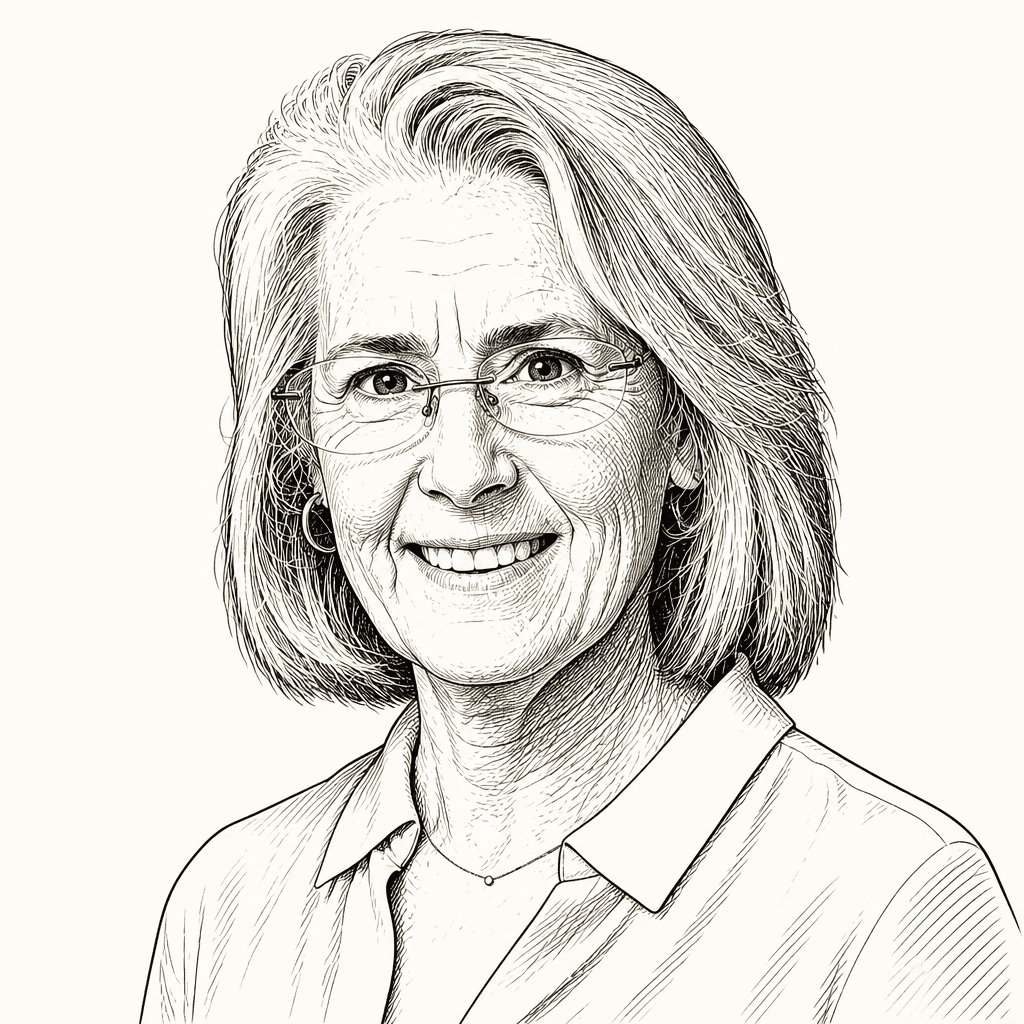
Maureen Conway
Vice President at the Aspen Institute and Executive Director of its Economic Opportunities Program, where she leads work on job quality, workforce development, business ownership, and economic opportunity. She also curates and moderates Aspen’s Opportunity in America discussion series.
35% of U.S. Workers Lack a Durable Employment Bargain
MIT Sloan professor Paul Osterman argues that roughly 35% of U.S. workers occupy “disposable” jobs—through contracting, organizational freelancing, or marginal W-2 employment—that leave them outside a durable employer commitment to training, benefits, and advancement. In his account, firms use these arrangements to cut costs and preserve flexibility, while contractors and marginal employees report lower earnings, satisfaction, and attachment to their organizations than standard employees. Osterman argues that training can improve individual options, but changing the system requires stronger classification rules, labor standards, benefits, and bargaining power.
Employers Must Redesign Hiring and Jobs for a Permanently Tighter Labor Market
Steve Dawson and Jerry Rubin argue in Help Wanted that employers should treat the tight labor market as a structural condition, not a temporary hiring cycle that will reverse on its own. They contend that demographic change, lower workforce participation, and limits on immigration require businesses to redesign how they recruit, train, advance, and retain workers—starting with the barriers that screen out or drive away people they need. Their case is that employee-centered practices are not a generic fix but an operational response that must account for each employer’s job design, incentives, and workforce.
Employers Must Redesign Hiring and Retention for a Permanently Tight Labor Market
Steve Dawson and Jerry Rubin argue in Help Wanted that a shrinking and changing workforce makes labor scarcity a long-term business condition, not a cycle employers can wait out. They contend that employers must compete for talent by changing how they recruit, train, manage, and retain workers—especially people routinely filtered out by conventional hiring systems. Their case for employee-centered strategy extends beyond wages to job design, workforce partnerships, and management practices that give workers a role in solving the problems that drive turnover.
Employee Ownership Advocates Urged to Reject the Niche Label
Paula D’Ambrosa, Prudential Financial’s director of inclusive wealth-building, opened the second day of the 2026 Employee Ownership Ideas Forum by arguing that employee ownership should be understood as a longstanding American answer to who shares in economic growth. Drawing on a Revolutionary-era profit-sharing requirement for cod-fishing subsidies, she said the field should stop describing itself as niche and instead present employee ownership as a mainstream way for workers to share in the value they create, including as artificial intelligence reshapes the economy.
Employee Ownership Is Framed as a Mechanism for Sharing AI Productivity Gains
Aspen Institute’s Maureen Conway and Rutgers University’s William Castellano opened the 2026 Employee Ownership Ideas Forum by arguing that employee ownership should be treated as a practical response to economic insecurity and technological disruption, not just a fairness principle. Conway framed broad-based ownership as a way to give workers voice, wealth-building opportunities, and a stake in the value they help create, while Castellano tied it to AI-era management challenges, arguing that productivity gains from new technologies should be shared with employees through ownership, incentives, and workforce investment.
Employee Ownership Gave a Local Hardware Chain Its Succession Plan
Gina Schaefer, founder and co-owner of A Few Cool Hardware Stores, used her keynote at the 2026 Employee Ownership Ideas Forum to present employee ownership as a succession strategy for community-rooted businesses. After building a 14-store hardware company in the Washington region, Schaefer said selling to employees through an ESOP was a way to preserve the company’s culture, reward the workers who built it, and keep ownership tied to the communities the stores serve.
Congress and Labor Department Action Could Remove Key Barriers to ESOP Formation
Jim Bonham, president and CEO of The ESOP Association, used his keynote at the 2026 Employee Ownership Ideas Forum to argue that ESOPs are entering their most important policy opening in decades. He said advocates must use that window to pass valuation legislation, shape Department of Labor rules, and ensure ESOPs are part of coming debates over AI, tax policy, and business succession — while defending the specific legal features that distinguish ESOPs from broader claims of employee ownership.
Employee Ownership Offers a Succession Path for Small Businesses
JPMorganChase philanthropy officer Gwyneth Galbraith used her closing remarks at the 2026 Employee Ownership Ideas Forum to argue that employee ownership should be treated as part of the mainstream small-business succession and economic-opportunity agenda. Galbraith said the model can help owners address transaction value, job preservation, and mission continuity at once, but scaling it will require more advisory capacity, capital, policy attention, and visibility among business owners.
Employee Ownership Needs Institutional Capital Channels to Reach Scale
Margot Brandenburg, a senior program officer for mission investments at the Ford Foundation, used her keynote at the 2026 Employee Ownership Ideas Forum to argue that employee ownership fits Ford’s social justice mission and its investment mandate. She made the case on three fronts: ownership can build worker wealth and voice, economic distribution matters for democracy, and research on ESOP productivity gains gives institutional investors a financial reason to pay attention. Scaling the field, she said, will require the fund managers and intermediaries that can move large pools of capital into employee-owned companies.