Congress and Labor Department Action Could Remove Key Barriers to ESOP Formation

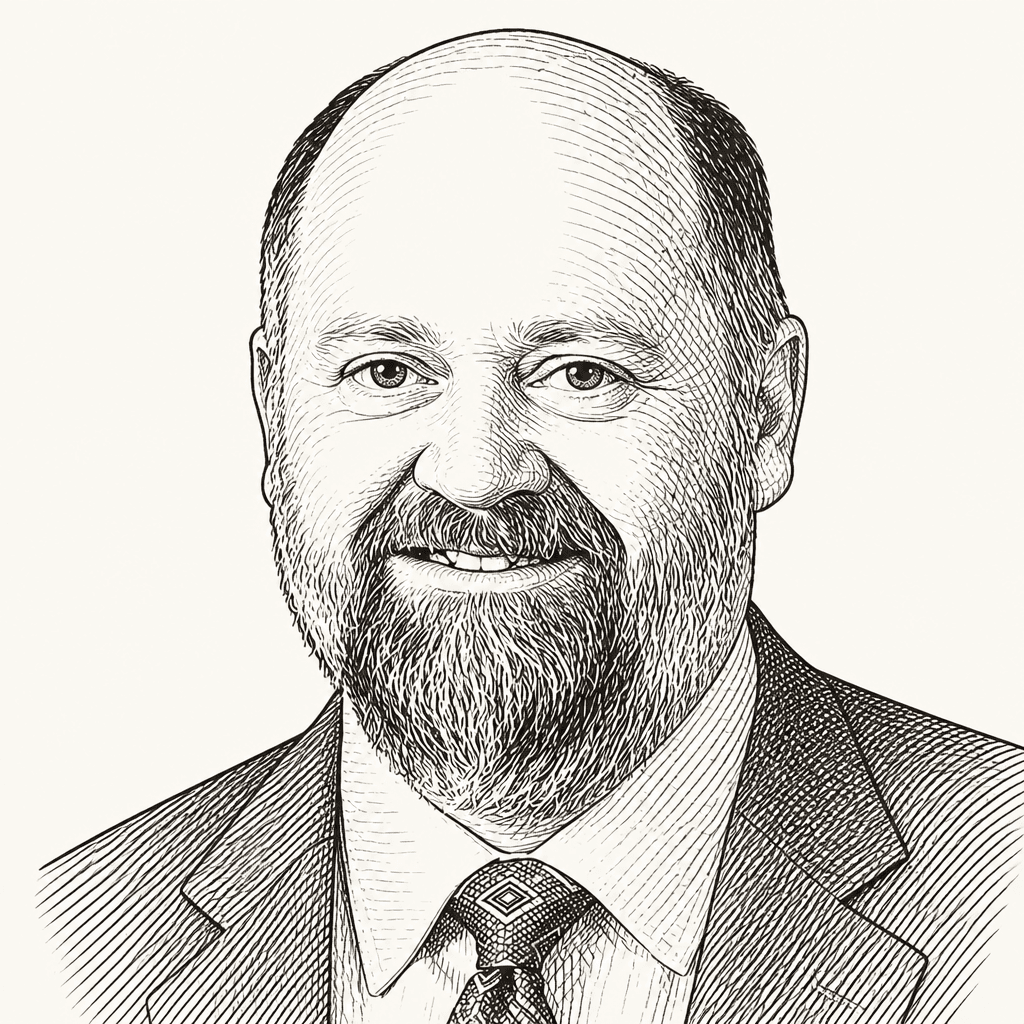
Jim Bonham, president and CEO of The ESOP Association, used his keynote at the 2026 Employee Ownership Ideas Forum to argue that ESOPs are entering their most important policy opening in decades. He said advocates must use that window to pass valuation legislation, shape Department of Labor rules, and ensure ESOPs are part of coming debates over AI, tax policy, and business succession — while defending the specific legal features that distinguish ESOPs from broader claims of employee ownership.
The policy window is open, but Bonham warned it can close quickly
Jim Bonham, president and CEO of the ESOP Association and the Employee Ownership Foundation, argued that employee ownership is entering a policy moment “in a way that we have not seen in decades” — and that the main task now is keeping that window from closing before advocates can act. Maureen Conway introduced him as a longtime employee-ownership advocate with deep policy experience, including nearly a decade as a senior congressional staffer and a current role leading advocacy through 18 state and regional chapters.


The point was not that every form of employee participation in business success is equivalent. Bonham acknowledged the wider field — cooperatives, employee beneficial trusts, restricted stock grants, short-term equity plans, profit sharing, and other models — and said their tradeoffs are worth understanding. But he focused on ESOPs because he sees them as “the vast majority” of employee ownership in America and as the model most directly affected by the policy opening now emerging.
For more than 50 years, since ERISA was enacted in 1974, Bonham said ESOP transactions have operated under “a fog of regulatory ambiguity.” Over the past two decades, he said, that ambiguity was compounded by a Department of Labor enforcement posture that treated ESOP transactions “as a problem that they had to police rather than a policy that needed to be promoted.” The special enforcement project targeting ESOPs is now officially over, which he called “a real and meaningful shift.”
The first concrete mechanism is legislative: the Retiree Through Ownership Act. Bonham said the bill cleared the Senate HELP Committee unanimously, passed the full Senate unanimously, cleared the House Education and Workforce Committee unanimously, and is awaiting a full House vote that supporters had been told would happen imminently. Its importance, in his view, is that Congress would for the first time in five decades adopt a clear statutory definition for ESOP valuations — certainty he said trustees, sellers, and advisors have been “starved” of since the Carter administration.
The second mechanism is regulatory: Department of Labor action on “adequate consideration.” Bonham said the issue is back on the agency’s agenda, this time with the goal of clarifying and simplifying rules for business owners who want to sell to employees rather than weaponizing those rules against them. A workable rule resting on a statutory foundation, he argued, would remove “the single biggest structural impediment to ESOP formation.”
Without it, everything that we would be building would be based on a foundation of sand.
AI and tax policy will decide who captures the gains
Jim Bonham placed ESOPs inside two larger policy fights he expects Congress to take up in the next few years: the workforce impact and productivity gains of artificial intelligence, and a tax code he described as tilted too far toward wealth accumulation and concentration among a small number of people.
Both debates, in his framing, turn on the same distributional question: who captures the gains when the rewards to capital and labor have fallen out of balance? When AI and advanced robotics raise productivity at a company, value flows to whoever owns the company. In a conventional structure, that means shareholders and executives. In an ESOP, it means workers.
The same logic applies to business succession. Bonham described a tax code that subsidizes private equity investors to extract value from Main Street businesses, with consequences for workers and communities. Communities lose businesses and workers lose economic vitality; with an ESOP exit strategy, by contrast, the company stays in place and wealth is distributed to the people who built it. Profits then recycle in the community rather than being exported to an investment account owned by a billionaire elsewhere.
The practical implication was direct: when Congress writes AI adjustment policy, ESOPs need to be in the bill. When Congress rewrites carried interest or the broader architecture of capital taxation, ESOPs need to be part of that debate “not as a footnote,” but as an affirmative answer to where redirected revenues should go.
This was not framed as a request for goodwill. Employee ownership advocates need to be in the room “with data, with legislative text, with company owners and employee owners ready to testify.” If they are not, someone else will define the policy space.
The evidence base belongs to ESOPs, not every plan using the ownership label
Jim Bonham’s sharpest warning concerned branding. As “employee ownership” becomes more valuable in Washington, arrangements will begin using the label even when they do not share the features that produced the evidence base policymakers cite.
The “40-plus years” of peer-reviewed research on public benefits — retirement outcomes, job stability, resilience through recessions, and productivity effects — was built “almost entirely on ESOPs,” where a meaningful share of the company is owned by the ESOP trust. That evidence “cannot and should not be indiscriminately transferred” to any arrangement someone chooses to brand as employee ownership.
He drew the boundary plainly. A profit-sharing bonus is not an ESOP. A phantom equity plan is not an ESOP. A minority stock purchase program with no governance rights and no retirement structure is not an ESOP. Some of those arrangements may be good, and some may deserve public support on their own merits. The objection is to presenting them to Congress as though they carry the same evidence base as ESOPs.
The distinction matters because Bonham’s case for public policy support rests on design, not terminology. An ESOP, as he described it, is a specific legal instrument with features that create the public benefit.
The first is fiduciary protection: an independent trustee whose legal duty runs to employees, not to the seller, company, or executives. Bonham described this as employee voice in governance.
The second is transparency. Participants receive annual statements showing what they own and what it is worth, and they can see the plan document describing allocations and rights. “There’s no black boxes,” he said.
The third is irrevocable ownership. Once shares or value are allocated to a participant, the company cannot claw them back. “The employee owns it.”
The fourth is protected compounding. ESOPs are funded by the company, not by employee wage contributions, and distributions are constrained. In Bonham’s account, that prevents ESOP accounts from being raided like 401(k)s and allows balances to compound over time. He cited the average ESOP account balance as now exceeding $230,000, with career employees at mature ESOPs holding multiples of that.
For Bonham, those four features — fiduciary protection, transparency, irrevocable rights, and protected compounding — are not administrative details. They are “the engine.” Strip them out, keep the employee ownership label, and the result is not the same public benefit. It is, in his words, “a marketing claim.”
The work is specific: pass the bill, shape the rule, prepare the next debate
Jim Bonham closed with a practical agenda for the policy window he described. The first ask was to push the Retiree Through Ownership Act across the finish line in the House. The second was to engage seriously in the adequate consideration rulemaking, with the aim of promoting ESOP formation rather than prosecuting it. The third was to engage candidates from both parties, including the 2028 presidential field, so that when the AI and tax debates arrive, “the ESOP answer is already on the page.”
The broader instruction was to defend substance over labels. Bonham wanted advocates to be specific about the ownership model they champion and why its design delivers public benefit. He described the current moment not as the end of a policy fight but as the beginning of a possible “renaissance,” provided advocates are disciplined enough to protect what produced the evidence and bold enough to write the next chapter themselves.