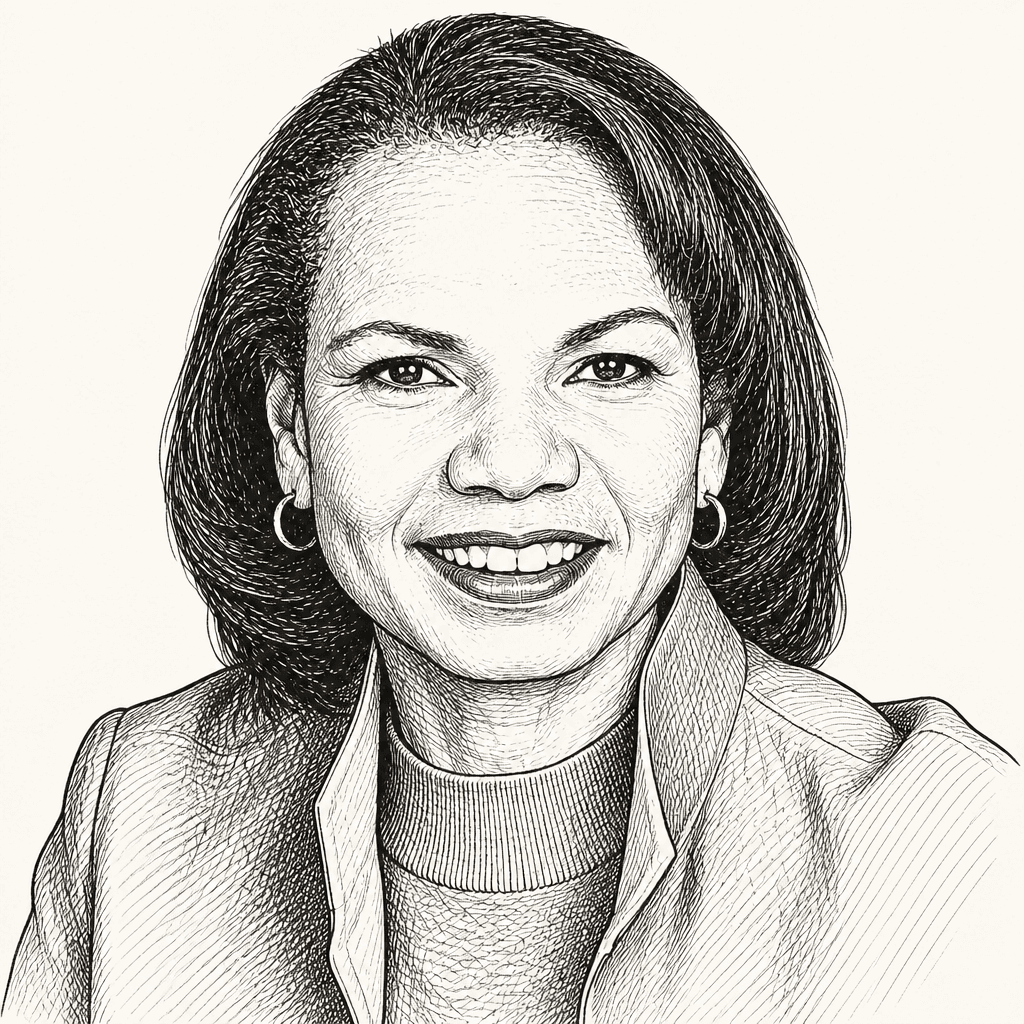
Condoleezza Rice
Condoleezza Rice is the Tad and Dianne Taube Director of the Hoover Institution at Stanford University, a Stanford professor, and a former U.S. secretary of state and national security advisor.
Indra Nooyi Says American Institutions Made Her PepsiCo Rise Possible
In a Hoover Institution conversation with Condoleezza Rice, former PepsiCo chief executive Indra Nooyi argues that her career was possible because of distinctly American institutions and culture: immigration, meritocratic opportunity, competitive markets, democratic rights, and civic obligation. Nooyi frames her rise from Yale student to Fortune 50 CEO not as a simple immigrant success story, but as a debt to a country that, in her view, welcomed her, tested her, and made contribution the price of gratitude.
AI Demand Turns Western Energy Abundance Into an Affordability Test
Condoleezza Rice opened Stanford’s 2026 State of the West symposium by arguing that the American West’s energy abundance is becoming a test of affordability, infrastructure, and public trust. Rice said AI and advanced computing are accelerating electricity demand, putting pressure on the grid and making household energy costs part of the politics of technological adoption. Her case was that the region’s resources, institutions, and policy choices must now align economic growth, energy supply, and environmental responsibility rather than treating them as separate questions.
NVIDIA’s GPU Bet Turned Parallel Simulation Into an AI Platform
In a Hoover Institution interview with Condoleezza Rice, NVIDIA founder and chief executive Jensen Huang argues that the company’s rise began with a contrarian bet that the CPU could not remain computing’s only serious architecture. He links that bet to a broader account of simulation, parallel processing, and artificial intelligence, while also making a civic claim: that NVIDIA’s improbable path, and his own immigrant story, depended on American institutions that supplied capital, talent, legal predictability, and tolerance for risk.
American Achievement Depends on Institutions That Reward Risk and Reinvention
Hoover Institution’s trailer for Only in America presents Condoleezza Rice’s interview series as an inquiry into why innovation, leadership, and reinvention recur in the United States. Through clips from Jensen Huang, Indra Nooyi, Tom Siebel, Mary Barra, Fei-Fei Li, and Yo-Yo Ma, the series argues that exceptional achievement depends not only on individual talent but on American conditions: freedom, opportunity, risk-taking, education, limited government, and a culture that permits people to change their circumstances.
Dollar Dominance Could Erode Without a Clear Successor Currency
At a Hoover Institution conference on central-bank independence and international risks, Condoleezza Rice, Arvind Krishnamurthy, Stephen Redding and Kenneth Rogoff argued that dollar dominance can no longer be analyzed apart from U.S. security commitments, fiscal policy, technology competition and trade frictions. The central claim running through the discussion was that the United States still benefits from a powerful reserve-currency position, but that privilege depends on confidence in safe dollar assets and stable institutions. Krishnamurthy quantified the reserve-currency asset as a large interest-rate benefit, while Redding and Rogoff warned that tariffs, fiscal strain and political pressure on the Federal Reserve could make erosion costly even without a clear successor to the dollar.