AI Demand Turns Western Energy Abundance Into an Affordability Test

Condoleezza Rice opened Stanford’s 2026 State of the West symposium by arguing that the American West’s energy abundance is becoming a test of affordability, infrastructure, and public trust. Rice said AI and advanced computing are accelerating electricity demand, putting pressure on the grid and making household energy costs part of the politics of technological adoption. Her case was that the region’s resources, institutions, and policy choices must now align economic growth, energy supply, and environmental responsibility rather than treating them as separate questions.
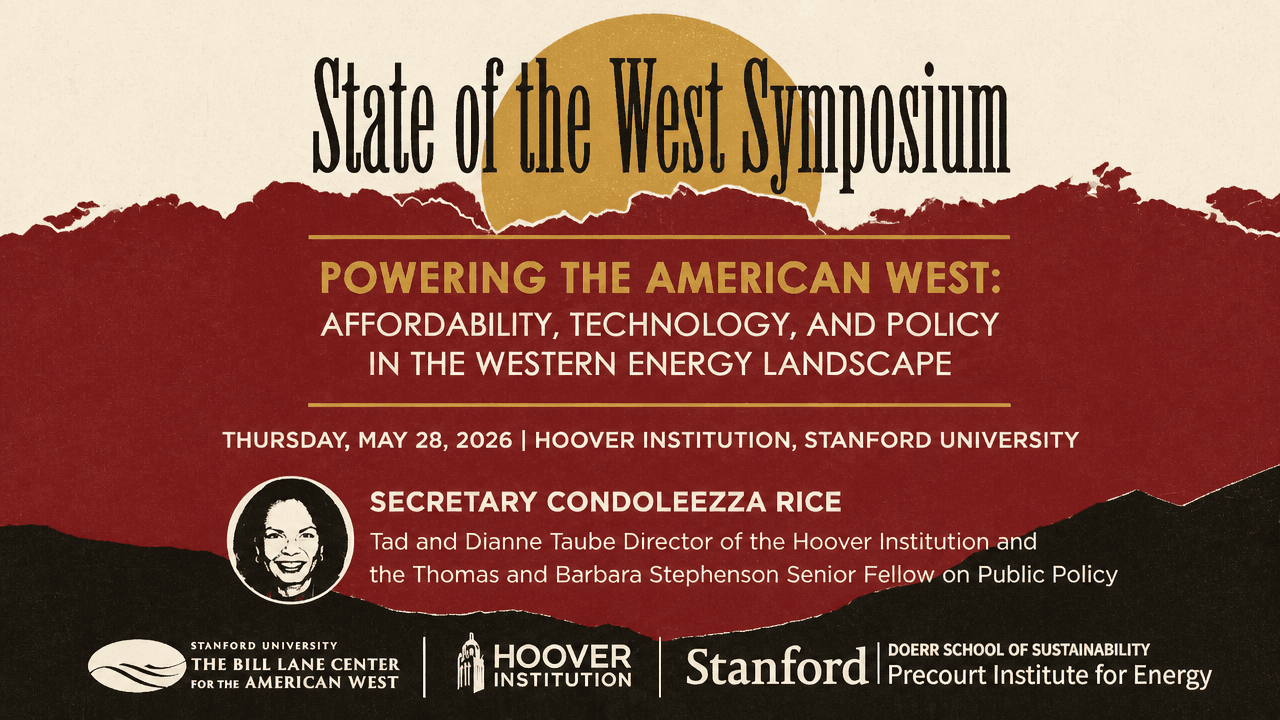
AI demand turns the West’s energy abundance into an affordability test
Condoleezza Rice framed the American West as one of the places where the country’s future energy needs will have to be met in practice. The symposium framing described the region as central to the U.S. energy landscape because of its renewable resources, oil and gas production, geothermal development, mineral resources, and transmission infrastructure. Rice’s sharper point was that abundance alone is not the issue now. AI and advanced computing are accelerating electricity demand, increasing pressure on grids, and reshaping how policymakers should think about infrastructure, policy, and energy security.
Rice described the present as “a time of extraordinary, rapid technological change.” She argued that the West has “a great deal to say” about how the country meets future energy needs because the region has long been defined by “resources and land and innovation and people.” The test she offered had three parts: economic growth, energy mix, and environmental sustainability. She called these the “3 E’s,” and said getting them right is becoming harder even as the West has significant opportunities to contribute.
We want to do it responsive to economic growth, we want to do it responsible to energy mix, and we want to do it responsibly to environmental sustainability.
For Rice, the energy question is broader than fuel supply. Growth, affordability, infrastructure, and environmental responsibility are interlocking constraints. The West’s role, as she presented it, is not simply to produce more energy, but to help work out how a high-demand technological economy can be powered without losing sight of costs and sustainability.
Public skepticism about AI is also an electricity-price problem
The most immediate pressure Rice emphasized was AI. Advanced computing is already reshaping energy demand, she said, and that makes the cost of electricity part of the politics of technological adoption. The concern is not only whether the grid can supply enough power, but whether households and communities will believe that new technologies are making their own energy bills unaffordable.
Rice said she is watching something about AI that troubles her: the American public is “more sour on AI than any population in the entire OECD,” which she glossed as developed countries. She attributed that skepticism to several messages Americans are receiving at once. They are told AI will take their jobs. They are told it will run up their electricity bills. And, as she put it jokingly, “Tron, the AI-powered robot, is going to eat you at some point.”
The joke carried a serious point about public fear. Rice told a story about a friend’s 11-year-old daughter who was unusually polite to her chatbot, thanking it warmly for its answers. When her father reminded her that the chatbot was not human and did not require politeness, the daughter replied: “Daddy, when they come for us, I want to be on the list of people who were nice to them.”
For Rice, that anxiety is a barrier to realizing what she sees as AI’s potential benefits. She pointed to drug discovery, healthcare, education, and industrial productivity as areas where AI could create major opportunities. But those opportunities cannot be separated from people’s concrete concerns about energy costs.
We do have to deal with some of the very real concerns that people have about, particularly, what it will do—and this is one of the subjects of this symposium—what it will do to the cost of the energy that they need in their lives.
Affordability is therefore central rather than secondary. If AI requires more power, and if Americans associate that power demand with higher household bills, the energy system becomes part of the public acceptance problem for AI.
The grid, nuclear power, and permitting are not separate questions
Rice grouped several policy and infrastructure issues together: the grid, nuclear power, permitting reform, and state and local decision-making. Rising demand from AI and other frontier technologies cannot be addressed only by inventing new tools or setting national ambitions. It also requires institutions capable of building, permitting, siting, and paying for energy infrastructure.
She singled out the grid as a central question: “what we must do about the grid” in light of AI-driven demand. She also said nuclear power needs to be brought “finally” back into consideration, describing it as having been “largely ignored for a lot of reasons.” She did not elaborate on those reasons in the remarks, but she placed nuclear energy among the practical subjects the symposium would examine, alongside permitting reform and policy frameworks.
State and local decision-making, in Rice’s account, is especially important in the West. Energy needs are often experienced locally, and people expect those needs to be met without costs moving beyond affordability. That creates a governance problem: the same energy transition that depends on large-scale infrastructure also runs through state, local, and community-level decisions.
The difficulty, as she described it, is that the hardest energy questions do not have easy answers. The aim of the gathering was therefore not to settle them in a single session, but to clarify “what the agenda must be” as the region faces a period she called both challenging and opportunistic.
The West’s institutional inheritance still matters, but as a resource for present problems
Rice placed the energy discussion in a longer Western setting. Stanford, she noted, is much younger than its eastern counterparts and was founded on Senator Leland Stanford’s farm. Herbert Hoover, whom Rice called “also a man of the West,” belonged to a tradition that saw the West as “in many ways the future of the country.” Rice’s point was not to dwell on history, but to connect the region’s resources, institutions, and appetite for innovation to a new demand shock.
She also widened the geography beyond the United States, saying the discussion should include “our friends in western Canada.” Her own attachment to the region was personal: born in Birmingham, Alabama, she recalled crossing the Kansas border as a six-year-old on the way to Denver, where her parents were going to graduate school, and thinking she “should have been born here.”
David Kennedy had set the institutional frame for the event as the 16th annual State of the West symposium organized by the Bill Lane Center for the American West, in partnership this year with the Hoover Institution and Stanford’s Precourt Institute for Energy. Rice thanked those institutions, including the Shultz Energy Policy Working Group and the Precourt Institute for Energy from the Doerr School, and described the Bill Lane Center as “a great jewel here at Stanford.”
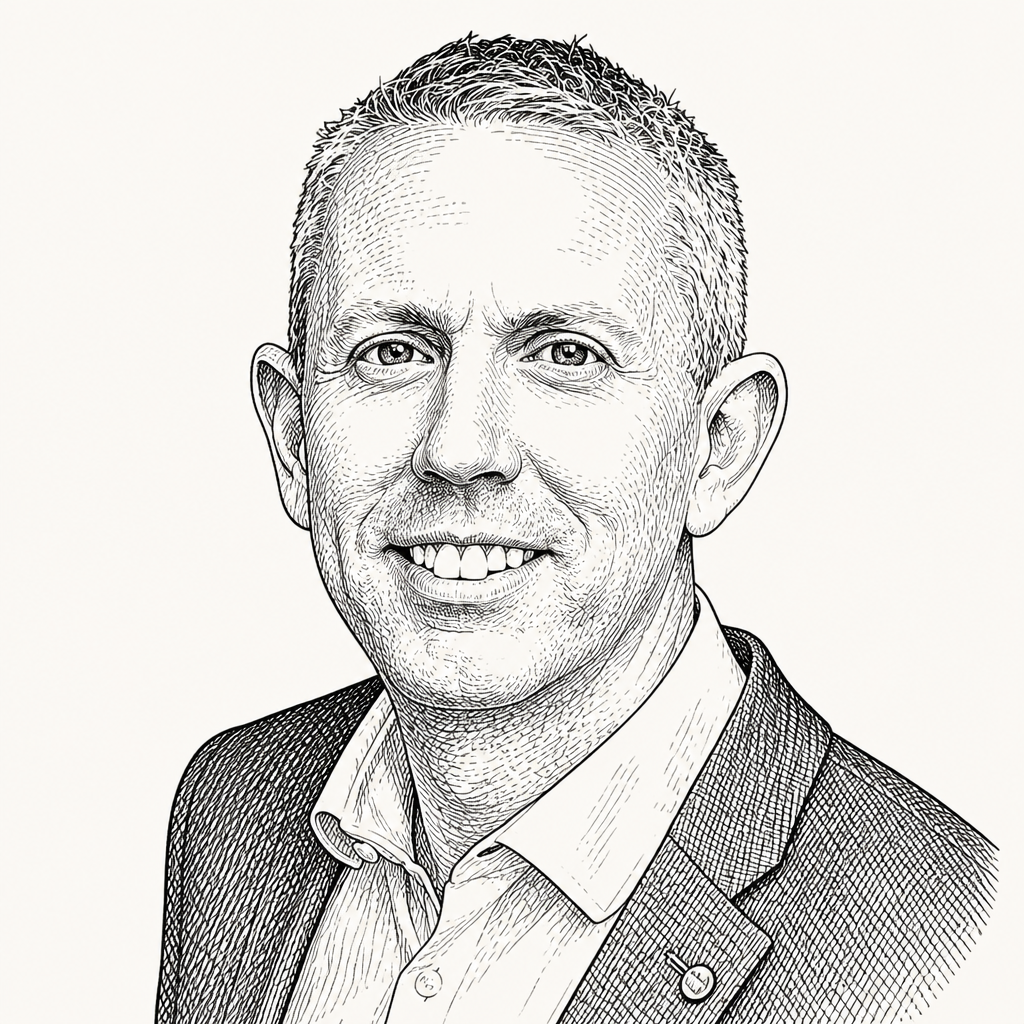

Rice presented the Hoover Institution’s role in this energy discussion as methodological rather than partisan. She said Hoover likes to think of itself as “data-driven, evidentiary-based, and indeed non-partisan,” and that on hard questions it can “shed more light than heat.”
The welcome became a policy frame with a sharper edge: the West has the resources and institutions to matter in the next energy system, but AI-driven demand, grid pressure, electricity affordability, permitting, nuclear power, and local decision-making all converge on whether the region can power growth without making energy feel less secure or less affordable to the people who depend on it.