Indra Nooyi Says American Institutions Made Her PepsiCo Rise Possible

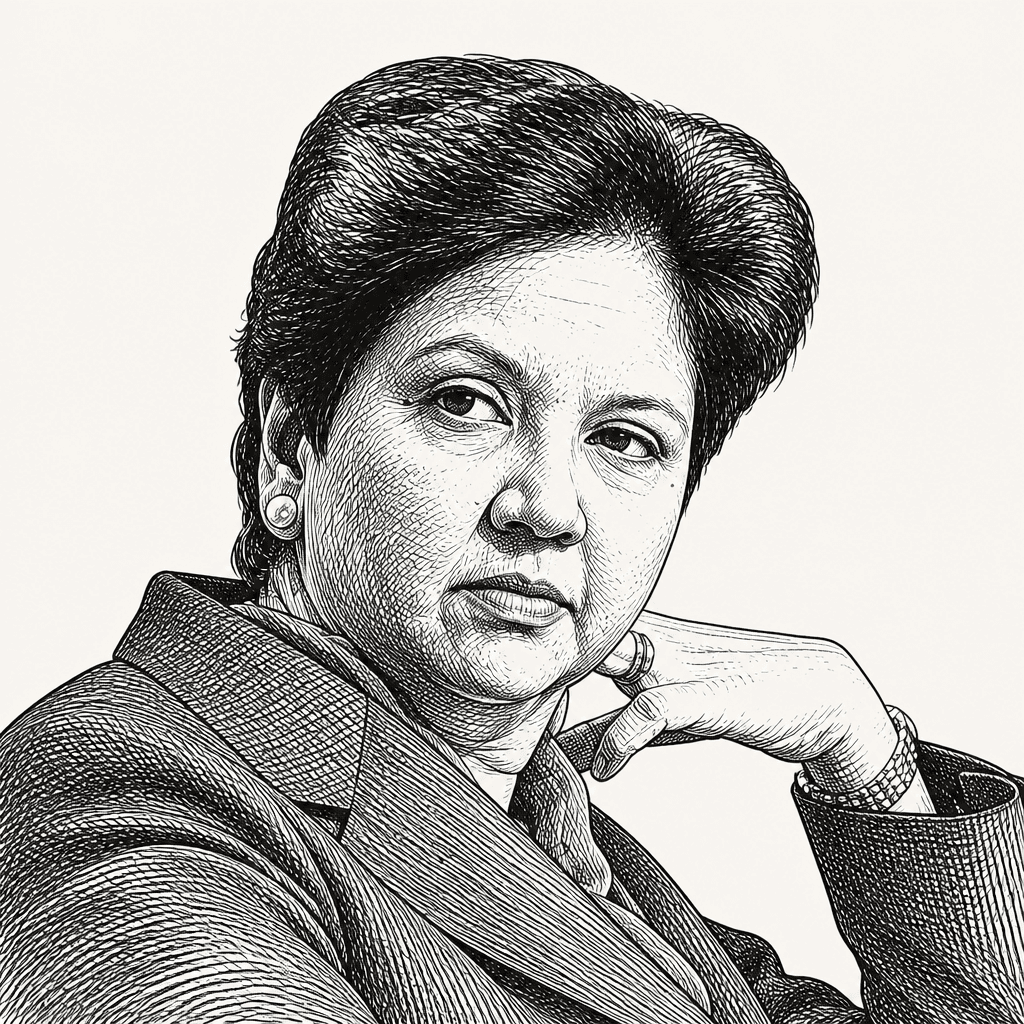
In a Hoover Institution conversation with Condoleezza Rice, former PepsiCo chief executive Indra Nooyi argues that her career was possible because of distinctly American institutions and culture: immigration, meritocratic opportunity, competitive markets, democratic rights, and civic obligation. Nooyi frames her rise from Yale student to Fortune 50 CEO not as a simple immigrant success story, but as a debt to a country that, in her view, welcomed her, tested her, and made contribution the price of gratitude.
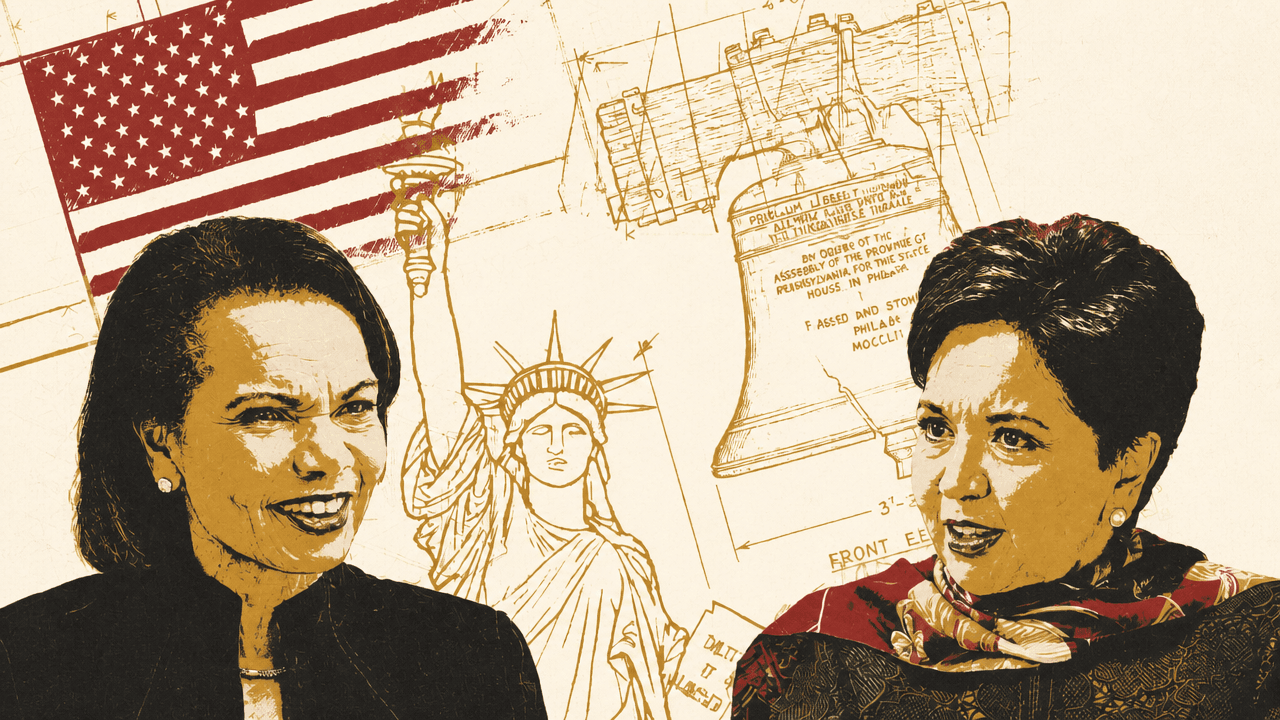
America made the rise possible
Indra Nooyi describes her career not only as personally improbable, but as institutionally American. An immigrant, she says, could arrive “with nothing in her pocket” and become chief executive of an iconic red, white, and blue company. She does not believe that would have happened anywhere else, including India.
I would never have been CEO in any other country of the world, including in India.
That is the ground beneath her gratitude to the United States. Nooyi came as a guest, as she puts it, and the country “welcomed me with open arms.” In return, she says, she felt obligated to live by its ideals and prove that the country had made the right bet on her.
Condoleezza Rice presents immigration as one of America’s enduring strengths: the attraction of talent seeking education and opportunity, and the contribution of immigrants to culture and the economy. Nooyi gives that argument a personal and operational form. America is not only a place that receives immigrants; she says it changes what they attempt. “Somehow when you come here, you change,” she says. People become more exciting, aggressive, transformational, and innovative. She cannot fully define the environmental cause, but she treats the effect as real.


New York becomes her example of that force. Its street-level energy, fashion, pace, and creativity make people want to become different. She contrasts it with Chicago, a city she loves, but says New York has an unmatched energy. For immigrants coming for education, she calls the United States “unbeatable versus any other country in the world.”
When Rice asks what Americans born in the United States may fail to see because they did not encounter the country as newcomers, Nooyi says she tells her daughters they have “no idea” how lucky they are. Her first example is technology and commercialization. Innovations may originate elsewhere, she says, but the United States is where they are commercialized and made consequential at scale. Technology matters when it is translated into something that changes the world.
Her second example is her own rise. She attributes it to what she calls a meritocratic system in which mentors were interested in “the best brains” rising to the top. The mentors who mattered, she says, did not care whether she was male or female, or what her ethnicity was. They cared whether she could do the work.
Nooyi’s conclusion to her daughters is not simply that they should feel grateful. It is that they are responsible for maintenance. If future generations see something wrong, she says, they should “go fix it” rather than only criticize what is not working. The spirit of the country, in her view, has to be kept alive by people who understand its rarity.
Leadership was an apprenticeship in being followed
Indra Nooyi treats leadership less as a title than as a long apprenticeship in earning followership. The old question of whether leaders are born or made, in her view, has a mixed answer: “a little bit” of leadership may be innate, but “a lot” is made over time.
The test is not charisma. It is whether people want to follow with conviction, “until you fall off the edge of the earth.” That kind of followership comes from the leader’s message, the way she approaches the work, and the way she motivates others. Nooyi compares the formation of a leader to training for the Olympics: observation, practice, experience, and being placed in situations where one must both follow and lead.
Leadership requires you to have people wanting to follow you.
Her advice to aspiring leaders is practical. Watch leaders closely. Follow them. Study the mistakes they make and how they recover. Look at how they shape agendas and persuade people to move with them. Learn their habits, not just their rhetoric.
Condoleezza Rice introduces the question from the perspective of students who tell her they “want to be a leader.” Rice’s answer to them is that leadership is not “a job description or a destination.” Nooyi’s answer completes the thought: leadership is an accumulated capacity, built through hard assignments, disciplined observation, and the ability to draw people toward a shared agenda.
Mentorship, for Nooyi, is central to that formation. But she rejects the transactional version of the idea. “Mentors pick you,” she says. You do not simply ask someone to become your mentor and expect the relationship to materialize. The mentors who shaped her often did so before she understood what they were doing. They pushed, pulled, corrected, and put her into difficult assignments because they believed mastery of those assignments would move her forward.
Nooyi describes herself as “a product of great mentoring,” from childhood in India through her career in the United States. In retrospect, she understands that some of the pressure she once experienced as punishing was actually developmental. The mentors who stretched her were testing whether she could perform at the next level.
The strongest mentors, she says, are not insecure. They understand that good mentorship may produce someone capable of taking their job. “I was a product of great mentoring and I took their jobs,” Nooyi says. The remark is pointed but not boastful; it is her definition of mentorship as succession rather than status management.
Rice adds that mentors often see something in a person that the person cannot yet see in herself. Nooyi agrees. Her account of leadership repeatedly returns to that pattern: the individual works hard, but institutions and mentors create the chances, standards, and tests through which the individual becomes visible.
The move to Yale began as a private bet
Indra Nooyi grew up in India in the 1960s and 1970s, a period she describes as early in the country’s post-independence life and one in which women were not yet a major force in public life. Most women, as she remembers it, stayed home. Her family was an exception. Her father and grandfather encouraged the girls in the family “to go out and conquer the world,” to dream beyond gender expectations, and to believe barriers could be removed rather than accepted.
As she describes that upbringing, family photographs from Nooyi’s personal archive appear: children, parents, grandparents, and a large extended family. The images reinforce the way she frames her departure. It was not a solitary rejection of family expectations; it emerged from a household that gave her unusual permission to imagine a larger life, even while her parents initially resisted the specific plan to leave.
Friends who had come to America told Nooyi that the United States was the “seat of innovation,” cultural advancement, and a “can-do” attitude. They told her that someone like her would thrive there. When she told her parents she wanted to go, their first response was disbelief. Her mother’s expectation, as Nooyi recounts it, was that she should get married.
Nooyi applied to the Yale School of Management without telling them. Yale had recently opened and appealed to her because it blended the public and private sectors. She was admitted, but initially without money. Her parents told her to put the letter away; they could not afford to send her. A second letter changed the decision. Yale offered loans and work-study support. Nooyi went back to her parents and told them they only needed to buy the airfare. “I’ll repay you in spades later on,” she said.
She still jokes that her parents’ willingness to let her go was “a character flaw,” because they allowed her to “sail the seas and go away from them.” But they did. They came to the airport, saw her off, and she left for Yale. The archival airport image shown during this passage places the decision in family terms: luggage, relatives, departure, and the beginning of a move that none of them could fully price at the time.
The United States she found, she says, exceeded even the most enthusiastic reports she had received. It was, in her words, “the most glorious country,” a seat of innovation, creativity, culture, and people who wanted to change the world. What had been word of mouth from friends became lived experience.
But Nooyi does not romanticize the arrival. She remembers landing at JFK, going to New Haven, and wondering whether she had made a mistake. America was quiet compared with India. India, as she describes it, was full of sound, people, and color. New Haven felt lonely. Yale, too, was socially difficult. There were not many international students, and especially not many students of color, in the School of Management. “I don’t think I fit in,” she says.
The students who felt out of place responded by working. Nooyi says the students of color “banded together” and were clear about why they had come: not for social life, but to study, earn strong grades, work hard, and get jobs. They were not invited to parties or Cape trips. They did not dress in ways that fit the environment. There were no counselors teaching them how to dress, speak, or interact. “We were the misfits,” she says.
Their status changed through academic performance. By the second year, other students wanted to be in study groups and projects with them. They came to be seen as “brainiacs,” whether or not the label was accurate. The shift was grounded in visible effort: Nooyi and others were studying while also working to make ends meet. She worked as a dorm receptionist from midnight to 5 a.m. The grueling nature of that schedule earned respect.
Rice asks whether that experience changed how Nooyi later looked at people who were talented but did not fit. Nooyi answers by distinguishing generations of immigrants. In the late 1970s and 1980s, many students from developing countries were still misfits in the United States. By the 1990s, the world had changed. Videos, global trade, more international exposure, and broader familiarity with American habits gave later arrivals more confidence and polish. Nooyi says she had courage and could debate, but did not feel good about how she looked or appeared. Students arriving later seemed more seasoned, more suave, and less insecure.
The conditions around immigrants changed. Nooyi’s own formation came through loneliness, awkwardness, work, and the slow conversion of competence into social respect.
At PepsiCo, the harder job was changing a company that was already winning
Condoleezza Rice notes that consumer brands have to innovate constantly because American consumers have so many choices. She recalls taking Russian émigrés to a grocery store and being asked which product was coffee. When she answered that they were all coffee, the question came back: “No, but which one is coffee?” The anecdote illustrates the abundance and competitive pressure built into American consumer markets.
Indra Nooyi says she inherited a PepsiCo portfolio of “fabulous brands” that had been built and invested in over decades. That strength created its own problem. None of the brands was in obvious crisis. She was not taking over an unsuccessful company that needed rescue. She was taking over a successful company and asking whether continuing to run it the same way would be enough.
Her answer was no. “Keeping a successful company successful,” she says, is more difficult than turning around an unsuccessful company. As president and then CEO, she looked beyond the company’s core to what was happening at the edges of the marketplace. There, she saw changes “nibbling away” at the core while the company remained narrowly focused on what already worked.
The response became a future-back rethinking of PepsiCo: how to change products, shift toward healthier offerings, make the business more environmentally acceptable, and create a workplace that could compete for talent against Silicon Valley, Wall Street, and consulting. PepsiCo’s “Performance with Purpose” framing appears in a 2007 annual report page, alongside product categories labeled “Fun For You,” “Better For You,” and “Good For You.” The same language appears again in a portfolio graphic and in a stage presentation behind Nooyi.
That language presents the transformation as portfolio strategy, not only CEO rhetoric. Nooyi describes the work as changing what PepsiCo sold, how it invested in research and development, which brands it bought, how it operated environmentally, and how it presented itself to employees who had other attractive labor-market options.
The transformation was not only strategic; it unfolded under unusual public scrutiny. Nooyi says that because she was the first woman of color to run a Fortune 50 company, there was “way too much focus” on her. Successes were underplayed, while anything that did not go right could be framed as evidence that she should never have been CEO. She describes an undertone in coverage or commentary that questioned whether she was capable.
Her board became the mentor-equivalent at that stage. According to Nooyi, directors told her they agreed with the strategy, believed it was the only way to run the company, and had her back. That support allowed her to keep transforming R&D, reshaping the portfolio, buying new brands, and searching for growth in a market growing only 2 to 3 percent.
Nooyi’s operating principle from that period is compressed into one line: “Growth is oxygen.” Innovation was the way to generate it. She defines innovation broadly: products, processes, platforms, and people practices. The goal was not to tighten an old machine, but to remake the company for the future.
That view of innovation is grounded in her career before PepsiCo as well. She describes moving from the Boston Consulting Group to Motorola, to Asea Brown Boveri, and then to PepsiCo. The industries differed—consulting, electronics, industrial equipment, consumer brands—but she says consulting taught her to understand value drivers and enter a new industry quickly. She did not go to PepsiCo intending to become CEO. She went intending to “nail this job.”
She warns that if someone becomes obsessed with becoming CEO in 10 years, the goal can displace the work. Her own pattern was to focus on doing the current job extremely well. Promotions sometimes surprised her. When she became CFO, she wondered whether she really wanted to leave strategy. Roger Enrico, then CEO, told her to get into the office and start as CFO on Monday.
Her work standard was severe. She says she was “never happy” with her output and always believed it could be better. She recognizes that pursuit of perfection may exact costs, because the endpoint keeps moving. But it also produced trust. Bosses would say that if Nooyi had looked at something, they did not need to see it, because they knew how much work she had put into it.
Immigrant fear made risk bearable
Indra Nooyi does not explain her choices mainly as appetite for risk. When Rice connects her willingness to leave India, attend Yale, and later transform PepsiCo to an American comfort with risk, Nooyi redirects the explanation. More than risk, she says, what propelled her was “immigrant fear.”
By that she means the fear of failing in a way that would bring shame to many constituencies at once. She did not want to let down women, women of color, immigrants, Indians, or her family. People were looking at her and hoping she would succeed. That weight made the risks larger, not smaller.
But the fear functioned as a propellant. It pushed her “to do better and better all the time.” She says it has not gone away even now. She still feels she must do the right thing because she came to the United States as a guest, was invited in, and must live by the country’s ideals.
The fear did not prevent risk. It made risk calculable. At times she knew she could lose her job. But she and her family lived simply enough that losing her income would not destroy them; they could live on one salary. That gave her room to fight for the changes she believed were necessary.
Nooyi celebrates America as a place that enables ambition, transformation, innovation, and mobility. Her own drive, though, was not produced by ease. It came from obligation, insecurity, and the pressure of representation. The opening America provided did not erase the burden of being first or visibly different. It made the burden worth carrying.
Democracy is slower than central control, and Nooyi still chooses the slowness
Condoleezza Rice turns the discussion from culture to institutions, asking Nooyi to reflect on the American constitutional order, especially as the country approaches its 250th anniversary. Rice distinguishes the revolution from the later creation of the Constitution and institutions that protect rights and sustain risk-taking.
Indra Nooyi says she has been reading books about past presidents and the country’s founding period, including David McCullough’s work. What stands out to her is the risk taken by founding leaders who were designing experiments that had never been tried before: writing a Constitution, writing the Bill of Rights, and asking a country to live by a code and framework it had never had. For every supporter, she notes, there were detractors. What she admires is the framers’ “sense of country.”
Her own political imagination was formed in India, which she describes as the only model of governance she knew before coming to the United States. She was born seven or eight years after Indian independence, in a free and democratic India emerging from 350 years of colonial rule. She says she does not know any model but democracy.
Nooyi sees the United States and India as natural partners: one the oldest democracy in Rice’s phrasing, the other the largest by population. India’s importance, she says, rests partly on demographics: 50 percent of its population is under 35. She also points to its English-speaking population, noting that in a country of 1.4 billion people, even 20 percent would be a large number—and she says the actual share is more than 20 percent. India, in her view, will be pivotal to the future through engineering graduates, software talent, AI workers, Indians, and the Indian diaspora.
| Nooyi’s claim | Her emphasis |
|---|---|
| India’s democratic position | Largest democracy by population |
| Demographics | 50% of the population is under 35 |
| Language | Large English-speaking population in a country of 1.4 billion |
| Strategic role | Pivotal in engineering, software, AI, and geopolitical competition with China |
The relationship, Nooyi says, requires empathy from both leaderships. American leaders should walk a mile in the shoes of India’s leader, and India’s leader should do the same with the United States. Each country must understand the other’s point of view before acting from pride or economic necessity.
China enters the discussion as both competitor and contrast. Nooyi argues that India becomes especially important if the United States remains in geopolitical competition with China. Given what she calls India’s “bad neighborhood,” she says it is critically important for the United States to “protect India” and allow democracy to thrive.
Nooyi complicates any simple picture of China as noncompetitive. In her experience, China is highly competitive internally. Companies compete aggressively through technology and new offerings, producing faster cycles of innovation. The United States, however, is “the most hyper-competitive environment,” where a company can die faster if it is not nimble and vigilant. China is competitive, but differently organized.
India, by contrast, is democratic and chaotic. Nooyi says China is relatively homogeneous and easier for a visitor to navigate. India is not one language or one religion; Rice underscores its diversity. Nooyi calls India “a chaotic country” and says “the beauty of India lies in its chaos.” Cows on the road are part of life; Indians learn to dodge them and continue.
Her comparison is unsentimental. She says she respects the Chinese system for pulling China into world-power status through central action. India is still struggling to become a world power, she says, because democracy rules. When everyone has a vote and a say, progress is slow. “But I’m glad it is that way,” she says.
Rice gives the institutional reason: authoritarian regimes lack a peaceful means to transfer power. Democracies are messy and cacophonous, but voters can decide they want someone else. Nooyi adds a concrete marker she says someone once pointed out to her: in any American town, there is always a courthouse; in any decent-sized Indian town, there is always a courthouse. In China, as Nooyi relays the observation, “there are no courthouses” in that sense because the government is both rule maker and decider. The visible judiciary, she says, gives people comfort that they have rights.
American civil society turns gratitude into work
Condoleezza Rice invokes Alexis de Tocqueville’s observation about Americans forming voluntary associations: people getting together not because the state compels them, but to do good. She connects that tradition to Nooyi’s post-PepsiCo work in philanthropy, the arts, and institutions such as Memorial Sloan Kettering.
Indra Nooyi answers from the towns and communities where she has lived, in Illinois and on the East Coast. She sees an “incredible sense” of town, community, neighborhood, state, and country. People band together to fix local problems: a library in decline, a park in disrepair, a crisis that requires collective action. No one has to force them. They act because they feel ownership.
Nooyi presents this as one of the distinct features of American life. She is careful not to claim it exists nowhere else; she says it may happen in parts of Europe, but she has not lived there in the same way. In her own experience, however, it has appeared “in spades” across many settings.
Her own post-CEO work is framed as repayment. After retiring as CEO, she felt she owed the country her time because the country had enriched her. She mentions teaching at West Point as “the most fulfilling learning experience,” and serving on boards including Memorial Sloan Kettering and the National Gallery of Art. If called to contribute, she says she will do it.
This is not separate from her immigrant story. It is the next stage of it. Nooyi’s gratitude toward the United States becomes a standard for civic behavior: count me in, I want to contribute too. She describes that impulse as infectious. Watching others give time and effort makes her want to step up.
Rice calls that sense of obligation to city, state, country, and fellow citizens “a beautiful part of being American.” In Nooyi’s telling, the obligation is also personal. She benefited from a system that made her rise possible; therefore, contribution is part of the life, not an optional supplement to achievement.
The crown stays in the garage
Indra Nooyi says the young version of herself could not have imagined the “dizzying heights” she reached. The path was beyond her vista. Coming to the United States and growing through each new experience felt like “being a kid in a candy store.” Each stage brought surprise.
But she says she kept one foot planted, and her family helped make that possible. Her mother’s line became an anchor: “I don’t care if you’re a big shot, leave your crown in the garage.” At home, Nooyi was still mother, wife, daughter, and daughter-in-law. The point was not to diminish achievement but to prevent it from devouring identity.
She also kept returning mentally to her immigrant roots: how little she arrived with, the difficult moments, the people who helped pull her through them, and the people who celebrated the good times. That reflection informs how she wants the life to be understood.
She does not want the final interpretation to be only that she became CEO. She says she earned her way into that role, but also mentored people, pushed and pulled people up, contributed to society, and responded when communities or institutions called on her. The aspiration is that people see “a life well lived” and “a life amply contributed to.”
I became CEO, I earned my way into being CEO, and along the way I mentored people, I pushed pulled people up, I pushed people. I contributed to society, I contributed to my community.
Condoleezza Rice calls Nooyi “an American story,” someone whose path illustrates why many people have stories that could only have happened in America. Nooyi closes by invoking the idea that only in America can one “dream in red, white and blue” and have the freedoms to pursue that dream.
The final on-screen quotation returns to her central claim of gratitude: “I am genuinely grateful to the United States because I came as a guest, and the US welcomed me with open arms.” For Nooyi, that gratitude becomes discipline, risk, institutional loyalty, mentorship, innovation, civic service, and a demand that future generations repair what needs repair rather than merely inherit the country’s advantages.