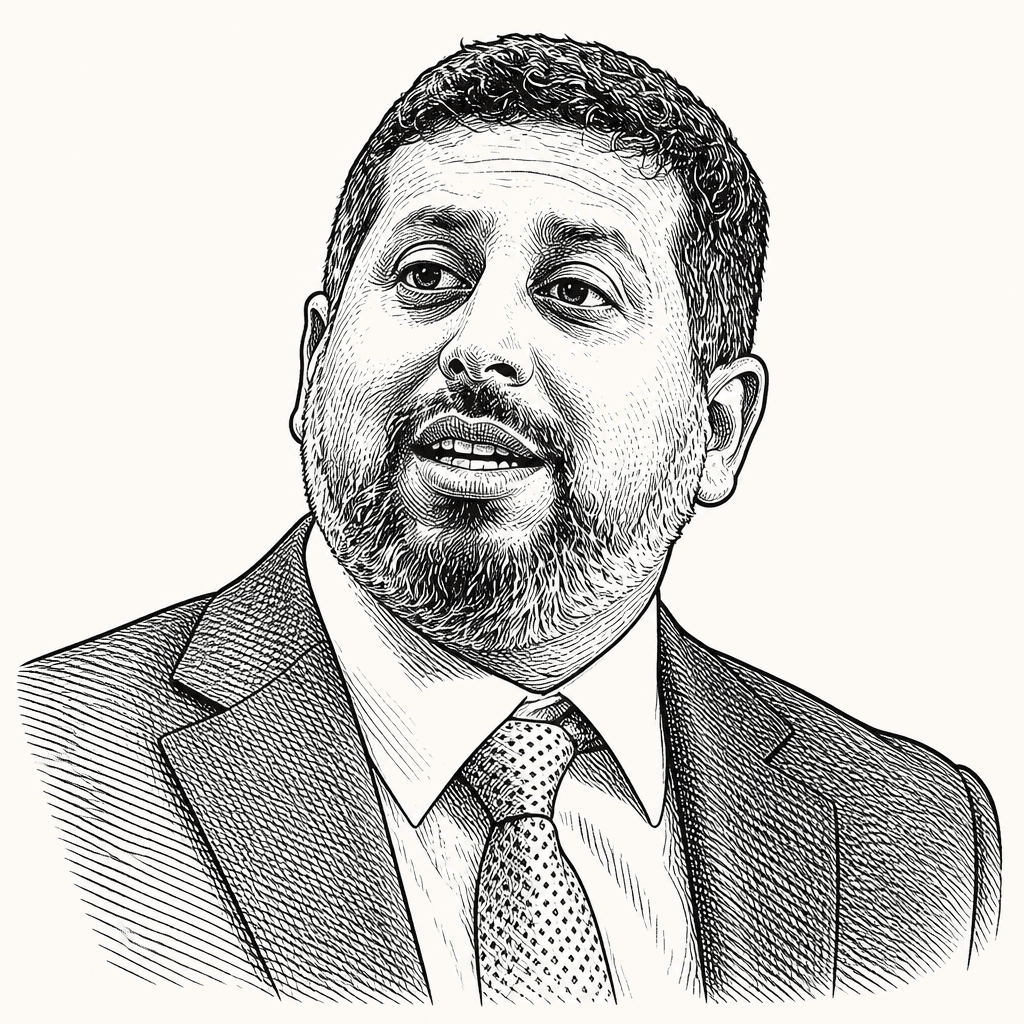
Vilas Dhar
President and Trustee of the Patrick J. McGovern Foundation, Vilas Dhar is a technology and philanthropy executive focused on human-centered AI, data for social impact, and AI governance for the public good.
AI’s Creative Promise Is Moving People From Consumption to Authorship
In a closing reflection at Shared Futures: The AI Forum, Patrick J. McGovern Foundation president Vilas Dhar argued that AI’s creative significance should be judged less by what machines can produce than by whether they help people recover agency as makers. Drawing on performances from the forum and a childhood memory of communal singing in India, Dhar framed the risk as passivity: a culture in which creativity is professionalized, distributed and consumed rather than shared. His cautious optimism was that AI could widen participation if it gives people without technical skills new ways to write, sing, build and imagine.
AI Distrust Makes Human Agency the Central Cultural Question
Opening Shared Futures: The AI Forum, Vivian Schiller of Aspen Digital and Vilas Dhar of the Patrick J. McGovern Foundation argued that public distrust of AI is not an obstacle to the conversation but its starting point. Schiller framed AI as a contested tool that can either feel imposed on people or be used by artists and makers with agency; Dhar said the deeper issue is not the technology itself, but how people turn fear of replacement into meaning, art, and shared experience.
Pope Leo XIV Frames AI Governance as a Test of Human Dignity
Pope Leo XIV’s first encyclical, Magnifica Humanitas, argues that artificial intelligence should be judged first by its effects on human dignity, agency and power, not by its technical promise. In a panel moderated by Vivian Schiller, Vilas Dhar, Kim Daniels and Josh Good read the document as an effort to bring Catholic social teaching into AI debates over work, education, autonomous weapons, institutional accountability and the moral limits of markets and technology.
Pope Leo XIV’s AI Encyclical Ties Safety Rules to Human Dignity
A panel convened by Aspen Digital treated Pope Leo XIV’s first encyclical, Magnificent Humanity, as an authoritative Catholic intervention in AI governance rather than a narrowly theological text. Kim Daniels, Vilas Dhar, and Josh Good argued that the document judges AI by its effects on human dignity, especially for workers, students, creative professionals, and vulnerable communities, while pointing to safety regulation, retraining, and education as practical tests. The unresolved problem, Daniels said, is whether the Church can move that teaching from Rome into parishes, civic institutions, classrooms, and technology work.