AI’s Creative Promise Is Moving People From Consumption to Authorship
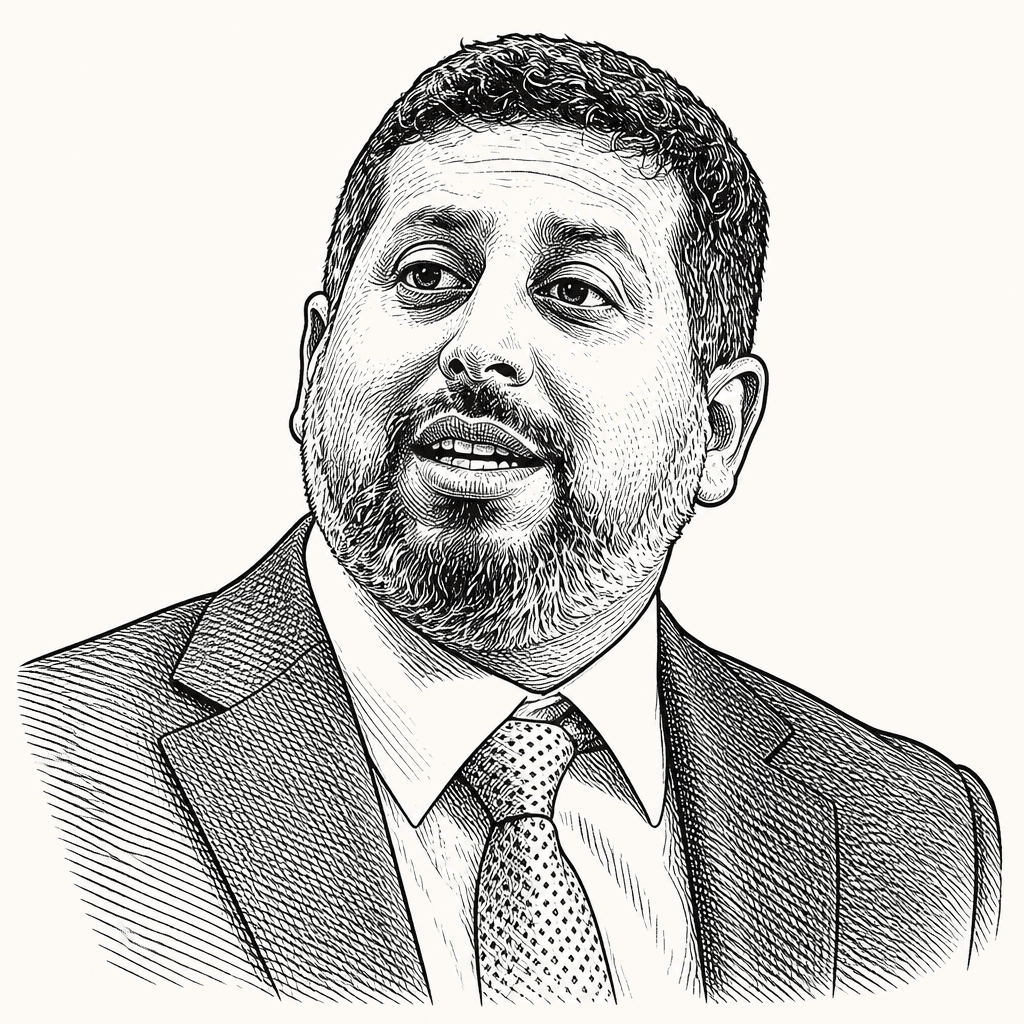
In a closing reflection at Shared Futures: The AI Forum, Patrick J. McGovern Foundation president Vilas Dhar argued that AI’s creative significance should be judged less by what machines can produce than by whether they help people recover agency as makers. Drawing on performances from the forum and a childhood memory of communal singing in India, Dhar framed the risk as passivity: a culture in which creativity is professionalized, distributed and consumed rather than shared. His cautious optimism was that AI could widen participation if it gives people without technical skills new ways to write, sing, build and imagine.
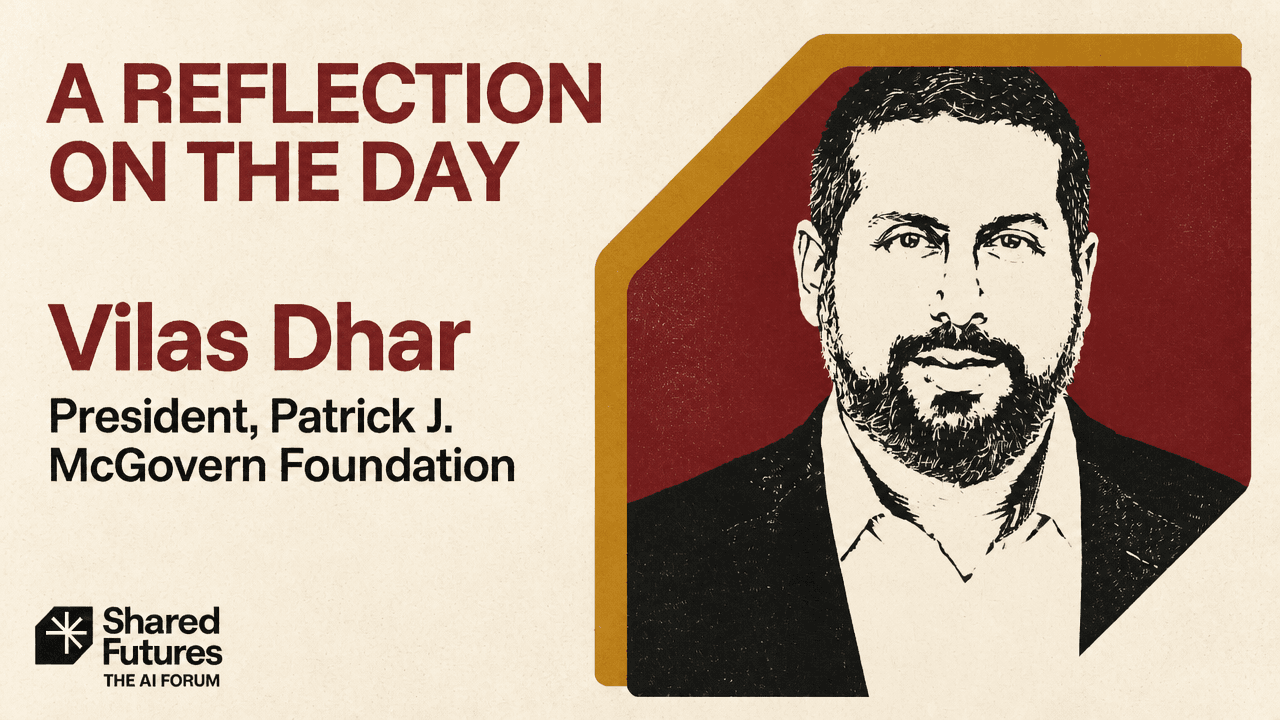
AI’s more interesting promise is participatory creativity
At Shared Futures: The AI Forum, framed on screen as a 2026 gathering of Aspen Digital and the Patrick J. McGovern Foundation, Vilas Dhar closed the day with a provocation: the central question around AI and creativity is not whether machines can generate impressive artifacts, but whether people can use these tools to feel more agency over what they make, share, sing, write, and build.
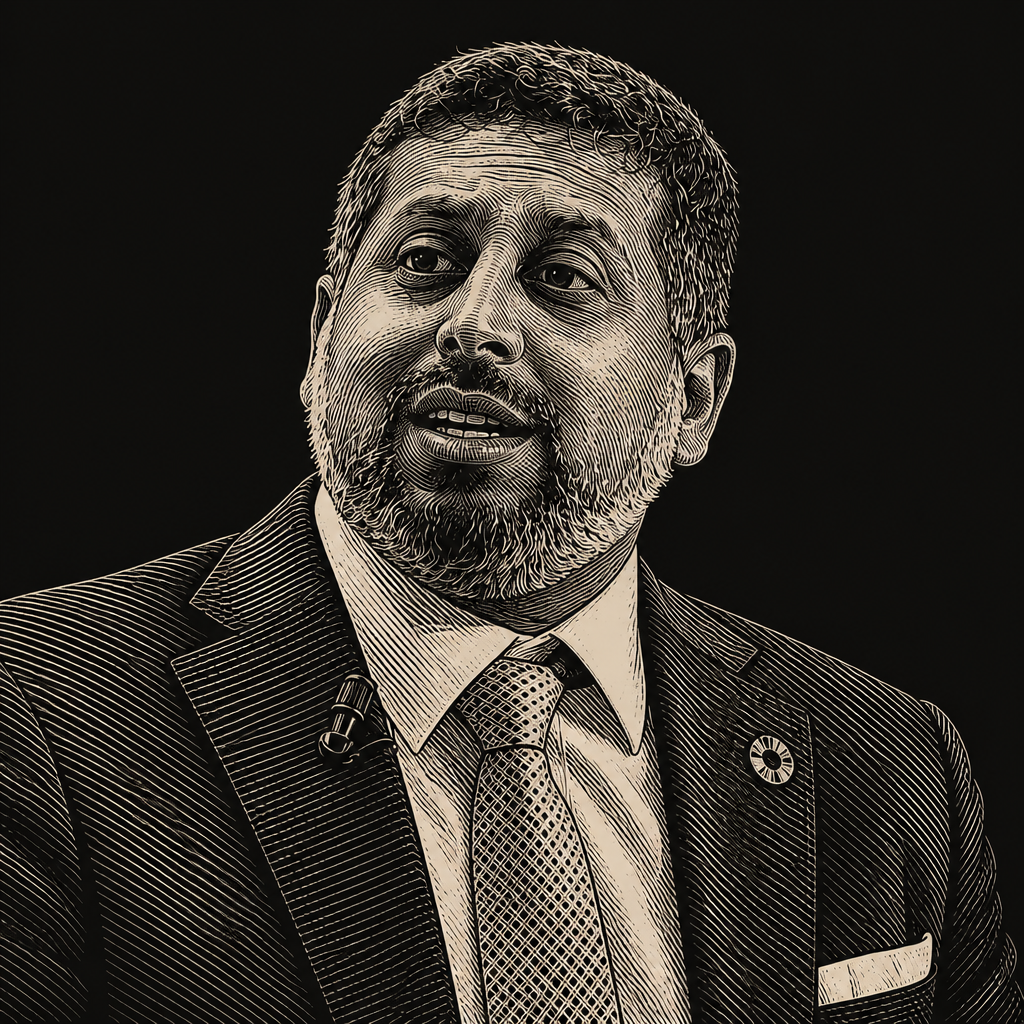
Dhar drew the distinction through a performance from the prior year’s Shared Futures gathering in Washington, D.C. The pianist AyseDeniz Gokcin played Vivaldi with an AI-generated version of Vivaldi, trained on the composer’s music. Dhar called it “a duet with the dead,” but the point was not simply that AI could imitate a composer or produce a plausible musical counterpart.
The artist’s role mattered more: her posture at the piano, her hands, her intensity, and her choices about what to accept from the AI system and what to push back on. The machine had “provided a ghost,” he said, but Gokcin made the result human. The performance became an example of how AI’s creative value depends on human judgment, refusal, discipline, and feeling.
She took a machine that had provided a ghost and she turned it into music that was so human.
That same idea carried through Dhar’s reflection on the day’s performances and discussions. Artists at the forum had shown different ways of interacting with machines, including work with robots and performances that made the audience want to move. He singled out Manon and Reggie as having turned “absurdity into a heartbeat,” and described other artists as speaking “from the soul” about writing for people and conveying lived experience.
The examples were not treated as demonstrations of AI replacing creative presence. They were cases where artists shaped machine capabilities into human expression.
The loss Dhar worries about predates AI
Dhar’s concern was not that AI suddenly introduced a new threat to creativity. He placed the problem further back, in the shift from creativity as a lived communal practice to creativity as something distributed, consumed, and scrolled.
He illustrated the older model through a childhood memory of visiting family in a rural part of India, in a village without electricity, internet connectivity, or running water. After days spent walking through villages and talking with people, he remembered returning to an open-air home near the center of the village. At sunset, as cowherds and goatherds brought animals back, his grandmother would sit on the porch and begin singing. Because no one else made a sound, her voice cut through the stillness. Then women across the village would begin singing together, turning the moment into a form of community.
For most of human history, Dhar said, creativity was not something people consumed through screens or algorithmic feeds. It happened on porches, in living rooms, in classrooms, and in places of worship. It was embodied and shared. It was a way of taking the complexity of the world and making it one’s own.
The digital age changed the scale and economics of cultural distribution. Dhar acknowledged the achievement: recordings could carry music made in one place around the world; film could receive hundreds of millions of dollars in investment and produce stories shared across a society. But that expansion may also have carried a cost. As professional media became more powerful and ubiquitous, people may have lost the sense that creativity belonged to them too. The lesson many absorbed, in his formulation, was: “Let somebody else create, you can consume.”
That is the world Dhar said he does not want to inhabit. His critique was not anti-technology; it was anti-passivity. The danger was a culture in which ordinary people experience themselves primarily as audiences rather than participants in creative life.
The amateur becomes a creative ideal
The word Vilas Dhar used to resist that passivity was “amateur.” It is often used dismissively, to distinguish people without professional status from those with recognized expertise. Dhar emphasized its root meaning: to love.
For Dhar, the amateur is not defined by incompetence. The amateur creates without station, commission, or mandate. People make things because they love an idea, a sound, a memory, or something that stays with them. More importantly, he said, they create because they love one another. Creativity becomes a means of sharing oneself with others and giving them an experience that matters.
We make things because we love.
Dhar briefly placed this within AI policy and “so many other decisions” now being made about what is happening in the world, but he did not offer a policy program. He returned to whether the tools being built can support agency and ownership, rather than reinforcing the pattern in which others create and everyone else consumes.
He was careful not to present himself as a naïve technology booster. “I’m no tech bro optimist,” he said, while also insisting that he remains an optimist. His optimism was not that AI systems will automatically produce good outcomes. It rested on a possibility: that people could use these tools from a place of love and agency.
The test was what AI might do for people who have vision but lack technical skill. Dhar named the parent, schoolteacher, preacher, poet, student, and young person who might say: I can create; I may not have the technical skills, and AI can give that to me, but I have a vision of what I want to see happen in this world. If that kind of person can participate more fully in making, writing, singing, building, and imagining, AI could help return creativity to everyday life rather than further concentrating it.
The forum’s closing frame was communal rather than technical
Vilas Dhar placed the event itself inside this argument. Shared Futures was “not really a conference,” he said, adding that he hates conferences. He described it instead as a celebration: of the artists on stage, of the community in the room, and of the wider world participants might build together.
His acknowledgments reinforced the same emphasis. He thanked Aspen Digital, the Patrick J. McGovern Foundation team and trustees, the Time Center staff, production and AV teams, catering staff, and Vivian Schiller, whom he described as a partner, friend, “co-conspirator,” and “partner in crime.” Of the McGovern Foundation team, he said their mission had “nothing to do with AI but about building a human future for us.”
The close returned to social continuity: more food and drink, a surprise closing session, a reception afterward, and a hope that the conversation would continue. Dhar left AI situated not as a standalone marvel, but as something to be judged within human contexts of performance, community, memory, love, and shared creation.