Pope Leo XIV Frames AI Governance as a Test of Human Dignity
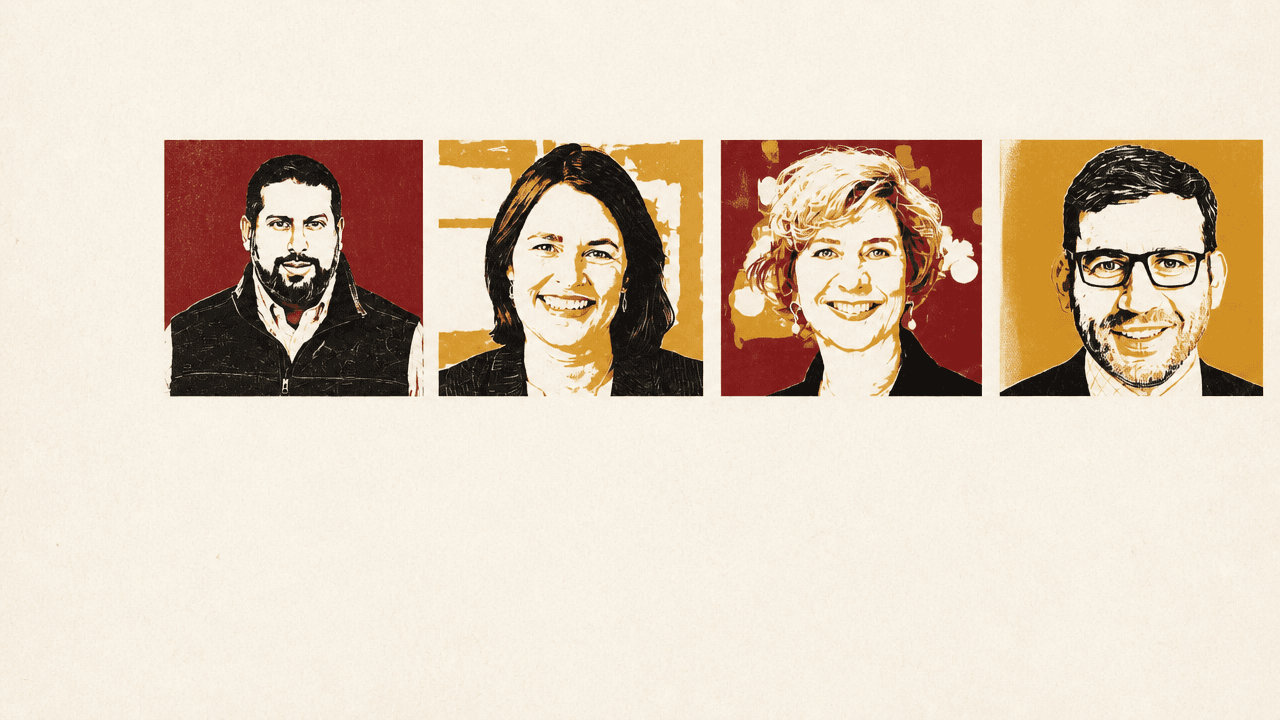
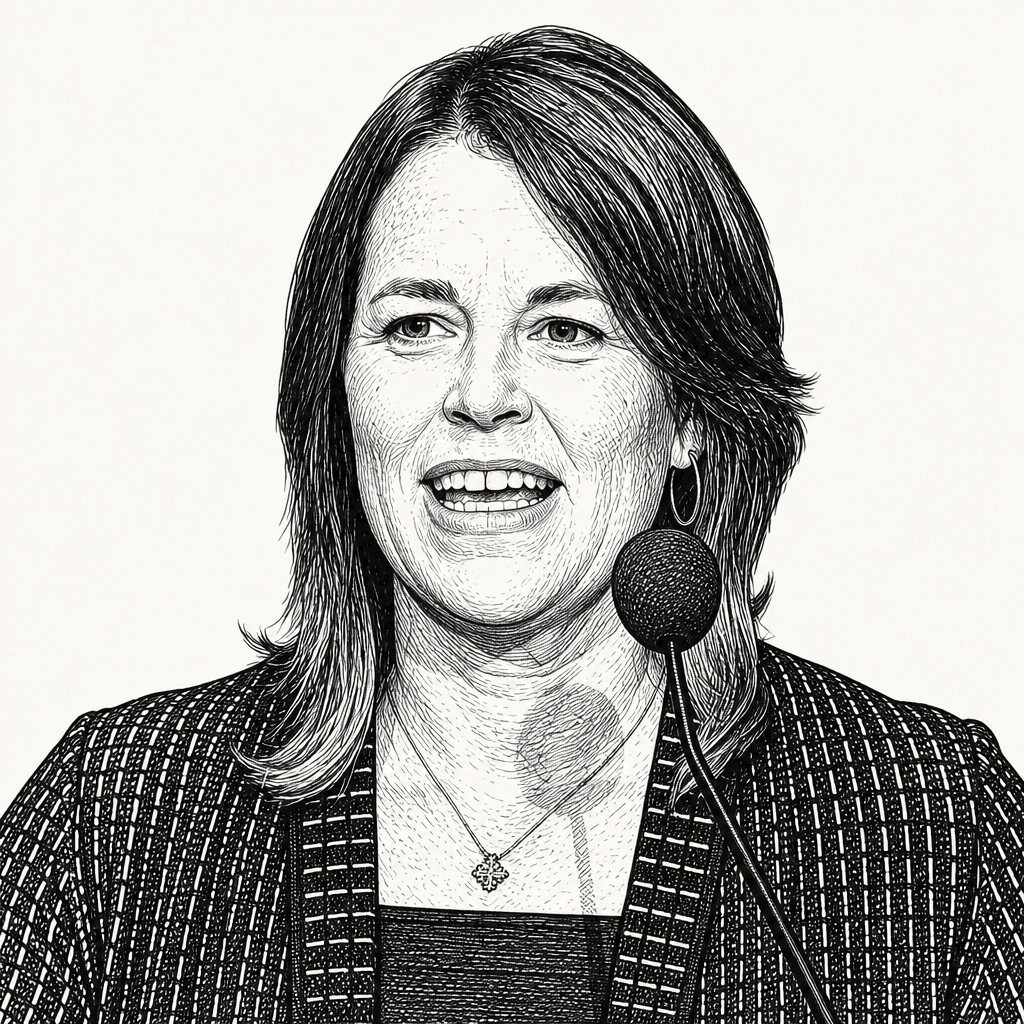 Kim Daniels
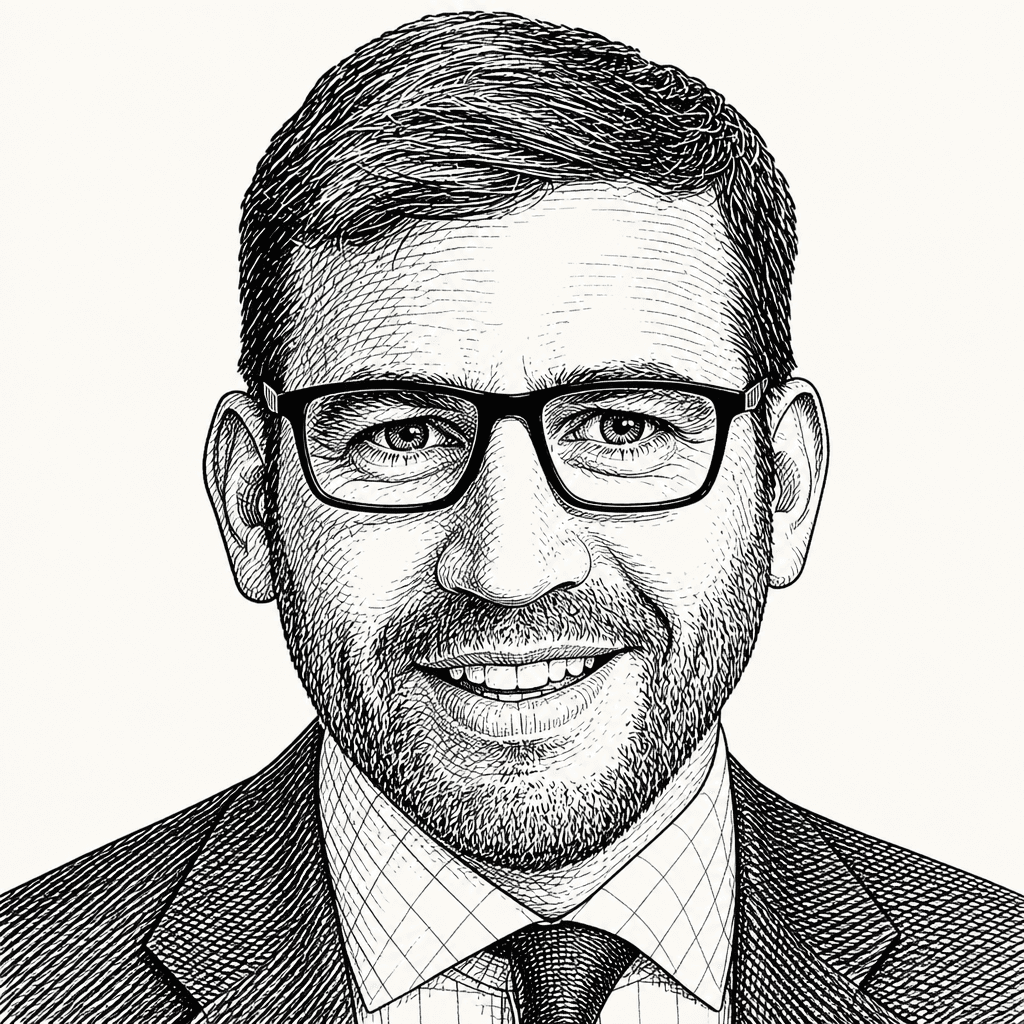 Josh GoodSaad Yaqub
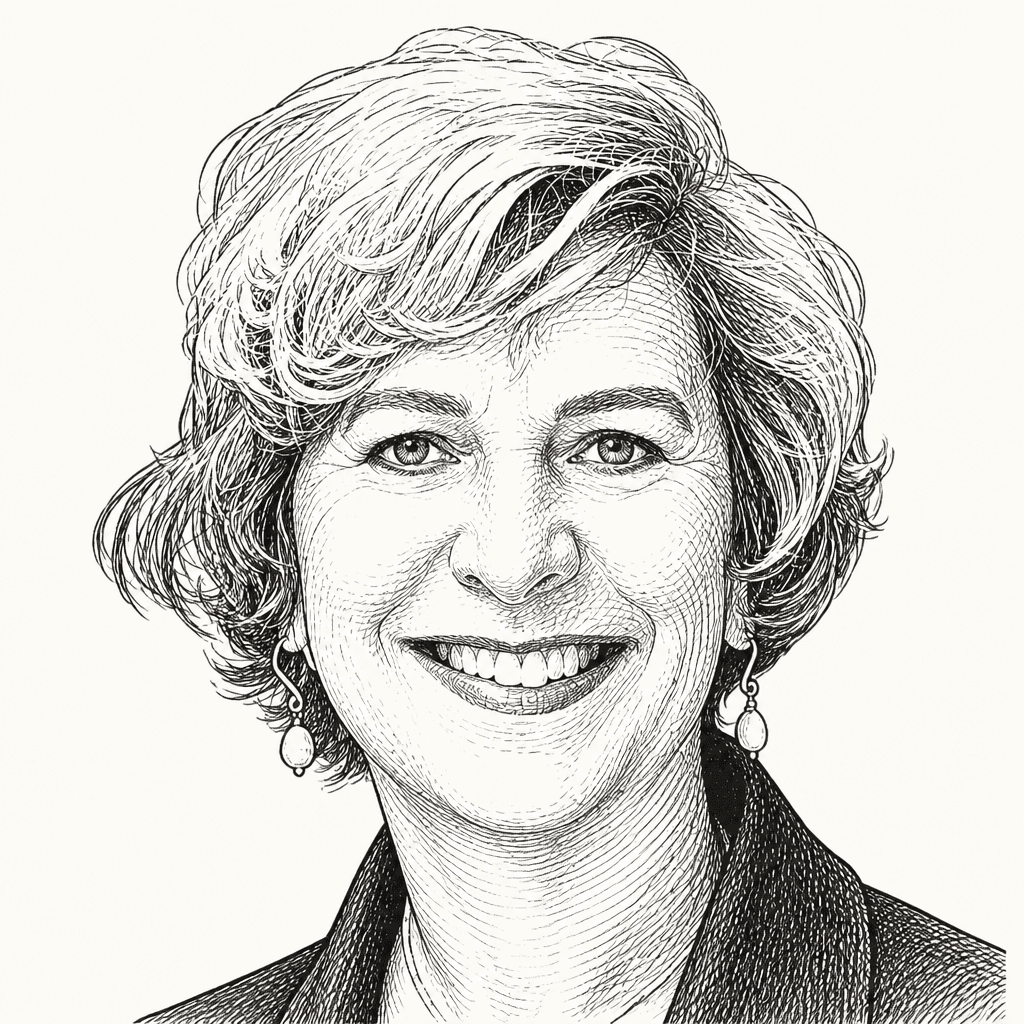 Vivian Schiller
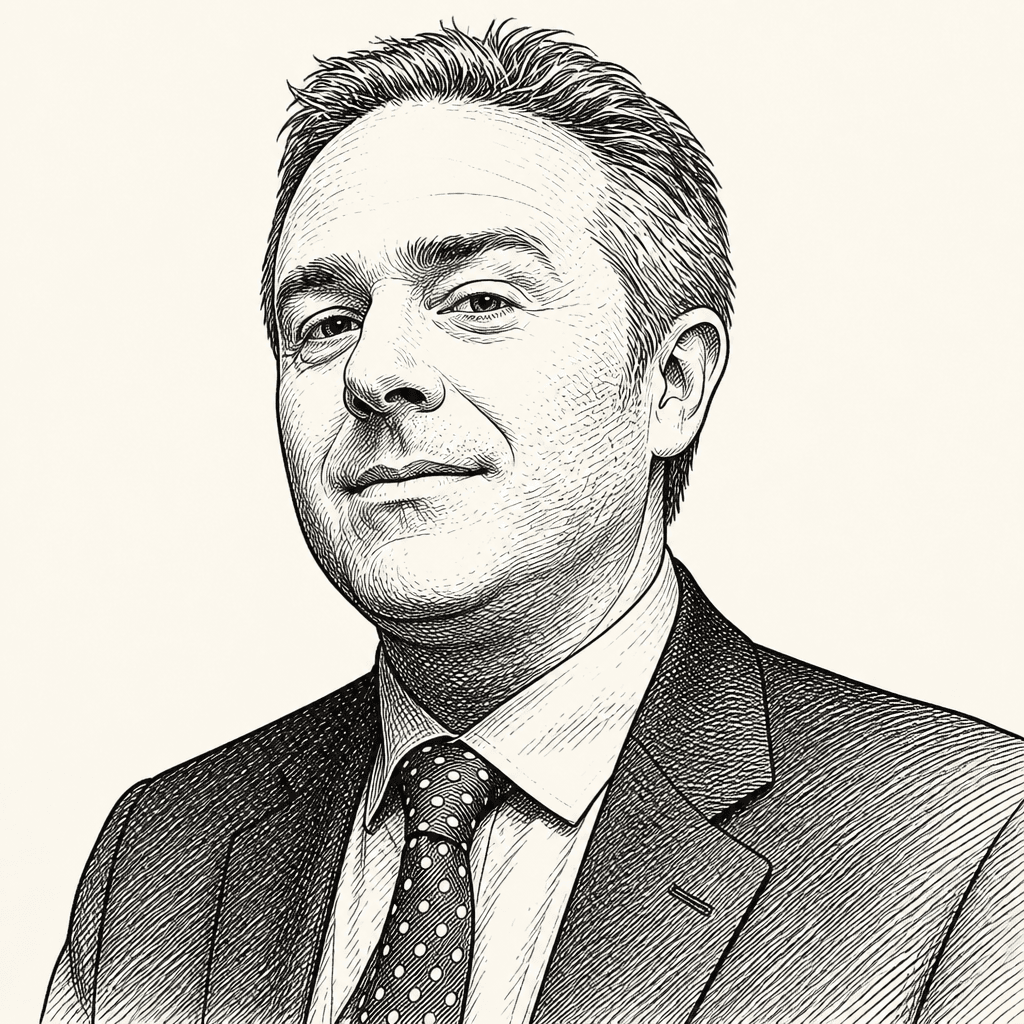 Edward Luce
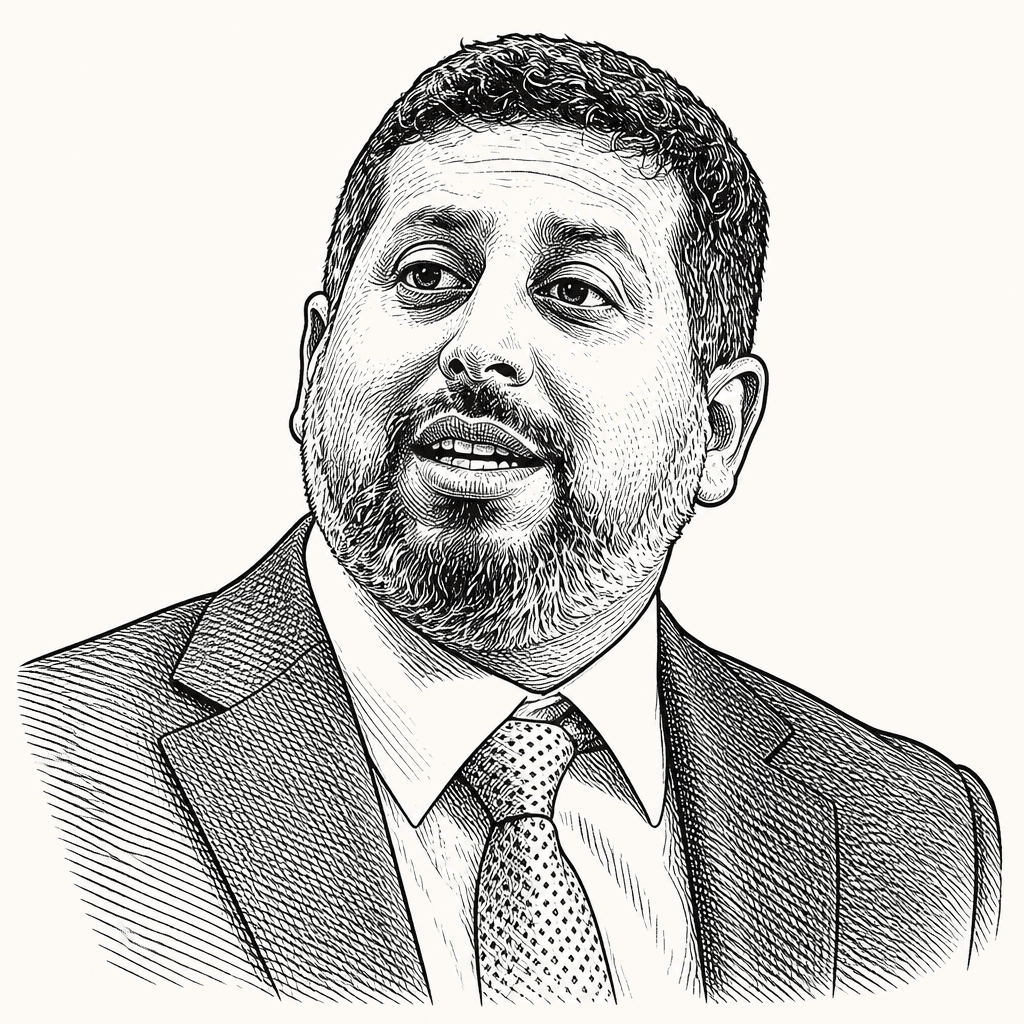 Vilas DharThe Aspen InstituteMonday, June 1, 202618 min read
Pope Leo XIV’s first encyclical, Magnifica Humanitas, argues that artificial intelligence should be judged first by its effects on human dignity, agency and power, not by its technical promise. In a panel moderated by Vivian Schiller, Vilas Dhar, Kim Daniels and Josh Good read the document as an effort to bring Catholic social teaching into AI debates over work, education, autonomous weapons, institutional accountability and the moral limits of markets and technology.
The encyclical treats AI as a question of power before it treats it as a question of software
Pope Leo XIV’s first major encyclical, Magnifica Humanitas, was read by Vilas Dhar less as a technology-policy document than as a moral account of power: who controls, builds, and designs the economic, political, moral, and religious frameworks through which society is being remade.
Dhar, who leads the Patrick J. McGovern Foundation, said the document’s references to algorithmic bias and the structures of AI matter, but he treated them as part of a larger problem. The underlying issue, in his account, is not simply whether a system is technically capable or efficient. It is whether people have agency over the frameworks now being constructed around them, and whether those frameworks are governed by dignity, love, and common purpose rather than productivity, profit, or control.
I don't actually think it's about AI at all. I think it is an actual reformulation of the fundamental moral clarity of how we should think about power.
That distinction shaped Dhar’s reading of the encyclical. AI tools can be useful; no one treated usefulness as the hard question. The harder question is whether human beings retain authority over the conditions under which these tools are designed, deployed, governed, and trusted.
Dhar said the pope had taken years of civil society advocacy and academic thought and placed them in a single moral and religious frame. That frame, he argued, is more intuitive and more human than languages built around code, optimization, productivity, or efficiency. It gives people a way to reclaim ownership and agency “through the lens of morality” in a moment when many feel powerless before the speed and scale of technological change.
Vivian Schiller introduced the encyclical by quoting one of its broadest formulations: “technology has the power to heal, connect, educate, and protect our common home, but it can also divide, exclude, and generate new forms of injustice.” For her, that line captured the document’s basic tension. The pope is not offering a rejection of technology as such. He is asking what technology does to human dignity, common goods, and human agency when it is built and governed under present conditions.
The document’s subtitle, Josh Good noted, is “The Time of Artificial Intelligence.” Good compared the moment to Pope Leo XIII’s 1891 encyclical Rerum Novarum, written several generations into industrialization, after its effects on factories, children, and workers were already visible. Pope Leo XIV, by contrast, is speaking earlier in the AI transformation. Good saw both strength and weakness in that timing. The encyclical is a strong warning from a new pope; it is also speaking about a subject that is difficult to define and changing quickly.
Good emphasized that the document itself acknowledges that instability. It says any statement about AI risks becoming outdated and that no single comprehensive definition of AI is possible. In Good’s formulation, the pope brings “moral religious clarity” to a subject that “isn’t terribly clear.”
That uncertainty does not leave the document empty of concrete concern. Good’s inventory included news and information, education, jobs, children, privacy, war, weapons, cybersecurity, cryptocurrency, mental health, criminal activity against minors, and autonomous weapons. The breadth is part of the point for the panelists: AI, in their reading, cannot be treated as morally neutral, and its effects cannot be left only to those with the greatest technical, financial, or political leverage.
Dhar rejected the usual technology-governance binary: either companies govern themselves or governments govern them. The starting point, he said, should be what “we, you and I, individually and together,” want the world to look like. Governance therefore requires more than institutional design. It requires moral traditions, technological knowledge, democratic participation, and people capable of saying what they believe to be right.
Catholic social teaching is presented as a living tradition, not a retreat from public life
Kim Daniels described an encyclical as authoritative church teaching, but not a message addressed only to Catholics. It is written, in the traditional phrase, to “all people of good will” and offered in a spirit of dialogue with civil society, political systems, corporations, individuals, and communities around the world.
That matters because it answers the predictable objection that the Church should stay out of AI. Daniels’s answer was that the Church is not entering public questions from the outside. Catholic social teaching is already a tradition of engagement with labor, markets, poverty, war, family, education, human rights, and the common good. Catholics, she said, are “not a quietist faith.” The Church is called to be “in the mix.”
Daniels placed Magnifica Humanitas in the modern Catholic social teaching tradition that began with Leo XIII’s Rerum Novarum. That 1891 document responded to the Industrial Revolution by defending the dignity of work and laborers while rejecting both an absolutized market economy and a fully planned economy as adequate accounts of society. Leo XIV’s choice of name was itself a signal, she said: he took the name Leo in reference to Leo XIII and then identified AI and the digital revolution as the “new thing” of the present age.
Good said the encyclical’s first third to half rehearses many of Catholic social theory’s major themes: subsidiarity, solidarity, dignity of work, family, school, diplomacy, postwar dialogue, and the idea that church social doctrine unfolds over time rather than standing still. Schiller suggested that this opening section also functions like “pre-bunking”: a way to establish the Church’s long record of speaking to social and human rights questions before critics tell the pope to stay in an ecclesial lane.
Daniels agreed with the substance of that point. Pope Leo is reminding readers that the Church has been part of these conversations for a long time and that engagement with the world is central to its identity. The document is not a claim that the Vatican has become a technical authority on AI. It is an effort to bring technical, civil society, and academic inputs into a moral framework centered on dignity and the common good.
Daniels stressed that the Vatican has been learning from others for years through efforts she named as the Minerva dialogues and the Rome Call for AI Ethics. The Church’s role, as she described it, is not to present itself as a technology leader. It is to listen, gather, judge, and teach from within a tradition that has a moral vocabulary for human flourishing, social obligation, and the limits of markets and power.
That tradition is also institutional. Daniels emphasized that Catholicism is a global civil society presence: 1.4 billion people on every continent, with schools, hospitals, churches, social service ministries, universities, think tanks, and local communities. That reach gives the encyclical channels beyond a burst of commentary. In Daniels’s account, it gives Catholics and Catholic institutions places to ask practical questions: what schools should do as children encounter AI, how hospitals should think about care, how social service ministries should keep the people they serve at the center, and how families and parishes can exercise agency rather than fatalism.
The central line is between human persons and predictive machines
Schiller pressed one of the encyclical’s sharpest claims: Pope Leo rejects the idea that artificial intelligence could become a person or possess free will in any morally meaningful sense. She quoted the document’s assertion that so-called artificial intelligences “do not undergo experiences, do not possess a body, do not feel joy or pain, do not mature through relationships, and do not know from within what love, work, friendship, or responsibility mean,” nor do they have a moral conscience.
Kim Daniels read that passage as an insistence that a person is “not a token predictor.” Human beings are not reducible to rational output, language generation, or problem-solving. Catholic thought, she said, is shaped by incarnation and embodiment: bodies matter, experience matters, and human understanding comes through sensory, relational, and limited life.
Daniels used ordinary examples to make the distinction concrete. Caring for her eight-month-old twin grandchildren, she noticed things that do not translate well into abstraction: the smell of their hair after a bath, their reaction to Bill Withers’s “Lean On Me,” the way embodied experience exceeds verbal reduction. She also described putting her 80-year-old mother on Amtrak and worrying whether she would manage her bags, Wi-Fi, and AirPods. Two young people noticed and helped. For Daniels, that moment showed moral perception in action: they saw a person, recognized a need, and acted without retreating into their phones.
The point was not only that her mother received help. It was that the young people grew morally through helping. Daniels connected this to what she called one of the encyclical’s important warnings: moral atrophy. If people increasingly outsource moral judgment, guidance, and conscience to AI systems, they may lose the habit of seeing others and responding through their own agency.
The more we outsource our moral conscience, our guidance to some artificial intelligence tool. The more our ability to make these decisions... starts to atrophy and that is a loss for all of us.
Vilas Dhar extended the argument from individual moral formation to social design. Compassion, he said, is collective and communal; it requires relationship with another person. That stands against what he described as a Silicon Valley-inflected ideology of hyper-individualism in which AI tools are built primarily to make the individual user more productive, efficient, or personally optimized. The encyclical, in his view, retrieves the idea that people share collective and common interests, and that this has not sufficiently shaped how AI systems are designed.
The claim that AI is not morally neutral rests partly on scale and persistence. Josh Good pointed to algorithms that never sleep, machines that are always on, systems that may draw on water and energy resources and affect the planet. Even if machines cannot forgive, practice fidelity, or assume responsibility, their power and ubiquity mean they cannot be treated as neutral instruments outside moral evaluation.
Schiller added another reason: AI systems are made by human beings who embed priorities, assumptions, and moral frameworks into them. That brought the discussion back to governance. If AI touches public goods and fundamental rights, the encyclical insists on oversight grounded in participation and subsidiarity rather than rule by technical elites.
Limits and weakness are not defects to be engineered away
One of the lines Schiller found most moving was Pope Leo’s statement that “building for the common good means accepting the limits and weaknesses of humanity without considering them an error to be corrected.” She described it as a rejection of the premise that human frailty is merely a bug in need of technical repair.
Josh Good connected that line to dependence, loneliness, and presence. He cited a New York Times audio story by Eli Saslow that, in Good’s description, asked whether AI can make people less lonely through the story of an elderly woman, the death of her husband, and a robot companion. Good described it as complex rather than a simple case for or against AI. He also described a friend with a son with Down syndrome and said such a life makes visible joy, permanent presence, curiosity, empathy, discovery, and humility. Even in a future of “easy everywhere,” where tools and robots remove frictions from ordinary life, he argued, there remains something beautiful in “human permanent brokenness.”
Kim Daniels treated the same theme as part of the central Christian mystery. Limits, in her account, are not incidental to human life; they are how people learn to love. Caring for her grandchildren decades after raising her own children had brought patience, perspective, tiredness, and a clearer appreciation for her daughter, son-in-law, and other children. She said she had to tell that through story because it is not easily reduced to a rational argument.
That theme also informed her use of the phrase “AI slop” for synthetic material that seems to lack distinctively human character. People may not be able to name precisely what is missing, she said, but they recognize the absence of something human, including the “little piece that’s broken.” In that recognition, she saw evidence that perfect polish is not the same as human presence.
The encyclical’s argument, as the speakers rendered it, is not a romantic rejection of useful tools. Good said plainly that people like Apple Music recommendations, navigation tools, and research assistants in their pockets. “AI is amazing,” he said. “It’s a tool, it’s incredibly powerful.” The danger emerges when tool power is paired with a diminished human capacity to deliberate, love, resist, and remain present to limits.
The global Church is speaking into different AI publics at once
Americans may read the encyclical through a particular mix of religious decline, political fracture, and skepticism toward institutions. Josh Good said the United States has seen a sharp decline in congregational engagement over the past 25 years: from roughly 71 percent of people being members of or engaged in local congregations for decades, down to 48 percent. That decline, he said, sits alongside broken politics, urban-rural tensions, and a diminished capacity to speak across differences.
The global setting is different. Good described a world that remains deeply religious: 1.4 billion Catholics, 2.4 billion Christians, 1.9 billion Muslims, 1.1 billion Hindus, 500 million Buddhists, and 400 million people practicing folk religions. The pope has to write into all of that “in one voice.”
Good suggested that in some developing countries, where civil society may have less capacity to push back, technologies can be adopted quickly and ubiquitously. That can bring benefits, including new access to tools for learning or economic activity, while also reshaping attention, family life, and ordinary habits in troubling ways. The encyclical is trying to speak across those uneven contexts.
Good highlighted idolatry as an unfinished but urgent concern. Drawing on a reflection by Yuval Levin that he said had appeared the previous day in National Affairs, he described the warning from Psalm 115 that those who make idols become like them, as do those who trust in them. Idols are dangerous not because they never work, but because they do. People turn to them because they offer something. The harm may fall not only on the first users but on their children and successors.
Vilas Dhar said that although he leads a secular, nonpartisan institution, he spends significant time with faith leaders around the world. In conversations with the Dalai Lama, imams, rabbis, and leaders of folk traditions, he has found common concern and shared moral frameworks. People across traditions feel uncertainty and powerlessness as their lives are changed for them, and they look to moral leadership for guidance.
That interfaith convergence is especially clear around autonomous weapons, Dhar said. The use of AI in such systems comes up in almost every faith-leader conversation he has and is deeply embedded in the encyclical. Yet it remains distant from the center of the for-profit public conversation. For Dhar, that gap suggests that some judgments may be widely held across faith and secular traditions even if they are not prioritized by industry or capital.
Kim Daniels found one of the encyclical’s most powerful moments in its closing turn to Mary’s Magnificat. Mary appears as a poor, pregnant young woman in a marginal district of the Roman world, yet her song speaks of casting down the mighty from their thrones and lifting up the lowly. Daniels said that ending centers the people usually excluded from conversations about technology: the poor, the outcast, those living in poverty, and those treated as peripheral by dominant institutions.
When the language of “lowly” was challenged, Daniels clarified that she was quoting the Magnificat and that the point is inversion, not hierarchy. Catholic teaching affirms equal human dignity. The “lowly” are those the world places in that category, and the encyclical insists that they belong at the center.
Dialogue with Silicon Valley is also a confrontation with it
The Vatican’s engagement with industry raised a visible tension. Schiller pointed to the presence of an Anthropic executive at the encyclical’s launch and asked what such a figure was doing “center stage” at an event whose message seemed to challenge the concentration of power among accelerationist technologists. She described Anthropic as a company some might view as more righteous than others while still being part of what she called a Silicon Valley arms race, and said in passing that its market cap had surpassed OpenAI’s. The panel did not independently examine that market claim; it functioned as part of Schiller’s question about industry power.
Vilas Dhar separated AI as a toolset from the narrow set of people who have become its public face. The encyclical’s repudiation, he argued, is not of technology as such. It is of the assumption that commercial success in building a tool gives its builders special authority over human hearts, souls, minds, and futures. Those who speak publicly for AI companies often speak from personal ideology and from structures governed more by profit than purpose. They do not speak for everyone.
He was careful not to treat companies as the only relevant actors or to exclude technical expertise. A serious AI conversation cannot happen without leading AI scientists and may not be able to happen without corporate and capital providers. But it should not confuse a legal architecture designed to extract profit with moral authority. Nor should it elevate industry leaders above ordinary people whose stakes in the technology are just as real.
Kim Daniels saw the inclusion of an industry representative as part of dialogue and as a form of speaking truth to power. In her framing, the economic power in the room came from the industry leader. The Church’s role was to say, in that setting, that human dignity and human flourishing are lived through relational, embodied lives of love, agency, freedom, and conscience.
That is also where the document’s anti-fatalism becomes practical. Daniels stressed that the encyclical tells everyday people not to sit back as if AI is too large to engage. Communities, schools, workplaces, civil society organizations, families, and political systems are all sites where people can exercise agency. Dhar similarly framed the challenge as translating moral intuition into governing power.
The political economy question sharpened that point. Saad Yaqub, a Georgetown PhD candidate, cited a philosopher-poet’s line that “science without love is from Satanism and science with love is from divinity,” then asked what can be done when the common good at the bottom of the economic spectrum is disconnected from ideologies at the top, where economic power drives AI. He invoked Elon Musk and what he described as a trillion-dollar IPO sought for SpaceX as an example of elite incentives remote from papal teaching.
Dhar answered that science, in whatever form, is nothing without human decision-making, and decision-making is nothing without love and compassion. He urged perspective: a 2,000-year-old institution is speaking about companies that have existed for only a few years. The durable question is not the immediate valuation or financing ambition of any company but what sustains human dignity over time.
Daniels answered through Pope Francis’s phrase “the technocratic paradigm,” which she said Pope Leo also resists. That paradigm values power, money, profit, and control. The encyclical pushes against it by insisting on what is distinctively human: the capacity to love, to recognize equal dignity, and to act through personal and collective agency rather than fatalism.
The apology for slavery is tied, in Daniels’s account, to credibility in naming present exploitation
The encyclical’s apology for the transatlantic slave trade was not treated by Daniels as an unrelated detour. Kim Daniels called the passage “very moving” and long overdue. Popes and the Church had spoken before about slavery, she said, but not in this kind of authoritative way.
Daniels connected the apology to the encyclical’s present-day critique of exploitation: human trafficking, data labeling, algorithmic bias, and the ways people living in poverty are exploited through AI systems that others increasingly rely on. The connection, as she framed it, is credibility. If the Church is going to call out grave evils now, it must acknowledge its own complicity in grave evils before.
Recognizing the Church’s participation in the transatlantic slave trade, in Daniels’s account, is necessary if it is to speak honestly about current systems of exploitation. Human dignity cannot be defended selectively. Institutions that name exploitation must also confess their own failures.
Daniels also referenced an interview with Rachel Swarns, whom she described as connected to Georgetown’s slavery and reconciliation efforts and as the author of The 272. Daniels said Swarns’s reflections as a Black Catholic, published in America magazine, offered a useful account of why the apology matters. The panel did not develop that reference further, but Daniels used it to underscore the importance of institutional acknowledgment as part of any credible moral witness.
The policy guidance is moral first, but not empty
The encyclical does not read like a technical manual for transparency regimes, cybersecurity standards, or bias audits. But Vilas Dhar said it offers something policy debates often avoid: red lines.
Some uses of AI, he argued, should not be approached first as matters of containment or risk management. Autonomous weapons and predatory systems are examples. The starting point should be that certain acts are immoral and must be limited or stopped.
That answer clarified one of the document’s sharper implications as Dhar read it. Some forms of deployment should be judged by moral category before they are optimized through policy design. The policy community may want procedural guidance, but the encyclical is pressing a prior question: what should never be built, normalized, or excused?
Josh Good had already noted that the document names concrete domains: news and information, education, labor, children, privacy, war, weapons, mental health, criminal activity against minors, cybersecurity, and more. Its specificity lies less in drafting regulatory provisions than in setting the moral conditions under which such provisions should be evaluated.
Dhar distinguished containment from prohibition. “We cannot have a conversation that says, let’s figure out how to contain them,” he said of systems that cross moral red lines. For some uses, the moral task is to say no.
Its impact may be slow, but the panelists did not treat that as failure
The likely impact of Magnifica Humanitas was contested in scale and timing. Josh Good expected a modest immediate effect on policy. The document would be discussed briefly, he said, but its “largest bite” would be inside the Church: priests preaching on it, bishops and cardinals using it, Catholic communities hearing its themes in sermons and teaching. Roughly a fifth of the United States is Catholic, he estimated, and those communities will encounter the document through church channels even if Washington does not convert it into policy.
Kim Daniels thought that view understated the Church’s broader influence. She expected the encyclical’s language and arguments to enter public conversation through Catholic universities, schools, think tanks, theologians, the Vatican, hospitals, charities, and civil society institutions. She pointed to Notre Dame’s Delta network, led by Megan Sullivan, as an example of work she said is developing resources for higher education, secondary schools, and elementary schools around human flourishing in relation to AI.
She also stressed the material reach of Catholic institutions. Catholic hospitals account for one in six hospital beds in the United States, she said. Catholic Charities serves people who should be central to AI conversations. Change, in her view, happens not only through legislation but through institutional practice, local witness, and the actions of individuals. She cited Dorothy Day as an example of one person’s response to Catholic teaching changing conversations around peace, justice, and service.
Vilas Dhar offered the darkest and most hopeful account. Over the next 20 years, he said, many people will face new vulnerabilities because of changes in civil discourse, political systems, democracy, and AI-enabled acceleration. Many will be hurt. When that happens, they will need comfort, intellectual frameworks for understanding what is happening, and inspiration to believe they still have a voice and the capacity to change the world. They may find that in faith traditions, civil society, local communities, or elsewhere.
For Dhar, the encyclical is one entrant into that space: not the end of the argument, and not a sufficient policy program by itself, but a source of resilience grounded in dignity. Schiller’s synthesis was long-term optimism paired with skepticism about immediate impact. No one on the panel corrected that summary.