AI Distrust Makes Human Agency the Central Cultural Question
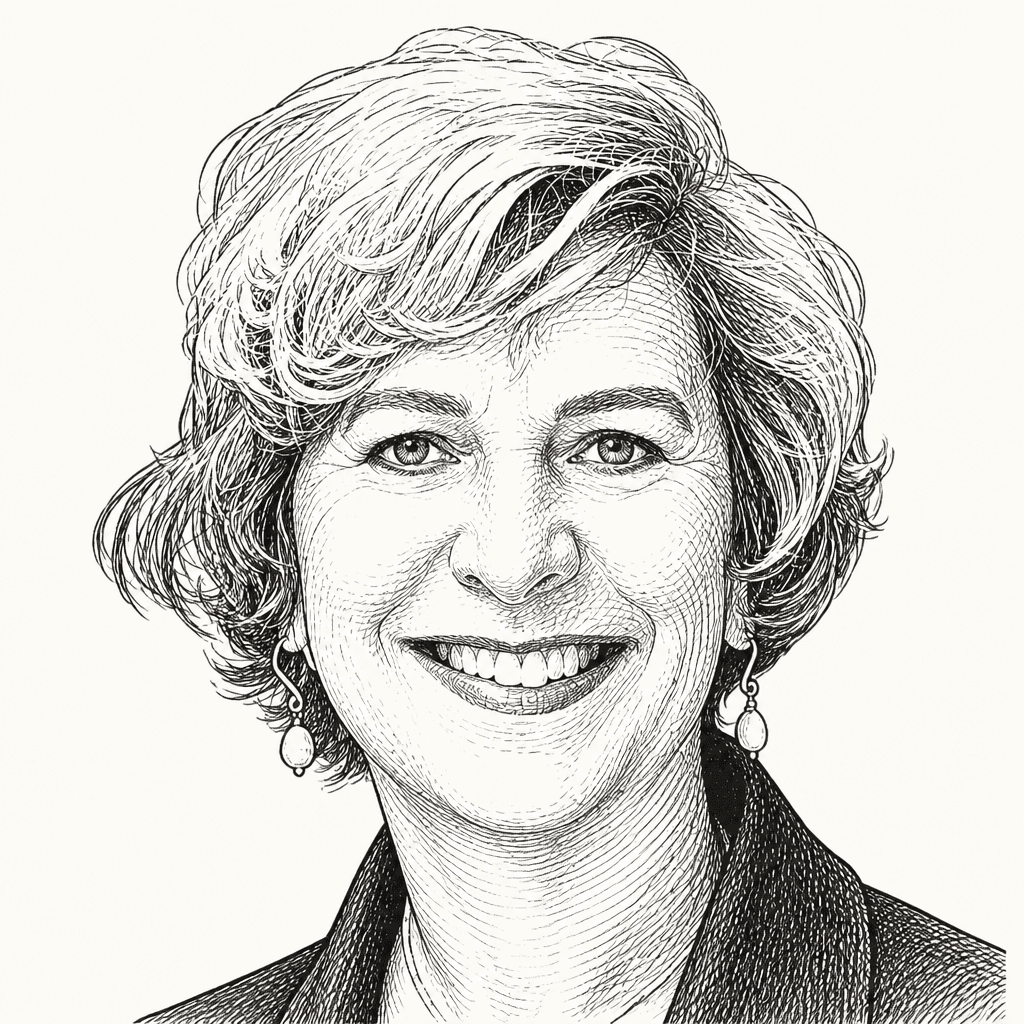
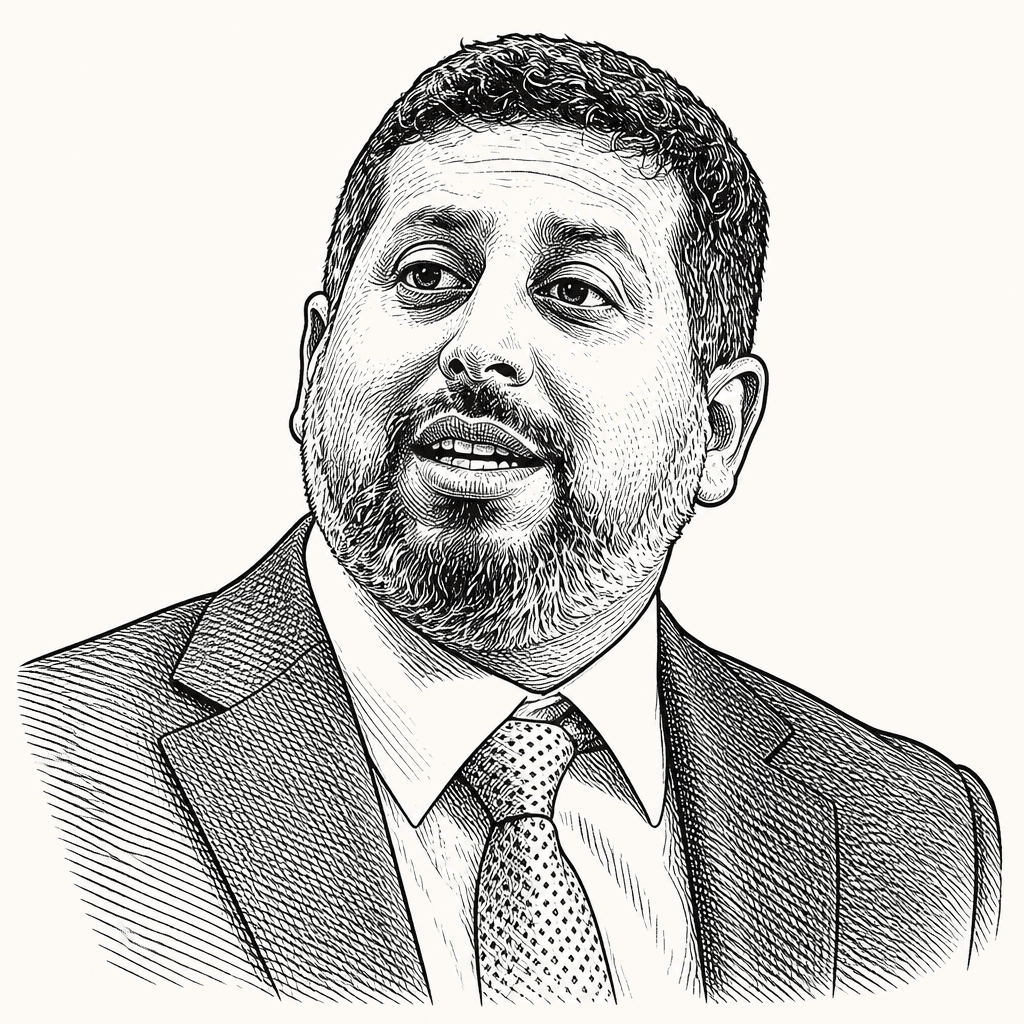
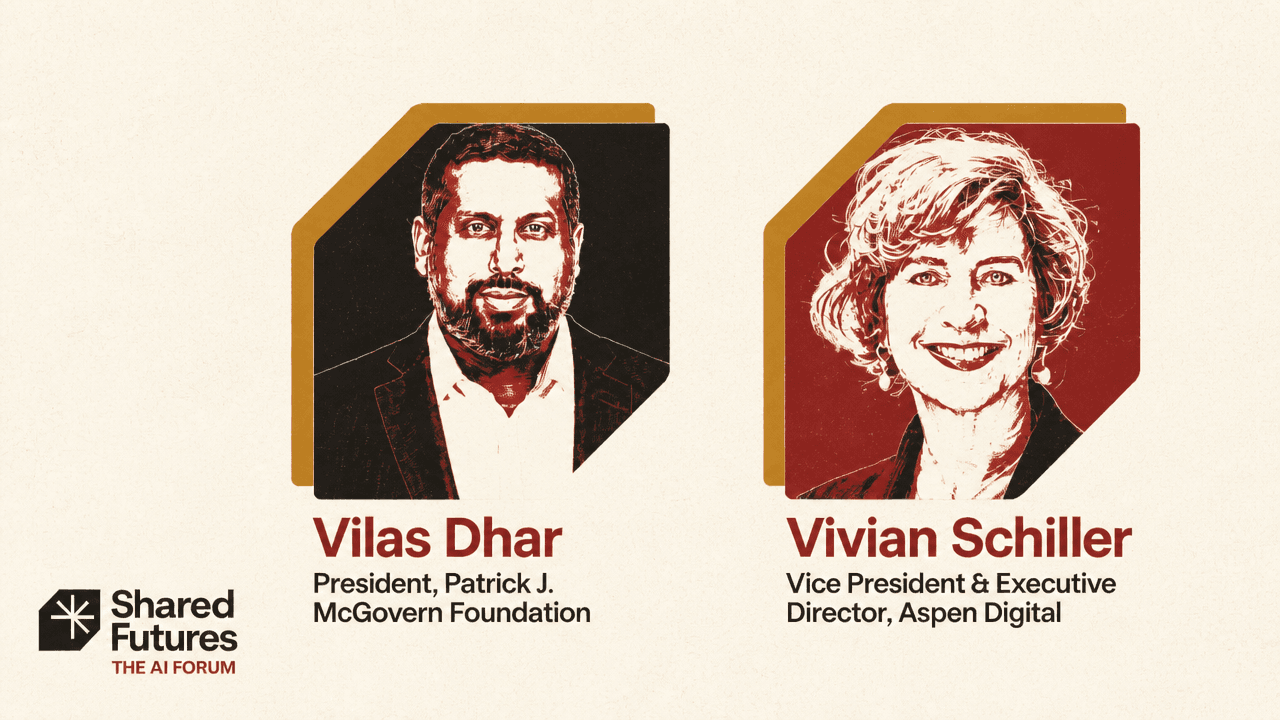
Opening Shared Futures: The AI Forum, Vivian Schiller of Aspen Digital and Vilas Dhar of the Patrick J. McGovern Foundation argued that public distrust of AI is not an obstacle to the conversation but its starting point. Schiller framed AI as a contested tool that can either feel imposed on people or be used by artists and makers with agency; Dhar said the deeper issue is not the technology itself, but how people turn fear of replacement into meaning, art, and shared experience.
AI distrust was the starting point, not a side issue
Vivian Schiller opened Shared Futures by naming the distrust around AI rather than trying to route around it. AI, she said, has become “a little bit of a dirty word in some corners,” visible in booing at graduations and protests around data centers. The reaction is understandable, in her telling, because AI can feel like something happening without consent or control.
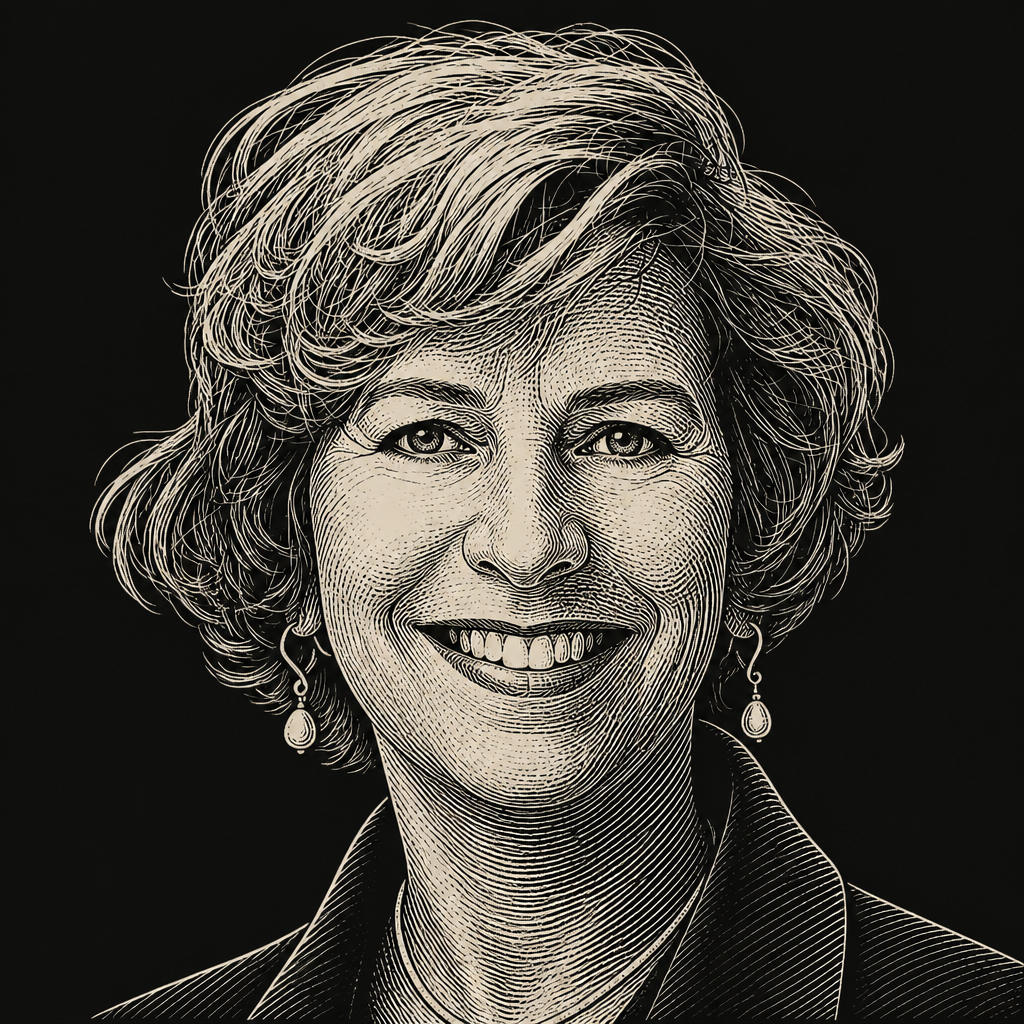
It can feel sometimes like AI is something that is being done to us, and not with us.
That was the reason she gave for creating Shared Futures: to widen the discussion beyond a frame in which AI belongs only to big technology companies, wealth, and “stealing people’s intellectual property.” Schiller did not deny those concerns. She placed them inside a broader claim: AI is also a set of tools that people can use to realize their own creative visions.
The day’s premise, as she described it, was not that the audience should become less critical of AI. It was that the people onstage would complicate the victimhood frame. The artists, musicians, scientists, thinkers, visionaries, and historians appearing at the forum were not being presented as people acted upon by AI, but as practitioners using it with intent.
“All of the people that you're gonna see on stage today, not one of them is a victim of AI,” Schiller said. “They are rather masters of their art.”
That distinction mattered to the forum’s opening claim. AI was not introduced as an autonomous force to be admired, or as a neutral productivity layer. It was introduced as a contested tool whose significance changes when people are not merely subject to it, but able to use it in service of their own creative work.
Dhar put fear of replacement at the center
Vilas Dhar extended Schiller’s point by describing the emotional condition around AI as one of speed, uncertainty, and unease. Technology, he said, can feel as if it is moving so fast that people are being watched by tools built without their interests at heart. The anxiety is not only displacement, but a more basic fear of being replaced before being seen or understood.
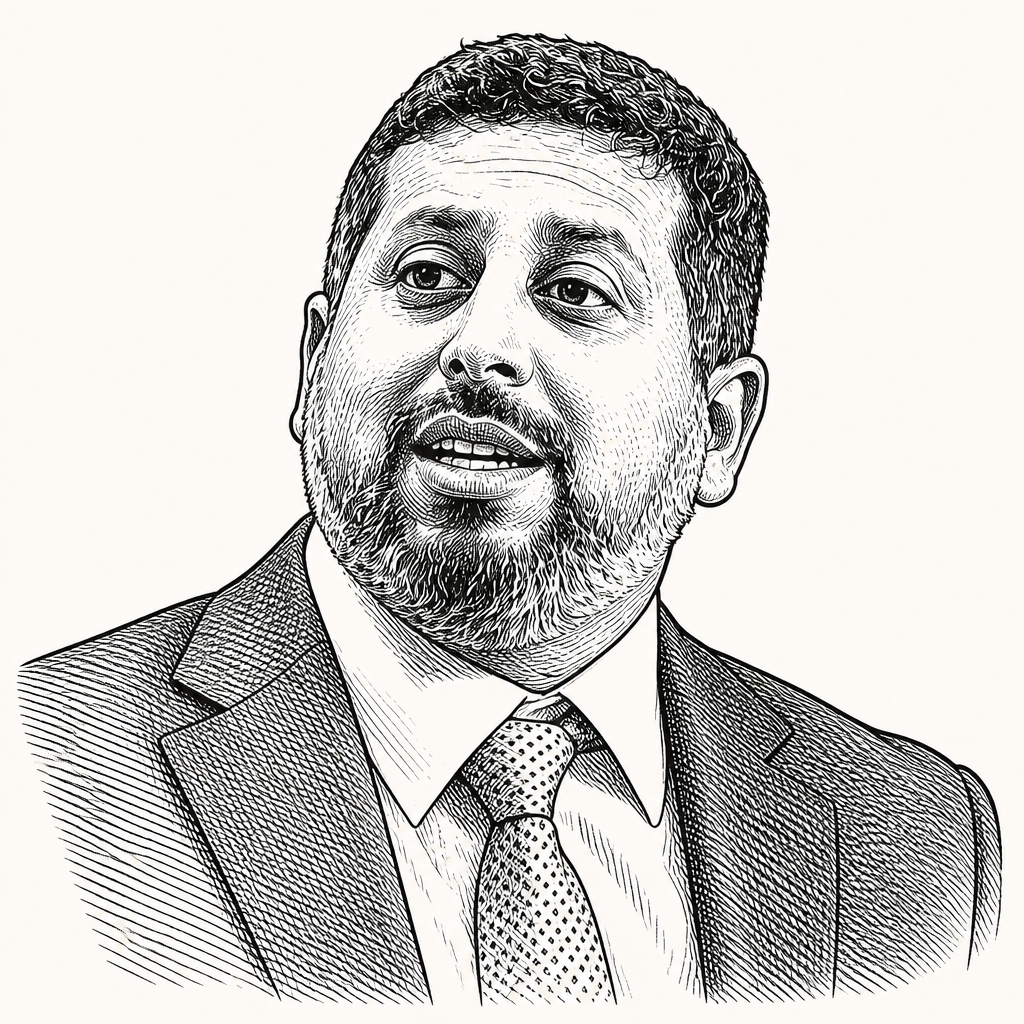
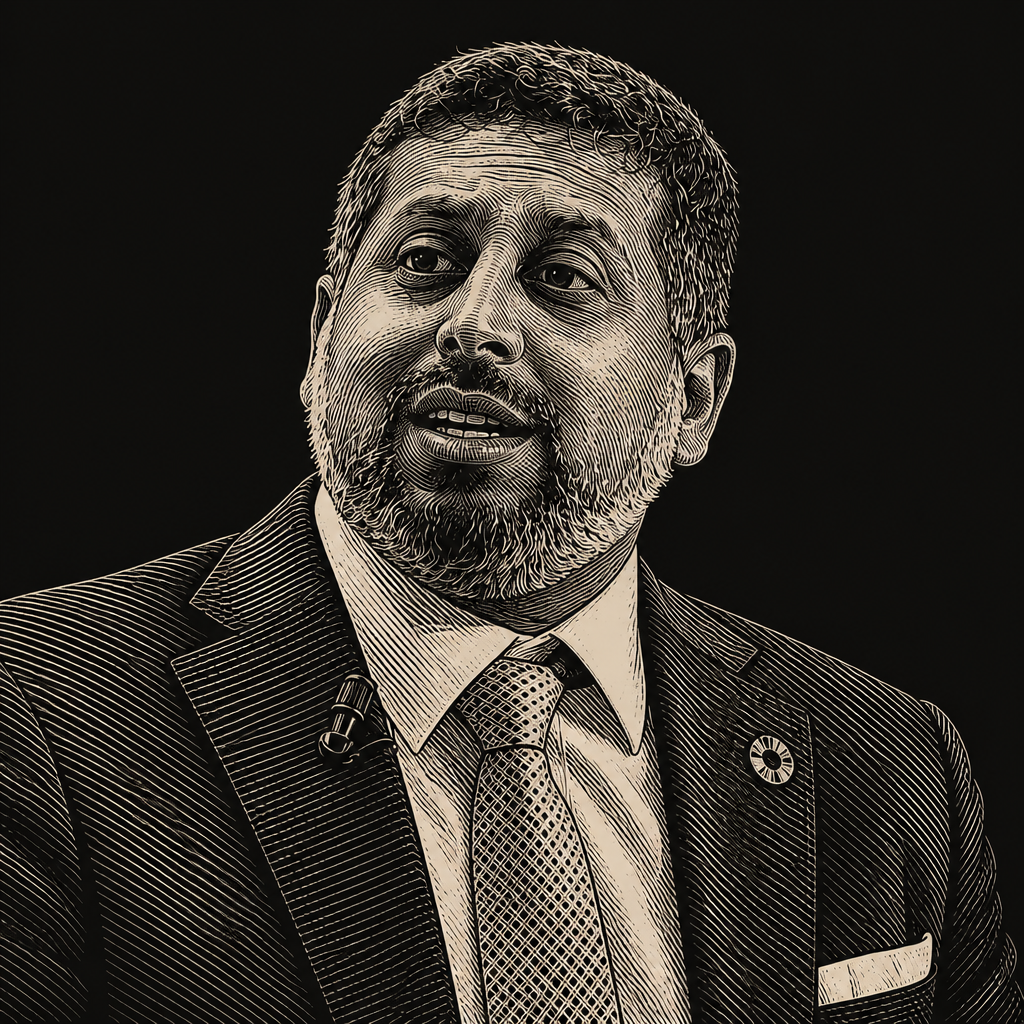
Dhar described this as a condition he hears from people “all across the country and across the world”: deep uncertainty about what is happening and where humans fit inside it. His remarks did not treat that uncertainty as irrational or uninformed. He brought it into the room as the starting point for the day.
The answer he offered was not technical literacy alone, though he acknowledged that people in the room could explain a large language model “in exquisite detail.” His answer was that human beings respond to uncertainty by making meaning: singing, writing poetry, creating art, gathering together, and turning fear into form.
AI is the perfect Trojan horse because today is not about AI. It's about us.
Dhar’s point was that AI provided the occasion, but not the final subject. The forum, in his description, was meant to examine how people use new tools to tell a shared story about fear, creativity, loneliness, community, and agency.
His contrast between technical explanation and artistic experience was deliberately sharp. Some people in the room, he said, could describe how an LLM works. Others, with “a single line of poetry or a single bar of music,” could make people feel grief, ecstasy, or joy in a way that “to this day no LLM can describe.” The forum was positioned at that boundary: where machine capability meets human experience, and where explanation is not the same as feeling.
Art was presented as a way to work through uncertainty
The opening remarks treated art not as decoration around a technology conference, but as one way people handle technological uncertainty. Vilas Dhar said people create art to “put structure around fear,” “turn confusion into rhythm,” and “build beauty” that converts loneliness into community. Fear, in this account, is not solved by ignoring AI. Confusion is not solved only by technical description. People work through both in shared forms.
Vivian Schiller’s version of the same claim was more focused on agency. AI, she said, is not just a story about companies, wealth, and intellectual property. It can also be a means by which people “manifest” creative vision. The forum’s lineup was meant to demonstrate that claim through practitioners rather than through abstract argument.
Dhar resisted describing the gathering as a standard conference. He said it was not really about “presenters on stage,” but about performances that would bring the room into a story “we’ll tell together.” The distinction was important: the audience was not being invited only to receive information about AI, but to participate in an exploration of what humans might choose to shape with it.
The hosts’ optimism remained tied to the concerns they had already named: protests, data centers, consent, control, feeling watched, replacement, and tools that, in Dhar’s words, do not necessarily have “my interests at heart.” Their claim was narrower than a general defense of AI. They argued that human creativity remains a site of agency, and that artists and other makers can reveal uses of AI that are neither passive nor reducible to the interests of the largest technology companies.
The hosts tied the event to public service and human labor
The forum was co-hosted by Aspen Digital, a program of the Aspen Institute, and the Patrick J. McGovern Foundation. Vivian Schiller described Dhar and the McGovern Foundation as “incredible champions of AI in service to the public,” and said they brought joy and optimism to the work.
Vilas Dhar began with gratitude to the people who made the event possible: teams at Aspen Digital and the foundation, the Times Center staff, union laborers, AV workers, and caterers. The acknowledgement fit the broader emphasis of the remarks. If AI is often discussed through systems, models, and infrastructure, Schiller and Dhar kept returning to people: the workers who built the room, the creators who would perform in it, and the audience asked to consider what kind of future they want to share.
The final frame Dhar offered was that creation is not primarily an act of technology or even communication. “It’s an act of love,” he said. In context, that line placed art and creation against the fear of being replaced by intelligent machines: a view of making as a human commitment that organizes uncertainty into relationship.