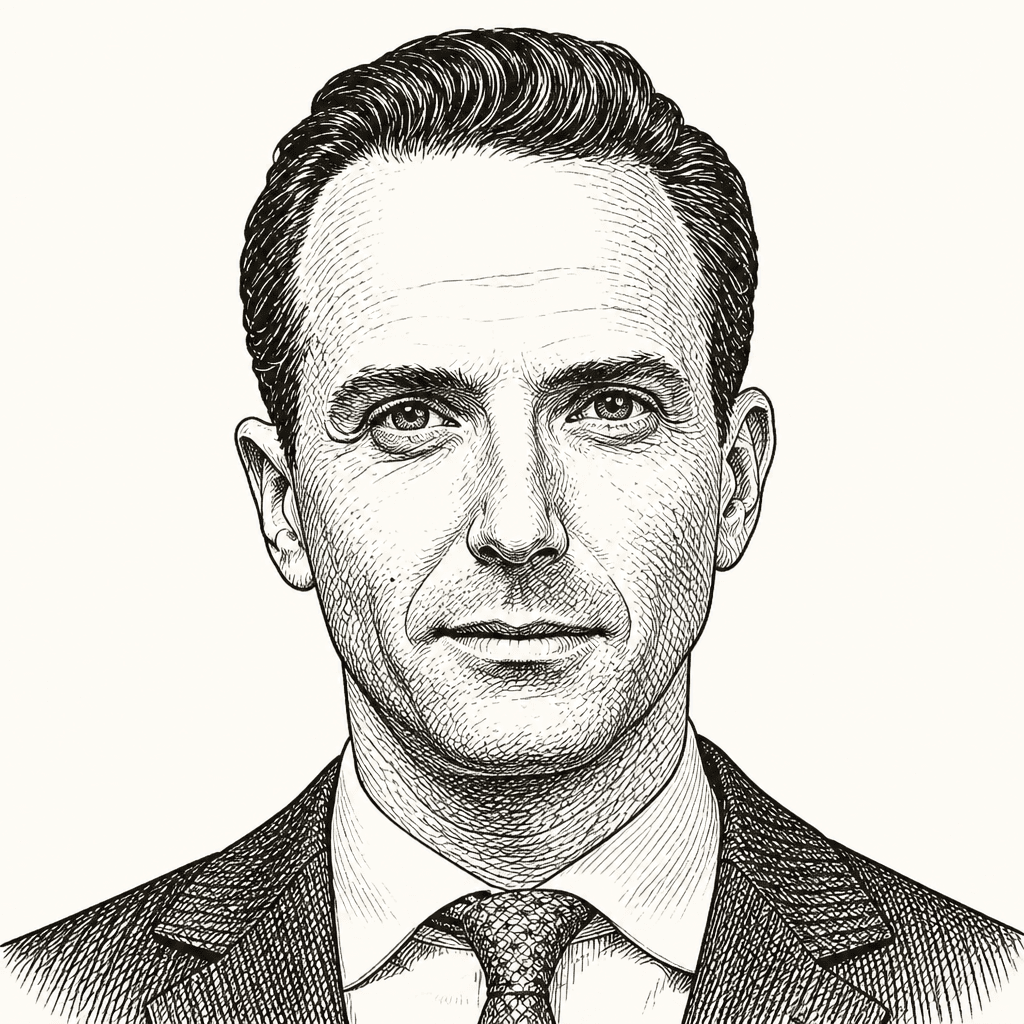
Tom Mackenzie
Bloomberg TV anchor and co-anchor of Opening Trade. He also hosts Bloomberg Tech Europe, where he interviews founders and executives about major themes in the European technology sector; he previously served as Bloomberg TV’s China correspondent.
Robotics Still Lacks Its ChatGPT Moment
Google DeepMind’s head of robotics, Carolina Parada, says recent advances in language and vision models have moved robots beyond treating their surroundings as meaningless coordinates toward understanding instructions, environments and tasks. But she argues robotics has not yet reached its “ChatGPT moment”: a system that can reliably respond to a person’s request in an unfamiliar setting. Humanoids may help deploy such intelligence in spaces built for people, she says, though many tasks will call for other robot forms.
Robeauté Targets 2027 Human Trials for Brain Microrobot
Robeauté is developing rice-sized microrobots that it says could navigate through brain tissue to collect biopsies or deliver therapies directly to hard-to-reach sites. Chief executive Joana Cartocci argues that advances in drugs, gene therapies and AI will remain limited unless they can be placed precisely in the brain, bypassing obstacles such as the blood-brain barrier. The French startup plans to begin with advanced tumor biopsy in first-in-human studies targeted for 2027, before expanding to other uses.
UK Could Soon Produce Its First £100 Billion Tech Company
James Wise, general partner at Balderton Capital and chair of the UK Government’s Sovereign AI fund, argues that Britain’s technology market is closer to producing a £100 billion company than its reputation suggests. Speaking to Bloomberg’s Tom Mackenzie at London Tech Week, Wise said UK funding is now robust at later stages, but that policymakers must help companies scale globally by using government procurement, data, expertise and state infrastructure, not just public capital.
London AI Founders Are Building Global Companies From Britain
ElevenLabs chief executive Mati Staniszewski told Bloomberg that London’s AI ecosystem has moved beyond a talent story and is becoming a credible base for building global companies. Speaking at London Tech Week, he argued that returning talent, greater founder risk appetite and more willingness from UK and European customers to buy from young AI companies are reinforcing that shift. ElevenLabs, the UK-founded voice AI startup valued at about $11 billion, is presented as both evidence and beneficiary of the change.
Waymo Says Validation Infrastructure Is Its Edge Over Tesla
Waymo’s Srikanth Thirumalai tells Bloomberg that the company’s driverless strategy is built around validation infrastructure as much as the driving model itself. In contrast to end-to-end approaches associated with Tesla and others, he argues that Waymo’s path to scale depends on a full stack of driver software, simulation, real-time safety checks and a critic that identifies weak performance and feeds improvements back into the system.
Freight Automation Starts With Platforms, Not Just Autonomous Trucks
Einride chief executive Roozbeh Charli argues that the shift to electric and autonomous freight will be led by software orchestration rather than by vehicles alone. In an interview with Bloomberg’s Tom Mackenzie, he says large shippers need a platform to coordinate electric trucks, autonomous systems, routing, charging and operational handoffs, while regulation and human supervision remain critical to making the model work at scale.
Wayve Bets Licensed Onboard AI Can Scale Autonomous Driving
Wayve chief executive Alex Kendall tells Bloomberg that autonomous driving is shifting from hand-engineered, city-specific systems toward learned AI models that run onboard vehicles and improve from real-world driving data. His argument is also commercial: Wayve plans to license its autonomy platform to manufacturers and fleets rather than build cars or operate robotaxi networks, a model Kendall says can scale across more vehicles, sensor packages and driving environments.
Autonomous Driving Race Turns on Architecture, Cost, and Deployment
Bloomberg’s Tom Mackenzie frames the autonomous-driving race as a contest between systems that work now and systems designed to scale later. In Bloomberg Tech: Europe, he contrasts Waymo’s mapped, sensor-heavy safety stack with Wayve’s end-to-end AI model, while executives from BYD, Einride and Vay argue for other routes through vertical integration, autonomous freight and remote driving. The central question is not only which technology can drive, but which architecture and business model can win regulatory, customer and fleet trust at scale.