Wayve Bets Licensed Onboard AI Can Scale Autonomous Driving
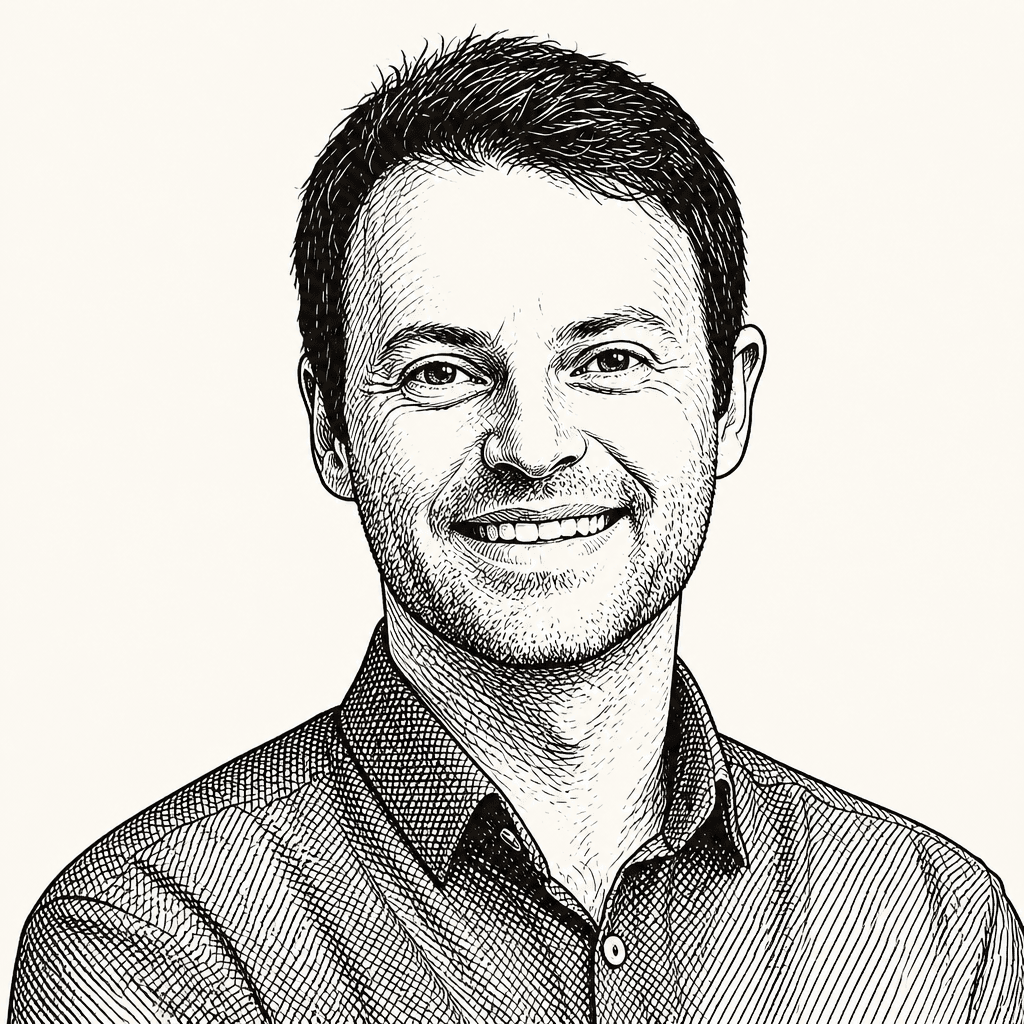
Wayve chief executive Alex Kendall tells Bloomberg that autonomous driving is shifting from hand-engineered, city-specific systems toward learned AI models that run onboard vehicles and improve from real-world driving data. His argument is also commercial: Wayve plans to license its autonomy platform to manufacturers and fleets rather than build cars or operate robotaxi networks, a model Kendall says can scale across more vehicles, sensor packages and driving environments.
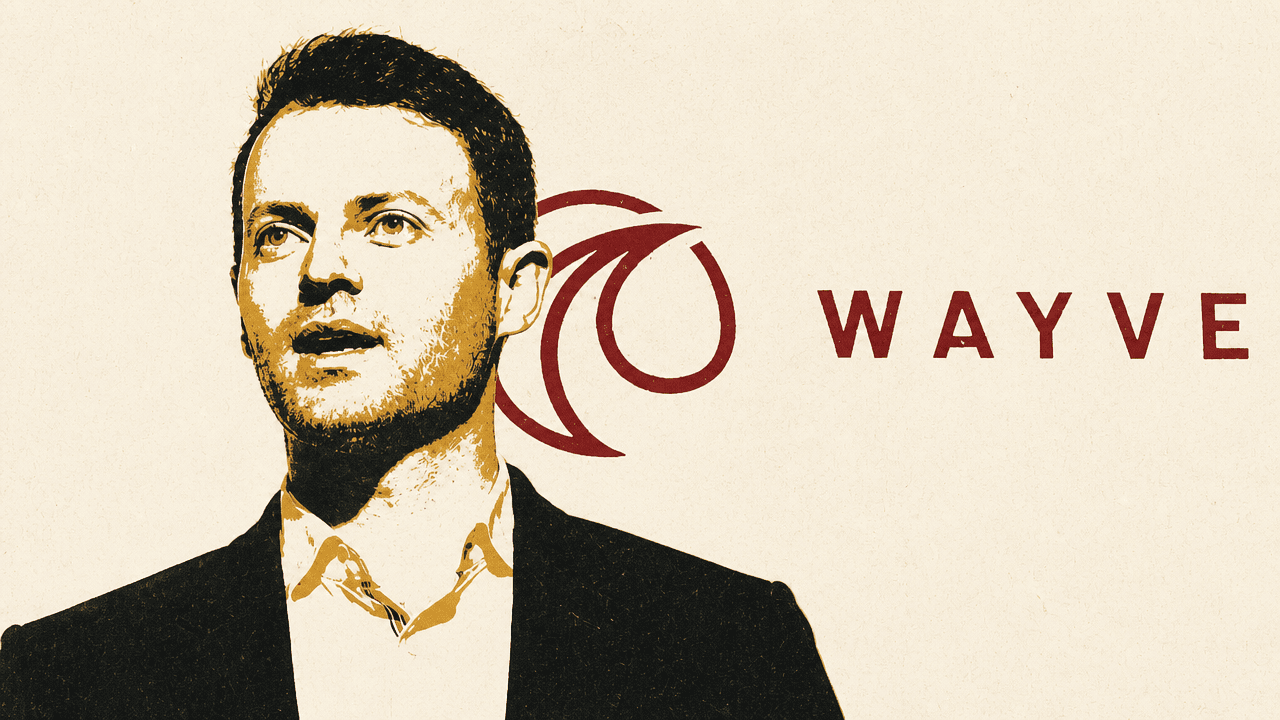
Wayve’s core bet is licensed autonomy running onboard
Wayve’s strategy combines two claims that Alex Kendall treats as inseparable: autonomy should be built as an end-to-end AI system that learns from real driving, and the commercial path should be licensing that system to manufacturers and fleets rather than selling cars or operating robotaxi networks itself.
Building “an end-to-end AI system” for driving, Kendall says, changes the requirements for safety, infrastructure, simulation, data, and even the embedded architecture inside the car. Wayve’s premise is that those pieces have to be designed around onboard intelligence and real-world learning.
That premise shapes the company’s business model. Asked by Tom Mackenzie whether autonomous driving becomes a winner-takes-all market or leaves room for different approaches, Kendall separates the industry into three models. Tesla sells its own cars, which gives it control but limits deployment to its own brand and fleet. Waymo builds and operates its own fleets, a model Kendall characterizes as capital-intensive and city-by-city. Wayve has chosen a third path: licensing its technology to fleets and manufacturers.
Kendall does not claim the other two models disappear. He says all three are likely to coexist. But he argues Wayve’s model can become the largest because most manufacturers and operators of “robots,” including vehicles and other physical systems, will find it more efficient to partner with an embodied AI platform than to build the full autonomy stack themselves.
The leverage, in his telling, is cumulative. If Wayve’s AI is deployed across partners, it can absorb data from a broader set of fleets and environments. Kendall argues that this should produce a safer, more cost-effective, and more performant system than any single manufacturer can build alone.
The AI we build can scale and have the economic and safety leverage of the entire industry that we work with.
Wayve is not making a one-sensor argument
Wayve’s position against rival autonomy architectures is less absolute than a simple cameras-versus-lidar comparison suggests. On the dispute over whether lidar and radar add safety through redundancy, Kendall’s answer is conditional: the right sensor configuration depends on the product.
Some products, in Kendall’s view, may be better with cameras only. Others may use radar, and some may use lidar. Wayve’s position is not that one sensor package wins universally, but that a scalable autonomy system should be able to support different configurations.
That is where Kendall places the emphasis on Wayve’s “foundation model” for physical AI. He says the model can drive camera-only systems, radar-equipped systems, and products that include lidar. The crucial property is not a fixed sensor ideology, but deployment across “any vehicle anywhere.”
The Tesla comparison is similarly framed around efficiency rather than a full architectural equivalence. Alex Kendall says Wayve and Tesla have “a similar benchmark and performance of safety” today, while Wayve has built that with “a fraction of the data and compute” used in Tesla’s solution. The next step, Kendall says, is scaling: as Wayve receives data from large-scale consumer fleets through partners around the world, he expects the system to improve.
This follows from the licensing model Kendall describes. If an autonomy company owns the car, the fleet, and the operating domain, it can optimize around its own hardware stack. Wayve’s chosen model requires an AI system flexible enough to work across manufacturers and vehicle categories, while using partner fleets to expand the data and operating experience available to the model.
London forced a different autonomy design
Alex Kendall frames Wayve’s London origins as both geographic accident and technical forcing function. Being outside Silicon Valley, he says, kept the company away from the “thought bubble” that followed the DARPA Grand Challenge and early Google autonomy work. In his account, many companies in that ecosystem were building with the same technology strategy. Operating outside it gave Wayve room to pursue a more contrarian approach.
London itself then made that approach harder to avoid. Kendall describes the city as a complex driving environment with old roads, frequent road works, heavy pedestrian and cyclist activity, merging traffic, roundabouts, and fewer protected traffic-light interactions. He says London has about 20 times more road works than San Francisco and about 10 times more cyclists and pedestrians.
The argument is not simply that London is difficult. It is that difficult, changeable roads made Wayve rethink systems that depend heavily on mapping or remote operation. Kendall points to connectivity challenges, frequent diversions, and unstructured road interactions as reasons a 2,000-year-old city pushed the company toward an approach designed to learn and generalize.
Kendall also ties that origin story to ambition. He describes Wayve as a global company, not a local UK or European success story, and says he wants it to compete at the frontier technically and commercially. The London base, in this telling, is not a constraint to overcome so much as the environment that helped produce the company’s contrarian design.
The demonstration turns on onboard intelligence and cheap hardware
The London robotaxi demonstration is used to make Wayve’s hardware and deployment claims concrete. Tom Mackenzie asks whether the safety driver has touched the wheel; Alex Kendall replies that the driver “won’t on this drive.” The model, Kendall says, is running on the car’s own chip stack, not relying on remote driving.
Kendall says the vehicle is driving with six cameras and one radar, using a compute and sensor stack costing “hundreds of dollars.” He presents that as the kind of low-cost architecture that can go into mass-market vehicles.
The route through King’s Cross and North London is used to illustrate the same claims Kendall makes about scale. He points to cyclists, traffic, and a diversion while emphasizing that all driving decisions are being made onboard. The important claim is not simply that the car completes a route, but that the system is making decisions locally with a relatively low-cost sensor and compute package.
Kendall uses the example of turn signals to contrast Wayve’s approach with more explicitly engineered autonomy systems. A conventional system, he says, might include an indicator detector, a car detector, a traffic-light detector, and learned or logical systems to reason across those outputs. Mackenzie summarizes that style as: “In scenario A, do scenario B.”
Kendall calls that architecture complex and unwieldy, even if it can be built with billions of dollars. Wayve’s alternative is to specify the desired driving outcome and let the system learn from data how to represent the world and act within it. He describes this as learning a world model: a model that can reason about and predict how situations will unfold without engineers explicitly telling it which features to look for.
The ride returns to Wayve without a reported safety-driver intervention. Mackenzie calls it smooth and says the system feels more confident than the version he rode in roughly a year and a half or two years earlier. Kendall’s explanation is that it “keeps getting better by orders of magnitude every year.”