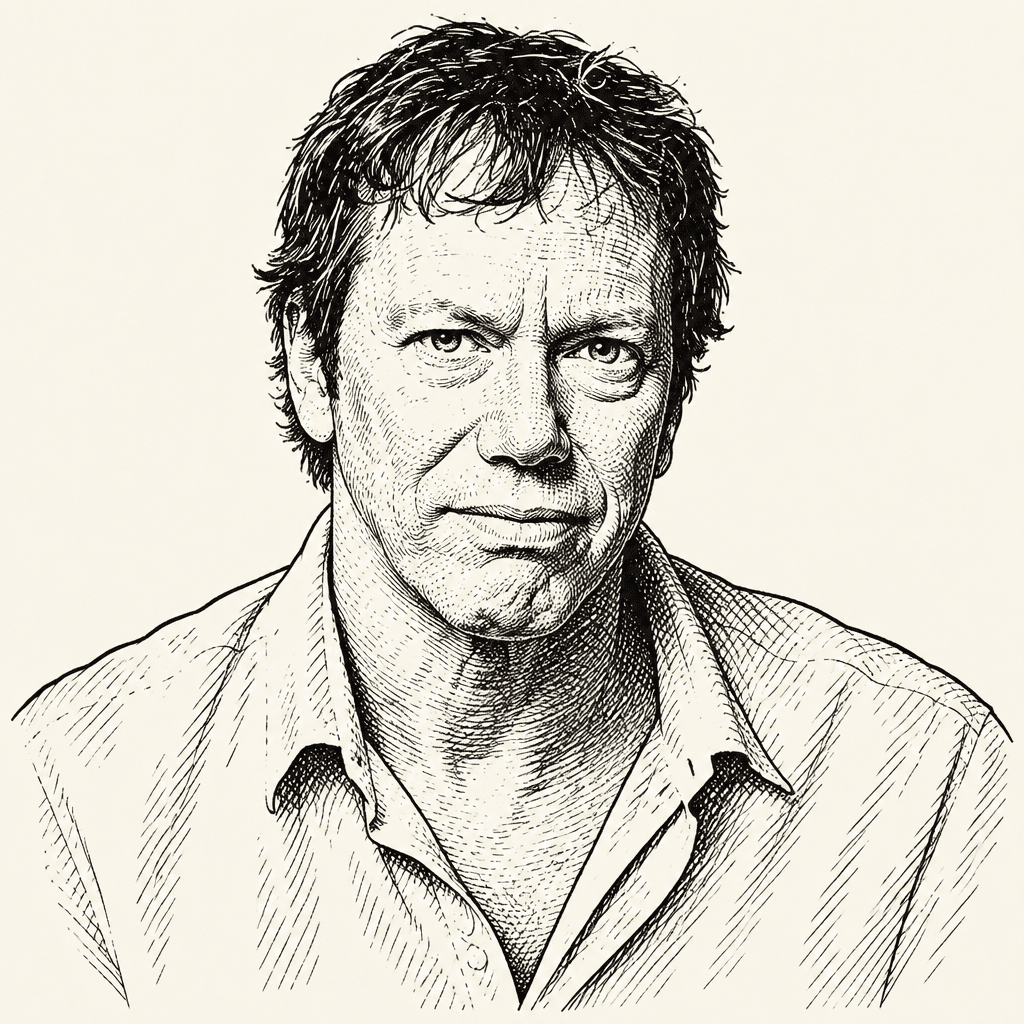
Robert Greene
American author known for books on power, strategy, and human nature, including The 48 Laws of Power and The Law of the Sublime.
Dersu Uzala Read the Siberian Forest Through Years of Close Attention
Robert Greene argues that ordinary life may leave some human capacities dormant, but his examples point to different processes. Dersu Uzala learns to read the Siberian forest through sustained attention to its signs; a climber, injured and facing a storm, experiences a brief surge of strength under extreme threat. Greene uses the contrast to question what people can perceive or do beyond the limits of everyday experience.
A Stroke Revealed How the Brain Filters Ordinary Reality
Robert Greene argues that a neuroscientist’s altered perception during a life-threatening stroke shows how the brain constructs the ordinary sense of self and reality—and how strange experience can become when those systems fail. She found the change exhilarating, even blissful, but could not work out how to make a phone call; Greene says her cognitive abilities took eight years to recover. He connects her account to evolution, arguing that human life and the bodies that sustain it are contingent outcomes, not facts to take for granted.
A Secure Career Can Still Leave Work Feeling Wrong
Robert Greene argues that career stability can become a trap when the work no longer fits the person doing it. In an interview with Chris Williamson, Greene recalls feeling unsuccessful until he wrote *The 48 Laws of Power* at 39, after leaving a television job he hated; even that book’s success, he says, did not mean he should simply repeat the formula. He urges people to take seriously the pull toward work that feels like their own, even when choosing it means risking income, security or other people’s approval.
The Sublime Offers an Alternative to Endless Novelty and Stimulation
Author and historian Robert Greene argues that the persistent flatness many people feel is not simply a shortage of novelty but a narrowing of attention: the mind filters the world for what is useful and urgent, while feeds and other stimulation can make experience feel repetitive. In his account of the sublime, awe comes from encountering what exceeds familiar frames—whether through history, science, nature or close attention to an ordinary scene. Reconnecting with that sense of scale, Greene says, does not require abandoning modern life; it begins by looking beyond the self and the next source of stimulation.