The Sublime Offers an Alternative to Endless Novelty and Stimulation
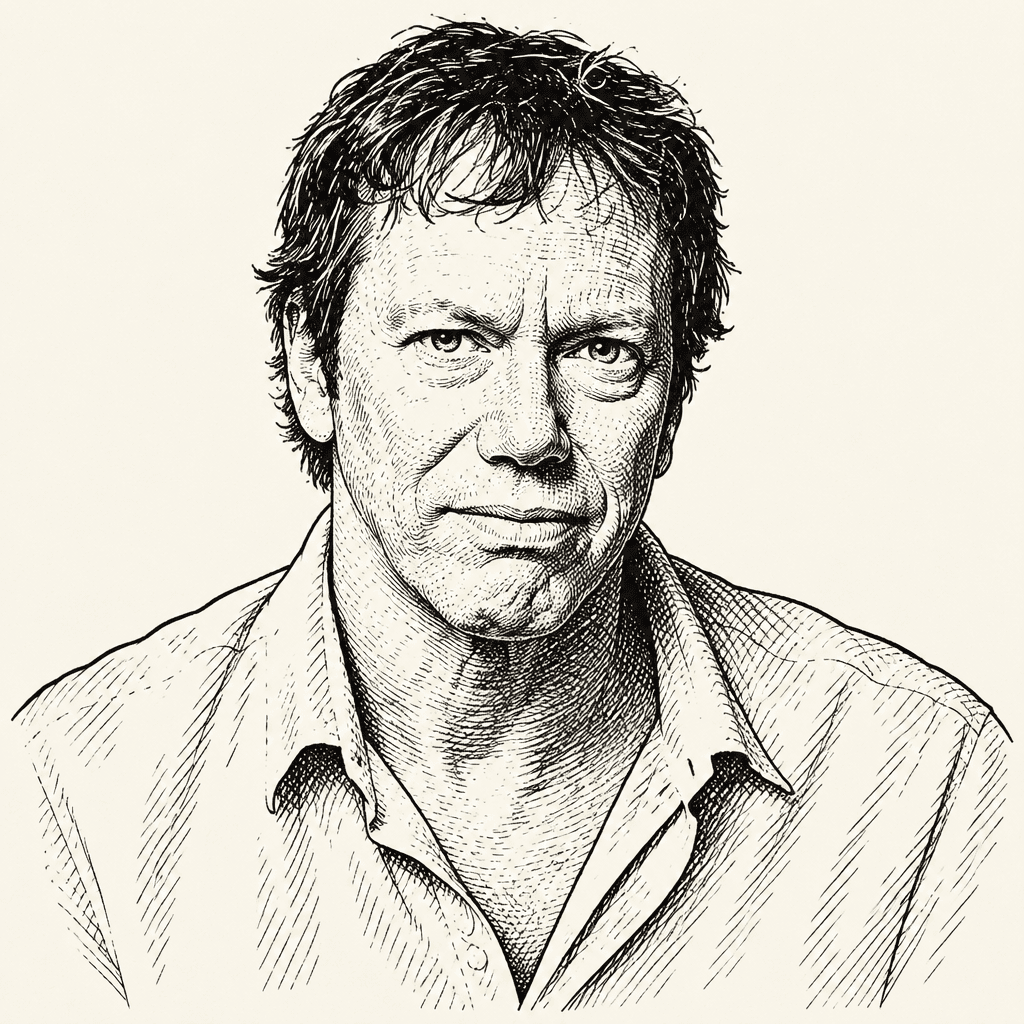

Author and historian Robert Greene argues that the persistent flatness many people feel is not simply a shortage of novelty but a narrowing of attention: the mind filters the world for what is useful and urgent, while feeds and other stimulation can make experience feel repetitive. In his account of the sublime, awe comes from encountering what exceeds familiar frames—whether through history, science, nature or close attention to an ordinary scene. Reconnecting with that sense of scale, Greene says, does not require abandoning modern life; it begins by looking beyond the self and the next source of stimulation.
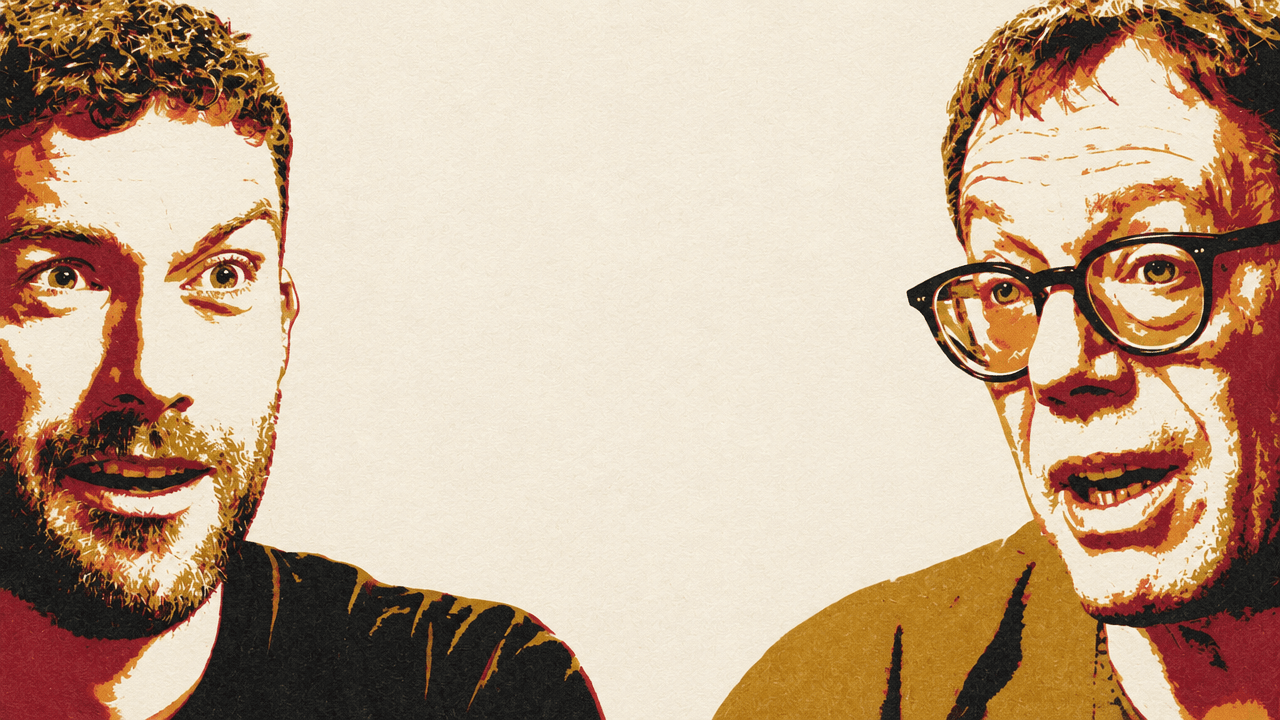
The first task is to notice what your attention has stopped seeing
Robert Greene’s reason for writing about the sublime began with a diagnosis: many people can still function, work and pursue goals, yet feel that life has lost its depth. Social media, he said, makes experience feel repetitive. A video can initially surprise, but the stream soon becomes more of the same: algorithmically selected, familiar, easy to consume without much attention. Greene sees that flatness not simply as boredom but as a disconnection from the feeling of being alive.
Chris Williamson described it as though life’s emotional range had been compressed: neither the highs nor the lows seem to register as fully. Greene agreed. He described the mind as built to filter experience. That filtering is necessary: if adults attended to every sensation as a young child might, they would struggle to plan, navigate streets and manage daily obligations. The problem is not that the brain filters, but that the survival-oriented mind can take over. If attention goes only to getting through the day, experience narrows to what is useful, urgent or personally concerning.
Greene did not argue that people should live in uninterrupted awe or abandon the responsibilities that require planning. He described how his own mind fills with reminders even during meditation: calls to make, emails to return, tasks to finish. But, he said, a walk outdoors need not be accompanied by headphones and a mind fixed on the next demand. Attention can turn to the landscape, to another person’s inner world, or to the unfamiliar consciousness of a pet. These shifts do not prevent someone from returning to work. They interrupt the assumption that getting things done is the only mode of being alive.
For Greene, the sublime names the shock of encountering something that exceeds the limits through which we usually experience the world. Those limits are cultural as well as neurological. People in one era take certain metaphors and assumptions for granted; people in another may organize reality differently. The brain, too, constructs a usable version of the world rather than giving a person unfiltered access to everything that exists. An encounter with the sublime opens a door beyond those familiar limits. It can bring awe, fear, strangeness and a sense of connection at once.
The sublime is not simply novelty. A new video, place or activity can surprise someone, but Greene’s concern is the way repeated stimulation can become another familiar pattern: the first cat video is astonishing; the next few begin to feel alike. What matters is not merely encountering something new, but meeting it in a way that unsettles the familiar frame and restores attention. That can happen on a mountain or in a dangerous landscape, but Greene also described finding it in an ordinary backyard by studying hummingbirds.
He expected some readers to resist his criticism of the technological world as old-fashioned. He clarified that he was not telling people to stop using social media or AI. He uses the internet, and sometimes ChatGPT. The point is to notice how technology affects attention and to preserve access to other ways of attending. A person can remain modern without allowing one kind of attention to become the whole of life.
Greene described recognizing how animal videos on Instagram drew him into a repetitive, intoxicating feed. Seeing that effect at work helped him step back. He wanted people to become the curators of their own experience rather than letting a platform continually select what deserves attention. That begins, he said, with taking restlessness seriously. If ordinary sources of stimulation are not satisfying, the answer may not be to reach automatically for the next one. It may be to ask what one’s habitual pattern of attention leaves out.
Greene’s examples point toward a practice of looking closely, whether the setting is a dangerous landscape, a train window or a backyard. The aim is not to become a child again, or to seek danger for its own sake. It is to notice what has become routine and to make room for the world to feel strange again.
The sublime makes the familiar world strange again
Greene drew on a distinction between the child’s and adult’s brains. Children are learning language, discovering that they are separate from other people, and encountering ordinary things for the first time. In his account, a child has fewer inhibitions and filters: more things are novel, strange and worthy of attention. Growing up means gaining the ability to function amid a flood of information, but it also means becoming less available to what is unfamiliar.
Greene recalled road trips as a child, imagining people and animals in the hills beyond the car window. The landscape was not just passing scenery; it was material for an active imagination. As an adult, a person may look up at the night sky and recognize stars without wondering what they are or how strange it is that they exist. The world has not become less extraordinary, Greene suggested; familiarity and the mind’s filtering have made it less likely to register as extraordinary.
He illustrated the brain’s role in constructing ordinary experience with the story of a neuroscientist who had a stroke that progressively disrupted her brain’s usual functions. Greene recounted her account of her sense of separation from her surroundings beginning to dissolve. In the shower, she felt that the water was part of her rather than something distinct from her. Her inner chatter fell silent; visual experience broke down into points of sensation. Greene described her account as a mystical experience, though it occurred during a medical crisis that nearly killed her.
She later recovered many of her cognitive abilities, but told Greene that the state she had experienced during the stroke had felt blissful compared with the return to ordinary thought. Greene’s point was that our everyday sense of reality is mediated by the brain, and that experiences which loosen its usual boundaries can make the world seem radically different. The story does not mean that the brain’s ordinary functions are dispensable: Greene stressed that the woman went on to write, give talks and live a full life. His argument was that functioning and experiencing the world vividly are not mutually exclusive.
The word “sublime” also captures a tension. It is not merely pleasant or calming. The experience of a vast landscape, a dangerous ascent or the enormity of the universe can make a person feel insignificant. But the capacity to perceive that vastness is itself astonishing. The feeling of smallness and the recognition of one’s participation in a larger reality arrive together. Greene described the effect as a shudder: a moment when the world feels strange and life feels newly remarkable.
His examples of the sublime did not all depend on crossing into a radically altered state. Science, history, landscape and attention to other living things can also disturb the sense that reality is already understood. Greene’s distinction is between simply storing information and allowing a fact to open onto a larger question. A discovery about life, for example, can be treated as something to memorize, or it can prompt wonder about the long chain of events that made life possible.
That difference helps explain Greene’s insistence that the sublime is not just another word for entertainment or stimulation. Action films, pornography, drugs and other forms of intense experience can, he said, become substitutes for a deeper search. He called these forms the “false sublime.” He was not claiming that any particular pleasure is inherently wrong; his concern was that people may reach for ever more stimulation when they feel disconnected from the world, without finding a durable sense of connection.
Mortality and scale connect the individual to something larger
Greene connected the need for the sublime to awareness of death. Modern people, he argued, are often sheltered from death: many do not see animals killed for food or encounter death at close range. In earlier societies, death was harder to keep out of view. Greene spoke of mothers and children dying in childbirth and of death being part of ordinary surroundings. That proximity posed a question that can be difficult to ignore: if life ends, what makes it matter?
For Greene, the search for something greater than the individual self is one answer humans have repeatedly found. People may connect their existence to the cosmos, to spirits or gods, to a community or to a tradition. The need, as he framed it, is to attach oneself to something greater than one’s individual life and death.
He pointed to the Chauvet Cave in France, where explorers found Paleolithic paintings dating, as he described them, to about 37,000 years ago. The cave was dark and dangerous, and Greene argued that entering it to make paintings and perform rituals could not be explained simply as a survival activity. He treated the paintings and traces of ritual as evidence that humans have long sought forms of meaning beyond immediate practical needs.
Awareness of scale offers another route to that larger perspective. Animals, Greene said, are responsive to their immediate surroundings but do not know what is happening across the planet or beyond it. Humans can attend to distant places, deep time and the universe. That capacity can make a person feel insignificant: Greene contrasted a universe about 13.8 billion years old with a human life that might last around 80 years, and noted that each person is one among billions on Earth.
The feeling can be bleak. But Greene argued that it also contains a source of awe: a human being can recognize the vastness that makes them feel small. Children, he said, are more directly aware of their vulnerability and smallness. They are weak, dependent and curious about what they do not understand. The night sky can feel both frightening and exciting. Adults often resist that vulnerability. The ego makes the individual the center of the picture, with personal needs and desires taking up the space that once belonged to curiosity about the world.
Greene saw a cost in that reversal. If everything is measured against the self, the landscape becomes a backdrop for private concerns. A person can hike on a mountain and still attend only to their own problems. Recovering a sense of scale means noticing the landscape as something in its own right, and recognizing that one’s life is brief and situated within a much larger history. That perspective may not solve a person’s immediate problems, but it can reduce the sense that every personal frustration is the most important thing in existence.
Greene connected the scale of human life to the contingency of life itself. The human body maintains breathing and a heartbeat without conscious direction, heals wounds and mobilizes its systems when danger appears. These capacities arise from biological processes with histories stretching back millions of years. Greene urged readers to look beyond the familiar human form, too. He said that during the Cambrian period, several body plans that look strange to us existed alongside the forms that eventually became predominant. He treated the survival of our own lineage as contingent, invoking the extinction of the dinosaurs after an asteroid impact as another event without which human life might not have emerged as it did.
Williamson added a different illustration: tracing the chain of ancestors that led to a person, and then considering how many possible reproductive outcomes could have resulted from small differences along the way. Greene agreed that a slight change could have produced a different child, with a different life. The point was not to calculate a precise probability. It was to make contingency felt. Neither one’s existence nor the shape of life on Earth is something to take for granted.
Greene said that learning the science can change how ordinary things appear without requiring constant contemplation of the universe. A glass of wine, for example, contains the work of grapes growing, people harvesting them and the processes that turn fruit into a drink. An ordinary object or meal can be seen as the end of a long chain of material and human activity. To Greene, that is one way of waking the senses: to notice what is present rather than move through the world as though it were all already known.
History reveals how much of the present is inherited
History can produce a shift in perspective like the one Greene associated with scale. People often mistake the present for something entirely unprecedented. Technology changes, but recurring human patterns remain. Greene used a trend among young Spaniards as an example: some were embracing conservative styles and symbols associated with an older Spain, including traditional dress and interest in bullfighting. He saw it as a generational reaction against the previous generation’s norms, comparable to earlier young people rebelling against the values they grew up with. Even ancient Babylonian records, he said, included complaints about the young ignoring their elders and taking a new direction.
The details change, but the impulse to reject what came before is old. History can make that visible. It can also reveal how much of the present is inherited. Language, values, habits of suspicion and envy, clothing, music and institutions all carry traces of people who lived before us. Greene called the result a “necropolis”: a world filled with the dead, whose ideas and creations remain inside the living.
That historical perspective can make a person more resistant to manipulation, Greene argued. Someone whose reference points begin only in the recent past may experience every political or technological upheaval as entirely new. A wider frame can create distance from the emotions that current events and social media provoke. Propaganda, demagoguery and the use of anger are not new tactics, he said. Recognizing their history may help a person pause and ask whether an image or message is designed to provoke a reaction.
The usefulness of that distance is not that it makes someone immune to persuasion. Greene’s point was that a person who knows something of the past has more than the present moment with which to interpret a claim. When a feed makes an event feel unprecedented and urgent, historical comparisons can interrupt that urgency. They give a person the chance to consider whether an old pattern is being presented in new packaging, and whether the reaction being solicited is part of the mechanism.
Williamson agreed that the tools of influence recur even when their wrappers change. He mentioned a historical concern about the printing press: that wider access to reading in common languages would pull people away from the world around them. He contrasted that with the current sense that smartphones, the internet and AI are uniquely disruptive. Greene accepted that these technologies are new in important ways, but said they are built and used by people whose motives and weaknesses have not fundamentally changed.
He illustrated that point with the internet’s development from a space of connection and discovery into something he sees as increasingly commercial and manipulative. He extended the argument to AI, which he said could be used for beneficial research but also by scammers and criminals. Greene described receiving near-daily emails that appeared tailored to his books and interests but were attempts to extract money. New tools, in his view, do not remove human malice; people bring their own motives to them.
That does not mean science has drained the world of wonder. Greene rejected the idea that rational inquiry necessarily produces a sterile view of life. He described Darwin’s work on evolution as capable of producing a near-religious sense of connection, and cited Einstein, Schrödinger and Heisenberg as scientists who spoke about the awe involved in studying the universe. Scientific knowledge, he argued, can expand the sublime when it is met with imagination rather than filed away as information.
His example was research into early black holes. A person can register a discovery and move on, or try to imagine what it means to observe objects that may have formed near the beginning of the universe, and what it means for gravity to be so strong that light cannot escape. Greene’s point was not that science itself supplies a single emotional response. It is that a scientific finding can open onto a larger question if a person follows it with imagination.
The ego narrows attention; the daemon points toward a particular life
Greene identified the ego as a central barrier to the sublime. By ego, he meant the steady inward turn toward one’s own concerns: how others see you, what parents did or failed to do, grievances, envy, resentment and personal hopes. A person caught in that stream becomes the center of every question and has trouble attending to anything outside it.
He was particularly skeptical of a kind of endless self-examination that keeps a person circling around the same injuries. Therapy and conversations with a spouse can be valuable, he said, but talking about one’s problems indefinitely may deepen self-absorption rather than loosen it. His contrast was an account of a therapist in Buenos Aires and a patient, Miguel, who seemed to have everything he might want—money, a good job, a house, a wife and children—yet felt that something was missing.
After repeated conversations that did not seem to move Miguel forward, the therapist proposed a different approach: train for six weeks and attempt to climb Aconcagua, the highest mountain in the Southern Hemisphere. They did not reach the summit. Storms made the climb dangerous, and they retreated. But Greene said the experience changed Miguel more than the extended conversations had, because it placed him in a world larger than his private dissatisfaction. The stars, snow and scale of the mountain drew his attention outward.
Greene connected this outward movement to what Zen practitioners call thinning the ego. The self does not need to disappear for a person to become less governed by it. As Greene described it, meditation and related practices can reduce the thickness of self-absorption and make the world appear more vivid. He saw this as possible at any age, even though he said that the most complete forms of ego dissolution are rare.
This claim sits alongside another part of Greene’s argument: the importance of an inner voice that tells a person when a life or course of action is wrong for them. He described that voice through the ancient idea of a daemon, a second self distinct from the social identity a person acquires through family, teachers, peers and culture.
The social self consists partly of labels and expectations: shy or outgoing, ambitious or agreeable, the person others think one should be. Greene regarded it as a constructed identity that can obscure more particular inclinations. The daemon, by contrast, names a person’s distinctive temperament and sources of attraction: the books, subjects, forms of work, people or experiences that excite them in ways they cannot fully explain.
There is a tension here. The ego, in Greene’s account, pulls attention inward toward personal grievances and the wish to be the center of things. The daemon is also described as inside a person, but it points toward particular interests and a direction that may take the person beyond the life that others have defined for them. Greene did not present every inward impulse as a reliable guide. Williamson asked directly how someone could distinguish the daemon from impulsivity, short-termism, fear or a coping mechanism dressed up as inner truth.
Greene’s answer was framed around love and the ends to which the voice is put. In the Greek mythological account he discussed, Eros places the daemon within a person. If the voice is connected to love, excitement and something personal, Greene said, a person is realizing the daemon. If it is used to acquire power, manipulate others, hurt people or destroy, he called that the “daimonic” or demonic.
He described the daemon’s voice as distinct from the voices people absorb from their culture, friends and peers. Those external influences can shape what someone thinks they want: which films to watch, clothes to wear, or people to date. By contrast, he said, the daemon can feel like an angry, rebellious insistence that a certain life or role is not for you.
When you hear that daemon, it tells you, fuck all that shit, I just want to be myself.
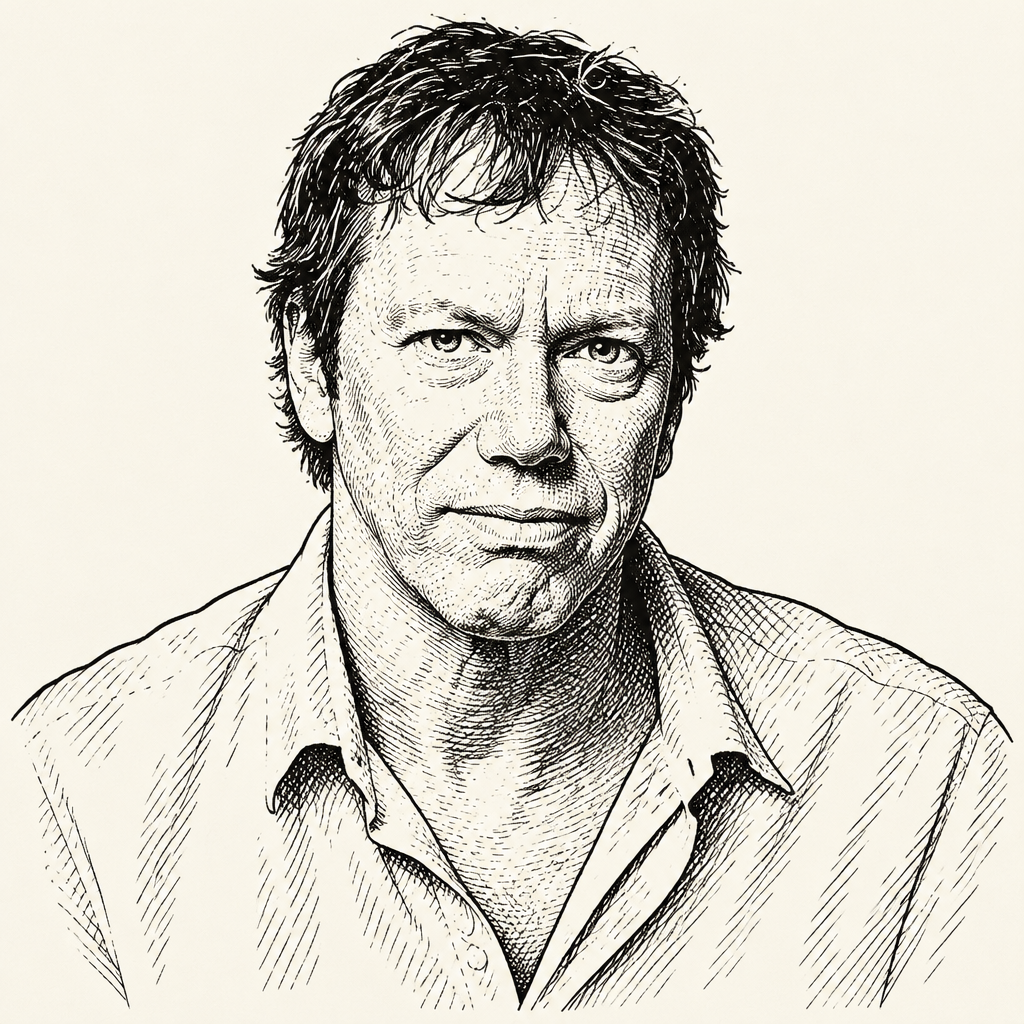
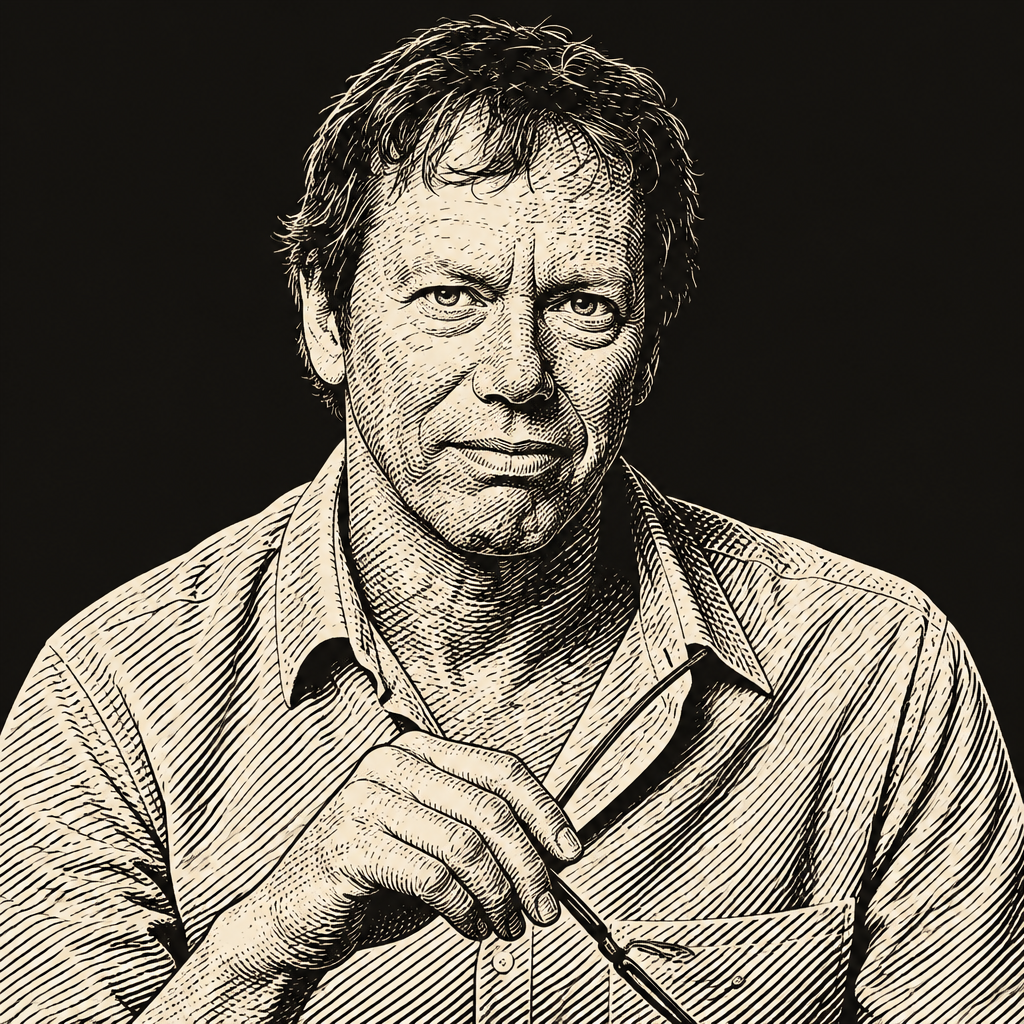
Greene’s own enduring fascination with ancient cultures and Neanderthals served as an example. He said he had been drawn to them since he was young. Reading about their brains, rituals, culture and different relationship to death made him wonder what the world might have been like if their lineage had survived. He could not explain why these subjects excited him so much, but the interest had been present since childhood, before he knew whether it would be useful or admired.
The daemon, then, is not simply a warrant for immediate gratification. Greene emphasized that its voice may challenge a comfortable role, while also distinguishing it from impulses directed toward power or harm. His account offers a way to think about the experience of misalignment, not a test that makes every decision easy or its consequences predictable.
Following an inner direction can require leaving security
Greene used Friedrich Nietzsche to show how a person’s inner direction can conflict with a seemingly secure life. Nietzsche was raised in a religious household and expected to follow a path shaped by his father’s faith. He became a classical scholar and professor, and developed a connection with the composer Richard Wagner. From the outside, the path looked established. Greene described Nietzsche as increasingly restless, drawn toward poets and ideas his teachers warned him away from, and eventually unwilling to remain within the career and intellectual world that had been laid out for him.
Greene said Nietzsche left his post and wandered in Italy, where he became attentive to how climate affected him. The German weather, in Greene’s account, had shaped a particular disposition; the light and climate of Italy suited him differently. There, Greene said, Nietzsche’s books began to emerge with force. But this was not a story in which following an inner voice simply resolved the conflict. Greene described Nietzsche later collapsing after seeing someone beat a horse. He identified with the animal, grabbed it and broke down. Nietzsche spent the final decade of his life mentally incapacitated.
Greene offered the story as a caution about how far the daemon can take someone, not as a demonstrated explanation of Nietzsche’s collapse. His example leaves the danger in view: the call to leave a settled role may be real and consequential without offering protection against suffering or collapse.
Greene offered Ingrid Bergman as a different case. As a child, Bergman knew she wanted to act, despite people trying to redirect her. Later, she became publicly associated with an image of the beautiful, respectable wife. When she left that role and had an affair with an Italian director, she was vilified. Greene interpreted the decision as a refusal to keep performing an identity that was not hers. The same pressure toward self-definition, in his view, can operate in a life far removed from the stereotypical image of a philosopher or artist.
Williamson brought up the writer David Deida, whose career had moved from computer science and artificial intelligence into writing, tantra, yoga, masculinity and later mathematics and AI. Deida had explained the changes by saying that he could tell when something was no longer for him. Williamson was struck less by the range of Deida’s interests than by the conviction to leave a path even when it had brought status or expertise. As Williamson recalled it, Deida said the pain of staying out of alignment eventually outweighed the fear of what might happen if he changed course.
Greene recognized that experience in his own career. After the success of The 48 Laws of Power, he faced pressure to produce another book in the same vein. Instead, he wrote The Art of Seduction, a subject that had interested him since his twenties and felt personally compelling, even though it was not what his publisher and partner expected. He said each book had to take him somewhere new rather than repeat the last one.
The same principle shaped the book he had delayed for years. Greene first encountered the idea of the sublime around 2000 and intended to make it his next project. He set it aside when the opportunity to write with 50 Cent arrived, then moved from that work into other books. After Greene’s own near-death experience, he felt that he could no longer postpone the subject. The experience made the project urgent.
He described a failed early version of the 50 Cent book as an example of what happens when a project does not contain enough of the writer. The first draft focused heavily on 50 Cent’s business dealings and did not feel like Greene’s work. When that version was cancelled, the book was reshaped to include more of Greene’s own interests and way of thinking. He said it became stronger when he was genuinely engaged in it.
For readers deciding whether to change course, Greene’s warning was that fear can disguise itself as reasonableness. A person may stay in an unsatisfying career for income and stability, then grow increasingly disengaged. He argued that the cost of suppressing one’s inclinations can emerge in work and in the body. He also shared the case of a basketball coach in his thirties who was offered an NBA head-coaching job. The coach worried about leaving a comfortable post in the G League, risking failure in public and losing the option to return. Greene advised him to take the job. The coach did, and his team won a championship several years later. Greene’s point was not that taking a risk guarantees a reward. It was that the fear of losing security may prevent someone from taking a step that would teach them more.
Greene had faced a similar choice in his own thirties, when he held a television job in Hollywood that looked like stability but made him miserable. His mother urged his girlfriend to persuade him to stay. He quit, despite the disappointment it caused. He believed that staying could have led to a well-paid career but would have left him feeling that he had sacrificed the life he wanted.
Attention can sharpen under danger, but it need not depend on danger
Greene’s account of pagan religion followed the same distinction between a flat explanation and an experience that connects a person to forces beyond the individual. He said modern readers often picture the Greek gods as comic human characters, similar to figures in a superhero film. That, he argued, is a projection onto ancient beliefs. He understood the gods instead as powers in nature: forces that could be felt as moving through a person, rather than distant characters in the sky.
Sexual desire, for example, can be described as hormones acting in the body. Greene suggested that an older religious vocabulary could also treat desire as a force larger than an individual, one connected to the biological and natural processes through which life continues. He described a scientist observing paramecia drawn toward one another even though, as Greene recounted it, that attraction was not part of their method of reproduction. Greene interpreted the example as suggestive of a broader force of combination in nature; he did not present it as a settled scientific finding.
Greene also described the Eleusinian Mysteries, an ancient Greek religious tradition that he said lasted for thousands of years and was associated with experiences of death and rebirth. He compared the experience’s impact to the story of Persephone and Demeter: the descent into the underworld and the return that brings spring. The point, as he presented it, was that religious experience once gave people a means of undergoing transformation and feeling part of something larger.
He went further and argued that Christianity retained deep pagan roots, pointing to parallels between the story of Dionysus, who dies and is reborn, and the story of Jesus. Greene’s claim was that a sharp division between paganism and Christianity obscures continuities in their myths and rituals. He spoke personally of feeling drawn to ancient Assyrian sculpture and Aboriginal art, which seemed to him more alive and direct than much modern imagery.
A story of a Russian explorer, Arsenyev, and an Indigenous hunter named Dersu Uzala brought these ideas into the landscape. In Greene’s telling, Arsenyev was mapping the Siberian taiga at the turn of the twentieth century when Dersu joined his expedition. Dersu was a hunter and trapper whose knowledge of the forest impressed the scientist. He could read tracks and broken branches, anticipate weather and interpret the behavior of animals. He spoke of the forest as alive and breathing.
The story’s decisive encounter was with a tiger. Arsenyev, frightened, raised his rifle. Dersu told him to put it away, then addressed the tiger as Amba and asked it not to be angry because they were only passing through. The tiger left. Greene presented Dersu’s response as part of a broader example of a person whose attention and knowledge of the environment had been cultivated far beyond what most modern people possess.
The explorer came to see that Dersu had a kind of intelligence he and his fellow scientists lacked. Greene described Dersu as able to read the forest as one might read a book, drawing information from tracks, smells, branches and weather. When Dersu was later murdered by people who robbed him, Arsenyev mourned the loss of a world and a form of knowledge disappearing with him. Greene wondered how much more powerful scientific understanding might be if it remained connected to that level of attention to the environment.
Williamson’s account of a safari in Zambia supplied a contemporary, personal version of heightened attention under threat. He described a close encounter with an elephant while travelling in a small canoe on a narrow tributary of the Zambezi. A large female elephant approached the water with her young nearby. Williamson’s guide remained calm, but the elephant moved toward them, backed away, lowered her head and charged. She stopped close to the canoe, then turned away.
Williamson had been frightened and full of adrenaline. For the next hour or two, he said, the environment seemed unusually vivid: he could hear birds, distinguish the direction and distance of their calls, and see sharper colors and lines. The experience stayed with him in detail. Time seemed to slow, and he could recall the morning’s sequence of events, smells and physical sensations. He described it as an encounter that made him feel unusually present in the environment, not as a lasting supernatural ability.
Greene connected the account to his interest in what the body can do under extreme conditions. He described a climber who fell onto a narrow ledge in a storm, injured his knee and believed he was about to die. A voice in him urged him to stand. Once he did, he found a way down the mountain and felt an extraordinary surge of energy. The climber spent years trying to reproduce the state and eventually developed a demanding running practice that sometimes brought it back. Greene interpreted the experience as evidence that the body’s hormonal systems can produce capacities that ordinary life rarely calls upon.
He also recalled waking at the end of a subway line in New York to find four men around him, one holding a knife. Greene said an unexpected calm came over him. He spoke quietly, showed them what money he had, and they left. He wondered whether bodily chemistry had helped protect him. Both stories served his broader point: people may have capacities for attention or action that rarely become apparent in ordinary, protected circumstances. They do not show that danger is necessary to access the sublime.
A change in attention can begin with an ordinary journey
When Williamson asked how someone could access the sublime more deliberately, Greene emphasized that the first requirement is wanting a different kind of experience. A person whose only priorities are money, career and getting through the day may read about the sublime without changing anything. Greene said the dissatisfaction itself matters: restlessness and boredom may be signs that ordinary sources of stimulation are not meeting a deeper need.
He described exercises in his book that try to make abstract ideas physical. Thinking about mortality can remain a detached intellectual exercise, so Greene developed a meditation that asks the reader to imagine the bodily sensations of dying: the world receding, the body sinking, bones dissolving, the mind perhaps separating from the body. The person then goes outside and walks as though they had died and are encountering the world afterward. Greene’s aim is to make mortality present enough that ordinary sights feel different.
Greene also used travel to illustrate how attention can change what a familiar activity feels like. The Russian writer Nabokov remembered feeling the speed of a train in his body as a child. Adults can fly across the country without registering that they are flying, with the shades drawn and their attention on a computer. A child might look out at the Grand Canyon or the mountains and feel the strangeness of being airborne. Williamson put it more bluntly: the movement of the plane has become an inconvenience to what he wants to do on it.
The aim is not to become a child again, Greene said, but to recover the ability to notice what has become routine. Climbing a mountain, too, can be approached with different priorities. The activity does not guarantee a sublime experience; a person can carry the same narrow, task-focused attention onto a mountain. What matters is how they attend to the experience.
Nor does the alternative have to be a dramatic journey or a brush with danger. Greene said he could barely walk out of his front door, but could find wonder in his backyard by studying hummingbirds: how their bodies work, how they hover, and what the world might look like to them. He connected the birds to Aztec beliefs that soldiers who died could be reborn as hummingbirds. Observation led from an animal in the yard into biology, history and myth.
Greene said the book included stories, exercises and meditations intended to help readers carry these ideas into daily life. He emphasized that the desire has to come first. A person who is content to make money, get by and advance a career may find the ideas have little lasting effect. He wanted readers to feel the restlessness or emptiness they were trying to suppress, and to recognize that they wanted something beyond the routine sources of stimulation.
Williamson suggested that people often pursue money, status and commercial success in the hope of finding intensity. Building a company for years in anticipation of a major sale, for instance, may not be the only route to feeling alive; a difficult hike without a phone might open another route. Greene agreed. The point was not that career ambition is worthless, but that it can become a substitute for forms of contact and wonder a person has stopped seeking.
Greene’s practical distinction was not between using technology and rejecting it, but between passive consumption and active attention. A person can use social media and AI while also noticing their effects and making room for other experiences. The sublime, he said, involves a shock: an encounter with strangeness, surprise or even fear. Entertainment can supply a controlled version of that shock by manipulating emotion. His alternative was to become an active participant in one’s own experience, finding the unexpected in the world directly.
The world need not be remote or spectacular for that to happen. Greene’s hummingbirds, Williamson’s memories of travel and the attention required to see a landscape differently all point to a practice of looking again. If life feels flat, the first move may be less about acquiring a new stimulus than about recovering attention to what is already there.