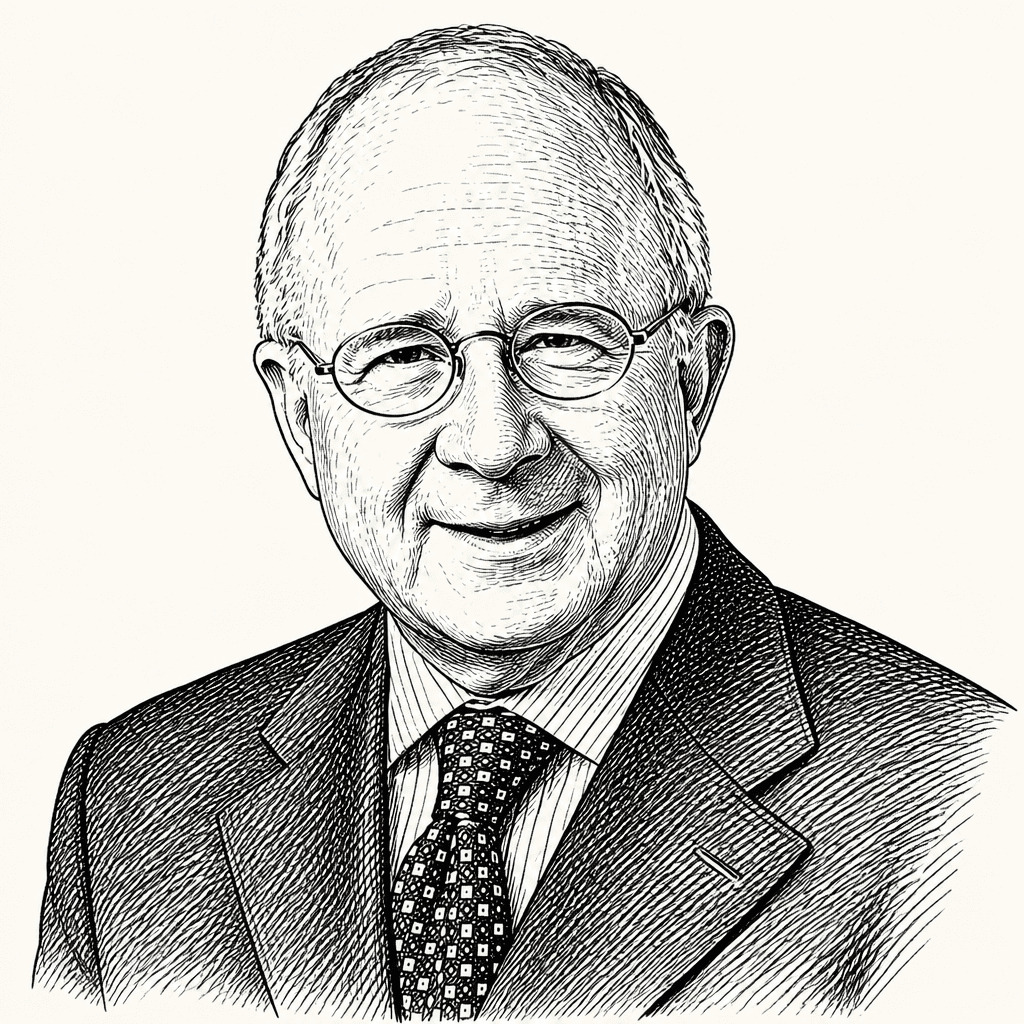
Michael Bordo
Michael Bordo is an economist and economic historian, serving as the Duncan Stewart Distinguished Visiting Fellow at the Hoover Institution and as Board of Governors Professor of Economics and director of the Center for Monetary and Financial History at Rutgers University. His work focuses on monetary policy, financial history, economic history, and central banking.
Central Banks Face Accountability Tests Across Independence, Reserves, and Stability Policy
At a Hoover Institution conference on central-bank independence, Marvin Barth, Darrell Duffie and Christina Skinner each framed the next phase of monetary and financial policy as an accountability problem. Barth argued that the Federal Reserve’s policy failures and lack of humility have weakened its political legitimacy; Duffie said shrinking the Fed’s balance sheet depends on changing reserve demand and payment mechanics, not simply selling assets; and Skinner argued that financial stability policy should weigh growth and economic security rather than treating every visible risk reduction as a net gain.
Reserve Bank Removal Powers Could Expose the Fed to Presidential Control
At a Hoover Institution conference on central-bank governance, John Cochrane, Edward Nelson, Gary Richardson and David Wilcox treated Federal Reserve independence as a delegated legal structure rather than a self-executing norm. Richardson argued that Congress designed the Fed to frustrate presidential control, while Wilcox warned that ambiguous authority over Reserve Bank presidents could still give a determined president a path into the FOMC. Nelson added that independence protects the Fed’s operational judgment, not the quality of its monetary doctrine.
Fiscal Stress Is Narrowing the Room for Independent Central Banks
At a Hoover Institution conference on central-bank independence, Michael Bordo, Barry Eichengreen and Hanno Lustig argued that fiscal policy is increasingly constraining what monetary policy can credibly do. Bordo used Britain’s Great Inflation to show how a fiscal regime shift can turn shocks into inflation; Eichengreen said U.S. fiscal politics now pose risks to the dollar and the Federal Reserve; and Lustig argued that markets are starting to price Treasurys less as safe assets than as risky debt. Their shared point was that legal independence offers central banks only limited protection when debt dynamics, fiscal politics and bond-market stress move against them.
Three Centuries of Recessions Undermine the Boom-Bust Theory
Tyler Goodspeed argues in a Hoover Institution presentation that recessions are usually misread as the inevitable result of excess in the preceding boom, when the longer historical record points instead to shocks filtered through institutions that either absorb or amplify them. Drawing on UK and US data back to 1700, he says expansions do not die of old age, recession warnings routinely fail, and downturns are often given retrospective moral labels — from dot-coms to housing — that obscure what actually caused the contraction.