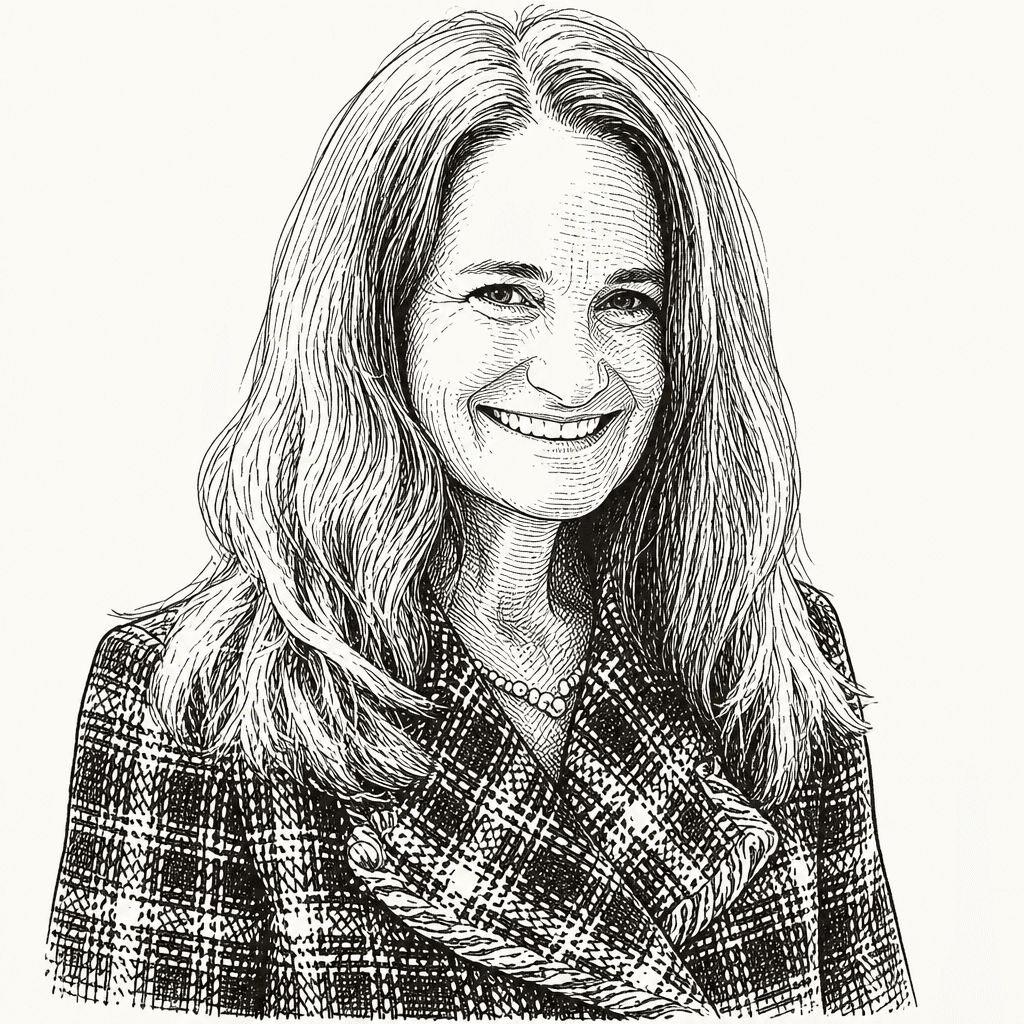
Elizabeth Economy
Elizabeth Economy is the Hargrove Senior Fellow and co-chair of the Program on the US, China, and the World at the Hoover Institution, where she hosts and interviews guests for the China Considered podcast. A leading scholar of Chinese domestic and foreign policy, she previously served as senior advisor for China at the U.S. Department of Commerce from 2021 to 2023.
China’s Credit-Fueled Growth Model Now Constrains Its Future
Rhodium Group’s Logan Wright argues that China’s financial system, once the engine of its economic rise, now locks capital into unproductive state firms and investment while starving households and private businesses of the income and credit needed for a new growth model. In a discussion with Elizabeth Economy, he says Xi Jinping’s centralization has made it harder to absorb losses or reverse policy, leaving Beijing reliant on exports as domestic consumption and employment weaken. A genuine shift, Wright contends, would require conspicuous fiscal transfers, financial restructuring and a willingness to accept slower growth.
Gulf States Still Anchor Security in the U.S. Despite China’s Rise
Jonathan Fulton tells Elizabeth Economy that China’s Middle East role is substantial but narrower than the recent hype suggests: Beijing is a major economic actor in the Gulf, yet remains a limited security and diplomatic player. In his account, the Iran crisis and reopening of the Strait of Hormuz underscored that regional governments may be frustrated with Washington but still rely on the U.S. security architecture because no other power can replace it. Fulton argues China is useful to Gulf states in trade, infrastructure, digital systems and energy, while its capacity to convert that influence into geopolitical power remains constrained.
Huang Zhen’s Sketches Show the Long March at Ground Level
Hoover Senior Fellow Elizabeth Economy uses the Hoover Institution Library & Archives’ 25 original ink sketches by Long March survivor Huang Zhen to explain why the retreat became central to Chinese Communist Party history. She argues that the 6,000-mile march preserved the Communist movement after near-destruction, consolidated Mao Zedong’s leadership, and forged a surviving cadre through extreme hardship; Huang’s drawings matter because they show that political formation at ground level, in images of cooking, carrying, climbing, illness, and movement through punishing terrain.
Iran Crisis Weakens U.S. Leverage Ahead of Trump-Xi Summit
Former Deputy Secretary of State Kurt Campbell argues in a conversation with Elizabeth Economy that the Iran crisis has weakened the U.S. position in Asia just as President Trump meets Xi Jinping in Beijing. Campbell says the conflict has diverted military capacity and political attention from the Indo-Pacific, exposed limits in allied support, and given China an opening to test U.S. commitments, especially on Taiwan. Economy shares his emphasis on allies but is less convinced that Beijing can convert U.S. disorder into lasting strategic advantage.
U.S.-China Diplomacy Can Manage Risk but Not Resolve the Systems Contest
At a Hoover Institution discussion on U.S. strategy toward China, Sarah Beran, Matt Turpin and Miles Yu argued that diplomacy with Beijing remains necessary but cannot resolve the deeper contest between the two countries. Beran framed the task as risk management through leader channels, alliances and domestic renewal; Turpin described a long hostile rivalry that will run through trade, technology and economic statecraft; and Yu said the problem is systemic incompatibility that Washington should confront more directly.
Trump-Xi Summit Prep Risks Leaving Security Flashpoints Off the Table
Sarah Beran, a former diplomat and national security official, argues that the Trump-Xi summit is being prepared through an economic channel that cannot handle the relationship’s highest-risk disputes. In conversation with Elizabeth Economy, Beran says the meeting may produce useful optics and limited trade progress, but without national-security preparation on cyber, Taiwan, arms control and military channels, it is unlikely to do more than briefly stabilize a relationship defined by recurring tension and mutual leverage.
U.S. China Policy Needs a Unified Economic Statecraft Command
Elizabeth Economy’s conversation with Randy Schriver and Mike Kuiken of the US-China Economic and Security Review Commission argues that Washington’s China problem now cuts across trade, technology, supply chains, cyber operations, Taiwan planning, pharmaceuticals, and sanctions policy. Schriver and Kuiken say the US government still manages many of those risks through agencies and laws built for an earlier era, leaving economic statecraft fragmented just as China’s leverage has become more integrated. Their case is less for severing all economic ties than for building the machinery to decide which ties are tolerable, which are dangerous, and which require national effort to replace.