Trump-Xi Summit Prep Risks Leaving Security Flashpoints Off the Table


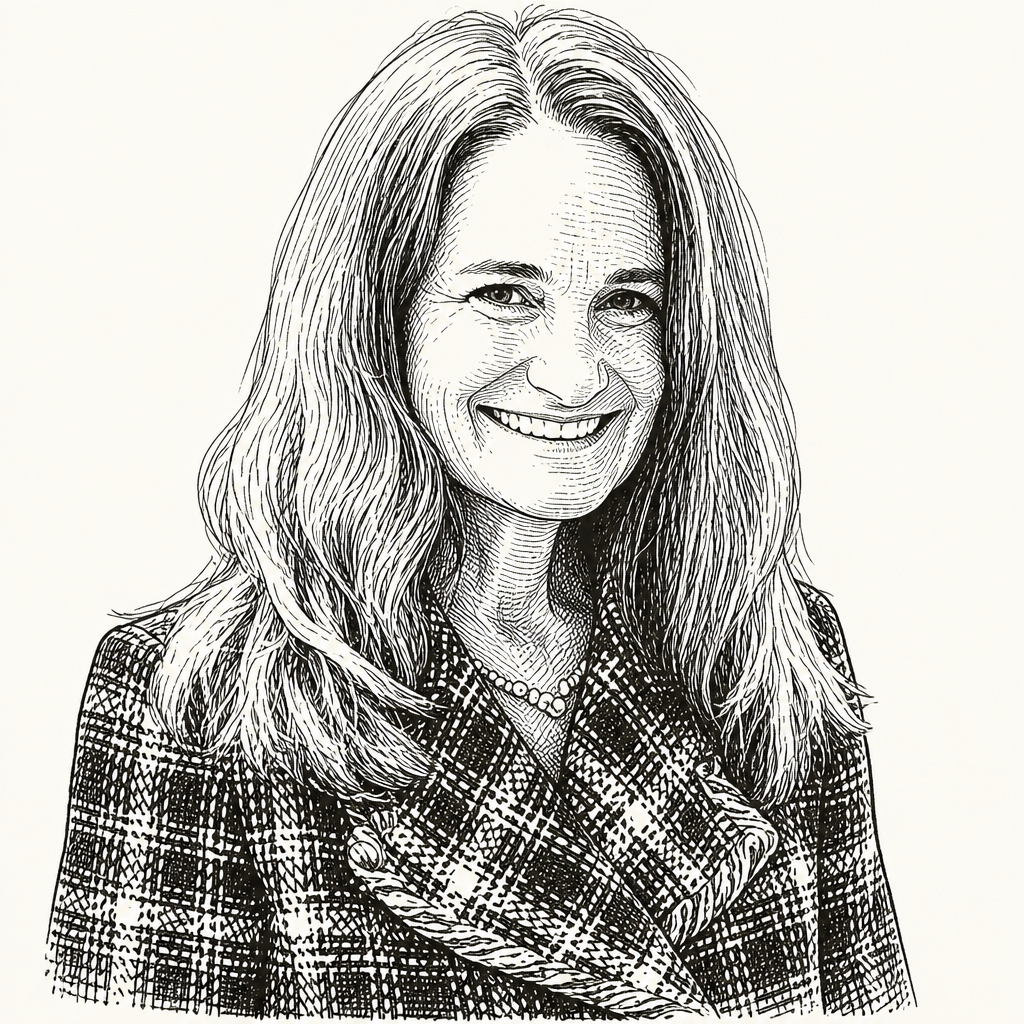
Sarah Beran, a former diplomat and national security official, argues that the Trump-Xi summit is being prepared through an economic channel that cannot handle the relationship’s highest-risk disputes. In conversation with Elizabeth Economy, Beran says the meeting may produce useful optics and limited trade progress, but without national-security preparation on cyber, Taiwan, arms control and military channels, it is unlikely to do more than briefly stabilize a relationship defined by recurring tension and mutual leverage.

The summit’s prep channel does not cover the highest-risk issues
Sarah Beran’s central caution about the Trump-Xi summit is that the meeting may be prepared through an economic channel while the most dangerous frictions in the relationship are national-security ones. Treasury Secretary Bessent and Vice Premier He Lifeng, as Beran described it, are the working channel for summit preparation. That is useful: summits need an authorized channel, and familiarity between teams can matter. But the channel’s authority is limited to trade and economic issues.


That limitation matters because the combustible issues Beran named are cyber operations, cross-strait dynamics, Iran, arms control, military-to-military channels, and broader foreign policy. Her concern is not simply that those matters may be absent from a public statement. It is that, without preparatory work through the right institutions — military, foreign ministry, security services, and other channels — the two sides are less able to reduce the risk of miscommunication, accidents, and misperception during what she called a period of “great geopolitical upheaval.”
And so we are leaving off the table most of the really thorny issues between the US and China.
The critique rests on Beran’s reading of how the Chinese system works. It is centralized and leader-driven, she said, but still depends on bureaucratic authorities. A vice premier responsible for economic agencies is not going to make recommendations or decisions on force posture, military-to-military talks, or cross-strait issues. The United States may have a president who can walk into a meeting and decide “on the fly” what he wants. Beran said the Chinese system does not work that way.
In earlier summit processes, as she described them, the United States first determined what it wanted before a leader-level meeting. Agencies then used different channels — Treasury, Commerce, Defense, State — to push desired outcomes, relationship framings, or communication mechanisms. The presidential meeting served to announce a direction or lock in modest steps already prepared. That process existed not only during the Biden administration, she said, but also during the first Trump administration.
The age of long joint statements and sprawling summit deliverables is over, in Beran’s account. She said that has not been the pattern for roughly a decade. Across Trump’s first term, Biden’s term, and the current Trump administration, the purpose has become more limited: preserve channels of communication and stabilize the relationship as much as possible amid competition.
That narrower purpose does not make the meeting meaningless. Beran expects a “positive halo” around the summit. That could give companies some room to advance specific issues, particularly if trade irritants are raised and non-sensitive sectors are encouraged. But she does not expect a reset. Once the summit glow fades, she expects the relationship to return to its recent pattern: recurring tension, periods of escalation, and mutual dependence that gives both sides coercive leverage over the other.
At the end of this, in another couple weeks, I would argue we're probably back to the same relationship we have had for the last, certainly last couple of years. Tension at times, escalation, but essentially both countries have each other in a chokehold.
Optics may be the strongest US leverage, and it may already be spent
Elizabeth Economy pressed Beran on leverage because the two sides have engaged in repeated tit-for-tat moves on tariffs, export controls, investigations, and other trade measures. Beran’s answer was that in past negotiations with Chinese officials, the most powerful US source of leverage was often not a specific tariff rate or legal tool, but optics: the ability to provide a visible signal of closeness between the two leaders.

That leverage works only if Washington can withhold or grant positive optics. Beran’s concern is that both leaders may want the optics badly enough that the United States loses a card it could otherwise play. Beijing and Washington both appeared to her to be focused on the image of a successful meeting, in part because both leaders need positive optics for domestic reasons.
She used Trump’s characterization of a prior meeting in Busan to illustrate the gap between presidential framing and expert assessment. Trump had called it a “12 out of 10,” Beran recalled, while most China experts would have regarded it as a standard bilateral meeting on the margins of a multilateral gathering. For that reason, she suggested that the operational significance of the summit may depend less on what specialists think occurred and more on how the White House and Zhongnanhai choose to portray it.
Economy agreed that both countries face significant domestic challenges and international headwinds. The summit’s public presentation is therefore not decoration around policy; it is part of the policy environment itself. If both leaders benefit from a visible reduction in tension, the meeting may be portrayed as successful even if few substantive changes follow.
Beran also pointed to signs that the summit’s substance may not have received sustained attention from the White House. She said she expected the president to be briefed in detail only as the team was preparing to depart, and she treated that expectation as a source of volatility. She also said invitations for the CEO delegation appeared to go out roughly 24 hours before departure, which she called “not a lot of time.” In her reading, the Middle East war and other issues had likely consumed White House focus, making the summit more about optics than carefully prepared substance.
That does not mean nothing useful can emerge. Economy raised the possibility of a “board of trade” and a “board of investments,” asking whether such mechanisms would be enough to bring stability to the relationship. Beran’s answer was limited: if a board of trade is meant to elevate trade irritants, resolve some of them, and encourage trade in non-sensitive sectors, she would see that as a positive outcome. She noted that some CEOs traveling with the president, including those associated with Boeing and Cargill, would likely seek exactly that kind of assistance.
A proposed board of investment seemed more difficult. On the US side, Beran anticipated concern from voices around the president about national security risks associated with expanding Chinese investment in the United States, especially in critical infrastructure or technology. Economy added that Congress and local officials would likely raise alarms as well, particularly in the sectors where Chinese investors might most want access and where US officials would be most concerned.
On the Chinese side, Beran questioned the durability of any guarantees the Trump administration might offer. If Beijing is uncertain whether US commitments to protect Chinese investment would survive implementation, politics, or future policy shifts, the mechanism may stumble before it produces much. The board of trade might help with non-sensitive commerce; the board of investment would collide with the security architecture of the relationship.
A more prepared summit could have advanced modest but real goals
Beran did not argue that a better summit process would have solved the major disputes. She was explicit that Beijing is unlikely to mediate the Iran conflict in a major way, pull back from overcapacity, or fundamentally change its behavior on cyber issues. “It’s just not where we are in the relationship,” she said.
But she did argue that more preparation could have advanced modest, substantive goals. Her clearest example was artificial intelligence safety and risk. She wanted to see progress on an understanding around AI, and she connected that to work done in the prior administration on ensuring a human remains “in the loop” on the use of nuclear weapons. To Beran, that is a common-sense principle, but an important one for the United States and China to state.
She suggested there may be some mechanism established to discuss AI, but emphasized that leader-level agreement is not produced by leaders improvising technical detail. Trump and Xi are not going to sit together and reason through the dangers of large language models in depth, she said. The diplomacy has to occur on the back end, with the summit providing the political uplift needed to seal work already done.
That sequence matters. It is better to do the technical and diplomatic work before a summit because the summit can then close a deal. Still, Beran saw room after the meeting to use the next leader engagement as a target and work toward something more concrete.
Her final piece of advice to Trump, if asked what he should do on China, was process-oriented but fundamental: know what the United States wants before rushing into a meeting. She allowed that Trump may have a China policy in mind and may have communicated it inside the government. But step one, in her view, is defining the desired outcome from the relationship and the longer-term goal.
The first thing is to know what we as the US want out of the engagement before you rush into a meeting.
Economy endorsed that as advice for any US leader. The exchange crystallized a broader theme in Beran’s remarks: summits are not substitutes for strategy. They can amplify preparation, announce mechanisms, or help manage tension. They cannot themselves decide what the United States wants from China.
The strongest China policy blends direction with coordination
Beran has served in Republican and Democratic administrations, and she described the difference less as a divide over whether China is a strategic challenge than as a difference in governing style. Over the past decade, she said, there has been a “tremendous amount” of bipartisan consensus on China. The differences are in implementation, tempo, and institutional process.
Republican administrations, in her experience, tend to have a strong view of executive authority. They are more top-down, often setting a broad policy direction and leaving agencies to work out details. Democratic administrations, particularly Obama and Biden, were more focused on consensus-building across agencies. That process could take longer, but it produced a single playbook across the US government. Beran argued that speaking with one voice on China is “incredibly important,” especially when multiple departments are sending messages through diplomacy, technology policy, sanctions, export controls, and other tools.
Economy connected that to Secretary Antony Blinken’s China-policy framing of “invest, align, compete,” which she saw as defining the Biden administration’s approach. When Economy worked on a speech for Secretary Gina Raimondo at MIT, she said, the Commerce Department followed the same structure and added a cooperation component. Economy recalled Blinken’s Alaska-era framing that the United States needed to negotiate from a position of strength, and she argued that domestic capability, allied alignment, competition, and cooperation remain the pillars of a successful China policy.
Beran’s assessment of the Biden approach began with the context in which the administration took office: the depths of COVID, an urgent domestic response, and a need to rebuild sources of American strength at home. She pointed to major investment bills, including infrastructure legislation and CHIPS, as part of the “invest” pillar. The next move was restoring habits of communication with partners and allies across technology, diplomacy, arms control, and other issues. Only then, in her description, did the China piece fully follow: an effort to rightsize the relationship from a stronger domestic and allied base.
That ordering mattered. Sources of strength begin at home, then with partners, and only then in the direct management of competition with China.
At the same time, Beran did not present the Biden process as flawless. Asked what each administration could learn from the other, she said the ideal US approach would blend both styles. The Biden administration, in her view, often designed tools intended to advance American competitiveness without working closely enough with industry or understanding the world companies operated in. That hampered policy design and limited the government’s ability to push investment or bring companies “into the tent” as part of an inside-the-US approach.
Economy agreed that business should have been treated as a more integral part of foreign policy across the administration, not only at Commerce or Treasury. She cited Commerce Department efforts under Raimondo to work with companies on digital skilling through the Indo-Pacific Economic Framework, saying that most companies asked to participate were eager to help. For Economy, US firms are not merely economic actors; they are also part of American soft power and often among the country’s strongest global advertisements.
Beran’s caution was that industry cannot be brought so close that its interests subsume the national interest. But she still argued for closer coordination on some issues. Her broader contrast was that Democratic administrations may study a problem for a long time before producing an outcome, while Republican administrations tend to act quickly and consider consequences later. Somewhere between “thoughtful” and “shoot first, ask questions later,” she said, is the right policy balance.
The NSC view widened the toolbox and exposed the tradeoffs
Beran’s move from the State Department to the National Security Council changed her view of China policy because it changed the instruments she could see. At State, the work involved diplomacy: economic diplomacy, public diplomacy, negotiations, statutory authorities, pressure tools, sanctions recommendations, messages, carrots, and other instruments used to advance US interests through foreign and economic policy.
As director of the China desk under Secretary Mike Pompeo and then for part of Blinken’s tenure, Beran described herself as an implementer. Policy was set by the White House, direction came from the secretary, and she had latitude to determine how to execute. During Pompeo’s time, the pace of China-related actions was “fast and furious,” and she saw the action-reaction dynamic with Beijing in real time.
At the NSC, the view widened to Defense Department authorities, the intelligence community, Commerce, Treasury sanctions, investment screening, and more. Her job was to take the policy direction set by the president and work through the interagency process to determine which tools should be deployed, in what sequence, to achieve the intended result. That produced “very long, painful interagency meetings,” but she believed the coordination produced a better outcome.
The White House also exposed a layer Beran said she had had “zero visibility” into from State: the balancing of foreign policy against domestic policy. The president and White House had to decide, with finite money and political pressure on Capitol Hill, where to allocate resources and energy. Foreign policy often did not win. Domestic policy frequently took priority, and Beran argued that this is often the right outcome. Still, for a foreign policy practitioner, seeing those tradeoffs in real time was eye-opening.
That observation connects directly to her summit caution. A leader-level meeting is not just a China-policy event; it competes with domestic demands, congressional pressure, wars elsewhere, economic concerns, and the bandwidth of senior officials. Beran’s point was not that China is secondary. It was that China policy has to be made inside the full machinery of government, where tools, authorities, and political capital are always being allocated against other priorities.
It also shaped her insistence on “rightsizing” China. Her earlier Foreign Service work on the Middle East and South Asia taught her that threats to national security are not determined only by the size of a country’s economy or technology base. A country such as Pakistan, or a conflict environment such as the West Bank and Gaza, can create national security risks as immediate as those posed by a technologically advanced China. The purpose of diplomacy, in her formulation, is to navigate those challenges in proportion: minimize damage to US national security and maximize US advantage.
Third countries were not naive about China; they had few alternatives
One lesson Beran drew from serving outside the China-policy world was that Washington often misreads how other countries evaluate China. In the early years of her Foreign Service career, China was not meaningfully present in many of the markets or countries where she served. That changed over time. From Washington, officials sometimes assumed host countries were naive about the risks of relying on China. Beran argued that this was often wrong.
Many countries understood the risks of over-reliance on China. They made “a very naked assessment of their self-interest.” If the United States or Europe did not provide a real alternative, they took the options available. They were not necessarily blind to the dangers. They were weighing risk and opportunity differently from Washington.
Economy extended the point to the Belt and Road Initiative. She argued that host countries had agency and that China did not simply go out to entrap countries in debt. Some governments may not have perfectly predicted whether a road or railway would produce enough returns to repay Chinese loans — just as the United States itself might not predict such outcomes perfectly. But in Economy’s view, those countries generally believed the deals were in their interest when they signed them.
That lesson bears on summit policy because great-power messages are weak if they are not paired with options. If Washington wants countries to choose differently, warnings about China are not enough. Many governments are not waiting to be educated about Chinese risks; they are weighing the alternatives in front of them.
Companies are no longer looking at China mainly as a market
Beran sees a new shift in how many companies think about China. The first major policy shift, she argued, occurred under Trump’s first administration but would likely have happened even if Hillary Clinton had won in 2016. US companies were frustrated by Chinese industrial policy, overcapacity, intellectual-property theft, and other practices. As the private sector’s advocacy for stable China relations weakened, it enabled a major shift toward a more competitive US policy framework.
Now she sees signs of another “vibe shift,” but for different reasons. It is not primarily about entering China to sell into the Chinese market. That remains challenging because of industrial policy, regulation, and intense Chinese competition. The new corporate question is what to learn from innovation happening inside China and how to use it to improve global operations elsewhere.
In Beran’s description, companies recognize China as a rapidly innovative technology space. They are asking how to adapt or take advantage of technologies and lessons from China for use in other markets. That creates a more complicated policy environment than a simple question of market access. Firms are not only deciding whether to sell in China; they are assessing whether China-origin innovation can “supercharge” multinational operations outside China.
The difficulty is that the US government’s frameworks are unsettled. Investment screening, technology controls, and export controls established under the Biden administration remain mostly in place, Beran said, but they are beginning to erode. Nothing coherent has replaced them, and she does not see a clear interagency view on how to approach investment or trade in this area. Companies are left trying to read between the lines: what the US government intends, how much room they have to act, and what the policy environment will look like in a few years.
Many companies are also preoccupied with risks beyond China policy narrowly defined. The Iran conflict and its cascading effects on supply chains, energy, petrochemicals, and green energy are creating challenges reminiscent, to Beran, of COVID-era disruptions. That matters for the summit because it competes for White House attention and because companies’ China strategies now sit inside a wider map of geopolitical disruption.
Engagement did not simply fail; circumstances changed
Both speakers resisted a simplistic retrospective account of US engagement with China. Beran said China policy has evolved over the past decade because the underlying situation changed: the United States changed, China changed, and perceptions of relative power changed. Diplomacy and the relationship had to change with those realities. The transition has been bumpy, and she acknowledged there are things she would have done differently in retrospect, but she said it would not reflect reality to expect policy to remain constant through such a period.
Economy applied that logic to debates over China’s entry into the World Trade Organization and the broader engagement policy. Claims such as “we should never have let China into the WTO” or “engagement failed,” she argued, often ignore the context in which decisions were made. At the time, there was a reasonable expectation that WTO accession could encourage China to grow and change in ways more consistent with market-based principles. Engagement also achieved real accomplishments, including in areas such as environmental policy, where Economy had worked.
Her point was not that earlier policymakers got everything right. It was that they were operating in a radically different context, and it is wrong to imply that everyone before a given administration was simply naive or foolish. Beran agreed that policy has to reflect changing conditions rather than nostalgia for a prior framework.
That posture also shaped their discussion of Hong Kong and Taiwan. Beran said one of the common mistakes among China watchers is mirroring: expecting China to respond to situations as the United States would. She said she saw that mistake across the intelligence community, the Defense Department, and foreign policy policymakers. Analysts and officials too often fail to frame Chinese reactions through Chinese equities, authorities, and habits.
Economy argued that understanding history, political culture, and individual leaders is essential for issues involving sovereignty, including Taiwan and Hong Kong. She recalled that some observers were shocked China would be willing to “kill the golden goose” in Hong Kong, given its stock market, foreign investment, and trade role. But that reaction missed the point that politics can trump economics when sovereignty is at stake. She cited the Hong Kong Human Rights and Democracy Act as a well-intentioned US tool that she did not think could achieve its aims because it underestimated China’s political priorities.
Beran connected that lesson directly to Taiwan. As China increases pressure on Taiwan, the United States needs to think carefully about the tradeoffs and about how Beijing itself evaluates sovereignty, risk, and pressure.
The hardest intelligence gap is how China’s leaders decide
Asked what Americans do not understand well enough about China, Beran identified a basic but consequential gap: the United States has a limited sense, by design, of how China’s leadership thinks through complex foreign-policy problems. That opacity creates unpredictability. During her time in government, officials struggled to understand inner decision-making within the party and leadership.
This is not merely a problem of missing facts. It is a problem of interpretation. If analysts assume Chinese leaders will respond like US leaders, they may misread incentives, thresholds, or tradeoffs. Beran’s warning against mirroring is therefore both analytic and operational: bad assumptions can shape bad policy, particularly in crisis management.
Her reading recommendations reflected the same emphasis on historical depth and institutional understanding. Her rule of thumb was to avoid books with a dragon and an eagle fighting on the cover. She recommended John Pomfret’s The Beautiful Country and the Middle Kingdom for its granular history of US-China relations back to the 1800s, Richard McGregor’s The Party for its account of the Communist Party’s power behind formal institutions, and Desmond Shum’s Red Roulette as an instructive account tied to real estate and corruption near where she had lived in Beijing.
The recommendations point to Beran’s larger method: China policy requires more than an inventory of current disputes. It requires historical memory, attention to party power, awareness of elite incentives, and humility about what outsiders cannot see.