U.S. China Policy Needs a Unified Economic Statecraft Command
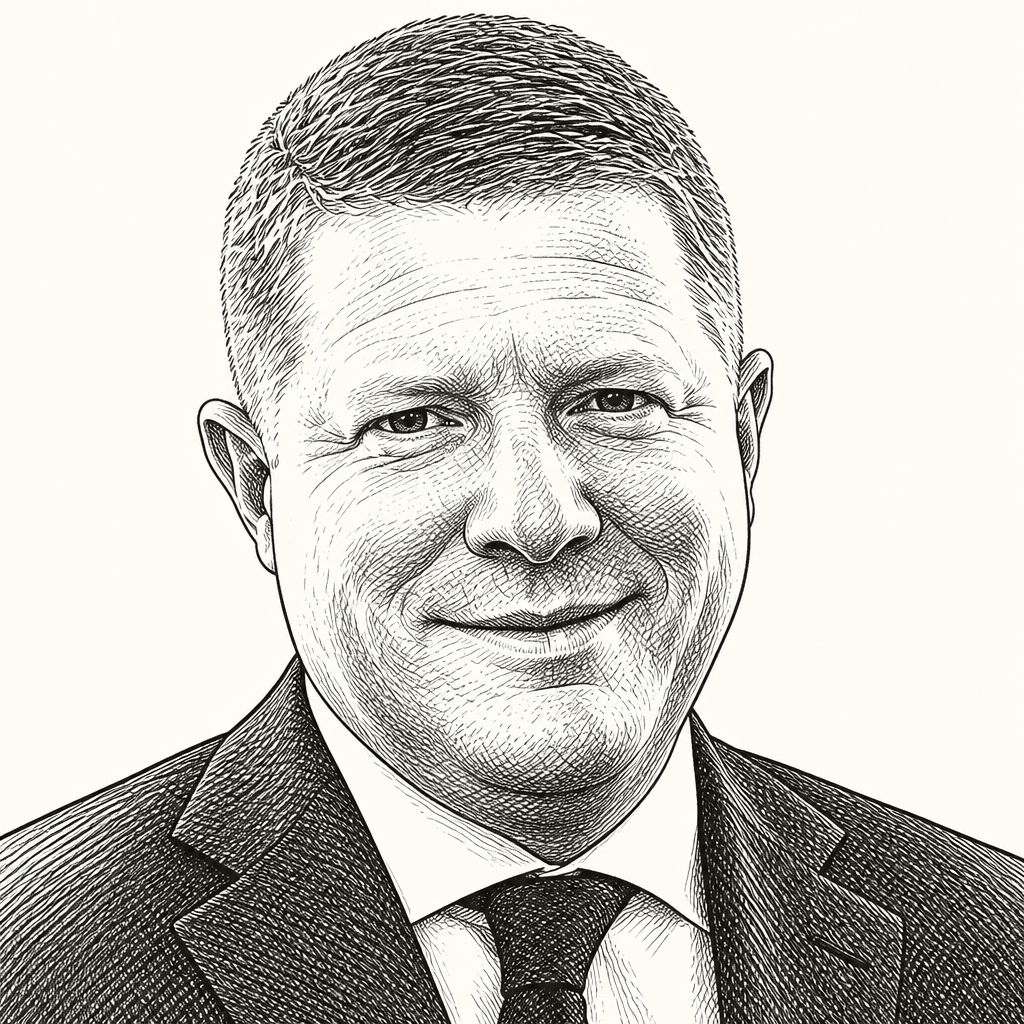
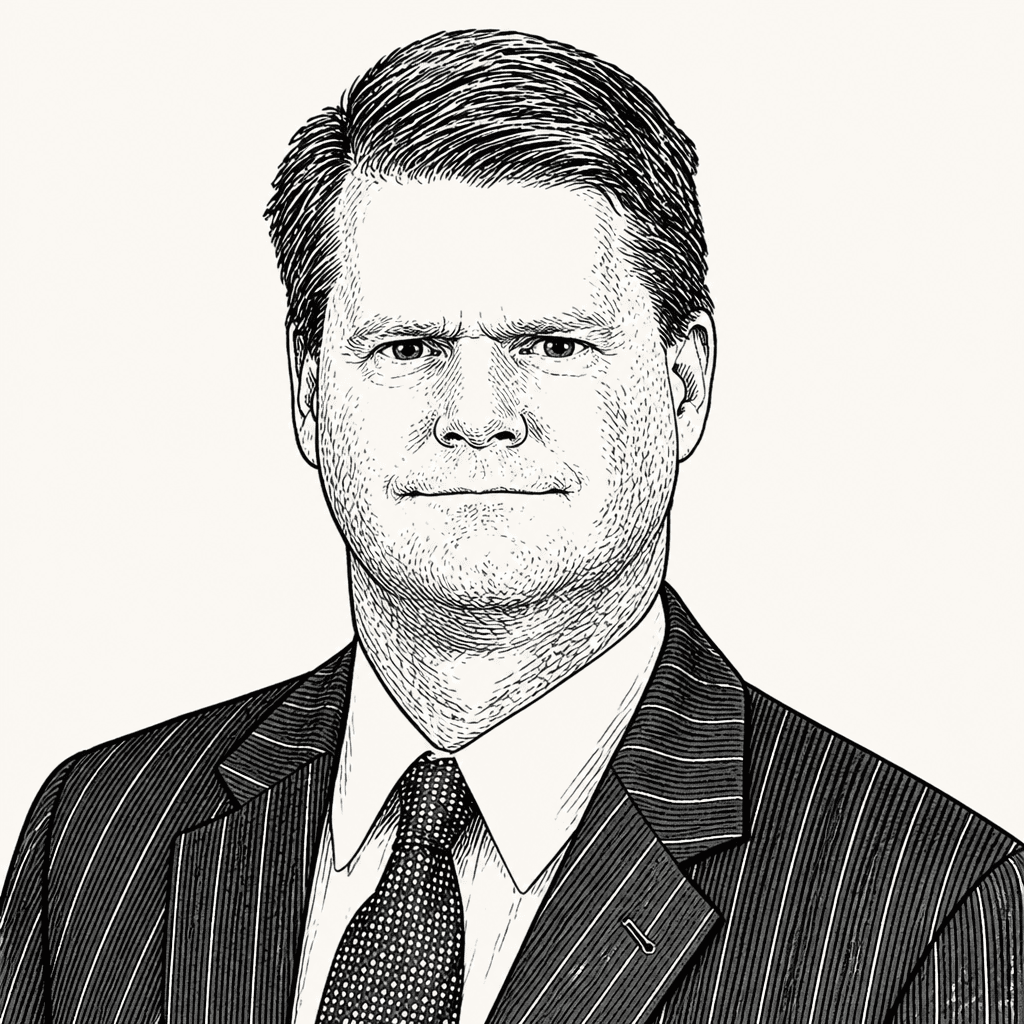

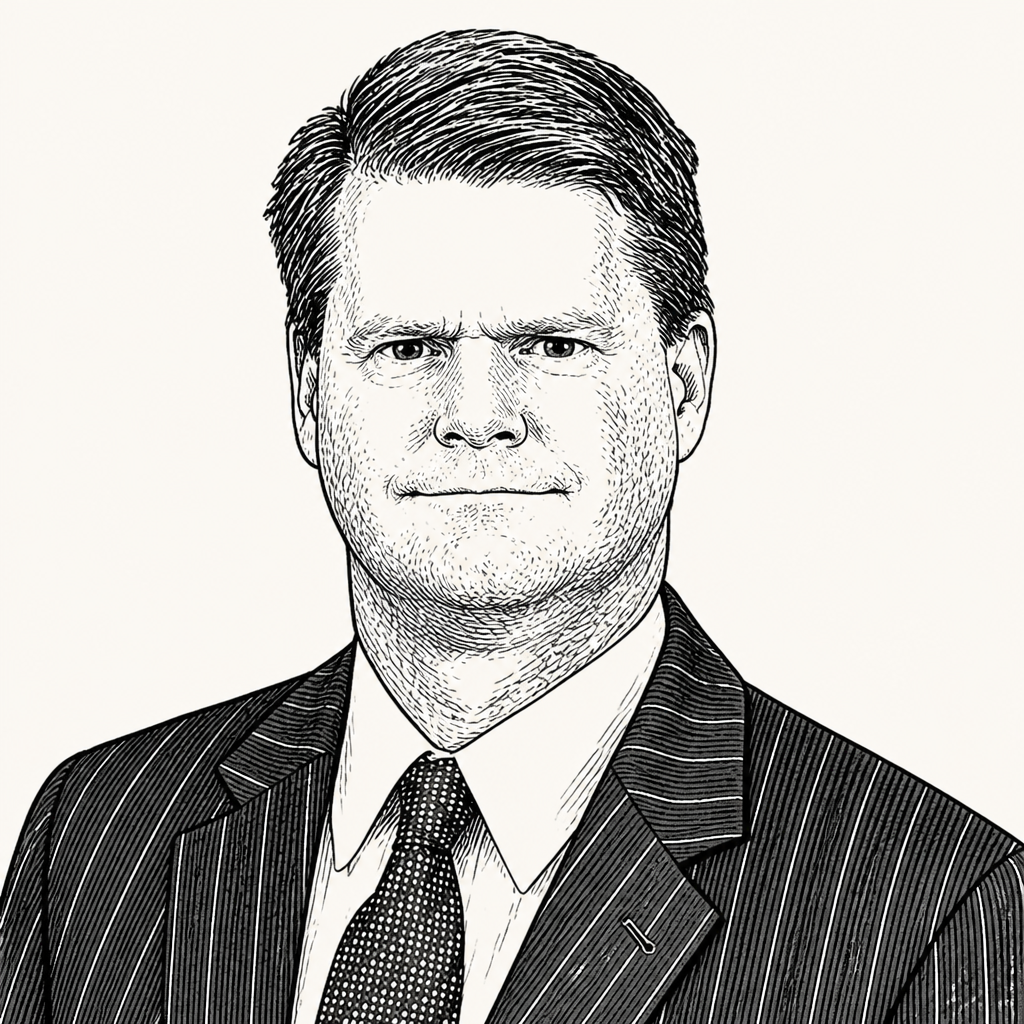
Elizabeth Economy’s conversation with Randy Schriver and Mike Kuiken of the US-China Economic and Security Review Commission argues that Washington’s China problem now cuts across trade, technology, supply chains, cyber operations, Taiwan planning, pharmaceuticals, and sanctions policy. Schriver and Kuiken say the US government still manages many of those risks through agencies and laws built for an earlier era, leaving economic statecraft fragmented just as China’s leverage has become more integrated. Their case is less for severing all economic ties than for building the machinery to decide which ties are tolerable, which are dangerous, and which require national effort to replace.
The China challenge has outgrown the agencies built to manage it
Elizabeth Economy frames the central problem as the expanding overlap between trade, investment, and national security. The older formula associated with Robert Gates — “small yard, high fence” — was meant to protect a narrow set of technologies tied to national security from potential military adversaries. Economy argues that the yard has kept getting bigger. The hard question now is how the United States defines the goods and services that are critical to economic and national security, and how it protects them.


That is the purpose Congress gave the US-China Economic and Security Review Commission when it created the body in 2000, as Permanent Normal Trade Relations with China was being passed and the annual most-favored-nation debate was ending. Randall Schriver says that old annual debate had been an open platform for airing grievances about China — human rights, religious freedom, and broader US-China concerns. The Commission, in his telling, was created because Congress “didn’t trust two entities: the Chinese and the administration in the United States.”
The Commission is structured to reflect congressional leadership in both chambers and both parties: 12 commissioners, six Republicans and six Democrats, selected by Senate and House leaders. Schriver, appointed after leaving the Department of Defense, describes the Commission as a platform for working across the aisle to develop what it thinks Congress’s China agenda should be: ideas for legislation and other congressional action. Over the years, he says, Congress has taken up a number of the Commission’s recommendations.
Mike Kuiken describes the Commission’s operating rhythm as a combination of hearings, meetings, travel, and staff research. It typically holds six hearings a year, mostly in the first six to eight months, and meets with the executive branch, industry, industry associations, Capitol Hill, and others. It also conducts domestic and international travel tied to the year’s focus. In 2025, for example, commissioners traveled up the West Coast to speak with the quantum community — not only quantum computing, but also quantum sensing and quantum communications — across academic institutions and businesses. Internationally, the Commission’s regional focus has shifted from the Middle East to Southeast Asia to India.
Kuiken emphasizes the staff as the Commission’s comparative advantage. The staff numbers about 20 people, all Chinese-language speakers, and much of the Commission’s work rests on their review of Chinese-language source material. Economy characterizes the Commission’s annual report as unusually detailed and fact-filled — roughly 700 pages in the most recent report she reviewed — valuable both as a reference and as a source of policy ideas.
Schriver likens the annual report to an old Encyclopedia Britannica: something sitting on the shelf until needed, but likely to contain what a reader is looking for. Its permanent features include chapters on Taiwan and Hong Kong, but much of the rest evolves with the competition. In the latest report, Schriver says, the Commission further defined the competitive space — “in one case literally space” — and examined areas where China has poured resources, energy, and talent through Made in China 2025 and related initiatives: space, quantum, biotechnology, and other advanced sectors.
The report’s most important recommendations, however, are not only about what China is doing. Schriver says the Commission’s work increasingly returns to whether the United States is organized and resourced for the challenge. The Commission recommended creating a single entity for economic statecraft. The point, as he puts it, is to get “our house in order” — to run faster and make smarter investments in a constrained-resource environment.
Kuiken says his own views evolved over the year as the Commission examined the executive branch more closely. He and Schriver had written earlier about export-control reform, but the broader conclusion was that the US government is not organized for economic warfare or economic statecraft. After September 11, Kuiken notes, the United States reformed the sanctions community and made part of the Treasury Department part of the intelligence community. That mattered because Treasury could then drive intelligence requirements: it could ask agencies such as CIA or NSA to collect information that would make sanctions more effective.
Kuiken wants a comparable logic applied to economic statecraft. The relevant tools — export controls, sanctions, trade authorities, investment review, and parts of economic diplomacy — are dispersed across agencies with different missions, oversight committees, and institutional cultures. USTR, Commerce, Treasury, and parts of State and Defense would all have roles, but the current arrangement lacks unity of command.
One example is USTR. Kuiken says he was “blown away” that the Office of the US Trade Representative has about 300 people despite being responsible for trade agreements for the largest economy in the world. Another is the Bureau of Industry and Security, which sits inside the Commerce Department. Commerce’s core mission is to promote American business; BIS’s core task is to keep American technology out of the wrong hands. Kuiken sees that as a structural mismatch that has not been seriously revisited.
The difficulty is partly congressional. Oversight of these entities is spread across committees: Finance oversees USTR; Banking has export controls in the Senate; House Foreign Affairs has export controls in the House. Kuiken calls the terrain a “den of snakes,” meaning not malice but complexity — many moving parts where bad outcomes are easy. For that reason, the Commission was both specific and non-specific: it called for alignment and unity of command without prescribing every detail of where the entity should sit.
The deeper problem is historical. Kuiken argues that many of the laws governing these authorities were written about 80 years ago, when the United States was dealing with the Soviet Union, an economy largely isolated from the global system. China is different: fully integrated into global supply chains, capital flows, technology ecosystems, and consumer markets. The adversary, partner, or competitor — depending on the issue — cannot be managed with the same assumptions.
Schriver adds that governments often discuss reorganization but rarely execute it before a crisis. The Treasury reforms after September 11 followed an attack. He wants economic-statecraft reform before a comparable shock. Supply chain integrity is his example. Some of the United States’ most advanced weapons systems, he says, still rely on Chinese inputs at the component and critical-mineral level. In a crisis with China, Beijing could cut those inputs off; at that point, it is too late to begin restructuring.
Economy notes that China has already shown its willingness to use licensing systems and restrictions involving rare earth elements and critical minerals. She says many US defense companies remain under special restrictions when it comes to receiving Chinese rare earths and other critical minerals. Schriver says this is exactly the kind of vulnerability the United States should address before crisis, though he says the recommendation has attracted interest without the urgency he had hoped for.
Scam centers are treated as a national security problem, not only a law-enforcement nuisance
One of the issues that most surprised Kuiken during the Commission’s work was the scale and sophistication of scam centers in Cambodia and elsewhere. He had heard reporting on “pig butchering” scams, but says he had not appreciated the depth, scope, and technology being deployed against Americans.
The problem, as Kuiken describes it, is not a crude fraud operation. These centers can build targeting packages, craft text messages likely to appeal to particular victims, and prepare video interactions. The result is the theft of life savings, college savings accounts, and other assets at large scale. Kuiken cites a conservative estimate of $10 billion a year.
The Commission’s interest in scam centers reflects a broader conception of the US-China security problem. Economy says she had not thought of scam centers as the kind of issue the Commission would address, but Kuiken explains the institutional gap: when a person is scammed, who exactly should they call — 911, the FBI, someone else? At the time the Commission examined the issue, he says, the answer was not clear.
Kuiken says the administration has since created a strike force. He does not claim the Commission caused that decision, but says commissioners “like to think” their recommendation and work helped. The point is that these operations sit between fraud, transnational crime, technology exploitation, and national vulnerability. They are not easily contained by the standard bureaucratic lanes.
Made in China 2025 is not over because the year passed
Economy argues that the United States risks underestimating Made in China 2025 precisely because the date has passed. She points to solar panels, batteries, and electric vehicles as examples of Chinese overcapacity becoming global dominance in manufacturing and exports. Her concern is that the same model will appear across the full array of Made in China 2025 technologies. If the United States does not have a proactive economic-statecraft strategy to compete globally, she says, it will be “out of the game.”
Schriver agrees that China has been more transparent than often assumed. Citing James Mulvenon’s line that “the first line of encryption for the Chinese is Chinese,” Schriver says Beijing told the world what it intended to do. The Commission’s hearing on Made in China 2025 asked “who’s winning,” but not only as a scorecard against China’s own benchmarks. It also examined where China is heading and where it will continue to invest.
Schriver says China did not meet every benchmark, but in most areas it made rapid advances. More importantly, he argues, China is changing its innovation model. The older description — relying on intellectual-property theft and fast-following — is no longer sufficient. In some sectors, Chinese investment in foundational research and development is producing discoveries that lead in new directions. Schriver says China has become more agile than in the past, and in some areas may already be outpacing the United States.
This is where the economic-statecraft recommendation connects to industrial policy and global competition. Economy asks not only how the United States responds to coercion, but how it competes against China’s Belt and Road Initiative and Digital Silk Road, and how it promotes an American AI technology stack abroad. Kuiken says the Commission has been discussing how to think about a “post-AID, post-MCC” orientation — not minor adjustments to existing development tools, but a more strategic offer in countries likely to align with US interests if the United States shows up with something attractive.
The source does not offer a fully designed alternative to Belt and Road. It identifies the absence of one as part of the strategic gap. For Economy, that absence is not secondary. Without a proactive economic-statecraft capability — able to combine trade, investment, technology, financing, and diplomatic tools — the United States will keep responding after China has already built scale.
Taiwan is a military, economic, democratic, and geographic problem at once
The Commission’s Taiwan work includes a recommendation that Congress direct the Pentagon to assess whether the United States is complying with the Taiwan Relations Act’s requirement to maintain the capacity to resist any resort to force that would jeopardize Taiwan’s security. Economy translates the legal formulation plainly: the United States must ensure it has relevant capabilities and that Taiwan has relevant capabilities, without the law itself committing the United States to Taiwan’s defense.
Schriver says Congress wrote itself into the Taiwan decision-making process in 1979. Under the Taiwan Relations Act, the president and Congress determine what weapons Taiwan needs for sufficient self-defense. Congress also appropriates the funds that shape the US joint force.
His concern predates the wars in Ukraine and Iran. Since at least the mid-1990s, he says, the People’s Liberation Army has made rapid advances and significant investments. China is getting better faster. The operational tempo around Taiwan — coercion and intimidation activities, large numbers of aircraft crossing the center line, and more complex exercises — is giving the PLA operational experience and insight into complex military operations. Schriver points to cross-domain communication and shared battlespace information as examples of capabilities being incorporated into those operations.
Ukraine and Iran compound the problem by depleting US munitions and stressing the global joint force. The Commission’s recommendation, Schriver says, is essentially to ask the Pentagon to “show your homework.” The goal is not to embarrass commanders or force admissions of weakness, but to show Congress where it needs to provide more resources or different resources. Some US investments are in exquisite platforms designed for a different warfighting environment and may not be appropriate for a China fight.
Kuiken adds a different argument for Taiwan’s importance. He says Washington sometimes loses sight of the “why.” His shorthand is that Taiwan is the current “island at the center of the world” because advanced semiconductor manufacturing sits there. In his view, Taiwan should matter to the United States for chips, just as Manhattan became central in Russell Shorto’s account of Dutch New York. Economy pushes back by adding democracy: Taiwan is a robust democracy and a counterpoint to claims that Chinese people are somehow unsuited to democratic government. She recounts a dinner with current administration figures who said they cared about Taiwan because of chips, not democracy.
Schriver’s answer is “chips and.” Taiwan’s importance is also geographic. Looking at a map of the Indo-Pacific, he says, Taiwan sits in the middle of many things the United States cares about. It is adjacent to the South China Sea, through which he says more than 80 percent of global commerce passes, and it is itself a claimant to some features there. Japan, because of the Southwest Islands and Yonaguni, is geographically closest to Taiwan; the Philippines lies to the south. Taiwan is also a gateway to the second island chain, including Guam, American Samoa, Palau, the Marshall Islands, and the Federated States of Micronesia.
That gateway matters for resources, fisheries, illegal and illicit activity, and military logistics. Schriver describes the compact states as part of a “logistics superhighway” to the Indo-Pacific. But a superhighway can run both ways. He warns that more Chinese presence closer to Hawaii and the US West Coast may not be far off.
The autocratic alignment does not need to be an alliance to matter
Kuiken and Schriver both resist the idea that China’s cooperation with Russia, Iran, and North Korea can be dismissed because it is not a formal alliance. Kuiken calls it, at present, a relationship of convenience. Schriver says Beijing prefers informality because binding agreements would encumber China with responsibilities. The absence of a treaty is therefore not a weakness; it is a preference.
Kuiken says one of the most frequently visited sections of the Commission’s website is its material on Chinese support to the Russian war machine. He points to chips, cameras, and drone components as areas where China has been a vital lifeline for Russia. He says Russian-built Shahed drones use Chinese chips and cameras, and that the same is true of Shaheds used by Iran. In his account, Chinese components have helped commoditize parts of the Russian and Iranian war machines, lowering the cost of war for both countries.
He also emphasizes energy and sanctions evasion. China can tap Russian and Iranian oil, and China and Russia have deliberately built institutions capable of moving resources without touching Western banking systems. A Commission side report examined sanctions evasion. Kuiken says crypto and decentralized finance add another channel, allowing large transfers quickly and outside traditional banking institutions. The Commission has some visibility into that space, he says, but not enough.
Schriver addresses the Chinese argument that the grouping is not a bloc. Even if the countries have disagreements, he says, what they agree on tends to be directed at common aversions: the United States, US alliances, support for Ukraine, conflict with Iran, and US operations such as the one he references in Venezuela. Even limited cooperation can be consequential. In Ukraine, Schriver says, Russia’s ability to continue prosecuting the war rests in significant part on Chinese economic support through oil purchases and Chinese component support for Russian capabilities.
The Taiwan implication is direct. If China received even limited cooperation from Russia, Iran, or North Korea during a Taiwan contingency, Schriver says, it could complicate US decision-making and force allocation. North Korea could create a feint or provocation on the Korean Peninsula, tying down US forces there. Russia, still a Pacific power with significant naval forces, could act in the Western Pacific and absorb US attention or assets that might otherwise support Taiwan’s defense.
Economy presses further, arguing that the relationship between Xi Jinping and Vladimir Putin may be more than convenience. She says Xi has publicly called Putin his closest friend in the international system and that China and Russia have worked together for decades in the United Nations where they have common purpose. The article’s source preserves both points: Kuiken’s “relationship of convenience” framing and Economy’s argument that personal and institutional ties may make the alignment more durable.
The US response, Kuiken says, is straightforward in principle and hard in practice: “bear hug” Europe, India, Japan, Korea, and Australia. Europe has 800 million people; India has 1.3 billion and, in Kuiken’s description, enormous economic opportunity and innovation. Competing with China over 10, 20, or 30 years requires compromising with partners who can be frustrating. He notes that India is often criticized for bureaucracy, but says the American bureaucracy is also “pretty bad,” with its own interagency “warring feudal states.”
Schriver agrees on the value of allies and partners, while saying he is not sure the current administration fully shares that view. He distinguishes between the broadly attractive idea of rebuilding American strength and the more negative rhetoric often associated with “America First.” His concern is that the administration does not fully appreciate how alliances complicate China’s planning. China, he says, hates US alliances and partnerships because they are asymmetrical advantages: countries train together, exercise together, think through contingencies together, and prepare contributions in advance.
He invokes Eisenhower’s line that plans are useless but planning is essential. The United States needs to talk with allies and partners about contingencies and what each can contribute. Europe’s contribution in a China conflict might be less hard power and more economic: sanctions, cost imposition, and related measures. But those tools need advance coordination.
Schriver also argues that the United States should not assume it is in peacetime simply because there is no open war with China. In his view, China sees domains such as information warfare, political warfare, and economic warfare as active arenas already. That makes allied alignment valuable not only in wartime but in the current phase.
Cyber intrusions are preparation for coercion, not only espionage
Kuiken wants the information and cyber dimension treated as more than intellectual-property theft. He points to Volt Typhoon and Salt Typhoon as Chinese cyber operations exposed in the United States. Economy asks him to define them. Kuiken says these operations involve Chinese actors parking themselves on American critical infrastructure, including telecommunications and likely other sectors such as power and water.
He describes this as operational preparation of the environment: placing capabilities in a country in advance of possible operations. Special operations forces do analogous work with hard-power or information capabilities before a mission. In Kuiken’s view, China has done this inside the United States.
The political implications are serious. Kuiken says one exposure before the last election showed Chinese presence on telecommunications devices of American political leaders. He says that should not be treated as unique; it is probably happening across Europe and India as well. Taiwan’s information space, he adds, is more intense still. The purpose is to hold American policymakers in a state of paralysis if China acts.
Economy says Salt Typhoon and Volt Typhoon may be under-discussed because the implications are “unbelievably scary.” When she thinks about future warfare, this is among her top concerns, and she says she has not heard it adequately addressed by recent administrations.
The distinction matters: if the cyber problem is framed mainly as theft, the response is one set of law-enforcement, counterintelligence, and resilience measures. If it is framed as pre-positioning for coercion or conflict, it becomes part of deterrence, crisis planning, infrastructure hardening, and alliance coordination.
The pharmaceutical supply chain is another coercive chokepoint
Economy turns from rare earths and critical minerals to pharmaceuticals, especially active pharmaceutical ingredients and key starting materials. China’s leverage in this space, the speakers argue, may be less publicly visible but similarly severe.
Schriver recalls former commissioner Derek Scissors pushing back against military-focused Taiwan discussions by saying China might not need to win through invasion or direct military escalation: it could cut off drugs, causing American public support for intervention to collapse. Schriver says that kind of vulnerability presents risk beyond an acceptable threshold.
He also cites a pandemic-era Chinese spokesperson who threatened to “drown America in a sea of COVID.” For Schriver, the mechanism behind such a threat would be the cutoff of drugs and related support, especially for seniors and other vulnerable populations. In a previous era, the United States may have been willing to accept that dependency. He argues it should not now.
Schriver does not believe pharmaceutical companies will fix the problem voluntarily. Market forces — cost optimization and profit optimization — have driven dependence on China. The government, in his view, will ultimately have to be directive and may need to support new supply chains and production capacity. This will take time and money, but he frames it as a national security and public health requirement.
Kuiken adds that India’s status as the “generics capital of the world” can obscure the deeper dependency. India may manufacture many generic drugs, but key starting materials come from China. He says a recent trip to India made the depth of dependence on the Chinese ecosystem staggering. He gives examples ranging from statins to cancer drugs needed in hospitals.
The economics are hostile to diversification. China’s pricing, Kuiken says, makes it nearly impossible for new entrants to compete in some key starting materials. He connects this to the Commission’s “China Shock 2.0” hearing, where pharmaceutical dependency was part of the story.
Economy asks whether the answer might be something like a CHIPS and Science Act for pharmaceuticals. She recalls discussions during her time at the Commerce Department about whether such an approach would be needed, while noting that CHIPS and Science itself was bipartisan but not easy to pass.
Kuiken distinguishes pharmaceuticals from synthetic biology. For synthetic biology — biomaterials, bioindustrials, and biology as a general-purpose technology — he sees a need for innovation dollars. For pharmaceuticals, he argues, the government already has powerful tools because the Department of Defense, Department of Veterans Affairs, and HHS are enormous buyers. Purchase guarantees and other contracting vehicles could create reliable demand at prices that support new sources of key starting materials. He does not think a CHIPS-style pharmaceutical bill is the best path; he thinks procurement power can shift the demand signal.
A Trump-Xi summit could produce transactions while missing security concessions
Economy asks what might come from an expected Trump-Xi summit. Schriver separates what he hopes for from what he expects. He says the president’s likely intent is to take the “trade truce” that emerged from Busan the previous year — a tariff landing spot, continued rare-earth exports, and a temporary pause in remediation from the Section 301 shipbuilding investigation — and turn it into something more durable. Schriver adds that China would “surely” violate such an agreement, but that the aim would be a landing spot longer than a one-year truce.
His concern is preparation. From what he can see, the only interagency preparation is being done by economic agencies: USTR, Treasury, and Commerce. He is not aware of a working group preparing for the summit on military and security issues. That creates a risk that China introduces issues it cares about, such as Taiwan, in ways that appear rhetorical but are strategically meaningful.
One example Schriver gives is a possible change in US language from “do not support Taiwan independence” to “oppose Taiwan independence.” The United States might think it is conceding little, but China would treat it as a significant win.
Schriver says he does not believe Trump intends to make concessions that are costly to the United States or its partners. But he has seen Trump make gut calls across the table. He cites Trump walking away from Kim Jong-un in Hanoi as an example of recognizing a bad deal, but also cites Trump’s decision in Singapore to take down US exercises with South Korea — a move Schriver says the Department of Defense had not staffed and recommended. The risk is not intent to betray an ally; it is improvisation.
Schriver says he hopes Trump will raise China’s support for Iran and Russia. He is outraged by Chinese support for Iran, including material on a recently boarded ship described as significant support for Iranian military forces, especially while Iran is targeting American forces and interests. He doubts the president will press as hard as he would like, given Trump’s public description of Chinese support for Iran as “not nice.”
Kuiken sees potential economic wins. When he traveled with Senator Chuck Schumer and a bipartisan delegation in 2022, he says he was struck by the number of economic items China had been sitting on for decades. If Trump unlocked even half, Kuiken says, it would be a major transaction-side win. He mentions Visa, MasterCard, Boeing planes, and other American companies eager to do business in China but not central to strategic competition.
The tension is between transactional gains and strategic discipline. Kuiken sees real value in market-access wins. Schriver worries that a summit prepared primarily by economic agencies may miss security risks or allow language changes with consequences beyond the transaction.
Investment screening is still behind the problem it is supposed to solve
Economy closes the policy loop by raising a recent Chinese decision to block Metis’s purchase of Manus, asking whether similar deals should happen if the situation were reversed and whether the United States needs clearer rules for the divide between economic security and national security. She mentions Secretary Bessent’s discussion of a Board of Investment and Ambassador Lighthizer’s idea of a Board of Trade.
Schriver says the investment question is important but probably not ready for a leader-level Beijing summit. The United States still has to decide what kinds of Chinese investment it wants. It is not analogous to pressing Japan for large-scale investment and figuring out the details later. Some Chinese investment in the United States would not be welcome, and debates over farmland near military bases and other CFIUS triggers illustrate the complexity.
Kuiken says Economy’s question bookends the broader discussion of economic statecraft. The Commission has considered whether it is time for a FIRRMA 2.0 — a refresh of the reforms led by Senator John Cornyn in the 2016–2017 period to modernize CFIUS. Kuiken describes CFIUS as a good and deliberate interagency process that was improved, but already needs another refresh.
The harder issue is that the United States has not decided whether it is decoupling, strategically decoupling in key areas, or something else. Nor has it clearly defined the key areas. Congress passed an outbound investment screen the previous year, Kuiken says, but it has not been implemented in any meaningful way. There is “a lot of work” to do at home before the United States can manage these questions coherently with China.
Economy notes that Congress is now trying to pass bills around chips and restrict the administration’s ability to loosen export controls. She returns to the Commission’s role: bringing facts to bear on issues where it is difficult to draw the line between technologies and services critical to economic and national security and those that can remain in ordinary commerce.