U.S.-China Diplomacy Can Manage Risk but Not Resolve the Systems Contest
 Elizabeth Economy
 Sarah BeranRobert Bloom
 Miles Yu
 Matt TurpinStanley Kober
 Erin CarterHoover InstitutionMonday, May 18, 202621 min read
At a Hoover Institution discussion on U.S. strategy toward China, Sarah Beran, Matt Turpin and Miles Yu argued that diplomacy with Beijing remains necessary but cannot resolve the deeper contest between the two countries. Beran framed the task as risk management through leader channels, alliances and domestic renewal; Turpin described a long hostile rivalry that will run through trade, technology and economic statecraft; and Yu said the problem is systemic incompatibility that Washington should confront more directly.
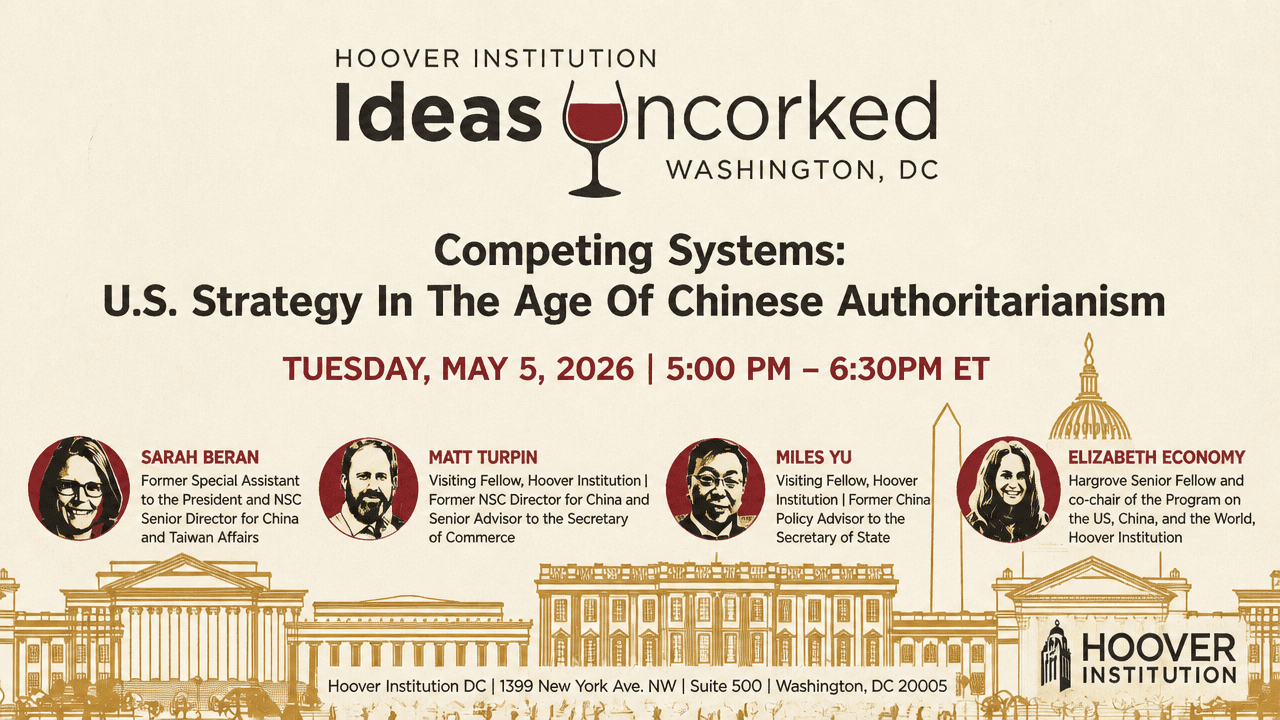
The central divide was not whether Washington should talk to Beijing. Sarah Beran, Matt Turpin, and Miles Yu all treated diplomacy as necessary, especially at the leader level and in crisis channels. The harder question was what diplomacy can realistically do when the relationship is described as a hostile rivalry, a structural systems contest, and in Yu’s formulation a problem with “design flaws” that cannot be repaired by better atmospherics.
Beran emphasized risk management: keep channels open, use summitry where only leaders can move the system, and work with allies while rebuilding American capacity at home. Turpin described a long-term rivalry in which military conflict is avoided precisely by pushing competition into trade, technology, investment, resilience, and economic statecraft. Yu argued that the problem is deeper than rivalry management: the U.S. and Chinese systems are fundamentally incompatible, and Washington should stop treating China as a card to play in pursuit of other objectives.
Those differences shaped their expectations for a possible Trump-Xi summit, their debate over export controls, and their views of whether the United States should prioritize bargaining, deterrence, alliances, values, or domestic renewal. None treated a summit communiqué as the measure of success. The real test, in their accounts, is whether the United States can lower the risk of crisis without mistaking managed contact for a resolution of the contest.
The rivalry is no longer a wording problem
Sarah Beran said the United States should stop treating the relationship with China as if the central task were finding the right label. In government, she said, officials spent “an inordinate” amount of time debating whether to call it managed competition, strategic competition, or strategic rivalry. Her view was simpler: it is “a difficult, complicated, tension-filled relationship,” and Washington’s preferred formulation matters less than Beijing’s own strategic reading of the relationship.

Beran argued that Beijing has “a very dim strategic view” of the relationship’s trajectory. That limits what cooperation can actually achieve. Both governments, in her view, still see a need to manage downside risk, and leader-level diplomacy remains indispensable because “there really is no other way to do it.” She pointed to planned leader meetings and previous meetings such as the Woodside summit as useful for that purpose. But she did not think the existence of such diplomacy implied a path to a grand bargain. Beijing, she said, sees the United States change every few years and therefore doubts that any given administration can commit the country to a durable settlement.
Matt Turpin largely agreed with the diagnosis but used a sharper phrase: “hostile rivalry.” He described a relationship defined by deep suspicion on both sides, in which both governments see themselves as locked into competition across “essentially all domains.” The stabilizing fact, for Turpin, is that both are superpowers that want to avoid direct military conflict. That avoidance does not end the rivalry; it pushes the contest into other fields.

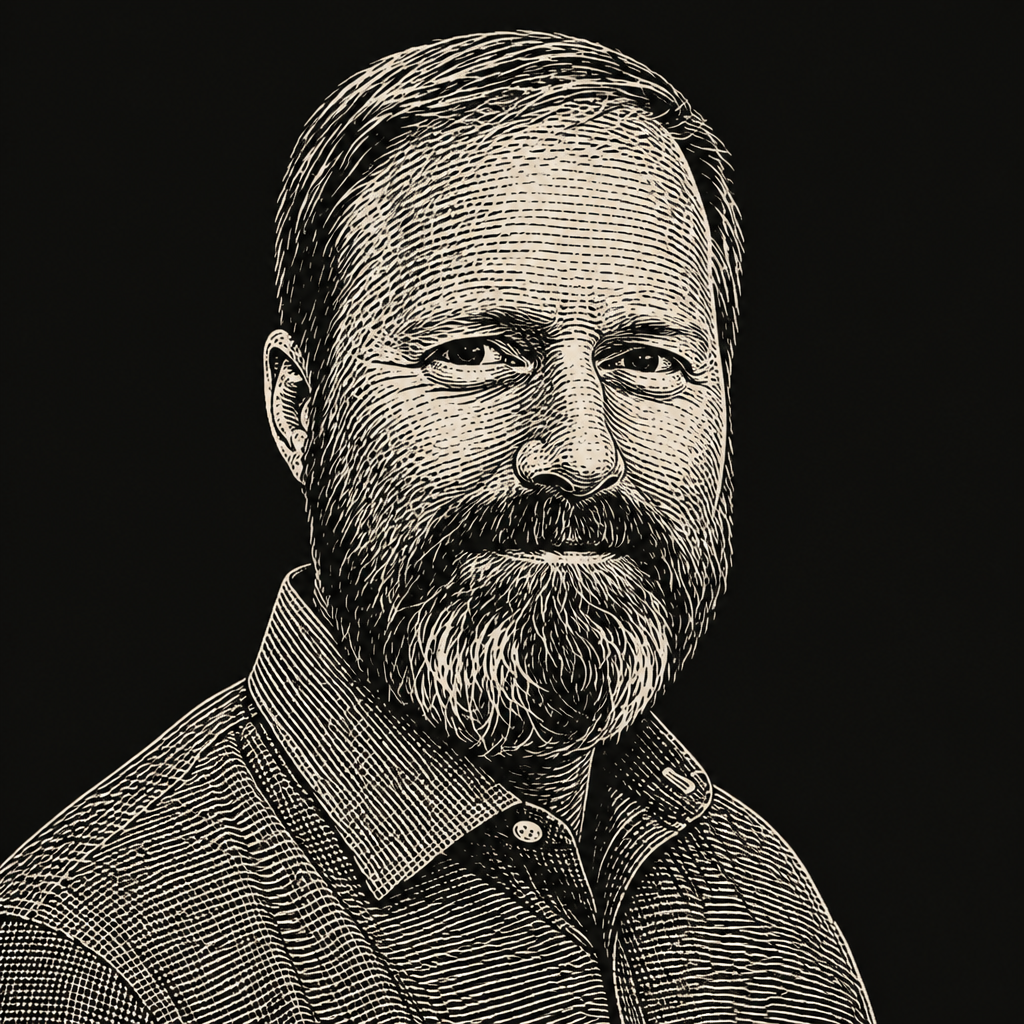
“Superpowers will seek to avoid direct military conflict, and that pushes their rivalry into other domains,” Turpin said.
Turpin compared leader meetings with China to U.S.-Soviet summitry during the Cold War: necessary, normal, and not evidence that the underlying rivalry is disappearing. He said the relationship is being managed “about as best as you can expect,” but the structural condition is a long-term rivalry that will not be solved by one meeting, one administration, or one bilateral formula. The task for the United States, he argued, is to build stability, self-improvement, resilience, and cooperation with others for a long contest.
Miles Yu framed the issue more fundamentally. He compared the State Department’s China work to a plumber who can repair a unit but tells the homeowner that the whole system needs replacing. The department, he said, is often a “relationship fixing” institution, but the deeper question is whether the relationship is “salvageable” or “fixable” at all. For Yu, many of the major problems arise from “systemic incompatibility” between the U.S. and Chinese systems.
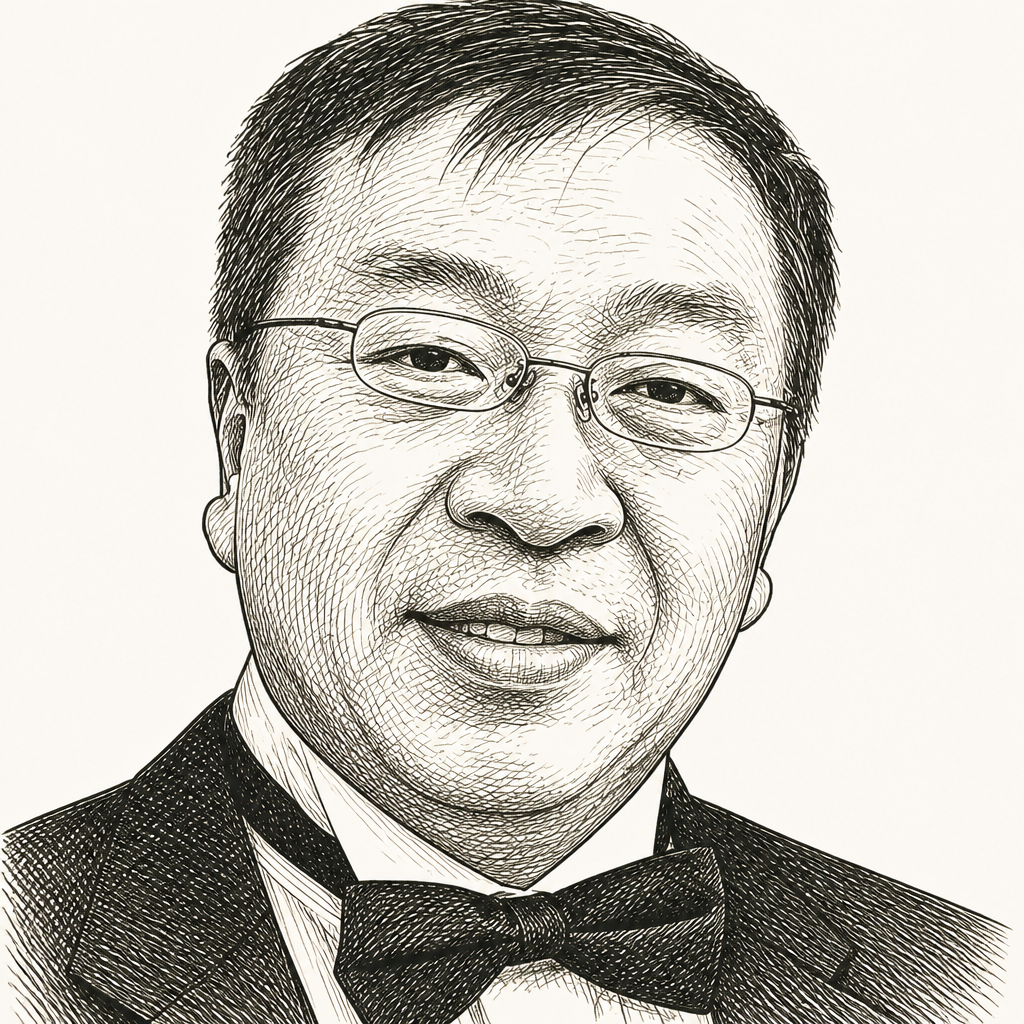
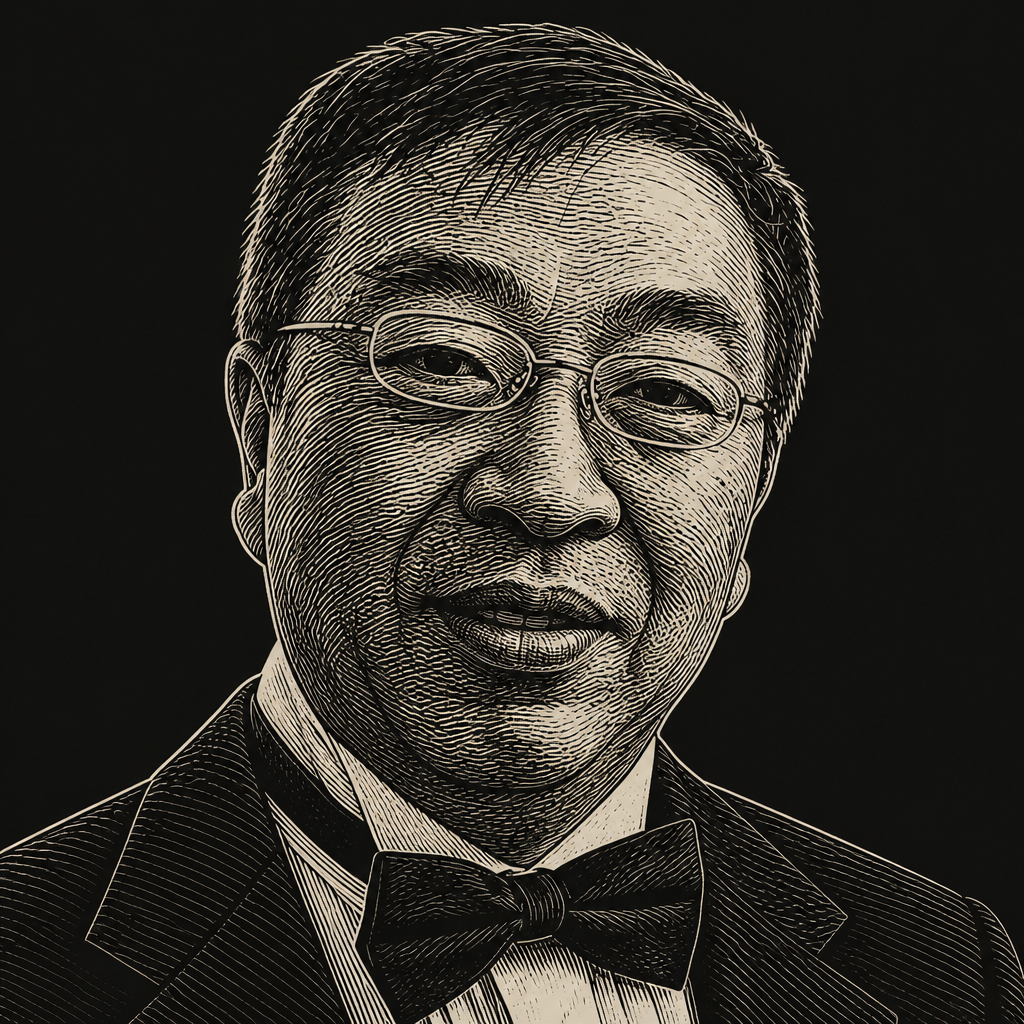
Yu also challenged a common Washington reflex: treating tensions as primarily the result of American choices about whether hawks or doves are in charge. The “real agency,” he argued, lies in Beijing, which determines much of the “temperature, direction, and intensity” of the relationship. He said U.S. policy has begun to recognize that Beijing must be treated as an active agent in producing the relationship’s conditions, not merely as an object of American engagement strategy.
His historical critique centered on the post-1972 model of seeking common ground while setting aside differences, which he rendered in Chinese as 求同存异, qiútóng cúnyì. That approach, he said, produced temporary détente and cooperation on issues such as the Soviet Union and regional security. But it also left unresolved human rights, trade, Taiwan, intellectual property, and other structural disputes. Yu said the first Trump administration did not see itself as revolutionary so much as trying to end a “redline-defined relationship” and engage China across the full spectrum: “Wherever there are problems, we talk.”
In Yu’s account, Beijing resists that full-spectrum approach and tries to pull the relationship back to the original design, including by invoking figures such as Henry Kissinger. The older model, he said, contained design flaws. He repeated a line he had once used on PBS: the U.S.-China relationship is like a Ford Pinto — “it runs, but has design flaws. Once it explodes, it explodes.”
Even so, Yu described himself as “cautiously optimistic” for two reasons. First, he said Washington has begun to abandon the idea of “playing the China card,” a mindset in which China is treated as a conduit for solving other problems — the Soviet Union, North Korea, Vietnam — rather than as a primary strategic challenge. Second, he cited what he called “wonderful bipartisanship on China,” pointing to polling that he said shows roughly 80 percent of Americans holding negative views of China. Elizabeth Economy immediately added an important qualification: that level of negative public sentiment is recent, not a constant feature of the relationship since normalization.
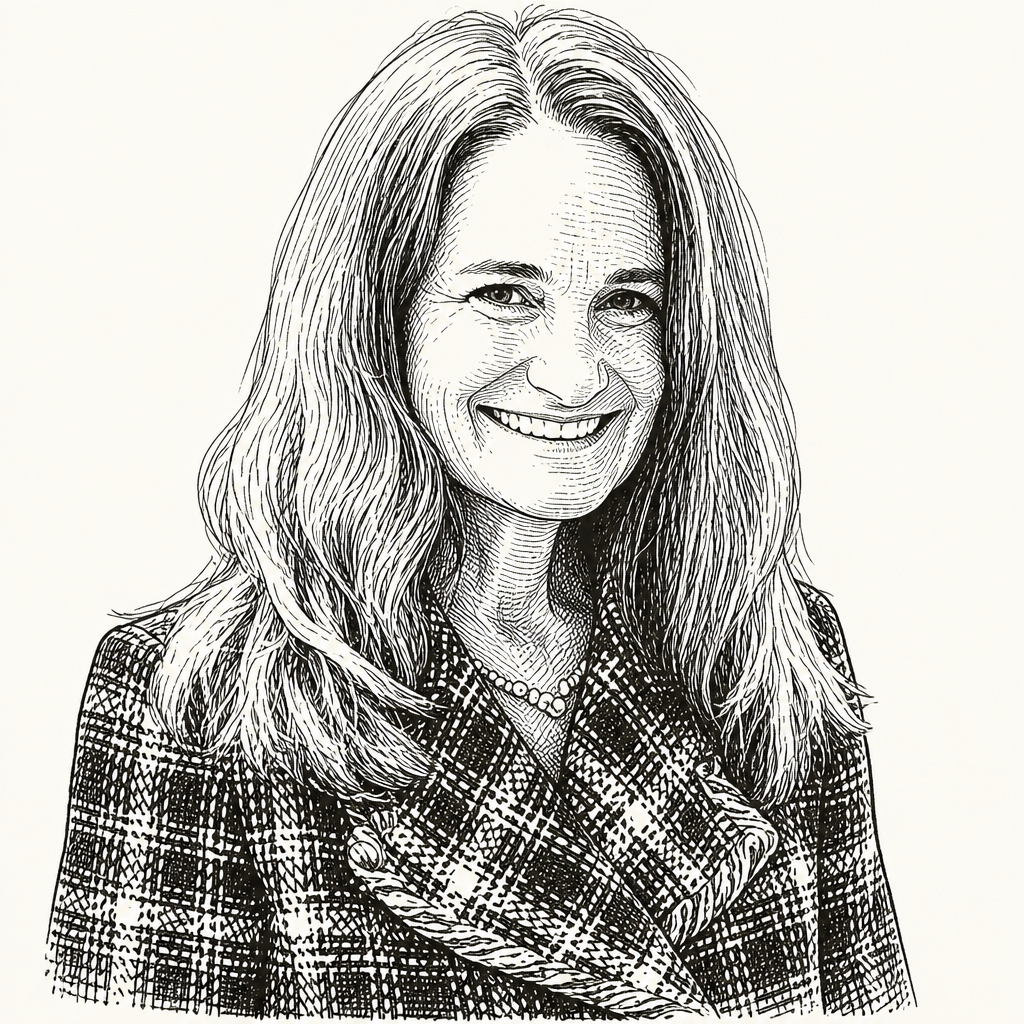

A summit can manage risk without changing the structure
Expectations for the expected Trump-Xi summit were skeptical, even where the speakers allowed for a successful announcement. Yu said President Trump wants to “win” and wants a moment of ceremony and glory. He described four priorities in Trump’s second term — homeland and hemispheric security, deterrence of China through “peace through strength,” alliance burden-sharing, and rebuilding America — and said China sits in the background of each.
Yu’s view was that Trump initially wanted a Beijing summit that would produce signed agreements and a “great moment of glory.” But he said the issues Trump wants to sign off on have not been agreed, citing seven rounds of talks between Treasury Secretary Scott Bessent and Chinese counterpart He Lifeng. That, to Yu, suggested the visit would be “more symbolic than substance.” His caution attached less to whether the summit would be staged than to whether it would settle anything meaningful.
Matt Turpin was more specific about what Trump might count as success. He said the president likely wants a trade and investment agreement favorable to the United States, and that Trump has “in his mind” an idea of balancing trade with China — ideally even reversing the deficit-surplus dynamic so the United States runs a surplus with China. Turpin judged that outcome implausible, not only within three years but possibly over 10, 15, or 20 years.
A more realistic result, Turpin said, would be a package of trade and investment announcements. Trump might reduce the overall tariff rate from “around 45 or 50%” to roughly 25%, and he might count Chinese commitments to invest in the United States as a win. Turpin’s skepticism was not that such an outcome was impossible, but that it would not touch the underlying hostile rivalry. He expected the public rhetoric around the summit to be positive and consequential while the concrete substance would contain “much less there there.” He also anticipated a familiar cycle: high expectations, a thin deal, presidential frustration, and renewed escalation over the remaining years of the term.
Sarah Beran saw a similar pattern from the perspective of recent diplomacy with Beijing. She said that when Trump returned to office, Beijing was “pretty optimistic” about the possibility of a grand bargain, despite concerns about volatility. Over the course of the year, she said, the nature of U.S. decision-making clarified the limits of what even Trump wanted to achieve.
Her expectation was that the summit could produce tariff adjustments in exchange for Chinese purchases of U.S. agricultural exports — a model she saw in the first Trump administration. Beran had been on the ground in Beijing preparing for Trump’s 2017 visit and recalled agricultural export commitments, a large CEO delegation, memoranda of understanding, and announcements that often did not materialize. She expected some of the same elements to recur.
The problem, in Beran’s view, was the narrowness of the preparation. Trade and investment were being discussed, but the “broader, really problematic parts of the relationship” were not. She wanted serious discussion of Iran, cross-strait stability, regional stability, and Chinese pressure on Japan. She did not see those issues handled in the preparatory channels, though she allowed that they might arise in the summit itself. The downside risk, she said, sits in those hard strategic issues. She credited the administration for continuing to focus on military-to-military communication and thought the summit might produce another push in that area, but she did not see much else in the strategic space.
For China, Beran said, tariff relief would be useful, though Beijing can manage current tariffs through transshipment and currency depreciation. The bigger Chinese ask, she thought, would likely involve export controls, especially after signs of softening on Nvidia chips. But she was cautious about how far Beijing itself wants the United States to go on advanced technology. China, she said, must create a market for domestic chips, and will ensure that some Chinese companies and state-owned enterprises buy them. Still, she thought Beijing would be “quite happy” to receive relaxation on tooling equipment.
The possibility that the meeting might not happen at all was raised later, but Turpin said that, roughly 11 days out, it appeared to be moving forward because the United States had already started moving equipment and videos showed C-17s flying into Beijing. Yu added that Trump’s negotiating style includes both a desire to make a deal and a willingness to walk away from one he dislikes, citing the first-term negotiations with Kim Jong-un. Economy and Beran were more cautious about that latter premise. Economy said she saw more tendency to announce a deal as successful “whatever that deal may be,” and Beran said that once preparation is rolling it becomes difficult for a president to walk away.
Export controls are a trade negotiation and an alliance problem
The chip question exposed a tension in how China might treat export-control relief. Matt Turpin said demand for chips and tooling equipment “far exceeds the supply,” which is why advanced chips can cost $25,000 each. He argued that China does want access to those chips because lack of compute is holding back Chinese AI model development. Domestic production, in his account, cannot match Chinese demand. Beijing may be “playing coy,” but Turpin said it wants more access, including to top-tier chips, and is willing to pressure U.S. companies to lobby for reductions in export controls.
Miles Yu agreed only partly. He said China’s approach is hindered by its own habits and security anxieties. On one hand, Beijing wants U.S. export controls relaxed. On the other, he said, Chinese leaders are confident in their ability to “copycat”: obtain a basic model, improve it, and replicate the process they used in other areas. He cited Russian Sukhoi fighter jets as an example of China getting “a little bit” and then improving on it. He also emphasized that China is “a national security obsessed country.” When Commerce Secretary Howard Lutnick said publicly that the United States wanted China “hooked” on American technology because Washington would not provide the best, Yu said Xi Jinping “freaked out” and had reason to pause. Even if Washington relaxed export controls, Yu doubted Chinese authorities would be fully enthusiastic.
Elizabeth Economy described the likely Chinese posture as “an and and”: China will take foreign chips for a period while pressuring domestic chipmakers and chip consumers to indigenize. That, she said, is the model.
Turpin then widened the issue from bilateral chip sales to multilateral control architecture. If the United States is seen as providing finished chips, he asked, why should the Dutch restrict exports of key equipment? He cited ASML and the Dutch government as part of the broader export-control ecosystem. Maintaining controls requires multilateral coordination, and Turpin said Beijing understands that if the United States starts pulling “Jenga sticks” out of the tower, the structure can come down.
Economy said that captured the problem well and noted a continuing debate within the Trump administration over what should and should not be sold to China.
Bipartisanship exists, but each side sees the other’s weaknesses differently
Elizabeth Economy asked each speaker to identify something their own closest administration had done poorly and something the other party’s administration had done better. The answers revealed both a bipartisan China consensus and different theories of what good policy requires.
Sarah Beran, who said she served under three Democratic and three Republican presidents as a career foreign service officer, offered a broad generalization: Republicans act more quickly, while Democrats tend to “debate an issue to death.” On China, she said the Biden administration could have done better by worrying less about criticism from Capitol Hill over “zombie diplomacy” and doing what was needed to manage risk. The United States talks to adversaries as well as friends, she said. In the first couple of years, she thought the administration was paralyzed by concern, COVID, and other pressing domestic issues, and did not focus early enough on managing downside risk.
On the Trump side, Beran credited the president’s willingness to question “all manner of catechisms,” including about China. Shaking the bipartisan consensus a little, she said, can be healthy if it forces hard questions about how the relationship should be managed. She also saw value in Trump’s willingness to lean into leader-level diplomacy through calls, letters, and meetings. Economy pressed her on whether freelancing could be dangerous. Beran acknowledged “many deep concerns” while maintaining that the willingness to question assumptions had value.
Matt Turpin, a first Trump administration political appointee, credited the Biden administration with thinking more broadly about economic statecraft. He said he wished Trump would think beyond tariffs and use “the whole panoply of tools” available. In his view, the Biden team did difficult work to identify and implement economic tools across government. The United States should use Commerce, Agriculture, State, Treasury, and other departments in a concerted way to achieve objectives, he argued, not use tools for their own sake.
Miles Yu said he was pleased that both parties accepted a fundamental shift of American strategic focus away from Europe and the Middle East and toward the Indo-Pacific, specifically China. He said the first Trump administration worried Biden would reverse that shift, and China was angered when Biden did not. Yu credited the Biden administration for “the courage to do that,” though he carved out an exception for the COVID investigation.
Yu also praised Biden for executing more efficiently an idea he associated with Secretary Mike Pompeo: withholding summitry and senior-level engagement when Chinese officials were not prepared to solve concrete problems. Yu said Chinese officials often prefer pageantry and spend large portions of meetings on Taiwan rather than the agreed agenda. Pompeo’s approach, in Yu’s telling, was to ignore them unless they had a real agenda. Biden, Yu noted, was the only recent president not to go to China during his presidency, though he met Xi Jinping in Bali and Peru. Yu saw that restraint as useful because Beijing is “obsessed with summits,” especially with the leader of the free world. In his account, summitry helps salvage Xi’s reputation, demoralizes U.S. allies and friends in Asia, feeds the idea of a G2, and gives China a public stage to discredit American leadership and values.
Soft power, alliances, and domestic strength are part of the China strategy
The systems contest, in Miles Yu’s account, cannot be handled only through government-to-government bargaining. He criticized the second Trump administration for cutting back tools of soft power such as Voice of America and Radio Free Asia. He called that an “own goal,” though he said Congress was restoring funds.
But Yu’s deeper point was that American power in China is not only, or even primarily, a government broadcasting function. The United States, he said, has an enormous “power of inspiration” inside China. He claimed Beijing citizens applauded seeing American C-17 aircraft arrive and said Chinese social media reactions to U.S. operations could become demonstrations of American values. He cited an operation he called “Epic Fury,” saying the United States spent extensive assets and effort to rescue two downed pilots, and that Chinese social media generated millions of comments about it. For Yu, the rescue showed American values more powerfully than messaging could.
He said Xi Jinping’s first red line is ritualistically Taiwan, but the second is that the United States must not talk about human rights and democracy. Those are precisely areas where Yu thinks the United States should retain confidence. It can rebuild institutions like the U.S. Information Agency, increase broadcasting, and rely on civil society channels beyond government.
Sarah Beran put the emphasis elsewhere: America’s asymmetric advantage is partnerships and alliances. She argued that Washington should work with partners to push back against China’s most egregious practices, not only with Asian security partners but also with transatlantic and NATO partners. She was concerned that this was not happening sufficiently. She also said the most important China policy may be “getting our own selves right at home” — rebuilding manufacturing, strengthening domestic capacity, and doing the internal work needed to compete. Diplomacy with China, in her formulation, is for managing downside risk; the long-term challenge is more domestic.
Elizabeth Economy added that the United States also needs to get its domestic polity right: strong, vibrant, and institutionally resilient. That, she said, matters as a model that people in other countries, including China, can admire.
War is not inevitable, but equivalence is contested
Stanley Kober challenged the emphasis on summits by pointing to Reagan and Gorbachev. Even the best summitry, he suggested, did not prevent U.S.-Russian relations from becoming worse than during the Cold War. He asked whether, if the peoples of the United States and China increasingly view each other as enemies, the two countries are on a course to war.
Sarah Beran rejected the premise as applied to ordinary people. She did not think everyday Chinese people view Americans as enemies, even if state media and government outlets do. In the United States, she said, polling had fallen sharply after COVID but was starting to recover somewhat. Despite poor government-to-government relations, she saw longer-term hope for what the relationship might look like in 20, 30, 40, or 50 years.
Matt Turpin also rejected inevitability. He described a strained rivalry in which both sides are deeply suspicious and trying both to deny the other side advantage and secure advantage for themselves. Each side, he said, is pursuing a combination of dependency and decoupling: wanting the other side dependent on it while reducing its own dependence on the other. That logic does not necessarily lead to open conflict because both are nuclear powers and understand how quickly conflict can escalate. The result, in his view, is a shift into other domains of competition and a need for leader-level risk management.
Turpin again used the Cold War analogy. U.S. and Soviet leaders met repeatedly, even as structural problems remained unresolved. There is no “one administration fix” to the structural problems with China, he said. Both countries would need to build themselves into different positions before a different resolution becomes possible.
Miles Yu objected to what he saw as equivalence. The two systems, he said, are fundamentally incompatible and “bound to confront.” He did not think the answer was for both sides to take five steps toward each other and “have ice cream together.” He grounded that claim in asymmetry. Roughly 300,000 Chinese students study in the United States each year, he said, accounting for 35 to 40 percent of the international student body, while fewer than 1,000 Americans study in China. He described that as an incompatibility produced by China making study in China “untenable” and unsafe.
Yu also cited press freedom indicators, saying China ranked third from the bottom out of 180 countries, ahead only of North Korea and Eritrea, and jails more journalists than any other country in the world. He added that among people jailed globally each year for expressing views online, 85 percent are in China. These are not issues that can be talked away diplomatically, he argued. They require confrontation with fundamental value questions.
For Yu, Reagan’s diplomacy with Gorbachev was inseparable from moral leadership: support for Sakharov and Sharansky, and Margaret Thatcher insisting on meeting Lech Walesa in Gdansk as a condition for meeting Wojciech Jaruzelski. U.S.-China policy, he said, should not be only bilateral, government-to-government diplomacy. It should also be “trilateral” in the sense of engaging the Chinese people. He said Chinese demand for U.S. visas demonstrates admiration for the American system. The United States, in his view, must believe its system is “infinitely superior” or risk succumbing to Chinese propaganda and sophistry.
Crisis management needs channels, but competition will run through economic statecraft
Washington’s ability to deal with Beijing depends on both negotiation structure and crisis channels. A challenge from the audience was whether the U.S. interagency process can understand what China wants, especially when Chinese officials are skilled at reading bureaucratic divisions in Washington. Matt Turpin accepted part of the premise. He said China does very well at identifying divisions among U.S. agencies and manipulating them in ways Americans themselves often cannot fully see. That creates an argument, he said, for centralizing negotiations close to the president rather than letting every department and agency participate through sprawling structures.
Turpin contrasted that with older formats such as the Strategic and Economic Dialogue, with many departments and working groups pushing issues upward from below. In some circumstances, he said, the U.S. interagency system is not optimal. Beijing can use it to exploit differences and buy time. A clearer, more centralized negotiation channel may make sense when dealing with China.
Sarah Beran agreed that a clear designated channel is important and said the current administration has one. Her concern was different: the breakdown of interagency coherence outside summit preparation. The United States needs “one China policy” across cabinet agencies — Department of War, State, Treasury, and others — all executing the same vision. She did not yet see that vision. Internal process matters less for the summit deliverable than for policy across alliances and issue sets.
Miles Yu used the question to reject the idea that Chinese bureaucracy works perfectly. If it did, he said, China would not have so many purges. He argued that He Lifeng’s repeated talks with Bessent without committing to anything showed that He was “not really in charge of anything.” Yu called the Chinese diplomatic circle a mess. By contrast, while the American system is imperfect, he said he had seen healthy coordination through White House processes, including deputies and principals committees, where agencies argue and then ask the president to decide. He described his own job partly as arguing with Treasury.
The same need for structure applies in a crisis. Beran said risk reduction requires “all of it”: government-to-government channels, hotlines, track 2, and track 1.5. She said unofficial channels have been used across administrations to float ideas, gauge the Chinese system, and feed information back into official channels.
But she was clear that there is no substitute for leader-level contact in two centralized systems. For crises — a collision in the South China Sea, or an incident in the Taiwan Strait — commanders and operators need to speak with each other, and someone in Beijing must answer the phone. The problem, she said, is that during real or near crises, Beijing’s channels have sometimes “gone dark.” Chinese officials stop picking up while waiting for responses or instructions.
Beran said U.S. officials have tried to engineer workarounds: ways to deliver messages that can sit there and be read without forcing someone in Beijing to take a position or talk to a foreigner. If functioning channels cannot be guaranteed during crisis, she said, the next best substitute is predictability — making clear in advance how each side will react in a crisis.
Economic statecraft, in Turpin’s view, is where much of the long rivalry will play out. Asked what observers should watch, he said a globalized economy makes economic tools central to the pursuit of long-term advantage. The United States needs to understand how agencies use those tools, how government works with private companies, and how investors are encouraged to put capital into nationally significant fields. Some of this began in the Biden administration and continued into the Trump administration, he said, but the field remains underdeveloped. The United States has either lost the “muscle memory” for such statecraft or is dealing with new commercial, industrial, and technological fields where older models are inadequate. It is not enough, he said, to pull out the Cold War-era CoCom model and apply it to the present. New tools will have to be invented.
Iran illustrated the limits of separating global crises from China policy. Turpin said Trump would likely want Xi to provide assistance, or at least rhetorical support, for opening the Strait of Hormuz and pressuring Iran. He was unsure whether Xi would provide it and would be surprised if China went far. Turpin did not think Trump necessarily links Chinese cooperation on Iran to the trade and investment package; he sees those as somewhat separate. But Trump might connect Iran to other things Beijing wants.
Yu saw Iran, Russia, Venezuela, and Cuba through a broader China lens. He said Trump does not necessarily care about China’s positive role in ending conflicts. Instead, in Yu’s view, Trump is trying not to confront China directly while putting pressure on Venezuela, Cuba, and Iran — countries Yu called, “for all practical purposes,” Chinese proxies. Yu also claimed that without Chinese support, the war in Ukraine would have been over years ago. The goal, as he described it, is to cut off oxygen supply lines.
Yu closed by invoking Trump’s public posture toward Xi: that he was excited to see his “friend,” the “highly respected President Xi,” and would tell him, “I’m winning.” The line captured the recurring tension. A summit may produce theater, language, and perhaps limited trade concessions. But for Beran, Turpin, and Yu, the central question was not whether leaders meet. It was whether the United States can manage risk while preparing for a rivalry rooted in systems, technology, alliances, economic leverage, and values.