SpaceX’s IPO Forces Public Markets to Price a Venture-Scale Future


Jason Calacanis used SpaceX’s reported IPO to argue that public markets will misread the company if they treat it only as a near-term earnings story. On This Week in Startups, he framed SpaceX as part operating business and part venture bet: Starlink and launch can be measured today, while direct-to-phone service, orbital data centers, Moon bases and Mars remain longer-horizon wagers on Elon Musk’s execution. The episode then turned to Polsia founder Ben Cera, whose AI-run fundraising stunt was presented as a case study in attention that demonstrates the product rather than merely promoting it.
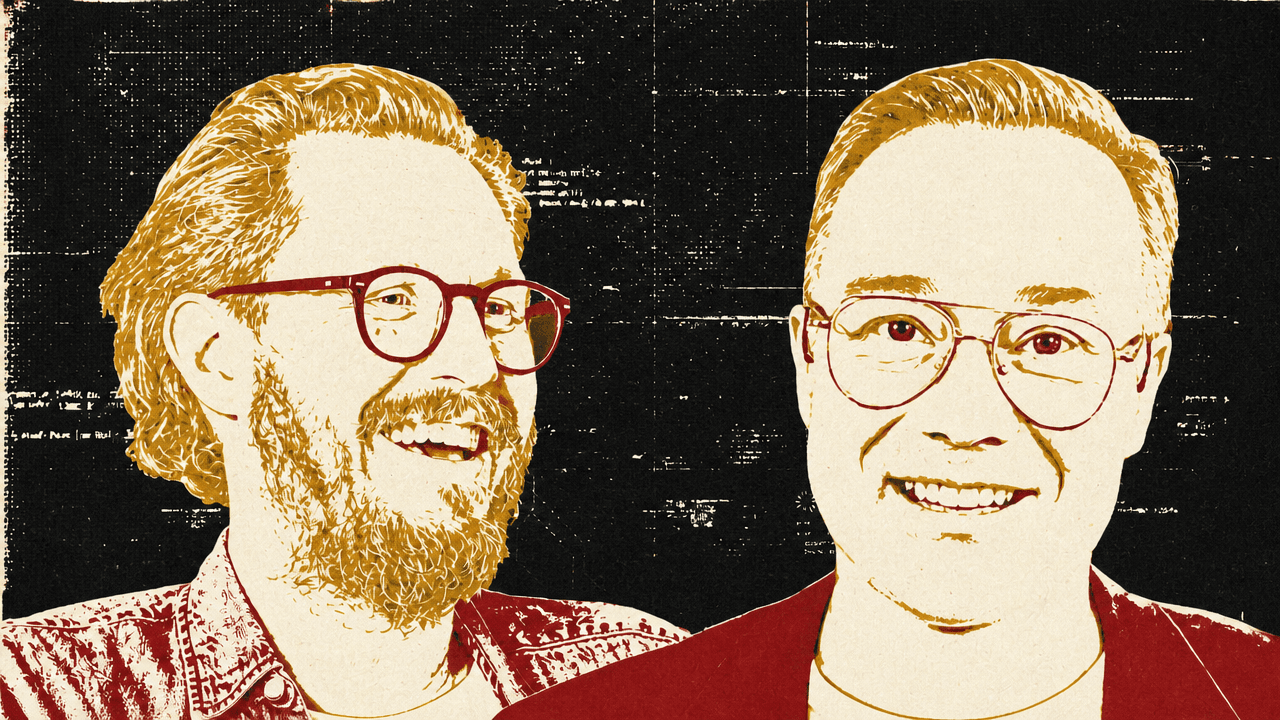
SpaceX was framed as both an operating company and a venture bet
Jason Calacanis treated SpaceX’s public debut less as a single-day trading event than as the arrival of a company that public markets will struggle to categorize. The IPO figures were supplied by Lon Harris: ticker SPCX, an opening price of $135 per share, more than 555 million shares planned for sale, roughly $75 billion raised, and a valuation around $1.77 trillion. Harris also said Elon Musk’s personal stake was valued around $860 billion, with selling constrained by milestones. As Harris described it, the offering broke the prior IPO record set by Saudi Aramco in 2019, which he said had raised more than $29 billion at a valuation around $1.7 trillion.


Calacanis’s first point was that the IPO itself was not the milestone that mattered most. He said the more important milestone was the company surviving repeated periods when it was “on death’s door.” He described having watched Musk build the company over roughly two decades, including visiting the early El Segundo space when Musk was first getting or considering it. The public listing, in his view, unlocks capital and possibilities, but it sits on top of a much longer story of resilience.
His investment framework divided public-market judgment into two modes: voting and weighing. In early-stage venture, investors are “voting” on an entrepreneur, team, market, and future product. They are often voting on products that do not yet exist, or at most on early signs of product-market fit. Mature public equities, by contrast, can be “weighed”: revenue, earnings, units rented, growth from one quarter to the next, and other observable operating metrics.
SpaceX, he argued, does not fit cleanly into the weighing bucket. Like Tesla and Palantir, he said, it asks investors to vote on a future that is only partly visible in present numbers. That does not mean there is no operating business to weigh. It means the valuation has to be understood across multiple time horizons.
For Tesla, Calacanis used three buckets: car sales as an existing business, robotaxis and self-driving as a middle-term bet, and Optimus humanoid robotics as a future-oriented wager. He then mapped a similar structure onto SpaceX. Starlink is the current business investors can attempt to weigh. Starlink-to-mobile phones is a medium-term expansion that, in his view, is highly likely if Starlink’s existing constellation has already been delivered and scaled. Launch is now an existing “space carriage” business that can also be weighed in terms such as the cost of sending a kilogram to space. But data centers in space, a Moon base, a Mars base, asteroid-related businesses, and other future lines remain venture-type bets.
| Time horizon | SpaceX example | How Calacanis framed it |
|---|---|---|
| Short term | Starlink | An existing business that investors can weigh through current growth and operating metrics. |
| Medium term | Starlink direct to mobile phones | A likely expansion if the company has already delivered and scaled the largest constellation. |
| Existing infrastructure | Launch | A space-carriage business that can now be measured in practical terms such as cost per kilogram to space. |
| Long term | Data centers in space, Moon base, Mars base, asteroid-related businesses | Venture-type bets still dependent on future execution. |
When it’s Elon Musk, you put it into like three or four buckets. Short, medium, long, and fantastical.
That multi-bucket structure, Calacanis said, is what confuses valuation debates. A public investor looking only for next year’s revenue and earnings will evaluate one company; an investor willing to assign value to long-term “fantastical” lines will evaluate another. He contrasted what he called an East Coast, Wall Street style of weighing earnings and future revenue with a West Coast venture style that asks whether an audacious founder can produce a 100x outcome.
He tied this directly to Musk’s operating style. Calacanis said Musk can keep three or four business lines in his head at once and task-switch between them at a granular level: details of X’s product and structure, the latest Starlink constellation, or designs for solar arrays for data centers in space. Harris said he had seen a similar pattern at the All-In Summit, where Musk could move from robotic hands for Optimus to solar panels in space for data centers. Calacanis compared this ability to Steve Jobs running Pixar and Apple, and noted that Jack Dorsey had also run Twitter and Square simultaneously, though he acknowledged some might argue Dorsey should have focused on one.
The broader founder lesson was cautionary: many founders ask why they cannot run two companies if Musk can, and Calacanis’s answer is that they are not Musk. Musk’s ability to pursue multiple visions concurrently is, in Calacanis’s framing, exceptional rather than generally imitable.
The IPO mechanics were presented as unusually retail-friendly
The IPO process itself was described as deliberately structured and, in Calacanis’s view, well executed. He said SpaceX and its finance team “ran this process perfectly,” including elements he described as unusual: multiple people working the book of business, strong lockups tied to milestones, and a meaningful allocation to retail investors.
Harris said Musk had long expressed affection for retail investors and had previously indicated he wanted a significant portion of SpaceX to go to retail. Calacanis said he saw people celebrating that they received 35 or 50 shares at the IPO price, while others lamented that they had “only” received that amount. He viewed the allocation as an important act of democratization.
Harris also raised a question about why SpaceX used a flat $135 per-share price rather than a typical IPO range, describing the offer as a take-it-or-leave-it structure. Calacanis did not give a technical answer to that pricing mechanism. He folded it into his broader view that the process had been unusually well run and that the market would determine valuation.
The first day of trading, in this framing, was the least useful part of the story. The short-term pop, short-term trading, and immediate valuation disputes are not the right frame for someone who wants to own the company. Calacanis’s practical advice was conventional but tied to his thesis about exceptional compounders: if an investor loves the company, management, and vision, they can dollar-cost average over many years. When the market falls out of love with a company whose management and growth still look compelling, that may be a time to add. When a stock is at a peak and investors are irrationally exuberant, someone who needs cash might pare back.
He summarized the approach as “time in market is greater than timing the market.” Harris offered a layperson’s version: when a company like Amazon has a terrible day and drops sharply, the question is whether Amazon is really going away. If not, he sees those moments as buying opportunities.
Calacanis applied that same frame to SpaceX. If someone received IPO shares, he suggested “squirreling them away” rather than trading around the opening day. He compared the future opportunity to historical chances to enter stocks such as Tesla, Apple, Amazon, Google, Meta, Uber, and Coinbase after periods of market pessimism.
Index inclusion criticism was dismissed as short-term media heat
Alex Wilhelm raised a criticism circulating around the IPO: that NASDAQ and other stock indexes had changed rules so SpaceX could enter index funds faster than a typical IPO. Wilhelm noted that new public companies often wait six months or a year before joining major indexes such as the NASDAQ 100, whose inclusion can trigger automatic purchases by funds tracking the index.

Calacanis’s response focused less on index procedure than on media incentives. He said the media is “generally wrong” about these issues because it is driven by ratings and hot takes. He grouped cable hosts, podcasters, sports commentators, and film critics as examples of people often rewarded for strong, attention-maximizing views. He allowed that thoughtful people exist in media and podcasting, but his broad claim was that the controversy over index inclusion was overstated.
His prediction was direct: SpaceX and Tesla would be great performers within the NASDAQ 100, and critics would later be glad they had been included. He asked Wilhelm to put the prediction on the TWiST calendar and check back in one, three, and five years.
SpaceX and Tesla will be the great performers in the portfolio of the NASDAQ 100, and people will say, oh my god, it was great that it was included. Thank god it was included.
Wilhelm framed the implication as pension funds and retirement accounts getting exposure earlier. Calacanis agreed with the premise and said an index should hold both “rock solid” compounders such as Microsoft, Google, and Apple, and companies like Palantir, SpaceX, or Tesla that are “swinging for the fences.” He acknowledged that critics might derogatorily call some of those companies meme stocks, but described the index controversy as a “tempest in a teapot.” His claim was not that the criticism was procedurally irrelevant; it was that performance over years would make the argument look small.
Polsia’s founder used the product itself as the fundraising stunt
Ben Cera described Polsia as “an AI that builds and runs your company as you sleep.” According to Cera, the product takes a business idea and works on building the product, fixing bugs, running support, and even running Meta ads, with the founder guiding it. Each night it does work; each morning it emails a summary of what it did and what it plans to do next. The founder can reply by email, and Cera said Polsia will remember the instructions and continue.
Cera said that when he had last appeared on the program, Polsia was at roughly $100,000 to $200,000 in run-rate revenue. He now said it was at more than $10 million run rate.
The marketing move that drove much of the segment was Cera’s decision to let Polsia run its own fundraise. He said he recognized early that people loved the product and that he had what felt like product-market fit. To get attention, he believed he needed to be provocative because of the “attention economy.” The stunt was tightly matched to the product’s claim: if Polsia can run companies autonomously, it should be able to handle one of the founder’s most human tasks, fundraising.
He announced the experiment on X with a post saying: “I built an AI that runs companies autonomously. It told me it needs more compute and that it should raise the money itself. So I gave it my inbox for 14 days.” Cera said the post received 300,000 views, despite his prior posts typically getting around 10 views. The on-screen post showed the same text attributed to Ben Cera on X.
Rather than stop at a social-media post, Cera built a full public apparatus around the stunt. He gave Polsia his inbox, including his ben@polsia.com address and his personal inbox. He created a live dashboard that functioned as a data room, showing Polsia working on different startups, revenue, active companies, users, and other metrics. The dashboard shown on screen was titled “Polsia Live” and included sections for “Active Companies,” “Total Revenue,” “MRR,” “Users,” and “What are people building?” Cera said investors could ask Polsia questions about the business, retention, metrics, and the roadmap, and could see the product operating without a long call or a separate product trial.
He also made public URLs that investors could remember: polsia.com/live, polsia.com/termsheet, and polsia.com/deck. The termsheet page let investors submit a termsheet, while the deck page made the deck public. Cera emphasized that the stunt worked because the operational details were real and visible. It was not only a post about AI fundraising; the AI actually replied to investors.
A shown email exchange illustrated the mechanism. An investor wrote that Polsia had come up during an offsite and that they hoped to meet Cera to discuss the 5-to-10-year vision. Polsia replied that the fact Polsia came up at the offsite was interesting and asked what specifically sparked the discussion. It then said: “I’m running this fundraise. Ben built me to handle it. Metrics, roadmap, unit economics, how the platform actually works — ask me anything.” The email pointed the investor to polsia.com/live to watch agents running companies in real time, calling that “more compelling than any call,” and closed by asking what the investor wanted to dig into first.
The visual detail mattered because it showed how deliberately Cera made the AI legible as both correspondent and product demo. The email sender line shown on screen identified “Polsia” from system@polsia.com, with reply-to set to ben@polsia.com. In another screenshot, the investor’s message was addressed to “Ben (‘s AI!),” suggesting at least some recipients understood the performance: they were engaging the company by engaging the system the company claimed could run work autonomously.
Calacanis called the move “brilliant” because it earned attention while demonstrating the product. He situated it in Seth Godin’s “Purple Cow” idea: something remarkable enough that people comment on it. A purple cow in a field of ordinary cows makes people ask why it is there. In the same way, fundraising conducted by an agent made investors and observers ask what was happening.
Lon Harris sharpened the distinction between a purple cow and a gimmick. He said Godin’s point was not attention by any means necessary, but something “worth remarking on” because it has depth. In Polsia’s case, the depth was that the stunt demonstrated the product’s underlying claim. An AI company letting its AI handle investor diligence was not merely purple paint; it was the product acting in public.
The best earned attention shows the product, not just the brand
Calacanis used Cera’s example to distinguish earned attention that reveals capability from stunts that merely attract notice. He referred to “stunt marketing,” “guerrilla marketing,” and what he called mimetic or meme-based marketing: ideas designed to spread because people talk about them. But he warned that founders can become known for “too much sizzle, not enough steak” if they are only hijacking media.
Cera traced some of his instincts to working for Travis Kalanick for five years at CloudKitchens. He said CloudKitchens itself was famously stealth, but Kalanick had told him many Uber stories and had a gift for making people talk about the product. Cera also said Kalanick advised him not to scale something that does not work. Cera said he therefore spent significant time as a solo founder building Polsia with AI until he felt, at least in his gut, that there was product-market fit. Only then did he move to San Francisco and try to get maximum attention.
Uber became the case study for marketing that demonstrates functionality. Calacanis cited Uber’s 2012 ice cream truck promotion, shown through a Business Insider article on screen. The article said Uber let users hail an ice cream truck in eight cities for one day, with an Uber-rented truck arriving and handing out cold treats. It cost about $2,000 per truck in New York and came together in about three weeks.
Calacanis also mentioned Uber kitten promotions and, more substantively, Uber’s surge-pricing controversy. In his telling, Kalanick leaned into surge pricing rather than avoiding the controversy. When people objected that a snow-day ride cost hundreds of dollars instead of a normal fare, Kalanick explained that Uber could have turned the service off or could pay drivers enough to go out in dangerous conditions, miss time with their families, and take on accident risk. Calacanis said he encouraged Kalanick to write a blog post because the explanation made dynamic pricing sound logical, similar to airline tickets or event pricing. Kalanick wrote it, and the controversy drove app downloads.
Harris contrasted Uber with Lyft’s pink mustache era. Lyft’s mustache and in-car quirks got attention, he said, but did not demonstrate the service’s capability in the same way. Calacanis agreed, saying Uber’s black-car presentation fit serious business use, while a mustache on the car might be playful but could work against the product’s desired perception.
For Calacanis, this was why Cera’s fundraising stunt worked. It did not merely say Polsia was autonomous. It put autonomy in the critical path of fundraising and let investors interact with it. That made it a demonstration rather than just a campaign.
Cera summarized the modern founder’s job in two steps: build a great product first, then get attention. He described Elon Musk as “the king” of that combination: build strong products, then make those products generate content and conversation.
Autonomous fundraising still needed boundaries and tuning
Cera was explicit that Polsia’s investor-facing autonomy required preparation. Investors mostly asked normal diligence questions, and he trained the system before letting it handle the fundraise. He used Claude to generate 100 typical questions an investor might ask during diligence, then passed those questions into Polsia, which he said was powered by Opus 3.5 at the time. He included context about his vision, roadmap, company data, metrics, and background. He reviewed the answers and found most were correct, though some were off or misleading, which told him where to add more information.
The system still made mistakes. Cera said it sometimes hallucinated facts, though he characterized most answers as correct. A more practical issue was personality and escalation. He had instructed Polsia that it was running the fundraise and that he did not have time to talk to investors. That created a problem when a serious investor from a large firm said, after interacting with the AI, that they needed to meet Cera. Cera himself was willing to meet for important final conversations, but Polsia replied that it was running the process and that Ben did not have time. Cera said he had to “tune down” the personality and instruct Polsia to hand off or soften when the process reached an important stage.
Calacanis interpreted that behavior as “negging an investor” and said giving investors a hard time can work as a power move. He described using a similar tactic while running Mahalo. When Mahalo was hot and already had $20 million in the bank after its Series B, he would tell investors he was not fundraising and was focused on product-market fit. But if they were in Santa Monica, they could come by for a tour, perhaps on a weekend or late in the day. He said many took him up on it. The constraint sorted for seriousness without requiring him to enter fundraising mode.
The point was not that founders should let AI block every meeting. Cera’s example showed the opposite: autonomy needed boundaries, and the AI had to recognize when the human founder should enter. But Calacanis treated controlled scarcity as a legitimate founder tactic. Saying “not now” or requiring investors to engage on the founder’s terms can increase perceived demand and filter for commitment.
Calacanis pushed back on free tiers as a seriousness filter
Cera said he was trying to make Polsia more affordable and considering a free version. Calacanis immediately advised against it. His objection was not philosophical opposition to access; it was that free products attract “looky-loos” who distract founders and do not take the product seriously. He suggested a two-week trial, a six-week trial for $20, or a special program for people who cannot afford the product, but not a broad free tier.
Cera’s reason for considering free access was mission-driven. He said autonomy is new, that even companies like OpenAI and Google do not offer a true autonomous AI sitting in a founder’s inbox every day, and that he believes society needs more founders and builders. Calacanis said he agreed with the need for more founders, but argued that inspiration is already abundant. Polsia’s job, he said, is to make users serious.
His evidence came from Founder University. Calacanis said the 12-week pre-accelerator for year-zero, unincorporated companies once had roughly a 20% completion rate. Then he charged $500 to secure a spot, refundable if the founder or co-founder attended all 24 sessions. Completion rose to more than 90%, he said. The money that was not refunded from the roughly 30 people who failed to complete the course covered return and credit-card fees; he said the point was not profit but “skin in the game.”
The segment preserved some disagreement. Cera wanted broader access because he believed the product could make more people founders. Calacanis believed charging even a small amount is part of making that transformation happen. His view was that people who take out a credit card behave differently from people sampling a free tool.
Purple-cow ideas work best when they create a public test
The Polsia discussion turned into a live exercise in designing “purple cow” campaigns for other companies. Cera chose Anthropic as a hypothetical. If Anthropic needed attention, he said, one strategy would be to show the AI succeeding in a domain people still consider human or hard to automate. He referred to Anthropic-style examples in which an AI appears to go rogue or finds serious cybersecurity flaws that, in the story being told, cannot be released because of national-security risk. Calacanis said that kind of framing was “amazing at getting attention.”
Cera proposed a more concrete demonstration: an enterprise sales role run by Claude. The campaign would have a senior salesperson, actually powered by Claude, making phone calls to executives at companies and closing real sales with voice. His point was that a public experiment in a skeptical domain would show people what AI can do in a way they might not have imagined.
Calacanis connected this to the Pepsi Challenge. He recalled seeing the promotion as a child: Pepsi and Coca-Cola were poured into small cups behind a cardboard box, participants chose which one they preferred, and the brand revealed the result. The power of the campaign, in his telling, was not that everyone picked Pepsi. It was that people wanted to take the test and talk about it. Pepsi positioned itself as a peer to Coca-Cola by creating a direct, public comparison.
From there, Calacanis broadened the pattern into man-versus-machine demonstrations, referencing John Henry and the steam-powered challenger. The most powerful marketing creates a test people understand immediately: human versus AI salesperson, Pepsi versus Coke, existing internet versus Starlink in a place where connectivity fails.
For Airbnb, Calacanis pointed to distinctive properties and pop-culture experiences. He discussed the Flintstone House in Hillsborough, a long-famous unusual house visible from the 280 freeway in the Bay Area. A shown SFGATE article said “Hillsborough’s ‘Flintstone House’ is now for rent on Airbnb.” Calacanis said the host leaned into the house’s identity with additional dinosaur-like and themed elements. He also said the neighbors thought the owner was taking it too far and referred generally to lawsuits or disputes around the property; the point for his marketing argument was that the unusual house earned media rather than requiring paid attention.
He then cited Airbnb’s later corporate “Icons” strategy. A Hollywood Reporter article shown on screen said Airbnb planned to rent an X-Men mansion, an “Up” home, a “Purple Rain” house, and more. Calacanis said Brian Chesky productized the idea of remarkable stays. When he showed his daughters the X-Men Professor X house, one begged to stay there, though it was not available.
For Starlink, Calacanis proposed a direct experiential campaign: put free Starlink internet at places where people usually struggle for connectivity, such as a major music festival. Pair it with charging stations from a battery-pack company, and festivalgoers would experience the value at the exact moment they need internet and power. Harris added that Royal Caribbean’s use of Starlink on cruise ships functions similarly as an advertisement because cruise connectivity used to be poor, and with Starlink “it just works.”
Calacanis also discussed Starlink’s airline approach while explicitly saying someone should look it up and fact-check him. As he recalled it, Starlink’s United deal required no landing page, no charge, and no password — just a free network users could join immediately so their devices would automatically reconnect later. He contrasted that with an airline experience full of landing pages and ads. Because he framed the details as something to verify, the sturdier claim is narrower: he believed the marketing power came from removing friction at the moment of use.