Trump’s Confrontational Strategy Depends on Results That Have Yet to Arrive
Hoover historian Victor Davis Hanson argues that Donald Trump’s confrontational style can force changes that more cautious politicians would not achieve, but that the resentment it creates can undermine those gains. In a discussion with Peter Robinson, Hanson points to NATO spending and shifts in U.S. policy as evidence for the approach while acknowledging that the Iran conflict, the economy and the Trump family’s business dealings could weaken its political case. His favorable judgment of Trump, he says, depends on results that remain uncertain.
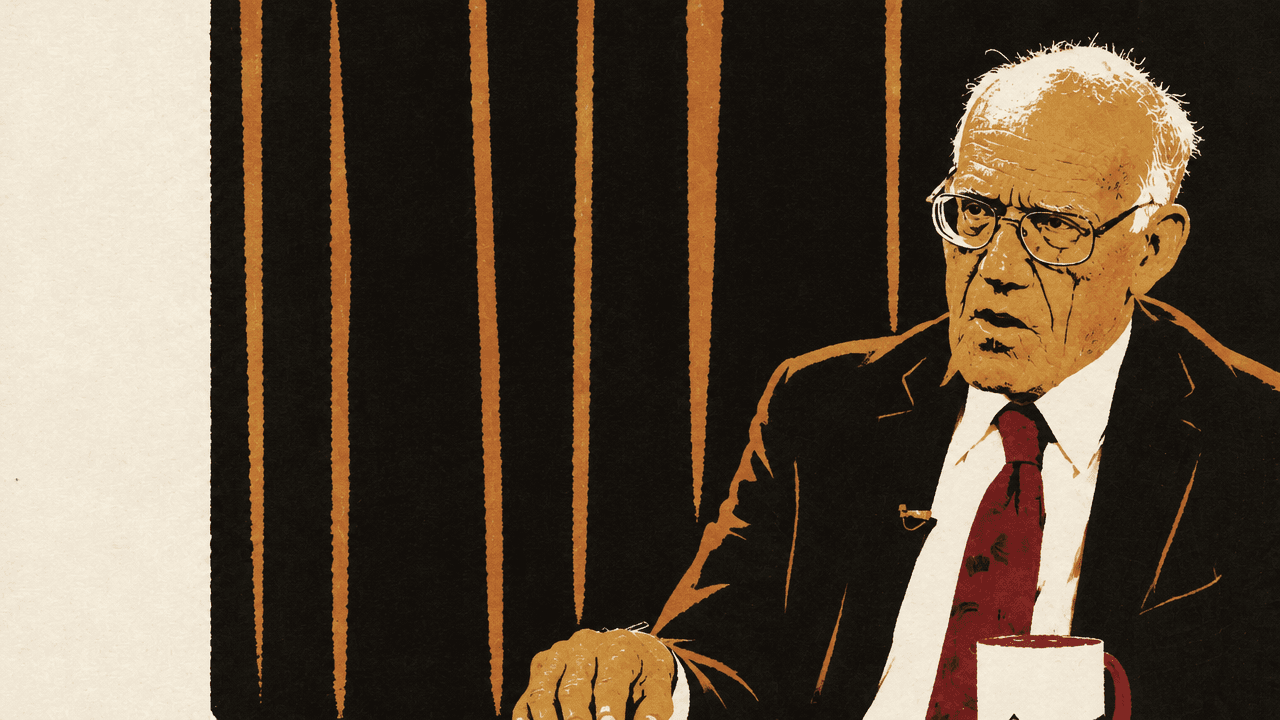
The method’s strategic case is also its political liability
Victor Hanson describes Donald Trump’s approach as a willingness to enter situations other politicians regard as untenable, make demands that offend people, and bet that pressure will force movement. Hanson’s defense of the method is that it can produce results; his warning is that the offense and resentment it creates can weaken the political project those results are meant to serve.
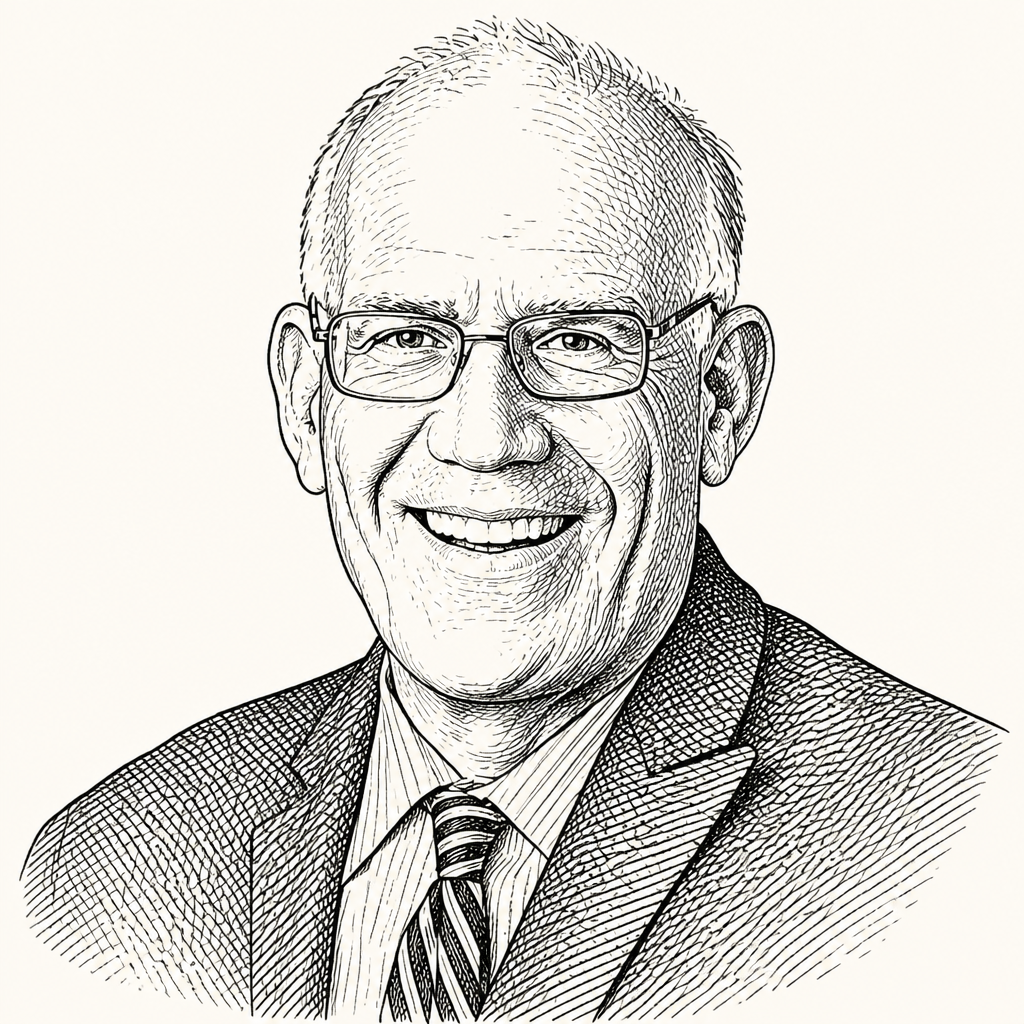
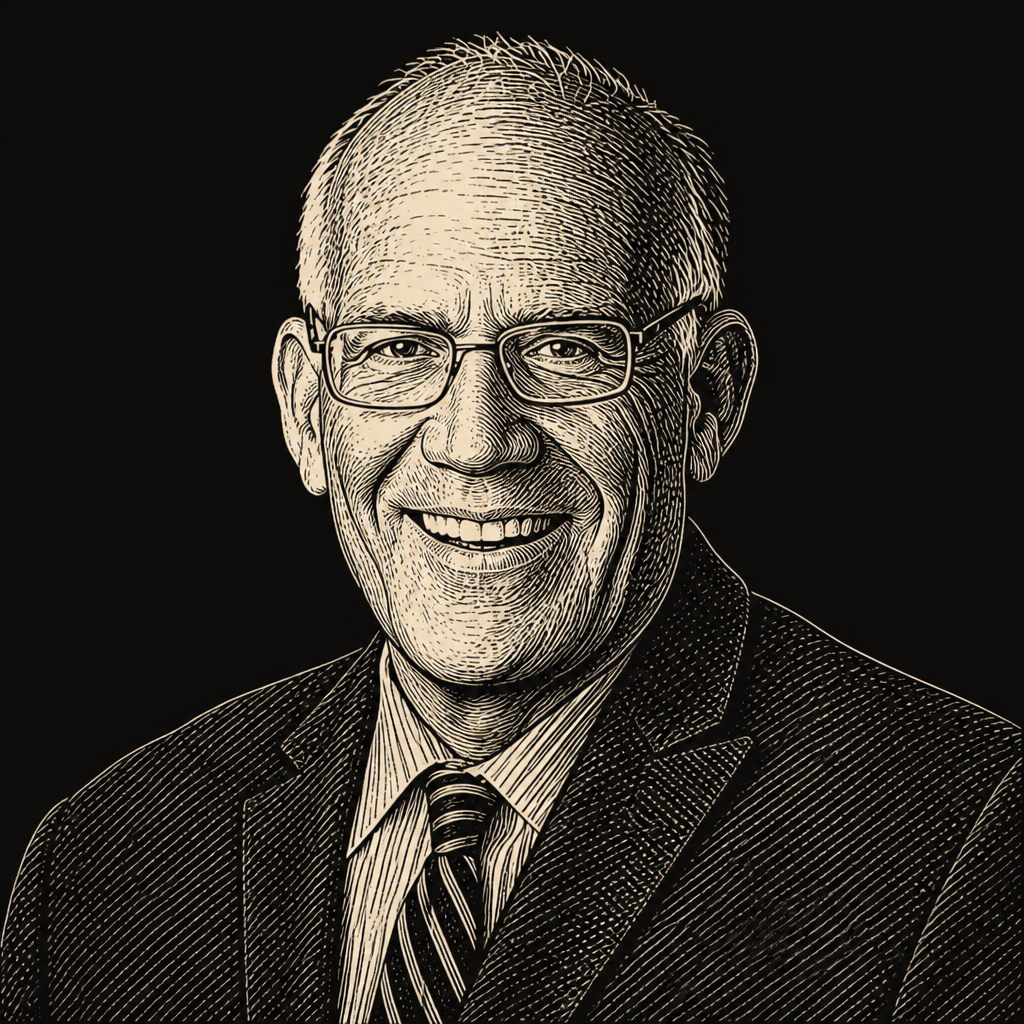
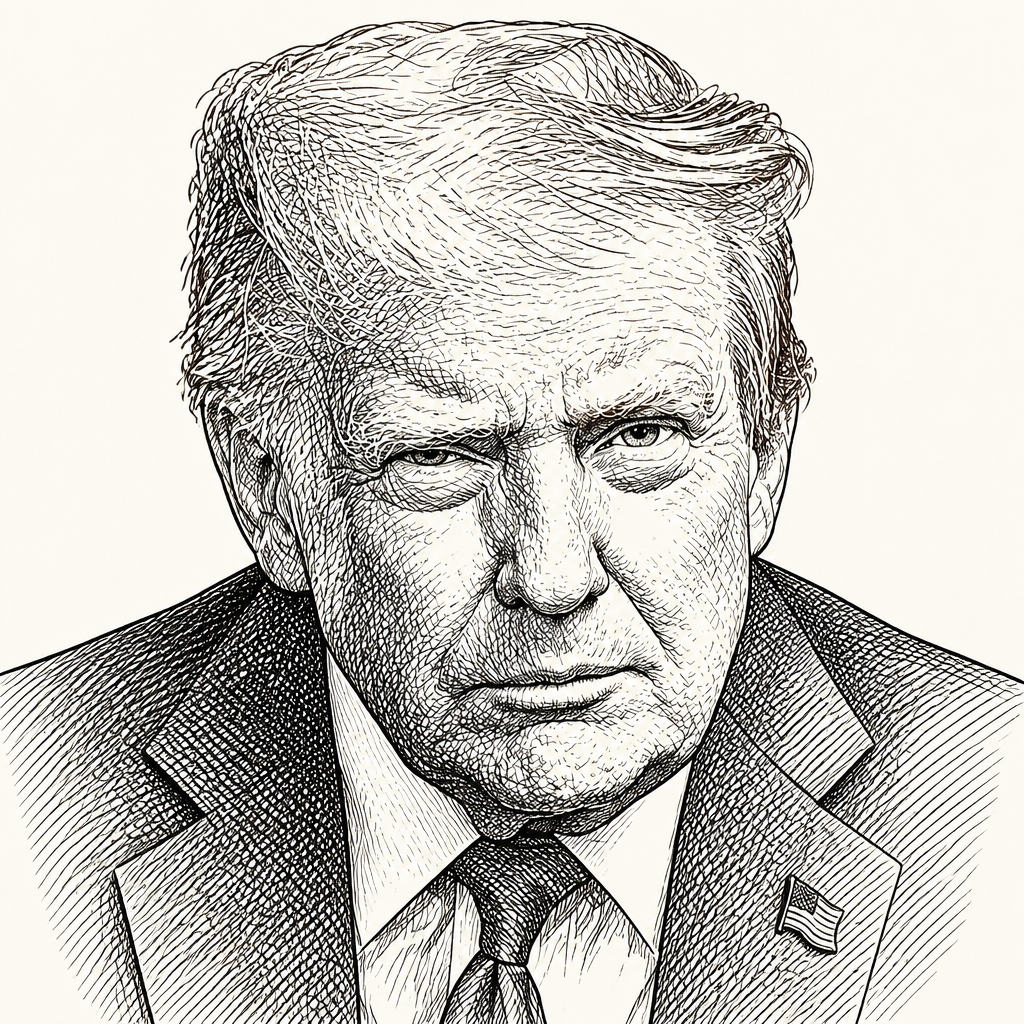
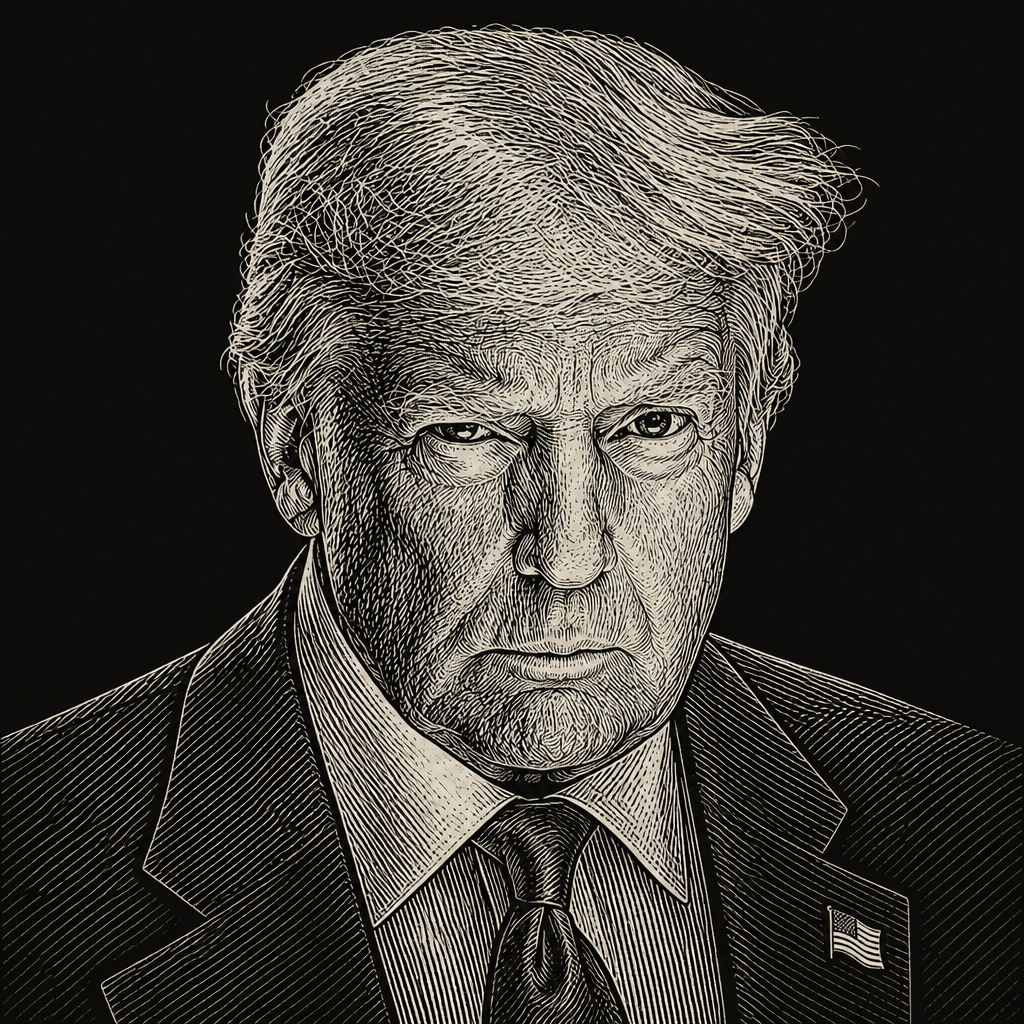
He reaches for Westerns and John Ford films to explain the trade-off. Trump, in Hanson’s account, is an outsider who says he has a distinctive set of skills and can solve a problem if people entrust him with it. But the hero does not necessarily get welcomed after the rescue. Hanson recalls the ending of The Searchers: John Wayne’s character brings Natalie Wood home, but does not join the family inside. He turns and walks away. “He is Shane. He is High Noon, Gary Cooper. He’s The Wild Bunch,” Hanson says of Trump. The comparison is not simply praise. Hanson calls the figure a tragic hero, someone whose flaws are not compatible with ordinary political acceptance.
That frame helps explain Hanson’s account of NATO. When Trump first became president, Peter Robinson says, NATO had 28 members and four were meeting the alliance’s 2% defense-spending target. At the time of the discussion, Robinson says, there were 32 members and all were meeting that target; NATO had also raised its target to 5%. Hanson adds that Spain had finally increased spending and says Canada had been one of the biggest offenders. He credits Trump’s confrontational pressure for pushing allies to spend more.
The pressure included public complaints that the United States carried too much of the alliance’s burden and threats that Trump might not honor Article 5 for countries that failed to pay. Hanson recounts his argument that U.S. contributions are larger than a simple comparison of defense budgets suggests: American bases and capacity to move forces, he says, account for a much larger share of the alliance’s practical capability. His description of the imbalance is pointed: the United States, he says, had become the Roman legionaries for allies who behaved like Greek philosophers.
The method also alarmed people who wanted to preserve the alliance without public confrontation. Hanson says the foreign-policy establishment condemned Trump’s approach, then allies began to acknowledge shortfalls he had highlighted. He points to the small number of tanks in Germany and the age of Canadian aircraft, and says Russia’s invasion of Ukraine reinforced the argument that Europe should have armed more. Robinson asks whether the confrontation was the only way to produce that change. Hanson does not claim to know whether allies would have acted voluntarily. He contrasts Trump with Barack Obama, who also called allies “free riders” but, in Hanson’s telling, tried to persuade them through a more conciliatory style.
Greenland provides another example of the same argument. Hanson says China and Russia were intruding into Danish air and maritime spaces and that Denmark did not have the capacity to respond. He describes Trump as demanding authority to act in Greenland, while offering the prospect of U.S. bases around the Arctic and economic activity there. Hanson’s account is that the confrontation forced attention onto a security problem and could help protect the Arctic for the West. He also acknowledges the offense caused by Trump’s manner and demands. The claimed strategic gain and the resentment are inseparable in his telling.
Hanson sees the same political risk in Trump’s handling of Iran. He says Trump expected the attack to resemble shorter operations, including the 2025 bombing and the one-day operation involving Nicolás Maduro. Instead, Hanson says, the Iran conflict lasted 38 days. He argues that Trump believed he could negotiate with the regime and misjudged what that would involve. Fighting around the Gulf and the Strait of Hormuz, in Hanson’s account, pushed oil prices above $100 a barrel and gas from a low of about $3.10 to $4.50.
The question Robinson presses is not only whether the operation could achieve its aims, but why Trump did not explain them more fully to the public. A clip shown during the discussion has Trump saying the objective was “to defend the American people by eliminating imminent threats from the Iranian regime.” Robinson says that this did not bring the country along or explain why Americans might have to sacrifice together. Hanson replies that the operation had longer-term objectives for future generations.
Hanson’s explanation is that Trump thought he could repeat a pattern of acting where advisers warned against it. He recalls Trump’s actions against ISIS in Iraq, Qasem Soleimani, Abu Bakr al-Baghdadi, and Wagner forces in Syria, and says Trump had also confronted China over Panama and acted against Maduro despite warnings. In Iran, Hanson says, Trump saw protesters in the streets, recalled Obama’s response to the 2009 Green Movement, and thought he could help. A Truth Social post shown during the discussion, dated January 13, 2026, urges Iranian protesters to take over their institutions and concludes, “HELP IS ON ITS WAY.”
But Hanson emphasizes that Iran was not another targeted operation. He describes it as a large country with a population of more than 90 million, a long Persian history, a technocratic state, and assistance from China and Russia. He says Trump saw the protests and believed he could help bring down a regime that had survived for decades. Hanson says Trump “really did believe that he was going to pull this off,” and that he “almost did it” in 38 days. He speculates that two more weeks, together with a direct explanation to Americans, might have changed how the operation was understood.
Hanson says some House Republicans believe Trump is risking the midterms because he wants the legacy of having liberated Iran. He also says Trump is trying to get gas prices down, which helps explain negotiations that Hanson expects will not end well. The broader political problem is that a potential long-term achievement competes with immediate costs that voters can see, while Trump has not, in Robinson’s view, made the case for the larger stakes.
Hanson’s claimed gains remain contingent on outcomes
The economic figures Robinson and Hanson discuss do not settle whether Trump’s approach is working. Robinson says growth during the second Trump term has been about 2.1% annually, compared with 2.8% during Reagan’s second term and roughly 2.7% under Biden after discounting for the Covid rebound. He says inflation remains above 3%, although it is down from its peak under Biden. Hanson gives a different measure of the earlier inflation period: 21% in aggregate, an average of 5.1% a year, and a peak of 9%.
Robinson’s assessment is that growth is respectable but not unprecedented, and that inflation is coming down slowly. He sets those figures against technological advances: the United States leads in AI, he says, while SpaceX is lowering the cost of putting heavy objects into orbit. That could make possibilities such as data centers in space less far-fetched, Robinson argues. The picture he offers is a mix of moderate economic performance and unusually rapid progress in some areas.
Hanson responds with several indicators that he says point to stronger conditions: a record stock market, a reported poverty rate he describes as the lowest on record, and reported per-capita income of $87,000. He says GDP growth is a little above 2%, while the Atlanta Federal Reserve had projected 5% growth. Robinson doubts Trump’s claim of $20 trillion in foreign investment, but says $8 trillion would itself be a record. Hanson thinks developments already under way could support Trump’s claims by the fourth quarter.
Hanson is less confident about the federal budget. He says the administration cut 400,000 jobs, but interest payments are running at about $1 trillion a year—more than the Defense Department budget. Hanson has not seen a way to balance the budget under those conditions. The administration, he says, appears to believe it can grow out of the problem; he doubts that it can.
Iran is the most consequential unknown in Hanson’s account. He says the country is closed to outside reporting, with no Western journalists on the ground, and says authorities are rounding up people who communicate with Europe or America. Hanson says the regime killed 40,000 of its own people and that he has heard reports of thousands more deaths, while acknowledging that he does not know whether the latter reports are true. He says sanctions, secondary boycotts, and frozen accounts are more extensive than anything previously seen. Israel, he says, claims to have removed the first three layers of Iranian command and control. Hanson also says Iran is losing $500 million a day in revenue and cannot obtain parts for machinery it has imported or export its own products.
He does not know when or how the regime might collapse. He argues that if it did collapse, the consequences could rival the fall of the Berlin Wall: Iran is, in his description, the chief source of anti-American terrorism since al-Qaeda’s September 11 attacks, and the U.S. military presence in the region is directed in large part at Iran. He compares the current conflict’s costs, as he gives them—18 American soldiers killed and about $50 billion spent—with the far greater costs of the wars in Afghanistan and Iraq. He calls the deaths tragic. His argument is that the strategic returns could be different, not that the costs are negligible.
Hanson’s assessment of the Western Hemisphere is similarly framed as a shift under way rather than a completed result. He says the Biden administration faced what it called a “pink tide,” with left-wing governments and increasing Chinese influence in Latin America. Hanson points to Maduro’s removal, China’s departure from Panama, and election results across the region. Out of 32 countries in the Caribbean, Central America, and South America, he counts only six as socialist, including Brazil, Paraguay, Mexico, Cuba, and Nicaragua.
For Hanson, the change also concerns which political models seem viable. Robinson says Cuba once offered people on the left a plausible picture of a socialist alternative to the United States, but now has no future to offer. Hanson agrees that people no longer look to Cuba and say they want to live that way. He argues that normalization under Obama and Biden softened the message of Cuba’s failure, while Trump’s posture says the island is finished. Hanson connects this to an effort to make Venezuela’s energy resources part of a pro-Western, capitalist, democratic economic sphere in the Americas. The ambition is substantial; Hanson points to a pattern of political changes he believes supports it.
On China, Robinson notes that Xi Jinping was beginning a state visit to Washington—the first in more than a decade, he says—when they spoke. The discussion then turns to how the United States and its partners can deter Chinese pressure. Hanson says Taiwan’s airspace is being violated constantly and argues that Washington must know whether Taiwan’s government is willing to fight before offering it “absolute guarantees of autonomy.” He makes a similar point about South Korea. After Vietnam and Afghanistan, and with Iran also in view, he says, American voters may not accept sending troops to defend a partner that will not defend itself.
Hanson says China understands this uncertainty and is trying to draw Taiwan closer through inducements as well as pressure. Robinson compares the offer to Hong Kong’s experience. He names Martin Lee, who spent years under house arrest, and Jimmy Lai, who is in prison; most of Hong Kong’s wealthy figures, Robinson says, accommodated themselves to the mainland. Hanson calls that accommodation the greatest danger facing Taiwan. The concern is not only military attack, but also whether political and economic pressure can make resistance seem too costly.
Hanson contrasts Taiwan with Israel, whose leaders, he says, have repeatedly declared that there will be no second Holocaust. He argues that Israel’s willingness to fight contributes to deterrence. In his account, Iran has attacked other Gulf states but has not fired a missile at Israel, despite Israel’s attacks on Iran, because Iran knows Israel can inflict severe damage in return. He says both Trump and Biden have told Australia, Japan, Taiwan, South Korea, the Philippines, and Vietnam that they can resist Chinese pressure together under U.S. leadership. But, he adds, the partners must stay committed. He points to Japan’s plan to launch two carriers and a wider regional rearmament effort.
Robinson credits Trump with helping change the American consensus on China. The older assumption that trade and engagement would eventually make China democratic has lost ground, he says. Hanson agrees that Trump helped make the view of China as an adversary bipartisan, while Robinson notes that the earlier assumption had roots in administrations before Trump.
Hanson’s conclusion about China is a forecast. He says China is shrinking and aging, with a fertility rate of 1.0, and argues that an older population changes a country’s outlook and places more pressure on younger workers to support older people’s health costs. He says China imports nine million barrels of oil a day, while the United States is the largest oil and gas producer in history. He also says the United States is ahead in bioengineering, AI, and satellite launches, comparing “Elon Musk” at 3,500 launches with China at 310. Hanson describes hundreds of millions of Chinese people as impoverished and lacking access to Western doctors and infrastructure. He says the Belt and Road Initiative has alienated countries by making China look like an imperial power. On this basis, he rejects the idea that China is destined to become the world’s hegemon.
The family’s business dealings could weaken the political project
Robinson raises a vulnerability Hanson discusses in his book: the Trump family’s business dealings. He cites a reported wedding party for Donald Trump Jr. said to have cost more than $1 million and been provided by a Russian oligarch. He also raises a claim that Trump could personally earn about $2 billion from crypto ventures. Robinson sets the issue against anger over Hunter Biden’s influence-peddling and argues that the Trump family’s conduct could make that case look small by comparison.
Hanson describes the claims as accusations made by Democrats and some media outlets. He says Gulf money is flowing into defense and technology ventures, including drone companies and startups such as Anduril. In his account, people connected to the Trump family act as conduits: they direct Gulf investors toward areas where they can invest and tell companies what they may be able to sell. Hanson says Representative Goldman, a Democratic congressman, had claimed that Donald Trump Jr.’s net worth rose from $50 million to $300 million.
His own ethical judgment is conditional. Hanson asks whether the family members involved would have had the financial skills to make comparable gains without their relationship to the president. If not, he says, the conduct is unethical. He does not say whether it is unlawful, and argues that Trump needs to rein in his family.
The potential consequences, Hanson says, extend beyond public criticism. If Democrats win the House, they could use subpoena power, block legislation, investigate the family, and impose heavy legal costs by repeatedly summoning Donald Trump Jr., Eric Trump, Jared Kushner, and others. Hanson says Democrats would not have the votes in the Senate to impeach Trump, but could still tie up the administration and drive down his approval. He compares the possible decline in public support with Richard Nixon’s.
Hanson’s warning is that the family’s conduct could put the administration’s wider agenda at risk: the border, Latin American realignment, the effort to change the balance in the Middle East, competition with China, and American preeminence in space. He says that in his own extended family, which he describes as Truman Democrats, he was the only person who voted for Trump. Relatives who had supported other candidates are angry, he says, and he finds it difficult to speak with them. He takes that reaction as a sign of how the family’s conduct could affect independent voters. Some may conclude that the administration’s policies do not outweigh what they see as grifting.
Hanson does not use support for the administration’s objectives to excuse the family’s conduct. He says the family’s actions could imperil the project they stand to benefit from.
The Republican Party has moved beyond its older establishment model
Hanson’s claim that Republicans will not return to their late-twentieth-century values is not a claim that the party has abandoned conservatism. He treats Ronald Reagan as a special case, then names George H. W. Bush, George W. Bush, Bob Dole, John McCain, and Mitt Romney as representatives of a governing model he thinks is finished.
That model, Hanson says, accepted inexpensive immigrant labor because corporate America wanted it, treated NATO as a bulwark that should be supported without much pressure, and avoided open conflict over culture. Its leaders preferred to preserve civility and institutional harmony rather than risk a sharp political fight. Hanson says they would rather lose nobly than win in a style associated with Lee Atwater’s hard-edged campaign against Michael Dukakis.
Trump broke with that restraint. Hanson says the party is now, for good or ill, a populist nationalist movement rooted in the middle class rather than a golf-club or East Coast establishment. The change shows up in policy as well as manner. Hanson says earlier Republican leaders would not have proposed eliminating taxes on tips or deregulated as aggressively. They would have described America’s role as leading the West in measured terms, rather than saying openly that the United States had been used and that it should pursue preeminence even if doing so caused turmoil.
Robinson points to Trump’s distance from elite social approval: despite moving from Queens to Manhattan, he did not try to remake himself for acceptance by its prominent circles. Hanson recalls a wealthy New York donor describing Trump as “C” rather than A- or B-list social company. Hanson contrasts that judgment with the way many Americans see Trump as a leading political figure. In his account, the break with the old Republican model is also a break with the assumption that elite respectability is a prerequisite for political leadership.
A favorable historical verdict depends on results, not likability
Hanson expects historians to rank Trump poorly at first. He compares a possible later reassessment with Ronald Reagan’s rise in presidential rankings, then makes his own forecast conditional. If Iran were liberated, the Middle East remade, Russian aggression checked, and American gains in Latin America, energy, technology, and economic strength endured, Hanson says Trump could be rated highly. He does not predict that outcome as certain.
A ranking graphic shown during the discussion places Trump alone in a “THE GREATEST” tier above “GREAT” and “NEAR GREAT” tiers containing historical presidents. Robinson and Hanson note its resemblance to a ranking associated with Arthur Schlesinger’s 1948 poll. Hanson’s own comparison is more guarded: he thinks Trump may be poorly regarded for the first ten years, but potentially reassessed if his policies produce the outcomes he describes.
Even in that favorable scenario, Hanson doubts Trump will be liked. He compares him to Andrew Jackson, a controversial figure who represented a changing electorate and whose name later became a political description. Hanson says Trump may be remembered as a leader who wanted the United States to be second to none and challenged the assumption that China would inevitably surpass it. Robinson connects that outlook to Reagan’s claim that the Cold War’s outcome was not foreordained. Hanson agrees that Trump’s attitude is “we win and they lose,” while distinguishing it from Reagan’s use of affability.
Hanson adds that Trump’s private manner can differ from his public persona. He says Trump often asks him about his health and describes personal acts of generosity, but does not offer this as a reason to overlook the political costs discussed elsewhere. The broader question remains whether a confrontational method can produce results durable enough to outlast the resentment it generates.
He goes into a situation that is not tenable. And he says, I’m an outsider, I’m beholden to nobody, but I have a unique set of skills that are not like your politician. And if you entrust me, I can solve these problems.
Hanson describes a difficult recovery
In a brief personal exchange, Hanson says a rare lung cancer was misdiagnosed and later removed. He says he is having DNA biopsies every 90 days because the cancer could return; those tests have so far been negative. He also describes complications after surgery: ruptures in a pulmonary artery caused severe bleeding, requiring six transfusions and a second operation. Afterward, he says, atrial fibrillation, anemia, and tachycardia left him unable to walk more than a short distance without falling.
Hanson says he rebuilt his stamina by adding a hundred steps each day. At the time of the discussion, he was walking five miles and taking about 10,000 steps a day. He says his heart is recovering, while remaining uncertain about whether the cancer will return.