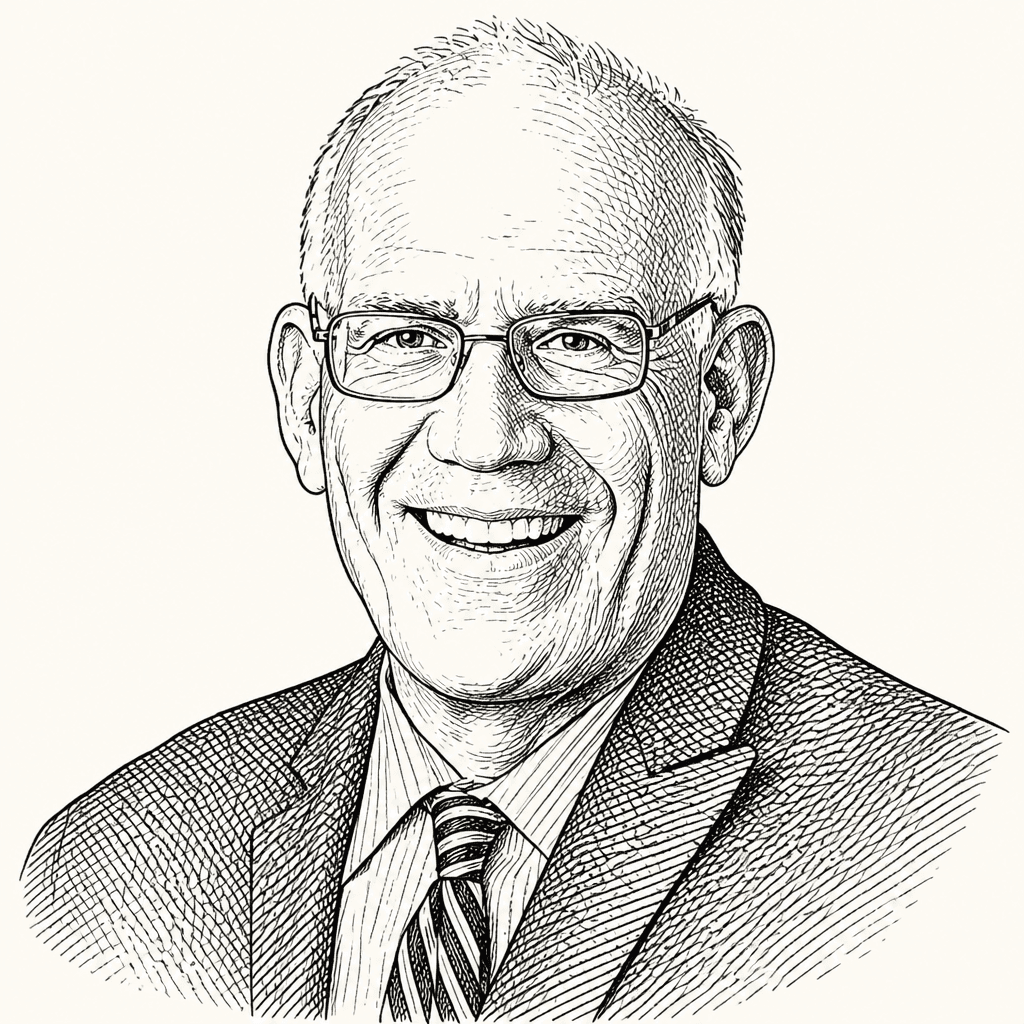
Victor Hanson
Victor Davis Hanson is the Martin and Illie Anderson Senior Fellow at the Hoover Institution, where his focus is classics and military history. He is a historian, author, and commentator.
Hoover’s Policy Boot Camp Marks a Decade of Preparing Civic Leaders
At its tenth anniversary, the Hoover Institution Summer Policy Boot Camp made the case that civic leadership is a present responsibility, not a future role. Speakers raised distinct questions about public judgment, participation and career uncertainty, while Condoleezza Rice pointed to the continuing need for informed, passionate and compassionate leaders.
Unelected Power Is Expanding Beyond Constitutional Checks
Victor Davis Hanson argues that American self-government erodes when power escapes the constitutional restraints that make it answerable to voters. In this Hoover Institution discussion, he contends that electoral compacts, expansive administrative agencies, partisan institutional changes and supranational bodies can bypass the division of authority among states, branches of government and the electorate. His proposed standard is authorization: political change may be necessary, but it must proceed through constitutional amendment, accountable delegation and sovereign democratic control.
Self-Government Depends on Distinct Citizenship and Civic Assimilation
Victor Davis Hanson argues that American self-government rests on citizenship as a distinct political status, reinforced by assimilation into a common civic culture, a broad economically independent middle class, and national allegiance stronger than ethnic or other group loyalties. He contends that blurred lines between citizenship and residence, large-scale immigration without sufficient incorporation, economic dependency, and identity-based politics are weakening the conditions on which consensual government depends.
A Shared Civic Culture Requires Assimilation and Self-Restraint
Victor Davis Hanson argues that America’s civic disorder is a cultural problem rather than a constitutional one: a free society needs citizens who share a primary political allegiance, civic knowledge and a willingness to restrain themselves beyond what the law requires. He contends that assimilation should preserve a common American political core while allowing cultural differences in private and local life, and that citizens, judges and elected officials alike must reduce the partisan conduct that erodes trust in public institutions.
Sowell Treated American Racial History as Part of a Global Record
Niall Ferguson, Victor Davis Hanson, and Coleman Hughes argue that Thomas Sowell’s central contribution was a comparative historical method that treated American questions of race, slavery, migration, inequality, and political order as part of wider human patterns. They focus on Sowell’s culture trilogy and later work to contend that cultural practices, human capital, and institutions—not racial essence or American exceptionalism—better explain how groups rise, stagnate, or come into conflict. They also credit his plain prose with carrying those arguments beyond academic institutions they say largely excluded him.
Thomas Sowell’s Comparative History Challenges American Racial Exceptionalism
Victor Davis Hanson argues that Thomas Sowell’s historical importance lies in his comparative method: *Race and Culture* places American slavery, Jim Crow, and their aftermath within patterns found across societies and eras, rather than treating the US as uniquely exceptional. Hanson says Sowell’s work relies on disciplined observation and reasoning from examples while resisting ideological orthodoxy. Coleman Hughes, who began reading Sowell as a teenager, says the books gave developed form to questions he had already begun to ask.
The Founding’s Strength Is Its Capacity for Self-Correction
Victor Davis Hanson argues in an Uncommon Knowledge interview with Peter Robinson that the American founding should be judged less by the country’s failures in 1776 than by the standard and structure it created for correcting them. Hanson says the Declaration’s equality claim gave abolitionists and civil-rights leaders a principle to wield against slavery and racial hierarchy, while the Constitution’s checks and balances were built for flawed human beings, not enlightened rulers. His defense of the founding extends to federalism, institutional restraint, and ordered liberty as the system’s answer to both administrative rule and calls for refounding.