The Founding’s Strength Is Its Capacity for Self-Correction
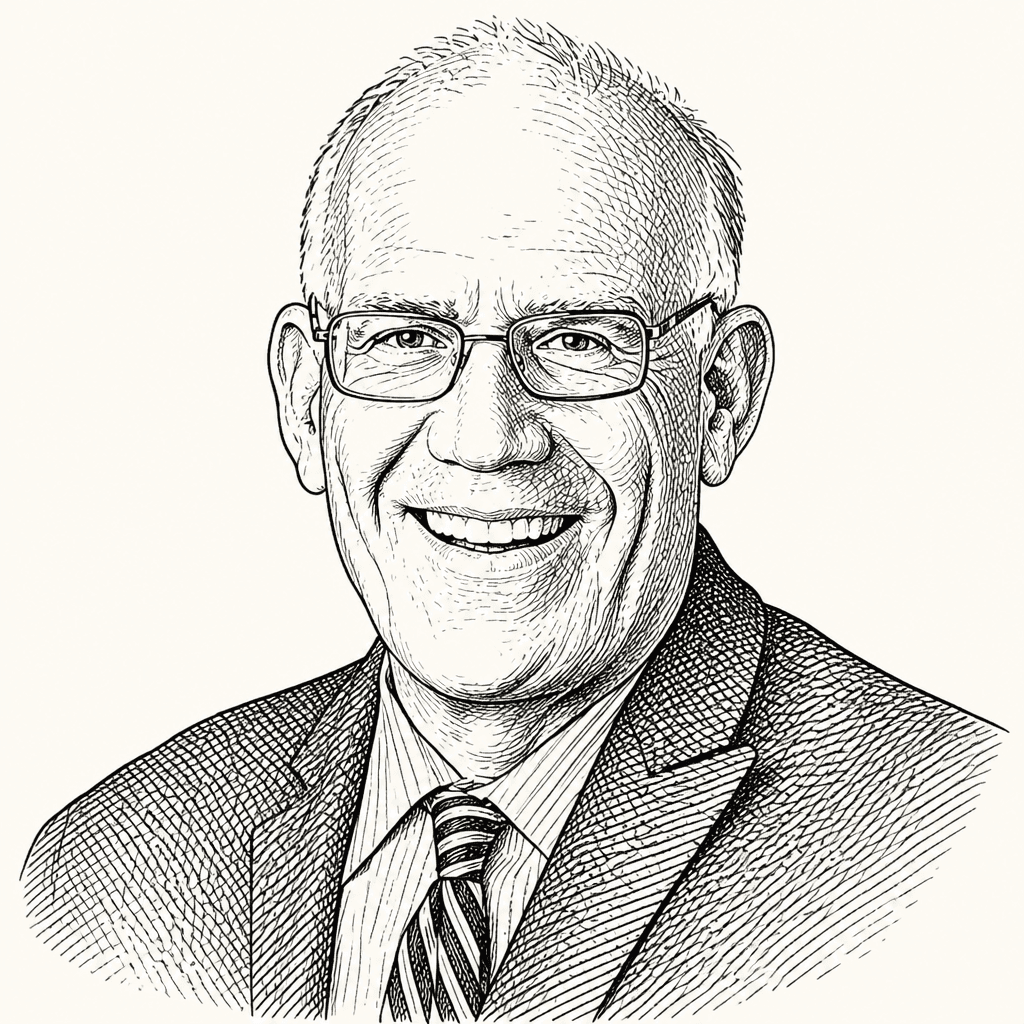
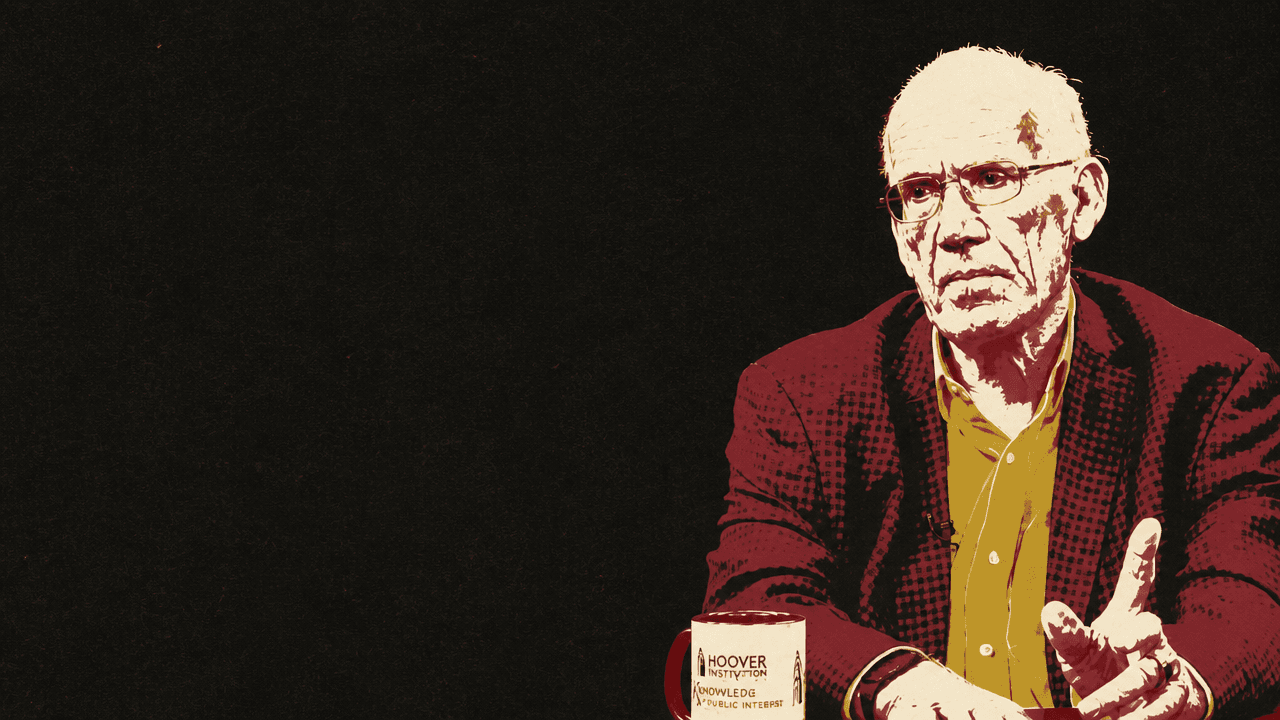
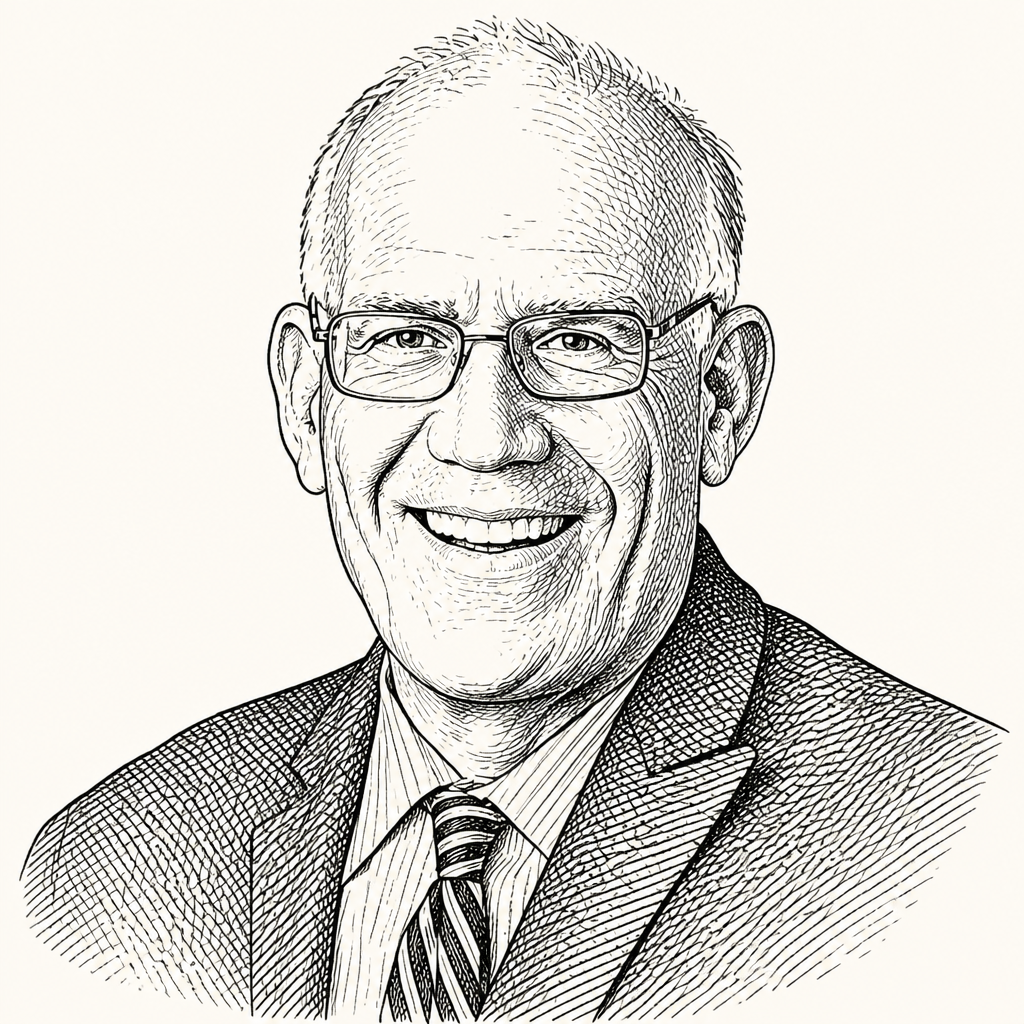
Victor Davis Hanson argues in an Uncommon Knowledge interview with Peter Robinson that the American founding should be judged less by the country’s failures in 1776 than by the standard and structure it created for correcting them. Hanson says the Declaration’s equality claim gave abolitionists and civil-rights leaders a principle to wield against slavery and racial hierarchy, while the Constitution’s checks and balances were built for flawed human beings, not enlightened rulers. His defense of the founding extends to federalism, institutional restraint, and ordered liberty as the system’s answer to both administrative rule and calls for refounding.
The Declaration gave America’s critics a standard America could not escape
Victor Hanson treats the Declaration of Independence as a world-historical event because it did something earlier constitutional milestones did not. Athens had democratic equality among citizens. Magna Carta protected nobles and property holders against arbitrary power. Roman liberty supplied a concept of freedom under law. But the Declaration’s claim that “all men are created equal” made a universal assertion about human beings, not merely a class of citizens, property holders, or free men.
Hanson does not argue that the claim described American practice in 1776. He says the force of the sentence lay partly in the fact that it exceeded the society that adopted it. Antiquity supplied only scattered approximations. He cites the orator Alcidamas — “No man is born a slave” — as about as close as the ancient corpus came, while Aristotle could still defend slavery if the right people were made slaves. The Declaration, by contrast, announced an innate equality that later Americans could use against slavery and racial hierarchy.
We're not thinking of anything new. We're just asking you people to abide by your declaration, not ours, you were the ones that said that, so please just honor it.
That is Hanson’s central defense of the founding against the claim that its contradictions exhaust its meaning. The Declaration was not a full achievement. It was an indictment waiting to be applied. Abolitionists and Frederick Douglass did not have to import a foreign moral principle into American politics; they could point to the founding language itself and argue that the country had failed its own stated premise.
Peter Robinson framed the issue with the Declaration’s familiar sentence: “We hold these truths to be self-evident, that all men are created equal,” endowed by their Creator with rights including “Life, Liberty and the Pursuit of Happiness.” Hanson’s reading depends on the distinction between a standard and a record. The standard was universal equality. The record was a country that had not yet lived by it.
The Revolution defended liberty rather than remaking human beings
The land critique of the American Revolution has force, in Hanson’s view, but only if kept in proportion. Robinson quoted Philip Deloria’s formulation that the Revolution was “all about land.” Hanson’s answer was that Deloria had taken “a truth” and turned it into “the truth.” Jefferson and other founders did believe that the American system required land enough to sustain independent agrarians. Hanson emphasizes the older meaning of that word: not simply farmers or agricultural producers, but a broad property-holding middle class, comparable to the Greek mesoi, with enough independence to speak, vote, fight, improve property, and pass property on.
That agrarian ideal mattered because the founders feared the European pattern of masters and peasants, owners and serfs. Hanson connects Jefferson, John Adams, John de Crèvecoeur, Tocqueville, and classical references to a shared ideal: a republic of independent property holders rather than a two-class society. Property was not incidental to liberty. It helped make political independence possible.
But Hanson sides with Bernard Bailyn’s account that the Revolution’s primary aim was the preservation of political liberty. The decisive word is liberty, not unbounded freedom. Hanson distinguishes the Greek eleutheria, closer to freedom, from the Roman libertas: freedom within a sophisticated civilization, under law, with competing interests and enforceable rights. Robinson condenses the point: liberty exists only within a system of law. Hanson agrees and adds that it requires civilization.
That is why Hanson calls the American Revolution conservative. It did not resemble the French Revolution’s attempt to begin at year zero, rename time, erase the church, and remake society culturally, socially, militarily, politically, and economically. The American Revolution defended assemblies, property, inherited colonial legal systems, and rights that Americans believed they already held as Britons. It broke with Britain to preserve a political inheritance derived from Britain.
Washington’s decision at Boston illustrates the distinction. After American guns were placed on the heights overlooking the harbor, Robinson notes, Washington allowed the British to withdraw rather than devastate their ships and troops. Hanson’s explanation is not military weakness but political psychology: Washington thought the British were mistaken, not evil. The founders believed they were creating a superior system, but one that remained derivative of the British parliamentary tradition and might even instruct Britain.
The Constitution’s genius is structure, not parchment rights
Hanson agrees with Antonin Scalia’s line, quoted by Robinson, that “every tinhorn dictator” can have a bill of rights; freedom depends on the structure of government.
Every tinhorn dictator in the world today has a bill of rights. It isn't our Bill of Rights that produces freedom. It's the structure of our government.
The founders’ central premise, as Hanson presents it, was that human beings are flawed. They did not build a system for purified citizens or enlightened administrators. They assumed ambition, charisma, acquisition, faction, and domination would recur.
The founders felt that we were flawed, in the Christian sense, and therefore, I think it was Madison or Adams, both of them in different variations said, “If man was perfect, we wouldn’t need this Constitution.”
Checks and balances follow from that anthropology. Hanson traces the idea through Montesquieu back to Sparta and Rome: Spartan kings, ephors, a popular assembly, and an upper body; Roman consuls checking one another, assemblies, praetors, and other offices. Montesquieu’s Spirit of the Laws transmitted that mixed-government tradition to the founding generation.
The American design made concentrated power difficult. The president could be checked by courts and Congress. Congress could be checked by veto. The Court could be shaped through appointment. Each institution had weapons against the others. Hanson says the system was intended to make it nearly impossible for one gifted, wealthy, magnetic, rhetorically powerful figure to seize the whole government.
Franklin Roosevelt is Hanson’s example of a president who came closest to testing that design after winning third and fourth terms. Yet when Roosevelt attempted to pack the Supreme Court, the system pushed back. For Hanson, that failure matters: even an extraordinary president with electoral strength could be checked.
The same structural concern drives Hanson’s criticism of contemporary institutional reform projects. He describes Democratic proposals to abolish or bypass the Electoral College, expand the nine-justice Supreme Court, eliminate the Senate filibuster, and add Washington, D.C. and Puerto Rico as states as attempts to change the rules when the rules frustrate an agenda. His claim is constitutional as well as partisan: when a party seeks to escape checks and balances, he argues, it is often because it cannot win durable consent within them.
The American model is “more difficult” than parliamentary government precisely because it resists sudden rearrangement. Parliamentary parties can replace prime ministers without a national presidential election. Hanson compares that feature to the Democratic replacement of Joe Biden with Kamala Harris after Biden’s debate performance, which he describes as the closest modern American analogue and a crisis because it departed from normal American expectations. In his telling, Biden had received 14 million primary votes, Harris had not won a delegate in her 2020 presidential run, and party actors effectively substituted her rather than holding an open contest.
The American presidency, by contrast, is normally occupied by someone voted into that office, except through death or constitutional succession. Elections are fixed. Offices have age, residence, term, and jurisdictional rules. The two-party system is steady. Third parties act as pressure valves but rarely replace the main parties. That difficulty is not a defect in Hanson’s argument; it is the achievement.
The founders read ancient history as practical instruction
The Constitution’s structure was not an improvisation by men who happened to meet in Philadelphia for a summer. Hanson emphasizes the founders’ classical education as practical training. They read ancient political writing not as ornament, entertainment, or cultural prestige, but as a usable record of success and failure.
Cicero’s De re publica and Aristotle’s Politics were especially important in Hanson’s telling. Cicero supplied an abstract account of forms of government. Aristotle, available in Latin translation since the Renaissance, classified democracies, oligarchies, and other regimes with empirical detachment and sharp criticism of Athenian democracy. The founders also read Plutarch’s Lives, likely often in Latin translation, as a gallery of examples: Caesar, Cicero, Alexander, Pompey, Aristides, Epaminondas, Demosthenes, and others.
Hanson contrasts that habit with modern historical reading. Today, he says, people often read history to be entertained or educated. The classical and founding habit was emulation. A reader might study Sherman, Caesar, or Cicero to ask what conduct should be copied and what should be avoided. Ancient histories and biographies functioned as “how-to manuals”: how to govern, how ambition corrupts, how republics fail, how power should be divided, and how leaders deceive themselves.
That is why Hanson treats the American constitutional settlement as historically informed rather than merely ingenious. The founders knew the failure modes of republics. They built a system for human beings who would remain vulnerable to those failures.
Slavery was the contradiction abolitionists turned into an argument
The strongest moral objection to the founding is slavery. At the time of the Declaration, Robinson notes, Americans held about half a million enslaved people, and Jefferson himself held about 200. Robinson quoted Nikole Hannah-Jones’s formulation that America may have been founded not as a democracy but as a “slavocracy.”
Hanson begins with concession: “There’s something to it.” But he disputes the claim that slavery captures the deepest logic of the founding. Jefferson, he says, drafted an explicit anti-slavery passage for the Declaration and was upset when it was removed. The three-fifths clause, in Hanson’s view, is also widely misunderstood. Southern states wanted enslaved people counted fully for apportionment while denying them rights. Northern opponents resisted because that would increase slaveholding power in Congress. The three-fifths compromise, in Hanson’s framing, was an effort to limit Southern representation, not a philosophical declaration that enslaved people were three-fifths human.
The larger point is that the Declaration’s equality claim created a principle that could not be permanently confined. Robinson quoted Frederick Douglass’s 1860 description of slavery as scaffolding around a magnificent structure — temporary, to be removed when the building was complete. Martin Luther King Jr. used the same founding logic when he said the Constitution and Declaration were a promissory note to which every American was heir. Robinson places Douglass and King in a long tradition that treated the founding’s injustice as contingent and its equality principle as permanent.
Hanson argues that the movement away from that tradition came when equality of opportunity gave way to racial administration and recompense. King’s generation, in Hanson’s account, wanted an equal playing field and worked within the constitutional system. After the Civil Rights Act and Voting Rights Act, Great Society programs and race-conscious districting institutionalized another logic. Hanson says racial essentialism, once condemned when expressed as white identity, was reintroduced under remedial auspices.
His example is race-based congressional districting. Hanson argues that districts designed around racial identity can trap candidates in contests over who is more ideologically or racially intense, making them less viable statewide. He contrasts that with Barack Obama’s statewide appeal as a healer and Tim Scott’s election as a Black Republican from majority-white South Carolina.
Hanson also offers a historical explanation for why slavery proved difficult to attack from older classical sources. Ancient slavery was not primarily race-coded. It came through conquest, birth, misfortune, or power. A brilliant enslaved person could not successfully argue for freedom on merit, because the system did not claim to allocate slavery by merit. Race-coded slavery, Hanson says, emerged with European exploration, the Atlantic world, and the use of Aristotelian “natural slave” arguments to justify African enslavement. The founding generation inherited both a universal equality claim and a racialized slave system that the older classical and early Christian corpus had not directly confronted.
Institutional restraint is the answer to administrators, refounders, and would-be strongmen
The progressive critique begins from the claim that an eighteenth-century Constitution cannot govern a modern industrial society through fixed natural rights and divided power. Robinson quoted the 1776 Commission report, on which Hanson served, describing the progressive alternative as government by credentialed managers securing evolving rights through rules and regulations. The report also quoted Woodrow Wilson’s formulation that the functions of government were “in a very real sense independent of legislation, and even constitutions.” A later Center for Progressive Reform statement went further: “Our Constitution not only permits the administrative state, it affirmatively requires it.”
Hanson’s objection is anthropological. The progressive project, he argues, must assume human nature is fluid and mutable. If material conditions change, human beings can be remade; if experts have enough authority, money, and scientific knowledge, they can direct that change. Hanson links this to late-nineteenth-century French administrative thought and to the Soviet idea of the “new man.”
The conservative premise, in Hanson’s account, is the reverse. Human beings remain flawed. They will seek power, wealth, and domination. The political task is not to empower managers to redesign society but to protect liberty, protect the weak from the strong, and let people act, create, and compete within a stable legal structure.
COVID is Hanson’s principal example of the administrative temptation. He names Anthony Fauci and Francis Collins as unelected public-health officials who, in his account, claimed expert authority to shut down the economy and isolate people for extended periods. Hanson argues that older experience with plagues favored more discriminating measures: gather data, determine whether children were at the same risk as adults, keep schools open if the evidence allowed, and weigh the social damage of closure. He also points to elite exemptions — Gavin Newsom at the French Laundry, Nancy Pelosi getting her hair done — as predictable when sweeping power is centralized.
Whenever this happens, the progressive administrator always relies on credentials. Not on science or not on... they say that. I am the science.
Hanson’s suspicion of refounding is not limited to the left. Robinson raised Patrick Deneen’s claim that Americans may need to “break with America and seek to refound the nation on better truths,” identifying it with NatCon thinking. Hanson says he accepts some of the critique of cultural excess, but not the remedy. Roman writers complained in the first century AD that affluence and leisure had corrupted Rome; the Western empire endured for centuries. Similar alarms appeared in the Roaring Twenties over the Charleston, churchgoing, and social looseness; earlier still, anxieties over Eastern European and Italian immigration produced fears of anarchism and rebellion.
Hanson does not dismiss those fears as imaginary. He says the answer is wrong. The American system is rigid enough to preserve order and flexible enough to address change through amendment, elections, courts, federalism, advocacy, and ordinary law. Subway violence, looting, failing schools, and open borders do not require a new founding, he argues. They require officials to use the tools already available.
The same standard shapes his defense of Donald Trump against claims by Joe Biden and Richard Cheney that Trump represents an extraordinary threat to democracy or the republic. Asked whether Trump is an instrument of decline or part of a revival, Hanson separates rhetoric from institutional behavior. He grants the rhetoric problem. Trump’s speech, he says, is excessive, rambling, contradictory, and theatrical. But Hanson rejects the idea that bombast is the constitutional definition of tyranny. In classical terms, he says, a tyrant is often careful and quiet, someone who professes democratic loyalty while manipulating institutions.
No, he's not. He's, he's, I guess what you'd say, what he says is rambling, confused, contradictory. It's showmanship.
The test, for Hanson, is conduct toward the structure. He asks whether Trump has weaponized the FBI to destroy a presidential candidate, coordinated prosecutors against opponents, packed the Court, abolished the Electoral College, expanded the Court to add conservative judges, or eliminated the filibuster. Hanson says he has not. In contrast, he points to episodes he associates with Trump’s opponents: the FBI and Russia-collusion investigation, Nathan Wade’s connection to the Georgia prosecution, Alvin Bragg, Letitia James, Merrick Garland, and the Mar-a-Lago raid.
Robinson corrects him on one point: Trump has said he wants the filibuster eliminated. Hanson answers that saying so is not the same as forcing Senate Republicans to do it, and that they would not do it anyway. On redistricting, Hanson describes Trump’s Texas position as retaliatory in a larger redistricting fight, citing states such as New Hampshire, Delaware, and Massachusetts where Republicans receive large vote shares but no House seats.
Robinson’s summary is deliberately plain: Trump “has a big mouth” but is not behaving like a tyrant. Hanson agrees. The claim is not that Trump is temperate. It is that constitutional danger, in Hanson’s view, should be judged by actions against institutions, not by style alone.
Power abroad should prevent wars without becoming empire
John Quincy Adams’s warning that the United States “goes not abroad in search of monsters to destroy,” quoted by Robinson, stands uneasily beside American military reach. Hanson’s answer is to distinguish empire and nation-building from targeted, Jacksonian force.
Trump, Hanson says, was elected on “no forever wars,” a rejection of Afghanistan and Iraq. Hanson describes those wars as a twenty-year misadventure costing about $2 trillion, 7,000 to 8,000 American military dead, 50,000 to 80,000 wounded, and ending in Afghanistan with sophisticated hardware, an embassy, and Bagram airbase lost to the Taliban. That is the model Trump rejected, in Hanson’s telling.
But rejecting nation-building does not mean rejecting force. Hanson cites the killing of Qasem Soleimani, the campaign against Abu Bakr al-Baghdadi, the destruction of Russian Wagner forces that attacked Americans in Syria, and action involving Maduro as examples of quick, targeted power used to prevent larger conflict. His current example is Iran: Trump, he says, took out nuclear facilities “in one day” and then stopped. The logic, as Hanson presents it, is cost-benefit: if a threat is existential, neutralize the capacity for war without occupying, rebuilding, or managing another country.
Hanson also defends much of the American global footprint as maritime order rather than empire. U.S. facilities, he says, sit near choke points: the Red Sea, Gibraltar and Morocco, the Panama Canal, the Bosphorus, and the Strait of Hormuz. After World War II, the United States inherited Britain’s role in keeping sea lanes open. Europe could spend little on defense for decades because America underwrote the system.
Trump’s problem, as Hanson frames it, is how to remain Jacksonian: use force decisively enough to prevent war, require allies to contribute, avoid prolonged occupations, and resist becoming a nation-builder. Hanson calls that very hard to do. It is also one of the places where his historical argument turns into contemporary strategic judgment: he is not deriving a complete foreign policy from the founding so much as arguing that restrained force and non-imperial commerce protection can coexist.
Federalism and openness are Hanson’s answer to American decline
Civic ignorance is one of Hanson’s internal warnings. In a 2017 survey cited from The Dying Citizen, Robinson reads, 37 percent of Americans could not name a single First Amendment right; only one in four could name all three branches of government; one in three could not name any branch.
Hanson nevertheless says he is optimistic because he sees a real reaction toward traditional and civic education. Charter schools, voucher programs, and institutions such as Hillsdale College’s K–12 efforts are part of that reaction. Robinson points to Florida, where he says more than half of students attend schools other than their assigned district public schools. Hanson adds that Mississippi public schools now have higher test scores than California’s, using the comparison as evidence of a broader shift.
His optimism rests even more on federalism. Americans are moving from blue states to red states in numbers Hanson describes as historically large, with people headed toward Texas, Florida, Tennessee, and similar states. He says many migrants are not ideologically conservative; they are leaving because they cannot afford housing or insurance, because taxes are high, because roads and schools do not justify the burden, and because crime and disorder have become intolerable.
Hanson contrasts red-state priorities — constitutional government, law enforcement, functional schools, lower taxes, and public sobriety — with what he describes as blue-state deficits, higher taxes, deteriorating infrastructure, homelessness, illegal immigration, and crime. The sharpness of the contrast, he says, has produced the most geographically sectarian United States since the 1850s.
Robinson identifies the constitutional mechanism: eighteenth-century federalism. Hanson agrees. The founders allowed states to compete within the Constitution so citizens could choose governing models. That competition is now producing consequences. If migration continues, Hanson argues, the 2030 census and redistricting could shift House seats toward Republican-led states. He also says Democrats may have miscalculated by entering a redistricting war, because Republicans control more state legislatures and could benefit if both sides escalate.
The deeper point is institutional. Federalism lets Americans leave failing models without refounding the nation. It turns political disagreement into jurisdictional competition rather than national rupture.
That same institutional argument carries into Hanson’s rejection of the claim that China now sees America accurately as a declining power. Robinson quoted a New York Times account saying many Chinese had long viewed the United States with “admiration, envy and resentment,” but now increasingly viewed America as in decline. Hanson says the Chinese are wrong.
His counterargument begins with geopolitics. China’s Belt and Road ambitions in the Western Hemisphere once appeared to be expanding through Venezuela, Colombia, Bolivia, Peru, and the Panama Canal. In Hanson’s account, China has now been pushed back in Venezuela, conservative governments have emerged in Argentina and Chile, and the Monroe Doctrine is being reapplied. In the Middle East, he says China and Russia have lost footholds; Russia lost Syria and Iran, while China lacks the leverage it expected from sanctioned oil and regional influence.
Militarily, Hanson argues that Chinese and Russian systems have been exposed. Russia has not been able to take Ukraine. American action shocked air defenses. Drones complicate any Chinese plan to cross roughly 110 miles of water from the mainland to Taiwan. These battlefield lessons, in his view, have strategic consequences.
Economically, Hanson’s strongest claim is comparative productivity. He says China’s GDP is about $21 trillion while America’s is about $30 trillion, despite China’s far larger population: about 1.4 billion people compared with roughly 340 million in the United States. His conclusion is that the American system remains far more productive per person. He adds that people still want to immigrate to America, not China; that eight of the ten largest companies by market capitalization are American; and that the United States leads or is near the lead in cryptocurrency, robotics, genetic engineering, and artificial intelligence.
Where China nears parity, Hanson attributes part of the gain to the 300,000 Chinese nationals studying in the United States and taking STEM knowledge back to China. China, in his view, remains derivative because it is a closed system in which advancement depends heavily on ideology. America’s advantage is openness: it draws talent from around the world and allows people to pursue ideas.
Hanson acknowledges the risks of openness if foreign-born elites are not assimilated and loyal, citing, in his account, an Orange County mayor working for China and a Stanford lecturer connected to the People’s Liberation Army. But he treats those as problems within a larger strength. The United States can produce and attract figures such as Elon Musk; Hanson says China has nothing comparable to one person building rockets more sophisticated than those of an entire rival state.
He extends the case to universities, agriculture, energy, defense, and technology. Hanson says American universities dominate global rankings in math, science, and medicine; California alone has Stanford, Caltech, USC, UCLA, and Berkeley in the top 50; and roughly 40 of the top 50 universities are American. He says the United States has the world’s most sophisticated food-producing sector, is the greatest oil and gas producer and exporter in history, and spends more on defense than the next 20 countries combined. The iPhone, computers, and electric cars took off in America, he argues, because the American system lets talent act.
For Hanson, those advantages trace back to the founding order: liberty under law, movement among states, protection for initiative, and a structure that lets people with ideas proceed without waiting for permission from a directorate.
The remaining danger is moral, not constitutional exhaustion
Asked whether he still likes America’s chances 250 years after the Declaration, Hanson says yes. He believes his children will live better lives than he did, just as he lived a better life, in terms of ordeal, than his parents.
His confidence is not complacency. The Greek and Roman warning remains: affluent and leisured people become prone to satisfying appetites in destructive ways, especially when legality is mistaken for moral permission. The founders, he says, understood in their peripheral writings that religion, community, and popular morality were necessary in a wealthy and free country.
I'm not just Pollyanna, there's a lot of things wrong that are going on, but I think they're being addressed.
Hanson does not call for a national religion. He argues that religion and moral institutions need to “step up,” because a free people will always be able to do things that are legal but bad for themselves and the country. The largest danger is not that the Declaration is exhausted or the Constitution obsolete. It is that wealth, leisure, empathy, and freedom can enable self-destruction when moral guidance weakens.
Even there, Hanson sees signs of correction, including a younger generation becoming more religiously observant than his own. His defense of the founding is therefore neither a denial of contradiction nor a claim of automatic success. It is a claim that the Declaration supplied the standard, the Constitution supplied the structure, and federalism supplied a way to correct course without breaking the country.