Apple’s Siri Overhaul Tests Whether AI Can Become an Operating-System Layer
 Caroline Hyde
 Ed Ludlow
 Mark Gurman
 Ian King
 Jared Isaacman
 Laura Crabtree
 Bailey Lipschultz
 Jensen Huang
 Ryan Vlastelica
 Paul Hudson
 Peter Diamandis
 Steve Jang
 Melissa Azari
 Carolina MilanesiAva Benny-Morrison
 Helene NorlemBloomberg TechnologyMonday, June 8, 202615 min read
Bloomberg’s WWDC preview frames Apple’s AI challenge as a test of integration rather than invention. Mark Gurman reports that Apple is expected to use the conference to make Siri more capable across apps, screens, personal data and web search, moving it from a weak voice assistant toward an operating-system layer; Carolina Milanesi and Paul Hudson argue that its value will depend on whether that layer is consistent, private and useful across Apple devices.

Apple’s AI test is whether Siri becomes useful enough to disappear into the system
Mark Gurman framed Apple’s AI position bluntly: the company has two AI buckets today, Apple Intelligence and Siri, and both are “subpar compared to the competition.” The expected WWDC change, in his reporting, is not a leap into “whizbang” AI features but an upgrade from subpar to “pretty adequate” — which, for Siri, would itself be a meaningful shift.

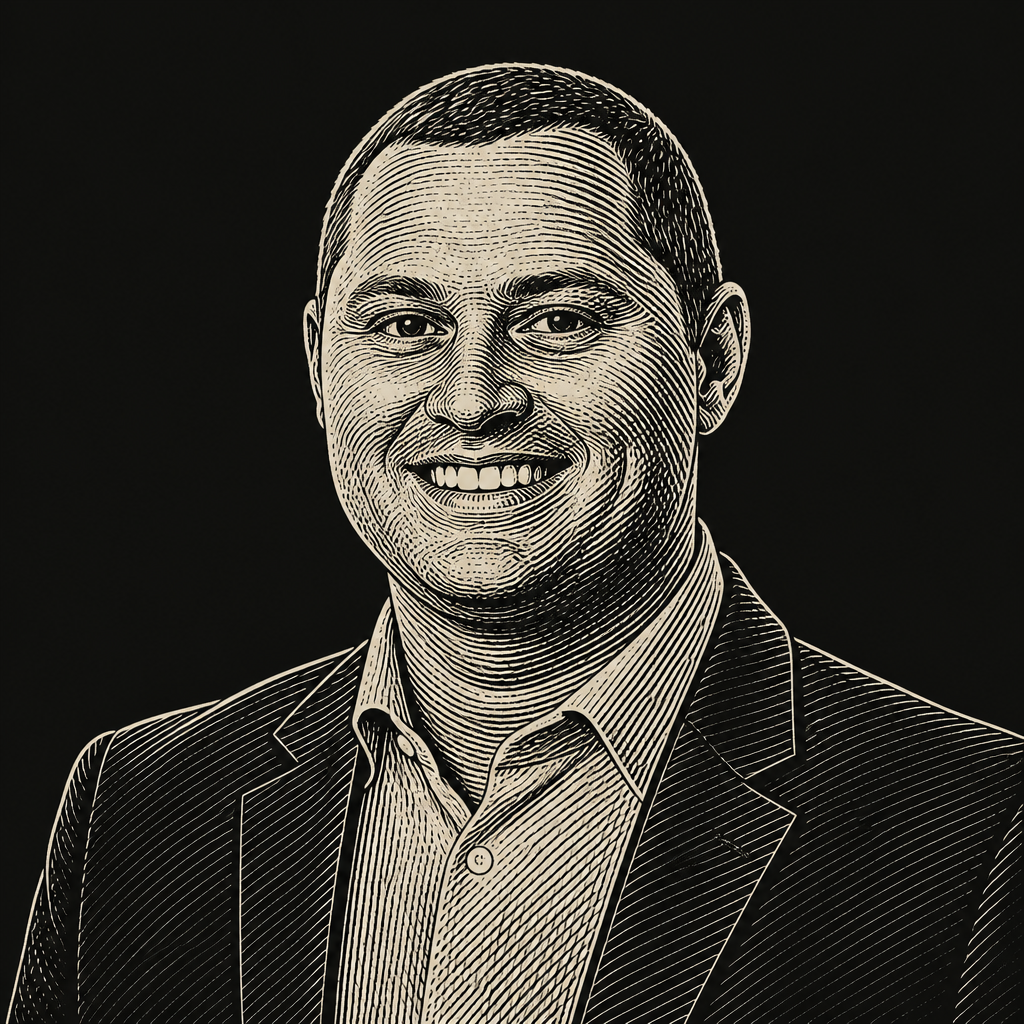
Gurman said the revamped Siri is expected to evolve from a voice assistant that answers single prompts into an always-on copilot that can handle multi-step tasks, draw on personal context, use what is on screen, work across first-party and third-party apps, and search both a user’s data and the web. His practical example was specific: a user could ask Siri to write an email about an upcoming schedule, pull in notes from a meeting, search the web for more detail on a topic such as wardrobe or another subject, summarize those details, and include them in the message.
That is the core of the reported shift. Siri is not only becoming a chatbot-like interface; it is becoming, in Gurman’s description, a standalone app and a system-wide layer that can follow the user across iOS, macOS, and other Apple environments. On-screen mockups showed “Search or Ask” interfaces with options including Siri and ChatGPT, conversational answers to questions such as “Where is Apple headquarters?”, and a broader feed-like experience aggregating news, notes, and search results.
Gurman also said Apple is preparing an in-house AI-powered web search engine inside Siri — positioned as a competitor to Perplexity and ChatGPT web search. Today, he said, Siri may hand a user to Google search or ChatGPT if it cannot answer. Under the new approach, Apple would have its own AI search capability within Siri.
The model underneath matters. Gurman said the new Siri uses underlying Gemini models, while Paul Hudson later said developers would be watching closely to see whether the intelligence is powered through Apple’s own private cloud compute, by Google infrastructure, or by some combination such as Gemini hosted by Apple. Hudson’s preferred outcome was clear: “Maybe Google’s hardware perhaps, Google’s Gemini, but hosted by Apple would be the dream.”


Gurman’s expectations were deliberately bounded. Apple has a “very positive story to tell on Siri,” he said, but not a “game-changing innovation” story. Alongside Siri, he expects refinements in Apple Intelligence and iOS, including photo-editing features, a customizable camera app, and broader performance and quality improvements. He characterized that last point as responding to users who want Apple to stop adding a thousand features each year and instead make the last decade’s software work well.
For investors, the software stakes are attached to a stock already performing strongly. Caroline Hyde noted Apple was up roughly 15% to 16% year to date and, at that point, was the second-best performer among the Magnificent Seven. The question is whether stronger AI integration can “refuel” the stock. Gurman’s answer was effectively that Apple can win by making Siri effective for mass consumers, not by matching the frontier labs feature-for-feature.

Siri may matter less as a chatbot than as an Apple-device glue layer
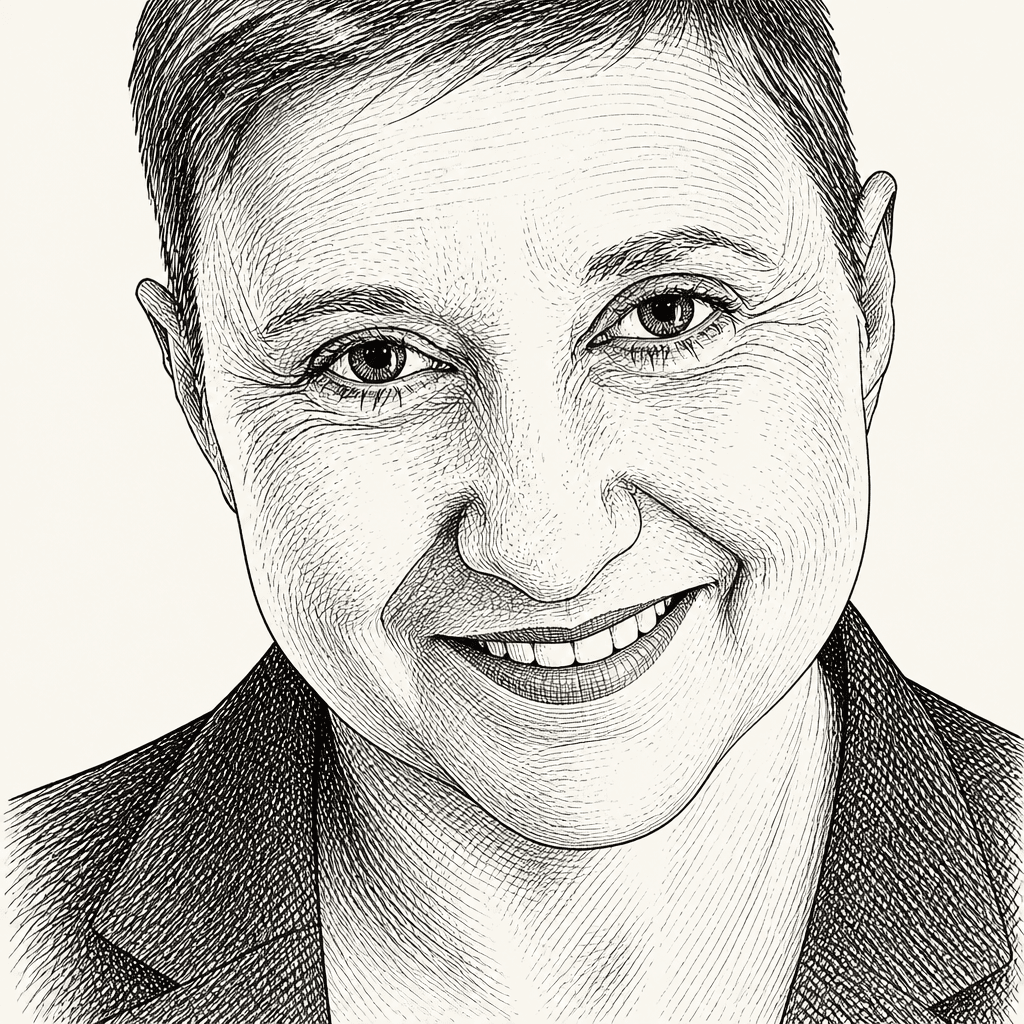
Carolina Milanesi argued that the important consumer question is not whether Siri displaces ChatGPT or Claude as an app on a phone, but whether Apple makes the AI experience valuable across the devices people already own. Apple’s advantage, in her view, is that its customers often own multiple Apple devices, and the user should not feel as if they are getting a different AI experience depending on whether they are on an iPhone, Mac, or another Apple product.
That framing makes Siri less a destination and more a continuity layer. Milanesi said cross-device consistency is “very important” because it is what locks customers in, though she immediately acknowledged the regulatory sensitivity around the word “lock,” especially in Europe. The consumer value, as she described it, is simple: the experience carries across all devices.
She was skeptical that AI itself will become a major switching mechanism between ecosystems. Users remain tied to ecosystems, and model leadership changes too quickly for one chatbot’s temporary superiority to compel mass switching. “One week one is ahead and the other one the following week,” she said. That makes parity likely at the model level and shifts the question to how AI appears inside the device.
For Apple, Milanesi said, the best AI use cases are likely to be mass-market functions that consumers immediately understand. She pointed to the camera as the clearest example. Intelligence that helps someone take a better picture is simpler and more resonant than a productivity-heavy or enterprise-centered pitch. That is consistent with Apple’s history, in her telling: the company puts attention where a mass-market consumer can recognize the benefit.
At the same time, Milanesi said Apple faces more pressure than it did a year ago. Consumers may still not be walking into stores asking for “AI,” but they are already choosing preferred chatbots or agents in daily life. That gives Apple less room to offer an AI experience that feels materially behind ChatGPT or Claude.
Ed Ludlow added a market constraint around the software launch: even if Apple delivers the Siri overhaul investors and users have been waiting for, it does not necessarily reverse the smartphone market this year. A text overlay attributed to Ludlow said memory constraints and component costs are doing more to shape shipment volumes than software announcements, while still allowing that AI may matter eventually.


Developers want Siri to become an API surface, not another prompt box
For developers, the question is whether Siri becomes a platform. Paul Hudson, creator of Hacking with Swift, said the “dream” is for developers to expose their app data directly to Siri so Apple Intelligence can handle natural-language interaction, user requests, and system integration.
Hudson described the current Siri pain points in familiar terms: “I didn’t understand that,” “could you repeat that,” or ambiguity over which device or room the user meant. Developers, he said, do not want to account manually for the 50 different ways users can ask for the same thing. They want Apple to solve that natural-language layer, expose strong APIs, and let developers provide data and code behind the scenes.
That is why the privacy architecture matters to the developer community. Hudson said Apple’s “privacy is Apple” positioning is something developers have bought into, and he praised the previous year’s on-device, private AI announcement. The open question for the new Siri is whether the work happens through Apple’s private cloud compute or elsewhere. Hudson called Apple’s private cloud compute “research-level breakthrough stuff for handling private AI” and said he would “100%” prefer the intelligence to be operated privately by Apple.
His argument was not that developers cannot use Google technology. It was that Apple’s privacy trust is part of the development bargain. “It’s not that I don’t trust Google,” Hudson said, “but I definitely trust Apple.” The strongest version, in his view, would be Google’s Gemini or hardware capability hosted under Apple’s privacy model.
Hudson also connected the Siri overhaul to Apple’s cross-platform ambitions. From a developer’s economic perspective, he said, “nearly all the money is still making iPhone apps.” Apple would prefer broader development across macOS, watchOS, tvOS, and visionOS. If Siri and related platform changes blur the lines among those systems, Hudson said, that could encourage a wider spread of development. He cited Universal Control — one cursor across iPad and Mac — as an example of existing integration, but said developers want more.
Even naming conventions mattered at the developer level. Hudson welcomed the move toward OS years such as iOS 27 and iPadOS 27 because it makes communication easier, though he hoped Apple would preserve macOS place names because developers enjoy them.
For Tiimo, Apple Intelligence is valuable if it reduces cognitive load at the OS level
Helene Norlem and Melissa Azari offered a concrete example of why developers care about Siri as a system layer. Tiimo, named iPhone App of the Year 2025, is a visual planning app built with AI features to make planning more adaptive to daily life. Azari described it as supporting users in making plans smarter and more adjustable in real time.




Norlem said Tiimo’s mission is to remove cognitive load from planning, making it feel effortless and smart. That is why Apple’s AI announcements matter to the company: if Siri, Shortcuts, and Apple’s broader operating-system integrations improve, Tiimo’s support does not have to live only inside the app. Users could interact with Tiimo through Siri or other parts of the OS and get help where they already are.
A quote card attributed to Norlem put Tiimo’s design thesis this way: “Different brains thrive with different tools. Tiimo is adaptive by design, built for accessibility and neuroinclusion from the very start.” Product screens showed task completion, mood tracking, daily reflection, and prioritized to-do lists, including “You completed 20 tasks” and high-, medium-, and low-priority categories.
Norlem distinguished Tiimo’s accessibility work from more visible accessibility categories. The company focuses in part on “invisible disabilities” and people who need more organization and structure because their brains work differently from the norm. The app adds visual support, timers, and subtask breakdowns to make time and work more tangible.
For Tiimo, a Siri that moves across iOS and macOS could open more moments of use. Norlem said the point is reaching users where they are — on the phone, on the computer, and throughout the day. Her most desired announcement was deeper Apple Intelligence capability that would help Tiimo build a “little personal assistant” that understands the user and supports them in the best way.
The AI infrastructure trade is still being judged by capacity, not just models
The Apple discussion sat inside a broader AI-infrastructure rebound. Hyde said the Nasdaq 100 was having its best day in about a month after its worst day in a year on Friday. The PHLX Semiconductor Index was up more than 6% during the program, clawing back some of Friday’s losses after what she described as its worst selloff since March 2020. A market screen later showed the semiconductor index up 6.81%.
Jensen Huang was shown in Seoul saying the tech selloff should be seen as a buying opportunity because “the future of AI is very bright” and AI becoming world infrastructure is a “foregone conclusion.” Hyde said the market appeared to be responding to that buy-the-dip framing, while emphasizing that the rally had not erased Friday’s decline.

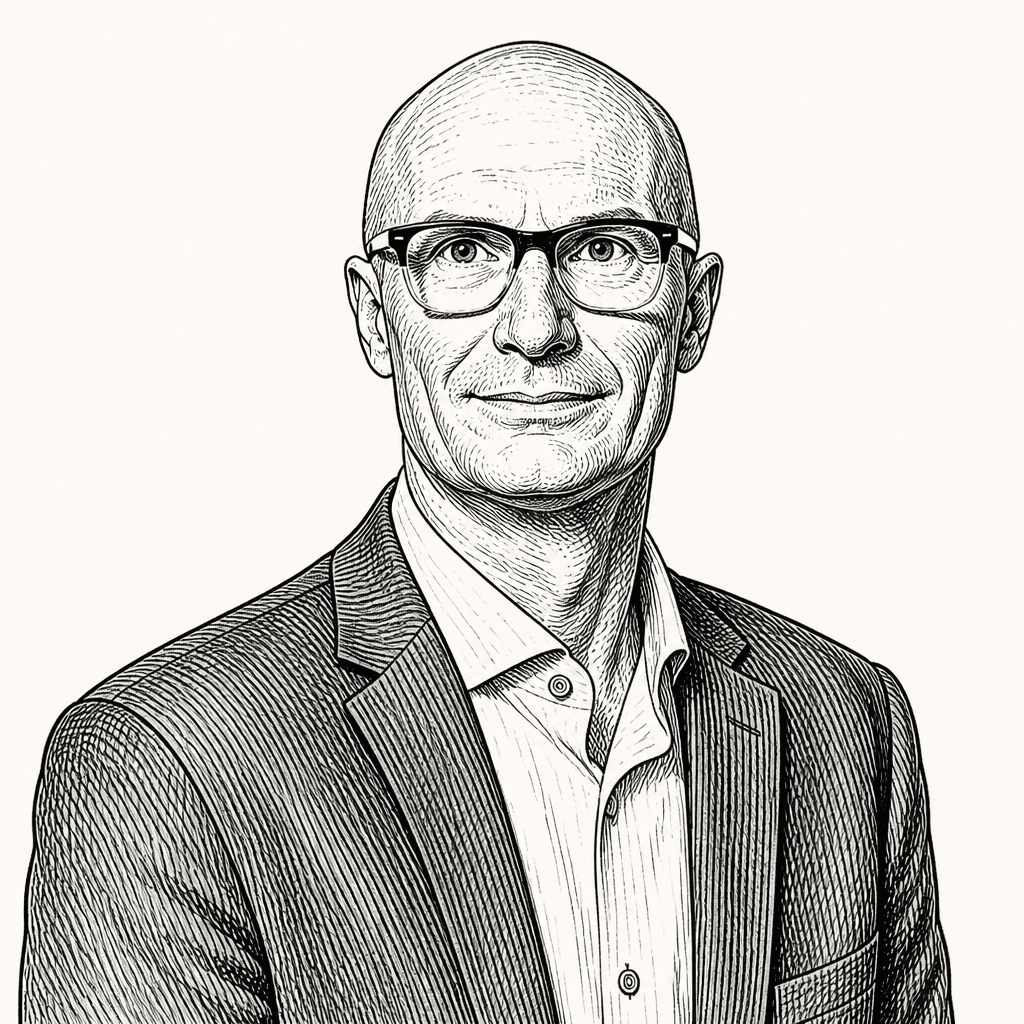
Ian King explained the Nvidia–SK Hynix partnership as both technical and strategic. Technically, he said, the interface between Nvidia processors and memory is becoming increasingly important. If processor performance improves, the way information moves between memory and processors must improve at the same rate. That makes early technical cooperation between Nvidia and a memory supplier logical.
Strategically, King said Nvidia benefits from having SK Hynix and Samsung compete to serve its needs. Samsung remains the largest memory-chip maker and has historically dominated the market, but SK Hynix made an early shift toward AI-related memory. In King’s phrase, Huang can “bat his eyelids” at SK Hynix to push the company to advance the technology and force Samsung to respond with capacity and capability.
The same capacity pressure appeared in Intel’s rally. Hyde cited reporting from The Information that Google and others may look beyond TSMC for chip manufacturing and that Intel could receive orders for Google TPUs. King said TSMC is adding as much capacity as it can but is not keeping up with booming leading-edge demand. If Google or another large customer needs alternatives, Intel and Samsung are the next places to look. The caveat, King said, is that Intel has promised customers will emerge as the year progresses, but “so far” the business has been struggling.
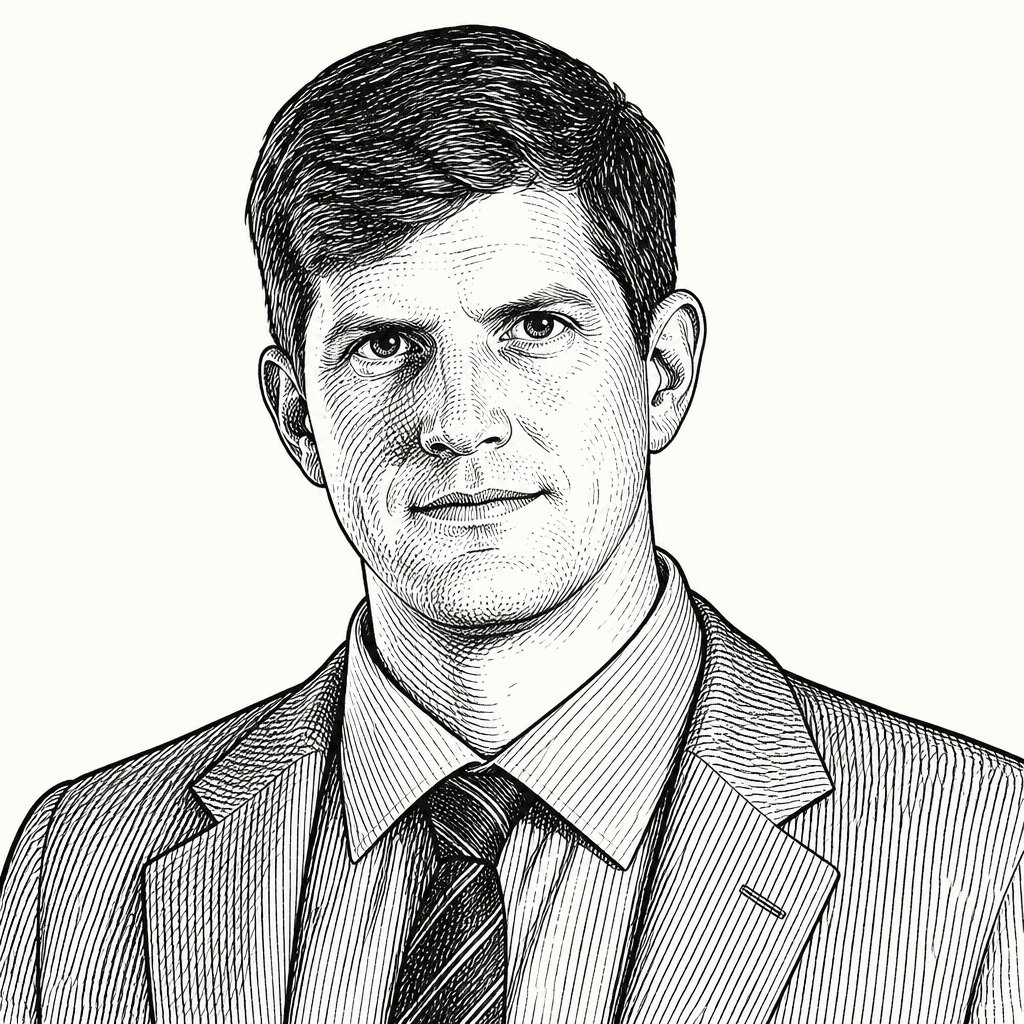
Ryan Vlastelica described the rebound as partly a normal bounce after a stretched semiconductor trade. The sector had been so strong that some investors viewed momentum as unsustainable. But he said the longer-term optimism remains tied to AI demand and the shortage of supply in semiconductors, memory, storage, data centers, and GPU compute. Hyde added Amazon’s multi-billion-dollar agreement with Corning for optical fiber, cable, and connectivity solutions as another “picks and shovels” example of the infrastructure buildout.
Vlastelica said many investors believe there is not enough supply to meet demand, which supports expectations for continued growth. Memory and storage companies, he said, are among the momentum areas expected to see tailwinds through 2027, even as investors debate when growth, earnings, or demand may peak.
The Asian market stress was sharper. Hyde said the Kospi plunged nearly 9% within minutes, triggered circuit breakers, and saw volatility surge after Friday’s U.S. tech rout and a 42% collapse in a triple-leveraged Korean ETF.
SpaceX’s IPO asks investors to buy rockets, satellite cash flow, and AI infrastructure together
SpaceX’s expected IPO was presented as a historic financing event and as a test of whether public-market investors will accept a company combining launch, satellite internet, AI, and Musk-controlled platform assets. Ludlow said Elon Musk wants to build AI infrastructure in space and is asking investors to help pay for it. The company is seeking to raise around $75 billion in what Bloomberg described as the largest IPO in history.
A graphic summarized the offering as a Nasdaq IPO targeting a valuation of roughly $1.77 trillion, with the filing revealing Musk’s voting control at 85%. Another timeline showed the company filing publicly on May 20, formal marketing beginning June 4, pricing on June 11, and listing shares on June 12.
Bailey Lipschultz said Bloomberg had reported the IPO was already oversubscribed, meaning the company had corralled more than $75 billion of orders. He noted two interpretations: some market participants saw that as obvious for a high-profile deal, while skeptics asked why demand was not already three or four times the offering size. Lipschultz’s own framing was that the scale matters: for a $75 billion deal, having well north of $75 billion of institutional orders gives a sense of likely demand, and large IPO orders can still arrive in the final days or hours. He also said bankers had been setting aside about 30% for a retail component, according to Bloomberg’s understanding.

The company’s AI exposure changes the nature of the investment. Ludlow said that after folding in Musk’s AI startup xAI earlier in the year, investors in SpaceX are also buying into the potential of Grok AI models and Musk’s vision for massive computing infrastructure. New filings, he said, showed the AI business lost nearly $6 billion last year and billions more at the start of this year as money went into compute and infrastructure to compete with OpenAI and Anthropic.
The offsetting asset is Starlink. Ludlow described Starlink as a powerful cash generator through satellite internet, while SpaceX launch operations continue to secure government and private contracts. Peter Diamandis said SpaceX is not “just a little bit ahead” of the launch industry but “orders of magnitude ahead.” Jared Isaacman, identified on screen as NASA Administrator, called SpaceX “probably our greatest commercial space company hands down.” Laura Crabtree, CEO of Epsilon3, said the IPO would enable the next iteration of the space industry’s growth.

Lipschultz said index inclusion will shape expectations. The company may fit into the Nasdaq 100, but the S&P 500 is holding to its requirement that the company be net-income positive. Based on sell-side notes Bloomberg obtained, he said that may not happen until 2028. That would put SpaceX in a pattern similar to Tesla, Amazon, and Uber: eligible for some major index demand, but not the S&P 500 for some time.
Early-stage venture is trying to keep its role as AI companies race toward enormous public valuations
Steve Jang said Kindred Ventures’ new $355 million fund is built around a belief that early-stage investing remains more important, not less, in a market dominated by huge late-stage and pre-IPO rounds. Hyde said Kindred was early to AI with a 2022 $200 million fund that had become a $1 billion gross fair market value by June 2026, and that the prior vintage had reached the top 1% of its class.

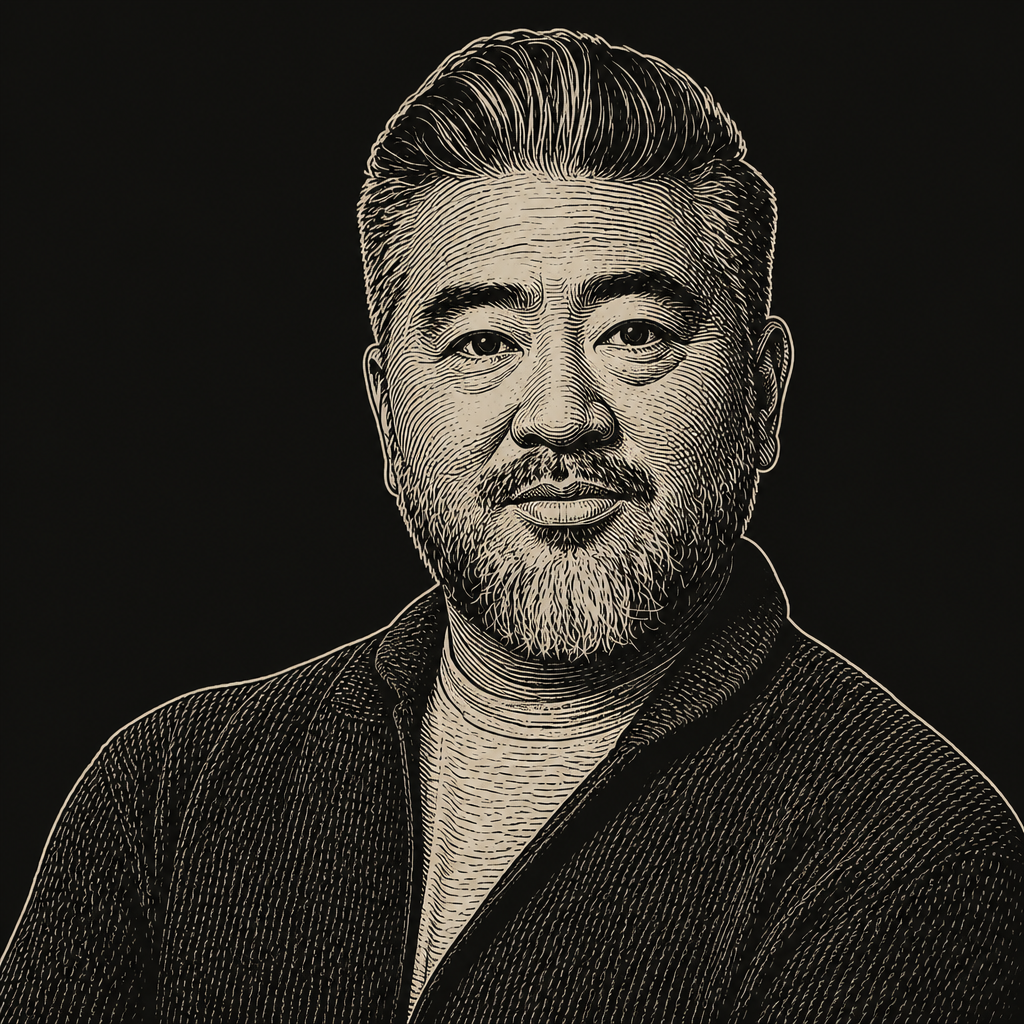
Jang argued that early-stage firms are better equipped than later-stage funds to help founders move through new technology frontiers from “zero to one.” The work, as he described it, is not primarily financial engineering. It is helping with product development, technology roadmaps, team building, and the path to a first customer, first traction, and revenue.
He also described a changing AI stack. Frontier labs are moving into the application layer while facing compute constraints. Demand is far outstripping supply in data centers and GPU compute, a pattern he said is visible both in public markets and in the growth of inference platforms such as Fal, Base10, and Modal. Agents and applications — embodied agents such as robots, autonomous vehicles, and virtual agents for knowledge workers — are driving token demand.
Perplexity, in Jang’s view, illustrates one path: a multimodal harness that is agnostic to models. Anthropic’s Claude Code illustrates another: a single-model harness. The competitive battlefield, he said, will be among the providers of state-of-the-art models, state-of-the-art harnesses, and the most productive agents.
On exits, Jang expects both IPOs and acquisitions. He said the market could open with SpaceX, Anthropic, OpenAI, and Databricks, while many existing public companies will also become acquisitive because they need to transform for the AI cycle. Kindred wants companies to remain independent, founder-led, and eventually public, he said, but it also has to guide companies through the reality that strategic buyers may seek acquisitions to accelerate their AI transitions.
Crypto and app IPOs moved with the same risk-on, risk-off tape
Ava Benny-Morrison said Sam Bankman-Fried has formally applied for a presidential pardon more than two years after being convicted in the collapse of FTX. He was sentenced to 25 years in prison, and Morrison said he has spent roughly 18 months trying to reshape his public image and gain favor with the president through social media and interviews with conservative media outlets.
Morrison said the president had told the New York Times in January that he had no plans to pardon Bankman-Fried, but SBF submitted an application anyway. She linked the move to broader use of clemency authority: more than 1,600 grants of clemency since the start of the president’s second term, many involving white-collar defendants and crypto-industry figures.
Crypto markets were also recovering from the prior week’s risk aversion. Hyde said Bitcoin was up about 3.5% as Strategy, formerly MicroStrategy, returned to buying. She said forced selling concerns had built around Michael Saylor and the possibility that his digital-asset treasury might sell Bitcoin, while the renewed buying gave the market confidence.
Bending Spoons, the Milan-based parent of apps including Vimeo and WeTransfer, was also moving toward a U.S. IPO. Hyde said it carried a $14.5 billion valuation in 2025 and reported more than $27.5 million in net income for the first quarter in a Monday filing. On-screen material from the company’s site described more than 1 billion registered users, 400 million monthly active users, and 7 million monthly paying customers.