Iran MOU Tests Whether U.S. Strikes Created Leverage Over Tehran
 Fareed Zakaria
 Kim Ghattas
 Mark Dubowitz
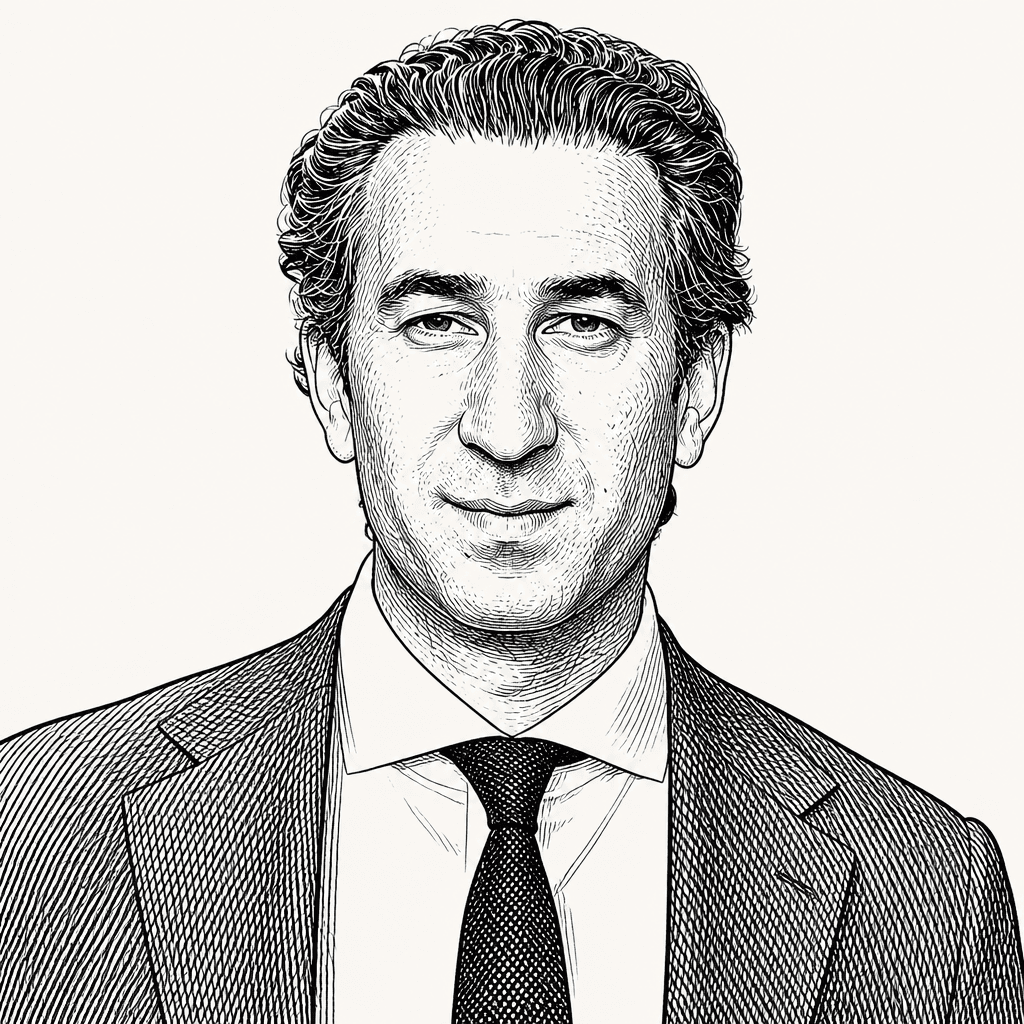 Karim SadjadpourThe Aspen InstituteTuesday, June 30, 202620 min read
At the Aspen Ideas Festival, Fareed Zakaria, Kim Ghattas, Karim Sadjadpour and Mark Dubowitz debated whether the U.S.-Iran war and the subsequent memorandum of understanding left Washington with leverage or exposed the limits of American coercion. Dubowitz argued that U.S. and Israeli strikes badly weakened Iran’s nuclear, missile and proxy capabilities, while Zakaria and Sadjadpour said Tehran may have gained a new strategic weapon in the Strait of Hormuz and learned that escalation works. Ghattas placed the argument in regional terms, warning that Lebanon, Gulf states, Iranians and Israelis are now living inside an unstable cease-fire whose documents are being read differently by every side.
The MOU is the test of whether Washington has leverage or is cutting losses
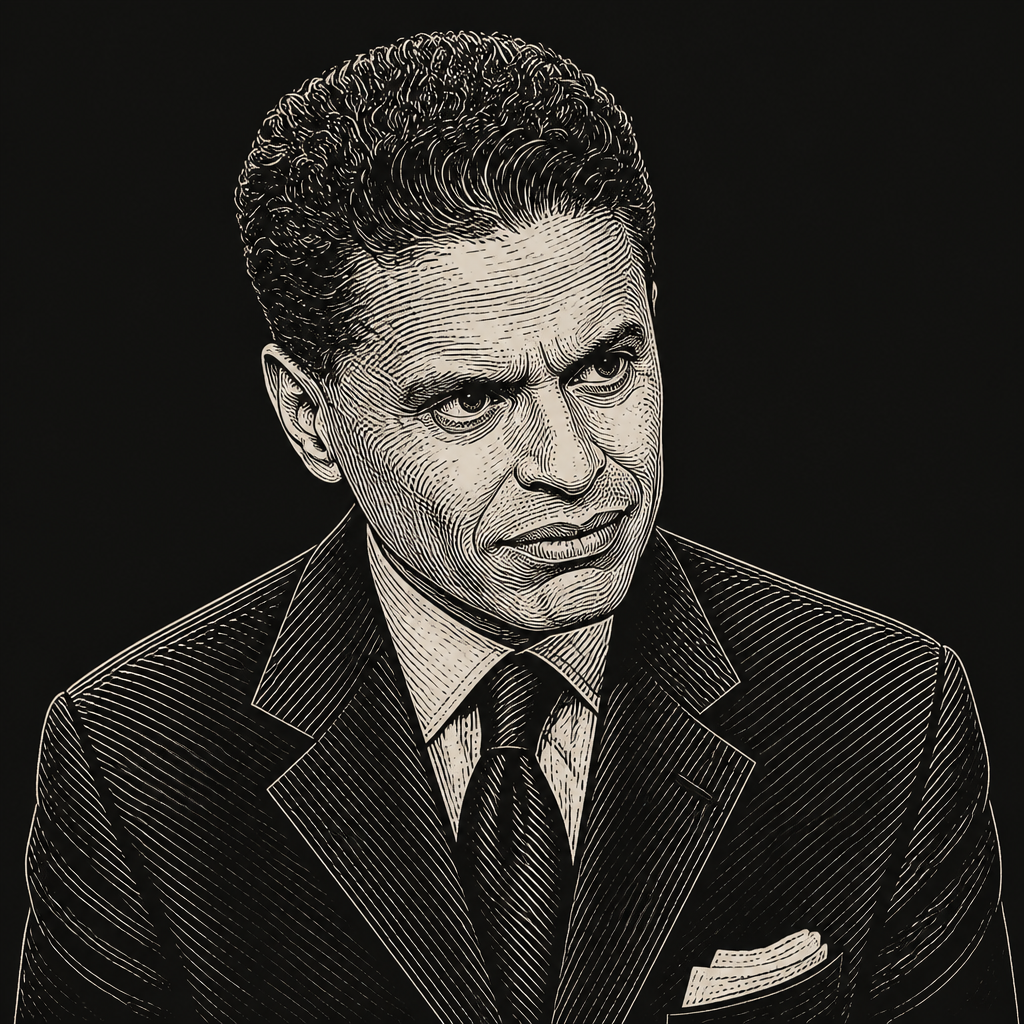
The United States is still, in Fareed Zakaria’s framing, “sort of still in a war in the Middle East.” There is a cease-fire, but not a final end to the conflict; he described it as America’s third war in the greater Middle East in 25 years. The central dispute was what the war changed: whether it left Washington with usable leverage over Iran, or whether the Trump administration’s memorandum of understanding with Tehran reflects a practical retreat from objectives it could not compel.

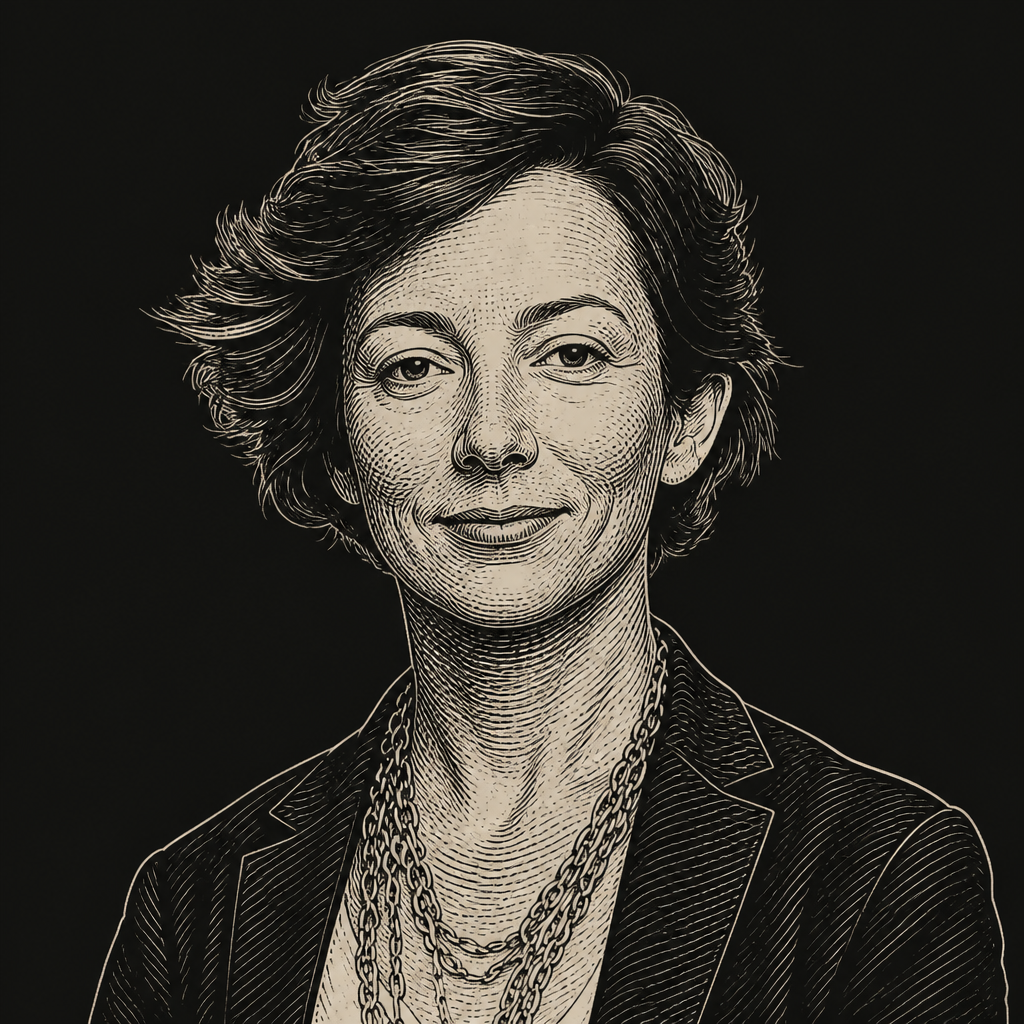
Kim Ghattas described the regional mood from Beirut as “limbo.” She quoted President Trump’s own line that a Middle East cease-fire is “kind of when they fire a bit less,” and said that is what the region has seen since the MOU: daily flare-ups, Iranian strikes on Bahrain, renewed U.S. strikes against Iran, and continued Israeli-Hezbollah fighting in Lebanon.

For Ghattas, the result is not a stable postwar order but a region “worse off than where we were before the war started.” Lebanon, in her account, is caught between Iran, which treats it as a “playground” and “battleground,” and Israel, which is fighting Hezbollah but has inflicted extensive damage on the country. Gulf states, she said, were dragged into a war they did not choose. They had hoped Trump would “finish the job,” without anyone being able to define what regime collapse in Iran would actually look like. Now they are trying to shape or counter an MOU they fear gives too much away to Tehran.
That phrase, “finish the job,” exposed the disagreement over what success would mean. If the job meant degrading Iran’s nuclear, missile, and proxy capacities, Mark Dubowitz argued that the United States and Israel have achieved major gains. If it meant compelling Iran to surrender core strategic assets or triggering regime change, Zakaria and Karim Sadjadpour were far more skeptical. The MOU became the test case: to Dubowitz, a bad agreement that squanders leverage but may be a temporary political pause; to Zakaria, evidence that Trump recognized he had failed to compel Iran to do what Washington wanted.

Ghattas also insisted that the war cannot be read only through state strategy. Iranian people, she said, had been told by Trump that “help is on the way” and now may find themselves under a more hard-line and entrenched leadership. Lebanese people, meanwhile, are being asked to accept a framework in which Lebanon must deliver what Israel wants before Israel withdraws from the south. Even where a framework between Lebanese authorities and Israel is historic, she said, it is also problematic: it could set the stage for long-term Israeli occupation, despite Israel’s stated lack of territorial ambitions in Lebanon.
Iran was hit hard, but the regime may have learned that escalation works
Karim Sadjadpour offered the sharpest version of the argument that Iran has gained from the war. He said Iran is “in a much better place now than it was four months ago,” chiefly because it now controls the Strait of Hormuz. He did not expect Tehran to give that back. At minimum, he said, Iran wants administrative control comparable to Turkey’s role over the Bosphorus; at maximum, it wants something closer to its own Panama Canal.
The strait matters in his account not only because of energy flows, but because it also affects agriculture and fertilizer. Zakaria later sharpened the point: Iran had discovered a “usable nuclear weapon” in the form of the ability to close Hormuz. It may not be a nuclear weapon in the literal sense, but in Zakaria’s argument it functions as strategic leverage capable of dividing Gulf allies, pressuring oil markets, and constraining Washington.
Sadjadpour called the MOU a “memorandum of misunderstanding.” He argued that the two sides have radically different readings of it. In his telling, the document asks Iran only for a vague nuclear compromise, concedes the possibility that Iran could control the strait after 60 days, and says nothing meaningful about missiles or regional proxies. That omission matters because Trump’s prewar objectives, as Sadjadpour understood them, included Iran’s nuclear program, missile program, and regional proxies. The agreement does not secure those goals.
Internally, Sadjadpour warned, the regime may have drawn precisely the wrong lesson. Four months earlier, he said, he had described the Islamic Republic as a “zombie regime” with a dying ideology, dying leader, and dying legitimacy. After the war, he fears the United States and its partners have breathed new life into it. The regime, in his account, has concluded not that revolutionary ideology is an albatross, but that it is a life preserver.
Iran has to decide whether it’s a nation or a revolutionary cause.
A government acting primarily as a nation, Sadjadpour said, might look at two catastrophic wars and repeated popular uprisings and decide to prioritize economic and national interests over slogans such as “Death to America” and “Death to Israel.” He thinks the Islamic Republic has reached the opposite conclusion. Its revolutionary ideology, he argued, helps maintain cohesion among security forces, and revolutionary regimes often last far longer than ordinary dictatorships. He cited a book by Steven Levitsky and Lucan Way for the proposition that revolutionary regimes tend to last about three times as long as “run-of-the-mill” dictatorships because they have a powerful organizing principle.
That is why Sadjadpour does not think today’s conditions are likely to produce a meaningful Iranian compromise. In his account, the Islamic Republic has made such compromises only twice since 1979, and only when existential pressure, especially economic pressure, was paired with a face-saving diplomatic exit. The first was Ayatollah Khomeini’s decision to end the Iran-Iraq War in 1988, which Khomeini likened to “swallowing poison” after eight years of brutal war. The second was the 2015 nuclear deal, the JCPOA, which Sadjadpour described as the product of a full-court economic press against Iran that included Russia and China, with Europeans stopping Iranian oil imports and Tehran receiving a diplomatic exit it could present as something other than capitulation.
Sadjadpour does not believe the regime now feels existential economic pressure. More important, he thinks the war may have taught Tehran that escalation works. The regime gained concessions, he said, not by stepping back or compromising, but by punching back, launching attacks on neighbors, and taking the Strait of Hormuz.
He framed the Gulf through a contrast between “falcons” and a “vulture.” Gulf countries such as the United Arab Emirates, Saudi Arabia, and Qatar aspire, in his words, to be falcons: to build soaring cities, societies, and economies. The Islamic Republic, by contrast, is a vulture that “feeds off chaos and destruction and misery.” Instability is cheap; stability is expensive. It can take decades and billions of dollars to build airports, cities, and commercial confidence, and days or weeks to damage them. He used the example of $20,000 drones harassing $100 million tankers or shutting down Dubai International Airport.
Ghattas agreed in part and disagreed in part. Iran’s regional project has been severely damaged, she said. It has lost its foothold in Syria for multiple reasons, and Hezbollah has been weakened. But Iran is also “on the back foot in the region” while holding new leverage. Iraq’s government, she noted, is asking Shia militias to disarm within 30 days. The point was not that Tehran emerged unscathed. It was that military setbacks and political leverage can coexist.
Dubowitz sees military success followed by diplomatic squandering
Mark Dubowitz rejected the idea that Iran emerged stronger. He said he had been invited to be “the skunk at the picnic,” then recast himself as “the perfume skunk at the doomsday picnic in Aspen” because, in his view, the United States and Israel are winning and the Islamic Republic is losing.
Dubowitz’s argument began not with the latest cease-fire but with October 8, 2023. In his account, that was the height of Iranian power. After the October 7 “brutal invasion by an Iranian-backed terrorist organization,” Hezbollah began firing on Israel. Ali Khamenei, whom Dubowitz repeatedly described as “the late Ali Khamenei,” could then envision activating what Tehran calls the “axis of resistance” and what Dubowitz called the “axis of misery.” That network, he said, had built a ring of fire around Israel and U.S. Gulf allies. Iran was building a missile shield, developing an intercontinental ballistic missile that could target the American homeland, and advancing a nuclear weapons program beneath that shield.
The factual architecture of Dubowitz’s case was highly specific and should be read as his assessment. He claimed Iran had been “days away from nuclear breakout,” had the ability to develop 11 nuclear weapons, and had weapons scientists working on a deliverable missile. He described what he said was an arsenal of 2,700 medium-range ballistic missiles capable of traveling 1,000 to 3,000 kilometers, and said that within two years it could have grown to 12,000. That trajectory, he argued, was existential for Israel even without nuclear weapons, because Israel’s defensive shields could not stop thousands of ballistic missiles. He also said Iran had a defense industrial base producing 100 ballistic missiles a month.
| Capability or asset | Dubowitz’s description of the prewar threat | Dubowitz’s description after the war |
|---|---|---|
| Nuclear infrastructure | Near breakout capacity and weapons work underway | Severely degraded; Fordow, Natanz, and Isfahan in ruins |
| Weapons scientists | Weapons group working on deliverable missile | Top 40 nuclear weapon scientists eliminated |
| Medium-range ballistic missiles | 2,700 missiles, with trajectory toward 12,000 | Reduced to roughly 1,400 |
| ICBM program | A future threat to the American homeland | Obliterated |
| Hezbollah arsenal | Part of Iran’s ring of fire around Israel | Reduced from 150,000 missiles to tens of thousands |
On that account, Iran played the Hormuz card not from strength but from weakness. Dubowitz argued that if Iran had reached what he called its “lethal end state” — nuclear weapons, ICBMs, a larger missile force, drones, Russian-Chinese military support, and sanctions relief — it would have controlled Hormuz permanently. Instead, he said, it used Hormuz after its capabilities had been hit hard.
Zakaria pressed the contradiction inside Dubowitz’s own position: if Washington has so much leverage, why sign what Dubowitz himself called a “fatally flawed MOU”? Dubowitz said the agreement looked as if it had been written by Qataris, written by Iranians, translated by ChatGPT, and left with spelling mistakes. He did not defend it. He argued instead that Trump had a political calendar.
In Dubowitz’s account, Trump needs to hold the House and Senate. To do that, he needs to get Hormuz open, oil and gasoline prices down, inflation down, and avoid a politically damaging continuation of war before November. The constraint, Dubowitz argued, was not strictly military but financial: Iran had spooked Lloyd’s and the protection-and-indemnity groups in London, causing tanker premiums to skyrocket or coverage to be withdrawn. He said U.S. Central Command could move 5 million to 6 million barrels a day through Hormuz, perhaps eventually 12 million to 15 million, but not soon enough for Trump’s political timeline.
So, as Dubowitz put it, Trump asked JD Vance to negotiate with the IRGC. If the agreement worked, Trump could claim victory; if it failed, the failure would be Vance’s. Dubowitz said both parties entered the MOU knowing neither side is likely to comply. Trump needed time for domestic reasons. Iran needed time because, in Dubowitz’s telling, its leaders feared they were on Israeli target lists.
Dubowitz is therefore both a strong defender of the war and a sharp critic of the agreement that followed it. He sees military success and diplomatic squandering, not military failure. Zakaria sees the agreement as evidence that Trump understood the war had not compelled Iran.
Zakaria’s test is not damage inflicted but behavior changed
Fareed Zakaria acknowledged that the war degraded Iran’s nuclear capacity, missile capacity, and navy. But he argued that Iran’s main aggression historically has not relied on its conventional army; it has relied on proxy militias. In exchange for the damage it suffered, he said, Iran found a usable strategic weapon in Hormuz, divided U.S. Gulf allies, created a major fracture in the American-Israeli relationship, and prevented Washington from achieving repeatedly stated objectives. He estimated the cost at roughly $150 billion when totaled.
Zakaria’s objection was not that the United States is weaker than Iran in any conventional sense. It was that war is not measured by how much destruction one side can impose. “Do you want me to list all the damage the United States did to North Vietnam over the Vietnam War?” he asked. The measure, he said, is whether the adversary does what you asked it to do. The relevant comparison is not who is stronger, but who is willing to absorb more pain.
In Zakaria’s reading, Iran demonstrated it was willing to take more pain than Trump was. Trump, he argued, is acutely aware of leverage. He bullies Europeans because he knows he has leverage over them; he backs off against China when he recognizes Chinese leverage. In this case, Zakaria suggested, Trump looked at the situation and realized he had lost in the narrow sense that he could not compel Iran to accept what Washington demanded. Like a practical businessman, he cut his losses.
Dubowitz rejected the inference. In his account, commanders and presidents often pause after pocketing wins to prepare the next phase. Trump, he said, hit pause because of electoral and economic timing, not because Iran had defeated U.S. strategy.
Sadjadpour added that the United States has moved in four months from one extreme to another: from “military led regime change” to what he called “essentially a policy of appeasement.” Four months ago, he said, Washington was trying to change Iranian politics with bombs; now it is trying to change Iranian politics with bribes. He did not think either approach would work.
He invoked H.R. McMaster’s term “strategic narcissism”: the idea that U.S. policy can change the interests of a revolutionary regime. To make the point, Sadjadpour used an anecdote he attributed to Sean Penn about Fidel Castro: Castro supposedly joked that if America ever removed the embargo, he would do something provocative the next day to get it reinstated, because his power was best preserved in isolation. Sadjadpour argued that Iran’s leaders likewise fear international integration. JD Vance may promise hundreds of billions of dollars in investment and Iran’s reintegration into the “League of Nations,” but the regime is not interested if openness threatens its hold on power.
Lebanon is being asked to absorb Hezbollah’s decisions and Israel’s response
Kim Ghattas resisted any reading that treats Lebanon merely as a chessboard on which Iran and Israel move pieces. Life in Lebanon, she said, is “schizophrenic.” It is a small country accustomed to war, with a population that has lived through a 15-year civil war and multiple wars with Israel. People can be partying in northern Lebanon while there is war in the south, or living in semi-peace in the south while fighting occurs in Beirut. That is often called resilience, she said, but Lebanese people hate the word because they would rather thrive than merely survive.
This phase, she said, feels unusually depressing. A quarter of Lebanon’s population has been displaced; 20% to 25% of the country is under fire in the south; many people cannot return home; and there is no clear horizon for when the conflict will be resolved. Ghattas said she has rarely known so many people around her who have lost homes or lost someone.
The Lebanon-Israel framework agreement, in her account, contains both a historic opening and a dangerous imbalance. Direct negotiations between Lebanese and Israeli officials break a taboo; in Lebanon, such contact has been illegal by law. Ghattas welcomed the fact that officials are sitting down together. But she said Lebanon has little leverage, has given too many concessions to Israel, and may be left with Israel as the arbiter of whether the agreement is implemented to Israel’s satisfaction. She noted that Admiral Cooper had visited Lebanon and that there was discussion of a coordination cell, possibly with Americans acting as arbiters.
Her disagreement with Dubowitz was not over whether Hezbollah has been weakened. It was over whether Lebanese leaders are now free from fear. Dubowitz argued that the only reason Lebanese leaders can sit with Israelis without fear of assassination is that Hezbollah’s power has been cut down. Ghattas responded that Lebanese leaders remain afraid. Hezbollah threatens violence against them every day, she said, especially because of domestic disagreement over the framework. The Lebanese government sells the agreement as a path to Israeli withdrawal. Israel, she said, sees it as legitimizing occupation until Lebanon disarms Hezbollah. As with the U.S.-Iran MOU, different parties are reading the same document differently.
Zakaria suggested that while many Lebanese dislike Hezbollah, being bombed by Israel can make people reluctant to criticize it in the moment. Ghattas pushed back. There is, she said, very vocal criticism of Hezbollah in Lebanon and “real anger” that Hezbollah dragged the country into another war “to avenge Ali Khamenei.” She ventured that 70% of Lebanese oppose Hezbollah. But that does not mean they like being bombed by Israel, or that they accept a framework that appears to legitimize long-term occupation of southern Lebanon and deprive people of the ability to return home.
Her prescription was to think less in terms of pure military disarmament and more in terms of neutralization. She proposed interdicting weapons, cutting the flow of money, imposing law, outlawing Hezbollah’s activities, and reducing Iranian leverage through practical arrangements, including alternative shipping lanes with Omanis. She welcomed active Gulf diplomacy aimed at bringing Lebanon and Syria into a regional fold after years in which they functioned as Iranian battlegrounds.
Hezbollah and the Islamic Republic cannot be solved by military force alone, Ghattas argued. If Israel’s focus is only “mow the lawn again and again,” bomb Hezbollah, and force the Lebanese state to disarm it, the political conditions needed to weaken Hezbollah may be undermined.
Foreign bombing does not automatically mobilize the people most opposed to the regime
Fareed Zakaria raised a historical and political caution about regime change by bombing. The Islamic Republic, he noted, was attacked by Iraq soon after the revolution and has spent decades learning how to survive. It created multiple and overlapping sources of authority: religious establishment, military leadership, Basij over the police, Revolutionary Guard over the army. The result, he suggested, is an octopus-like system that is hard to decapitate.
Zakaria also argued from a simpler premise: people do not like being bombed by foreigners. They may hate their government, but U.S. or Israeli bombs do not necessarily produce revolt against that government. He did not deny that the Iranian regime is “nasty.” He questioned whether foreign attack is the moment when people are most likely to rise against it.
Sadjadpour agreed that the theory of rapid decapitation had failed. Zakaria described the theory as one Benjamin Netanyahu sold Trump: two days of bombing, remove the Ayatollah and those around him, and the regime collapses as the people rise. Sadjadpour said he thought that framing was accurate, citing his reading of a new book by Maggie Haberman and Jonathan Swan. He also said Trump was “high off” the capture of Nicolás Maduro in Venezuela and hoped to “Xerox” that policy with Iran. Both points were presented as Sadjadpour’s characterization of the thinking behind the failed regime-change bet.
Sadjadpour’s own view of Iranian society remains starkly anti-regime. He said there may be no country in the world with a greater gap between government and people. Iran, he argued, should be a G20 nation: “a population which wants to be South Korea, the regime which acts like North Korea.” But he warned against confusing hope with analysis. The regime understands that losing power may mean death. Its leaders are despised by their own population, lonely internationally, and have no obvious exit plan for exile or retirement. That makes them willing to throw everything into survival.
Dubowitz responded to the moral and strategic question by arguing that the United States has failed for decades to support the Iranian people seriously. He called for “Operation People’s Fury” alongside military and economic pressure. In his view, Iranians have returned to the streets repeatedly — in 1979, 2009, 2017, 2018, 2019, 2022 and 2023 with Women, Life, Freedom, and again in 2025 and 2026 — while U.S. presidents from both parties have failed to arm them, provide communications devices, finance them, or support them the way Ronald Reagan supported anti-Soviet dissidents during the Cold War.
For Dubowitz, this is both a moral failure and “geopolitical malpractice.” For Sadjadpour, outside pressure alone is not enough and may misread the regime’s incentives. For Zakaria, the burden of proof lies with those who think bombing can unlock a popular revolution in a state designed for survival.
The U.S.-Israel strain is more than a Trump-Netanyahu spat
Fareed Zakaria pressed Dubowitz on a striking feature of the current moment: the Trump administration’s public posture on Iran and Israel has, in some areas, become more dovish than previous U.S. positions. Zakaria cited Trump saying Iran of course must have ballistic missiles because Saudi Arabia has ballistic missiles; the apparent U.S. willingness to let Iran blend down “nuclear dust” rather than require that nearly all of it be shipped out, as Zakaria contrasted with the Obama position; JD Vance admonishing Israel by reminding it that the United States is the only country that supports it and that two-thirds of the weapons defending Israel are American-made; and Trump criticizing Israeli strikes in Beirut after drones exploded in the desert.
Zakaria’s challenge was pointed: if Obama or Biden had said such things, he told Dubowitz, Dubowitz would have mounted a major campaign against them. Dubowitz answered that he is mounting a campaign against the MOU and is not defending it. But he also widened the lens. He argued that Israeli suffering needed to be acknowledged alongside Lebanese suffering. Since 1948, he said, Israel has endured devastating wars; in the most recent war, he claimed, 1,000 Israeli soldiers are dead, tens of thousands maimed, and hundreds of thousands suffering from PTSD. He argued that Israel sent young men and women into brutal urban warfare rather than relying only on air power, and that Hamas and Hezbollah use civilians as human shields.
Dubowitz’s central claim was that the root of the suffering is the Islamic Republic, which he described as illegally occupying Iran itself, Lebanon through Hezbollah, Yemen through the Houthis, and Syria until Hezbollah was weakened and al-Shara was able to move against the Syrian army. He argued that the Islamic Republic is weaker than at any point in 47 years and that this is the best opportunity to take advantage of that weakness.
On the U.S.-Israel relationship, Dubowitz distinguished between immediate political theater and longer-term structural trouble. Trump and Netanyahu, he said, are strong-willed men in election season, and he did not make too much of the personal rift. He also said Trump and Netanyahu may have worked together more closely than any president and prime minister in modern Israeli history.
But he is worried about medium- and long-term trends. On the isolationist right and the radical left — which he said is becoming the mainstream left — Israel is increasingly politically isolated. More Americans are questioning the benefits of the U.S.-Israel relationship. Dubowitz framed Israel’s response after October 7 as a decision not to “die on our knees” but to “fight on our feet.” Israel, he said, is a country of 10 million people surrounded by enemies on multiple borders, facing an Islamic Republic dedicated to its destruction. In his view, Israelis can deal with the reputational and generational consequences of war only if they first survive.
Ghattas accepted the need to acknowledge Israeli pain, saying Israelis have been in “a dark tunnel of trauma” since October 7. But she argued that acknowledging pain on all sides should point toward constructive regional arrangements, not only military action. That includes recognizing Palestinian national aspirations and imagining the regional effect of an Israeli relationship with Saudi Arabia. Such a “jackpot,” she said, would change the neighborhood in which Israel lives. But she doubted Benjamin Netanyahu is ready for the sacrifices such a path requires.
The next phase depends heavily on Trump’s own ambiguity
Karim Sadjadpour closed with uncertainty rather than prediction. Zakaria asked whether the region is likely to remain in a “cold war cold peace,” with Iran opening the strait just enough to avoid triggering a major U.S. response while still extracting benefits and avoiding full compliance. Sadjadpour answered by describing Trump as “the Jackson Pollock of grand strategy.” To supporters, he said, it looks like beautiful art. To detractors, it looks like randomly and violently throwing paint at a canvas.
His point was not merely stylistic. People in daily contact with Trump, Sadjadpour said, give very different accounts of the president’s intentions. Some say the MOU is temporary and should not be taken seriously; the priority was to bring down oil prices, and if Iran does not “play ball” within two months, Trump may return to blockade or bombing. Others, also in daily contact with the president, say he is done with Iran.
That uncertainty gives unusual weight to individual decision-making. Sadjadpour recalled Kissinger’s reflection that before entering government, he believed history was driven by impersonal forces and that individual leaders mattered less than national interests. After serving in government, Kissinger concluded the opposite: individuals profoundly shape and define history. Sadjadpour said that has been true in the Middle East and is now true of the United States.
Ghattas warned that the summer could be “very hot,” not only because of temperature. U.S. midterms are approaching, and so are Israeli elections. She said she has a hard time believing Netanyahu will simply fade into the sunset. She expects him to try something big again, even without a guarantee of results. She cited Israeli Minister Katz saying Israel might go it alone in a “blue and white operation,” while noting that it is difficult to see whether Israel can do so without the United States.
The competing readings remain far apart. Dubowitz sees a historic weakening of the Islamic Republic and a dangerous but temporary MOU that should not obscure American and Israeli leverage. Zakaria sees failure to compel Iran and a president cutting losses. Sadjadpour sees a revolutionary regime that has survived, may have learned that disruption works, and is unlikely to be transformed by either bombs or bribes. Ghattas sees a region whose states and people are being forced to live inside the consequences: Lebanon under pressure, Gulf states scrambling, Iranians betrayed, Israelis traumatized, and diplomacy trying to operate under the shadow of renewed force.