Feeling Good Can Close the Gap Between Health Intentions and Habits
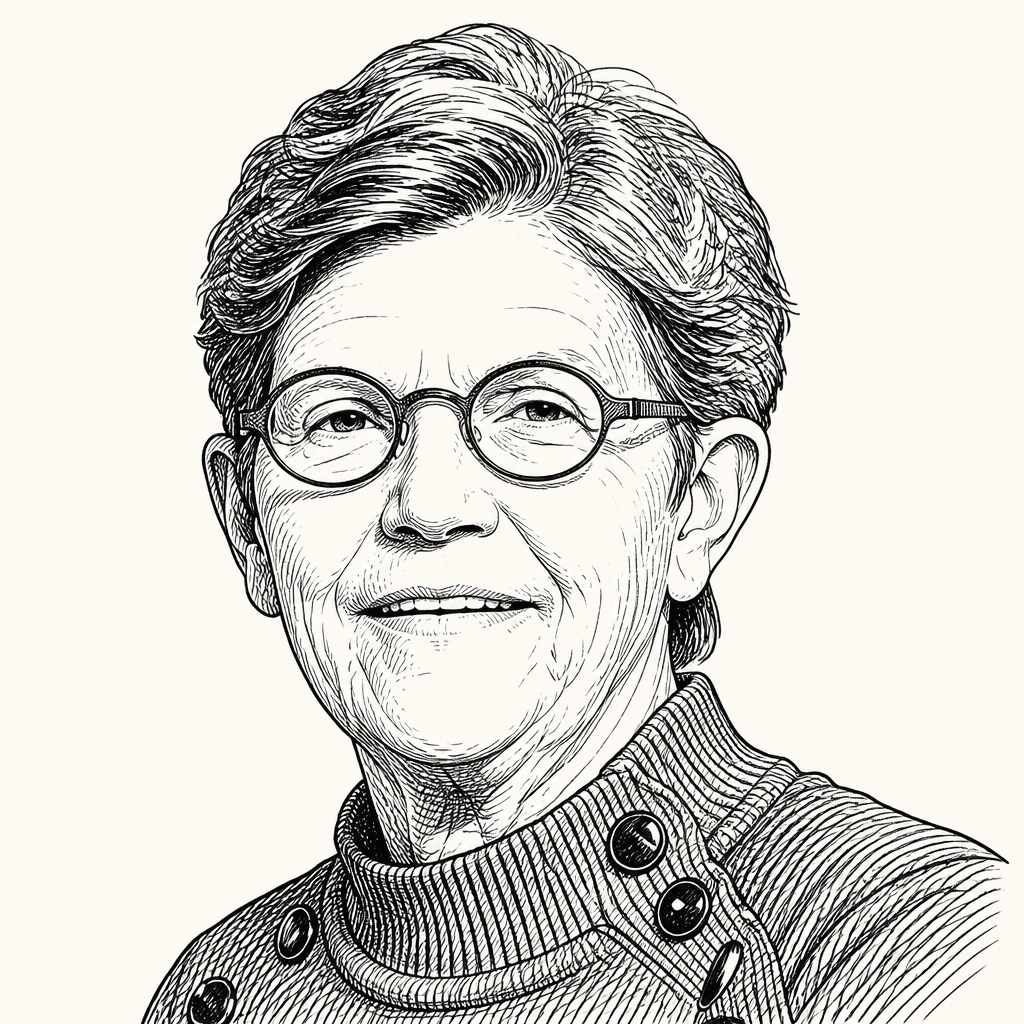
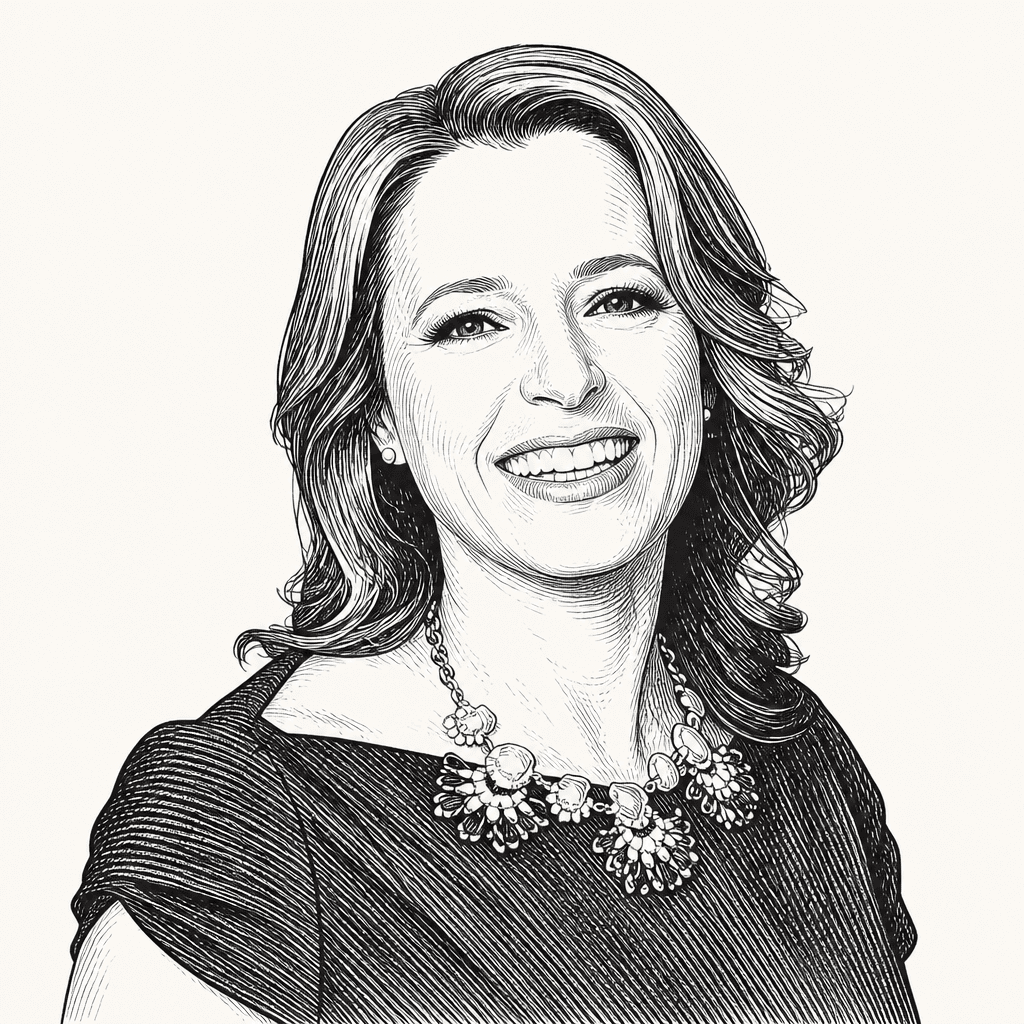

Psychologist Beth Cabrera argues in her forthcoming book, “Being Well: A Positive Path to a Healthier, Happier You,” that the main obstacle to better health is not ignorance but the gap between intention and action. In a conversation with Elizabeth Cohen, Cabrera makes the case that lasting behavior change depends less on discipline and guilt than on designing daily environments, relationships, and routines so that healthy choices feel rewarding and become easier to repeat.

The problem is not knowing what to do; it is getting yourself to do it
Beth Cabrera framed “Being Well: A Positive Path to a Healthier, Happier You” as a response to a practical failure in much advice about health and happiness. Most books, including her own earlier “Beyond Happy,” tell readers what to do: meditate, exercise, eat better, sleep enough, maintain relationships, avoid ultra-processed foods. After a decade of speaking about those strategies, Cabrera said she kept hearing the same anxious response from audiences: they already knew the list, but the list itself had become another source of pressure.
Her phrase for the problem was the “intention-behavior gap,” or the “knowing-doing gap.” People know what would help them live healthier and happier lives, but knowing does not make the behavior happen. Cabrera’s turn in the new book is from a “what to do” book to a “how to do it” book, drawing from behavioral science and positive psychology.
The central claim is counterintuitive only because so much health advice is built around self-control. Cabrera argued that the durable path is not discipline, willpower, guilt, or self-denial. It is feeling good enough, and shaping one’s surroundings well enough, that the desired behavior becomes easier to repeat.
The best way to do something is not through discipline and willpower and self-control. It's actually through feeling good.
Positive emotions, in Cabrera’s account, provide psychological resources: energy, confidence, resilience, and the capacity to continue after setbacks. She cited two recent longitudinal studies that measured self-control and well-being at one point, then again six months later. According to Cabrera, higher self-control at the first measurement did not increase later well-being; higher well-being did predict greater later self-control. She used that result to reverse the usual causal story. It is not simply that self-control makes people well. Feeling well can make self-control more available.
Elizabeth Cohen pressed Cabrera on whether this meant working against the customary belief that discipline is the way to become happier: if a person knows they need to eat better, go to bed on time, exercise, and socialize more, they assume they need to “get” themselves to do those things. Cabrera said yes. Her explanation began with “present bias.”

Humans, she said, evolved in conditions where immediate consumption could be adaptive. If a forager found sweet berries, the right move was to eat as many as possible because the next meal was uncertain. The environment has changed radically; the human brain has not changed at the same pace. A bar of ice cream sundaes is not a berry patch in a survival context, but the bias toward present reward remains. Thriving over time now requires delaying gratification and resisting temptations that are abundant and easy, but “our brains aren’t wired that way.”
Cabrera’s practical consequence was not to scold the brain, but to work with it. If people value the present more than the future, then healthier behaviors have to become more rewarding in the present.
Make the healthy behavior enjoyable before trying to make it perfect
The first lever Cabrera emphasized was immediate enjoyment. If a healthy behavior can feel good while it is happening, it stops depending so heavily on discipline. Cabrera called this the “Mary Poppins approach”: a spoonful of sugar helps the medicine go down. The point is that the first design question should be: what can be added to make this something a person wants to do?
For exercise, Cabrera’s examples were simple and concrete: add music, do it with friends, meet someone at the gym or yoga studio, or choose a format that is actually enjoyable. She said she dislikes running and is also limited by her knees, but cycling classes with the right playlist changed her relationship to cardio. Country music, 1980s music, or Latin music could keep her on the bike because the activity became something she looked forward to rather than something she had to endure.
She described a stronger version of the same idea as “temptation bundling”: only allowing oneself to do a desired indulgent activity while doing the beneficial habit. Cabrera used her own return to the United States after living in Madrid as an example. She had missed watching the Today Show in the mornings. When she moved back, she made herself a rule: she could watch it only on the elliptical. She had a quick coffee at home, avoided turning on the television there, went to the gym, got on the elliptical, and watched the show. The result, she said, was that she was at the gym five days a week because she wanted her morning news.
The same logic applied to food. Cabrera gave the example of someone who wants to eat salads for lunch but hates salads. Her advice was not to begin with the ideal salad. Start with the dressing you love, even if it is blue cheese or ranch. Add tortilla chips if that makes the salad appealing. The immediate goal is to begin the habit, not to optimize it on day one.
Cabrera argued that once the habit is established, the quality can improve. She said that if people begin feeding their gut microbes vegetables, those microbes begin “wanting vegetables” and signaling the brain for more arugula or red pepper. Over time, the person may naturally move from the heavier dressing and tortilla chips toward olive oil and vinaigrette, because the salad itself has become easier to want.
The logic is deliberately incremental. An imperfect salad is useful if it helps establish the behavior. A workout with entertainment can make the workout repeatable. Cabrera’s standard was whether the design gets the person to start and continue.
The environment is often stronger than willpower
Cabrera’s second lever was environmental design: make the healthy behavior easier and the unhealthy behavior harder. She rooted this, again, in how the brain works. In addition to present bias, she said, the brain conserves energy. People tend to take the easy way out. That means the environment quietly determines behavior by changing what is easiest in the moment.
She drew on Dan Buettner’s work on Blue Zones, saying that in places where people live the longest, “the healthy choice is the easiest choice” and sometimes the only choice. People walk, garden, grow food, move throughout the day, and eat what they grow. Health is not constructed as a sequence of heroic decisions; it is built into ordinary life.
Cabrera contrasted that with contemporary environments. She rejected the idea that people today are less healthy because they have less willpower than their grandparents. “We have the same brains that they had,” she said, but the environment is radically different. Earlier generations did not have fast food restaurants on every corner, streaming services encouraging people to stay on the couch and delay sleep, or delivery services that bring restaurant food to the door while they remain watching television. The issue, in her telling, is not a sudden collapse of character but an environment that has made unhealthy behavior easier.
Her most vivid example was an experiment at Google involving M&Ms. According to Cabrera, Google snack rooms used to have open containers of M&Ms. In an experiment, the M&Ms remained in the snack room but were moved into opaque bins so employees could not see them. Over seven weeks, Cabrera said, employees ate an estimated 3 million fewer calories of M&Ms. Nothing was banned. The candy was still there. The intervention changed visibility and friction.
Cabrera translated the lesson to the home. Put fruit on the kitchen counter. Keep small hand weights near the television so that sitting down to watch becomes a cue to do a few movements first. Put exercise clothes by the bed; she noted that some people even sleep in part of their workout clothes to reduce morning friction. Do not buy ultra-processed snacks or desserts if their presence reliably leads to eating them. If the only sweet option in the house is fruit, then the default becomes healthier because the alternative is unavailable.
Cohen highlighted the practicality of this approach: a person cannot change the whole food system or persuade large companies to stop making ultra-processed products, but they can control what enters their own house. Cabrera agreed: the relevant unit is “your own little environment.”
Optimism is treated as a practice, not a mood
Beth Cabrera also argued that positivity and optimism are not merely temperaments people either have or lack. When Elizabeth Cohen asked how someone can choose optimism when there are obvious reasons not to feel positive, Cabrera’s answer was direct: happiness, broadly, is a choice, and it takes intentional work.
The practice she emphasized most was gratitude, especially the “Three Good Things” exercise. At the end of each day, people write down three good things that happened. Cabrera acknowledged that the exercise can sound simplistic, but said its effect is to train attention. During the day, the brain begins scanning for good things because it knows it will need to recall them later.
This matters, she argued, because the brain has a negativity bias. It evolved to detect threats, not to notice flowers. A saber-toothed tiger mattered more for survival than beauty in the environment. In modern life, Cabrera said, an email can trigger the same threat machinery: “danger, potential danger.” The brain does not naturally distinguish enough between ancient physical threats and contemporary social or professional ones.
The Three Good Things exercise is meant to counter that bias through repetition. Cabrera described it in neuroplastic terms: parts of the brain that are activated more often become stronger. Negative thoughts repeated all day strengthen the habit of negativity; noticing and writing down good things strengthens the positive-emotion circuitry. She used the phrase, “what fires together, wires together.”
The desired outcome is not denial of difficulty. It is a changed attentional baseline. If a person notices more good during the day, Cabrera said, they begin to expect more good in the future. That expectation is optimism.
Cohen asked whether people could also train the “caveman and cavewoman” brain to stop treating an email like a saber-toothed tiger. Cabrera was cautious. She said that is hard because the brain does perceive any threat as potential danger. Rather than trying to convince the brain that the threat is different, she returned to the same answer: shift the brain toward noticing more good.
Negative events can be disputed, reframed, and answered with self-compassion
Cabrera distinguished several ways the mind can worsen an adverse event. One is catastrophizing: taking something upsetting and mentally moving to the worst possible outcome. A boss expresses dissatisfaction, and the employee goes home convinced they will be fired the next day. Cabrera said the brain does this in an effort to keep people safe, but the stress and anxiety it creates can make calm decision-making harder.
She described an ABCD process for handling that pattern. A is the adversity or situation. B is the thoughts around it: “I’m going to get fired,” “he was really upset,” or “there’s no way out of this.” C is the emotional consequence: stress, anxiety, panic. D is disputation: pausing to examine the thought more rationally. What is the worst case? What is the best case? What is most realistic? In the boss example, the best case may be that the boss forgets; the worst may be losing the job; the realistic case may be that the problem can be addressed. The point is not forced cheerfulness, but reducing the automatic pull toward the most negative interpretation.
Cabrera also described “positive reframing,” the psychological term for finding a silver lining in a negative event. If someone is in a car accident and breaks an arm, they could dwell on the damage: the injury, the missed meeting, the loss of the car for a week. Or they could also notice what did not happen: the children had just been dropped off and were not in the car; the arm broken was the left rather than the right; the other driver had insurance. The bad event remains bad. The reframing asks whether there is any good within or around it that can also be true.
Self-talk, in Cabrera’s account, is another place where the brain’s protective instincts become harmful. The inner critic says a person was dumb, wrong, careless, or should not have done what they did. Cabrera said this voice can be constant for some people, and while the brain may think it is helping by keeping people alert to danger, the resulting anxiety does not improve performance.
Her alternative was self-compassion, drawing on Kristin Neff’s work at the University of Texas at Austin. Cabrera described three steps. The first is mindfulness: noticing the self-critical voice rather than letting it run as background noise. She suggested even saying, “Thank you, brain. I know you’re trying to keep me safe, but this isn’t helping me.” The second is shared humanity: remembering that mistakes are part of being human. People make wrong decisions, say the wrong thing, hurt feelings, or slip from their plans. That does not make them bad people. The third is kindness: speaking to oneself as one would speak to a best friend.
This matters for behavior change because self-criticism often leads to quitting. Cabrera used the example of a person trying to eat a salad every day who eats a doughnut when doughnuts appear. The self-critical response says: I knew I couldn’t do this; I have no willpower; I am not a healthy person. That thought pattern can lead to what Cabrera called, using the term from psychological literature, the “what the hell effect”: once the day feels ruined, the person gives up and has the burger and fries too.
Her counterexample was Duolingo’s streak freeze. Cabrera said she is close to an 1,800-day streak on the language app, but not because she has practiced every single day without fail. She has forgotten, skipped, or traveled. The app allows a “streak freeze,” a kind of mulligan.
I promise I would have quit if I had messed up and lost my streak.
Instead, the app’s design says: bad day, but continue tomorrow. Cabrera’s larger point was that health habits need the same grace. A slip is a detour, not the end of the route.
Belonging changes behavior because the brain treats the group as survival
Elizabeth Cohen asked Cabrera to explain the biological imperative behind social connection. Beth Cabrera again returned to evolution: thousands of years ago, belonging to a tribe was a live-or-die matter. The group provided food, safety, shelter, and protection. The modern brain still treats belonging as survival.
That is why loneliness and exclusion are not minor discomforts in Cabrera’s account. She said the part of the brain associated with physical pain is activated when people feel lonely or left out. The same region involved when a person breaks an arm is involved when the person feels excluded, because the brain interprets exclusion as a survival threat.
This also makes social influence powerful. People want to fit in because fitting in historically meant remaining part of the tribe. They do what the group does, often without deliberate intention. Cabrera cited Fowler and Christakis’s book “Connected,” saying their research shows that if a friend gains weight or gets divorced, the likelihood that one gains weight or gets divorced becomes higher. She added that the influence extends beyond a direct friend to a friend’s friend and even a friend’s friend’s friend.
Cabrera acknowledged that this can be unsettling, but treated it as actionable. If a person wants to build healthy habits, it helps to spend time with people who already have those habits. A friend who walks even when it is raining can make walking more likely. A social group can provide accountability and support, but it also changes what feels normal.
The influence does not have to be limited to in-person relationships. Cabrera said that when she began using Instagram, she did not primarily follow personal friends. She followed doctors, trainers, nutritionists, and people focused on well-being. Her feed became a stream of people discussing the gut microbiome, demonstrating workouts, and cooking gut-friendly meals. That made it feel as if “everyone in the world” was obsessed with improving their well-being. Cohen described that as becoming her tribe, and Cabrera agreed, even though she did not know most of them personally.
An audience member asked whether the same network effect operates in a positive direction. Cabrera said yes. She referred to a study in her book involving people following a weight-loss program, in which spouses who were not on the program also lost weight. Her explanation was straightforward: if one person in a household changes what is cooked and kept at home, the other person’s environment changes too.
She illustrated this with her own household. After reading Suzy Cameron’s “One Meal a Day” in late 2019, Cabrera said she was moved by the health and planetary arguments for eating less meat. In January 2020, she decided not to buy meat and planned to cook more vegetarian meals at home, assuming her husband, Ángel Cabrera, could still eat meat at work or dinners. Then March 2020 arrived, and he began working from home. Cabrera said he jokes that he “became a vegetarian” then. It was not necessarily his choice, but the household food environment shifted. She also said she does not buy desserts because she does not want to eat them at home, so when her husband wants something sweet, the available option is berries.
Her point was that influence can be subtle and practical. A teenager in a story from her book stops meeting friends at Krispy Kreme after school and, after getting into cross-country and seeing himself as healthier, persuades them to meet at a yogurt place instead. A single person’s behavior can alter the default for others.
The same logic shaped Cabrera’s brief answer to an audience question about patients facing diagnoses, test results, and waiting. She said she was not a health expert, but suggested that patients need social support and agency. Providers, in her view, can look for moments when a patient can make a choice within a care plan, take some control over diet, or otherwise feel less trapped by uncertainty. She mentioned fasting in connection with immunotherapy research only cautiously. Her core claim was narrower: under uncertainty, support and a sense of control can help people sustain positivity.
Mindsets can change the body’s response, but habit timing remains variable
In response to an audience question, Beth Cabrera moved into a related theme she said she is “obsessed” with: mindsets. She treated mindsets as powerful not just psychologically but physiologically.
One example was stress. If a person sees a stressful situation as a threat, Cabrera said the body prepares for fight or flight, including constricting blood vessels so that if the person is hurt in a fight, they do not bleed out. If the person sees the situation as a challenge, the body prepares to meet the challenge differently, including increased blood flow to the brain to support thinking and decision-making. The external stressor may be similar, but the interpretation changes the bodily response.
Another example was a milkshake study. Cabrera described it as showing that when people believe they have consumed a high-calorie milkshake, their ghrelin level drops, signaling fullness. When they consume the same milkshake but are told it is a “sensible” shake, the same hormonal change does not occur. Cabrera used that finding to demonstrate how strongly beliefs can shape physiological response.
Cabrera also rejected the common claim that habits form in 21 days. The research, as she described it, does not support a single fixed timeline. The time required is highly variable and depends on the habit. Easier habits form more quickly; more difficult habits take longer. She did not claim a precise number of days for “rewiring” the brain, saying she was not an expert on that specific timing question and that her understanding is that consistency and difficulty matter.