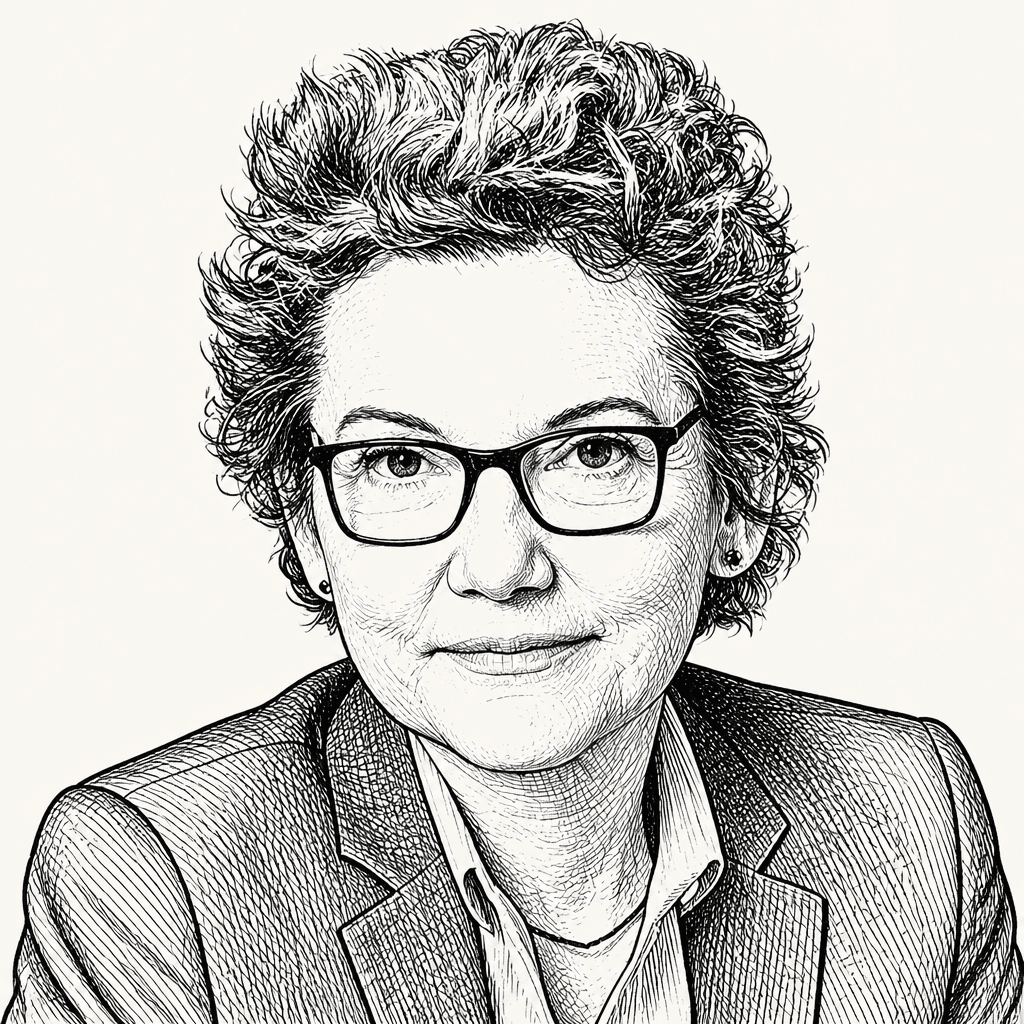
Mary Daly
President and CEO of the Federal Reserve Bank of San Francisco and an economist focused on monetary policy, inflation, labor markets, economic shocks, and the economic effects of emerging technologies including AI.
AI Capex Boom Meets Higher Rates and Public-Market Scrutiny
Bloomberg’s Ed Ludlow framed the day’s tech selloff as a test of the AI trade’s practical limits: higher rate expectations after a solid jobs report, pressure on chip stocks after Broadcom’s outlook, and the capital demands of SpaceX’s looming IPO. Across interviews with economists, executives and investors, the program argued that enthusiasm for AI and space infrastructure remains strong, but the market is increasingly focused on whether compute, energy, supply chains and public investors can absorb the scale of spending required.
AI Has Not Yet Become a Hiring or Productivity Shock
Martha Gimbel, executive director of the Yale Budget Lab, told Bloomberg Technology that May’s jobs report showed a steady labor market and gave the Federal Reserve room to keep its focus on inflation. She argued that artificial intelligence is already visible in investment and may be adding some price pressure, but she sees no evidence yet that it is holding back hiring or producing a measurable productivity shock in the economic data.
AI Demand Is Real, but Productivity Gains Remain Unproven
Bloomberg’s Tech event in San Francisco framed the AI boom as a market caught between constrained infrastructure demand and valuations that leave little tolerance for misses. Executives from Databricks, Okta and Altimeter argued that the next bottlenecks are enterprise context, secure system access, power and capital allocation, while San Francisco Fed President Mary Daly said AI investment is widespread but has not yet produced broad, measurable productivity gains.
Fed Forward Guidance Could Mislead Amid Inflation and AI Uncertainty
San Francisco Fed President Mary Daly told Bloomberg Tech that monetary policy is in a good place because the economy could still break in either direction, making further forward guidance potentially misleading. Daly said AI may eventually lift productivity and reshape hiring, infrastructure and regional growth, but she has not yet seen broad economy-wide evidence of those gains; with inflation still vulnerable to energy, food and geopolitical shocks, she argued the Fed should preserve room to respond rather than signal a fixed rate path.
Fed Officials Call for Better Classification Tools Under Economic Uncertainty
At a Hoover Institution policy panel on central-bank independence, structure and emerging risks, Federal Reserve officials Michelle Bowman, Mary Daly, Austan Goolsbee and Christopher Waller each argued that the Fed’s next problems turn on classifying risks before they are obvious in hindsight. Bowman focused on capital rules and private credit, Daly on distinguishing temporary from persistent inflation shocks, Goolsbee on whether expected AI productivity gains lower or raise the appropriate rate path, and Waller on which Fed functions require regional autonomy rather than centralized operations.