Fed Forward Guidance Could Mislead Amid Inflation and AI Uncertainty



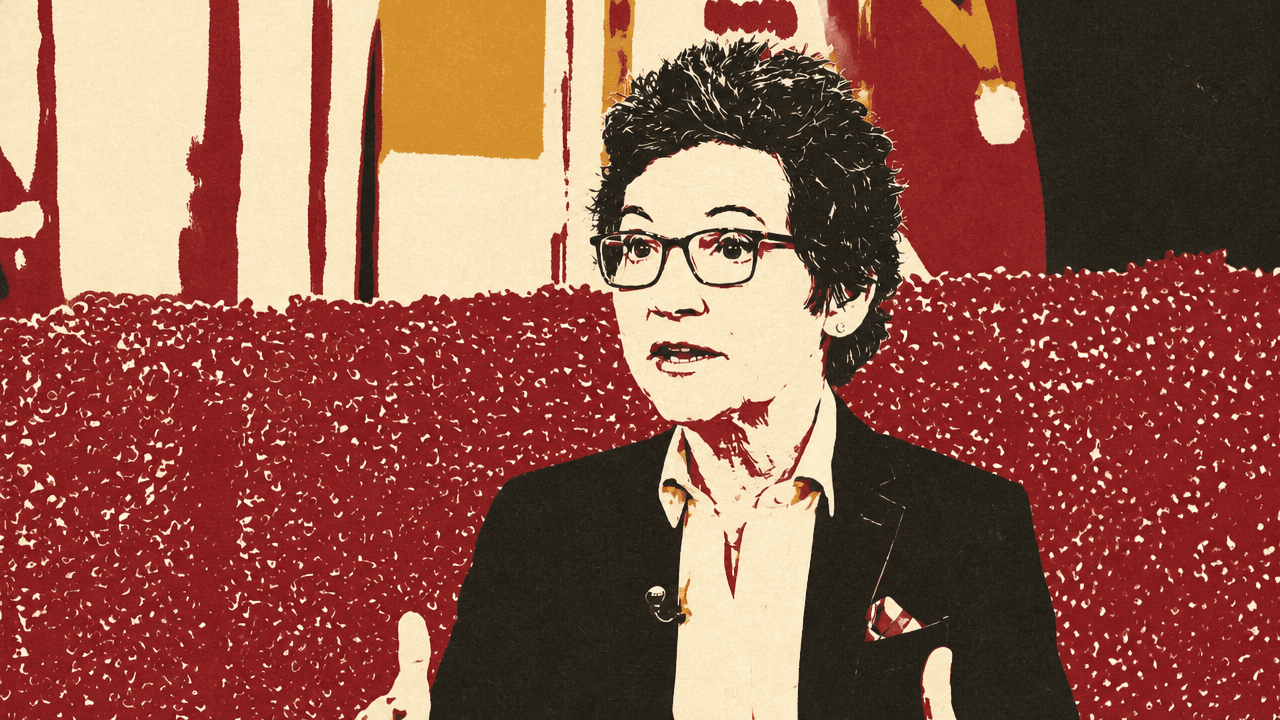
San Francisco Fed President Mary Daly told Bloomberg Tech that monetary policy is in a good place because the economy could still break in either direction, making further forward guidance potentially misleading. Daly said AI may eventually lift productivity and reshape hiring, infrastructure and regional growth, but she has not yet seen broad economy-wide evidence of those gains; with inflation still vulnerable to energy, food and geopolitical shocks, she argued the Fed should preserve room to respond rather than signal a fixed rate path.
Forward guidance could mislead when the risks have not resolved
Mary Daly framed the Fed’s position as readiness, not a promised rate path. Monetary policy is “in a good place,” she said, because the economy could plausibly move in either direction: toward more inflation pressure from energy, food, and geopolitical shocks, or toward relief if those shocks fade and underlying dynamics improve.


That was her answer after Ed Ludlow asked how the current inflation backdrop should affect the likelihood of a 2026 rate cut. Daly did not translate the data into a rate forecast. She pointed instead to unresolved forces: the possibility of positive supply effects from AI, the war in Iran pushing up oil prices, and fertilizer costs filtering into food prices. Those commodity pressures, she said, were “fairly contained” for now, and oil futures pointed to $80 a barrel by year-end. But the uncertainty itself was the reason to avoid over-precision.


Right now policy is in a good place. We are prepared to respond either way whatever the economy brings. But I think giving more forward guidance about what's possible could be misguiding in the end.
Daly’s concern was not only that forecasts can be wrong. It was that trying to “resolve the uncertainty today” can narrow what policymakers are willing to see tomorrow. The Fed, she said, has to remain open both to the possibility that inflation risk worsens and to the possibility that the war ends, oil prices fall, and the economy returns to underlying dynamics that may include some of the AI-related positives she sees developing.
AI is a possibility story, not yet a productivity fact
Daly’s assessment of AI rests on a deliberate separation between adoption and measured productivity. She said she is “bullish” about AI’s possibilities, but repeatedly distinguished that from proof that AI has already produced broad economy-wide productivity gains.
Caroline Hyde framed the data problem as separating “fact,” “fiction,” “utopia,” and “sensationalism.” Daly said she does that by going to businesses using the technology rather than to “enthusiasts or doomsayers.” The useful signal, in her view, comes from firms in the middle: companies working through deployment, workforce training, and changes to operations.
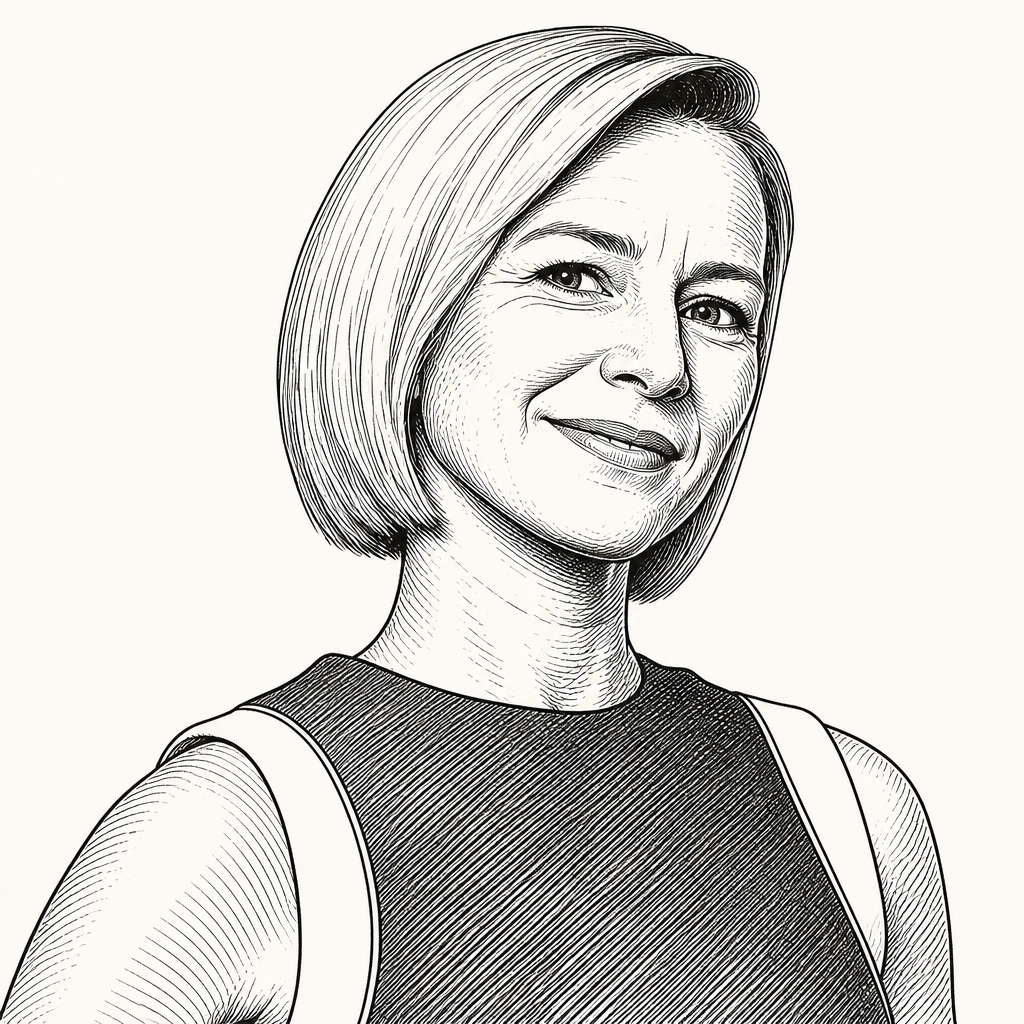

She described a shift from interest last year to investment now. Businesses are asking how to make workers “AI ready,” how to use AI beyond back-office functions, and how to apply it across operations. Daly said she is hearing this not only from large technology companies but also from small, medium, regional, and global businesses, across agriculture, machining, manufacturing, and services.
The missing piece is still broad realized productivity.
We haven't seen widespread productivity gains yet. The ROI is still to be developed. But I'm definitely seeing the enthusiasm and it's picked up tremendously in the last year.
Ed Ludlow noted that he had previously asked Daly repeatedly to “show me the productivity gains.” Daly acknowledged that U.S. productivity growth has recently been outside the historical norm and called that positive for the economy. But she cautioned against simply attributing that to AI. It is possible, she said, that firms are using AI assistants or large language models to do the same amount of work with fewer workers. Still, she said businesses are not reporting “transformative ongoing productivity gains” at scale.
For Daly, the important word was “yet.” Businesses are telling her the relevant timeframe is next year or the year after. AI adoption, in her view, is not just buying a model or agent and putting it to use. The larger effect requires transforming business processes around the technology, including changes companies may not yet be able to imagine.
One can find individual firms or sectors seeing gains, she said, but not yet a broad economy-wide effect. She is hearing more reports of early rewards, and she described next year as “the litmus test.”
Market enthusiasm is not the same as a financial-stability event
Daly did not treat elevated AI valuations or heavy investment as a financial-stability problem by themselves. Her distinction was between market risk and system risk. Markets can rise or fall, she said, as they have in the past. A financial-stability issue would require broader transmission to banks, consumers, or businesses. Daly said she is not seeing that evidence, though the Fed is watching.
The composition of AI spending matters in her analysis. Much of the investment is being made by the “Mag 7,” companies she described as having the capacity to fund it. Their enthusiasm is real, she said, because they see what is possible.
But Daly’s underlying bullishness did not mainly rest on the largest technology companies. It rested on what she is seeing from “everyday regular companies that make things and provide services.” Those firms are beginning to use AI for operational purposes, not just speculative narratives.
One example was a machine-making business with 50 years of plans. Daly described the company’s idea: scan decades of machine plans, use those plans with a model, and generate new product ideas that could be “faster, better, cheaper” than prior offerings. She also mentioned touring a robotics company that helps manufacturers improve shipping and distribution.
Those examples mattered because they make AI look, to Daly, like a potentially pervasive business technology rather than a sector-specific financial trade. If the technology is being deployed by ordinary manufacturing and services firms, the macro question is not only whether AI valuations are stretched; it is whether those deployments eventually change costs, output, and investment behavior.
Credit risk still remains on the watch list. Ludlow raised data-center financing near the end of the discussion, noting that for some observers it is worrying. Daly said she is watching carefully and noted that many companies are investing substantial internal resources. But when she “stack ranked” current concerns, she put inflation first: getting inflation back to target and giving Americans relief remained her number-one priority.
Data centers may pressure prices before they relieve them
Ludlow put the data-center buildout to Daly as a two-sided inflation question. He cited large capital commitments, data-center construction, and bottlenecks in areas such as memory, then asked whether the result is inflationary or disinflationary. He also noted the argument that large buyers could eventually be disinflationary by buying in aggregate.
Daly called it a timing issue. In the beginning, large construction projects and new electricity demand create competition for limited services and capacity. Companies and regions supplying those services may therefore see pressure. But data centers create infrastructure, and if large companies help build or finance electricity generation, that can eventually improve the supply picture.
When Ludlow put the point more bluntly — “But not here and now” — Daly agreed.
Her policy conclusion was that the Fed should not assume which effect dominates. Policymakers need to look at current prices, price forecasts, and incoming evidence before deciding how to respond. At present, she said her inflation focus is on energy prices, oil prices, and food prices. AI infrastructure could compete for services and raise costs later, but she said she has not seen real evidence that it is currently the limiting factor.
The bottleneck she identified was more specific: difficulty getting generators and infrastructure equipment. Large technology companies, she said, are responding by thinking about solutions they can provide for themselves.
San Francisco has 1990s pressure, but Daly rejects a simple dot-com analogy
San Francisco gives Daly a local view of how an AI boom can show up in prices and sentiment before it shows up cleanly in national productivity data. Potential IPOs, employee wealth, housing demand, and labor costs can all create pressure in a city with constrained housing supply.
Daly answered through the lens of her own arrival in San Francisco in 1996, before and during the dot-com era. She said she remembers what it felt like when many people could not afford rent because others were earning far more. That experience, in her view, resembles the current feeling of being “crowded out” when investment and high-income employment concentrate in a region.
But she located the housing pressure more in supply than demand. San Francisco wants people to invest in the community, she said; it wants the city to thrive, and it wants regional activity and employment to grow. The problem is that when many people want to live in a place with limited housing supply, prices run up. She said those issues fall more to other federal and local policymakers, including the mayor, than to the Fed.
Daly acknowledged that one can see “elements of 1996” in the current environment: productivity growth, enthusiasm, and regional momentum. But she rejected a direct bubble analogy.
The dot com was very different than the AI boom.
Her distinction was that AI is already being put into businesses and is “very pervasive.” The dot-com era may offer useful historical texture, but Daly said she does not jump from similarities with the 1990s to the conclusion that the outcome must repeat the 1990s.
AI is already making employers slower to hire
Daly described a labor market that has stabilized but has not clearly strengthened. She said it was too early to call it firming, given month-to-month statistical noise.
Late last year, Daly said, she had been among policymakers worried about the labor market and supported rate cuts to stabilize conditions. Relative to that point, she said conditions have stabilized. She is hearing more cautious optimism from businesses, which could feed through to hiring.
But firms are not rushing to add workers. Hyde noted that businesses “can get an agent,” and Daly agreed. Companies are asking what AI can do before they hire. They do not want to add many workers only to discover that AI can handle some tasks and that they need a different mix of skills.
That caution, in Daly’s telling, is both managerial and human. Layoffs are painful for workers and businesses. Firms therefore do not want to overhire out of optimism and later be forced to reverse course. Daly said that caution is likely to remain “for a bit.”
This is one of the more immediate channels through which AI enters her macro view. It may be affecting hiring behavior before it proves itself as a broad productivity boom. Firms can delay decisions while they learn what agents, assistants, and redesigned processes will actually do.
Fed modernization should not outsource judgment to machines
Daly described the Fed’s institutional evolution as a question of stewardship rather than novelty. Fed leaders, she said, should constantly ask how the institution can better serve the American people, operate more efficiently, work more effectively, and become more resilient.
She described two “book ends”: the Fed as a fiduciary steward of public trust and a fiduciary steward of public funds. The first means people must be able to depend on Fed services and on the institution’s pursuit of its goals. The second means the Fed must be careful with taxpayer dollars.
Daly used check processing as an example from her own tenure. When she joined the Fed in the 1990s, check processing existed across locations. As check demand fell, the Fed consolidated those activities into fewer locations. She presented that as the model of modernization: continually reassessing how to do the work better.
Asked by Ludlow about “Chairman Walsh” and how he sees the Fed evolving, Daly said he had just joined and should have time to set out his plans. She said he had talked about holding on to the Fed’s tradition of improvement and came in with “a lot of ideas.” More broadly, Daly said the chair shared the basic compass she had seen in the five Fed chairs she has worked with: doing the Fed’s best work for the American people and working with the people inside the institution who are trying to do that work well.
On the Fed’s own use of AI, Daly said the institution is careful, like regulated institutions and businesses more broadly. The Fed is always trying to adopt new technology to work more efficiently, she said, but it must do so safely.
Her boundary was clear: technology may improve operations, but it should not replace accountable human judgment in core public functions. People want access to their money when they need it, banks that are well supervised, and monetary policy made by people — not machines. Daly said monetary policy requires judgments not only about models and rules but also about the lived experiences of people across the country.