AI Capex Boom Meets Higher Rates and Public-Market Scrutiny
 Ed Ludlow
 Craig Trudell
 Jamie Dimon
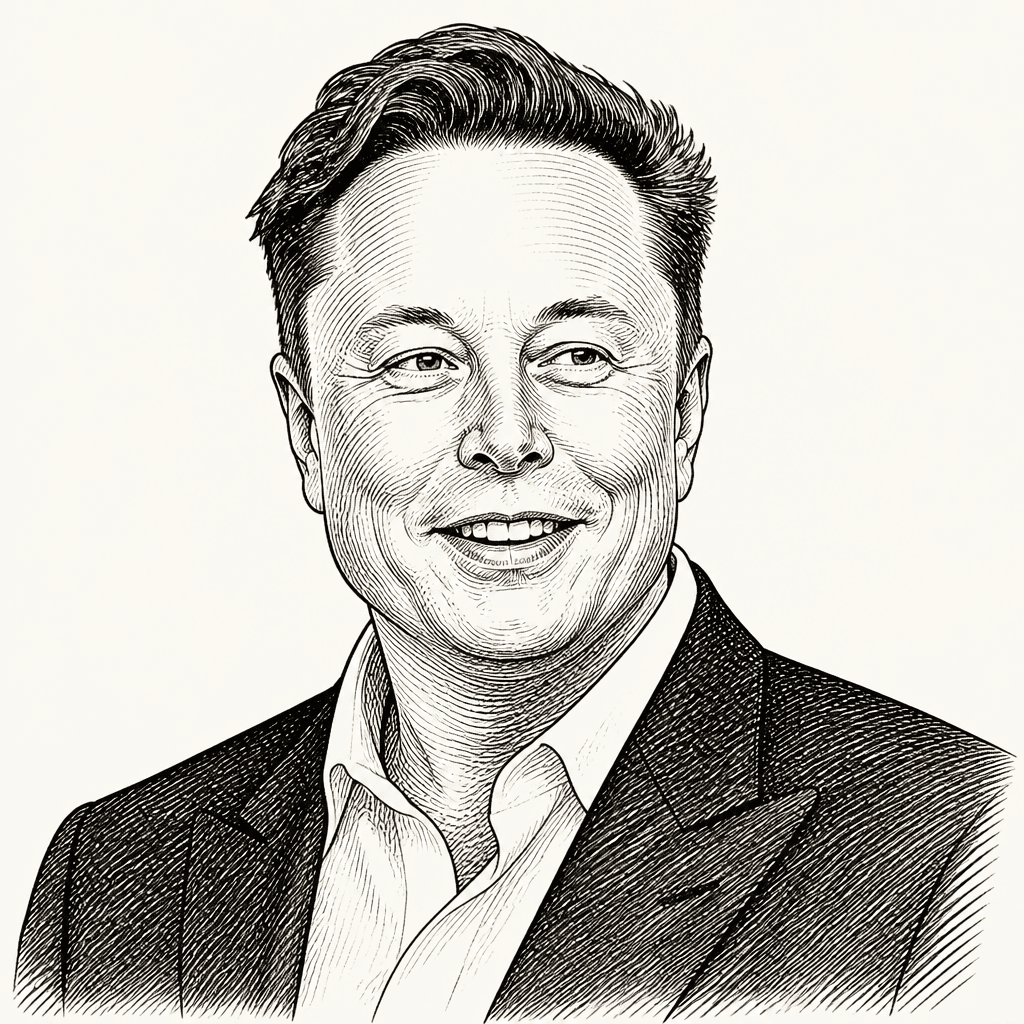 Elon Musk
 Jensen Huang
 Martha Gimbel
 Mary Daly
 Daniela Amodei
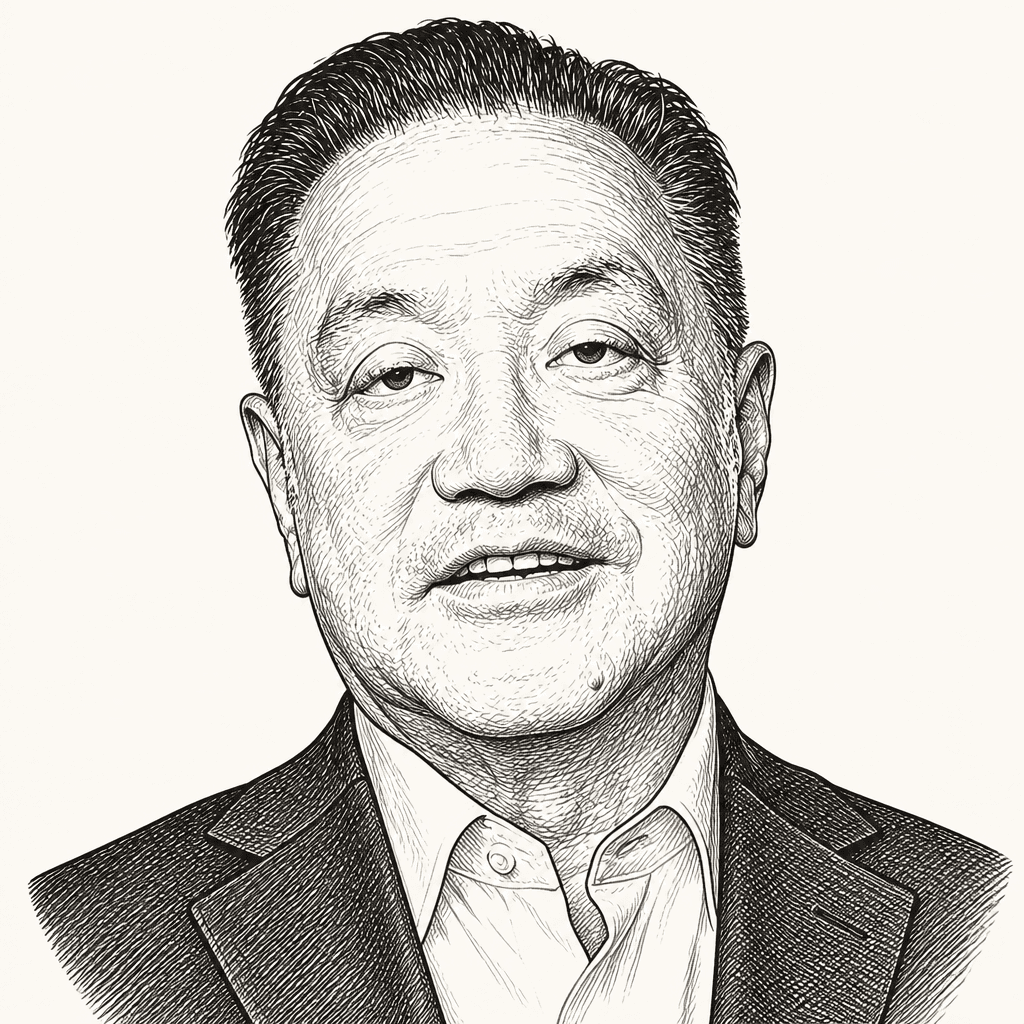 Hock Tan
 Emily Chang
 Nina Achadjian
 Philip Johnston
 Tom Giles
 Shirin Ghaffary
 Mira Murati
 Tom Keene
 Jeffrey Rosenberg
 Trae Stephens
 Ian CinnamonBloomberg TechnologyFriday, June 5, 202613 min read
Bloomberg’s Ed Ludlow framed the day’s tech selloff as a test of the AI trade’s practical limits: higher rate expectations after a solid jobs report, pressure on chip stocks after Broadcom’s outlook, and the capital demands of SpaceX’s looming IPO. Across interviews with economists, executives and investors, the program argued that enthusiasm for AI and space infrastructure remains strong, but the market is increasingly focused on whether compute, energy, supply chains and public investors can absorb the scale of spending required.

AI enthusiasm is colliding with rates, supply constraints, and execution risk
Ed Ludlow framed the selloff as a collision between a still-hot economy, stretched chip gains, post-earnings anxiety, and the looming SpaceX IPO. The S&P 500 was down roughly 1% and stood to end a nine-week winning streak rather than reach a historic tenth. The pressure was sharper in semiconductors: the PHLX Semiconductor Index moved from a 4.7% decline to around 6% lower, with Ludlow noting that chip stocks had still been up more than 80% year to date.


The labor-market data was the macro trigger. The May jobs report showed nonfarm payrolls up 172,000, unemployment at 4.3%, and average hourly earnings up 3.4% year over year. The April revised nonfarm payroll figure shown was +179,000, and two-month pay revisions were shown at +93,000. The 10-year Treasury yield was around 4.53% to 4.54%. Ludlow repeatedly tied the move in yields to investors reassessing the path for interest rates.
| Measure | May | April revised |
|---|---|---|
| Change in nonfarm payrolls | +172k | +179k |
| Unemployment | 4.3% | 4.3% |
| Average hourly earnings, year over year | 3.4% | 3.6% |
| Two-month pay revisions | N/A | +93k |
Martha Gimbel described the report as the kind an economist opens, sees little alarming in, and then moves on: job growth was strong, while wage growth lagged in some respects compared with inflation. For the Federal Reserve, she said, the report gave policymakers room to keep acting on inflation through interest rates.


That assessment sat alongside comments from Mary Daly, who said policy was “in a good place” and that the Fed was prepared to respond in either direction. Daly resisted giving forward guidance because, in her view, resolving uncertainty too early could “close off our mind about what we really have to look at.”


The AI labor-market question remained unresolved, but Gimbel was firm about what she does not yet see in the data: “I really am not seeing any evidence of major AI impacts in the economic data at this time.” She said AI is making a difference on the investment side, but she is not seeing major AI impacts in the labor-market data or productivity data. She also rejected the idea that companies, at scale, are holding off hiring because they are waiting to understand what AI will do.
Gimbel’s caveat was timing. She said it is still “really, really early” in the technology and that AI is being held to “an impossible standard” if observers expect it already to show clear labor-market effects.
The capital-expenditure question was different. Ludlow pressed whether the enormous AI buildout is inflationary or disinflationary, including the argument from some utilities that hyperscalers taking on large projects could eventually push energy prices down. Gimbel said the most important inflationary force on energy at the moment was events in the Middle East, which would “trump anything else.” But she also said the inflation data show some upward impact from AI investment. If utility financing and infrastructure models change, she said, that could begin to work the other way, but not yet.
Her view of the current loop was straightforward: capital is piling into an expensive sector, data centers and models are not free, and that demand pushes prices up. If companies want to keep investing, they have to pay those prices.
Jeffrey Rosenberg of BlackRock added the demand-side version of the same argument in a clip from a Bloomberg subscriber event. AI, he said, is unleashing both an “incredible capex boom” and an “incredible wealth effect.” In his framing, the surge in AI investment spending and the wealth effect powering consumption have contributed to stronger economic growth than expected.
Broadcom’s selloff sharpened the question of AI-chip execution
Broadcom added a company-specific pressure point to the semiconductor selloff. Ludlow said shares were down roughly 10% to 11% over five days after a negative reaction to the company’s outlook for the current period, specifically as it related to AI chip sales.
Jensen Huang said Nvidia had qualified Samsung, SK Hynix and Micron to supply HBM4 memory for its next-generation AI chips. He said all three vendors had been qualified, all three were in production, and all were “racing” to support Vera Rubin. Ludlow said Nvidia’s Vera Rubin platform was in full production ahead of third-quarter deliveries, combining Nvidia CPUs and GPUs with those HBM4 memory chips. In a market already punishing chip stocks, the point was not that demand had disappeared; it was that the supply chain for the next phase of AI compute remained central to execution.


Hock Tan argued that Broadcom’s organic opportunity in generative AI compute is so large that acquisitions are hard to justify. Tan said that between 2024 and 2026 he would double revenue, creating more than $50 billion per year in annualized revenue. The question, as he put it, was what he could buy that would “even come close to that.”
M&A, Tan said, creates distraction twice: first in acquiring and navigating regulators, then in integrating the target for another year. Against that, Broadcom is trying to supply “picks and shovels” into an “almost insatiable” demand for generative AI compute.
When Bloomberg’s Tom Giles asked whether photonics or optics might be an exception, Tan said he had spent 20 years trying to avoid “bright shiny objects.” That answer captured the split in the AI trade: public-market investors were punishing the stock on near-term AI-chip-sales expectations, while Tan’s strategic argument was that the existing organic opportunity is too large to dilute with acquisitions.

SpaceX’s IPO became a market event before it priced
Elon Musk told Jamie Dimon at a JPMorgan-hosted investor event that SpaceX was going public because it was entering “a massive new growth phase” and needed capital. He also said he felt “pretty good” about revenue projections, contrasting that with an earlier period when revenue was “a little unstable.”

The IPO terms discussed by Ludlow were extraordinary: SpaceX planned final pricing the following Thursday, had already indicated $135 a share, and aimed to raise more than $75 billion. Ludlow described the target valuation as about $1.77 trillion. A Bloomberg visual in the same segment described the target valuation as “at least $1.8T,” also saying the filing revealed Musk’s voting control at 85% and that the deal would be the largest IPO of all time.
Craig Trudell called the JPMorgan event a “love fest” between Dimon and Musk and noted that it was unusual to see Dimon struggle to get a word in. Trudell’s broader takeaway was that Musk was unusually direct about the need for capital. He connected SpaceX’s raise to a wider tech pattern: even large, cash-generative companies are seeking enormous capital because the AI and hyperscaler race has become so capital-intensive.

Ludlow also emphasized the market mechanics. SpaceX, and other IPOs waiting in the wings, would not be fast-tracked into the S&P 500. Trudell called that a setback but said other indexes, including Nasdaq, had taken different approaches. That could spread institutional demand over time, which he suggested might be beneficial given concern about disruption from a small float in such a large listing.
Another constraint emerged around geography. Ludlow said underwriters were being told they could not take orders from investors in China and Hong Kong because of security concerns. Trudell also pointed to a notable post-event development: JPMorgan, after hosting Musk, moved from being among the more bearish banks on Tesla shares to having a new analyst take over coverage and raise the price target by more than 200%.
The IPO was not treated as just a company-specific event. Ludlow repeatedly described it as a catalyst for volatility and folded it into the day’s market pressure. The AI trade was already under stress from rates and Broadcom’s outlook; the world’s largest IPO arriving the next week added another source of uncertainty.
Frontier AI companies are moving toward public capital before the business model settles
Anthropic’s message, according to Ludlow, was that AI is advancing faster than expected and may be accelerating AI development itself. A post shown from Anthropic said internal data showed Claude accelerating AI development, creating “a possible path to recursive self-improvement, or AI autonomously building a more capable successor.” Ludlow said Anthropic’s new post argued that the world should have the option to slow or temporarily pause projects that become too dangerous and that the company planned to meet with policymakers and rival labs about safety thresholds.
The financing argument was more immediate. Daniela Amodei said frontier AI companies need access to capital because training models is highly capital-intensive, and that public markets are well suited to provide it.


Shirin Ghaffary said OpenAI had been early in making “splashy” compute announcements, including very large spending ambitions around projects such as Stargate. Those ambitions had initially drawn criticism as overly ambitious, she said, but Anthropic was now being upfront that it needs far more compute and that this is one of the main reasons to go public.


The tension is that public capital brings public scrutiny. Ghaffary said AI companies may gain access to more capital if they list, but Wall Street will scrutinize the financials. That means companies must decide whether they are ready for that level of disclosure and quarterly market pressure.
A separate AI-company thread showed how widely the race is spreading. Ghaffary and Ludlow reported that Airbnb co-founder and CEO Brian Chesky is starting a new AI lab while remaining CEO of Airbnb and not serving as CEO of the new lab. Ghaffary described it as part of a broader pattern: established tech founders who want to go all-in on AI may do so through side projects or side companies when their core company is not itself an AI-only firm. She said the new lab may have a design and user-interface focus, reflecting Chesky’s interests.
Orbital data centers turn SpaceX’s vision into an engineering problem
The SpaceX pitch, as described by Ludlow, included an especially ambitious number: 100 gigawatts of annual AI compute capacity ultimately deployed in orbit. Ludlow described the concept as a network of specialized spacecraft using radiation-tolerant AI chips, networking layers, power systems, thermal management, flight controls, laser links for communications, large solar arrays, batteries, and radiators to disperse heat into deep space.
Philip Johnston, CEO and co-founder of Starcloud, said Bloomberg’s explanation of orbital data centers was “excellent.” Starcloud, he said, had already launched the first Nvidia H100 aboard a satellite the previous November. The satellite carried five GPUs: three from Nvidia and two from Arm, with the H100 the most powerful and important.

Johnston described the company’s earlier concept for a large training-oriented system: a four-kilometer-by-four-kilometer solar panel with a five-gigawatt cluster in the middle and a roughly one-kilometer-by-four-kilometer radiator along the back. But he said the workload mix has shifted. Starcloud now expects “99% of all AI workloads” very soon to be inference, so the company does not need to dock together a giant structure for most use cases. Instead, it is focused on smaller distributed inference nodes.
Starcloud has filed with the FCC for a constellation of 88,000 satellites, which Johnston said would allow it to deploy about 20 gigawatts of compute. Its near-term posture is narrower than SpaceX’s orbital-compute vision: Starcloud is building small inference nodes and plans initially to serve other spacecraft with edge and cloud services.
Johnston made the largest market claim in the segment: in his view, space compute could be “potentially the largest market opportunity ever,” with trillions of dollars per year of capital expenditure deployed in space. Some of that will use SpaceX, he said, but many customers will want independent clouds. Starcloud is itself a SpaceX customer through rideshare and potentially dedicated Falcon 9 launches.
The SpaceX IPO is already affecting Starcloud, according to Johnston. He said investor interest in space has changed, and credited much of that to the IPO. He also said Starcloud raised what he described as the fastest unicorn round out of Y Combinator: in 17 months, from near zero to a $1.1 billion valuation, with a $170 million raise. Starcloud’s backers shown included NFX, Nvidia, Y Combinator, Benchmark, and IQT.
Satellite production, not launch, is the bottleneck Apex wants to own
If SpaceX solved much of the launch problem through reusable rockets, Ian Cinnamon argued that the new bottleneck is spacecraft production. Apex, where Cinnamon is CEO and co-founder, had just raised more than $200 million, doubling its valuation to $2.3 billion, with proceeds intended to expand its satellite manufacturing facility in Los Angeles.


Cinnamon said Apex Factory One can produce more than 200 satellites per year, which he said is more than the U.S. government launched last year. The market shift, as he described it, is away from one large, bespoke, “exquisite” satellite and toward constellations or fleets that work together.
He rejected the comparison to a contract manufacturer. Apex is not building other people’s designs; Cinnamon described it as “the Ford of satellites.” The company designs a limited set of standard products — small, medium, and large satellite buses, analogous to a sedan, SUV, and pickup truck — and produces them ahead of customer demand. If a customer needs 100 satellites, he said, Apex can supply them in weeks or months rather than years.
Apex’s funding strategy, according to Cinnamon, is acceleration rather than survival. He said the company had raised three back-to-back $200 million rounds over 14 months from a position of strength and did not “actually need the capital.” The new money would support hiring, production, and customer deliveries, including work connected to a Northrop Grumman partnership on space-based interceptors.
Like Johnston, Cinnamon positioned SpaceX as a tailwind rather than only a competitor. SpaceX, he said, opened the space ecosystem and helped customers shift from large bespoke satellites to proliferated systems. Apex supplies those systems, is a SpaceX customer, and is “very excited” for the IPO.
AI is moving from software for knowledge work into systems that can break
Mira Murati described advanced AI systems as “the most incredible tools for thought that humanity can ever have.” Her focus was not replacing human thinking but changing its nature: what people think about, and what new tangible things they can think with. She compared the potential shift to earlier deep technologies such as language, writing, and numerals. But she said realizing that possibility requires intentional research and product work.


Asked by Emily Chang whether she left OpenAI to run toward something or away from something, Murati said she was “most definitely” running toward something once she understood what it was. She praised her OpenAI experience and said she had developed a strong view of how the technology ought to be developed. Starting Thinking Machines gave her a rare opportunity to build a company around that conviction.
Nina Achadjian extended the AI discussion into venture capital’s physical-world thesis. Index Ventures has invested across the AI stack, she said, from foundation models such as Anthropic to inference companies such as Fireworks and application companies. But much of software disruption has centered on the knowledge worker. The white space, in her view, is what AI does in the physical world.


That includes electrical, mechanical, and aerospace engineers, many of whom have used the same software stack for decades, with incumbents built in the 1980s. Achadjian emphasized that physical-world software carries a different risk profile: if a model or tool gets one character wrong in code, something physical can fail — “a nuclear reactor or a rocket,” in her examples. That is why she is interested in deeply technical, domain-specific companies.
SpaceX matters here as a valuation and talent signal. Ludlow asked whether the IPO could become a public-market proxy for areas like humanoid robotics and physical AI, where investors lack obvious comparables. Achadjian said that is why “all eyes” are on the SpaceX IPO: it has opened investors’ eyes to how compelling and lucrative the market could be, drawing capital into private companies doing related work.
She also described Musk and SpaceX as a talent source. Two of her recent investments, she said, were founded by former SpaceX employees. Scott Mordin of Revel spent 10 years at SpaceX doing launch control and became convinced of the need for better software for hardware. Sergiy Nesterenko of Quilter spent six years at SpaceX and was frustrated by waiting for humans to manually lay out printed circuit boards; Quilter uses AI to autonomously lay out PCBs.
The venture-capital industry, Achadjian said, is always rooting for the IPO window to open because it creates more options for founders, capital, and liquidity. SpaceX may be singular, but its listing is being watched as a test for a wider physical-AI and hard-tech market.