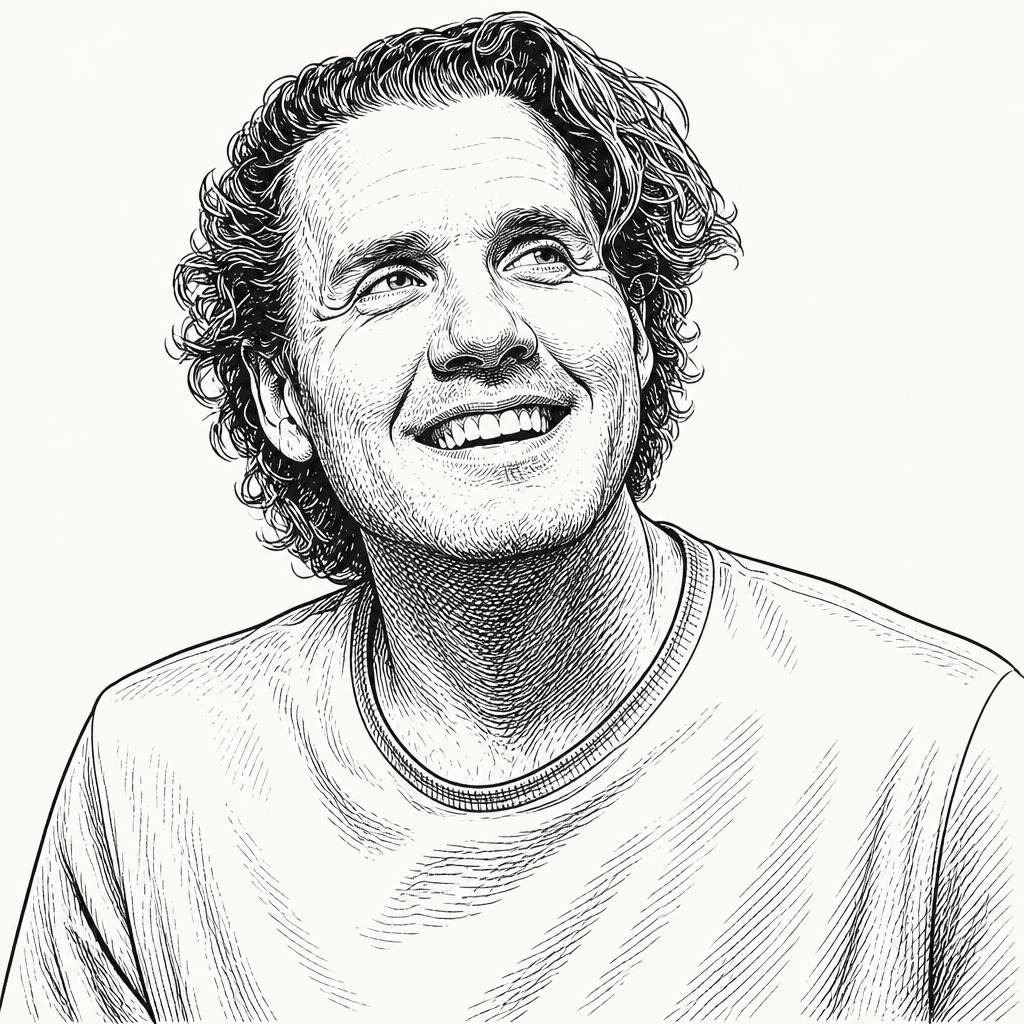
Mark Manson
Mark Manson is a bestselling self-help author, blogger, and creator known for The Subtle Art of Not Giving a F*ck, his blunt approach to personal development, and his work across books, newsletters, podcasts, video, and the Purpose growth-mentoring app.
Hardship Explains Behavior, but It Does Not Exempt It
Chris Williamson and Mark Manson argue that hardship can deserve sympathy without entitling someone to exemption from responsibility, criticism or ordinary social friction. Using Alex Hormozi’s formulation that disadvantage is real but agency still matters, they frame ownership as the harder alternative to competitive victimhood: acknowledge what happened, then ask what can still be done. Their broader claim is that overprotective empathy can become condescension when it treats people as too fragile for equal participation.
Neediness Makes Approval the Organizing Motive in Dating
Mark Manson argues that the most unattractive trait in men is neediness, which he defines not as a specific behavior but as prioritizing a woman’s approval over one’s own judgment. In a discussion with Chris Williamson, Manson says this motive can sit underneath everything from rehearsed lines to fitness goals, and that dating advice fails when it teaches men tactics without addressing their dependence on validation.
Certainty, Convenience, and Optimization Can Become Substitutes for Living
Mark Manson, the writer and author, argues that people stay lost less because they lack information than because they use certainty, convenience, optimization and advice-seeking to avoid contact with reality. In a wide-ranging conversation with Chris Williamson, Manson’s case is that growth usually comes through friction: tolerating uncertainty, choosing the costs attached to the life you want, accepting a partner’s ordinary Tuesday as well as their best moments, and acting before more insight becomes another form of procrastination.
Choosing A Partner Means Choosing Their Average Tuesday
Chris Williamson and Mark Manson argue that choosing a romantic partner is less about peak chemistry than about the ordinary life that person brings with them. Williamson frames the test as whether someone’s average Tuesday is livable for years, while Manson says the practical work is to identify a few true non-negotiables and accept that every relationship comes as a package of habits, family dynamics, flaws, and trade-offs.
Self-Help Works Through Repetition, Not Constant New Breakthroughs
Chris Williamson and Mark Manson argue that the most useful lessons from therapy and self-help are usually not hidden insights but basic principles people fail to keep in view under pressure. In their account, adulthood depends on repeated reminders about responsibility, boundaries, values and attention, because even familiar truths can disappear during success, stress or crisis. They distinguish between beginners, who may need years of immersion in personal development, and veterans, for whom the work becomes less about novelty than maintenance.