Certainty, Convenience, and Optimization Can Become Substitutes for Living
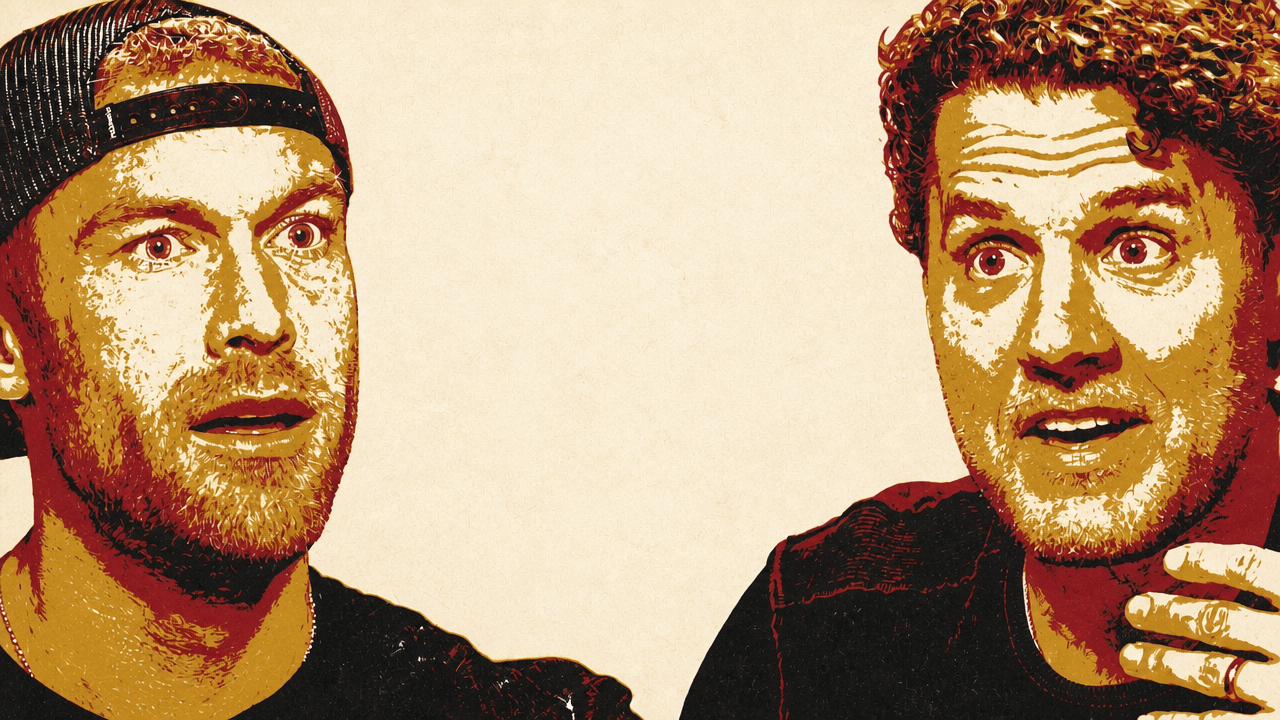
Mark Manson, the writer and author, argues that people stay lost less because they lack information than because they use certainty, convenience, optimization and advice-seeking to avoid contact with reality. In a wide-ranging conversation with Chris Williamson, Manson’s case is that growth usually comes through friction: tolerating uncertainty, choosing the costs attached to the life you want, accepting a partner’s ordinary Tuesday as well as their best moments, and acting before more insight becomes another form of procrastination.
Uncertainty is not a problem to solve; it is a condition to build for
“The most important skill in the 21st century,” Chris Williamson says, “is the ability to live happily with uncertainty.” Mark Manson agrees, but not because uncertainty itself is new. His point is that access to information has scaled while confidence in information has weakened. People can reach “everything 24/7” and still feel “less moored to reality than ever before.”

Manson frames this as a paradox with a human cost. People have a deep instinct to seek a set of beliefs they can “hang your hat on and build your life around.” When that becomes harder, the compensating move is often not flexibility but radicalization. If someone cannot tolerate uncertainty, Manson argues, they over-index on a single belief or worldview and put too much of their emotional stability into it.
Every worldview is going to get blown up at a certain point. Like nothing survives contact with reality.
When the worldview is contradicted, the person either suffers sharply or “double[s] down the delusion to maintain the certainty.”
Williamson connects this to anxiety. Anxiety, in his account, tries to compress uncertainty by imagining bad futures. The mind would rather turn the future into a specific catastrophe than hold open an unknown. He describes people as preferring to “collapse the superposition” into even an absurd disaster — “your dead grandma comes back from the grave to tell you off” — rather than sit with “I don’t know what’s going to happen.”
The attempt to forecast every outcome, Manson adds, creates more uncertainty, not less. Each imagined branch gives the mind another surface area on which it can be wrong. His alternative is not to find certainty in narrower predictions but to widen the aperture until some confidence becomes possible. AI is his example. At the micro level, he says, he does not know whether specific jobs, including his and Williamson’s, will exist in two years. At the macro level, looking across technological revolutions, he sees a repeated pattern: disruption, displacement, adaptation, continuation. That wider frame gives him some confidence that “we’re going to be okay in the macro,” even when the micro remains unstable.
A need for certainty, Williamson argues, is a kind of fragility: “I can’t deal with something that I can’t anticipate.” Robustness is not having predicted everything; it is being able to survive what was not predicted. Covid becomes his example of a “lifestyle Rorschach test.” In his telling, people’s lives tended to fork dramatically: some went “way off the rails,” while others got “stupendously better.” Some of that was luck — the hospitality job that vanished, or the SaaS company perfectly timed for remote work. But the event also revealed how people handled a disruption they could not plan around.
Manson distinguishes between two kinds of confidence. There is state confidence: the confidence of having done a specific thing many times. Williamson has done enough podcasts that if a light exploded in the studio, Manson says, he would probably figure it out. Then there is trait confidence: the deeper confidence that comes from having lived through enough moments of uncertainty, lack of control, and things not going to plan, and still being fine. That kind of confidence cannot be acquired by prediction. “By definition,” Manson says, “you have to live through things not going as planned.”
Williamson calls this “difficulty exposure therapy”: “I’ve been here before and I didn’t die.” The worst thing that has happened to a person becomes a reference point. It does not make future difficulty pleasant, but it changes the meaning of difficulty. The person has evidence that collapse is not inevitable.
Convenience removes friction, and friction is often where meaning is made
There is, in Mark Manson’s current view, an “inverse relationship between convenience and significance.” The standard case for doing hard things is resilience: failure builds endurance, self-belief, confidence. But Manson is more interested in the existential version of the claim. People appreciate what requires friction or sacrifice. When outputs are handed over by technology — “a fucking burrito taxi’s coming anytime we want” — life becomes easier, but some opportunities for significance disappear.
His small example is a phone call. His wife had a friend going through serious problems with her child, business partner, and ex-husband. The friend sent voice notes and had not considered simply calling because she did not want to bother anyone. When they finally spoke for an hour and a half, the call became a reconnection. Manson and his wife took from that the idea that the social friction of calling — the inconvenience of interrupting, the burden of synchronous conversation — is partly what creates intimacy. Text and voice notes cannot fully reproduce it.
Chris Williamson gives the formulation that carries the exchange: “the inconvenience of a friendship is exactly where it grows from.” He defines safety as the knowledge that “we can go through something hard and come out the other side okay.” Without a hard thing, the claim of safety is untested. The same applies to self-trust: “I’m okay no matter what happens” is only credible after difficulty has been endured.
The same tension appears in creative work and AI. Williamson says AI assistance can make completion easier and perhaps better, while robbing the completion of enjoyment. That raises the question: is the point the outcome, or the feeling of having done the thing? If a prompt could generate videos in the style of Manson’s work and grow a channel to a million subscribers in four weeks, Williamson doubts Manson would feel satisfied. The result would be there, but the link between effort and outcome would be broken.
Manson compares this to playing a video game with cheat codes. It is fun briefly to crush everything, but beating the game is not satisfying. He describes much of the last two decades of technological innovation as adding “little cheat codes” to areas of life. These have made things faster, seamless, and efficient, but can also remove the satisfaction of doing them.
Dating apps are, for Manson, one of the clearest cases. They optimize for “convenience of introduction,” which sounds valuable to single people. But in his account, by mass-matching people conveniently, they remove friction that once acted as a filtration system. Struggle, hesitation, real conversation, rejection, and persistence are not merely inefficiencies. They help reveal who is actually suited to whom.
Williamson extends the point to “easy wins.” If a person becomes wealthy through crypto in a way untethered from prior effort or skill, Manson says it can be deranging in the same way a poor person winning the lottery can be. The person is “air dropped to the peak” without having developed the skills and habits required to stay there. Around money, relationships, and competence generally, gradual ascent builds capacities that sudden arrival does not.
The difficulty is not that all friction is good. Williamson notes that technologies can unlock creativity and remove unnecessary challenge; he mentions the typewriter changing Nietzsche’s writing style as an analogy for the way tools can alter the work, not as a settled verdict against the tool. The issue is where the optimum sits. Williamson argues that AI often “regresses you back to the mean”: if someone is below average at a task, AI can improve them; if someone is above average, he thinks it can make them worse by smoothing away the distinctive work.
Manson’s conclusion is that as technology makes some tasks easier, individuals must “go find the new difficulty.” That is not natural. Human beings tend to choose the path of least resistance. Choosing hard things becomes a muscle, and Manson thinks many people do not have it.
A partner is not just a person; it is an average Tuesday
Choosing a partner is also choosing an ordinary life. Chris Williamson frames partner choice as the selection of “a whole lifestyle,” not just a person: sleep schedule, money habits, stress levels, family drama, cleanliness standards, work ethic, coping mechanisms, and normal daily rhythms. Love does not cancel flaws; “love just makes you tolerate them for longer.”
Most people obsess over, do we have romantic chemistry? And they completely skip, can I live with this person's version of a Tuesday for the next 10 years?
Mark Manson says this matches what he sees among single friends. Many carry a long list of requirements and a false perception of infinite options. The moment someone fails one qualification, they move on. Manson says he has started giving single friends an exercise he attributes to Warren Buffett: list what you want, rank the items, keep the top three, and negotiate on the rest. His message is blunt: “You’re not gonna find all of these.” Even if the perfect person exists, the odds of meeting them and being chosen by them are low.
That advice now sounds like “settling,” and Manson thinks people resist it for that reason. But everyone settles on something. He has been with his wife for 14 years and says there are still things about her that drive him crazy, and things about him that she cannot stand. The point is not the absence of irritation. It is that the good “vastly outweighs the bad.”
Manson’s central image is that a person comes with an “iceberg under the water” of traits, habits, relationships, family dynamics, and ways of being that are not immediately visible during dating but will become most of the relationship. If someone’s mother is difficult, and you marry that person, “you’re gonna have a crazy mother-in-law for 40 years.” It is not a buffet. “You gotta take… the whole prefix menu.”
Williamson connects this to a Tim Ferriss line he says helped shape an early name idea for his show: most people optimize around peak experiences, while life is made of average Tuesdays. Great sex or fascinating conversation can obscure a person’s baseline: how they eat, sleep, spend, recover, handle discomfort, manage dysregulation, relate to family, and imagine timelines. These structural qualities become the environment of the relationship.
Manson clarifies that the point is not to find someone who perfectly satisfies every category. It is almost the opposite. You are not looking for every trait to hit a ceiling; you are looking for “nothing [to fall] below your floor.” You also need self-knowledge about which flaws you are unusually equipped to tolerate. Manson says his Brazilian wife has “a lot of feelings,” while he is extremely even-keeled, so he can handle emotional intensity without being pulled into drama. Conversely, he has a strong need for intellectual stimulation; when he dated attractive women who were not curious or smart in the way he needed, he became bored quickly.
Williamson brings in Rory Sutherland’s “air fryer girlfriend” idea: find someone whose value is unusually visible to you and whose disadvantages you can tolerate better than others. As Williamson recounts it, Sutherland’s own example is a house near a pub and a railway line. To many buyers, the noise would be a discount. To him, trains were pleasant, pub atmosphere was enjoyable, and he could order a beer over the fence. The same principle applies to partners: the best fit may not be the person with universally admired traits, but the person whose trade-offs suit your particular temperament.
Manson links this to a broader problem in optimization culture. Advice usually optimizes for the general. But people differ in what they want, what they can tolerate, and which psychological environments suit them. Williamson adds a story he describes about fighter-pilot seats: engineers averaged pilots’ body dimensions and designed a seat that fit none of them. “There’s no such thing as average,” he says. General advice can be directionally useful, but it cannot tell every person what is optimal for them.
That creates two common failures. Williamson says some people reject advice angrily because it is not for them, rather than recognizing it may be useful for someone else. Manson says the reverse failure worries him more: people try general advice, it does not work, and they conclude not that the advice was mismatched but that something is wrong with them. They then seek more detailed protocols and stricter implementation, entering what Williamson calls an “over-optimization spiral.” Manson’s reminder is that even what he regards as the best and most credible psychological interventions do not work for everyone; he gives “maybe 50%” as a rough ceiling for the hit rate of the strongest forms of therapy with a good therapist. His practical conclusion is to expect that much advice will not work for you, track honestly, and adjust.
Respect can be requested at the margins, not manufactured at the core
The hard version of the relationship claim is that if you have to explain why you deserve respect, you are already in the wrong relationship. Chris Williamson says you should not have to beg someone to prioritize you or be proud of you. If effort must be requested, it becomes compliance, and compliance fades once the requests stop. The right person treats you well because they value you, not because you provided a checklist.
Mark Manson agrees in the macro but amends the claim in the micro. If someone is consistently and egregiously disrespectful — if you are constantly fighting for basic acknowledgement, attention, or care — the problem is foundational. Some requirements for a healthy relationship are non-transactional by nature; asking for them turns them into a transaction and invalidates what is given.
But in a relationship with an established bedrock of trust, people sometimes drop the ball. They may have blind spots, be under strain, or fail to show up as they themselves would intend. In that context, saying “I’m feeling unacknowledged” or asking for a specific form of support is not only normal but healthy. Williamson puts the distinction this way: there is a difference between telling someone they should think of you and explaining your love language; between asking someone to show up at all and explaining how you would like them to show up.
Williamson’s concern is when a relationship runs on constant refueling: requests, reminders, beratement, and compulsion. If you must keep dragging someone toward basic consideration, eventually the honest interpretation is incompatibility. People are, for the most part, showing up as themselves. The goal should be to find someone you need to “instruct and train as little as possible.” Growth matters, but starting close to the destination matters too.
Manson adds intention. Sometimes the issue is not compatibility but priority. If someone does not care enough about the relationship, the missed calls and absent gestures are symptoms. “You can’t change somebody’s priorities.” Still, long relationships require maintenance. Manson describes himself as a workaholic who enters cycles where he ramps up too much. Every few years his wife tells him he has to take a Sunday off or go on vacation because she feels ignored and because it is bad for him too. Williamson calls her an “external conscience,” augmenting his life rather than working against it.
Williamson cites Stan Tatkin’s view, from an audiobook he recommends, that a relationship is a set of agreements, with the first agreement being that “the relationship comes first.” If one person lives by that agreement and the other does not, the relationship becomes high-friction for both: the more invested partner feels starved, and the less invested partner feels pressured. The answer may be to choose someone who chooses you, rather than someone who is choosing something else.
Manson sharpens the test for whether someone is really prioritizing the relationship: how much does each person put the other first when they have nothing to gain? Early intensity can be misleading. Someone may be attentive because they are getting something from the situation, because work is quiet, because they need emotional support, or because the circumstances make it easy. Conditions change. Friction becomes the filtration system.
Learning can become a socially acceptable way to avoid doing
“Learning more is a smart person’s favorite form of procrastination,” Chris Williamson says. Mark Manson immediately pleads guilty. Learning is safe for intelligent people. It is something they know they are good at, it feels like progress, and it is easy to believe it will make action easier later. But more information can also create perfectionism, obsession, and anxiety.
The truth is is you need both simultaneously. You need to learn, but you need to practice. You need to do things.
Williamson compares this to relationships held together by perpetual couples counseling, co-journaling, and therapeutic processing. At some point, repeated insight-seeking can become a way of avoiding the conclusion that something is not working. The same applies to projects: if you keep learning, you never have to face whether the work is too hard, whether you are not good enough, or whether becoming good enough will require public failure.
Manson broadens the point from learning to insight. In the personal-development world, “gaining more insight” can become procrastination. The person cycles through seminars, therapy modalities, coaches, meditation retreats, ayahuasca, and frameworks. At some point, insight must be digested, and “the only way you digest is by living and doing other things.”
Both men give personal examples. Williamson delayed launching Modern Wisdom for months while he searched for the perfect name, artwork, launch strategy, and chart tactics. Some of that preparation was useful; the name and URL lasted across more than a thousand episodes. But it also shows how easily preparation can extend beyond what the work requires. He also regrets choosing a business degree because it seemed transactionally useful, while his deeper interests were psychology and philosophy. Years later, he created an amateur version of the education he had wanted by interviewing experts in those fields.
Manson’s example is health. He was, by his own description, the fat guy who could explain metabolic dysfunction, insulin resistance, workout protocols, and nutrition details, while eating pizza, drinking whiskey, sleeping badly, and not changing. He eventually hired a coach, and the coach’s repeated instruction was simple: “Dude, just go to the gym.” Manson would try to debate rep schemes and optimization details; the coach would bring him back to the basic action.
Williamson argues that over-optimization is becoming less attractive as people drown in information. In relationships, he says, his own learning arc moved from demographic statistics, to evolutionary psychology, to red-pill-style system models, before arriving back at something simpler: “A relationship is your nervous system interacting with someone else’s.” Manson calls this the midwit meme of dating: the beginner says “just go talk to girls,” the over-intellectualized middle constructs elaborate models, and the wise answer returns to “just go talk to girls.”
The same tension appears when Manson asks Williamson whether making marriage and family a priority has become another form of insight-seeking. Williamson answers that he is trying, but dating is not a solo project. He also offers a critique of a claim both Manson and Scott Galloway have made: that the person you marry is the most important decision of your life. Williamson believes it is true and useful for people who otherwise drift into relationships unconsciously. But for older daters and highly reflective people, the claim can create anxiety and over-scrutiny. If the decision is maximally important, every date becomes an audit.
Manson accepts the tension. The claim may be “objectively true in a vacuum,” he says, but not always helpful when sitting across from a person. Marriage is not mostly found; it is built. The better analogy is a business partner: not someone who has everything figured out, but someone you can build with, fight well with, trust, and choose. At some point, both people “opt in.” The commitment being a one-way door helps keep both invested. Williamson contrasts that with situationships, which often become “a one-way door for one party and a revolving door for the other.”
Neediness is not a behavior; it is the reason behind the behavior
Neediness, in Manson’s older dating work, occurs when someone places a higher priority on what others think of them than on what they think of themselves. Chris Williamson summarizes the idea this way: altering words or behavior to fit another person’s needs rather than one’s own, lying about interests or background, or pursuing goals to impress others are all needy. The important variable is not whether a behavior looks attractive but why it is being done.
Mark Manson identifies the passage as from Models, his dating book, and says the concept is still one of the central through-lines of his work. He began as a dating coach in a fragmented men’s advice world organized around “texting game,” openers, first dates, and separate techniques. He wanted a unified theory of male attractiveness. What he noticed was that men who were attractive in one phase of dating tended not to have major problems in other phases. The issue was not a special text or a special opener; it was fundamentals.
The fundamental he saw was self-prioritization. Men who did well with women prioritized their own perception of themselves over the woman’s perception of them. Men who struggled were constantly asking, “What is she going to like?” and “What does she want to hear?” Even men who could perform and get occasional hookups often lost the woman because the performance was rooted in validation-seeking.
Manson’s broader statement is that attractiveness is dictated by “your comfort with yourself,” how deeply you have explored your own life and identity, and your willingness to share that with the world. Non-neediness is not indifference to other people. It is not orienting the self around approval.
Williamson sees this as an example of Manson’s talent for distillation: taking a large, unwieldy human domain and condensing it into a phrase. The attraction advice becomes: prioritize your approval of yourself over other people’s approval of you. Do not be needy.
The concept also explains, in Williamson’s telling, some of the resentment that emerged from pickup artistry. Men who failed with pickup felt broken because even a supposed evidence-based system for getting laid could not help them. Men who succeeded could also become dispirited, because success seemed to require contorting themselves into an artificial performance. Manson says neither group stopped to consider that “maybe the system is wrong.” Instead, some concluded that women were the problem, rather than that their model of dating and human relationships was broken.
Manson extends the point to the manosphere, but keeps the distinction narrow: he calls it “the incorrect solution to the correct problem.” Young men are struggling; that is real and, in his view, not discussed enough. But resentment and distorted models of women are not the solution. Some men may receive useful advice through that packaging — train, work hard, get your life together — but Manson argues that the same advice exists elsewhere, and the damaging packaging must eventually be let go.
Victimhood may explain pain, but it does not remove responsibility
The claim is intentionally hard: nobody owes you patience because you had a rough upbringing or a hard day. Chris Williamson says “life doesn’t hand out pity passes.” Pain should be fuel, not a crutch; resilience is built not by feeling good all the time but by getting better at feeling bad.
Mark Manson says that such a statement could not have been posted safely during the cultural period from roughly 2016 to 2022. He is careful to distinguish between genuine victims and victimhood as entitlement. Some people have suffered unfairly and through no fault of their own, and they deserve sympathy. But in Manson’s view, sympathy does not necessarily entitle someone to more than sympathy. He criticizes what he has elsewhere called the “Victimhood Olympics,” where social legitimacy is ranked by pain and identity categories.
Williamson quotes Alex Hormozi’s response to criticism of a similar point. Hormozi’s argument, as Williamson presents it, is that disadvantages are real and make success harder, but the remaining question is “What are you gonna do about it?” One option is to act anyway and become proof for others from similar circumstances. The other is to blame and complain. Hormozi reframes “blame” as “give power to,” arguing that the person you should want to give power to is yourself.
Manson’s reaction is to notice how many caveats are required to say this in public. Williamson calls it “throat-clearing,” while also acknowledging why the caveats exist. If someone has been hurt by forces outside their control, a message of obligation can feel like making them pay twice. But he also thinks the communication becomes clunky and that some public empathy is shallow. To assume that caring requires treating broad groups as fragile can become patronizing.
The strongest part of the exchange comes when humor is treated not as dismissal but as a way to metabolize pain. Williamson cites Jimmy Carr’s line that saying a problem is too serious to joke about is like saying a disease is too bad to create medicine for. Manson answers with a personal story: his grandmother died slowly from a brain tumor when he was a teenager. She gave the tumor a name and joked about it even as she deteriorated. When a family member objected, she replied that “there’s nothing so serious in this life that you can’t laugh about it,” and that it was her tumor, so she would joke about it if she wanted. Manson says that stuck with him and reflects something he believes deeply.
The costs you cannot see are the reason the life looks enviable
Envy usually attaches to benefits without costs. Mark Manson puts it this way: “You only envy the lives of people whose sacrifices you can’t see.” Wanting benefits alone is, in his words, almost childish. Before pursuing a life, a person should ask whether they want the costs too. The costs are not merely barriers; they are part of what makes the achievement meaningful.
Chris Williamson points out the duality. If you could see the sacrifices, you might not want the life. But if you could get the life without the sacrifices, you would not appreciate it. He quotes a James Clear line approvingly: “It doesn’t make sense to continue wanting something if you’re not willing to do what it takes to get it. If you don’t want to live the lifestyle, then release yourself from the desire. To crave the result but not the process is to guarantee disappointment.”
Williamson’s example is the fantasy of being a world-famous guitarist. People imagine the stage, not the decade of practice. Manson, who describes himself as a failed musician, says even Williamson’s description of playing to no one is still the fun 5%. The bulk is sitting alone in a room practicing the same song hundreds of times. Musicians say you do not practice until you get it right; you practice until it is impossible to get wrong. That means tedious, monotonous repetition unless you love the thing enough to tolerate its pain.
Williamson connects this to one of Manson’s best-known ideas: every worthwhile pursuit comes with pain, struggle, and sacrifice, so choose “what flavour of shit sandwich you want to eat.” Willpower is often insufficient if the person does not in some sense want the process. Some lives require a level of obsession. Williamson describes himself as a “serial obsessive,” moving through roughly seven-year cycles: cricket, club promotion, personal development, then podcasting. He regards himself as fortunate that these obsessions were mostly not destructive and sometimes useful.
The same cost-benefit logic applies to fame and success, though both men treat fame less as a prize than as a destabilizing environment. Manson says being around Will Smith while working on his book taught him that fame requires skill, temperament, and systems. Some people have personalities suited to fame; others respond badly to attention, especially critical attention. Fame removes barriers and guardrails: money, access, and people saying yes. To remain functional, a famous person often has to intentionally reintroduce limitations.
Williamson describes a “middle area of fame” where life can be disrupted, relationships harmed, and privacy compromised, but the person does not have the systems and team that very famous people use to stay functional. Manson says those systems are essentially friction reintroduced. They are “highly unsexy,” Williamson adds, but necessary.
The broader point is not fame itself. It is that the visible benefit of any life usually hides the maintenance cost. The more the benefit looks like freedom, the easier it is to miss the constraints required to keep that freedom from becoming chaos.
Personal growth is mostly reminders, not hidden keys
Williamson compresses “10 years of therapy” into a list of principles: no one is coming to save you; adulthood means responsibility even when something was not your fault; strong boundaries make good relationships; many problems are not fixed but lived with; the mind lies; stop trying to convince people to like you; sometimes a dream should die; a few people will matter in the long run, so treat them well.
Hearing the list, Mark Manson asks why this is not taught in schools. After 17 years in the personal-growth world, his view has changed. Earlier, he thought the work was about ideas, information, and knowledge — finding key insights from psychology that unlock areas of life. He now thinks many of the most important principles are obvious and already known. The difficulty is keeping them “in front of our face” during ordinary life.
For most of history, Manson says, religion performed that reminder function. It kept repeating responsibility, humility, care, perspective, and restraint. As people lose those rituals, online culture has reinvented part of the function through podcasts, Instagram, YouTube, and shows. The value of a piece of advice is often not that it is novel but that it arrives at the moment someone needs to remember it.
Chris Williamson says the modern novelty economy makes this difficult. People reject what they have heard before because they think they already know it, even if they do not live it. The creator’s challenge becomes “playing the game of novelty” while redelivering the same core messages. “Clean your room,” “tell the truth,” and “neediness is unattractive” may be repeated because they are true and useful, not because the market lacks imagination.
Manson compares advice to a fire extinguisher. You may read something years earlier and dismiss it as obvious; then you get dumped, someone dies, or you move across the world, and suddenly the same idea is urgent. Williamson says one of the most embarrassing experiences is realizing that the problem you are facing was solved by something you learned long ago but did not appreciate.
Manson experienced this literally. After The Subtle Art of Not Giving a Fuck became a massive success, he went through an identity crisis, depression, imposter syndrome, and health decline. He began saying yes to things he did not care about and felt trapped in his own career. When working on the film version, he reread his own book and realized he was violating its lessons: choosing the wrong struggles, losing clarity on values, failing to stand up for himself.
Williamson adds an important caveat. The simplicity is only available after going through complexity. It is true that much of personal development becomes maintenance and reminders, but not before a person has learned the terrain. He recommends that someone genuinely new to the field become intensely absorbed in personal development, productivity, habits, money psychology, and Manson’s own work for several years. Only after that can they earn the right to say “95% of that was packaging” and keep the core principles.
Manson agrees, and situates the moment historically. When he was growing up, much of this information was behind gates: expensive Tony Robbins seminars, graduate psychology programs, academic journals, closed rooms. The internet democratized it. Writers like Manson, James Clear, Ryan Holiday, and others repackaged academic, therapeutic, and older wisdom for a wide audience. In the 2010s that was novel. Now the advice is everywhere, free, and repeated constantly.
That saturation makes implementation more important. Williamson predicts AI will intensify the problem: derivative optimization content produced by an “infinite robot army.” Manson is therefore bullish on authority and credibility. As slop increases, he expects people to crave sources who have actually done something, know something, or can be trusted. The irony, in his telling, is that the internet’s earlier destruction of gatekeeping created enormous access to useful ideas, but the next stage may restore demand for credibility because the marginal advice stream will become so repetitive and synthetic.
Mortality clarifies what optimization obscures
Mortality functions as a hard interruption. Chris Williamson puts it bluntly: “your time on this earth is extremely limited” and everyone you love will die, so perhaps you should “put the fucking phone away and go and do something meaningful.” Mark Manson calls death salience “magical” and connects it to memento mori, Stoic philosophy, Buddhist philosophy, and his own work. The last chapter of The Subtle Art of Not Giving a Fuck is called “And Then You Die,” a title his publisher thought dark, but Manson felt strongly about because confrontation with death had changed him.
The practice is simple: periodically ask whether, if you were to die soon, this is what you would want to be doing; whether at 80 you would look back proudly on the present. Manson is glad this idea is memetic because it pulls people out of scrolling and into perspective.
Williamson suggests several questions. What do you regret from the last year? What did you do too much of and too little of? The last year often reveals the same pattern as the last decade, but in a form you can remember. Another question: if you wanted to make 85-year-old you as miserable as possible looking back, what would you do more of and less of?
He then speculates that as the first cohort with a substantial smartphone-shaped life reaches old age and death, “I wish I’d spent less time looking at a screen” will rise to the top of end-of-life regrets. Manson jokes that he has seen some good memes, but he does not dispute the basic concern.
The final theme is permission. Williamson’s line is: “At some point, you realize that the permission you’ve been waiting for all along was your own.” Manson says people often seek advice when what they really want is someone to tell them it is okay: okay to want what they want, stop doing something, change their mind, be wrong, or feel bad. Many requests for advice can be reduced to a need for reassurance.
Williamson divides the world loosely into people who do not know how to improve their lives and people who are too scared to start. Thoughtfulness can be both fuel and barrier. The same capacity that allows someone to understand complexity can paralyze them in uncertainty. Sometimes the needed intervention is not a framework but encouragement: “It’s alright man, you got this. Or maybe you don’t, but you’ll be alright anyway.”
He illustrates this through his own preference for encouragement over mockery. He says he responds strongly to praise and found aspects of American enthusiasm more useful than the British habit of mutual “piss taking,” especially when trying to make large changes such as becoming a club promoter who stopped drinking. The broader point is not national character so much as permission. Some people do not need encouragement; others, especially those already prone to doubt, do. Manson observes that the need for permission tends to decline with age because people eventually see that “nobody knows what the fuck they’re doing” and that most people are not thinking about your choices anyway.
The last practical claim is also the simplest: much of what people call advice-seeking is permission-seeking. The answer may not be another framework. It may be deciding that the thing matters enough to try, and that even if it fails, you will be all right.