Self-Help Works Through Repetition, Not Constant New Breakthroughs
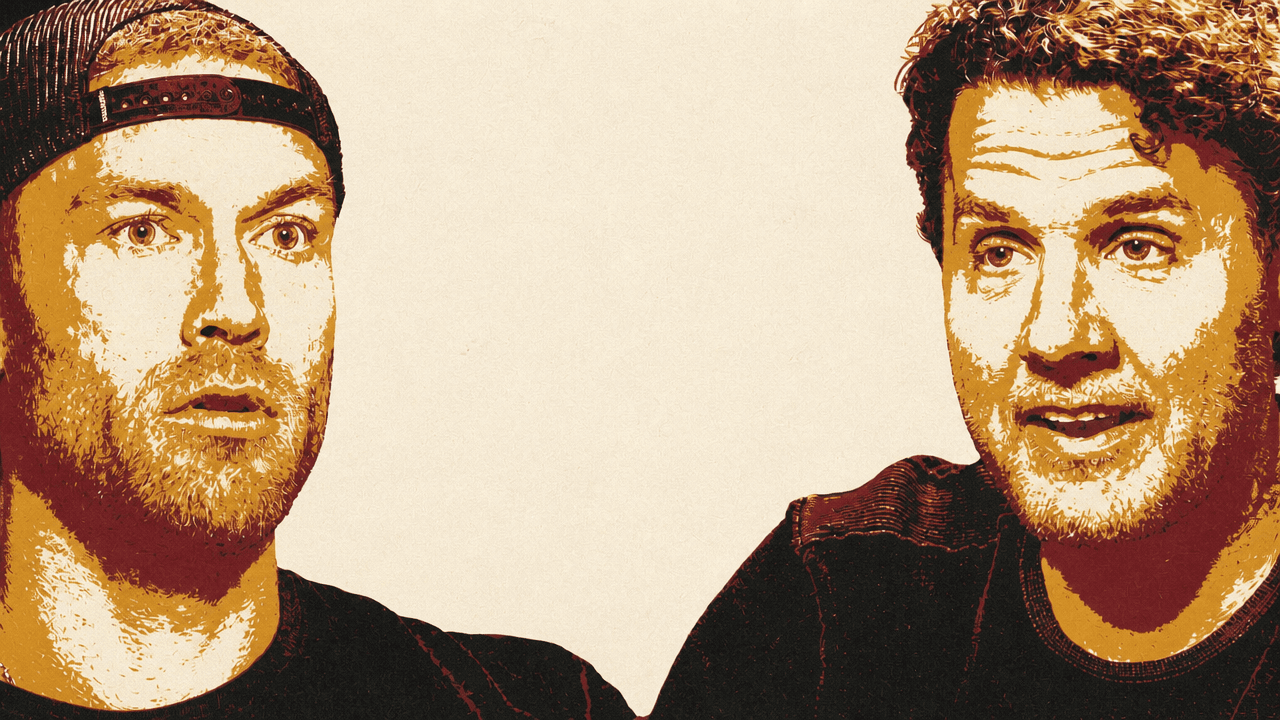
Chris Williamson and Mark Manson argue that the most useful lessons from therapy and self-help are usually not hidden insights but basic principles people fail to keep in view under pressure. In their account, adulthood depends on repeated reminders about responsibility, boundaries, values and attention, because even familiar truths can disappear during success, stress or crisis. They distinguish between beginners, who may need years of immersion in personal development, and veterans, for whom the work becomes less about novelty than maintenance.
Obvious principles only work when they are repeated
Chris Williamson compresses “10 years of therapy” into seven adult operating principles, but the list’s force is less in its novelty than in its bluntness. No one is coming to save you. Functioning adulthood means accepting responsibility for everything in your life, “even if it wasn’t your fault.” Strong boundaries make good relationships; weak boundaries create drama. Some problems do not get fixed so much as lived with. The mind exaggerates catastrophe, treats mistakes as fatal, and imagines social scrutiny that is not there. Stop trying to convince people to like you. Sometimes a dream should die. Only a few people will matter in the long run, and those people should be treated accordingly.


Mark Manson hears the list as evidence of a strange omission. His first reaction is that these things are so fundamental they should be taught in school. Instead, people often “discover this at 34,” as Williamson puts it, or spend years consuming advice before hearing basic claims stated plainly enough to use.
That reaction sets up Manson’s larger point. The problem with many life principles is not that they are hidden. It is that they are hard to keep visible when ordinary life, stress, ambition, and emotion pull attention elsewhere.
The hard part is keeping obvious truths in view
Manson says his view of personal growth has changed over 17 years. Earlier in his career, he thought the work was mainly about ideas, information, and knowledge: dig through enough psychology studies, find the right applications, and eventually discover a key that unlocks life. He thinks that is often how personal-growth advice feels to its consumers. He no longer thinks it is true.
Manson’s current view is that people already know many of the important principles but fail to keep them “in front of our face” during ordinary life. The need is not a constant stream of new unlocks. It is rituals and reminders. For most of human history, he suggests, religion served that function: repeatedly reminding people to take responsibility, treat others well, focus on what matters, and let go of smaller concerns. In a more secular, online culture, he sees podcasts, Instagram, YouTube, and similar channels partly reinventing that reminder mechanism.
The point is not that every piece of content changes a life. It is that a familiar truth may become usable because it appears again at the right moment. Manson says the channels and people he follows often do not unlock anything new for him; they simply make him think, “oh yeah, it’s a good reminder.”
Chris Williamson frames the same problem as a conflict between novelty and practice. Modern media trains people to reject what they have already heard, even when they have not embodied it. A listener sees a familiar point and thinks, “I already know that,” while still failing to live by it. His proposed solution is to “play the game of novelty” while redelivering the same core messages.
That makes the work vulnerable to seeming unimpressive. Williamson names the likely objections: this is just “clean your room” again, or “tell the truth” again, or another lesson about neediness. But he frames the alternative as dishonest: either invent a “new big unlock” as a kind of “fugazi gaslight thing,” or repackage what is already most accurate so it satisfies the audience’s desire for novelty while reinforcing the principle.
What you need to do I think is play the game of novelty whilst just redelivering the same core message.
Williamson compares that work to spaced repetition. Dense information consumption and over-optimization, he says, are “dead in the water.” The better model is to be reminded, with enough freshness to pay attention, of basic actions: go for a walk, sleep more, say how you feel to your partner when something upsets you.
Advice looks obvious until the emergency arrives
Manson’s metaphor for advice is a fire extinguisher. It can sit in the room unnoticed because the need is not present. A person may read something five years earlier, dismiss it as obvious, and only later, after being dumped, losing someone, or moving across the world, realize they need it badly.
Williamson calls one of the most embarrassing experiences recognizing that a current problem was already solved by something learned long ago. Worse is facing the same problem again after having learned from it before. For both men, because they write and speak about personal growth, there is a sharper version of the humiliation: realizing, “I wrote about this.”
After The Subtle Art of Not Giving a Fck* became a major success, Manson says the external achievement produced disorientation rather than peace. When the book was number one everywhere, he went through an identity crisis, some depression, and a period of intense imposter syndrome. He began saying yes to things he did not want to do, became trapped in obligations, felt anxious and stressed, and saw his health worsen.
When he later reread his own book while working on the film version, he found that the very issues he had spent the previous two years struggling with were already addressed in his own chapters. He was saying yes to things he did not care about, filling his life with distractions, failing to stand up for himself, losing clarity about his values, and choosing the wrong struggles.
It was like all the shit I just I'd been spending the last two years dealing with... It was like in my own book.
That is the sharper claim: insight does not remain automatically available because one has understood it once, or even because one has taught it. Under stress, success, grief, rejection, or obligation, the obvious lesson can disappear from view.
Beginners need immersion; veterans need maintenance
Williamson draws a boundary around the anti-optimization argument. It is true, he says, that after a person has been through the personal-development world, much of it can look like “majoring in the minors.” But that is not true before the apprenticeship. “Breaking the rules of the game before you’ve learned how to play the game,” he argues, is not innovation; it is playing a different game.
For that reason, he still recommends a period of obsession with personal development, productivity, and adjacent work. He names David Allen’s Getting Things Done, James Clear’s Atomic Habits, Morgan Housel’s The Psychology of Money, and Manson’s The Subtle Art of Not Giving a Fck* as examples of the material in that phase. His suggested duration is “probably between 3 and 6 years.” Only after that, he says, can someone earn the equivalent of a black belt and conclude that much of the material was packaging, while a smaller set of principles really matters.
Williamson compares the process to a video-game map whose fog clears as the player explores. Ideas such as telling the truth, choosing struggles appropriately, and recognizing neediness were once novel when articulated in memorable language. Now, for people already steeped in that material, the territory has been opened.
He suggests that personal development went through a sharp period in which a large amount of insight was repackaged, made secular, distilled into good language, and made memorable. As new books and online figures appeared, many people absorbed that material at the same broad cultural moment, whether they were 18, 28, or 48. The result, for that audience, is fatigue.
Manson agrees with the distinction. If someone is beginning from scratch — in Williamson’s blunt example, “I’m a fat piece of shit, and I’m 25 and I’ve never done any of this” — then the advice is not to dismiss the field as repetitive. It is to “lock in for the next six years.” After that, Manson says, the work becomes much more about maintaining the practice.
The split matters because the same advice can be wrong for different stages. A beginner who rejects the whole field as repetitive may be avoiding the apprenticeship. A veteran who keeps chasing novelty may be avoiding the discipline of practice. For Williamson and Manson, the transition point comes when the map is no longer fogged out: the useful work shifts from discovery to repetition.