Neediness Makes Approval the Organizing Motive in Dating
Mark Manson argues that the most unattractive trait in men is neediness, which he defines not as a specific behavior but as prioritizing a woman’s approval over one’s own judgment. In a discussion with Chris Williamson, Manson says this motive can sit underneath everything from rehearsed lines to fitness goals, and that dating advice fails when it teaches men tactics without addressing their dependence on validation.
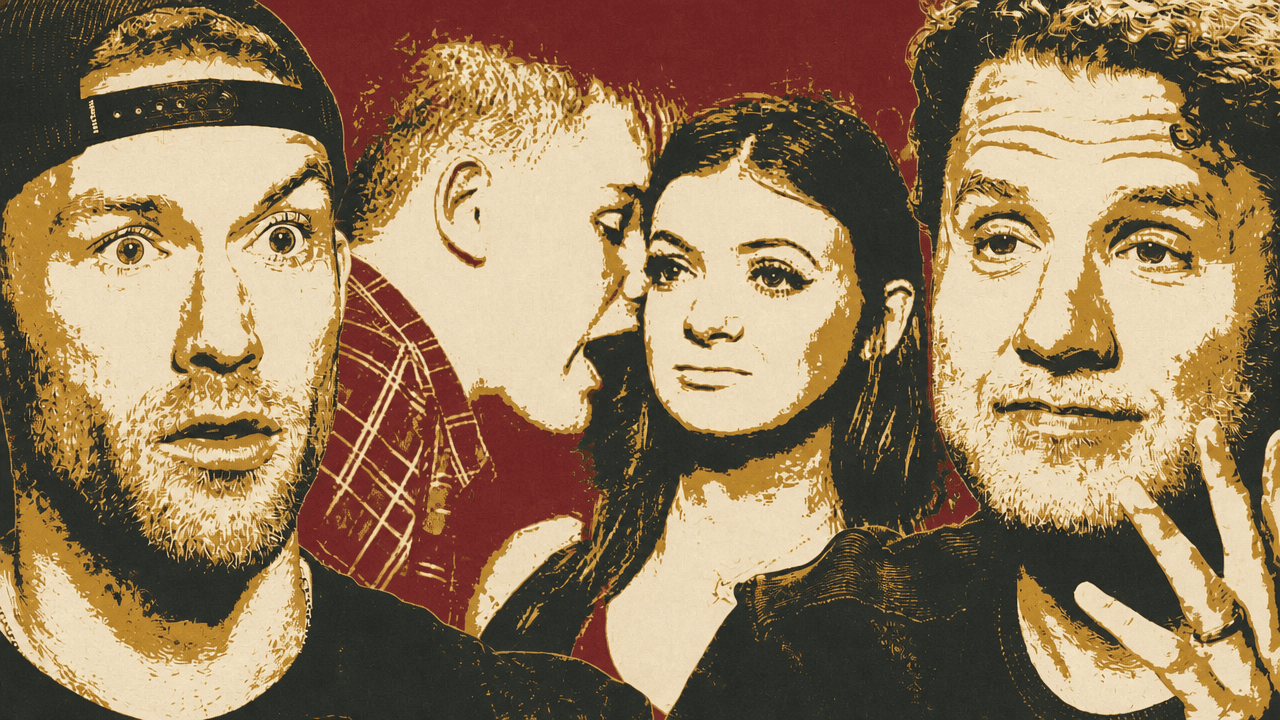
Neediness is not a behavior; it is the motive behind the behavior
Chris Williamson frames Mark Manson’s dating thesis in its most compressed form: neediness begins when a man gives higher priority to another person’s opinion of him than to his own. It is not limited to obvious desperation. It includes altering speech or behavior to fit someone else’s expectations, lying about interests or background, or pursuing a goal primarily to impress rather than to satisfy oneself.
That distinction matters because, in this account, attractiveness is not determined by whether a man says the “right” line, wears the “right” clothes, or performs the behavior currently coded as confident. The same act can read differently depending on why it is being done.
You can say the coolest thing or do what everyone else does, but if you do it for the wrong reason, you will come off as needy and desperate and turn people off.
Manson identifies this as the core argument of Models, his dating book, which he notes is approaching 15 years old. Williamson says its basic advice remains relevant, even down to simple fundamentals such as wearing a T-shirt that fits and jeans without stains. The larger point is that the book’s thesis has not aged out: in dating, neediness is unattractive because it makes approval the organizing motive.
Manson wanted one explanation for attraction, not a stack of tactics
Mark Manson says he arrived at the concept through the practical incoherence of the late-2000s dating-advice world. From roughly 2008 to 2013, he worked directly with men: taking them to bars and clubs, helping them meet women online, and advising them on dates and relationships. At the time, he says, men’s dating advice was broken into separate “classes”: texting game, openers, first dates, second dates, and other tactical modules.
His problem with that structure was that it did not match what he observed. Men who were highly attractive in one stage of an early relationship did not usually collapse in the next stage. Manson says he did not see men who were excellent at meeting a woman in a bar but then helpless on a date. The underlying competence tended to travel across contexts. As Williamson puts it bluntly, there were “winners and losers”; Manson accepts the basic distinction in terms of whether the skills were present.
The pattern Manson noticed among men who were consistently successful with women was not primarily age, appearance, money, or background. It was that they prioritized their perception of themselves over the woman’s perception of them. The men who struggled, including some who could temporarily perform well enough to get a hookup, were guided by a different question: what will she like, and what does she want to hear?
Manson’s conclusion was that attractiveness is strongly tied to comfort with oneself: how deeply a person has explored his own life and identity, and how willing he is to share that honestly with the world. “Neediness,” or more precisely non-neediness, became the concept that connected otherwise scattered advice. Do not work out for approval. Do not change your lifestyle for approval. Do not say a rehearsed line in a bar for approval. The outward behaviors differ, but Manson treats them as expressions of the same underlying dependency on validation.
Your attractiveness is really dictated by your comfort with yourself.
He also says this is probably true for women as well, though he thinks it is more true of men. The claim is not presented as a minor dating tactic but as part of Manson’s broader skill as a writer: taking abstract, intangible psychological dynamics and making them concrete enough for ordinary people to use. He describes “non-neediness” as his first major success at that kind of distillation.
The pickup-artist model made men dependent on a bad explanation
Chris Williamson connects Manson’s thesis to the pickup-artist world and what he calls “PUA hate.” In Williamson’s telling, the red-pill movement was born out of that reaction: men who had either failed with pickup artistry or succeeded with it and disliked what that seemed to reveal.
The failures could read their inability to make the system work as evidence that they were especially broken. Williamson describes the resulting logic as dispiriting: they saw pickup artistry as the most evidence-based system available for helping them get laid, and even that could not help them. But the successes, in his account, faced a different kind of dispiriting conclusion. If pickup artistry worked, it appeared to prove that they had to contort themselves heavily to be remotely attractive to women.
Mark Manson’s objection is that both groups accepted the wrong premise. They did not stop to consider that the system itself might be wrong. Instead, some concluded that women were wrong. Manson’s formulation is direct: the problem is not that every woman on the planet is broken; the problem is that “your model of dating and human relationships is broken.”
For Manson, the attachment to the pickup model became a psychological dependency. Men were unwilling to discard it because they had become dependent on it. The critique, anchored in his account, is less that any single tactic is automatically invalid than that a bad model can become the thing distorting a man’s behavior.
The advice stays simple because the motive does the work
Chris Williamson emphasizes the value of reducing a large, messy domain like human attraction into language that can actually guide behavior. His version of the distilled principle is simple: prioritize your approval of yourself over other people’s approval of you; do not be needy.
Williamson says that kind of distillation requires a “human in the loop.” It is not just synthesis. It depends on language, interpretation, and finding the phrase that makes an otherwise unwieldy idea usable.
Manson’s framework does not eliminate the practical level of dating. It explains why tactics alone are insufficient. Texting, opening a conversation, dressing better, going to the gym, or planning a date may still matter. But under this model, they become part of the problem when they are organized around approval: what does she want, what will she like, what should I perform so I can be accepted?