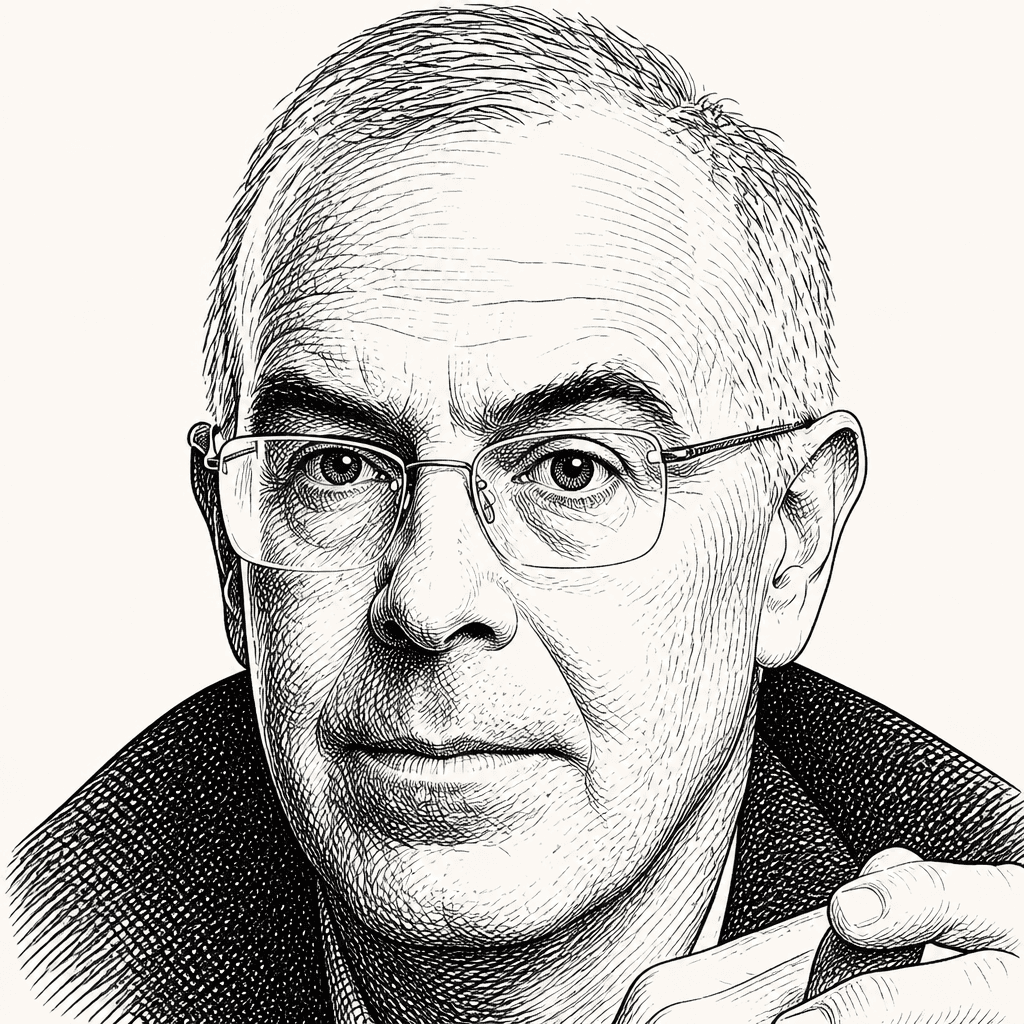
David Brooks
Journalist, author, and political and cultural commentator. He is a staff writer at The Atlantic, a senior presidential fellow at Yale University, and a PBS NewsHour commentator; he previously spent 22 years as a New York Times columnist.
The Declaration’s Promise Outran the Founders’ Narrow Vision
Ken Burns argues that the founding’s importance lies not in a settled promise of freedom but in language of liberty and equality that later generations could use to challenge its exclusions. In a conversation with David Brooks, Burns describes a republic built to check human ambition and a commitment to religious toleration shaped by practical need and the risks of sectarian conflict. Both speakers present the founding as unfinished: its principles can guide efforts to repair the country, but do not resolve its present divisions.
A Passionate Life Requires Educated Desire, Not Measurable Intelligence
In an Aspen Ideas Festival talk, David Brooks argues that a passionate life is not a matter of intensity or youth but of forming desire around what is worth loving. Brooks sets that view against institutions — schools, meritocracy and AI among them — that define people too narrowly by intelligence, measurement and efficiency. His answer is a humanist one: people remain capable of growth at any age when curiosity, beauty, work, responsibility and love continue to enlarge them.
The Declaration’s Promise Now Depends on Political Reform and Shared Symbols
At the Aspen Ideas Festival session “General Assembly: The Idea of America,” Danielle Allen, Martha Jones, Shilo Brooks and Reihan Salam treated the Declaration of Independence as a living inheritance whose authority now depends on more than anniversary reverence. Their shared dispute was over what must sustain its claim of equality in a changed country: Allen emphasized institutional reform and democratic accountability, Jones insisted on confronting slavery, citizenship and present contradictions, Shilo Brooks stressed the moral and philosophical force behind equality, and Salam argued that a credal nation still needs a culture capable of carrying shared symbols across demographic change.
Trust-Building Starts With Shared Local Work, Not Political Reform
At the Aspen Ideas Festival, David Brooks of the Aspen Institute and Allstate chief executive Tom Wilson argued that America’s trust problem cannot be repaired first from Washington or by institutional reform alone. They described trust as a practice built through repeated local action: shared work, cross-generational contact, respect across disagreement, and everyday habits that make people feel seen. Their case was that politics is more likely to follow such a civic revival than lead it.