A Passionate Life Requires Educated Desire, Not Measurable Intelligence
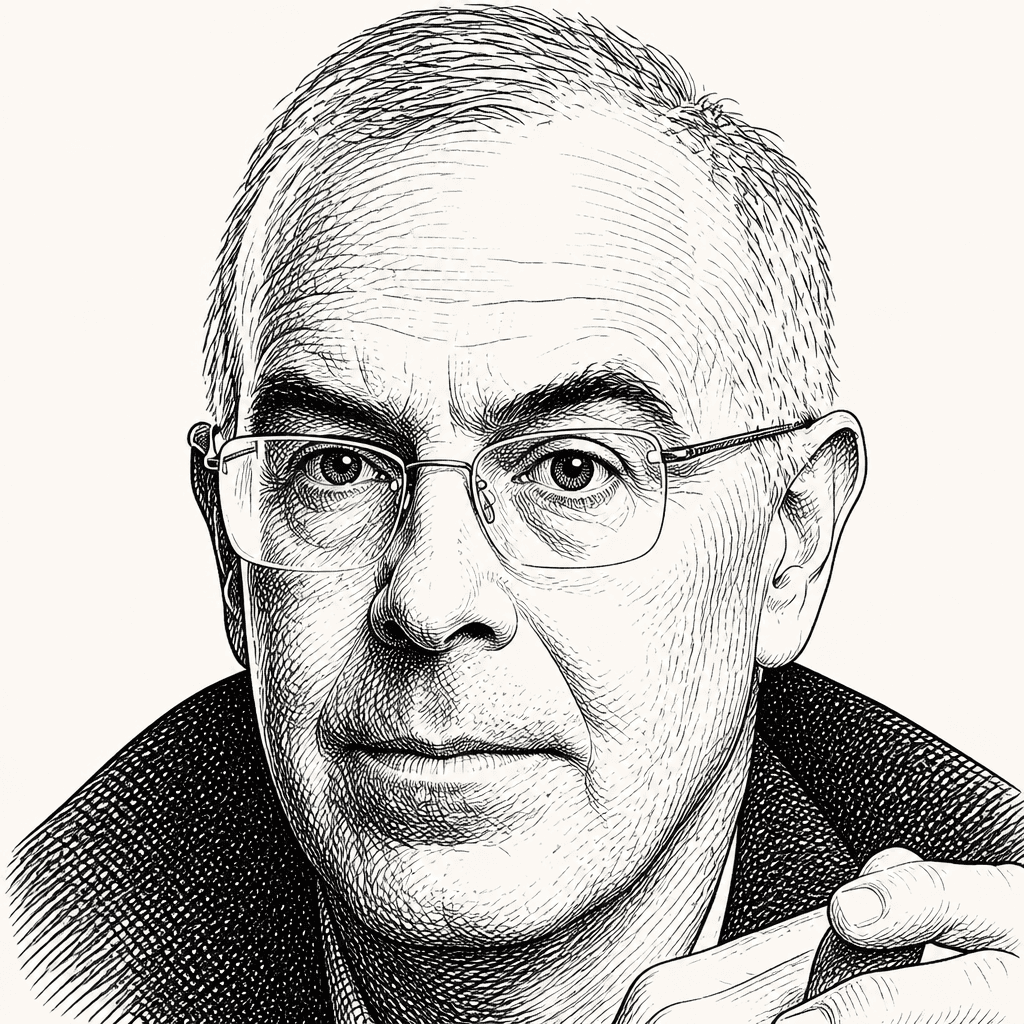
In an Aspen Ideas Festival talk, David Brooks argues that a passionate life is not a matter of intensity or youth but of forming desire around what is worth loving. Brooks sets that view against institutions — schools, meritocracy and AI among them — that define people too narrowly by intelligence, measurement and efficiency. His answer is a humanist one: people remain capable of growth at any age when curiosity, beauty, work, responsibility and love continue to enlarge them.
The threat is a society that mistakes intelligence for the whole person
David Brooks frames the passionate life as a humanist argument against institutions that reduce people to measurable cognition. His concern is not that reason, intelligence, science, or technology are bad. It is that a culture organized around them too narrowly forgets the rest of the person: desire, curiosity, imagination, embodied knowledge, care, effort, longing, and love.
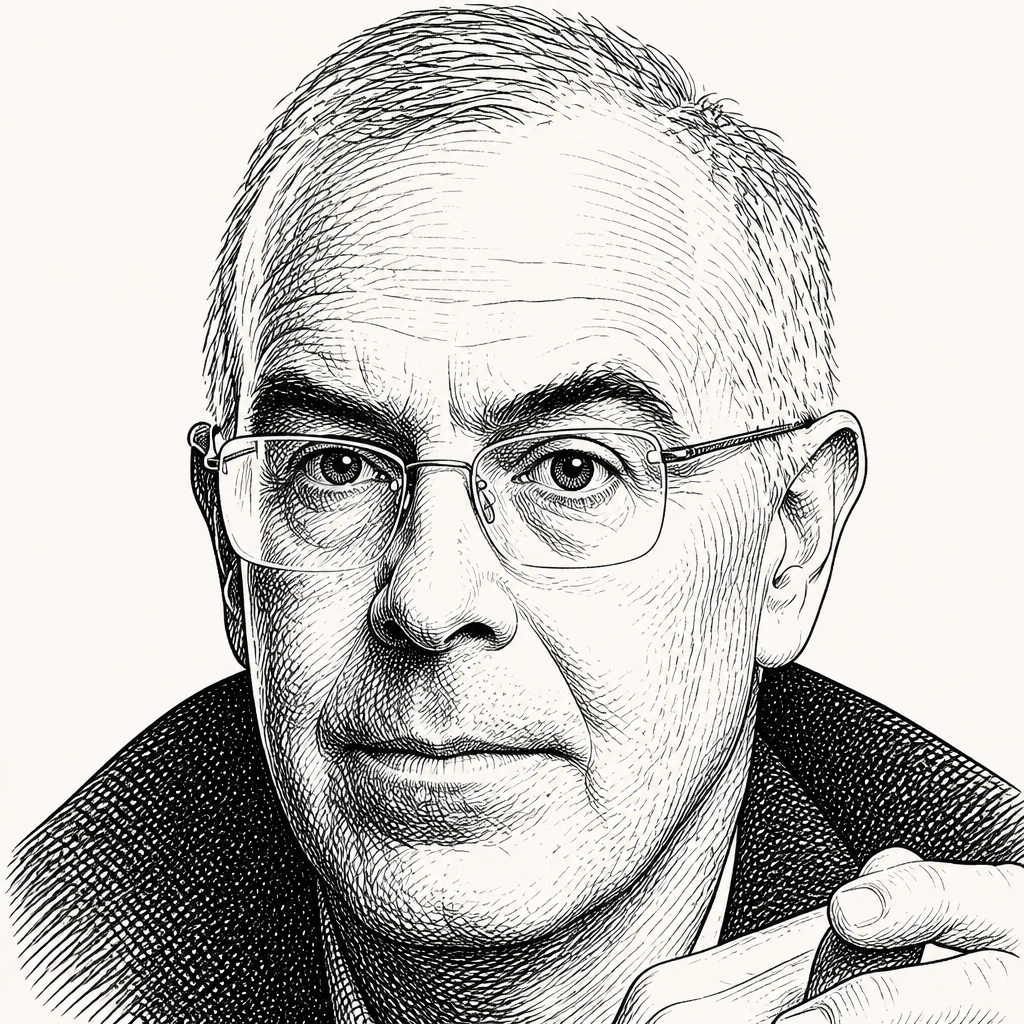
Brooks calls the narrowing tradition “the party of the head.” It treats reason as the highest human quality and the passions as primitive forces to be controlled. He associates it with Plato’s image of reason as a wise charioteer restraining the beasts of passion and emotion. Its modern creeds, as Brooks lists them, are cognitivism, quantification, reductionism, optimization, and scientism: IQ as the defining trait; distrust of what cannot be measured; the habit of dividing human beings into supposedly separable traits; efficient use of resources as a moral imperative; and science as the master key to human nature.
Against that, Brooks places “the party of the whole.” In this tradition, reason matters, but it belongs inside a unified human system that includes appetite, desire, intuition, imagination, emotion, and what he calls “the wisdom known in the body.” These are not merely obstacles to thought. They are ways of knowing. Brooks traces the tradition through Augustine; Blaise Pascal, who said “the heart has reasons that reason knows nothing of”; and David Hume, who said reason “is and ought to be slave to the passions.” Brooks takes Hume’s line to mean that passions can be more intelligent than reason because they direct life toward what is worth wanting.
The party of the head becomes dangerous, in Brooks’s account, because it is “oblivious to what they don’t see.” He gives the example of public housing in Chicago, where he worked as a journalist early in his career and covered Robert Taylor Homes and Cabrini-Green. The projects were designed with good intentions and rational plans. They replaced older neighborhoods that planners viewed as deficient. But the planners did not see the systems of care that residents had built for one another. When those systems were torn out, the new places became almost unlivable, and were later demolished.
James C. Scott’s Seeing Like a State supplies Brooks’s forest analogy. In the 19th century, the German timber industry tried to optimize forests by planting trees in straight rows and removing the underbrush. For five years, Brooks says, the result was efficient. Then the trees died. “Without the underbrush the trees died,” he says. “Without the emotions and the passions, the soul dies. And our systems don’t see that.”
The school system is his first direct example of a human system that starves a bright passion. Brooks cites research by Michelle Chouinard finding that infants and toddlers, from 18 months to three years old, ask an average of 140 questions an hour. Curiosity, for Brooks, is one of the noblest passions because human beings desire understanding. Yet school often suppresses it. Teachers may love curiosity, but they work inside systems that require content coverage. Brooks quotes Vladimir Nabokov’s description of the question as “the ultimate form of insubordination”: if children are allowed to ask questions freely, the class may not get through the lesson.
Susan Engel’s classroom observation gives Brooks the telling scene. Children in a science classroom found an old-fashioned scale and began experimenting with it. The teacher stopped them: “Enough of that, we have no time for experimentation. This is a time for science.” Brooks uses Engel’s figures to show the decline in displayed curiosity as children move through school.
| Stage | Curiosity measure Brooks cites |
|---|---|
| Age 18 months to 3 years | 140 questions per hour on average |
| First grade | 2.3 displays of curiosity per class per hour |
| Fifth grade | 0.48 displays of curiosity per class per hour |
Meritocracy is the larger institutional version of the same error. Brooks traces the system to James Bryant Conant, president of Harvard in the 1940s, who, in Brooks’s telling, decided that intelligence was the most important thing about a person and built selection around SAT scores and GPA. The problem is not only inequality, though Brooks stresses that too. It is the moral psychology of a system that ranks people by a thin measure and then asks everyone to live inside the ranking.
Intelligence, Brooks argues, is not the same as judgment, creativity, goodness, or metacognition — the ability to think about one’s own thoughts. It is also gameable. Families that invest heavily in their children can raise scores and grades. Brooks says that at many schools, a child from the top 1% of earners has 77 times the chance of going to an Ivy League school as a child from the middle income, and that at many elite schools, including some places where he teaches, there are more students from the top 1% than from the bottom 60%.
What interests him most is what the system does to both winners and losers. Among the winners, he says, it turns students into “shrewd animals.” He loves teaching at Yale and calls the students amazing, but recounts asking seniors on what he framed as their final day in a college classroom which books assigned over four years had changed their lives. After a long silence, one student explained that they did not read that way: “We just read enough to get through class.” Another said she had set aside a few books that might change her life and would read them after college. Brooks’s conclusion is that the system had trained them into “engineers of resource management,” with time as the resource. They knew they were playing a game, were cynical about it, and remained stuck inside it.
For those who lose the intelligence game, Brooks says the injury begins around age nine, when children know the system thinks they are dumb and check out. He lists the external disparities that follow: a high school graduate earns about a million dollars less than a college graduate; lives eight years less on average; is less likely to marry and twice as likely to divorce; is four times more likely to die of opioids and three times more likely to die by suicide; and is 2.4 times more likely than a college graduate to say they have no friends. The result, for Brooks, is a caste system around IQ.
That caste system produces resentment. Brooks defines resentment as an injury to social standing: someone makes a person feel disrespected and inferior. It begins in humiliation, moves into impotence — the sense that those looking down on you do not even see you — and then curdles into rejection of the goods associated with the people who humiliated you. College expertise becomes worthless. Generosity becomes “toxic empathy.” Kindness becomes naivete. Resentment, Brooks says, is “an inversion of love.”
AI appears in Brooks’s argument as the newest and most comprehensive expression of the same narrowing, though he says he is “generally an admirer” of it. His worry is that AI, built by technologists and organized around intelligence, tells users they can have productivity without effort. They do not have to try hard. They do not have to care. He cites a 55% decline in “cognitive energy” among people using AI and says gamma rays, which he presents as a measure of effort, drop 40%. If people stop thinking hard, he argues, they lose the skills that hard thinking builds.
His analogy is GPS. Driving in Anaheim, with what he calls its “infinity of freeways,” Brooks remembered that he once navigated with maps and has lost that ability. GPS concerns direction; AI concerns “everything.” The danger, as Brooks states it, is that AI attracts people by making tasks easy and then hollows out abilities, motivations, and desires.
Humanism is Brooks’s answer to machine-shaped life
Brooks’s alternative is humanism, broadly understood. He does not define it as a single doctrine. It can be secular, Christian, Jewish, or otherwise. It is “any endeavor that celebrates the dignity of human beings.” His examples range from Antigone burying her brother, to Martin Luther King Jr. writing the “Letter from Birmingham Jail,” to Tracy Chapman and Luke Combs singing “Fast Car” at the Grammys. What unites them is the insistence that human beings are deep creatures, not shallow cognition machines.
The historical analogy is industrialization. In the 19th century, Brooks says, rapid technological change led people to fear that machines were turning them into machines. Fordism and Taylorism narrowed workers into mechanized functions. In response, humanists rose up: John Ruskin celebrated local craftsmanship; Matthew Arnold argued that culture could revive the human spirit; Coleridge and Wordsworth represented the poetic side of the resistance.
Brooks makes the contrast concrete through Chicago. One of the world’s fairs of that period, he says, was in Chicago in 1892 and celebrated machines. Around the same period, nearby, the University of Chicago was founded and celebrated humanism. Brooks arrived there in 1980 after, as he jokes, the admissions officers at Columbia, Wesleyan, and Brown decided he should go to Chicago. He repeats two old descriptions of the place: “where fun goes to die,” and “a Baptist school where atheist professors teach Jewish students St. Thomas Aquinas.”
For Brooks, Chicago mattered because it was “all about the soul.” His professors taught Thucydides, Hobbes, Toni Morrison, and other works with the conviction that careful reading could make students fuller human beings and offer “the magic keys to the kingdom of how to live.” Brooks says he knew he would never be as wise or learned as his professors, but he badly wanted to be like them. Once one has tasted “the fine wine,” he says, it is hard to drink “the Kool-Aid.”
That was elite humanism. A few miles north, Jane Addams’s Hull House offered Brooks’s democratic version. Hull House helped immigrant families settle in Chicago, but Brooks emphasizes the form of help: drama classes, trips to the symphony, literature courses, dance, folk music, sculpting, painting, poetry, and the great books. He quotes Jean Bethke Elshtain’s biography to the effect that all of Hull House’s activities pointed toward “the building up of the social culture of democracy.”
The point is that human beings need more than material provision and cognitive sorting. “There are many ways to feed the hungry,” Brooks says, “but one of the ways is to feed them with good and beautiful things.” Because human beings are made for love and gifted with yearnings, pleasure can degrade or elevate. Humanism is not ornament. It is a way of treating people as whole beings capable of being formed by beauty, conversation, craft, responsibility, and shared culture.
Humanism also happens through conversation. Brooks says great humanistic eras contain clubs, cafés, and spaces of sustained encounter. Out of that conversation comes the insistence that no institution should amputate a part of the person. “You treat me as a whole,” is the humanist demand.
He closes this part of the argument by quoting George Eliot: “There are certain things we feel to be beautiful and good and we must hunger for them.” He then paraphrases Augustine: give me a man or woman in love, one who has been in the faraway desert and thirsts for the springs of passion. That person knows what he means. A cold, suspicious, mistrusting, or calculating person does not.
The gleam is the sign of a person still pulled by love
What humanism protects, Brooks calls “the gleam”: the look in someone’s eyes when they are animated by a future, craft, love, responsibility, or longing large enough to pull them forward. The gleam is not merely ambition. It is the outward sign of an inward force.
His first example is Mona Dixon, a finalist for the Boys & Girls Clubs of America’s Youth of the Year award in 2010. Dixon had spent 13 years of her childhood homeless. When she described that upbringing to the judges, she cried, and they worried that giving her the award would require her to retell a traumatic story again and again. But when they asked about her future, Brooks says, she changed. She sat up, smiled with what he calls “a whole body” smile, and looked outward with “bonfires” in her eyes. That was the gleam: “I don’t know what I’m going to do, but some big future is awaiting me.”
Brooks sees it in Viola Davis. In high school, her drama teacher asked how many students wanted to become actors or actresses. Every hand went up. Then the teacher warned them that acting meant auditions, failure, and poverty. All the hands went down except Davis’s. Brooks quotes her memoir: “When you haven’t had enough to eat, when your electricity and heat are cut off, you’re not afraid when somebody says life is going to be hard. The fear factor was minimized for me. I already knew my fear. My dreams were bigger than my fear.”
He also sees it in Lady Gaga, whom he quotes as saying she did not know what she would become but always wanted “to be extremely brave and a constant reminder to the universe of what passion looks like, what it sounds like, what it feels like.” He hears it in Hamilton: “I am not throwing away my shot,” “in the room where it happens,” and “young, scrappy, and hungry.”
But the gleam is not confined to fame, performance, youth, or visible charisma. Brooks sees it in parents filming their children in school plays; in an Aspen optometrist named Tim who repaired his broken glasses for an hour, charged nothing, and said, “Everybody leaves this shop happy and comfortable”; and in a 100-year-old man who had lost interest in sex, fame, and status but lit up like an eight-year-old when talking about lectures he attended. Passion may appear as delight, craft, devotion, or steady attention.
From those examples Brooks derives both a political and an anthropological claim. Politically, he wants “a country where every boy and girl has a chance to dream that big, and every adult is filled with such abundance they get to have that much bigness.” Anthropologically, he rejects the view that human beings are best defined by IQ. The more important questions are how much energy someone brings to life and where that energy is directed.
Deep down inside, each of us has a nuclear fusion reactor.
That “reactor,” for Brooks, is the spiritual core of a person: the source of desires, yearnings, cravings, aspirations, and loves. He invokes his former teacher Leon Kass, who argued that people are defined not by opinions, ethnicity, or job, but by “the ruling passion of their soul.” Brooks revises that slightly. Most people, he says, have many passions. To know him is to know what he loves: his children, wife, America, God, writing, friends, New York City, the Mets, Bruce Springsteen’s music, the Chesapeake Bay, Montana. “That’s who you are,” he tells the audience.
That is why the passionate life, for Brooks, is not simply a life of strong feeling. Desire has to be educated. “It’s important to want the things that are worth wanting,” he says. His rule is that intermediate passions deform life, while ultimate passions sustain it. Intermediate passions are things desired in order to get something else: money for pleasure, good looks for love, power for justice. Pursued as life’s end, money, looks, and power swallow a person up. Ultimate passions are intrinsically worth wanting.
Brooks names six ultimate wants: belonging, understanding, respect, pleasure, significance, and, in a later phrasing, competence or mastery. Human beings want friends and community. They want to understand because they are born curious. They want respect from people whose admiration is worth having. They want pleasure, and Brooks tells his students that even a worthy activity such as feeding the poor or homeless is probably not their calling if they do not enjoy it; without pleasure, they will not do it daily. They want meaning and purpose.
This is not moral relativism. Brooks says there are dark passions — fear, hatred, resentment, anger, the urge to dominate — and bright passions that lead toward goodness. Wisdom, respect, beauty, pleasure, and justice are not merely preferences. They are “absolute goods,” virtues “you can bet your life on.”
The deepest human need, he says, is self-expansion. He cites Erich Fromm’s claim that the deepest human need is to overcome separateness, “to leave the prison of his aloneness.” A couple kissing, a carpenter working on craft, an astrophysicist gazing at the heavens, and a nun at prayer are all, in Brooks’s examples, transcending the isolated self by making contact with something outside it. That contact feels pleasurable because some part of the self senses growth. Brooks adds a personal counterexample: his father had died about a month earlier, and the pain of that loss felt to him like contraction, as “that part of my otherness has grown small.”
The theological form of the claim comes through Gregory of Nyssa. Brooks says Greek philosophy around Gregory often imagined happiness as rest after completion: one achieves goals, finishes projects, and then peace arrives. But Gregory’s aim was to know and love God perfectly. If that goal could be completed, it would imply that love is finite and God is finite. Gregory therefore concluded that happiness must come not from rest but from pursuit.
In Brooks’s telling of Gregory’s reading of the Song of Songs, the bride glimpses the man she loves, finds him, delights in him, and then he withdraws — not as cruelty, but so she can advance again and experience a deeper encounter. Desire is not dissatisfaction. Under a great love, Brooks says, it is “the highest form of flourishing.”
Growth is not self-expression but self-formation
Brooks rejects what he calls “the plaster theory”: the idea that by the time people reach their 20s they are largely fixed. He cites Harvard psychologist Dan Gilbert’s line that “human beings are works in progress who mistakenly think they’re finished.” The lives Brooks admires are those in which people are different at 80 than at 60, different at 60 than at 40, and different at 40 than at 20. They keep changing.
He also rejects the cultural story that creativity belongs to the young and then fades. The figures he cites are offered as a correction: the average Nobel Prize winner was 44 when making the relevant discovery; the average patent applicant was 47; a 55-year-old is twice as likely as a 25-year-old to produce a scientific breakthrough; and a 50-year-old entrepreneur is twice as likely to be successful as a 30-year-old entrepreneur.
| Measure | Brooks’s cited age pattern |
|---|---|
| Average Nobel Prize winner | 44 when making the discovery |
| Average patent applicant | 47 |
| Scientific breakthrough | A 55-year-old is twice as likely as a 25-year-old |
| Entrepreneurial success | A 50-year-old is twice as likely as a 30-year-old |
Growth, in this account, is not chiefly about résumé accomplishment. “Growers live with an offensive spirit,” Brooks says. They treat life as a pilgrimage that will change who they are. The core achievement is “the self they turn themselves into.”
Tina Turner is Brooks’s strongest example of adult formation. He recounts her childhood in Nutbush, Tennessee, where both parents abandoned her; her dyslexia and shame at the chalkboard; and the energy and musical skill that were already present. Ike Turner heard her sing and, in Brooks’s telling, took control of her public identity: he gave her the name Tina Turner, copyrighted it, controlled her performances, did not pay her, and abused her. Brooks describes the violence and domination starkly, including beatings, adultery, and the collapse of hope that led her to take sleeping pills.
The turning point, for Brooks, is not only escape. It is a long act of inner construction. Turner decided there would be two Tinas: “Ike’s Tina,” who would do what survival required, and “Tina’s Tina,” her own voice and self. She gave herself permission to think her own innermost thoughts, took up Buddhist practices, kept a journal, prayed, and over 13 years built herself into the kind of person who could stand up to Ike.
Her break from Ike is the visible result of that formation. After a violent confrontation in a limousine, she later slipped out of a hotel room at night, crossed a highway, and asked a Ramada Inn clerk to take her in though she had no money. At 40, Brooks says, she began again as a rock star in her own right, and over the next 30 years sold “a zillion albums” and created her own inner voice. What impresses him is not only success after abuse, but the long construction of a “solid self.”
Brooks’s shorter examples make the same point from different angles. Haruki Murakami, he says, was running a jazz club when, at a baseball game, he decided he might write a novel. He quit the club, wrote all day, gained weight, and took up running. The running became severe: six miles a day for decades, marathons, triathlons, ultramarathons. Brooks notes that Murakami’s book What I Talk About When I Talk About Running does not make running sound pleasant. Murakami writes of hating everything around mile 23, feeling only relief at the finish, and swearing afterward never to run again. Brooks’s interpretation is that the toil was not finally about finishing marathons. It was about becoming the sort of person tough and enduring enough to write novels.
Warren Buffett provides a compressed model of growth through attachment to systems and people. Brooks describes Buffett as a child gifted at math but fearful, rigid, and socially nervous. Dale Carnegie gave him a system for socializing. Ben Graham gave him a system for investing. Charlie Munger gave him a broader, more humanistic way to think. Katharine Graham stretched him into social worlds far from Omaha. Bill Gates taught him about technology and philanthropy. Brooks’s point is that Buffett grew by contact with people who expanded him, becoming, in Brooks’s description, a person of “deep humanity and deep integrity,” not the scared and narrow child he had been.
Brooks also places himself inside the argument, but as a counterexample to theatrical passion. He is not, by his own description, someone of obvious star power. He jokes that grocery-store automatic doors do not know he is there. For years, his speaking-agent introduction described him as bringing “insight and quiet passion,” a phrase he once hated because it sounded like “dull fun.” He has come to value it.
His passion, he says, is not a sprint but a walk. He has worked at the same television show for 30 years, appeared at Aspen for 21 years, lived in the same city for 29 years, and had no particular traumas. He writes every morning from 7 a.m. to 1 p.m. and does not speak to another human being until he has written 1,200 words. A Fitbit once told him he was napping while he was writing because his heart rate had dropped so low. Brooks interprets that not as disengagement but as alignment: he was doing what he was “supposed to do on this earth.”
The unfinished life is the successful one
Brooks’s late-life examples show what his argument means when youth, early promise, and prestige are stripped away. The passionate life is not proved by quick recognition. It is proved by sustained longing and continued formation.
Paul Cézanne knew early that he wanted to paint, but the path Brooks describes is mostly rejection and obscurity. His father pushed him toward law; Cézanne withdrew and went to Paris; the École des Beaux-Arts rejected him twice. The Salon de Paris rejected his paintings every year from 1864 through 1869, and he continued submitting work until 1882 without acceptance.
By middle age, Brooks says, Cézanne decided he was not good enough and stopped showing his work. During the years when many people are thought to be at their peak — ages 46 to 56 — there were no Cézanne paintings on public display. The personal wound was just as sharp as the professional one. In 1886, when Cézanne was 47, Émile Zola, his childhood best friend and by then a celebrated writer, published The Oeuvre, a novel about two childhood friends, one a famous novelist and the other a failed painter who commits suicide. Zola sent it to Cézanne as a novel about them. Cézanne almost never spoke to him again.
Things changed when Cézanne was 56, with his first one-man show. Two years later, a Berlin museum bought one of his paintings. In his 60s, the paintings began selling and other artists came to watch him work. Brooks says the force that kept him going through obscurity was what his biographer called “inquietude”: he was never satisfied. There was a discrepancy between where he was and where he wanted to be, and Brooks calls that discrepancy “the key to all longing.” Cézanne knew he was not where he wanted to be, but kept working toward it.
At 67, a month before his death, Cézanne wrote to his son that, as a painter, he was “becoming more clairvoyant to nature.” He still found it difficult to realize his feelings, still felt he could not reach the intensity unfolding before his senses, still lacked the richness of color animating nature. Brooks imagines him looking at the mountain he often painted and asking again and again how to capture it. At 67, Brooks says, “he’s still going for it.”
The Grant Study gives Brooks his final example of adult transformation. The study began at Harvard in the 1940s and followed Harvard men from age 18 to death. One participant, Andrew Newman, was, in Brooks’s description, a “total prig” and insufferable at Harvard. Interviewers disliked being around him. In middle age, his two daughters hated him. He was rigid and perfectionist.
Then in his 50s, Newman read a sentence: “The world’s poor are the responsibility of the world’s rich.” He quit his defense-industry job, moved to Sudan, and helped farmers raise crops and price them properly. Later he returned to Texas, worked at a community college, and did city planning. When George Vaillant, head of the study, came for the annual interview, Newman greeted him with, “Let me give you a big Texas hug.” Brooks says Newman had become warm and wonderful; Vaillant told him at the end of the interview that he was “transcendent” and “transfixed” by him.
Vaillant returned to Harvard, reviewed Newman’s old interview transcripts, and sent them to him. Newman sent them back with a note saying Vaillant had sent the wrong transcripts: “I have nothing in common with this guy. I had none of these opinions, none of these experiences.” Vaillant told him no, that was him.
For Brooks, that is growth: keeping the gleam alive through tribulation, error, injury, and the damage people cause. A person can still become someone else. A life can remain open to love, responsibility, beauty, work, and conversion long after the culture expects the decisive story to have already been told.