The Declaration’s Promise Now Depends on Political Reform and Shared Symbols
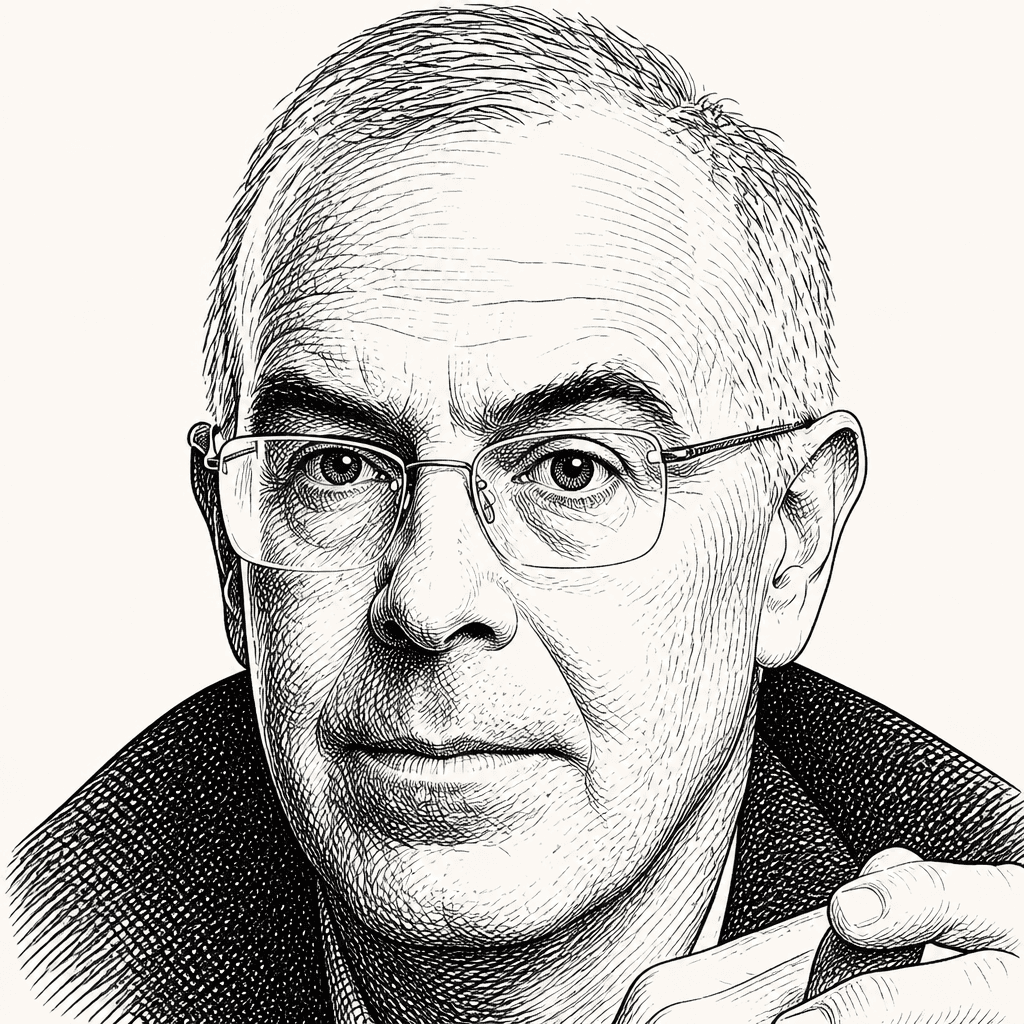 David BrooksRachel Ramirez-Guest
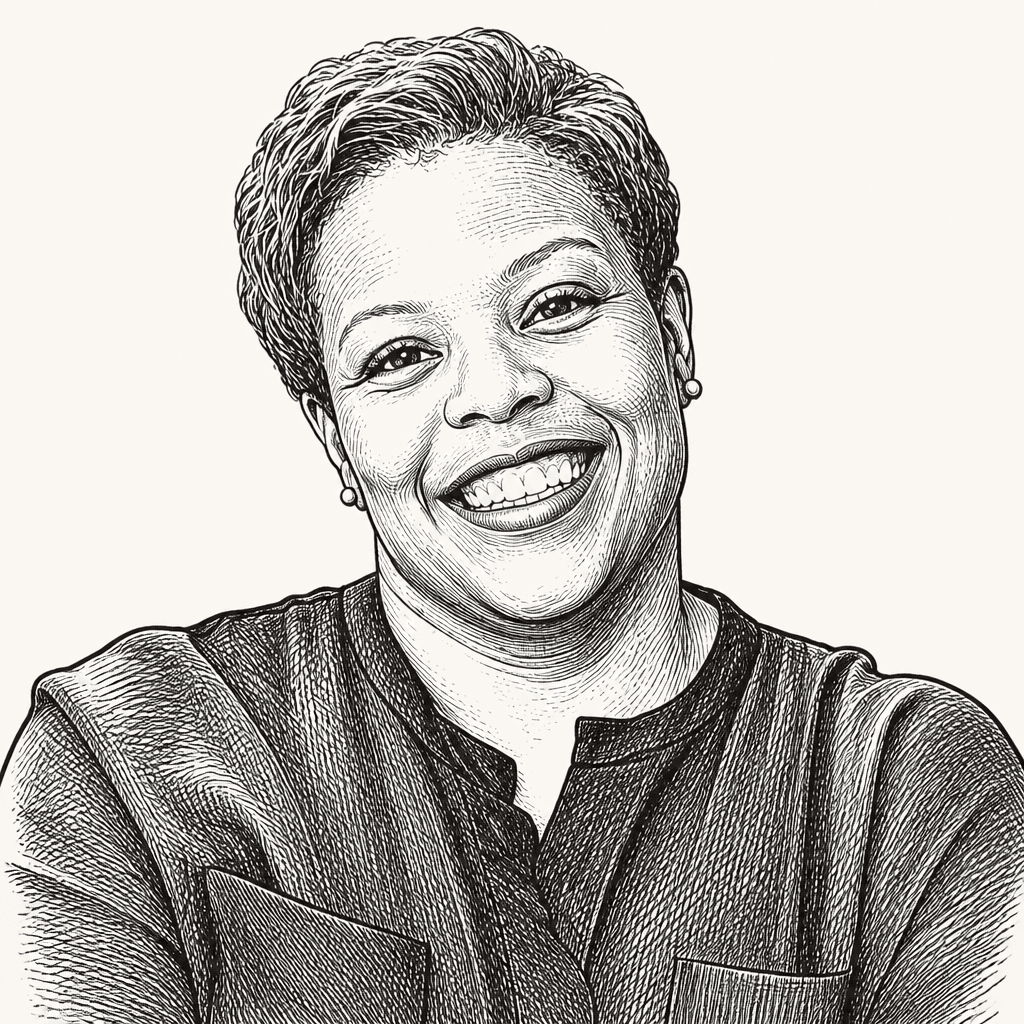 Kaya HendersonRob DriscollShaurya KanteLubanzi Tsabedze
 Natalie Fleur
 Shilo BrooksTiffany ClydeMolly Pencke
 Reihan SalamJeslyn KamgaDerrell ColemanMarwa Kriraa
 Martha JonesThe Aspen InstituteTuesday, June 30, 202621 min read
At the Aspen Ideas Festival session “General Assembly: The Idea of America,” Danielle Allen, Martha Jones, Shilo Brooks and Reihan Salam treated the Declaration of Independence as a living inheritance whose authority now depends on more than anniversary reverence. Their shared dispute was over what must sustain its claim of equality in a changed country: Allen emphasized institutional reform and democratic accountability, Jones insisted on confronting slavery, citizenship and present contradictions, Shilo Brooks stressed the moral and philosophical force behind equality, and Salam argued that a credal nation still needs a culture capable of carrying shared symbols across demographic change.

The Declaration remains the starting point, but not the whole inheritance
The Declaration of Independence still mattered to every major argument. The disagreement was over what kind of inheritance it is: a universal philosophical claim, an unfinished constitutional project, a fragile moral proposition, or a story that must be retold under changed demographic and technological conditions.
? danielle-allen put the Declaration at the center, but not as a call to write a replacement. For her, the 250th anniversary is a moment to return to the “core principles” and ask where the country stands in relation to them. She rejected Thomas Jefferson’s famous image that the tree of liberty must be refreshed with blood, saying instead that liberty has to be watered every generation by “celebration and a reckoning.”
Allen’s own frame was family inheritance. Her grandfather helped found one of the first NAACP chapters in northern Florida in the 1940s, when lynchings were on the rise, and “took his life into his hands to secure the right to vote.” Her great-grandparents fought for women’s suffrage; her great-grandfather marched with suffragists on Boston Common in 1917, a year she emphasized as more politically repressive than Americans often remember. The point was not biography for its own sake. It was that the United States is young enough for those struggles to sit only a few generations back. Many living Americans, Allen said, have personally lived through a fifth, a quarter, or even a third of the country’s life. The country is “basically just a kind of pimply, hormonal teenager,” still developing through recurring confrontations with its founding claim.
The claim she returned to was Abraham Lincoln’s “golden apple”: the Declaration’s assertion that all people are created equal. Allen recited the full long sentence of the Declaration’s second paragraph, emphasizing that most Americans remember only the opening clauses. Its structure, in her reading, links private self-direction to collective self-government: people thrive when they can steer their own lives and when they can also steer together the government that secures their rights.
That is the whole sentence, and that is the inheritance of every single person in this room.
The renewal Allen called for was institutional, not rhetorical. She drew a distinction between principles and instruments. At the Constitutional Convention, she said, the framers considered whether they needed a new statement of founding principles or only a new mechanism for organizing governmental power. Lincoln faced a similar question in the Civil War era. In both cases, Allen argued, the answer was not to discard the principle but to build institutions that could better realize it.
That distinction led to her sharpest diagnosis of the present: the United States does not now have a government “by the people” in the necessary sense. She cited gerrymandering, closed primaries, low-turnout primaries, and the claim that 60 million Americans no longer have a meaningful vote in federal elections — “a quarter of the electorate.” The work, in her view, is to rededicate the country to equality while considering reforms to the organization of political power, including all-party primaries and a federal law to end gerrymandering.
Shilo Brooks began from the Declaration’s form. It is not, he said, a treatise or a mere statement. It is a declaration — and that makes it radical. It begins not with a narrow historical marker but with “When in the course of human events,” a phrase Shilo Brooks read as a claim addressed to all time and all humanity. Its assertion that all men are created equal, he argued, should be understood as universal: not only for Americans, but for “everybody,” everywhere.


Shilo Brooks also stressed the document’s claim about truth. It does not merely offer an argument. It calls certain truths “self-evident.” In an age when people often speak of “their own truth,” he said, the Declaration’s confidence is striking: it says “this is simply the truth.” The grievances and signatures are historically situated, but the document’s central claim, in his reading, is philosophical and permanent.
Martha Jones accepted the importance of that inheritance but approached it from the position of someone who must explain it to people who do not simply accept its moral authority. Her “strangers,” she said, are her grandchildren, raised in France. Around the family table, she is called on not only to explain the document’s history and political philosophy, but to square it with “who we are today.” For her grandchildren, the professor’s account is not enough. They want the contradictions addressed.
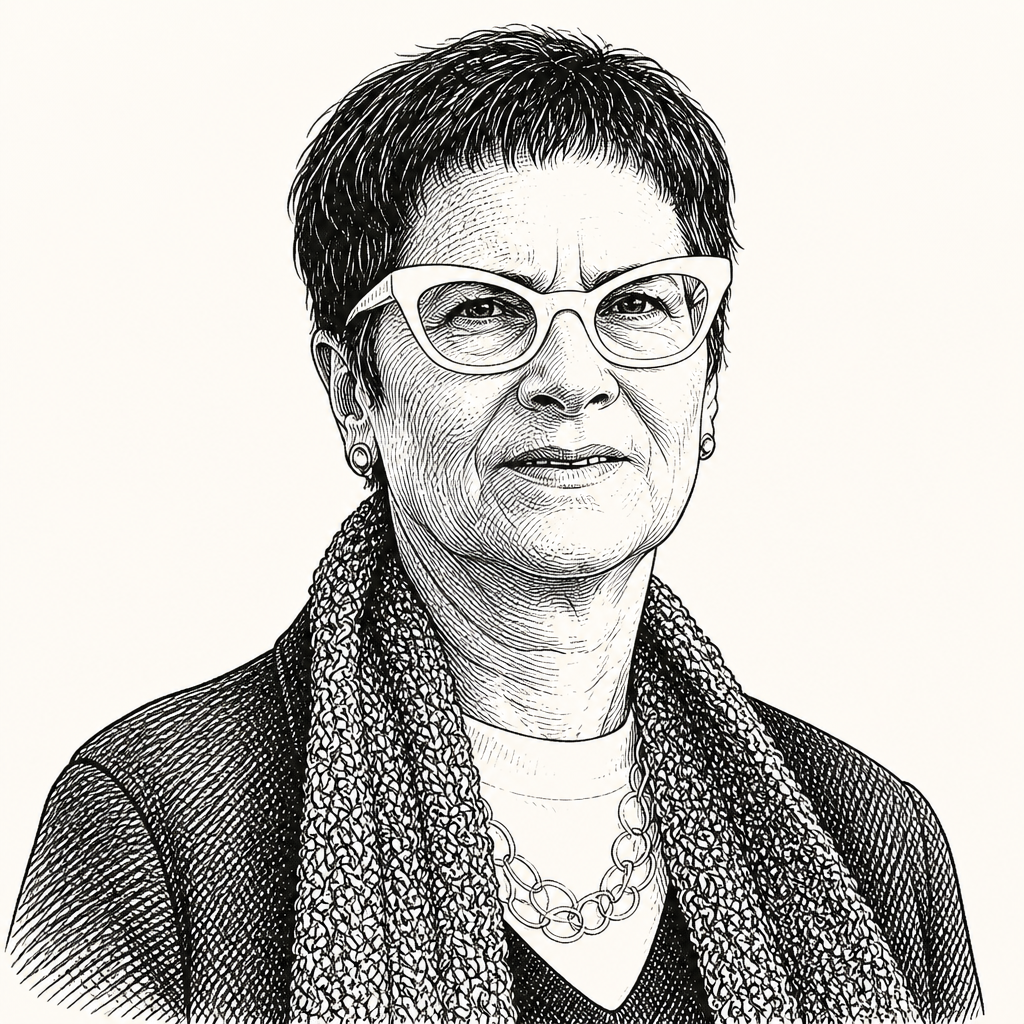
There is no way to do that, I think, in this celebratory year for us, without having to reckon not with the contradictions of the past, but for my grandchildren the contradictions of the present.
Jones did not argue for abandoning the Declaration. She treated it as a document whose meaning has to be followed through the Constitution, Reconstruction, civil-rights jurisprudence, and current disputes over citizenship. The difficulty, for her, is that celebration cannot be separated from the present conditions that make the founding promise hard to explain.
Reihan Salam located the renewal problem in demographic and narrative change. Stories of America, he argued, are periodically “renewed and replenished,” often under the pressure of migration, incorporation, and conflict. The post-1776 period was unusual because the country was “Americanizing” largely through high native fertility during wartime and the Napoleonic era. Later waves of German and Irish Catholic immigration created both conflict and a need to retell the American story. By 1976, the foreign-born share of the population was low, many immigrants were older, and earlier immigrant waves had largely been folded into a common narrative.
The 50 years between 1976 and 2026, in Salam’s telling, were different. The country received “this incredible infusion of talent and energy” from the wider world, but did not do enough narrative work to define a “new mainstream.” The result, he said, is a society in which both the majority and multiple minorities are insecure and anxious. National identity itself has also become less salient because the technologies through which people communicate and understand themselves no longer center the nation in the way print capitalism once did. A young person on YouTube, TikTok, or other social media may still be patriotic in some broad sense, but the tribe to which that person feels attached may be fragmented, nonlocal, and combustible.
Salam’s optimism was conditional. The country can renew its story, but only by taking seriously the scale of demographic transformation and the fact that inherited national symbols no longer automatically organize people’s identities.
Equality no longer carries itself as self-evident
David Brooks put the problem sharply: can the Declaration endure if Americans no longer share the moral world that made its claims intelligible? The line that humans are “endowed by their Creator with certain unalienable rights” rests, David Brooks suggested, on a theology of natural law — the idea that right and wrong are written into the fabric of the universe. If that view fades, what happens to the document’s authority?
Shilo Brooks answered that the loss matters. Speaking through what he called his “Friedrich Nietzsche hat,” Shilo Brooks argued that if the eternal principles and powers sustaining a civilization are evacuated — “if God dies” — people may become bearers of Christian morality without the Christian God. Moral values originally grounded in transcendent authority may then “wither and die” because they lack their former source of force.
Shilo Brooks connected that worry to Lincoln’s change of language at Gettysburg. Jefferson’s Declaration called equality self-evident. Lincoln called it a “proposition.” Shilo Brooks read that as more than rhetorical variation. Lincoln, he said, was a student of Euclid, and the word “proposition” carries geometric implications: a proposition is something requiring demonstration. What had been treated as self-evident had become, after the Civil War, something that needed continual proof.
That is why Shilo Brooks emphasized Lincoln’s words “dedication” and “devotion.” The principle of equality cannot be assumed to maintain itself. It must be recommitted to, practiced, proven, and sustained. He also pointed to Lincoln’s Second Inaugural, where Lincoln interpreted the Civil War through biblical language and a shared God. For Shilo Brooks, the founders’ deism and Lincoln’s Judeo-Christian rhetoric served as “our greatest lights” in sustaining the principle of equality. He feared that those lights may still be necessary.
? danielle-allen also used the language of rededication, but placed the problem less in the loss of metaphysical consensus than in the failure of institutions to embody the principle. The proposition that all people are created equal remains the standard; the test is whether the structures of government permit the people to rule.
Martha Jones complicated the same issue by insisting that the Declaration’s renewal cannot be understood apart from the Constitution. By the mid-19th century, she said, the locus of American political life had shifted from the Declaration to the Constitution. The question becomes whether the Constitution is doing the work of renewal through amendments, reinterpretation, and doctrine.
Her example was birthright citizenship. Jones described it as an important legal question, but also as a policy question tied back to the Declaration’s preamble. Birthright citizenship, in her account, establishes a baseline: at least everyone born in the United States is created equal, and is a citizen with the same rights and privileges. That claim links the constitutional text to the Declaration’s principle, making the Constitution the vehicle through which the Declaration is repeatedly revisited.
Reihan Salam approached the same terrain through culture. Shared moral language, in his account, depends on practices and institutions capable of transmitting a national story. It is not enough to assert a creed; people have to inhabit a culture in which the creed has meaning. That culture cannot be purely ideological, because the meaning of the creed is itself contested in practice. Nor can it be purely ancestral, because the country has been repeatedly remade by incorporation and migration.
The dispute is not whether equality remains the central proposition. It is what must sustain that proposition now: metaphysical authority, constitutional practice, institutional reform, or a renewed culture capable of carrying shared symbols.
Allen’s account of the founding includes anti-slavery resources many Americans have not been taught
The most direct challenge to a common American story came from the problem of slavery and racial exclusion. The contradictions were not denied. But ? danielle-allen and Martha Jones each resisted a flattened account in which the founding becomes only a defense of slavery.
Allen argued that many young Americans have inherited a crystallized view that “the founding was only about the preservation of slavery.” She called that view false. Her counterargument began with authorship. The Declaration was not written by Thomas Jefferson alone, she said, despite Jefferson’s tombstone claiming him as “Author, Declaration of Independence.” It came from a committee of five: Jefferson, John Adams, Benjamin Franklin, Roger Sherman, and Robert Livingston. Allen identified Adams as the “real motive force” in 1775 and 1776.
That mattered because Adams never held humans in bondage and always thought slavery wrong. Franklin had held people in bondage earlier in life, but had repudiated the practice by 1776. Allen also emphasized that the phrase “life, liberty, and the pursuit of happiness” came from Adams, not Jefferson. It avoided the more familiar Lockean triad of “life, liberty, and property” because, in the spring of 1776, property rights were already being invoked to defend enslavement.
In Allen’s telling, Adams and Franklin opened space for anti-slavery politics inside the founding language. The Declaration’s equality language was immediately used by abolitionists and became a foundation for ending enslavement in Massachusetts, Pennsylvania, and Vermont, which she noted was then its own country. Before the Revolutionary War ended, she argued, the Declaration was already being used to start abolition.
That inheritance, Allen said, has been lost to many Americans. Recovering it does not erase the fact that the principles were contested from the beginning. It changes the picture of the founding from pure hypocrisy to a field of conflict in which, in Allen’s account, a real commitment to human equality existed and was acted on from the start.
Jones made a related but distinct claim. She pointed to the 19th-century Colored Conventions: hundreds and thousands of Black men, and a few women, who, excluded from state houses and Congress, created a “shadow political culture” and deliberated on the major questions of the day, including what the Declaration should mean in the face of slavery and anti-Black racism. Jones presented them as embodiments of the deliberative political culture David Brooks worried had been lost.
Her account came through an episode from her work with students at the Baltimore School for the Arts. While consulting on a production about early American history, she was in a rehearsal when a student stopped and asked the adults: “Why have you kept this history from us for so long?” Jones said she has never forgotten the moment. It showed her that many young people are hungry for history, but not for a sanitized history. They want a past that speaks to their present and helps them understand how the country arrived where it is.
That same issue surfaced in a question from Derrell Coleman, who works on generational poverty and described himself as an eighth-generation Black American. He said many young people have become “too knowledgeable” about the history of national harms to people who look like them, or are living with the consequences of past decisions. In his framing, the country is fraying between people who no longer believe in the American promise and people whose belief sometimes depends on an absolutist account of American greatness that ignores harm. He asked what kind of story could be “wide enough to encompass truth” while still being uplifting.
Reihan Salam answered by warning against the expectation of a single unified framework. Modern societies contain different psychological dispositions, he argued. Some people are drawn to cosmopolitan, individualistic frames; others understand society through cultural, ethnic, or genealogical inheritance. The aim should not be to eliminate those differences, but to make a peaceful society possible with shared symbols that can carry different meanings.
He used the term “multi-vocalism,” attributing it to scholar Eric Kaufmann: shared symbols should be allowed to hold different voices and meanings. The danger, Salam said, comes when people on either the right or left believe they can create a country where they no longer have to live with people who hold sharply different views. Totalizing accounts produce backlash, and backlash can discredit the possibility of shared symbols at all.
Allen’s final response to Coleman’s question was more hopeful and more practical. She said national celebration is already happening “all over the country,” citing an exhibit at the Huntington Library in Los Angeles called “This Land Is...” The exhibit, in her description, begins with an early printing of the Declaration and minutes from New York’s delegation to the Continental Congress, placed near Woody Guthrie’s guitar. For Allen, the exhibit’s value is that it invites an expansive, multi-vocal account of the country. Her answer to Coleman was not to wait for a president or a single national domino. The work is distributed: museums, historical societies, civic organizations, and communities all have roles in building the narrative.
Young Americans’ skepticism is treated as rational, not merely cynical
Young Americans’ disenchantment was presented less as a failure of civic character than as a rational response to the world they have inherited. ? danielle-allen, in particular, argued that skepticism toward democracy has obvious sources in lived experience. People under 25 were born after, or in the wake of, September 11. Their childhoods were shaped by the Great Recession, often through family instability and housing displacement. Their first political memories were of the 2016 elections, which she described as among the most polarized since the 19th century. They then experienced a global pandemic and face climate uncertainty.
It is therefore unsurprising, Allen said, that they ask what democracy has done for them. Older generations may celebrate democratic governance, but younger people reasonably doubt whether it can navigate current turbulence.
Reihan Salam focused more on inheritance and memory. He described a rising generation with a strong bias toward novelty and the present. He traced part of that to the cultural rupture of the 1960s, when a large generation came of age and looked at previous generations as an inheritance it chose not to claim. He said there was truth in that rejection, but over time the habits and memories carried by earlier generations attenuated. What remains for many young people is a richly critical lens on history without an accompanying sense of continuity — without the feeling that they are inheritors of the legacy Allen described.
Salam connected this to post-1965 immigration. He said 30 percent of Americans are post-1965 immigrants or the children or grandchildren of post-1965 immigrants. They have entered a country already uneasy with its inheritance and have often encountered institutions that have not figured out how to tell an uplifting, romantic story about America that also allows critical engagement.
The civic-education problem became concrete in a question from Rob Driscoll, an Aspen Challenge coach and high school history teacher at Tech Boston Academy. He described a widening gap between young people and local and national leaders. His school polled its senior class, soon-to-be 18-year-olds, and found that 60 percent did not know how to register to vote. He asked whether the gap between youth and leaders is mendable, and what would be required to repair it.
Allen’s answer refused to isolate civic education from political structure. She said she has often stood before eighth-grade classrooms urging students to prepare to vote and consider running for office. But over time, especially in Massachusetts, she concluded that this exhortation could become irrational. Massachusetts, she said, has the fewest competitive elections of any state; in the last decade, more than half its races had only one candidate on the ballot. If elections are not competitive, telling young people to vote is not enough.
For Allen, the educational and institutional pieces must fit together. Young people need civic education, but they also need systems in which elected officials can be held accountable and elections actually generate competition. If that happens, she argued, people will register to vote.
David Brooks reinforced the point by observing that recent redistricting fights in Texas and California had not produced the public revolt one might expect. Politicians were “literally taking away” people’s political power, he said, yet the response was muted. Allen agreed.
Kaya Henderson’s opening remarks gave this discussion a practical institutional context, but the useful point was not the branding of a program. Henderson described the Aspen Institute Center for Rising Generations’ mission as making civil discourse, civic engagement, and leadership development “a predictable part of the journey to adulthood” for people ages 14 to 24. She announced Aspen Ideas Rising Generations, a four-day fall convening for 350 young people ages 18 to 24, built “by and for the rising generations,” designed for conversations across difference and leadership development.
The Bezos Scholars Program supplied examples of youth civic formation at smaller scale. Molly Pencke described it as a year-long youth leadership program in which students and educators from the United States and Africa collaborate with one another and their communities on projects intended to create lasting change. The program was presented with the figures “30 Scholars turning ideas into action,” “20+ years impacting youth,” “560 Alumni,” and “230 Community Change Projects.” Scholars described projects including Team Align, which aims to help disengaged students find more meaning in school; Tomball Stride, a youth-led organization focused on walkability and local-government engagement; and the South African Ideas Festival, described as a continuing legacy project.
| Program element | Visible figure or description |
|---|---|
| Bezos Scholars cohort | 30 scholars turning ideas into action |
| Program history | 20+ years impacting youth |
| Alumni | 560 alumni |
| Community change projects | 230 projects |
| Aspen Ideas Rising Generations | 350 young people ages 18 to 24, convening November 13–15, 2026 |
The strongest theme was not inspiration in the abstract, but the link between civic confidence and practice. Shaurya Kante said the Bezos Scholars Program made him more collaborative in problem-solving: if one is “in the business of making change,” one should be open to personal change too. Jeslyn Kamga said she became more confident in rooms and situations she had never entered before. Educator Natalie Fleur said the experience changed how she understood student potential, not only academically but in a broader picture of growth.
Young people are not merely an audience for a national story. They are being asked to build, contest, and inhabit it — but current institutions have to give them real reasons to believe they can.
A credal nation still needs a culture, but the culture cannot be closed
The claim that America is bound by ideas rather than bloodline, soil, or ancestry was not treated as self-sufficient. David Brooks referred to an argument he associated with JD Vance: that America is not simply a credal nation but also a culture, with families rooted for generations in particular places such as Kentucky. David Brooks characterized that as a more European definition of nationalism and asked Reihan Salam how he reacted.
Salam’s answer was neither a rejection nor an embrace of pure creed.
A credal nation is grounded in a credal culture.
Such a culture does not arise automatically. It takes thoughtfulness, conversation, and ways of relating to other people. A culture with no boundaries, edges, or distinction between inside and outside is not really a culture at all. But if the culture is too closed, it cannot do the work required in a country that has been demographically transformed.
He also argued that the culture cannot be purely ideological because some of the founding ideas are themselves contested in practice. Free speech was his example. American norms of free speech have changed significantly over the past century, remain contentious, and differ from those in other market democracies. The meaning of a credal commitment is therefore learned through practice, not merely recited as doctrine.
Salam said Vance’s own family life complicates any simple opposition between ancestral rootedness and post-1965 pluralism, because Vance is married to a woman Salam described as a second-generation American. The question, Salam said, is how to blend and ennoble both American stories. He accepted that American institutions, norms, and practices emerged from particular “Anglo-Afro” origins, but insisted that the present question is what to do now that the country is markedly different.
This was also where his earlier account of immigration mattered. The exodus story — leaving oppression, crossing the wilderness, arriving in a promised land — still resonates with some immigrant experiences, especially those fleeing pogroms, famine, or persecution. But Salam complicated the story. Many migrants came temporarily, returned home, or moved back and forth like “migratory birds,” building wealth and transforming their countries of origin. Enslaved Africans experienced something profoundly different: forced migration, dehumanization, and attempted eradication of memory, lineage, pride, and identity.
A national story that treats all arrivals as versions of the same exodus cannot contain those differences. But a story with no shared symbols and no shared inheritance cannot sustain democratic life either. Salam’s answer was a permeable culture: bounded enough to mean something, open enough to incorporate different histories, and modest enough to permit multiple emotional relationships to the same symbols.
Martha Jones’s answer to an audience question about what had been missing from the discussion underscored the limits of any easy credal account. Rachel Ramirez-Guest, an attorney working on climate and environmental justice, noted the lack of Native perspective and the relative lack of attention to the Constitution, including separation of church and state. Jones responded by returning to the hypothetical of rewriting the Declaration. If she could ask the founders to revise it, she would ask them to make explicit what they left implicit: why there was no critique and call for a ban on the slave trade, and why Native land dispossession and colonization were not faced directly, even as the document invoked “savages.”
Jones did not suggest that explicit acknowledgment would have solved those dilemmas. Her point was that it would have made clear from the beginning that slavery, colonization, and Native dispossession were core national problems to be grappled with, rather than matters left unspoken or implied.
Shilo Brooks responded to the same question by distinguishing the Declaration’s inspirational status from the Constitution’s governing achievement. The Declaration is a statement of political philosophy, not a legal instrument one can sue under. The Constitution, by contrast, is a practical document that has governed a people for nearly 250 years. Shilo Brooks suggested that the country should reconvene in 2039, the 250th anniversary of the Constitution becoming law, to give that achievement proper attention.
Shilo Brooks also used Frederick Douglass to link the Declaration and Constitution. In his account, Douglass’s “What to the Slave Is the Fourth of July?” begins by calling the invitation to celebrate the Fourth an insult, because the Declaration did not apply to enslaved people. But Shilo Brooks emphasized that Douglass later expressed confidence that the Constitution could fulfill anti-slavery purposes if wielded by the right executive. He described Douglass as having changed his mind from William Lloyd Garrison’s view that the Constitution was pro-slavery after encountering reason, argument, and better evidence. He recommended Douglass’s later speech, “The Constitution of the United States: Is it Pro-Slavery or Anti-Slavery?”, as the fuller statement of that view.
For Shilo Brooks, Douglass’s change of mind was itself important: it showed a political culture in which reason, argument, and evidence could alter a person’s view. That capacity for argument was, in his view, one of the founding generation’s great strengths.
Democratic capacity has to be formed before it can govern
David Brooks raised a question that ran beneath the whole discussion: how could a small, exclusionary founding generation produce such remarkable documents, while a larger, more inclusive, more talented modern America might struggle to do the same? The founders governed a country of roughly three million people, most of whom could not vote. Today’s America has liberated the talents of a vastly broader population. Yet David Brooks said he doubted that 30 current members of Congress could write documents as good as the Declaration and Constitution.
Shilo Brooks offered two explanations, while calling them speculative. First, moments of necessity can summon “great souls.” He pointed to Lincoln, the founders, and Franklin Roosevelt as examples of figures arising in crisis. Second, he argued that the founders’ education was superior. Jefferson’s intellectual world included Francis Bacon, John Locke, Isaac Newton, Montesquieu, and the political thought of Greece and Rome. Shilo Brooks contrasted that with current members of Congress, whom he said probably would not know Montesquieu from Ronald McDonald.
The founders’ use of Roman pseudonyms such as Brutus and Publius mattered to him because it revealed an active engagement with the history of republics. He described the founding as perhaps the most meaningful moment in human history when a regime was created through argument and reflection. The Federalist Papers, in his account, stand alongside Plato’s Republic, Locke, Montesquieu, Rousseau, and Hobbes as America’s contribution to political philosophy. They tried to persuade New York through reasoned argument about peoples, politics, ancient republics, British failures, and constitutional design.
Martha Jones redirected the question from elite formation to excluded deliberation. The deliberative culture David Brooks admired was not only present among founders and Federalists. It also existed among those barred from formal politics. Her example of the Colored Conventions showed Black Americans creating their own institutions of debate and political reasoning when official institutions excluded them. That history, she argued, helps young people see themselves as participants in a long deliberation rather than as latecomers to a finished national story.
? danielle-allen’s institutional argument supplied another account of lost capacity. If the country’s problem is a degraded ability to govern itself, then the remedy is not simply better civic feeling or better rhetoric. It is redesigning the channels through which public reason becomes power. Gerrymandered districts, closed primaries, uncontested races, and low-turnout selection processes do not produce the kind of accountability or deliberation that would make self-government credible to citizens.
Reihan Salam’s account of narrative and culture made the same problem less procedural. Shared symbols have to remain usable in a changed country. A nation cannot simply declare itself credal and assume that the creed will be inherited intact. It has to build a culture that transmits the creed, permits argument over its meaning, and leaves room for citizens whose histories of America differ sharply.
A people does not become capable of self-government simply by invoking equality. It has to be formed, institutionally and culturally, to practice it.