Enterprise AI’s Test Extends Beyond the Model
Meta’s Muse may strengthen the company’s AI offer, but Bloomberg Intelligence’s Mandeep Singh says enterprise adoption also depends on integration and cost. Across internal tools, bank deployments, agent systems and Microsoft’s Maia plans, the practical question is whether the surrounding organization and infrastructure can make AI dependable for real work.

A stronger model is only one part of the enterprise offer
Meta’s Muse is described as a substantial improvement, with company leadership saying it can compete with leading systems on coding and financial or legal questions. But Bloomberg Intelligence’s Mandeep Singh separates that progress from the harder question of enterprise adoption. A better model may strengthen Meta’s offer; it does not, on its own, supply the integration businesses need.
Singh’s own experience illustrates the distinction. He says he uses Muse daily and likes it, but almost entirely for personal purposes—not for work or as a coding agent. His assessment of Muse as a personal-use agent is favorable, while his enterprise judgment is more cautious. He points to Anthropic’s deeper integration into business use as something that cannot be reduced to model quality. Muse’s token pricing, in his view, is not far enough below competitors’ to provide a clear alternative on cost alone.
That gap is the day’s central practical question: what has to surround a model before an organization can depend on it? The answer varies by setting, but the other cases here keep returning to systems and operating choices—how tools are connected, what employees are encouraged to use, who owns deployment, and where the computing runs. The evidence does not establish that model quality has stopped mattering. It shows why quality is only one part of the offer.




Large customers are also building substitutes
Microsoft and Meta are encouraging employees to use in-house AI tools while continuing to spend heavily on Anthropic’s Claude. That is not yet evidence that either company has stopped relying on Anthropic. It is evidence of a commercial tension: a large customer can sustain significant outside spending and still work to reduce its dependence.
The reported figures show why usage and substitution should not be conflated. Microsoft lowered its projected spending on internal use of Anthropic technology by more than a third after asking employees to use less Claude and more Microsoft tools. The Information’s account said the projection had been at least $1 billion, and excluded customer spending on Anthropic models through Microsoft products. At Meta, employee use of Claude Code fell from about 60,000 to 30,000, while Muse Code had more than 6,000 users and the internal-only MetaCode more than 30,000. Yet Meta still spent more than $105 million on Claude Code in a recent 28-day period, according to internal data cited in the reporting.
Ranjan Roy and Alex Kantrowitz interpret the shift as a question of whether an internal product is good enough for some work, not whether it matches Claude across the board. Employers may value tighter control over costs and company data, while employees may prefer a more capable outside tool. A decline in employee use therefore does not show that Anthropic’s overall business is faltering; it raises a question about how much growth large customers will continue to provide. Kantrowitz noted that the available figures did not settle the revenue exposure, and Roy cautioned that the customer-concentration data he cited reflected an earlier period.
The argument over internal tools also meets a harder reliability question. When an agent posts personal financial information into a work Slack channel, Kantrowitz calls it a model failure; Roy points to ambiguous instructions and similarly named destinations. Their disagreement matters for enterprises considering substitutes: reliability may depend on the model’s judgment, but also on data quality, instructions, permissions and the surrounding system. A polished answer or a functioning tool is not, by itself, proof that the system is safe for consequential work.




The organizational layer may determine who gets value
JPMorgan’s first-place position in Evident’s 2026 bank ranking offers a case study in what can follow early adoption: time to reorganize around the technology. Evident CEO Alexandra Mousavizadeh argues that leaders’ advantage is not simply that they got access sooner, but that they had more time to build the structures needed to deploy AI across real workflows.
Mousavizadeh points to JPMorgan’s research lab, established in 2017, and Jamie Dimon’s 2018 statement that the bank would be “AI first”—years before ChatGPT’s release. Her account of the operating model combines centralized expertise and shared platforms with deployment closer to the work. Business-line leaders and embedded specialists can identify where AI might help in capital markets, wealth management or other functions, while the common platform is meant to support faster and safer implementation.
That structure is not a guarantee that every use case pays off, nor does a ranking establish that early adopters will always stay ahead. It does clarify what Mousavizadeh believes a head start buys: organizational learning, not just earlier access to a tool.
The workforce picture is similarly mixed. Mousavizadeh says banks investing most heavily in AI are still growing headcount, even as automation changes tasks such as call-center work and parts of client onboarding. She argues that AI can help banks clear backlogs, address work they could not previously manage, and develop products; she also cites demand for non-technical roles such as relationship managers. Her estimate is that for each job changing, four new roles may emerge. That is her broad assessment, not a universal forecast or a claim that displaced workers automatically move into those roles.


The agent harness is part of the product
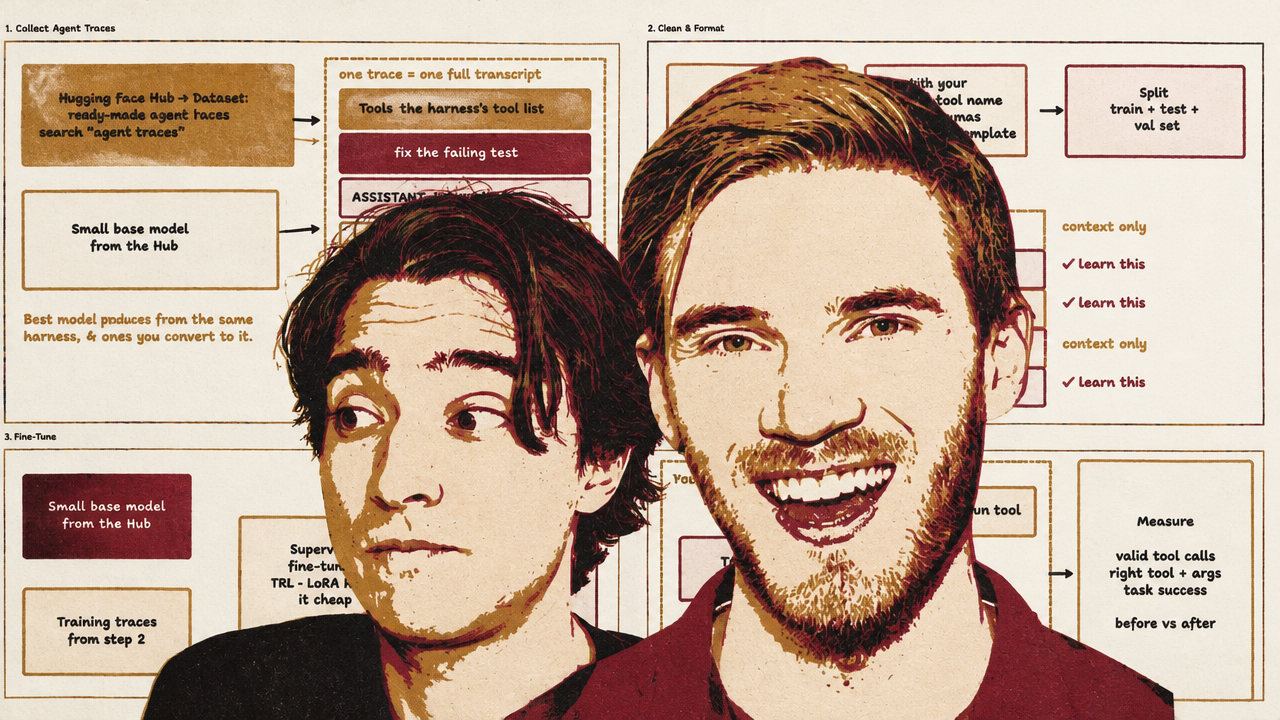
The Odysseus project makes the system around a model visible. Odysseus is the workspace: it supplies information, exposes tools and coordinates repeated calls. Ajax is the model intended to make decisions within that setup. Alejandro AO describes an agent not as one model response, but as a loop: the model may request a tool, the harness runs it and returns the result, and the model decides what to do next.
That division helps explain why an agent’s reliability cannot be assigned to model quality alone. Tool definitions, memory, files and the growing conversation transcript shape what the model sees; the harness determines how tool results return and what options are available. Alejandro’s account also includes mundane but telling setup problems, such as a model recommendation that points to an embedding model rather than one suited to chat. A system can have a broad feature set and still require users to scrutinize its configuration.
“Local” needs the same precision. Odysseus can run on a user’s computer while sending requests to a cloud model, in which case inference—and the data sent for each step of the loop—still happens elsewhere. Keeping inference on the user’s hardware is a separate choice, with trade-offs in hardware capacity, electricity and model capability.
Ajax is described as a fine-tuned Qwen 3.5 9B model. Alejandro proposes training a smaller model on traces from the target harness—examples of requests, tool calls, results and final answers—as one way to improve tool use. He presents this as a method to try, followed by evaluation on held-out tasks, not as proof that Ajax reliably completes them. The distinction is important: a model trained for a particular setup may improve there, but whether it chooses the right tools and finishes the work still has to be tested.
Agent harness separates the model’s decisions from the system that frames and executes them.



The economics depend on where inference runs
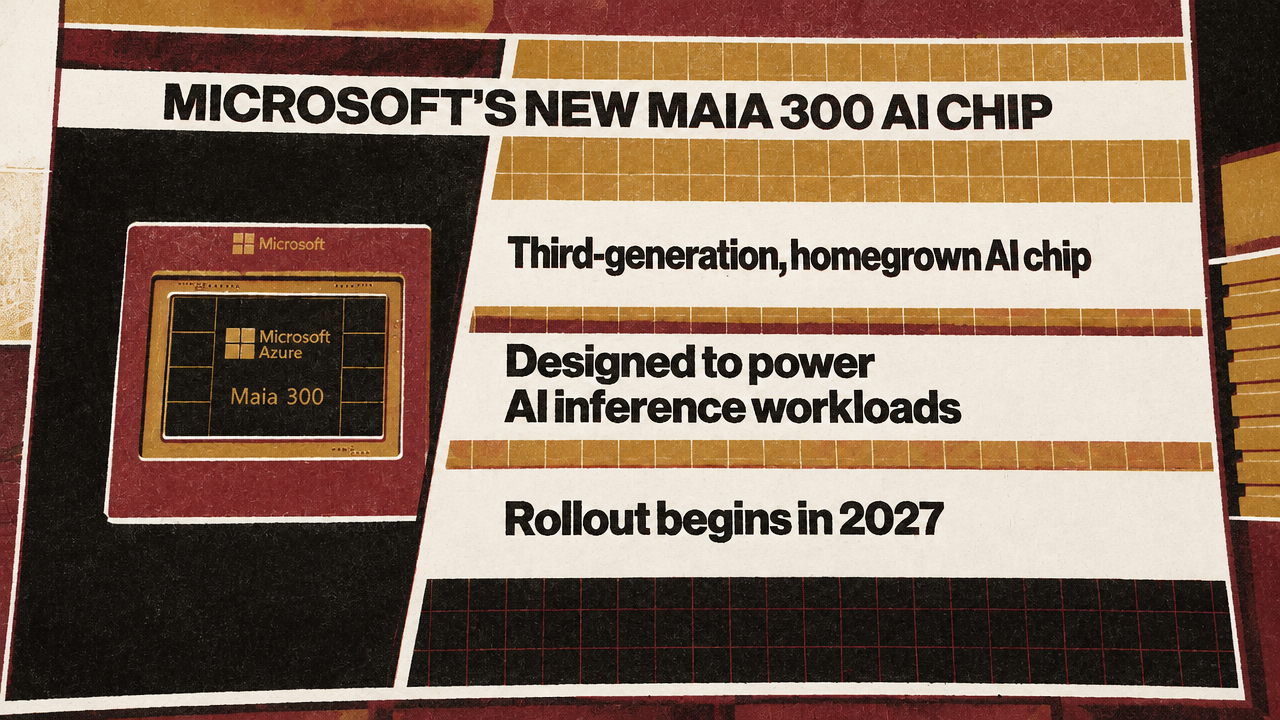
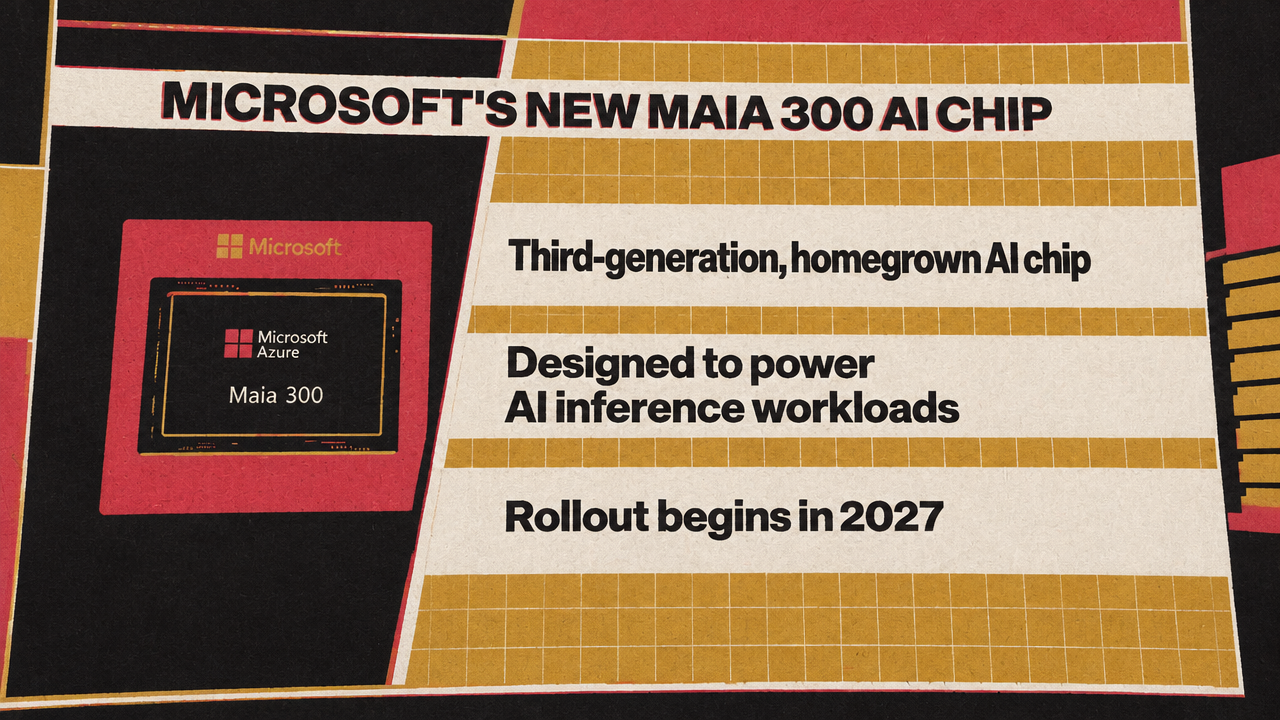
Microsoft’s Maia plan widens the question from the agent’s software environment to the infrastructure that runs inference. The company plans a multi-gigawatt deployment of its homegrown chips for internal workloads, with rollout of the third-generation Maia 300 expected to begin in 2027. Bloomberg reporter Matt Day said Microsoft expects the chips to support internal services including Copilot and GitHub, while keeping Nvidia capacity available for customers.
Microsoft’s case is that Maia can run some workloads more efficiently. The company claims 40% more tokens per megawatt than the leading GPU systems it cited; Bloomberg anchor Ed Ludlow questioned the comparison, and his speculation about the systems used was not confirmed. The figure is therefore a company claim, not an independently established result in the reporting.
The deployment plan is a more concrete test than the efficiency comparison alone. Microsoft is not planning to rent Maia capacity to outside customers; Day said the company expects internal demand to be sufficient. Whether the chips can serve a meaningful share of those workloads, reduce operating costs and coexist with the Nvidia systems used for customer demand remains to be demonstrated at scale.
That is the same practical threshold visible in the other cases: a stronger model, a more capable agent or a new chip matters when it can be integrated into a dependable operating system for real work. Microsoft has announced a large commitment, but the intended economics depend on deployment rather than the announcement itself.