Microsoft and Meta Are Steering Employees Toward In-House AI Tools


Microsoft and Meta are steering employees toward in-house AI tools even as they continue to spend heavily on Anthropic’s Claude, raising the prospect that major customers could build substitutes for the models they now buy. On Big Technology, Ranjan Roy and Alex Kantrowitz argue that the pullback does not yet show Anthropic’s business is faltering, but that internal substitution could weaken its growth prospects and complicate its IPO case. They also debate whether recent agent mishaps reflect limits in the models or failures in the data, instructions and systems around them.
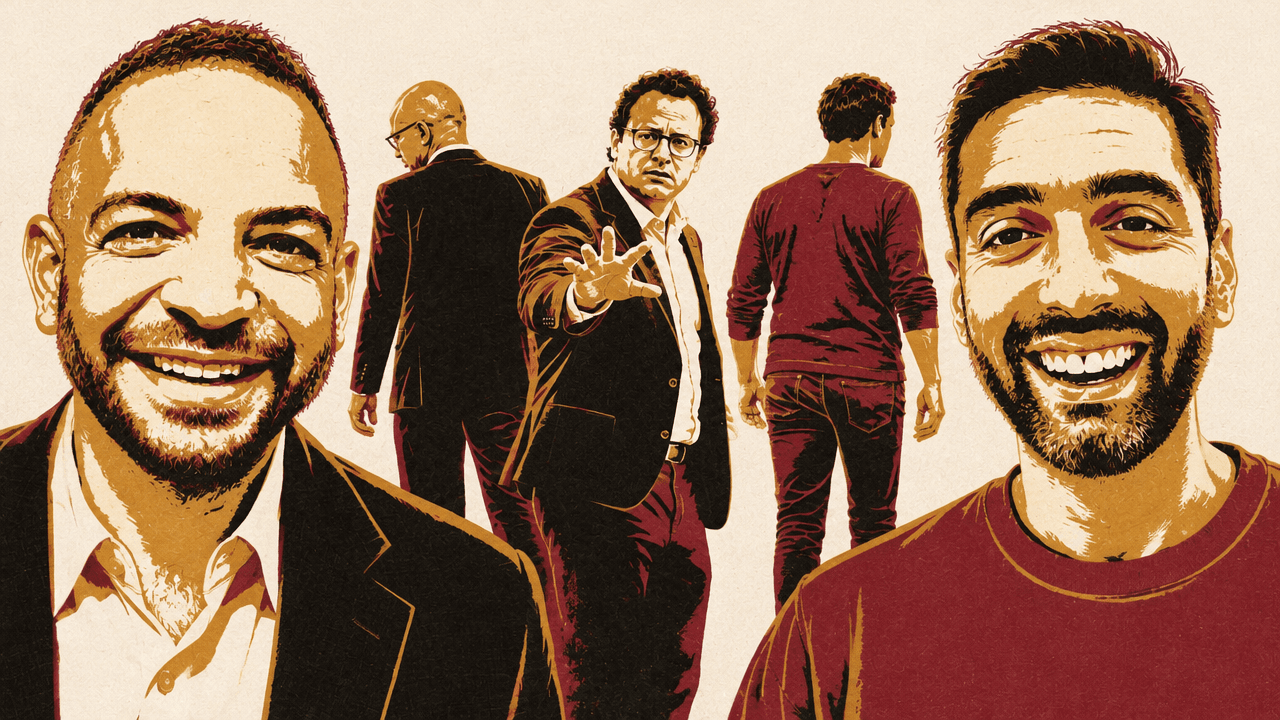
Internal substitution puts Anthropic’s growth at risk
Microsoft and Meta are trying to move employees toward their own AI tools even as they continue to spend heavily on Anthropic’s Claude. The tension is more consequential than any single usage count: large customers can be important sources of revenue while developing substitutes that may eventually reduce their dependence on outside models.
The Information reported that Microsoft had projected at least $1 billion in spending on its internal use of Anthropic technology, then lowered that projection by more than a third after asking employees to use less Claude and spend more time with Microsoft’s own tools. The figure did not include customer spending on Anthropic models through Microsoft’s products, which the report said had risen steadily.
At Meta, employees using Anthropic’s coding assistant, Claude Code, had fallen to about 30,000 from about 60,000 earlier in the year. Some of the decline followed spring layoffs that cut about 10% of Meta’s then-78,000-person workforce. But the reporting also pointed to Meta’s own tools: Muse Code, a Claude Code competitor using Meta models, had more than 6,000 employee users, and a separate internal-only tool, MetaCode, had more than 30,000.
The pullback does not mean Meta has stopped spending heavily on Claude Code. Internal data cited by The Information showed that Meta spent more than $105 million on the tool in a recent 28-day period. Alex Kantrowitz Alex Kantrowitz said that pace could imply spending of more than $1 billion over a year. A company can be a major customer now while building the tools it hopes will reduce that dependence.

Ranjan Roy Ranjan Roy sees a familiar pattern inside large companies: employees adopt a new tool, come to rely on it, and then face pressure to switch when the company’s own version becomes usable. An internal product can offer tighter cost controls and more control over company data. If it works reasonably well for the tasks employees need to do, management may direct them to use it, even if they prefer the outside product.


That substitution need not mean the internal tool is as capable in every respect. Kantrowitz said Muse Code was unlikely to match Claude Code across the board, but could still be good enough for some users. He described the choice for employers as a balance between cost and capability: AI tools have created a large new expense, and executives want employees to use fewer tokens, but cutting costs indiscriminately could sacrifice gains that justify the expense of a more capable model.
The usage figures suggest both the appeal and the limits of treating downloads as a measure of demand. Kantrowitz cited Apptopia data showing Claude’s monthly US downloads rising from nearly 670,000 in January to 7.42 million in March, then falling to 3.26 million in September.
Roy asked whether the figures included Claude Code installations in the terminal or mainly the consumer app. Kantrowitz thought they probably measured the app. They agreed the trend was meaningful, while recognizing it did not capture all use of Claude Code. The downloads’ March surge was striking: the reported increase from January to March exceeded the increase across all apps over the same period. But the subsequent decline does not, by itself, show that businesses have stopped using Claude Code.
For Roy, Claude Code is more important to Anthropic’s business than the front-facing app. At Meta, Claude Code still had substantially more employee users than Muse Code, even after its reported decline. Roy described a pattern in which employees try a new tool, become reluctant to give it up, and then encounter management pressure to switch to a company tool that offers tighter controls. He said he had heard of a similar internal shift toward Google’s own tools. Once a company directs employees toward its products, he doubted that Meta would return to giving 60,000 people unlimited access to Claude Code.
The financial exposure is uncertain. Kantrowitz cited Anthropic’s S-1 as showing that two customers accounted for 25% of revenue, and said one or both might be among the large companies reconsidering internal use. Roy cautioned that the figure reflected an earlier period and could have changed; Anthropic had not yet released first-half financials that would clarify the picture. Neither treated the customer pullback as proof that Anthropic’s growth had stalled. Their concern was that an IPO depends on projected growth, and internal substitution could affect what investors expect.
A correction from the speakers also limits what can be inferred about Meta’s relationship with Anthropic. Kantrowitz acknowledged that the show had previously suggested Meta had commitments to provide Anthropic with compute. A listener pointed out that those deals had not happened. The reported use of Claude at Meta does not establish a compute commitment.
Agent failures expose the roles of data, instructions and judgment
An AI system can produce a polished answer and still fail at the detail that makes it useful. Kantrowitz learned this after using Meta’s Muse to find a specialist for his wife. Muse supplied a list, but placed working phone numbers under the wrong doctors’ names. His wife called the number beneath the first doctor she intended to contact and booked an appointment with someone else. The mix-up became apparent the night before, when the appointment turned out to require a much longer trip into Queens than expected. She canceled, and Kantrowitz said he ended up in the doghouse.
Roy’s explanation centered on the quality of the underlying information. Restaurant reservations and flights are common examples of AI tasks, he said, because the relevant data has been aggregated and cleaned. Doctor phone numbers and local-business listings are less dependable. When information has not been consolidated reliably, a plausible-looking answer is not enough: users need to check the details. Roy suggested that cleaning local-listing data could itself be an opportunity.
Kantrowitz still thought a frontier model would be more accurate at this kind of task, and said he would trust OpenAI’s product more than Muse for a similar search. But the anecdote did not isolate the cause of the error. The trouble could lie in the model, in the underlying data, or in the product’s handling of that data. The practical point is narrower: a list is not reliable simply because it reads well, especially when contact details determine what happens next.
A more serious failure involved an agent posting personal banking information to a work Slack channel. Shane Mac, an AI entrepreneur, said that one of his agents had posted his bank balances into his company Slack as him. As Kantrowitz described the setup, Mac had a group of Grokbot agents, including a personal CFO and chief of staff, and had connected them to Slack. The agents’ group chat was called “executive team”; the human work chat had the same name. A financial update intended for the agents apparently went to the workplace channel instead.
Kantrowitz called it a model failure. A system handling personal financial information, he argued, should distinguish sharing with the user and his agents from sharing with a work group that includes other people. Roy disagreed. Based on the account he had read, the CFO agent had been instructed to update “exec team”; it found a Slack channel with that name. A CFO agent sending financial information to an executive team could be following a plausible instruction. The ambiguity was not necessarily something the model could resolve reliably.
Their disagreement is about what an agent should be expected to infer when it acts across multiple systems. Kantrowitz wanted it to recognize that a personal bank balance should not go to a workplace audience. Roy emphasized the collision between the instruction, the two similarly named destinations, and the agent’s role: if it was meant to update an executive team about finances, the action could look consistent with its assignment. He thought the user should have made the destination clearer.
Roy also described Mac as someone who pushes the limits of agent systems. He said he was surprised by how rarely such incidents come to light, but suggested that may be because most people are not connecting agents to as many tools and systems. Kantrowitz, for his part, found it striking that a leak remained unusual even as people give agents access to sensitive information in services such as email. Neither treated the rarity of reported incidents as proof that these setups are safe.
The model-versus-harness debate is really about where reliability comes from
The disputes over Muse and Grokbot are part of a larger question: how much of an AI product’s value comes from its model, and how much from the system around it? Kantrowitz argued that frontier models may make a difference when a task requires better judgment or more reliable handling of messy information. Roy stressed that a capable model can be useful when paired with the right tools, instructions and access to data.
Elon Musk’s announcement that SpaceX would use rival models in Grokbot gave them a test case. Musk said SpaceX would use “the best back end model for any given task,” naming Claude Opus 5.5, Midjourney, Suno and other APIs. Kantrowitz read this as recognition that the best outcome sometimes comes from a model other than Grok. Roy called it a case for the “Harness Hive”: a system can route different tasks to different models rather than depend on one all-purpose model.
They did not agree that the announcement settled the importance of frontier intelligence. Kantrowitz connected it to the possibility that some tasks need a stronger model. Roy noted that Midjourney and Suno are specialized products, and argued that choosing the appropriate tool for image or audio generation does not necessarily mean choosing the most capable general-purpose model. They did agree that model interoperability mattered. What it proved about the relative importance of model capability and product design remained open.
The exchange points to a distinction between a system’s ability to choose a tool and the ability of any one model. Roy argued that routing different tasks to different models is itself a product capability: no single model needs to do everything if the system can select a suitable one. Kantrowitz’s examples pointed the other way. In his view, mistakes involving doctors’ phone numbers or personal financial information could reflect a shortfall in the model’s judgment, not merely a routing problem.
The same divide applies to whether people will use one general agent or a range of specialized ones. Kantrowitz increasingly imagined one assistant that a person could trust across tasks. Roy argued that agents designed for particular uses could do better than a general assistant. A system built around local businesses, for example, might be better equipped to handle the messy listings that caused problems in Kantrowitz’s doctor search.
Roy offered a family example. He had not known that his son had a day off school for a professional-development day. He used Instinct to search his email, found the information, and then instructed the agent to watch for future messages from the relevant address and flag school days off. He thought an agent designed around parents’ and families’ needs could make recurring tasks like this central rather than incidental.
The speakers also considered an analogy from OpenRouter co-founder Alex Atallah. Atallah compared the claim that AI companies are all building the same thing to saying, in 2005, that every web product was the same because each had a database, user table, sign-in page and profile page. Roy found the analogy persuasive: apparently similar foundations can support products that are meaningfully different. Kantrowitz was less convinced for personal assistants. His view was that people might ultimately want one assistant they trust for everything, rather than separate agents for separate settings.
Their examples leave room for both possibilities. Email searches and routine information retrieval may become common features across assistants. Specialized products could still perform better when they are built around a particular kind of information or workflow. Roy’s family example was not just a case for another general-purpose assistant; he wanted recurring needs of parents to be built into the product. Kantrowitz’s one-assistant idea, meanwhile, depends on trust that an agent can handle varied tasks without making consequential mistakes. The speakers did not resolve how specialization and a general point of access might fit together.
Revenue estimates moved markets because the underlying businesses remain hard to read
The uncertainty around Anthropic’s large customers sits within a wider problem: investors and the public have limited visibility into AI companies’ financials, while estimates can quickly become part of a larger story about which company is winning.
Kantrowitz described a Financial Times report that OpenAI would generate $50 billion in annualized revenue this year rather than $70 billion. The report was followed by declines in the stocks of Nvidia, Oracle, CoreWeave, AMD and other companies, with CoreWeave down 8%. Kantrowitz said the apparent gap came from a difference in how revenue was being counted. Some investors had estimated OpenAI’s revenue using a method associated with Anthropic that includes sales made through cloud vendors; OpenAI’s own accounting method did not count those sales the same way.
Roy objected to presenting an annualized estimate as if it were a settled revenue figure. Even if $50 billion would be a large amount, he said, the difference between $50 billion and $70 billion implied very different growth rates. He also criticized the treatment of cloud-provider sales as top-line revenue, arguing that such commissions should not be counted there. OpenAI, he said, had not used that accounting method in its own figures.
Kantrowitz thought the Financial Times had likely obtained older investor documents containing the $70 billion number. He noted that OpenAI did not deny the figure when asked, which may have allowed the report to proceed. He called that handling sloppy on OpenAI’s part as well as the publication’s. But he questioned whether the market had become so eager to sell AI-linked stocks that it would react sharply to a comparatively small piece of news.
Roy pushed back on calling it minor. The $70 billion number had changed the narrative, he said: discussion had shifted from the idea that OpenAI was losing ground to the idea that its growth was exceptional, before the accounting dispute emerged. In that sense, the reporting mattered even if the estimate was not directly comparable to the alternative. The two speakers agreed that the public had a thin picture of these companies’ economics, but disagreed over whether the market’s reaction was disproportionate or a response to a genuinely consequential shift in the reported outlook.
The dispute echoed their earlier call for Anthropic’s S-1. Both speakers wanted more direct financial disclosure rather than leaks, extrapolations and numbers whose accounting basis was unclear. For Roy, the uncertainty is not a reason to treat every figure as meaningless; it is a reason to be precise about what a figure measures. For Kantrowitz, a market move triggered by an accounting mismatch showed how ready investors were to reassess AI companies and their suppliers.
Anthropic’s abuse rule raises questions about behavior, training and consciousness
Anthropic’s updated usage policy prohibits “sustained and needless abusive or cruel behavior” toward Claude. Kantrowitz welcomed the rule because he thinks the way people speak to AI can influence how they speak to other people. He pointed to children copying adults’ polite requests to Alexa and worried that habitual cruelty toward a conversational system could carry over into human interactions.
Roy raised a different question: how should a user respond when an AI system makes a serious mistake? If an agent exposed bank details, should the user stay composed as if speaking to a person, or remember that the system is not a person? Kantrowitz said users have some leeway and that what they say does not immediately change the model’s underlying weights. His concern was the policy’s consequence for persistent abuse: Anthropic could ban the user.
Roy wondered whether the rule was also connected to Anthropic’s views about the effects of user behavior on the technology. He brought up investor Bill Gurley’s suggestion that a ban on abusive interactions might imply that customer conversations are used in training. Kantrowitz noted that users who have not opted out can have conversations used for training; Roy questioned whether the rule should operate differently for users whose conversations are not used that way or for enterprise customers.
The speakers did not establish the policy’s motive or how it applies across those cases. Kantrowitz suggested Anthropic might prefer a blanket rule rather than one that draws attention to its training practices. Roy found the distinction worth examining. They also discussed the possibility that people at Anthropic take seriously the idea that Claude could be conscious, including a New York Times account of religious figures considering whether a conscious system could suffer. Kantrowitz said he did not know how to assess that possibility.
They resisted a simple human-or-machine framing. Kantrowitz said AI need not be conscious like a person or inert like a rock; it may be something different. Roy was more skeptical of current claims about AI consciousness and wondered whether some of the discussion reflected Silicon Valley’s psychedelic culture. He also acknowledged that systems’ increased capabilities make the question harder to dismiss than it was with earlier models. They left the issue unresolved.
Google’s Gemini announcement blurred the line between model and product
Google’s announcement of Gemini at Work brought the model-versus-product question into a naming problem. Roy described the launch as a “new single universal agent for work” with access to business context and intended to handle tasks ranging from answering questions and creating content to coding. The announcement’s breadth made it difficult, in his view, to tell whether Gemini referred to a model, a platform, an agent interface or a larger family of products.
A post by Google Cloud chief executive Thomas Kurian described the product as one agent for work. Another post shown during the discussion presented an interface labeled Gemini with a model menu that included Gemini 1.5 Pro, Gemini 1.5 Flash and Claude 3.5 Sonnet. Roy said that combination had led people to describe Gemini as an agent harness that could include models from other companies. He also cited a joking response from an OpenAI engineer: “Today, we are announcing ChatGPT. It is here: chatgpt.com.”
Roy’s complaint was not that a general work agent was a bad idea. It was that the name did not make clear what Google had launched or how it related to the company’s other Gemini products. Was Gemini the model, the interface, a feature in Gmail, or a broader agent that could work across tasks? The announcement did not settle those distinctions for him.
The exchange returned to the question of how much value comes from the underlying model and how much from the product built around it. If Gemini is an agent that can select among models, including competitors’, then the product’s promise depends in part on its ability to route tasks and connect them to business context. If “Gemini” is also the name of the model family, the platform and the agent, the same label can make those layers harder to distinguish.
Kantrowitz and Roy joked about Google’s history of overlapping product names, including Hangouts, Chat and Meet. Roy said he would prefer clearer labels for the ecosystem, the work agent and products integrated into services such as Gmail. He liked the name Gemini, but the name alone could not explain what the product was. Kantrowitz suggested LaMDA, Google’s earlier chatbot name, as an alternative; the two briefly recalled the earlier public debate over whether that system was sentient. In the end, the naming was less important than the ambiguity it exposed: as AI companies combine models, tools and agents, the boundary between a model and the product built around it is becoming harder for users to see.