JPMorgan’s Early AI Investment Is Widening Its Lead Over Banks
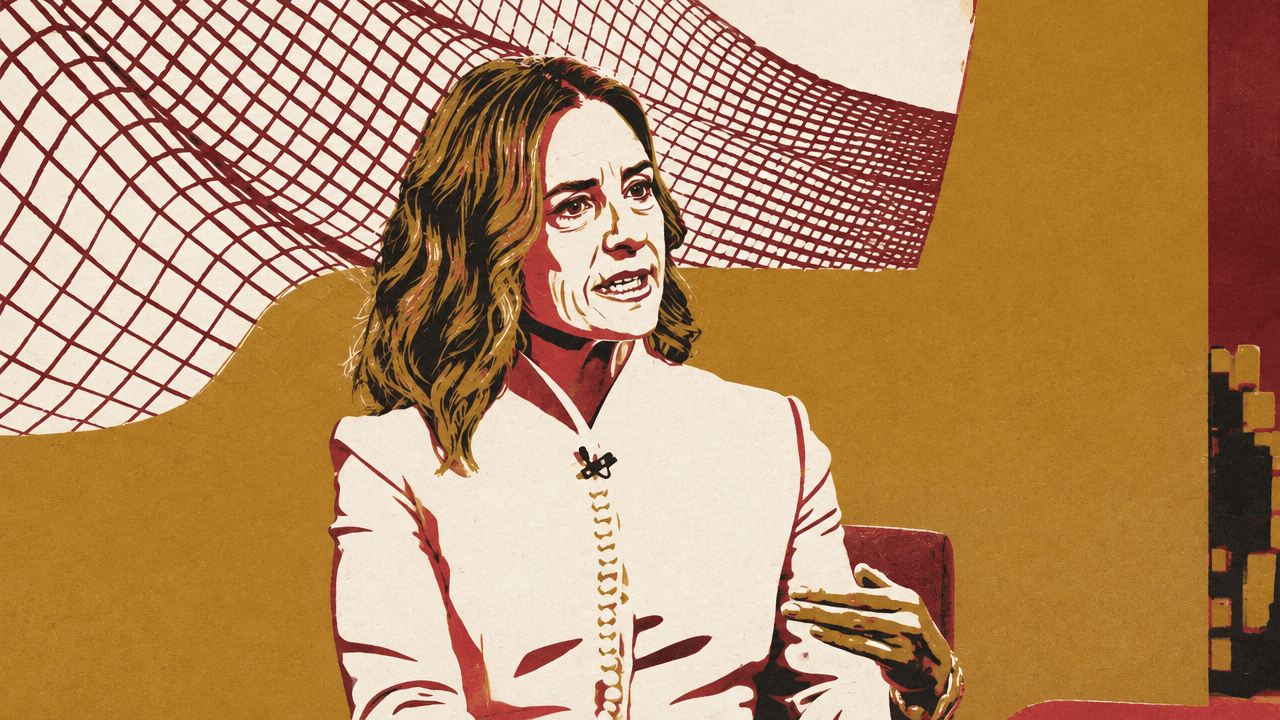
JPMorgan Chase remains at the top of Evident’s global ranking of banks’ AI capabilities as deployment across the industry accelerates, and CEO Alexandra Mousavizadeh says early movers are widening their lead. Their advantage, she argues, comes not just from adopting AI sooner but from having more time to reorganize operations around it. Mousavizadeh also says banks investing most heavily in AI are still growing headcount, even as the technology automates some tasks and changes jobs.
The leaders are widening their lead
JPMorgan Chase remains first in Evident AI Index’s global ranking of banks, followed by Capital One and Royal Bank of Canada. The top three held their positions a year later even as AI deployment across banking reached its fastest pace to date, according to ? alexandra-mousavizadeh Alexandra Mousavizadeh, Evident’s CEO and co-founder. The competition is accelerating, she said, but the leaders are moving faster still.
The ranking’s top ten also includes CommBank, Wells Fargo, UBS, Bank of America, Citigroup, Morgan Stanley and TD Bank. Its stability at the top raises a question: does early adoption create a lead that becomes harder for competitors to close? Mousavizadeh’s answer is that a head start matters not just because a bank gets access to the technology sooner, but because it has more time to reshape how it operates around it.
JPMorgan’s early investment is one example. The bank established a research lab in 2017, and CEO Jamie Dimon said in 2018 that the organization would be “AI first,” Mousavizadeh said. That gave the bank years to consider how AI could change its work and how to prepare for shifts in financial services—before ChatGPT’s release in November 2022.
Early adoption means changing the operating model
Mousavizadeh described a progression from centralized AI work toward deployment within individual businesses. Banks first centralize expertise, then build a platform architecture that allows teams to deploy generative and agentic AI quickly and safely. Responsibility can then move to the heads of business lines such as capital markets, investment banking, wealth management and asset management, who are closer to the workflows the technology is meant to change.
Specialists are distributed into those businesses and functions to support that work. The point, in her account, is not simply to buy or build AI tools: it is to establish the structure that lets the bank apply them across different operations. Early movers have had more time to develop that structure and are now benefiting from it.
That approach combines a shared technical foundation with decisions made close to the work. Central platforms support speed and safety; business-line leaders and embedded specialists bring knowledge of where deployment may be useful. Mousavizadeh linked the leading banks’ continued advantage to having worked through those organizational choices earlier than their peers.
AI is changing jobs, but headcount is still growing
Mousavizadeh said Evident’s view of banks investing most heavily in AI runs counter to predictions of an imminent white-collar job collapse. In the enterprises the firm tracks, she said, those investments are accompanied by headcount growth—not a broad reduction in staffing.
Her explanation is that AI lets banks take on work they could not previously manage: clearing backlogs, addressing problems left untouched and developing new products. Hiring is not limited to teams building the AI systems. Mousavizadeh also pointed to demand for non-technical roles, including relationship managers.
She did not suggest that existing jobs are untouched. Call-center demand may fall, and parts of client onboarding—especially document ingestion and know-your-customer processes—are being automated. But automation can also create new work. Banks may need teams to monitor activity more closely and at higher frequency than was previously practical.
Mousavizadeh estimated that for each job changing, banks may see four new roles emerge. She presented that as a broad pattern, not a claim that every affected worker moves into a new position. Her longer-term view was that AI could become the biggest job generator in decades, even as particular tasks and roles are displaced.