Microsoft Plans Multi-Gigawatt Maia Deployment for Internal AI Workloads


Microsoft is moving its Maia chips into data centers as it seeks to run more of its AI workloads on homegrown hardware. Bloomberg reporter Matt Day said the company plans a multi-gigawatt deployment, with its third-generation Maia 300 beginning rollout in 2027, and expects internal services such as Copilot and GitHub to use the capacity. Microsoft’s case for the chips is that they can run some workloads more efficiently and reduce the cost of its data-center operations.
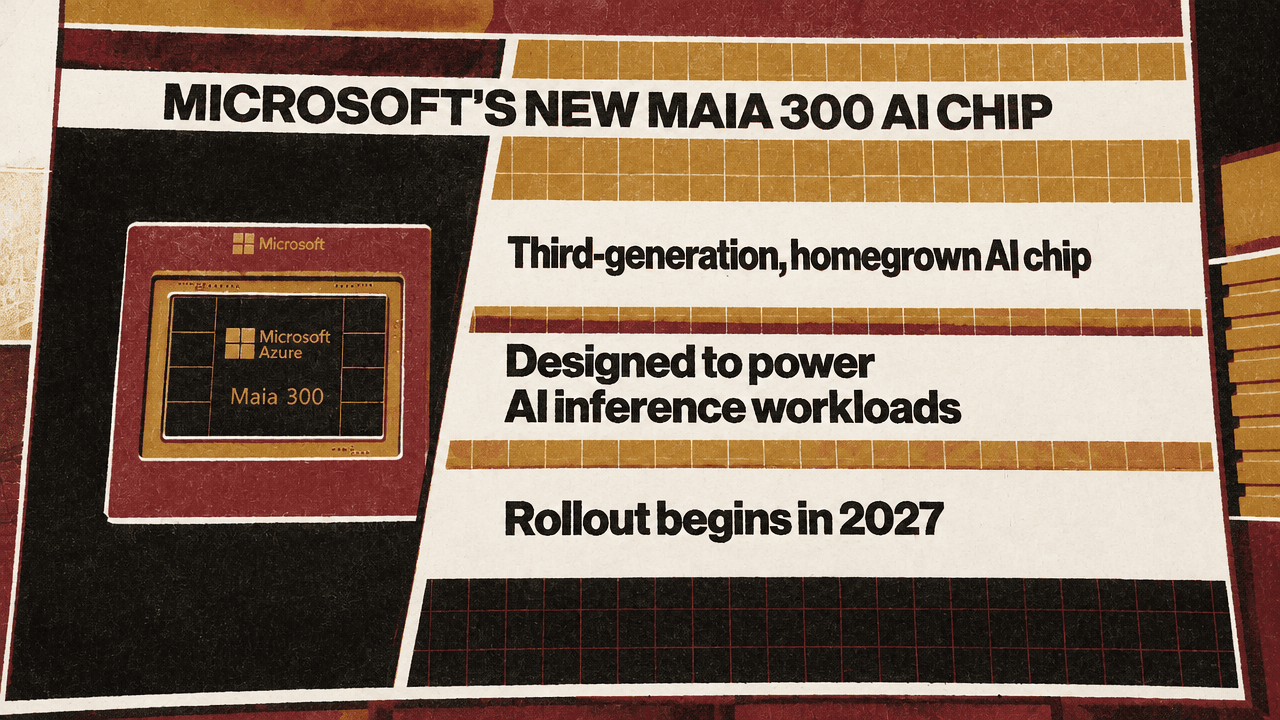
Maia 300 is built to run models, not train them
Microsoft’s Maia 300 is a third-generation, homegrown system-on-a-chip designed for AI inference: running models that already exist rather than training new ones. Matt Day said Microsoft expects enough chips in its data centers to make a meaningful difference to the cost and performance of its AI workloads. A slide shown during the discussion said rollout would begin in 2027.


Ed Ludlow described that efficiency figure as Microsoft’s claim and raised a question about the comparison behind it. He speculated that Maia 300’s use of HBM4 might mean Microsoft was benchmarking against Nvidia’s Vera Rubin systems; he did not present that as confirmed. Day’s account centered on the practical aim: deploy enough of the chips to run a meaningful share of Microsoft’s internal AI work more efficiently.


The figure and the deployment plan point to the same test for Maia: whether Microsoft can build and use its own chips at a scale that affects the economics of its data centers. Day said the company expects the chips to back most of its AI workloads internally. That does not mean every workload moves to Maia; the plan is to use the chips for some of the work Microsoft needs to run.
A multi-gigawatt deployment would move the program beyond experimentation
Microsoft entered custom AI silicon later than some of its hyperscale competitors. Day pointed to Google’s TPU effort, which began years earlier, and Amazon’s chip lines following its Annapurna acquisition, including Trainium and Inferentia. For Maia’s third generation, he said, the question was whether Microsoft would put the chip into service at enough scale to mature the program—or take it in another direction.
Microsoft’s multi-gigawatt deployment plan is the clearest signal in Day’s account that the company intends to keep building on Maia. He estimated that Microsoft has about 12 gigawatts in its data centers today, making the planned deployment a substantial commitment relative to its existing footprint. He connected that commitment to Microsoft’s belief that it can build a more efficient alternative for some of its workloads.
The ambition sits within a much larger buildout. Day said Microsoft, like Amazon, Google and Meta, is spending hundreds of billions of dollars on data centers. Equipping those facilities with Nvidia systems is among the most expensive parts of making them run AI workloads. Maia is an attempt to add homegrown chips to that infrastructure and reduce costs on work Microsoft can run itself.
Microsoft plans to keep Maia capacity for its own services
Microsoft does not intend to rent Maia computing power to outside customers. Day said the company believes internal demand is sufficient, pointing to Copilot and GitHub as examples of services that can use the chips. Microsoft would run some of that work on Maia and keep Nvidia capacity available for customers.
That choice makes internal demand central to the deployment plan. Microsoft is not counting on sales of Maia compute to third parties to justify putting the chips into service; its stated case is that its own AI workloads can use the capacity. The company’s plan to reserve Nvidia systems for customers also clarifies how Maia fits into the broader buildout: it can take on some internal work while Nvidia capacity remains available for customer workloads.