Frontier Hardware Startups Face Infrastructure Constraints Beyond the Demo
 Alex Wilhelm
 Jason Calacanis
 Lon Harris
 Hon ChongMichael NorciaThis Week in StartupsMonday, June 1, 202620 min read
Cortical Labs and Pyka show how frontier hardware companies move from demonstration to deployable infrastructure. On This Week in Startups, Cortical founder Hon Weng Chong presents the CL1 as a programmable biological computer that packages lab-grown neurons, silicon hardware, life support and cloud tools, and says unpublished work shows neurons can be 5,000 times more sample-efficient than GPU-based reinforcement learning systems. Pyka chief executive Michael Norcia argues that autonomous aircraft face a different bottleneck: not whether they can fly, but whether regulation, uptime, maintenance and field deployment allow them to improve in real use.
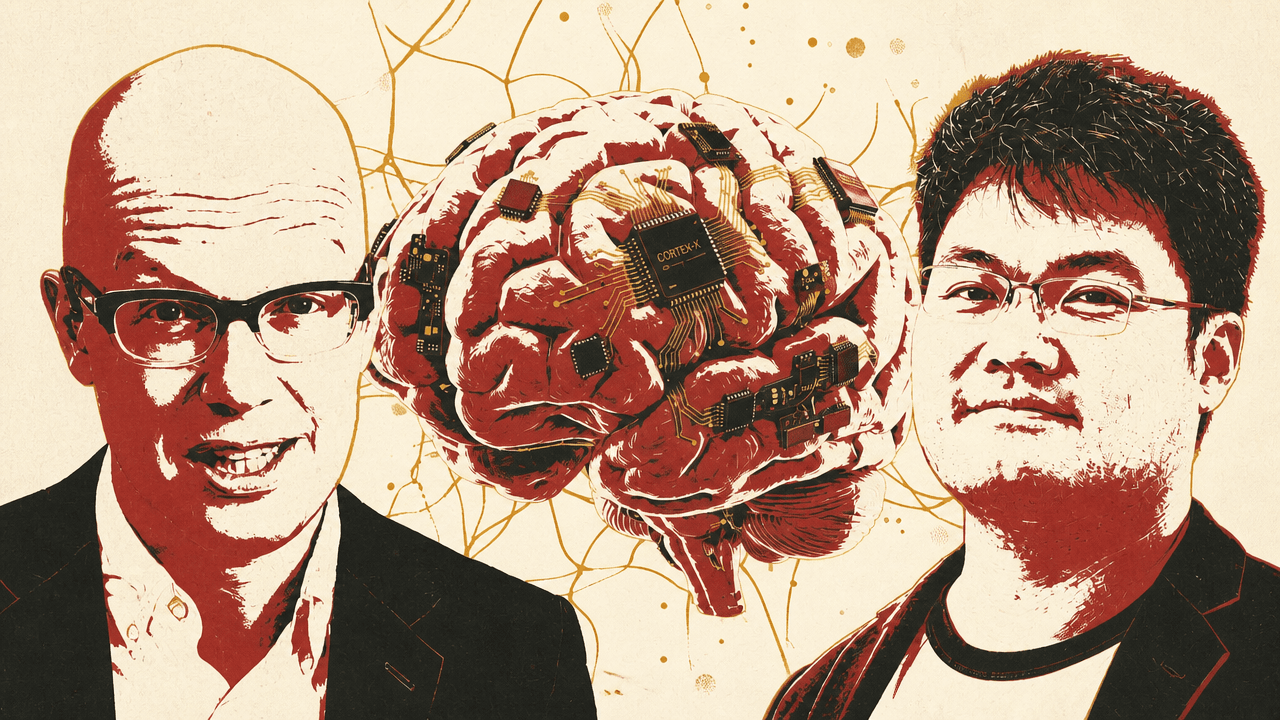
The common thread between Cortical Labs and Pyka is not that one company works on neurons and the other on aircraft. It is that both are trying to turn frontier hardware into deployable infrastructure. In both cases, the demonstration is only the beginning. The commercial problem is access, uptime, maintenance, regulation, developer or operator workflow, and enough exposure to the real world for the system to improve.
Cortical Labs is trying to make biological compute programmable
Hon Chong described Cortical Labs’ CL1 as a computing platform built to make biological computing accessible to researchers and developers without requiring them to assemble their own hardware, software, and cell-culture systems. The device combines a neural chamber containing lab-grown neurons with silicon hardware, life-support systems, and conventional developer interfaces. Users program it in Python.


The CL1 is not presented as a metaphorical biological computer. Chong showed a rack-mountable 3U unit with a neural chamber under a top latch, compute electronics at the back, and a life-support system around it. The system keeps the neurons at 37 degrees Celsius, feeds them, removes waste, mixes gases, and filters the media. Chong compared the components to organs: pumps like a heart, feeding and waste reservoirs like a stomach and bladder, filtration units like kidneys, and a gas mixer like lungs. The back panel includes USB-C, USB-A, Ethernet, and gas inputs for filtered room air, CO2, and nitrogen, plus a waste-gas outlet the company jokingly calls the “fart valve.”
Alex Wilhelm called the device “a very long Space Age toaster,” but the unusual part is not its form factor. It is that Cortical Labs is trying to turn living neural tissue into something that fits into the operating model of computing infrastructure: rack-mounted hardware, cloud instances, dashboards, SDKs, Jupyter notebooks, documentation, and developer access.
Chong said the company had exhausted its first stock of 30 CL1 units. Wilhelm did the quick arithmetic aloud, estimating that at roughly $1 million given the prior price of about $35,000 per unit. Chong did not present that as a formal revenue figure. He said he was in the United States both for fundraising and, as he put it, as “company courier,” delivering units to Johns Hopkins, Mass General, and UCSF. Dartmouth had received an early preview unit the previous year. About five U.S. institutions now have CL1 devices, according to Chong.
The biological scale is still far from a human brain. A CL1 can support up to a million or two million neurons if desired, Chong said, and organoids grown on the devices can contain several million neurons. Cortical Labs’ cloud offering uses about 200,000 neurons because that number is commercially viable, easier to grow and maintain, and sufficient for learning and training. When Wilhelm asked for a comparison to the human brain, Chong said he believed humans have roughly 100 billion neurons and trillions of synapses. The closer analogy for Cortical’s systems, he said, would be a cockroach or fly.
That comparison matters because Chong’s claim is not that the system approaches human cognition. His point is that even small biological systems have capacities that machines still lack. A fly will not solve calculus, he said, but it is very hard to kill because it is fast, agile, and appears to anticipate motion. In Chong’s framing, current AI systems can be “super intelligent” in narrow domains without being generally intelligent. He invoked the test associated in the discussion with Steve Wozniak: can a system walk into an unfamiliar kitchen and make itself a cup of coffee? “We don’t have that yet,” Chong said.
The bet is that biology offers generalized adaptation even at small scales. Cortical Labs wants to exploit those properties without building systems anywhere near the ethical and technical complexity of human intelligence.
The strongest compute claim is sample efficiency in reinforcement learning
The most consequential technical claim from Hon Chong was about reinforcement learning. He described novel work, still being written up, with a “really strong research partner” on whether neurons can exhibit goal-seeking behavior or pathfinding. The answer, he said, was yes. More surprising to the team was a benchmark comparison: the neurons were 5,000 times more sample efficient than GPU-based reinforcement-learning systems.
Chong explained sample efficiency in practical terms: for every step the biological system takes, the GPU-based system needs 5,000 steps. GPU reinforcement learning can compensate by accelerating time in simulation. But that advantage disappears when an agent is embodied in the physical world. “You can’t accelerate time if you’re a robot,” he said. A robot has to operate at the same speed as everything else in the real world.
That caveat is central to why the claim matters. Alex Wilhelm noted that reinforcement learning is a major part of improving AI models today, and the implication was that biological computing could extend beyond drug discovery and disease modeling into broader computing workloads. Chong did not claim that CL1s are ready to replace GPUs or TPUs generally. He framed the current advantage specifically around reinforcement learning and said the work had not yet been published, though the team hoped to publish it later in the year at NeurIPS in Sydney.
The discussion also distinguished between two possible bottlenecks: hardware scale and algorithms. Wilhelm asked whether future systems would need more neurons as chips improve, or whether the current biological scale is sufficient while gains come from the silicon side. Chong argued that, for now, Cortical Labs sees the bottleneck as algorithmic. The hard problem is representing digital information from the internet and other machine-readable environments in analog biological systems. Brain-computer-interface companies such as Neuralink and Synchron face related interface problems, he said, but Cortical Labs has an additional challenge: writing information directly into neurons.
Chong compared the situation to GPUs before large language models. The hardware existed before the decisive algorithmic use case appeared. In his telling, the rise of AI from GPUs and CUDA was partly serendipitous: CUDA was free, could run on even weak gaming GPUs, and eventually intersected with researchers such as Alex Krizhevsky working under Geoffrey Hinton on image recognition. Chong’s commercial lesson from that history is that accessibility can create the conditions for unexpected applications.
The biological data center changes the operating model
Cortical Labs has 120 CL1 units in six racks in its lab in Australia, which Hon Chong called “the world’s first biological data center.” The phrase began, in his telling, as a simple observation from someone who visited: if the company sells biological computers, then a place with many of them is a biological data center. But the infrastructure implications are more serious than the joke suggests.
A single CL1 uses about 30 watts of energy, Chong said. That low energy demand is one reason Cortical Labs is working with Day One on a Singapore data center. Singapore’s data-center environment operates under a tight 200-megawatt energy window specified by the government, according to Chong. Day One can offer conventional chips like other data centers, but also add Cortical’s compute without materially affecting its energy budget because the CL1s do not require special cooling and consume little power.
The Singapore plan goes beyond hosting the hardware. Chong said Day One has built space for 1,000 CL1 units and, next to it, a laboratory for growing the cells used for compute on-site. Alex Wilhelm emphasized that the neurons are stem-cell-derived and that the company is not taking brains from people. Chong said on-site cell growth saves a “tremendous amount” in operating costs and removes a supply-chain constraint. In his framing, it changes the model from centralized chip supply to a decentralized data-center model in which each site can manufacture its own biological compute units.
The maintenance cycle is also biological. Neurons can live a long time if well kept, Chong said, but the tube sets require replenishment, mainly because filtration cartridges clog with large protein growth factors. He compared that to kidney failure. Swapping the cartridges gives the system another four to six months. When Wilhelm joked that the neurons might be fed sugar water, Chong said that, essentially, they are.
The current cloud capacity is still modest. Cortical Labs has deployed 120 CL1s, but biology-related “teething” means only about 20 users are on the cloud at the moment, with another 10 to be brought online. Cell growth introduces lag: what is available now reflects decisions made two months earlier. The queue is getting smaller, Chong said, and corporates and partners are beginning experimental work.
A DOOM demonstration ran on one CL1, not a cluster. Chaining systems together is not yet available, but Chong said it is coming in Q2 or Q3. Cortical Labs is also experimenting with PDMS microfluidic wells that segment the surface of the chip, potentially allowing multiple users or workloads on the same CL1. Chong described PDMS as a gel-like material used to make microfluidic devices. In the slide he showed, octagonal wells contained several thousand neurons each, connected by channels. Those channels constrain axon growth so neurons can communicate only with nearest neighbors, or only along particular directions such as east-west or north-south. Chong likened this to a chiplet model: instead of assigning the entire surface and all electrodes to one workload, the company may be able to partition smaller neural regions and share an instance.
The cloud demo looked like developer infrastructure, not a lab bench
Hon Chong showed the Cortical Cloud interface from New York while connected to a live cell culture in Melbourne. The important point was not that the dashboard exposed operational telemetry, though it did. It was that Cortical Labs is wrapping biological compute in a developer workflow that looks familiar: instances, activity views, Jupyter notebooks, an SDK, and documentation.
The activity view showed a raster plot of neural spikes and a topological map of the chip. Alex Wilhelm described it for audio listeners as looking like stars moving past a spaceship window. Chong explained that each spike or action potential is marked across channel rows and on the chip map, allowing users to see temporal correlations, bursting activity, synchrony, and clusters of activity. Another view showed raw waveforms, which Chong said are similar to what a Neuralink would pick up. He clicked a region of the chip to deliver a stimulus and “wake them up a bit.”
The interface also includes Jupyter notebooks, an SDK available through pip install, and documentation at docs.corticallabs.com. Developers write application code in Python. They define the environment for the neurons, the parameters of the game or task, reward and punishment signals, objective functions, and visualization. Chong described programmers as “mini architects for mini Matrices”: they build the world into which the neurons are placed.
The DOOM example was not built internally by Cortical Labs, according to Chong. It came from a student developer at a Stanford hackathon with no biology background who used Cortical’s API and SDK. The company helped tell the story after the result proved compelling. In Pong, Cortical had already used ordered stimulus versus disordered stimulus as reward and punishment. In DOOM, the mechanism was similar but the task had more variables. Initially, the system discovered that if it spun around and spammed the shoot button, it could win because wasting ammunition had not been penalized. After the reward structure changed to punish wasted ammunition, it began to learn more interesting gameplay.
Wilhelm used that example to connect the technical design back to the ethics. If disordered inputs are used as punishment, then it matters whether the system is conscious or capable of suffering. Chong agreed. The same mechanism that makes biological reinforcement learning legible as engineering also makes consciousness a red line.
Cortical Labs’ ethical boundary is consciousness, but the boundary is not easy to locate
Alex Wilhelm raised the religious and ethical question directly: once a company moves from Pong to CL1 sales to DOOM and biological data centers, does anyone object that it is “tinkering a bit with the edges of humanity”? Hon Chong said the Vatican had been worried, but that Cortical Labs’ chief scientific officer had engaged bioethicists proactively. The company tries to address these criticisms before they arrive, he said, because biomedical work already requires ethics-board oversight and because this field carries unusual ethical stakes.
Chong said one of the most important tasks is shared nomenclature among people working in biological computing and consciousness. Without agreement on what is being studied, he argued, the field will produce “a lot of fear with not much understanding.” He said a discussion with the Vatican included questions about religious and ethical issues and that, fortunately, they “agreed that what we were doing was all right” and “fine.” He did not describe a formal Vatican approval process or a detailed ethical ruling.
The ethical questions, as Chong framed them, include whether the work involves humanization and whether there is a net good from the technology versus a net negative. That is one reason Cortical Labs began with conventional biomedical uses such as drug discovery and disease modeling. Those remain the primary use cases for labs purchasing the devices. Chong cited Mass General’s Alzheimer’s and dementia work, Johns Hopkins’ toxicology and alternatives to animal testing, and UCSF’s movement-disorder research and related work.
The compute side, Chong said, is the smallest and newest part of the business, and the one most “fraught with risk” because the company cannot know what people will build. Internally, Cortical Labs has drawn a red line that it does not want to cross: consciousness.
You do not want to create conscious systems because ethically, a conscious system has the ability to suffer.
The problem is locating that line. Chong said the company can monitor systems in the cloud, but once devices go into the real world, it does not know everything users do. He added that about 90% of purchases have come from academic R&D institutions that the company trusts to act appropriately.
Wilhelm noted that a data center full of biological computers raises a science-fiction question: if many systems can interact, does the math change? His own answer was that the world is still far from having enough biological computers linked together for that concern to dominate. Chong’s more immediate commercial and ethical emphasis remained narrower: keep systems non-conscious, serve legitimate research uses, and lower access barriers so developers can discover applications under controlled conditions.
Pyka’s drone business is constrained less by flight than by deployment
Michael Norcia founded Pyka after years of personal obsession with aviation and professional work on eVTOL projects. He told Lon Harris that he had worked on three or four passenger-carrying vertical-takeoff-and-landing air-taxi concepts in the Bay Area, but concluded almost 10 years ago that commercial certification was realistically two decades away. That timeline pushed him to start Pyka.
Pyka’s first aircraft flew during Y Combinator, about a week before Demo Day. Norcia said the team spent one month designing a roughly 600-pound autonomous aircraft, built it in under two months, and flew it in week 11 of the program. It took off and landed using Pyka’s own software. Yet he characterized that as only 1% of the work the company has done since. The prototype mattered as a demonstration, but it could not perform a meaningful customer mission: it could not spray crops, move cargo, or meet the reliability expectations of commercial users.
For Norcia, the hard part of hardware is not making something fly once. It is making a tool customers can rely on every day in remote environments. Pyka’s agricultural aircraft now operate with customers seven days per week, and some customers run 12- to 13-hour shifts. Those customers may be six hours from the nearest city, he said, and they are upset if an aircraft is down for more than 24 hours. The work is repeated deployment, flight, learning, retrofit, repair, and re-engineering until the product reaches what Harris called “market product reliability fit.”
That operating reality is why regulation appears early in Pyka’s story rather than as a late policy footnote. Norcia said Pyka is the only company he knows of that has deployed a Group 4 UAS to commercial customers at scale. Group 4, he explained, is a military classification for drones heavier than 1,320 pounds; the MQ-9 Reaper is the common reference point. Pyka’s scaled commercial operations are happening primarily in rural Brazil, which Norcia said is the only place on Earth where big drones like this are being flown commercially.
Brazil became attractive for two reasons, one of them regulatory. Norcia said Brazil deregulated agricultural drones about two years ago. Pyka has commercial approval to operate in the United States and, according to Norcia, has the largest drone approved for commercial use by the FAA. But that approval comes with a commercially limiting restriction: the drone can fly only about four kilometers from where it took off and landed. In Brazil, Pyka typically operates 5 to 15 kilometers from the takeoff and landing point.
The difference is not physics. It is beyond-visual-line-of-sight regulation. Norcia said the FAA is understandably apprehensive because operations at this scale are new, but Pyka has data from Brazil and has been working with the FAA over the past year to expand U.S. limits toward the Brazilian operating model. He said Pyka already has one U.S. customer with an aircraft and expects more in the coming year.
U.S. regulation is a bottleneck for autonomous aircraft scale
The same constraint shaped Pyka’s cargo strategy. Alex Wilhelm imagined DropShip and earlier cargo aircraft eventually becoming a domestic autonomous logistics layer, closer to an airborne delivery network than a battlefield system. Michael Norcia said the application is compelling, but regulations were a major reason Pyka pivoted away from mass manufacturing its all-electric Pelican Cargo aircraft despite customer interest. The company could not get approval for scaled beyond-visual-line-of-sight operations on a timeline that mattered.
Norcia’s frustration was not only that regulation slows sales. It slows learning. Hardware-software systems improve through exposure to real operating conditions: faults, repairs, edge cases, customer usage, and accumulated data. Without scaled deployment, the product cannot mature as quickly. Norcia pointed to SpaceX as the model of learning through real-world failure and iteration: rockets blew up, the company learned, and reusable launch became taken for granted.
Pyka had to go to Brazil to get that operating exposure. Norcia said Zipline had to go to Rwanda. Other companies have gone to Ukraine. Those examples were not presented as interchangeable markets; they were presented as places where autonomous systems can encounter the real world at meaningful scale. Outside such environments, Norcia said, there are very few options.
That makes regulation a competitive question, not just a compliance burden. If the United States limits beyond-visual-line-of-sight operations while other jurisdictions allow more useful deployment, the data, reliability improvements, operator habits, and customer workflows accumulate elsewhere. Norcia said the United States is “absolutely” shooting itself in the foot by limiting real-world exposure for hardware-software products that could create substantial value.
Pelican’s agricultural advantage is precision, not just cheaper fuel
Pyka’s Pelican is electric. Lon Harris asked how a battery-powered agricultural drone works in remote regions that may not have strong grid access. Michael Norcia answered that farms generally have electricity, especially farms with pivot irrigation and large water pumps. Some customers run power to the runway. Others charge with diesel generators.
Even in the worst case, Pelican is far more fuel efficient than the incumbent aircraft, according to Norcia. He identified the Air Tractor as the relevant competitor: an approximately 8,000-pound aircraft that burns roughly 55 gallons of jet fuel per hour. Pelican, when charged from a diesel generator, uses about two gallons per hour.
| Aircraft or charging case | Fuel use cited by Norcia |
|---|---|
| Air Tractor | About 55 gallons of jet fuel per hour |
| Pyka Pelican charged by diesel generator | About 2 gallons per hour |
The aircraft starts around $550,000, according to Harris’s recollection of Pyka’s site, and Norcia said payback depends heavily on utilization. In Brazil, agricultural operations can run multiple seasons back to back, and one new customer planned to run three shifts with Pelican. Pyka already has customers operating 12 hours per day; moving from 12 to 24 hours is “intense,” but not a fundamentally different problem, in Norcia’s view.
For U.S. farms, ownership economics are different. Norcia said a farm would need almost 20,000 acres to fully utilize a Pelican, which is very large by U.S. standards but mid-sized in Brazil. In the United States, he expects a spray-as-a-service model, where a contractor owns the vehicle and serves multiple farms within a radius.
The more important selling point, Norcia said, is not only lower operating cost or easier labor. Pelican sprays better. The chemical being sprayed often costs about four times as much as the application, he said, so evenness and boundary control matter. The aircraft’s value is in depositing a fine mist evenly over the crop, including at the crop’s edges. Pelican’s design gives it an advantage in applying that chemical precisely.
Labor matters too. A person can be trained to operate a Pelican in two to four weeks, whereas becoming an aerial application pilot takes about 18 months, according to Norcia. The product therefore changes both the operating economics and the available labor pool. But his strongest argument was that the vehicle performs the job better, and that input costs make precision valuable.
DropShip was designed from military feedback but is not primarily a bomber
Pyka’s DropShip is a second-generation cargo aircraft and a dual-use product. Michael Norcia described its commercial use case as logistics. In defense, it splits into contested logistics and broader multi-mission work, including carrying large sensor payloads. Alex Wilhelm asked directly whether it could carry bombs. Norcia said technically it could, but that is not the most interesting use case.
The reason is design intent. Pyka’s aircraft are built to be reliable and low-cost to operate. If the goal were kinetic use, Norcia said, the company would make different decisions. DropShip is “too nice” and lasts too long to be optimized as a low-cost bomber.
DropShip went from initial CAD renderings to first flight in 180 days. Norcia said Pyka’s earlier “Big Bird” prototype during Y Combinator was technically faster, but DropShip is far more complicated and useful. The first-generation cargo plane was all-electric, with a useful range of about 200 miles. Pyka built eight of those, sent three to the Air Force and one to the Army, and received positive feedback and follow-on opportunities, including an Air Force contract and invitations to demos.
Because the category is new, Norcia said there were no formal written requirements for this kind of attritable contested-logistics and multi-mission UAS. The feedback from the Air Force, SOCOM, and Army was therefore especially valuable. The electric cargo plane was easy to use, practical, and easy to maintain, but it needed far longer range. DropShip was designed around that feedback: 1,000 miles of range with 500 pounds of payload; fit inside a 20-foot shipping container; operate on heavy fuels such as JP-8, JP-5, or diesel; and airdrop payloads.
The container requirement changed the airframe. Pyka’s vehicles already fit in 40-foot containers, Norcia said, but were roughly two and a half feet too long for a 20-foot container. DropShip solves that with a removable tail. The airdrop requirement changed the internal architecture. The electric cargo plane’s nose opened, but the entire floor was battery, leaving no way to create an airdrop mechanism. DropShip’s hybrid design removes that constraint.
DropShip uses a parallel hybrid turbo-diesel architecture. A diesel engine behind the fuselage drives a pusher propeller and can charge the batteries in flight. Two high-power electric motors sit forward on the wings. During takeoff, all three propulsion sources operate together. Norcia said the diesel engine is just over 30 kilowatts peak, and each electric motor is about 25 kilowatts. With electric propulsion engaged, peak power is roughly three times cruise power. That enables takeoff and landing in under 600 feet. Once at altitude, the electric propulsion system shuts down, passive folding propellers fold away, and the aircraft cruises on diesel.
Vertical integration is Pyka’s answer to reliability and supply-chain control
Alex Wilhelm asked how Pyka sources materials and components without relying on Chinese supply chains, especially given the company’s defense relevance. Michael Norcia said Pyka began at a time when many required drone components were not available off the shelf, so the company vertically integrated essentially every critical component: motors, batteries, motor controllers, avionics, airframes, and more.
That integration lets Pyka create versions of its products for defense-related compliance requirements. Norcia used the phrase “NDA compliant” in the discussion but did not define it. He contrasted those versions with commercial products and described different sourcing choices. For example, Pyka would manufacture the battery management system in the United States for the defense-oriented product, while commercial products may use China-based manufacturing. The cost difference for manufacturing that component in the United States is about 2x, he said. For DropShip, that is not a major overall cost driver because there are only two battery management systems in the vehicle. Pelican is more exposed because each aircraft ships with 15 batteries.
Norcia added that the cost penalty is manageable because Pyka owns the design. If a company owns the design, U.S. manufacturing versus China might be on the order of 2x. If it does not own the design and is buying from an OEM in the United States rather than an OEM in China, the difference could be closer to 4x.
Vertical integration did slow Pyka down. Norcia acknowledged that some components, such as motor controllers, have matured enough in the OEM market that Pyka might have reconsidered building its own if it had known how far the market would come. But he argued that the tradeoff is not obvious. Pyka has had issues with its own designs and resolved them. It has also had issues with off-the-shelf products, and getting robust resolutions from suppliers can be more time-consuming.
His broader view is that the best hardware companies are blended hardware-software companies that make complex systems feel simple. He named Apple, Tesla, and DJI as examples. The point is not ownership for its own sake. It is the ability to control the whole experience so the end user does not feel the complexity. An iPhone camera produces excellent pictures without requiring users to understand the hardware and software stack behind it. Pyka wants a similar simplicity for aircraft that are, by nature, far more operationally complex than software.
On capital, Norcia gave a qualified answer. Pyka has been able to raise the money it needs, he said, but would move faster with more. Wilhelm contrasted that with venture investors backing AI-wrapper software companies and urged capital toward companies building drones. Norcia did not frame funding as an existential blocker; he framed it as a speed limit.