AI Is Forcing Startups to Return Capital or Rebuild Around Agents
 Alex Wilhelm
 Jason Calacanis
 Jenny Fielding
 Sam Lessin
 Dave McClureThis Week in StartupsThursday, May 14, 202622 min read
AI is forcing founders and investors to make decisions faster than venture’s last cycle assumed they would have to, Jason Calacanis, Alex Wilhelm, Jenny Fielding, Dave McClure and Sam Lessin argue on This Week in Startups. Fielding’s example is a legal-tech founder who raised a $15mn Series A and, six months later, planned to return the money because he believed Claude and other models could erode the company’s long-term value. The same pressure is showing up in private markets, where demand for exposure to OpenAI and Anthropic is straining company controls over secondary sales, SPVs and liquidity.
AI is forcing some founders to choose between reinvention and returning the money
Jenny Fielding said the uncomfortable part of the AI transition is not that startups are being challenged by incumbents. It is that some founders are concluding, shortly after raising major rounds, that the company they just financed may no longer be worth building.


Her example was a legal-tech founder who had raised a $15 million Series A from a top-tier venture firm and, six months later, planned to return the money. Fielding said this was not a thin application-layer company suddenly frightened by a single product release. The founder was a second- or third-time entrepreneur, deeply technical, working closely with law firms, and believed the company had a meaningful data moat. The issue was not that Claude’s MCP connector immediately killed the business. It was that the founder looked five years out and asked where Claude and other models would be by then.
People don't want to talk about it because it's scary to admit that this is happening and it doesn't really serve their interests of raising capital from LPs or telling the narrative, you know, that Silicon Valley is healthy and everything's good.
That longer horizon, Fielding said, is what made the decision alarming. It also cuts against the venture industry’s need to tell limited partners that the startup market remains healthy.
The on-screen version of Fielding’s post put the point more bluntly: “Founder closed a $15m Series A (top tier VC) and 6 months later, plans to return the cash to investors. Feels like long term, Claude will displace the product / erode the value. This is really happening, most people are not talking about it, it’s kinda wild.”
The story exposed a choice venture investors are not used to seeing so plainly: should a founder who no longer believes in the original path return capital, or should investors expect the founder to pivot until something works?
Fielding’s instinct was that early-stage investing is a bet on people figuring it out. She said she would rather not get the money back if the founder can try several different directions and “skate where the puck is going.” In her view, the market now demands unusually fast iteration. She cited an AI consulting business whose team “rips everything out every two weeks and starts again.”
Sam Lessin took the opposite side in some cases. He said founders need both a good business and the will to work on it. If they have lost conviction, keeping them grinding on the old company can be worse than getting the capital back. Lessin described another founding team, years earlier, that concluded at the LLM moment that they had spent their lives preparing to work on AI directly. Rather than continue their existing company, they returned capital and took senior roles at OpenAI. Lessin respected the decision because, for a founder, the scarce asset is not only money but a decade of attention.
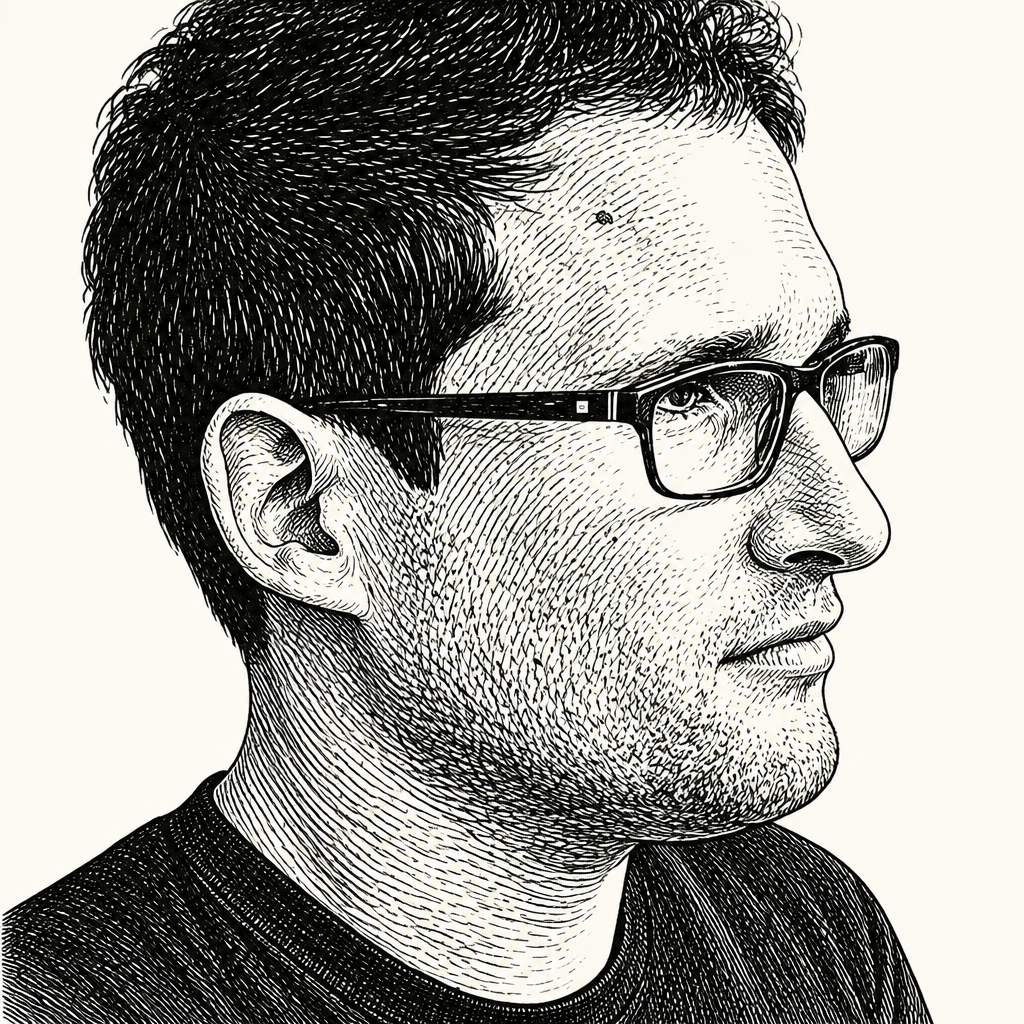
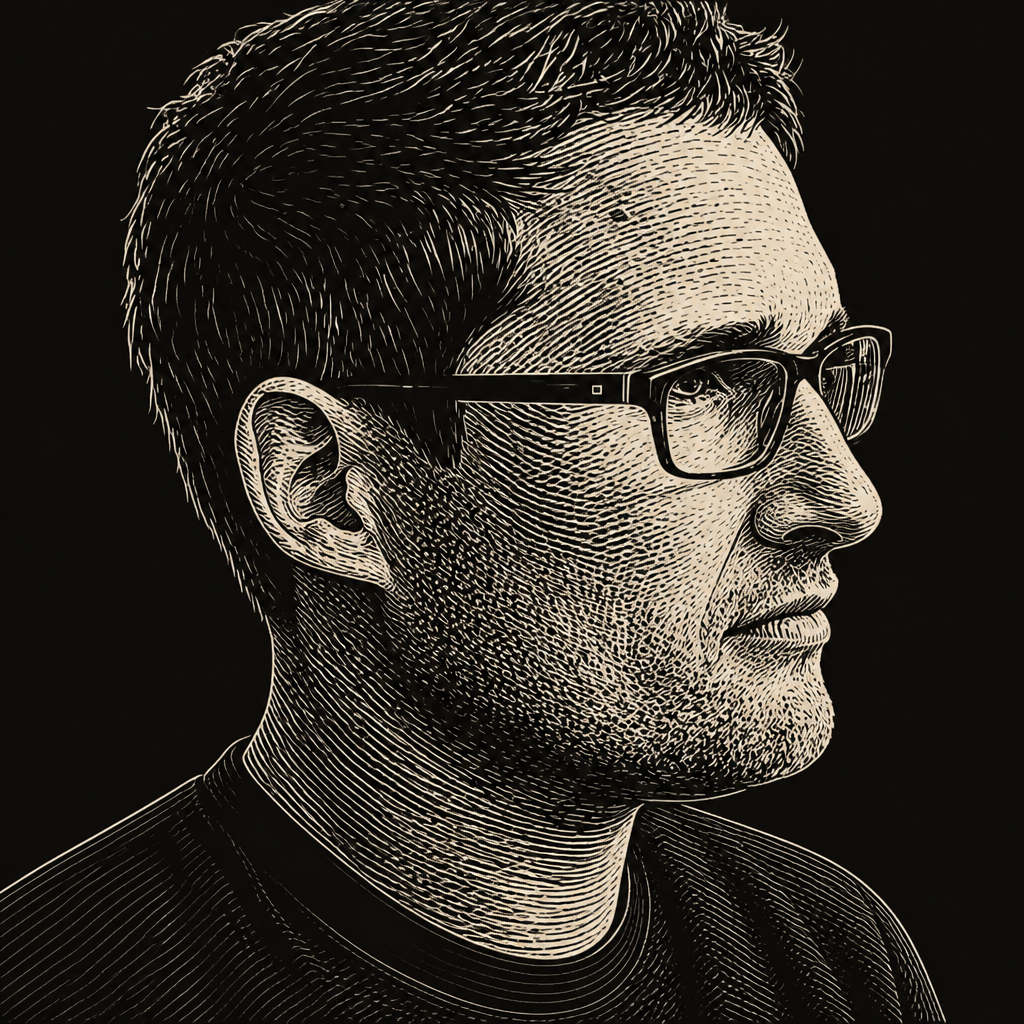
Running a zombie company as a great person in a moment where the world has changed so fast is the worst feeling you could possibly have.
Dave McClure framed the question around edge and conviction. Whether backing a founder or another fund manager, he said, he wants the operator to believe they have an edge and care about the work. If that is gone, he does not want them continuing just because money has been raised. But he also wants to back people who believe they can still figure it out.
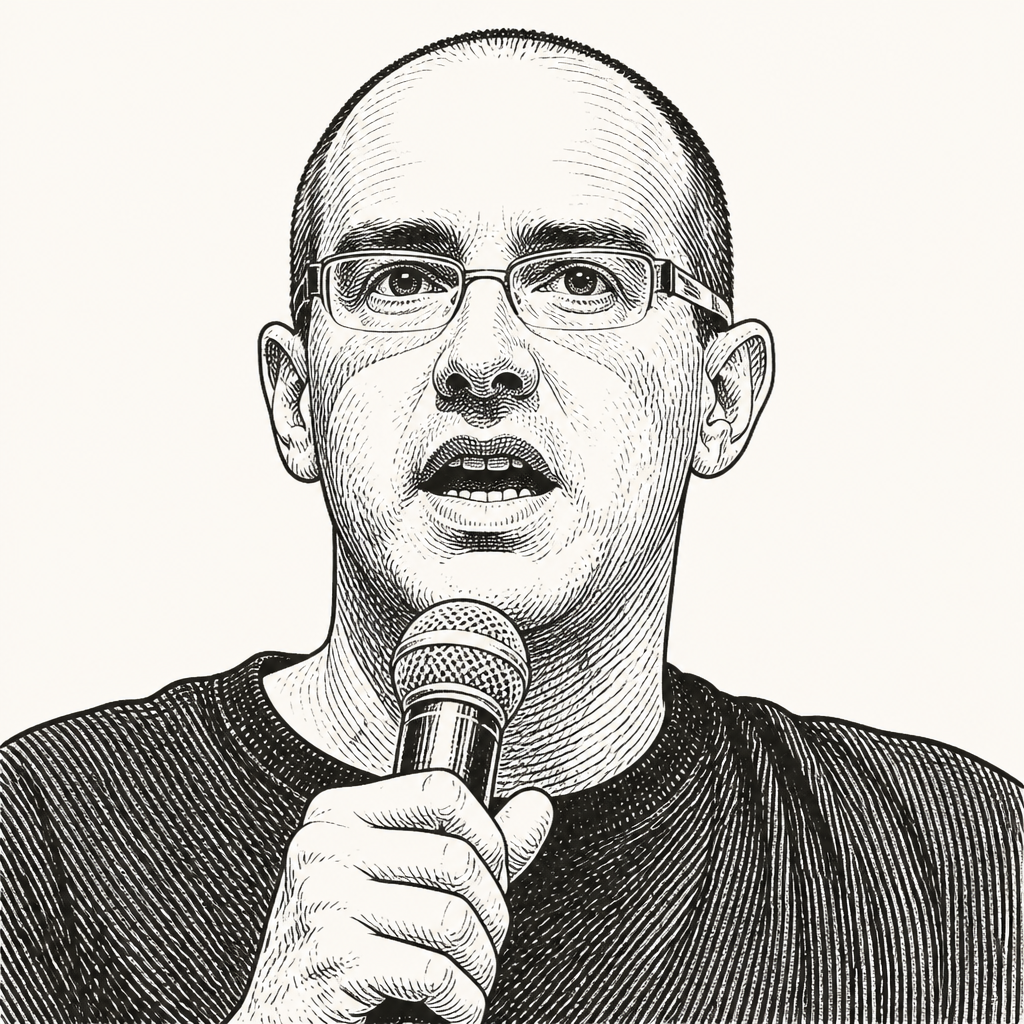
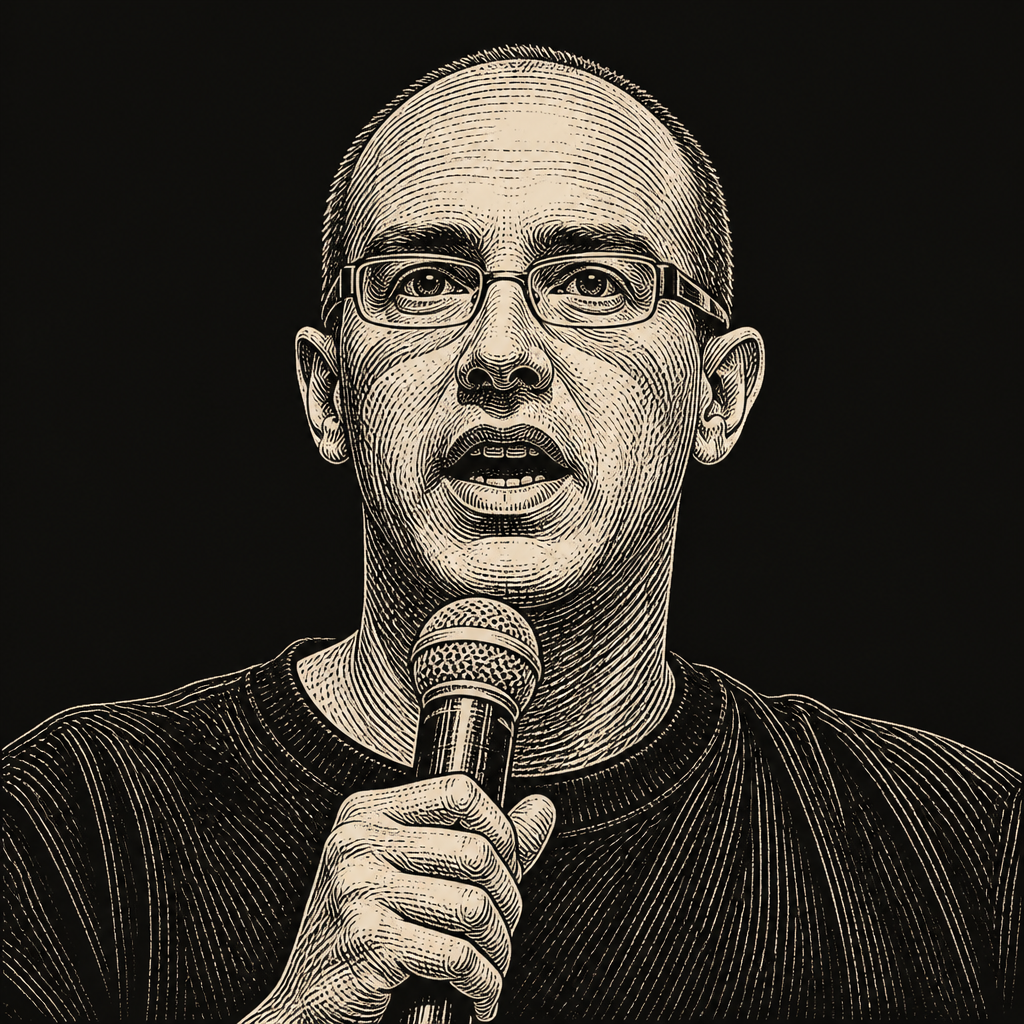
Jason Calacanis added a labor-market pressure behind the decision. A founder can spend 10 or 15 years on a startup with an uncertain outcome, or take a guaranteed compensation package from OpenAI that might be worth $10 million, $20 million, or $30 million. For seasoned founders, Fielding said, that opportunity cost is very different from the psychology of a first-time founder who may simply put their head down and try to survive.

The SaaS-to-agent transition is a board problem, not just a product problem
Jenny Fielding said she has roughly five or six later-stage portfolio companies facing the transition from SaaS into AI-native or agentic products. Asked how many would make it, she estimated “probably 50%” — and only the ones that moved fast.
What separated the likely survivors, in her view, was not a more polished AI narrative. It was painful operating action: firing executive teams that were not AI-native, changing pricing from SaaS subscriptions to usage-based models, and making decisions before the company wanted to. The companies she believed might cross the chasm had decisive leadership and a willingness to accept disruption inside the business.
Intercom’s shift toward Fin became the central example. Alex Wilhelm described Intercom as a company that, early in the AI era, decided to rearchitect itself around a customer-service agent. Its product Fin gained enough traction that, as Wilhelm described it, Intercom announced it would rebrand the company around Fin, with Intercom continuing as a product or sub-brand. He emphasized that, in his reading of the move, the change was not just a new product or name; the company had also changed how it prices and builds.
Fielding saw the move as an unusually strong example of a late-stage company trying to make the jump. Customer service, she noted, is one of the categories one might have expected AI to displace first. Instead, in her telling, Intercom’s founder came back and pushed the company toward an AI-native identity. Fielding called it inspiring, though she qualified the state of the transition: Intercom was “starting to make it through,” not already done.
Jason Calacanis argued that the hardest part of these pivots is not recognizing the new product direction. It is managing the existing business, the new business, and the board at the same time. He used LeadIQ, a sales intelligence company in his portfolio, as an example. Sales teams historically used tools like ZoomInfo to find leads. But, he said, AI tools can now perform work that previously looked like an SDR task: take a list of top podcasts, identify their advertisers, check whether those prospects exist in a CRM, and determine the last contact date. In his example, AI performed work that might previously have gone to a $30,000 or $40,000 offshore SDR, or a $60,000 to $80,000 U.S.-based SDR.
LeadIQ, he said, is trying to meet that change directly. The screenshot shown during the discussion displayed the company’s homepage headline: “Accelerate Revenue with AI-Driven Data.” The strategic question for a company like that is whether to accept an acquisition that may feel like a bronze medal or rebuild for the AI-native market. The harder question is whether the board can tolerate the transition.
Early investors, Calacanis said, may accept revenue destruction and a management shakeup if that is what the future requires. Later-stage investors may not. They invested into a model that expected a predictable sequence of growth — “double, double, triple, triple,” then an exit to Salesforce or HubSpot. Those investors can become the obstacle when a founder needs to break the model.
“The real dynamic is the board issue,” Calacanis said. In some cases, he said, he has told late-stage board members to leave the board, sell shares back at a discount, or write off the investment if they cannot support the pivot. Dave McClure agreed that late-stage company pivots are rare. Fielding said Everywhere Ventures avoids board seats partly so it can act as a founder’s informal advisor without adding pressure.
Calacanis described the required trait as “a high tolerance for ambiguity.” A company may need to say, in effect, that its old product is still loved and useful while its new AI product is the future. That is not clean messaging, but it may be necessary. The alternative is burning the boats — which he described as rare and usually dependent on founder authority.
Several of Calacanis’s examples were explicitly his own interpretations. He said Elon Musk has the founder authority to make moves other executives would avoid, including, as Calacanis described it, ending Tesla Model S and X production because “they have to die so Optimus can live.” He contrasted that with Google, which he said tends to let legacy products taper rather than abruptly kill them. Fielding pushed back against writing Google off, noting that Gemini had recovered strongly. Calacanis agreed, but attributed Google’s AI-first turn to founder authority returning to the company, saying Sergey Brin came back and said, “enough.” McClure added that only a limited number of founder figures — he named Steve Jobs as the archetype — can make company-changing pivots work after an organization has matured.
The same tension appeared in Calacanis’s example of Grin, another SaaS-era company from his portfolio. The page shown on screen described Gia as an AI product with four possible jobs: marketing coordinator, influencer marketing assistant, program manager, and strategic consultant. Calacanis’s point was not that a new AI product is hard to imagine. It was that supporting the old product and teaching the market to adopt the new one at the same time is operationally hard, politically hard, and confusing to customers. “It is really hard running a legacy business that’s printing money,” he said, when internal constituencies and board expectations still attach to that legacy business.
Unauthorized SPVs are a symptom of demand that private markets cannot cleanly absorb
Anthropic and OpenAI’s warnings against unauthorized equity transactions raised a narrow legal and market-structure question: when are secondary sales and SPVs valid, and when are they abusive? The investors treated it as a broader argument about access, fraud, liquidity, and private-market transparency.
Alex Wilhelm described the basic pressure: if investors cannot buy Anthropic or OpenAI shares directly because they are not venture firms or employees, they look for exposure through intermediaries. In his analogy, someone appears “in a back alley behind a dumpster” offering shares. The “fentanyl,” he joked, is the layered fees. The companies, meanwhile, want permission over who trades their stock and how.
Sam Lessin was initially surprised that this needed to be said. Most companies, he noted, have rights of first refusal on stock transactions. From his perspective, tight control over private-company stock was not new. At Facebook, he said, the process was extremely controlled; an authorized buyer could make significant money precisely because the company allowed that buyer to purchase shares. He also recalled concerns that too many “look-through” investors could create pressure to go public.
Dave McClure drew a distinction that became a practical dividing line: single-layer SPVs authorized by the company are probably fine; unauthorized, multi-layer structures are where the trouble begins. Anthropic’s public statement, he said, was broad, and some of it may be true, but some of it also looked like fear and marketing. He expected “a fuckload of lawsuits” regardless.
Jason Calacanis, who said he has been involved in SPVs since the early AngelList syndicate era, sympathized with founders who do not want uncontrolled routes onto their cap table. Unauthorized syndicates can create multiple paths into a company, bring in unwanted investors, and allow outsiders to tell a company’s story without information rights. He said founders including Mark Pincus and Elon Musk had tried to control this in earlier eras, and that the current crackdown was overdue because the market had become too much of a Wild West, including synthetic exposure to private shares.
McClure pushed back on the companies’ moral posture. The same companies, he said, have benefited from SPVs when raising capital and creating competitive markets for their shares. Employees also want liquidity. Companies cannot use SPVs when convenient and then condemn them categorically when the market becomes inconvenient.
The shared frustration was with the fee stack. Calacanis distinguished between SPVs that charge small administrative load-in fees to cover Carta, legal, or SPV platform expenses and those charging 10% up front. A 10% fee, he argued, attracts misaligned promoters — “Wolf of Wall Street” types who care about commissions, not the company or investors. McClure added that even a 5% fee on a $50 million allocation is substantial money.
Jenny Fielding said she sees the growth of a broker cottage industry directly. She receives multiple inbound messages a day offering to buy or sell shares in portfolio companies, sometimes with laughably untargeted outreach: asking whether she wants to sell shares in a company, then soon after asking whether she wants to buy them. She described the market as increasingly predatory, though she did not want legitimate SPV models swept up in a broad crackdown.
That distinction mattered personally to Fielding because Everywhere Ventures uses SPVs as part of its model. Her fund writes small checks at pre-seed and then offers SPVs to accredited LPs, many of whom are founders. When large AI companies issue sweeping warnings, she said, it makes her nervous that regulators or companies will crack down on legitimate, transparent SPVs alongside abusive ones.
McClure’s conclusion was measured: the secondary market and SPV market are not going away. The current pressure may clean up bad behavior, and future lawsuits may produce more oversight. Whether that oversight is good or bad remains uncertain.
Calacanis was more forceful that the bad actors would be blown out. Investors considering a $250,000 check into a synthetic Anthropic or SpaceX exposure with a 10% fee may decide the risk is not worth it and wait for an IPO. He also worried about founders losing control of their valuation and narrative when SPV promoters sell a story without company information.
Accreditation rules are too crude, but opacity may be the larger failure
Jason Calacanis argued that accreditation creates a broken system in which only a small share of Americans can participate in private-market opportunities even though far more want access. He said the SEC had been charged with creating a sophisticated-investor test and imagined a practical version: an online exam, like a driver’s-license test, that would allow someone to invest in SPVs if they demonstrated sufficient understanding.
Sam Lessin agreed with the principle. He called it absurd that wealth alone determines access to the best investment opportunities, especially because plenty of people with $1 million are not sophisticated and some people without that wealth may understand risk well. But he also argued that the accredited-investor threshold has become less restrictive over time because inflation has eroded it. The income and net-worth cutoffs that were once high are now, in his view, not as exclusionary for people with meaningful investable assets.
Lessin also reframed the denominator. If roughly half the country owns no equities, the relevant question is not what percentage of all Americans are accredited, but what percentage of people with investable assets are accredited. By that measure, he suggested, the access problem is real but perhaps less central than it appears in political rhetoric.
Dave McClure thought the discussion targeted the wrong problem. People are already allowed to lose large sums through leveraged home purchases, gambling, prediction markets, and real estate speculation. In his view, if they can take those risks, they should be allowed to lose money in venture capital too.
But his bigger issue was company-side opacity. Investors are not evaluating private companies on balance sheets or financials, he said; they are investing on “vibes.” That applies even to sophisticated investors if the companies do not disclose meaningful information. Venture capitalists and companies, he argued, should push for more transparency in private markets. A company that is doing well should want to share revenue growth and profitability, and there should be a lower cost of capital for companies that provide transparency.
Instead, he said, the market often rewards companies for staying private and opaque. That is backwards.
Lessin replied that making information public while allowing broad buying begins to resemble “half of the public market,” minus some governance requirements. He also pointed to the cost and burden of being public after Sarbanes-Oxley as a reason companies avoid public markets. McClure agreed that public-company regulation had gone too far, but he maintained that private markets had swung too far in the other direction.
The accreditation debate therefore produced two separate prescriptions. Calacanis wanted a test to broaden access. McClure wanted information standards so investors are not merely buying stories. Lessin accepted both instincts but kept returning to the fact that much of the market, public and private, is now driven by narratives that do not resolve cleanly into cash-flow models.
The private-market boom is being funded by concentrated wealth, not only sovereign capital
A question from Sam Lessin — “where the hell is all this money coming from?” — opened a dispute about whether the private-market appetite for AI and late-stage secondaries is being driven by Middle Eastern sovereign wealth, American wealth concentration, or both.
Lessin suggested the Middle East may be slowing down after several years of aggressive spending. Dave McClure rejected that, saying oil prices were up and asserting that sovereign wealth funds in Qatar, the UAE, and Saudi Arabia have more than $4 trillion, with royal families across those countries holding hundreds of billions more. “They are not shutting off the spigot,” he said. They want exposure to Anthropic and SpaceX as much as anyone else.
Alex Wilhelm partially defended Lessin’s point by noting that many oil-producing governments need much higher oil prices to generate large new surpluses. Jason Calacanis split the difference. He said McClure was right that the money remains enormous, but Lessin was right that some projects had gotten over their skis. He cited Neom and LIV as examples of splashy spending that is now being rationalized. In Calacanis’s view, Middle Eastern capital is entering a second phase: more infrastructure, more partners, more scrutiny, and a clearer strategy.
But Calacanis said the U.S. source of demand is also important. The upper middle class and “lower part of rich people” in America have grown massively. He described an “equity and owner based middle class” whose wealth has risen sharply through stock ownership and business ownership. Jenny Fielding supported that anecdotally: she had recently run a large SPV in a buzzy company, and the money came from families in Palm Beach, not the Middle East.
Calacanis showed a chart labeled “Share of Families in Each Class, 1979, 2001, and 2024,” sourced on-screen to “Authors’ analysis of the ASEC.” The chart showed the lower-middle class shrinking from 24.1% in 1979 to 15.8% in 2024, the core middle class declining from 35.5% to 29.7%, the upper-middle class rising from 10.4% to 31.1%, and the rich category increasing from 0.3% to 3.7%. The “poor or near poor” category also declined in the chart, from 29.7% in 1979 to 19.1% in 2024, though Lessin immediately asked how the buckets were defined.
| Class | 1979 | 2001 | 2024 |
|---|---|---|---|
| Poor or near poor | 29.7% | 21.9% | 19.1% |
| Lower-middle class | 24.1% | 18.7% | 15.8% |
| Core middle class | 35.5% | 33.2% | 29.7% |
| Upper-middle class | 10.4% | 23.6% | 31.1% |
| Rich | 0.3% | 2.2% | 3.7% |
Calacanis’s broader claim was that stock ownership has become a dividing line. If someone owns equities, they are “running away with it.” If they only earn income and do not own equities, they are getting squeezed. Lessin connected that to a feedback loop: the market goes up because it went up, and the people who own it become more able to buy the next scarce asset.
Venture liquidity may not redistribute as cleanly as investors expect
Jenny Fielding said even modest IPOs can change LP sentiment. She did not think venture-backed offerings like Fervo Energy and Cerebras necessarily solve the liquidity drought by themselves, but they create hope. Her firm can track LP inbound and response speed, and she said that activity improves when IPOs appear. Larger anticipated offerings — SpaceX, Anthropic, OpenAI — could move the needle more.
Dave McClure argued that investors should not define meaningful liquidity only by the largest possible IPOs. On Cerebras, he said the projected float could be $4.5 billion to $5 billion back to investors, which he called meaningful capital. Venture does not need every IPO to be enormous; billion-dollar IPOs can still produce real returns.
Sam Lessin was less sure that liquidity from the biggest companies will be recycled into the venture ecosystem. If investors receive SpaceX stock, for example, do they sell it and redistribute the proceeds into new funds and startups, or hold forever? The answer depends partly on taxes. Tax-exempt institutions can rebalance more easily. Taxable investors may face roughly 40% taxes in California, Lessin said, making it costly to sell a massive winner and redeploy.
Jason Calacanis agreed that this creates a redistribution problem. If a family office receives shares in a great public company through venture exposure, sells, pays taxes, and later buys the same company again in the public market, the round trip may be inefficient. It may make more sense simply to hold. That logic is especially strong, he argued, for Elon Musk companies, where investors may believe the upside is still venture-like even after public-market scale.
Lessin described the result as “feudalism 2.0”: a world of hyper-winners with near-zero cost of capital, compounding advantages, and investors who keep holding because everyone else is holding. If AI benefits the winners more than the insurgents, he said, the venture model of the last 20 years — software helping startups beat incumbents — may not apply.
McClure resisted abandoning fundamentals. He said investors need to know whether they are investing on fundamentals or vibes, and he does not want to give money to VCs who treat everything as vibes. Entry price still matters. Portfolio construction still matters. Follow-on decisions still require math.
Lessin did not reject that. He said Slow Ventures is “incredibly cheap” and that cash-flow businesses still have financial clearing prices. But he observed that, over the last five to ten years, the investors who made the most money often were not the ones focused on fundamentals. A single narrative shift can create enormous value, while a strong software business growing efficiently may receive little attention from Series A investors.
Calacanis predicted that the market will eventually weigh the AI leaders. Institutional investors will ask when the J-curve ends, whether each transaction loses money, and when free cash flow arrives. He compared it to Uber, where the dominant narrative was that ride-sharing could never make money. In his telling, the path to profitability was partly pricing: if most users would not stop taking Uber over a $3 price increase, the company could shed the least profitable users and become profitable. He expects SpaceX, Anthropic, OpenAI, and Cerebras to face similar scrutiny.
Lessin countered that retail demand from the expanding upper-middle-class investor base may be large and narrative-driven enough that valuation does not need to resolve quickly into fundamentals. McClure agreed that this was possible. Calacanis disagreed, saying he thought parts of the market had hit a top.
McClure asked why Elon Musk would want a 30% retail allocation in an IPO. Calacanis said he thought it would be filled, but the question would be where the money came from: cash on hand, 401(k)s, Vanguard funds, second homes, or sales of other public equities. McClure suggested that, if Musk got his way, capital would come out of the Nasdaq 100 and eventually the S&P 500. Calacanis agreed and said a year later investors might begin weighing the new holdings more rigorously.
AI value capture is still unresolved, even if AI adoption is not
The investors did not dispute that AI will reshape major industries. The harder question was where the profits accrue.
Jason Calacanis warned that the leading AI labs may not become the “money printing free cash flow machine” investors assume. Token costs are falling rapidly, he said, because of more data centers, better energy, photonics between chips, more efficient models, open source, distributed computing, and competitive networks racing prices down. Demand for tokens may explode, but that does not guarantee high margins. The business could resemble bandwidth or hard drives: essential, huge, and commoditized.
Alex Wilhelm asked the obvious follow-up: if Anthropic and OpenAI do not make the money, who does? If AI subsumes legal work and small-business workflows, someone must capture the value.
Calacanis listed several possibilities: hardware, energy companies, data centers, application-layer companies, or service businesses that use AI to cut delivery costs while maintaining much of their pricing. A law firm, for instance, might need half as many people, charge 20% less, and reduce delivery costs by 40%, increasing margins even if the model provider does not capture the full surplus.
His conclusion was uncertainty, not a single forecast. “Anybody who says they know exactly which one works and where the value gets captured is just not telling the truth,” he said.
Dave McClure connected that uncertainty back to the need for secondaries. Founders and employees are often massively concentrated in one private asset and cannot diversify. He said that is why the secondary market exists. In the Bay Area, he estimated, there are 100,000 people with $1 million to $10 million in equity and 10,000 people with $10 million to $50 million in equity. Many cannot buy homes costing $3 million to $5 million because their wealth is illiquid. Tender offers and regular liquidity programs give them an outlet, especially when IPOs take 15 years while employee vesting happens in a fraction of that time.
That context framed the OpenAI tender offer discussion. Wilhelm said OpenAI had a $6.6 billion employee tender in which roughly 600 employees sold stock. He cited a viral post by Shruti Gandhi of Array VC arguing that someone who sold about $10 million might still be “SF brokie” after 50% taxes, $3 million to $4 million of cash for a San Francisco home, renovation costs, childcare, school, camps, and other expenses. McClure’s response was blunt: “I think they’ll be just fine.” Fielding noted that this was only one secondary and that such employees likely still had upside.
The disagreement was less about the literal budget and more about expectations. Wilhelm argued that people’s reference points have changed when “mere billionaires” can look second-tier next to hundred-billionaires and a potential first trillionaire. He also warned that it may be a bad moment for technology wealth to become visibly richer given public anxiety about AI.
Jenny Fielding’s practical advice was simpler: leave the Bay Area if the math does not work. Calacanis said Austin can radically change the equation through lower taxes and cost of living. McClure countered that Austin and Miami are good places to move after making money, but the Bay Area and New York remain powerful places to build companies because the companies and opportunities are still there. Fielding, whose firm is called Everywhere Ventures, argued that entrepreneurship should include “zigging when other people zag.” If someone insists on Pac Heights, expensive schools, and the full high-cost lifestyle, they should expect the bill.
Pro-rata fights reveal who pays for hot-round scarcity
The SPV fight is one version of a larger scarcity problem in private-company equity. Pro-rata fights are another.
Jenny Fielding said her firm invests early, often at pre-seed, and has contractual rights to maintain ownership through later rounds. Most of the time, she said, relationships with founders and lawyers make the process transparent. But in three or four cases across roughly 300 investments, founders have asked her to waive pro-rata rights.
She said it is sometimes the founder asking, but often the pressure comes from the larger Series A or Series B investor. Sam Lessin was more categorical: “It’s always the big guy.” In hot rounds, he said, Series A investors tell young founders that seed investors may have pro-rata rights but will waive them. His stance was absolute: if a founder signs a contract granting pro-rata and later tries to renege, he will sue.
Fielding’s approach is less immediately adversarial. She tries to educate the founder and help them push back. If that fails, she calls the later-stage investor and makes clear that squeezing her out will damage future deal-flow relationships. In one recent Series B, she said, there were three potential leads and not enough room for everyone to get 10% of the company. The founder asked pre-seed investors to sell. Fielding’s response was that this was not how the rights worked. After conversations with the Series B investors, the issue was resolved.
Alex Wilhelm asked why major funds push so hard. Fielding’s answer was simple: in competitive rounds, there is not enough allocation to go around. Later-stage investors want more ownership, and the easiest target is often the small early investor.
That dynamic is distinct from the unauthorized-SPV problem, but both involve the same underlying asset: access to scarce private-company equity. Founders want control. Early investors want their contractual upside. Later investors want ownership. Employees want liquidity. Brokers want fees. The AI boom has made the scarcity more acute.