AI Backlash Reaches Commencement as Graduates Face a Reshaped Job Market
 Jason Calacanis
 Alex Wilhelm
 Gloria Caulfield
 Eric SchmidtThis Week in StartupsTuesday, May 19, 202621 min read
Jason Calacanis and Alex Wilhelm argue that the boos greeting pro-AI commencement speeches are a visible sign of AI’s legitimacy problem with new graduates entering the workforce. On This Week in Startups, they frame the reaction less as technophobia than as distrust: students have already seen AI weaken academic norms, threaten entry-level work, concentrate wealth around frontier labs, and expand systems of surveillance and data capture. Their discussion returns to a central question: whether workers, founders, consumers, and citizens have any meaningful control over the AI systems now reshaping their choices.
AI’s legitimacy problem is now visible at the point of entry into work
Jason Calacanis read the boos at 2026 commencements as something more pointed than student anxiety. Graduates, in his view, are reacting to what they see as a breach of trust: technology leaders and companies are telling them that many of the jobs they trained for may not exist, or may exist in sharply reduced form.


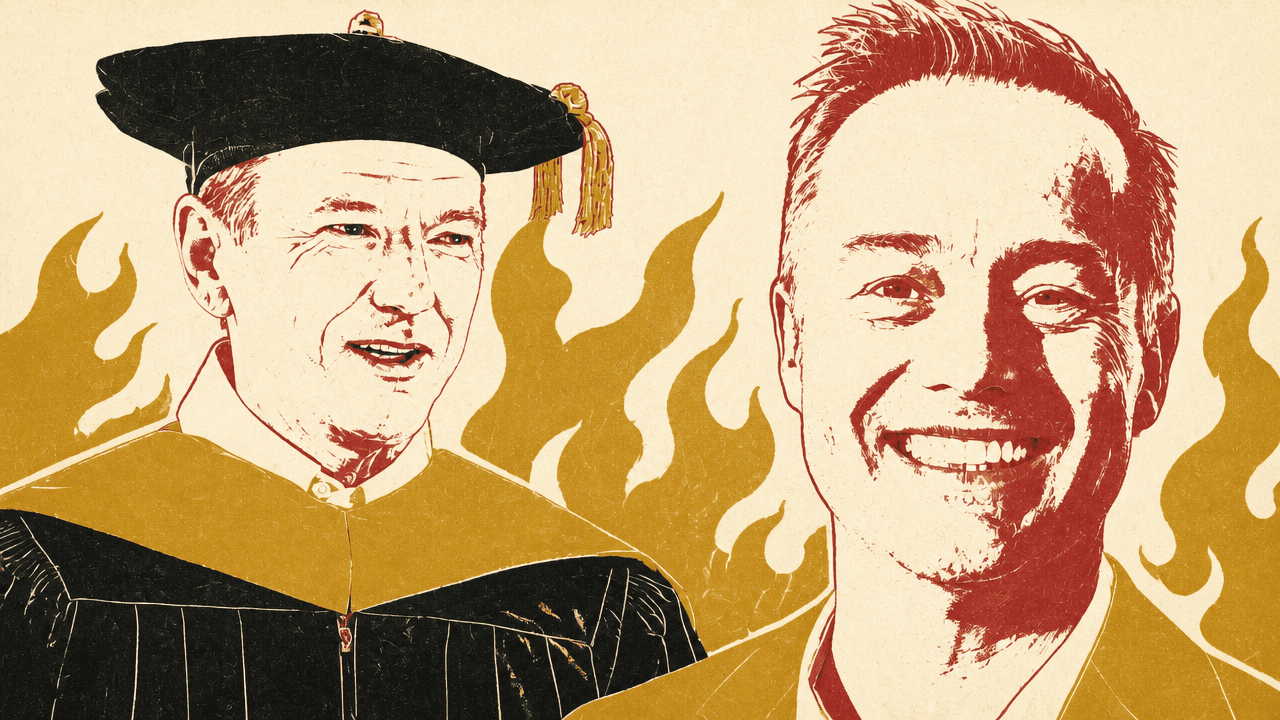
When Eric Schmidt told University of Arizona graduates that AI would be “larger, faster, and more consequential than what came before,” touching “every profession, every classroom, every hospital, every laboratory, every person, and every relationship,” the reaction in the room was audible. Schmidt acknowledged the mood directly: “There is a fear in your generation that the future has already been written. That the machines are coming. That the jobs are evaporating. That the climate is breaking. That politics is fractured. And that you are inheriting a mess that you did not create.”
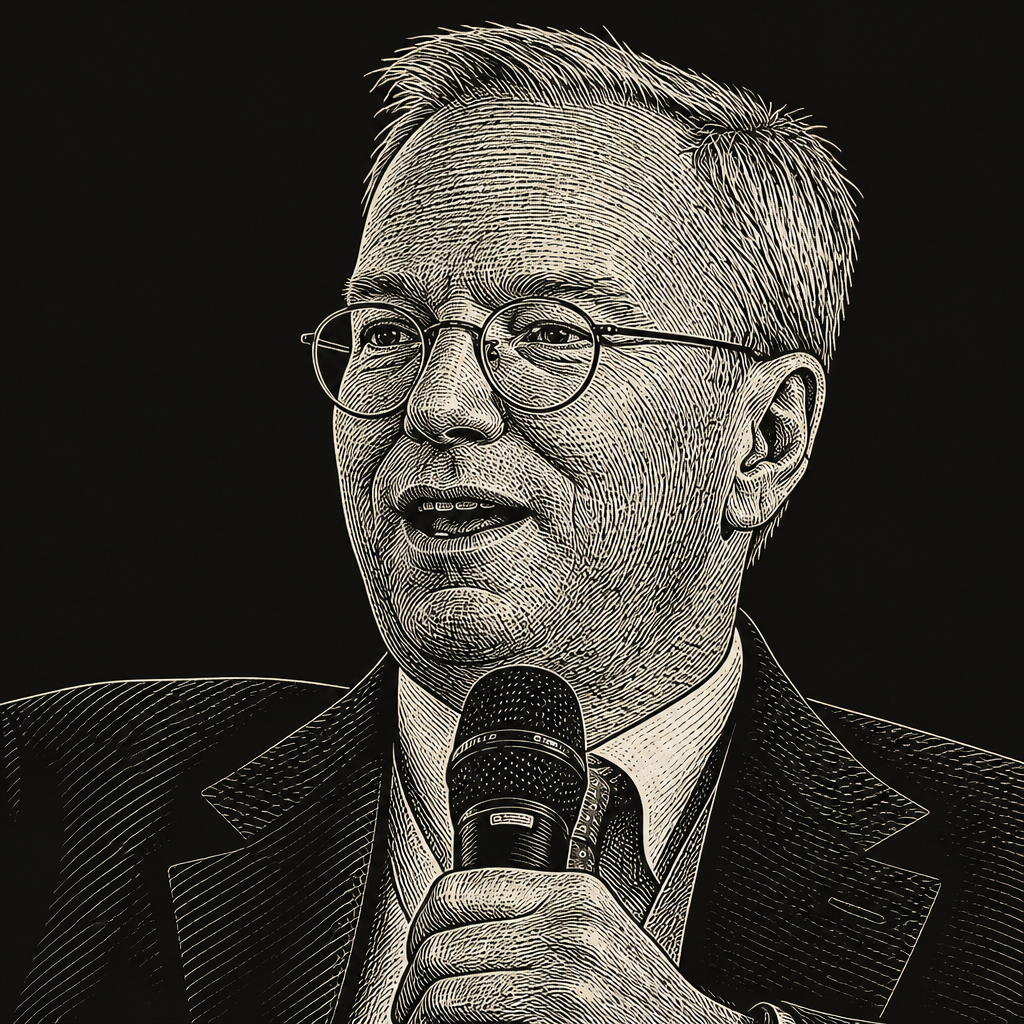
Schmidt’s answer was agency. “To speak of the future as though it has already been decided is to surrender the one thing that actually matters,” he said. “The future does not simply arrive, it gets built.” The question, in his framing, was not whether AI would shape the world, but whether the graduates would help shape AI.
Calacanis thought that missed the emotional and political reality of the audience. “It felt a little bit condescending,” he said. The graduates, in his view, are not merely worried that AI will change their lives; they suspect that the people building it have already made the important decisions without them. “They know that they don’t have a role in it,” he said. “They know that the horse has left the barn.”
It might not be that they’re scared. It might be they feel like they’ve been double-crossed.
That distinction matters to Calacanis’s reading of the moment. Schmidt’s speech assumed the students could be recruited into the project. Calacanis argued that many of them may already hear themselves described as future casualties. They have watched Big Tech layoffs and heard leaders discuss universal basic income, optional work, abundance, and large-scale job displacement. In that context, he argued, the invitation to “shape” AI can sound hollow.
Alex Wilhelm made the generational gap more concrete. Recent graduates are not debating AI from inside a boardroom or venture portfolio; they are trying to rent apartments and pay for healthcare. “This really just highlights the gap between business excitement about AI and the average consumer,” he said, especially the graduate “going into the workforce probably for the first time.”
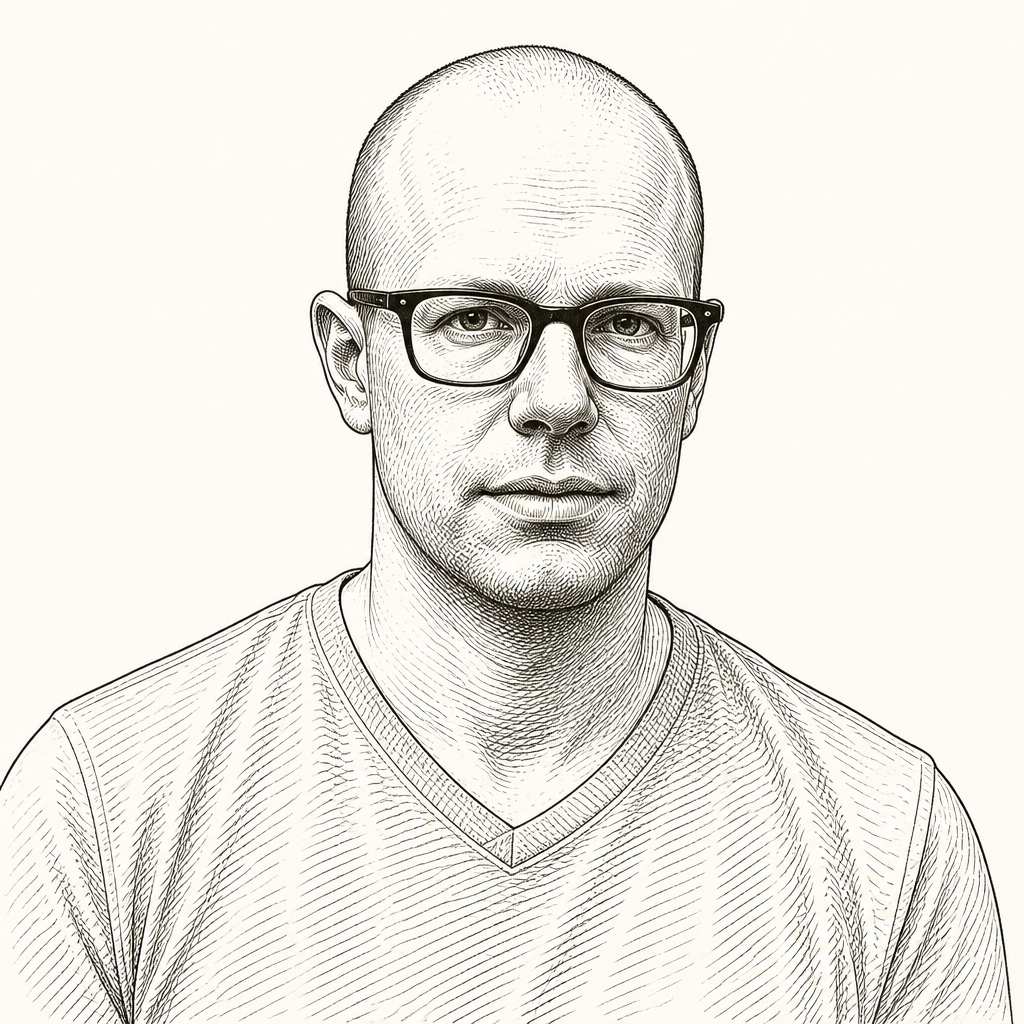

A second commencement clip, from the University of Central Florida, showed Gloria Caulfield encountering the same reaction. Caulfield, a real estate development executive, told graduates that “the rise of artificial intelligence is the next industrial revolution.” The crowd booed. She paused, visibly surprised, and said, “Whoa.” When she tried again — “AI was not a factor in our lives” — another wave of reaction came back. “We’ve got a bipolar topic here, I see,” she said, apparently meaning polarizing, as Wilhelm noted.


For Calacanis, both ceremonies surfaced the same cultural rejection. He connected AI to the earlier consumer experience of machine learning: social feeds, targeted ads, recommendation loops, and self-driving technology. Students who hear “AI” may not hear a neutral productivity tool. They may hear the continuation of systems that already trained them, tracked them, optimized their attention, and reshaped their relationships.
“They’re probably looking at it going, yeah, this tech stuff is toxic,” Calacanis said. “And it’s not good for society and we probably want to hang out with our friends and not have this in the palm of our hands.”
Wilhelm suggested the possibility of a countercultural movement against AI, “a la the hippies in the 60s.” Calacanis sharpened the analogy into something closer to the anti-war movement. “It does feel like Vietnam or something,” he said. “We do not want to be drafted into your AI army.” The draft, in this analogy, is not military service but participation in a work system where the same tools that make a young worker productive also help replicate and replace that worker.
Students are not outside AI; they have already seen it change the bargain
Jason Calacanis did not treat students as naive outsiders to AI. He argued the opposite: the graduating class is unusually familiar with the technology because much of its college experience unfolded after ChatGPT became widely available. “These people have had ChatGPT for two years,” he said. “They’ve been using it. They understand it really well.”
Alex Wilhelm brought in Theo Baker’s New York Times essay about Stanford in the AI era as a way to describe how deeply the technology has entered campus life. Wilhelm read several passages from Baker’s account: “AI is everything. We talk about it at the dining halls and in history classes, on dates and mostly joking with friends, at the gym and in communal dorm bathrooms.” Baker wrote, as quoted by Wilhelm, that AI had opened “the door to staggering wealth” for some, while for many students who entered Stanford believing the degree was a guaranteed path to a high-paying job, “the door has been slammed shut.”
The more corrosive claim concerned academic norms. Baker wrote, again as Wilhelm quoted, “Cheating has become omnipresent. I don’t know a single person who hasn’t used AI to get through some assignment in college.” Students were, in Baker’s telling, “fudging just about everything,” from assignments to dorm funds to claims of illness. In lectures, “half of laptops” seemed to be open to ChatGPT or Claude.
Wilhelm’s conclusion was not that students had missed AI’s benefits. It was that they had seen institutional norms weaken first. “AI arrived all at once to universities and instantly dissolved the foundations of kind of a liberal arts higher education much faster than it crushed the workforce,” he said. The students’ cynicism, in that reading, comes from proximity: “We’re up to our necks in this and we don’t like it.”
Calacanis tied that experience to a broader sense of pointlessness. If students write assignments with ChatGPT and professors evaluate them with ChatGPT, the exercise can start to feel performative. “This is all a farce,” he said, describing the sentiment. He connected the same feeling to workers who build automation systems that later reduce the need for their own labor.
A news.com.au screenshot shown during the discussion referred to a former Atlassian software engineer who had worked at the company for eight years, was laid off, and then posted a 45-minute YouTube video explaining what he had built. Calacanis said he had watched about half of it and found it “incredibly technical,” with the employee walking through the work step by step. His reaction was disbelief at the layoff: “You’re like this guy’s a genius. How did he get laid off?”
Wilhelm argued that layoffs can now send a different signal to investors than they once did. In his framing, a layoff may suggest that a company is finding AI-driven efficiencies and preserving capital for a more AI-first future. “Investors dig it,” he said, while acknowledging the human cost: “It sucks for people who are suddenly cut loose.”
Calacanis described the labor market shift as “a level of choppiness I didn’t exactly expect all at once.” The resentment is intensified, he said, by a new elite within the elite: people who joined frontier AI labs early enough to hold valuable stock as those companies reached enormous private valuations. In previous generations, joining Google, Uber, Meta, or Facebook early could produce millions or tens of millions in options. In the current cycle, he argued, the frontier model companies have created a sharper split among already highly skilled workers, with some becoming “instantly” worth large sums in liquid stock while their peers face layoffs and uncertainty.
The replacement jobs argument does not yet answer the scale of the anxiety
Alex Wilhelm introduced a University of Utah Kem C. Gardner Policy Institute report on data center employment to challenge one common answer to AI labor anxiety: that infrastructure investment will create a new employment base. The chart shown on screen projected U.S. and Utah data center construction and operations workforces from 2025 to 2030 under different automation and build-intensity scenarios.
The visual stated that the U.S. data center pipeline expected to come online by 2030 would support an estimated 21,000 to 39,000 active construction jobs, transitioning to 42,000 to 67,000 permanent operations jobs. In Utah, construction employment was projected to peak in 2025 and decline through 2030, with permanent operations jobs ranging between 2,000 and 3,250 by 2030.
| Measure shown | Projected range |
|---|---|
| U.S. active data center construction jobs supported by pipeline through 2030 | 21,000–39,000 |
| U.S. permanent data center operations jobs by 2030 | 42,000–67,000 |
| Utah permanent data center operations jobs by 2030 | 2,000–3,250 |
Wilhelm emphasized the comparison rather than the absolute number. Construction jobs, he noted, decline after projects are complete. In the low-automation case, direct operations jobs total roughly 65,000 by 2030. Technology companies, he said, had already cut 100,000 jobs that year. “All the data center jobs by 2030 are less than the layoffs we’ve seen in the first quarter and a half,” he said.
His position remained pro-investment. “I don’t think we can afford to not invest in the future,” he said. “I’m still a free market capitalist guy.” But he said the figures made student concern easier to understand. If one highly visible category of AI-adjacent job creation does not numerically match the job destruction already underway, graduates have reason to doubt generic assurances that new categories will simply absorb them.
Jason Calacanis placed the reaction inside a larger political shift: democratic socialism, demands for universal healthcare, desire for more job loyalty, anti-billionaire sentiment, anti-progress sentiment, and calls for the state to take better care of citizens. Commencement, he said, is one of the few moments where generations meet directly. In 2026, the younger generation “does not like to be talked down to and told how exciting this is, because they don’t see it as exciting.”
The practical advice that followed was blunt: start a company. Wilhelm said he had initially resisted Calacanis’s line because not everyone has resources, access, or the same risk tolerance. But he said he had come around to the logic that ownership offers at least some protection from becoming a permanent cost center. “If you are a worker for someone else, you’re a cost center,” Wilhelm said. “But if you own your own company of any size, you’re at least in control of your own destiny.”
Calacanis argued that the barriers to starting small companies have fallen far enough that the advice is no longer reserved for venture-scale founders. “Anybody can put up a shingle,” he said. “Anybody can build a website. Anybody can start a sales process.” AI tools such as ChatGPT and Claude, in his view, now do “half the work” for many forms of small-company creation.
He defined the relevant opportunity not as venture scale, but as “delightful scale”: companies making roughly $500,000 to $5 million a year for their owners. Media was his example. Journalists who suffered through two decades of contraction in newspapers, magazines, BuzzFeed, HuffPost, Vox, Vice, and related institutions responded by launching newsletters, podcasts, consultancies, and independent publications. Calacanis saw that as a proof point against the objection that “not everybody can start a company.” When necessity forced them to, he said, many did.
Wilhelm accepted most of that argument but pushed on structural barriers. “Why isn’t someone right now talking about removing obstacles and barriers and friction to making small companies more viable?” he asked. Healthcare portability was his central example. A one-income family with children cannot simply quit a job and “go do a thing” without absorbing risks that public policy could reduce. Wilhelm said he wanted to “rip that barrier down” and “let people be free.”
Calacanis answered with a more austere version of self-reliance. If healthcare is the issue, he said, someone could move to Europe while keeping the company domiciled in the United States, accepting higher taxes and slower bureaucracy in exchange for socialized medicine. More broadly, he argued that Americans had lived through “a hundred year delusion” of unusually stable employment and are now returning to a harsher baseline. “It’s just gonna be hard, folks,” he said. “Radical self-reliance” is what schools should teach.
The money in AI is concentrating around the model providers
If AI demand is rising, Alex Wilhelm asked, who is actually capturing the money? He cited The Information’s reporting that Anthropic and OpenAI generate 89% of AI startup revenue. The chart shown on screen presented annualized revenue growth for major AI startups from July 2023 to April 2024, with OpenAI and Anthropic occupying the overwhelming majority of the stack. Smaller segments included Cursor, Cognition, ElevenLabs, and a group labeled “29 Others,” listing companies such as Abridge, Clay, Cohere, Harvey, Lovable, Midjourney, Mistral, Perplexity, Replit, Runway, Sierra, Suno, Synthesia, and Writer.
Wilhelm said the total shown in the chart was about $80 billion in annualized revenue, or roughly $6.6 billion per month. He also said that, according to the reporting he was discussing, Anthropic and OpenAI’s share had been 4.5 percentage points lower six months earlier. In his reading, that meant the two major labs were gaining share even as application companies such as Cursor, Cognition, ElevenLabs, Harvey, and others grew quickly.
Jason Calacanis cautioned that the chart mixed layers. Token sales, in his view, look more like infrastructure than applications. Putting token providers and app companies into one “AI startup revenue” bucket creates interpretive problems. He also raised the possibility of double counting: some application companies in the long tail are likely paying OpenAI or Anthropic for model access and then reporting their own revenue on top.
Still, he agreed that the chart made the revenue concentration visible. “Two companies are running away with the revenue,” he said.
The more important question was whether this amounts to a duopoly. Calacanis said that in terms of people buying tokens, it is starting to look like one. But that was his interpretation of the token market, not a conclusion he treated as settled across all of AI. He framed the current phase as potentially temporary and heavily subsidized. The large model providers, he argued, are selling tokens “at a massive loss” as they build out infrastructure. He compared the dynamic to Uber and Lyft when both companies were losing money per ride while building a rideshare duopoly.
Wilhelm asked directly whether Calacanis thought gross margins on inference were currently negative. “Of course,” Calacanis replied, pointing to infrastructure buildout as the major cost, more significant than even the highly paid human talent inside the labs. He also raised the question of how long the infrastructure being built will have its primary practical use: four, five, or six years, perhaps, with some secondary use afterward.
Wilhelm pushed back by pointing to a reported Anthropic deal involving xAI infrastructure and H100 chips in Colossus 1, arguing that the arrangement puts a floor under GPU value. Calacanis responded that if the chips are two to three years old, they may still have half their useful life remaining.
The application-layer concern was more strategic. Wilhelm worried that startups building on top of foundation models are training the very companies that may later compete with them. If OpenAI and Anthropic see enough usage patterns and market demand through their APIs, they can build direct products into their own platforms: Codex, Copilot-like workflows, Claude plugins, legal tools, accounting tools, creative tools.
Calacanis agreed that if a company owns the tokens and the foundational model, integrating application functionality poses a “significant risk” to independent products such as Harvey or other vertical AI tools. “You do need to actually think, are they going to in their search for revenue and profits going to go direct?” he said.
At the same time, he warned against overreading the startup-only chart. It excludes Google’s Gemini revenue because Google is public, and it excludes Amazon Web Services, Google Cloud, and Azure in their broader AI infrastructure roles. If hyperscaler revenue were included, he said, the picture would look different. Wilhelm noted that hyperscaler AI revenue disclosures are often too broad to be useful, giving examples such as claims that “revenue from products built on gen AI models grew by 800%.”
The issue for founders, as Wilhelm and Calacanis framed it, is not only whether AI demand is real. In the data Wilhelm cited, the most visible revenue center is token access, and token access is controlled by a small number of very large private companies, with public hyperscalers sitting partly outside the dataset. That leaves app-layer startups trying to build businesses on platforms whose owners may also become competitors.
Tools for memory depend on who controls the capture layer
The product and bounty discussion put a narrower version of the same problem into practical form: when AI tools capture work, media, notes, and knowledge, who controls the resulting layer?
Jason Calacanis described two active $5,000 bounties. One was for a podcast companion sidebar. A Notion spec shown on screen originally described a real-time app with multiple AI personas, including a fact-checker and a cynical or troll commentary voice. Calacanis corrected the scope: the current requirement should be only the real-time fact checker. “One simple solution, one simple part of this that we should then judge everybody by,” he said. Alex Wilhelm had tested a submitted demo and said it could fact-check in real time through a website, with customization options such as only responding after a certain number of words.
The second bounty, Annotated.com, reflected Calacanis’s frustration with both link rot and content theft. The bounty page described a Chrome sidebar extension that would let users highlight and clip media, text, audio, or video from any website, add commentary, and save the annotation on a public landing page that links back to the original source. The “three non-negotiables” shown on screen were: the product must ship as a Chrome sidebar extension; every annotation page must include a visible “file a claim” button to dispute fair-use breaches; and all clipped content must link back to its original source URL.
Calacanis’s intended distinction was clear. Annotated is not meant to be a paywall-removal or wholesale archiving tool. It is meant to support small excerpts and commentary. A user might clip 30 seconds from a podcast, a paragraph from an article, or a segment from a video, then publish a landing page with commentary. The source remains linked and credited, and the annotation is the new contribution.
He imagined the system as a global annotation layer. If multiple users annotate the same New York Times story, a sidebar on that URL could show a count and let readers see the annotations. The same could apply to YouTube videos, Spotify podcasts, songs, or other media. The content itself would not live on YouTube or Spotify as a comment; it would live on Annotated, attached to a bounded excerpt.
Wilhelm connected that to link rot, saying that 538.com had gone offline. Calacanis said an annotation system could act as a “mini archive of that moment” if the source later disappears, while still trying to preserve attribution and fair-use boundaries.
Wilhelm then showed a related physical product: Mark, a $159 AI bookmark from Think with Mark, made by MSCHF. The promotional video described a bookmark that highlights passages, records thoughts, and builds a personal library of what the reader chooses to keep. Wilhelm said the use case was immediate for him: he had just returned a library copy of The Gulag Archipelago and lost the marked passages he wanted for later reference. “I would have literally used this in my life like 20 minutes ago,” he said.
Calacanis was less personally interested because he buys books, reads on Kindle, and uses Audible, all of which already support notes or highlights. But he saw a broader product category: narrow AI gadgets for readers, writers, researchers, and leaders. Plaud, note-taking devices, AI bookmarks, annotation layers, and bookmarking systems all point toward what he called a “backup brain.”
His ideal system would collect bookmarks from TikTok, Instagram, Twitter/X, books, articles, and other sources into one place, then make them available to an agent. If he remembered reading about a designer in a book and later bookmarking a related product, the agent would connect the references. “It all comes together in one place,” he said. “I think that’s what we’re all trying to use AI for, is to build like a little backup brain before Neuralink kind of does this for us.”
Flock Safety turns public safety into a surveillance tradeoff
The discussion of Flock Safety centered on a concrete case in Austin and a broader surveillance dilemma. A statement shown on screen said that 12 shootings across Austin led to a manhunt involving 200 officers, including SWAT, air, and canine support. The suspects were found and arrested as they entered Flock-supported Manor. The statement criticized Austin for ending its contract with Flock and argued that privacy in public is “an ill-informed position” if it allows an active shooter to escape and harm more people.
Jason Calacanis said he had received police activity alerts while in Austin, and later learned that the suspects had been picked up in Manor through Flock after someone had their license plate number. He corrected himself after initially saying Lockhart; the relevant location was Manor.
His own position was conflicted. “Do you want your license plates and where you’re going in a database?” he asked. “No, is everybody’s answer.” But if there is a shooting or robbery nearby, most people also want the criminal’s plate captured quickly enough to prevent further harm. That is the hard tradeoff: the risk that one’s own location history can be abused, hacked, leaked, or misused, versus the public-safety benefit of identifying vehicles tied to serious crimes.
Alex Wilhelm showed a DeFlock map of Providence, with 174 cameras in view, including 152 labeled Flock Safety and 17 unknown. He said Flock’s argument, as he understood it from speaking with CEO Garrett Langley, is that people on public roads have no expectation of privacy. Wilhelm called that “a pretty good argument” but said he remained uneasy. “I don’t really want to be surveilled,” he said.
A broader DeFlock map of Texas made the scale harder to treat as theoretical. The map showed 21,074 cameras in view, including 17,156 Flock Safety cameras, with additional cameras attributed to Motorola Solutions, Genetec, and unknown categories. The icons were dense around Dallas, Austin, San Antonio, Houston, and other urban areas. Wilhelm’s point was not only that cameras existed, but that their geographic density was visible across a state strongly associated with local independence.
| Map view | Cameras in view | Flock Safety | Other categories shown |
|---|---|---|---|
| Providence | 174 | 152 | 17 unknown |
| Texas | 21,074 | 17,156 | Motorola Solutions 975; Genetec 409; unknown categories also shown |
Wilhelm was surprised by the density in Texas. He wondered whether he was overestimating public aversion to camera networks, given that they seemed to be widely deployed in “the lone star freedom state.”
Calacanis argued that local deployment changes the analysis. The state of Texas did not centrally impose 21,000 Flock cameras, he said; cities, towns, and communities opted in. Manor, Lockhart, Dripping Springs, Westlake, and other localities make their own decisions. To him, that suggested agency rather than a top-down police state. “I don’t see people not having personal freedom,” he said. “I see people having personal freedom. They’re making a decision in their community.”
Wilhelm responded that the concern is not only government surveillance. It is also that a third-party company may be feeding a system with police-state capabilities. “It’s not just the central government,” he said.
Calacanis’s proposed safeguards were audit trails, retention limits, restricted access, encryption, and local control. Every request should be logged and authorized. Abuses should carry real penalties, including firing or sanctions. Data should be kept for a defined period — six months, a year, or another local policy — and then destroyed. He acknowledged that true deletion is technically difficult in cloud systems, citing a case in which Google was reportedly able to recover Nest camera footage even though the user did not have the relevant paid subscription. The word “recover,” Wilhelm noted, was doing a lot of work.
Calacanis also proposed a crime-threshold model: cameras might be justified in areas where crime is above a certain level and less necessary where it is low. He used San Francisco’s Tenderloin as an example of a neighborhood where residents might strongly prefer cameras and facial recognition if they believed it would reduce chaos and danger. People’s preferences, he argued, depend heavily on perceived personal risk.
Wilhelm agreed that preferences shift with conditions, but remained troubled by the cumulative loss of practical privacy. He did not recall voting for cameras in Providence, and he objected that phone-location data is already widely commercially available. “It feels like I am now not able to functionally live in society and maintain a private location,” he said.
Calacanis’s final instruction on the subject was brief: “Be vigilant.”
The operational questions are now about control, not novelty
The audience questions returned the AI discussion to decisions founders and companies are already making.
On using AI to file patents instead of paying expensive lawyers, Jason Calacanis drew a line between low-stakes legal automation and high-stakes intellectual property. Incorporating a business, filing a trademark, preparing an employment agreement, or drafting a convertible note may be closer to the kinds of tasks founders can automate or heavily template. Patents and litigation, he said, are among the most sophisticated and high-risk areas of law.
His recommendation was “human in the loop.” A founder can use AI to prepare, organize, or draft, but should talk to a patent attorney if the patent matters. If a founder has no money and AI filing is the only available option, he said, doing it may be better than doing nothing. But if a company is building something like a rocket, a drug, or another technology where IP protection is central, “that would not be the place to try to save money.”
He also questioned how often patents matter for startups. Business-process patents and similar filings rarely come into play in the companies he sees, he said. Alex Wilhelm called patents “the world’s most annoying vanity metric” and pointed to IBM as the company with the most patents per year, while acknowledging that IBM does core research.
On running AI models locally with high-end hardware such as Mac Studios, Calacanis was more definitive. “It’s not a fad, it’s the future,” he said. His reasoning was partly economic and partly privacy-based. If models become good enough, users will want to run them without worrying about token prices. Until cloud tokens become much cheaper, local inference will appeal to some users and companies.
The corporate case may be stronger. A venture firm, for example, may not want its investment secrets, documents, and internal knowledge uploaded to Anthropic or another model provider. Calacanis warned that model providers could learn from those documents and that data leakage into LLM systems could become “really problematic.”
That concern loops back to the market-structure discussion. The dominant token providers are not only capturing revenue; in Calacanis’s warning, they may also receive sensitive workflows and proprietary knowledge from the companies that use them. Local models, private deployments, and hardware investment become ways to reduce that exposure.