Ivan Zhao Says AI Makes Companies Flatter, Not Hierarchy-Free
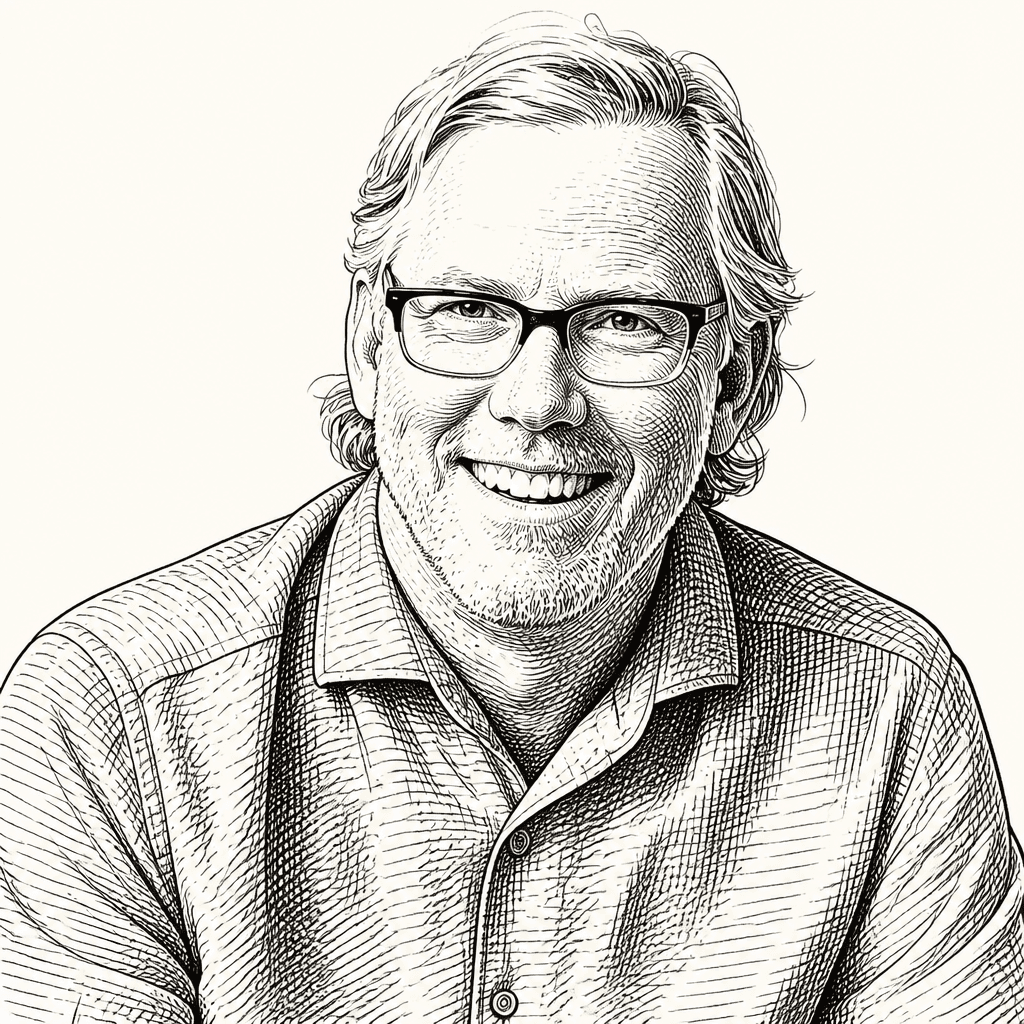

Notion founder and CEO Ivan Zhao argues that AI will not make companies hierarchy-free, but can reduce the amount of human routing that makes hierarchy slow. In a conversation with Brian Halligan, Zhao describes Notion’s answer as “jazz mode”: a deliberately decentralized company that still has structure, but relies on high-agency people, ex-founders and model-enabled teams to improvise as product and market conditions change. His broader case is that AI-era leaders have to refound around the technology itself, not just bolt it onto the old SaaS operating model.
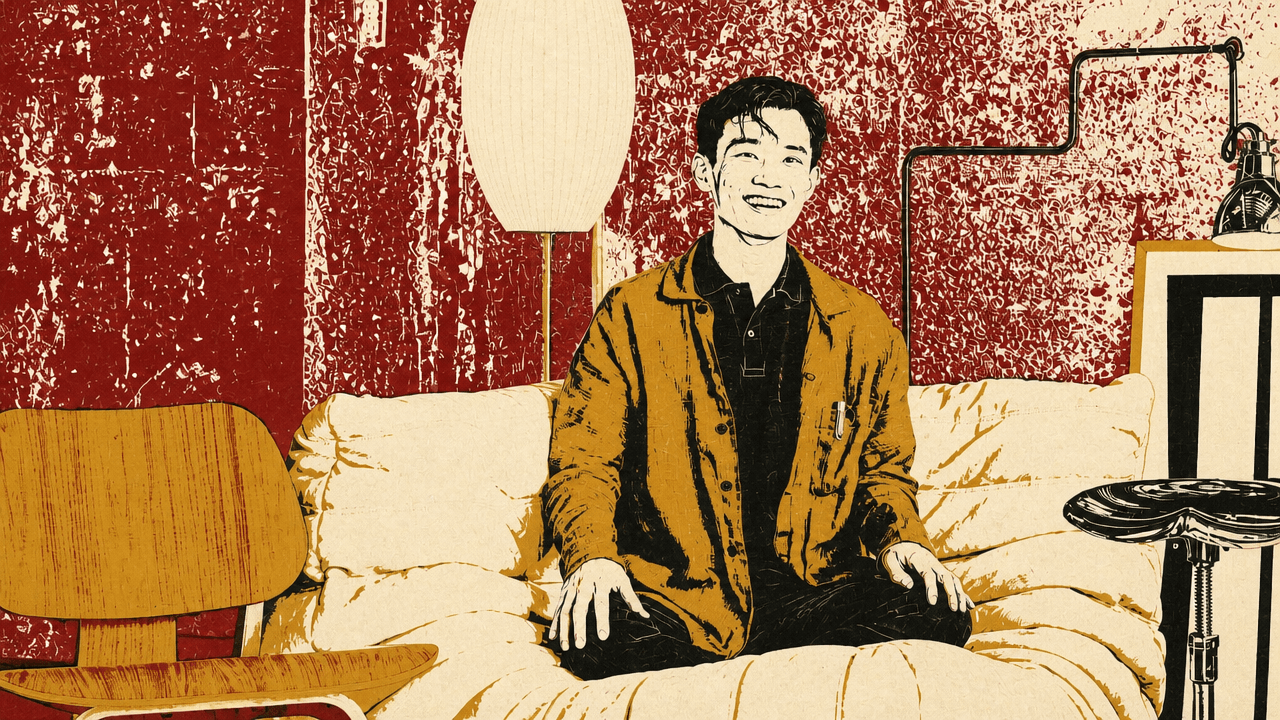
Notion is trying to get flatter without pretending hierarchy disappears
Ivan Zhao’s distinctive claim is not that AI eliminates hierarchy. It is that language models can reduce how much human work is spent routing information and small decisions through an organization, while a company still needs enough structure for people to coordinate. His shorthand for that is “jazz mode”: Notion should be a jazz band, not a marching band.


The comparison to Jack Dorsey and Brian Armstrong came mostly from Brian Halligan. Halligan framed Dorsey’s recent organizational thinking as a move away from the triangle-shaped org chart toward a flatter structure with AI in the middle, and Armstrong’s as a five-layer “player-coach” model. Zhao did not present a detailed circle-org model of his own, and he did not say Notion had adopted Dorsey’s or Armstrong’s structure. He agreed with the “spirit” of those efforts, but insisted on an invariant he thinks many flat-org arguments miss: “human nature” is hierarchical.
Zhao’s view is that AI can make organizations flatter without making them post-human. Legal systems still require CEOs and CFOs to sign for things. People still differ in taste, values, biases, temperament, and interests. Division of labor still makes sense. He pointed to nature, personality clusters, and basic social organization as evidence that hierarchy is not merely a corporate artifact to be designed away.
What can change is the amount of human paper-pushing inside the hierarchy. Zhao described much knowledge work as fuzzy context being moved from one person to another because software historically could not do the full job. Language models, in his view, now help in two ways: they can write software that creates better “pipes” for information and decisions, and they can make small decisions between formal decision points. His analogy was architectural. Before steel, buildings were constrained to five or six floors; after steel, they could rise. Language models plus software, he said, are “the steel for organizations.”
That does not mean Notion is trying to become managerless. Zhao said Notion is getting flatter, and that some of its best people now have 15 to 20 or more reports. His own direct-report count is closer to seven or eight, and he put the company average around seven to nine. The point is not to erase management, but to reduce the burden of routing information through managers simply because no other system can carry it.
We want to be a jazz band, not a marching band.
The metaphor also reflects Zhao’s own constraints as a founder. After Notion found product-market fit and scaled during COVID, the company adopted more conventional SaaS management in some areas. Zhao said that helped in certain respects, especially because he now believes Notion should have started building a sales team earlier. But he also found that a marching-band model did not fit him. If he delegated everything and everyone simply executed, he said, he would feel “sad.”
So the operating model became a hiring and leadership filter. Notion began hiring more “jazz band” people: high-agency people who can lead, cross boundaries, and tolerate improvisation. Zhao said AI has made those people shine more in the past two and a half years. The company now has enough people he trusts to generate ideas bottom-up, and enough openness that he can jump top-down into areas where he has interest or unique value without triggering territorial reactions. He described the current state as an “equilibrium” between himself and the company.
Jazz mode is not founder-as-dictator. Halligan emphasized that jazz leaves room for other people to contribute and have fun; Zhao agreed that jazz still has structure. That distinction shows up in planning. Zhao finds financial plans useful because they function like a treadmill readout: they tell you how fast you are running. Product strategy, by contrast, has “literally no plan” in the traditional sense because the market and technology are changing week by week. “Financial things, march that,” Zhao said. Product strategy has to be jazzed.
Hiring is moving away from résumé depth and toward taste and agency
One operational shift Ivan Zhao described is a reduced emphasis on experience as the main hiring signal. Notion no longer optimizes engineering hiring primarily for résumé depth. Zhao’s rough formula is that talent equals capability or experience, multiplied by taste or value system, multiplied by agency or will.
The reason is scarcity. Language models, like Google before them, make certain capabilities easier to access. They help people write, program, and retrieve information. Capability still matters, but Zhao believes it has been partially normalized. Taste and will have not. “Taste is not in language model,” he said. Taste, in his account, is rooted in a person’s values: what they want to bring into the world, which direction they choose, and what they care enough to refine. Will is the person’s agency, energy, and willingness to do the work.
Halligan noted that this resembles an older hiring idea: slope. Zhao pushed back only on a narrow definition of slope as raw intellectual horsepower. Intelligence is multidimensional, he said, and “there’s plenty of smart people are lazy.” In the model era, the difference between intelligence and agency becomes more visible.
The engineering structure that follows is a barbell. Notion is hiring very junior individual contributors and very senior architects. Halligan said that sounded different from many AI-focused CEOs, who tend to argue that a senior engineer who knows the system and is AI-pilled can become extraordinarily productive. Zhao’s answer was “both.”
Junior engineers can be highly leveraged by coding agents. But senior architects still supply taste, direction, and out-of-distribution judgment. Zhao said language models remain weak at architecture. A good engineer might manage four to six coding agents. A very senior architectural engineer might manage two or three junior engineers or interns, each of whom is managing agents, while also training the next generation. Zhao suggested that this may be more optimal than simply giving a group of senior engineers their own agents.
The same pattern is changing design and product management. Notion has always blurred those roles. Zhao is a designer who can code, and the company has long favored designers who can code, engineers with product sense, and PMs willing to experiment directly. One of Notion’s heaviest token consumers, he said, is a PM.
Notion is intentionally hiring designers who can operate as PMs. Zhao said the reverse is harder because visual craft takes years to train, though he pushed back when Halligan joked about stereotyping designers as people who do not want to talk to customers. In evaluating design leaders, Notion now asks PM-like questions: Can this person drive work themselves? Do they interface with customers? Are they more than an idea generator with taste?
Hiring tests have changed outside product and engineering as well. Zhao said engineering and design evaluation began changing two years ago; go-to-market and marketing changed around six months ago; sales is changing now. For sales candidates, the first interview no longer begins with a résumé. Candidates are asked to build something and send a Notion link. Notion looks at what they made.
Compensation is moving in the same direction. Zhao said the company needs to become much more meritocratic and cannot “peanut butter” rewards across people. The SaaS era, as he described it, was relatively peaceful: playbooks, broad allocation, predictable execution. The AI period feels like wartime. In that environment, the productivity spread between people matters more, and compensation has to reflect it.
Language-model products broke the old product assembly line
Ivan Zhao’s product-development claim is that AI changes the nature of building, not just the tools used by builders. Traditional software, he said, is like engineering a bridge: if you can design it, you can usually build it. The process is fairly predictable. A PM talks to customers, hands requirements to a designer, and the designer hands designs to engineers.
Language-model products are different. Zhao’s analogy is “brewing beer.” You cannot tell the yeast to move toward a precise flavor profile. You put strong people close to the process, experiment, observe what the underlying system can do, and adjust.
Building with language model back then, and somewhat still is, is like brewing beer. You can't truly predict the things.
That makes the development motion technology-first before it can become customer-first. Zhao acknowledged that models have improved substantially, but he still sees AI product work as “technology first driven development” rather than classic customer-driven development.
That explains why Notion’s product teams are less role-bound. Designers, engineers, and product people sit in the same “bucket,” working with evaluations and experiences to discover what the model can enable. The point is not that customers stop mattering. It is that in the early stages of a model-driven product, the builder has to learn the affordances of the technology directly, because the technology itself is unstable and partly unpredictable.
The same logic pushed Notion to reorganize marketing. Zhao said the company no longer has a CMO organization. It split marketing into two main parts. One is storytelling, which sits closer to product and connects directly to social channels where people are discussing product changes. The other serves sales and go-to-market functions such as demand generation and lead generation.
The reason was speed. Zhao said classic marketing cannot keep up with how fast the product is changing. Routing information through a central CMO organization and then back out to serve both product and go-to-market creates unnecessary delay. Notion chose a more decentralized structure, with community and creative work sitting closer to the storytelling and ecosystem side.
AI also changes cost assumptions. Brian Halligan noted that traditional SaaS companies such as HubSpot could have gross margins around the mid-80s, while many AI startups have much worse margins because inference is expensive. Zhao did not claim to know where Notion’s margins will settle. But he said companies have to be willing to let gross margins get worse if that is what competition requires. Otherwise, in his view, they are not really in war mode.
He distinguished Notion’s knowledge-work use cases from coding-agent products. Coding agents often benefit from frontier models: the smarter the model, the better. But many knowledge-work tasks do not require the most expensive model. Filing a ticket because someone spilled coffee on a carpet does not require “Opus.” Zhao said Notion is already seeing that some paper-pushing tasks can be handled by less capable or less expensive models, and he mentioned second-tier, Chinese, and open-weight models as examples. His point was not to lay out a settled model-sourcing strategy, but to suggest that knowledge-work products may have a different gross-margin profile from coding-agent businesses.
The planning implication is that financial discipline remains useful while product planning becomes more experimental. Zhao said Notion tries to be conservative to moderately conservative financially while taking large product risks. Cost is now a product dimension. In classic software, he said, builders often did not think much about cost. In AI, he has to.
The Kyoto refounding was a survival decision, not a romantic pivot
Brian Halligan called Ivan Zhao “the king of refoundings,” and Zhao accepted the framing. He sees refounding as part of a pattern among great artists and leaders who reinvent themselves: Miles Davis, Picasso, and Steve Jobs were his examples. Notion’s first refounding came before product-market fit, after years of struggle.
Zhao said the first version of Notion took four or five years to find product-market fit. The company eventually found the shape of the product it wanted to build, but it was running out of money. Zhao and co-founder Simon Last decided to lay off everyone and continue with just the two of them. Notion was only around five people, but Zhao said the decision was not easy. The pre-product-market-fit period felt like despair: black, directionless, with no clear place to go.
Kyoto was both practical and psychological. After saying goodbye to colleagues and friends, morale was low. Zhao and Last wanted to change the mood, and neither had been to Japan. Zhao first looked at Tokyo Airbnbs, but the apartments were too small; he did not want to cram into one with his co-founder. Kyoto offered larger and cheaper apartments. They rented out their San Francisco apartment and office, which made them cash-flow positive.
Once they arrived, the routine became simple: coding, eating, coding, eating. Zhao described it as liberating. The rebuild took about a year and a half.
Kyoto mattered partly because of the story they could tell themselves. Zhao said most things are “the story we tell ourselves,” and the story was that Kyoto was a special place from which to be reborn. The city’s craft culture resonated with him: knives, ceramic cups, tatamis, seats, shrines that had stood for centuries. If Notion was fundamentally a tool for humans, being surrounded by human-made tools was inspiring.
Halligan pressed him on whether they would have succeeded in a beautiful place in Thailand or the Philippines. Zhao said he thinks they would have pulled it off. But Kyoto made for the better story.
He did not consider quitting to start something unrelated. Notion was not a company started merely for the sake of starting a company. Zhao said he had been obsessed since his last year of college with the shape of the tool Notion could become. He and Last were both part of the “tools for thought” community, which Zhao traces back to Bay Area computing pioneers and the Grateful Dead era. If they had stopped working on Notion, he said, they would have started another company pursuing the same idea.
That lineage matters to Zhao because he thinks much of Silicon Valley has lost its memory. He described tech as dominated by technology and tinkering culture, but said tinkering often lacks respect for what came before. Science at least respects history; tech often does not know its own. Many people in tech, he said, do not know Douglas Engelbart or Alan Kay. If founders do not know the past, their view narrows to competitors and the present market. If they draw from history and other disciplines, there is “way more good stuff you can steal from.”
Zhao’s advice to stuck founders is not simply to cut the company down and move to Kyoto. It is to listen for the physical signal that drastic change has become necessary. He remembers feeling an inner urge that there was no way out and that he had to act. Once he landed in Japan, the decision felt liberating. Halligan interpreted the lesson as being more risk-seeking when a venture-backed startup has gone sideways for years. Zhao’s answer was that there is “no better time than now,” because the market dynamic is wide open.
The GPT-4 refounding began with conviction and then became a slog
The second refounding came with a much larger company. Brian Halligan described it as happening around a thousand employees; Ivan Zhao corrected him that Notion was probably around 500 at the time. The setting was Cancun, where the team had early access to GPT-4.
Zhao described GPT-4 as qualitatively different from GPT-3. GPT-3 was “fine.” GPT-4 was, for him, a “religious experience” and a “full body” one. He felt that the world had stopped and that anything Notion did without this new capability would become meaningless. There were doubters inside the company, partly because the moment followed the crypto boom and bust; some people wondered whether AI was another crypto-like wave. Zhao said some of those doubters are no longer at the company. For him and Last, the conviction was clear.
You gotta feel the AGI, feel the AI.
The business impact was not simply a step backward. Notion launched its first AI writing product two weeks before ChatGPT, and Zhao said it produced a meaningful revenue boost. But the more ambitious agent product, which the company wanted to build by the end of 2022, became a year-and-a-half slog.
They tried many approaches. Anthropic built a model for Notion. OpenAI fine-tuned another. None worked. Zhao said he and Last may have been “living too much into the future,” which can hurt when working with new technology. The morale cost was real. Zhao referred to the period as one in which Notion was rebuilding its AI foundation multiple times and its growth rate was low, but he did not quantify the business trajectory. The inflection came only when the underlying models improved enough and Notion’s AI product began to work.
Zhao distinguished that pain from the despair of the early company. Pre-product-market fit was worse because there was no clear direction. During the AI rebuild, morale suffered and progress took longer than expected, but the conviction about the direction remained. Right now, he said, “everything on fire” is another kind of pain.
For larger SaaS companies considering their own refounding, Zhao’s advice begins with product, not org theory. The founder or leader has to be hands-on with the technology. Treat the work like brewing beer, not building bridges. Halligan asked whether non-founder-led companies can pull it off. Zhao said he does not know, but thinks it will be tough. Founders have the “moral high ground” to change things, and people are more tolerant and forgiving when the founder drives a drastic shift.
The requirement Zhao returned to is not reading about AI or watching videos. It is using it until the body understands. He said the leader has to feel the AI, ideally by building with it for the product or for internal systems. Businesses, in his framing, are path-finding entities in markets, searching for local optima. A new ingredient — language models — opens new paths, but each company has a different position, niche, and angle. Leaders have to internalize the ingredient to see which paths are open to them.
Ex-founders are Notion’s decalcification machinery
For companies that have calcified, Ivan Zhao offered one mechanism Notion has used deliberately: acquisitions and acquihires. Founders inside a larger company, he said, can act as “decalcify” machinery, breaking things and keeping the organization regenerating.
The key is not simply collecting former founders as a status signal. Zhao said some of them are working on domains close to the companies they were already building. The person leading Notion’s AI meeting notes had built an AI meeting-notes startup. The person leading enterprise search had founded an enterprise-search product. Notion can give those founders a larger platform, support, and users who care about what they are building.
That arrangement matters because Zhao and Halligan both see the startup market as noisier and harder to scale into. Halligan put it bluntly: it has never been easier to start, and never been harder to scale, because traction in a micro-segment can attract many competitors almost immediately. Zhao did not disagree. Existing companies are shipping faster, and the world is getting louder. Twitter fatigue, in his phrasing, reflects how much product news and company activity now competes for attention.
In that environment, a larger platform can give acquired founders leverage. They are not merely being absorbed into bureaucracy if the company lets them continue pursuing the domain they cared about. They get distribution, support, and a place where users may actually adopt the product. Notion, in turn, gets founder energy inside the company.
This ties back to jazz mode. Zhao said Notion now has about a thousand employees and enough founder-like people to lead important work across organizational boundaries. Halligan contrasted that with his experience at HubSpot, where many important initiatives cut across organizations and were difficult to drive because few people had the mandate and temperament to lead across the whole system. Zhao’s answer was that Notion had learned it could not become a marching band. The people who remained and thrived were those who could operate in the company’s more improvisational equilibrium.
Enterprise sales was the place Notion should not have tried to reinvent
Ivan Zhao’s bias toward first principles cost Notion time in enterprise sales. He said the company resisted a traditional sales motion for roughly two years and tried to design its own system. In retrospect, he called that a mistake. Notion could have started sales earlier.
His lesson is not that every old playbook is obsolete. Enterprise sales persists because it reflects human nature. People want to talk to a seller. They want to feel comfortable before buying something expensive. Zhao compared it to not wanting to see a doctor who is only a robot. The modern sales playbook has lasted for decades for a reason.
He now argues that companies should concentrate their innovation in only a few places. Notion’s innovation needed to be in product and tool-making, not in reinventing sales motion. Trying to innovate everywhere spreads a company too thin. “Fundamentally, you should not reinvent new things unless it’s really absolutely necessary,” he said. His attempt to reinvent go-to-market was, in his words, “stupid.”
The first attempt at sales had too much product-led-growth flavor. It was more system-oriented and order-taking than true enterprise selling. PLG creates demand; customers already want to buy. That gives sellers the option to fulfill demand rather than do the harder work of creating and closing enterprise opportunities. Zhao said Notion had to respect both system and sales energy.
What started working, in Zhao’s account, was a pairing: Erica, Notion’s CRO and former GitHub CRO, as the system thinker, alongside Pervesh, the head of sales, whom Brian Halligan described as a “meat eater” and Zhao accepted as the “rah-rah” counterpart. Zhao said that combination has worked over the past year and a half. Sellers get the drive of a classic sales culture while operating inside a stronger system.
Notion did not experience the “organ rejection” of sales that some engineering-led companies do, according to Zhao. Halligan asked whether engineers looked at sales compensation and rah-rah culture and rolled their eyes. Zhao said Notion’s culture has been receptive to different kinds of people, and that engineers like working with sales. This fits his larger view that human differences are not bugs in the organization. The task is to build a system where different clusters of people can collaborate rather than pretending everyone should become the same AI-native generalist.
The CEO still has to speak directly to the company
Ivan Zhao describes himself as introverted. He prefers one-on-one conversations to one-to-many communication, and he trained himself into public company leadership through repetition. He once tried to delegate all-hands meetings to co-founders and executives, but concluded that would not work. To lead a group of humans, he said, the CEO has to communicate one-to-many. People want to hear from the founder; otherwise, they do not trust you.
Writing can help, but Zhao believes face-to-face communication is necessary at Notion’s scale. He now opens the mic and leads every all-hands. He still does not love it, but he no longer dreads it.
His practical advice is specific: get a teleprompter. Brian Halligan said he hates teleprompters because he cannot read fast enough. Zhao said a teleprompter changed him, partly because English is his second language; thinking and speaking simultaneously is harder. He now uses speech-to-text tools to talk through what he wants to say the night before, then speaks from a teleprompter during all-hands.
Notion has increased its communication cadence because the world is moving faster. The company used to hold all-hands once a month. Now it alternates every other week between all-hands and AMA, creating a weekly rhythm. Zhao said the worst failure in an AMA is not saying something controversial. It is giving a non-answer when there was a chance to rally people.
His personal schedule is not extreme by founder mythology standards. He wakes around seven or eight, makes coffee for his wife, does thinking or writing at home in the morning, and then comes to the office every day. He is experimenting with going to the gym during the day to raise his energy. His meetings are often packed into 25-minute blocks with five minutes between them, while his team protects one- or two-hour thinking chunks. His best thinking usually happens in the morning. Weekends are his “happy time,” when curiosity rather than responsibility can lead.
This emphasis on energy connects back to wartime. When Halligan asked what Zhao does differently in wartime, Zhao’s first answer was bodily: he has to exercise every day. War mode is more fluid and makes him feel more alive, but it requires physical maintenance.
Culture gives work the force of belief
Ivan Zhao does not recoil from being called a cult leader. Brian Halligan said people had used the phrase about both of them and that he had not particularly liked it. Zhao said he liked it.
His reasoning is that a company is “sort of a religion.” It has a point of view, a value system, rituals, and a way of projecting beliefs into the world through a business and product. He cited the Catholic Church as one of the most successful companies of all time: 2,000 years old, with rituals, business models, and continuity. Halligan joked that it had a great founder in Jesus and a great head of sales in Paul; Zhao extended the analogy to sellers, referral systems, and “OG viral marketing.”
The point was not just humor. Zhao believes people want belief, meaning, and purpose. Work and companies can give people that, as can camaraderie and sports. Wartime amplifies the feeling because purpose becomes clearer. All-hands, he suggested, have a church-like quality: a repeated ritual where the group gathers around shared belief.
That is also how he advises founders to think about themselves. CEO work is a social game, full of status and power, like entertainment or sports. But it can also be a pursuit of personal values. Zhao said he has had to find equilibrium between competition for competition’s sake and the values that give him sustainable energy: building good tools, craft, and the human side of technology.
A founder who only cares about craft may be more like an artist and may not build a business. A founder who only wants to compete or be popular may build something misaligned with himself. Zhao’s advice is to locate one’s own equilibrium on that spectrum.
He also argues for leaning into strengths rather than over-fixing weaknesses, while recognizing certain obligations as inescapable. A CEO at scale probably must communicate one-to-many. Maybe the founder can lean more on writing than speaking, but the need remains. Inside those constraints, Zhao said, founders should amplify what they are good at. As machine capability commoditizes more tasks, a leader’s point of view and durable strengths become more important.
Halligan closed with a similar observation. Companies reflect their CEOs, and CEOs should not be afraid to be themselves. His view of Zhao is that Notion has been built around Zhao’s quirks rather than despite them.