The Savannah Bananas Built Stadium Demand by Designing for Fans

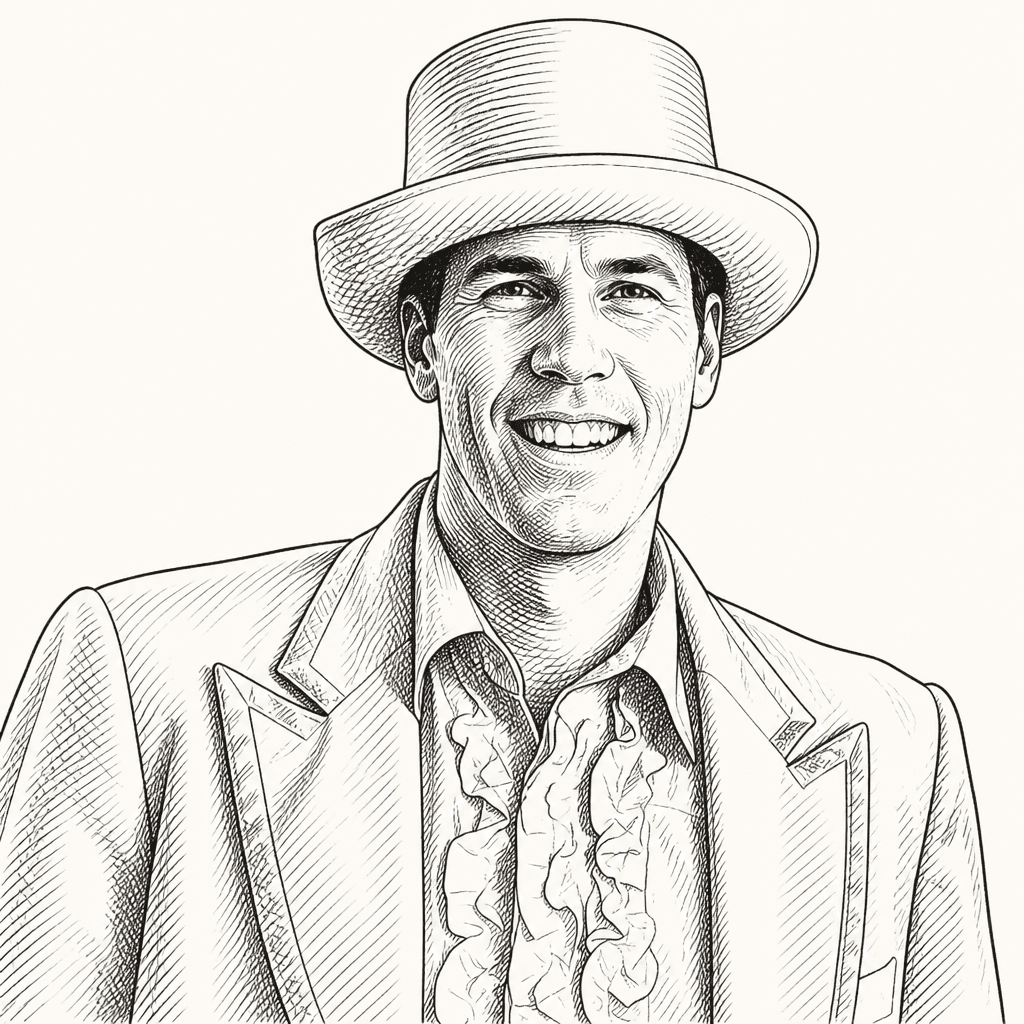
Savannah Bananas founder Jesse Cole argues that putting fans first is a commercial discipline, not a slogan: his company keeps tickets at face value without fees, streams games free on YouTube, and absorbs costs that many sports operators pass on to customers. As Fans First Entertainment expands from a 4,000-seat ballpark to 75 stadiums in 45 states, Cole says the strategy depends on building the production, ticketing and logistics infrastructure to make a faster, more theatrical version of baseball worth attending again.
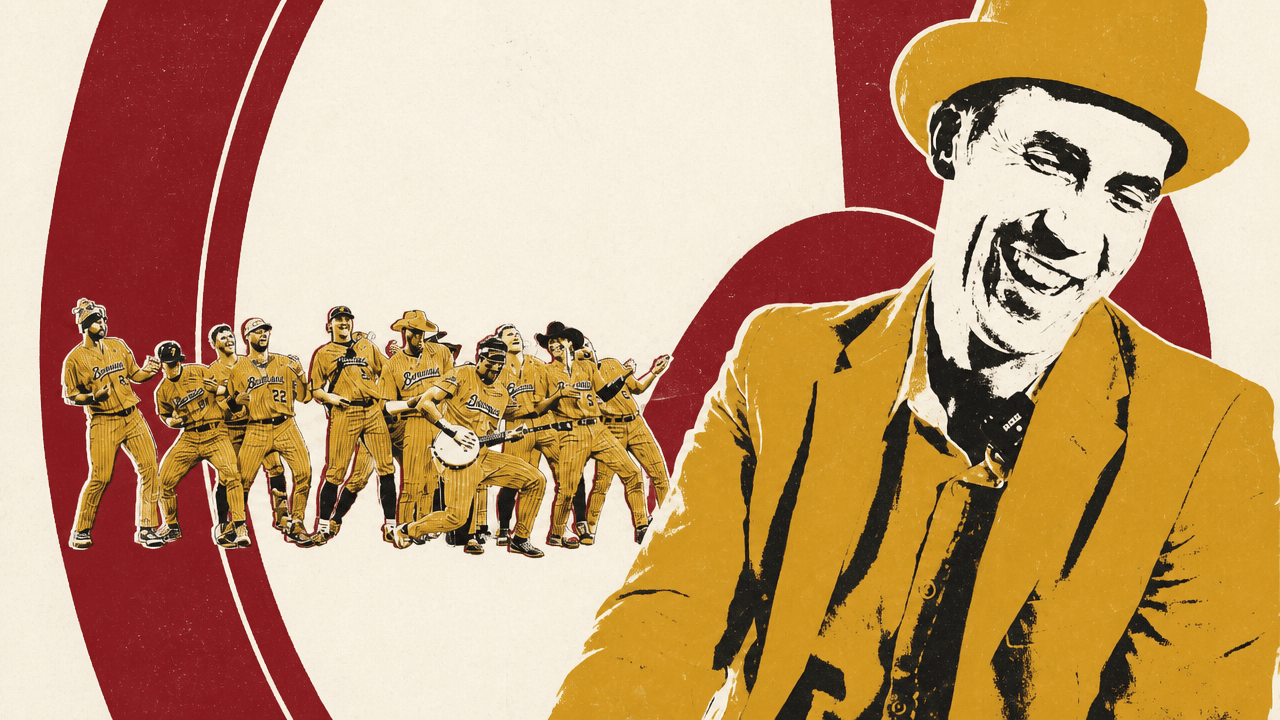
Fans first is a commercial choice, not a marketing slogan
Jesse Cole says the Savannah Bananas’ goal is “to create fans,” a priority that dictates decisions many sports operators would treat as obvious revenue opportunities. The stakes are no longer confined to a small ballpark: Cole says Fans First Entertainment now operates in 75 stadiums across 45 states, while preserving ticket prices of $40, $50, or $60.
Those prices come with no ticket fees or convenience fees, and Cole says the company pays the taxes itself. He says the average Bananas ticket on the secondary market exceeds $200, and that consultants have repeatedly advised the company to raise prices. Instead, it built its own face-value resale marketplace and absorbs the associated costs so fans can obtain tickets at what it considers the right price.
Cole applies the same principle to distribution. Bananas games are available free on YouTube globally even as the company works with outlets including ESPN and CW. Asked whether an offer worth ten times more would make him stop livestreaming games, Cole answered that the company must remain fans first.
As soon as you deter away from that, you’re in trouble. And you know, you’ll have short term, it’ll be glorious in the short term. And then every day you’ll just lose a few fans.
That position is not costless. Cole says the company is investing $13 million this year in its broadcast operation without expecting to recover that investment directly from YouTube. It is also spending millions on individual shows and building a ticketing platform and secondary marketplace before trying to turn either into a product for other organizations.
Cole’s operating thesis is that accessibility, fixed pricing, and a better show will create an audience worth serving over the long term. His concern is not simply that fans might complain about a single price increase or rights decision. It is that a sequence of short-term choices could steadily make the company less worth caring about.
Stadium-scale demand makes the promise harder to keep
The Fans First model is being tested at a scale far beyond the 4,000-seat ballpark where Cole says the Bananas first became a viable business. On-screen figures during the interview showed a 41,000-fan sellout at Wrigley Field, 120,000 fans across two games at Autzen Stadium, and 70,000 fans participating in an Iowa Wave tradition with a children’s hospital.
| Event shown | Venue or setting | Attendance cited |
|---|---|---|
| Bananas and Firefighters sellout | Wrigley Field | 41,000 fans |
| Party Animals and Bananas games | Autzen Stadium | 120,000 fans across two games |
| Iowa Wave tradition with a children’s hospital | Stadium event | 70,000 fans |
Those crowds are evidence of demand, but they also create an operating problem. Cole says Fans First Entertainment now has six teams, performs in 75 stadiums across 45 states, and expects to go international. Delivering a consistent level of access and production across that footprint requires capabilities the original baseball operation did not have: broadcast production, ticketing technology, merchandise distribution, and trucking logistics. The company has 16 full-time truck drivers moving equipment and merchandise around the country, Cole says.
Cole does not describe those functions as incidental. They are the infrastructure required to deliver the experience. Its president, Jared Orton, who Cole says has been with the organization since day one, focuses on operations and on figuring out how to serve fans at that growing scale. Cole focuses on the creative side: the show, major events, original music, and media.
The division reflects a practical constraint. A live-entertainment business can promise surprise and spontaneity to fans only if someone has made the machinery behind it work. Cole says that learning process is messy and initially expensive, but that the organization has to keep improving its show, merchandise, ticketing, and operations if it wants to avoid losing fans.
The product was redesigned around the moment families left
The Bananas did not begin as a rejection of baseball. Cole says the original plan was to operate a college summer baseball team. But his team watched fans leave games early even after adding dancing, celebrations, music, surprises, and other entertainment.
They videotaped games, took photographs, and observed behavior at 30-minute intervals. The signal, in Cole’s view, was clear: a three- or four-hour game was too long, slow, and late for many families, particularly those taking children home. This was one kind of testing: observing what people did in the venue, rather than asking them to articulate a preference in advance.
Cole’s premise is that sports operators cannot control whether their team wins or loses, but they can control the show. By designing both the game and the surrounding entertainment, he says, the company can make sure people leave having had a good time regardless of the score.
That produced Banana Ball, initially tested behind closed doors. Cole called two former college coaches and asked whether they could try a new version of the game. The early test ran nine innings in 99 minutes. It was chaotic, he says, and did not work immediately. But the players said it was the most fun they had played, while Cole saw an experience in which viewers could not look away because they might miss something unfamiliar.
The point was not simply to shorten baseball. Cole wanted an event full enough that people would not leave their seats. His standard for each new show is that fans should be able to say they saw something they had never seen on a baseball field.
That approach grew out of years of low-stakes experimentation in Gastonia, North Carolina, where Cole had worked in summer baseball before starting the Bananas. At 23, he became a general manager of a team that, he says, had $268 in the bank, had lost more than $100,000 the prior year, and could not pay him. He began testing conspicuously odd promotions, including a Grandma Beauty Pageant, Flatulence Fun Night, and “garbage can nachos.”
The specifics mattered less than the operating habit: normal ideas were easy to ignore, while unusual ones gave fans something to react to. Cole later formalized that habit into a process modeled on Saturday Night Live: all-day Tuesday idea sessions, followed by table reads, rehearsals, and a new show each week.
Experimentation works only when fan behavior outranks the plan
Jeff Berman pressed Cole on how an organization can turn an aspiration to “think differently” into a repeatable practice. Cole’s answer is to lower the perceived cost of being wrong, make more attempts, and pay attention to different signals at different stages.


In the early days, he says, the team had little to lose. An idea could fail without becoming a referendum on the business or its leadership. That removed some of the weight people put on individual ideas and on failure itself. The lesson he draws is that companies learn more by doing more, provided they observe what happens.
The Bananas’ approach separates at least three forms of feedback. At games, the company watches concrete behavior: when people arrive, when they leave, and how they react in the building. For changes to the game itself, such as Banana Ball, Cole describes controlled tests before presenting the product publicly. And for content, the company uses social media as a rapid signal of fan response. It has posted “millions of things” online, he says, but the relevant question is not whether an algorithm rewards a post; it is whether fans do.
Don’t do surveys, just actually go do it.
That approach also requires deciding whose response matters. Cole says baseball traditionalists criticize the Bananas regularly, but the company is not trying to serve them. A business attempting to create and retain customers, he argues, should be explicit about the audience it is for, then test work with that audience rather than defend every departure from convention.
The same thinking informed the company’s break from its original business plan. The Bananas were intended to be a baseball team; repeated evidence that fans were leaving early pointed instead toward a faster, more theatrical product. Cole’s advice to businesses facing outside disruption is not to abandon planning altogether. It is to avoid treating a plan as more authoritative than customer behavior.
New teams need their own reason to matter
Expansion creates a brand-architecture problem: more teams can create more occasions for fans to attend, but only if they do not register as interchangeable versions of the Bananas.
Jesse Cole calls this one of his largest fears. Each show has to be distinct, unique, and different; if fans conclude that every team is merely another Bananas variant, the company is “in trouble.” The purpose of the investment in each team is to give it its own reason to matter.
The Party Animals offer one test of that proposition. Cole says they have more TikTok followers than every Major League Baseball team and can sell out major-league stadiums without the Bananas. In Detroit, he says, 170,000 people joined a list to see the Party Animals; based on four tickets per customer, he estimates that demand could fill eight straight nights.
The Clowns, the newest team, are being developed as a tribute to a Negro League team, according to Cole. He describes plans including Broadway-style singers, a brass band, and an act from Cirque du Soleil that had not yet been announced. The Local Beach Coconuts, meanwhile, have merchandise sales Cole says rank second in the organization and a crowd chant that takes hold when they enter at the end of games.
These teams can reinforce one another, Cole says, but only if each is distinct. The task is not simply to repeat a recognizable Bananas format under different names; it is to continue producing new reasons for a fan to feel that a particular team and show are worth seeing.
The early business proved demand before it attempted scale
Cole says the Bananas did not begin by raising outside capital. The organization learned to sustain itself by selling tickets.
The early period was financially severe. Cole says he and his wife sold their house, emptied their savings, slept on an airbed, and carried more than $1 million in debt. In the first three months, the team sold two tickets. His account of the period is not that the team had a clear route to success, but that it worked toward the next show rather than trying to resolve every problem at once.
Once the Savannah operation began selling out its 4,000-seat stadium, Cole says, it became a roughly $3 million profitable business. That created enough room to take the show on the road. The first touring effort was improvised: equipment and merchandise packed into a Penske truck, with little prior knowledge of remote sound systems, merchandising setups, or stadium logistics. The sound failed on the first night, Cole says, but the team continued, improved the next show, and saw fans stay more than an hour after the game for a surprise fireworks display.
That experience hardened Cole’s view that ticket demand is the fundamental test. Sponsors and advertisers can support an event, but they do not substitute for an experience people will pay to attend. If customers do not want to buy tickets, he says, the event is not good enough.
The company’s later move from one touring stop to seven cities, then 33, then major-league and football stadiums followed that logic: establish that people will come, learn what fails in public, improve the show, and expand after the audience has made the case.