Senior Officers Must Advise Privately and Execute Lawful Civilian Decisions
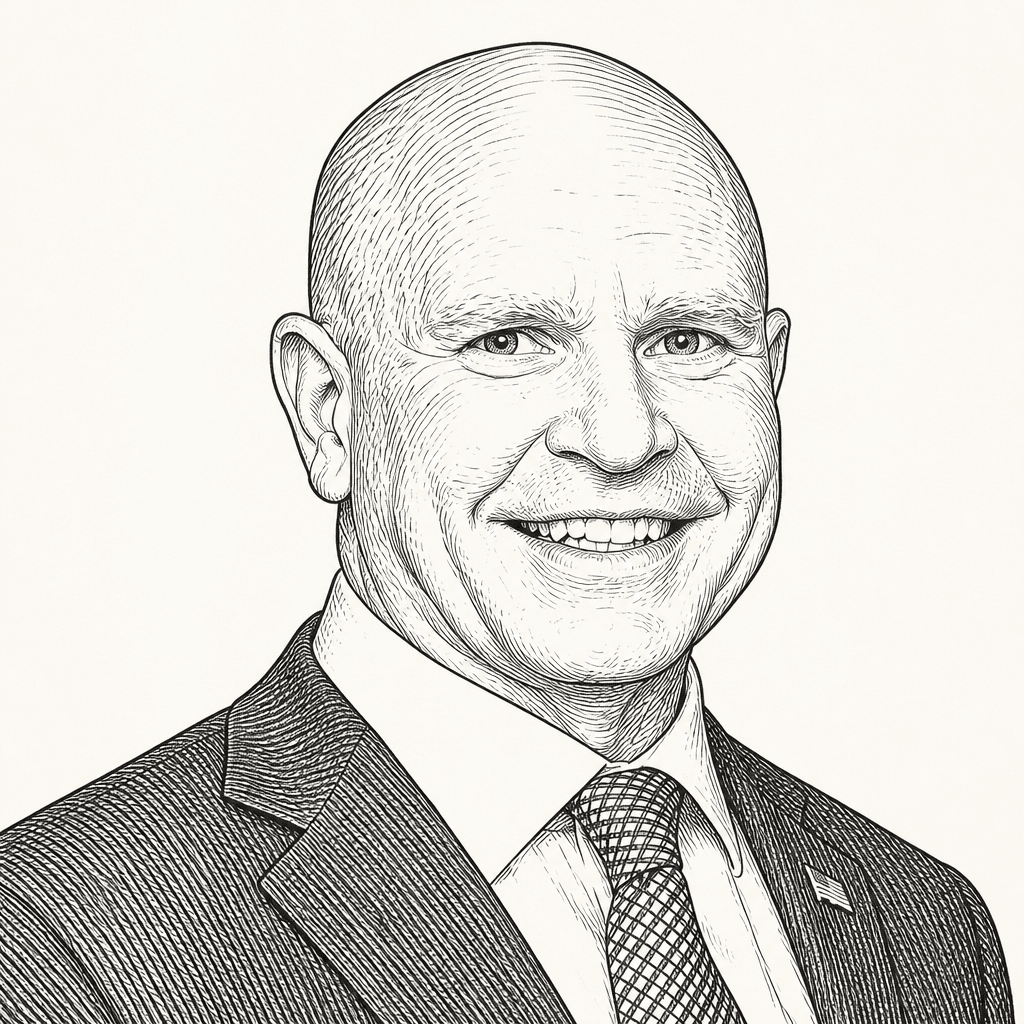 Herbert McMasterErin Tillman
 Christopher Cavoli
 Joseph DunfordHoover InstitutionWednesday, May 13, 202619 min read
In a Hoover Institution discussion on civil-military relations, retired generals Joseph Dunford and Christopher Cavoli, with H.R. McMaster moderating, argued that the U.S. military’s democratic role depends on a hard boundary: senior officers give candid, private, nonpartisan advice; civilian leaders make policy; and the military carries out lawful orders. Their case was that this discipline is not Washington etiquette but a practical safeguard for the force, ensuring Americans are not sent into danger without an achievable political objective, clear risks, and accountable civilian decisions.
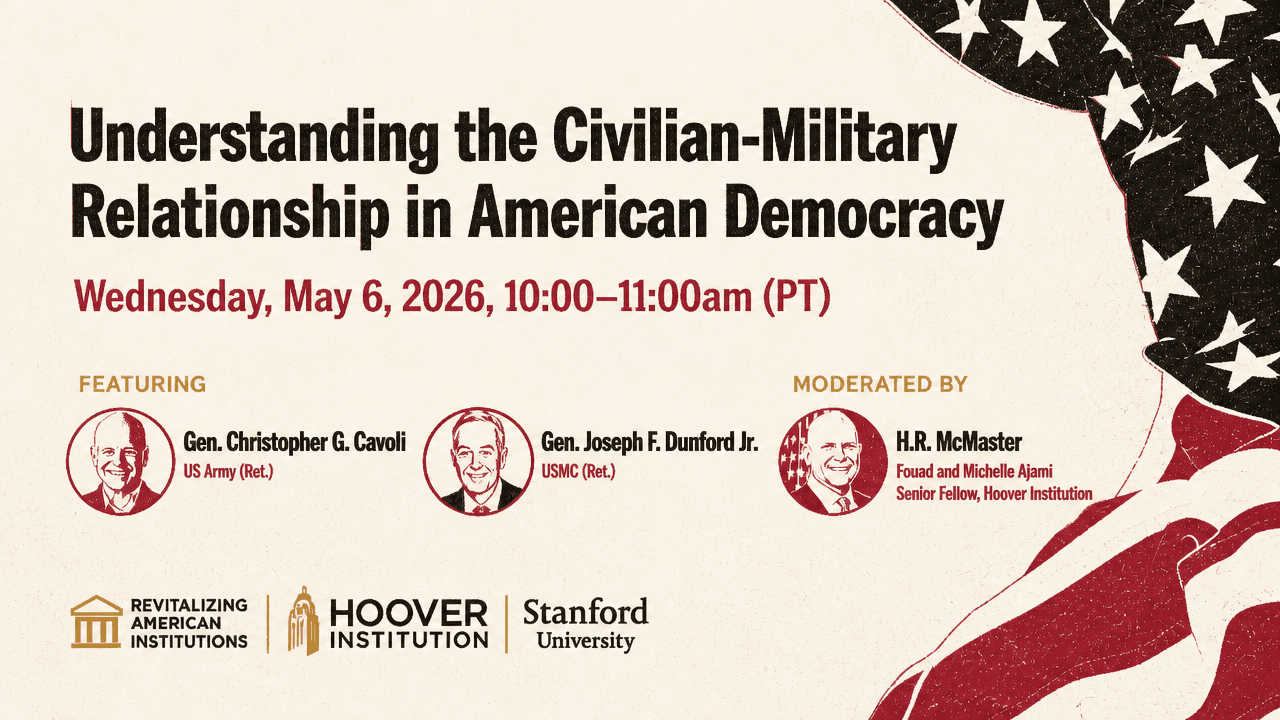
The bargain is candid advice, civilian decision, lawful execution
The standard defended by Joseph Dunford and Christopher Cavoli was neither military deference nor military autonomy. It was narrower and more demanding: senior officers owe civilian leaders candid, private, nonpartisan military advice; elected and appointed civilian leaders decide; the military executes lawful orders; and retired officers should be careful not to make candid advice harder for those still in uniform.
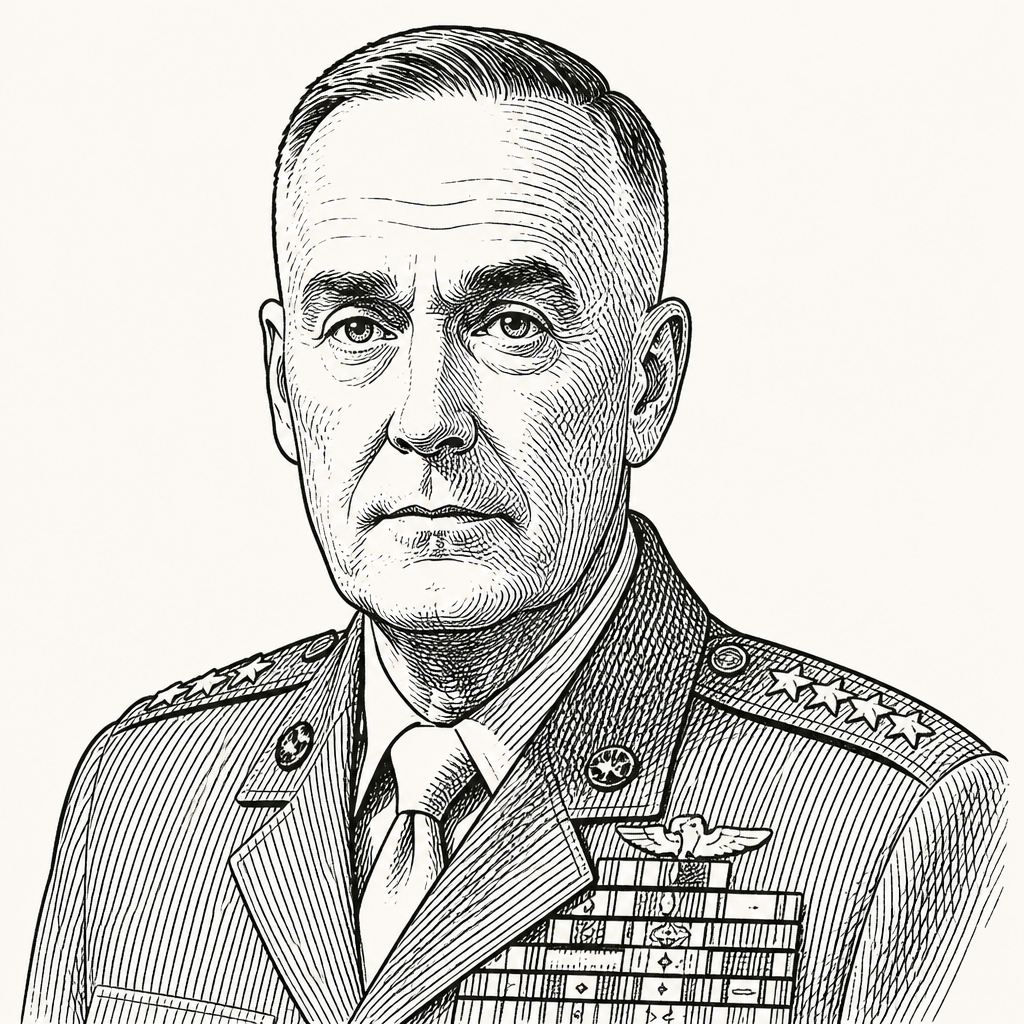
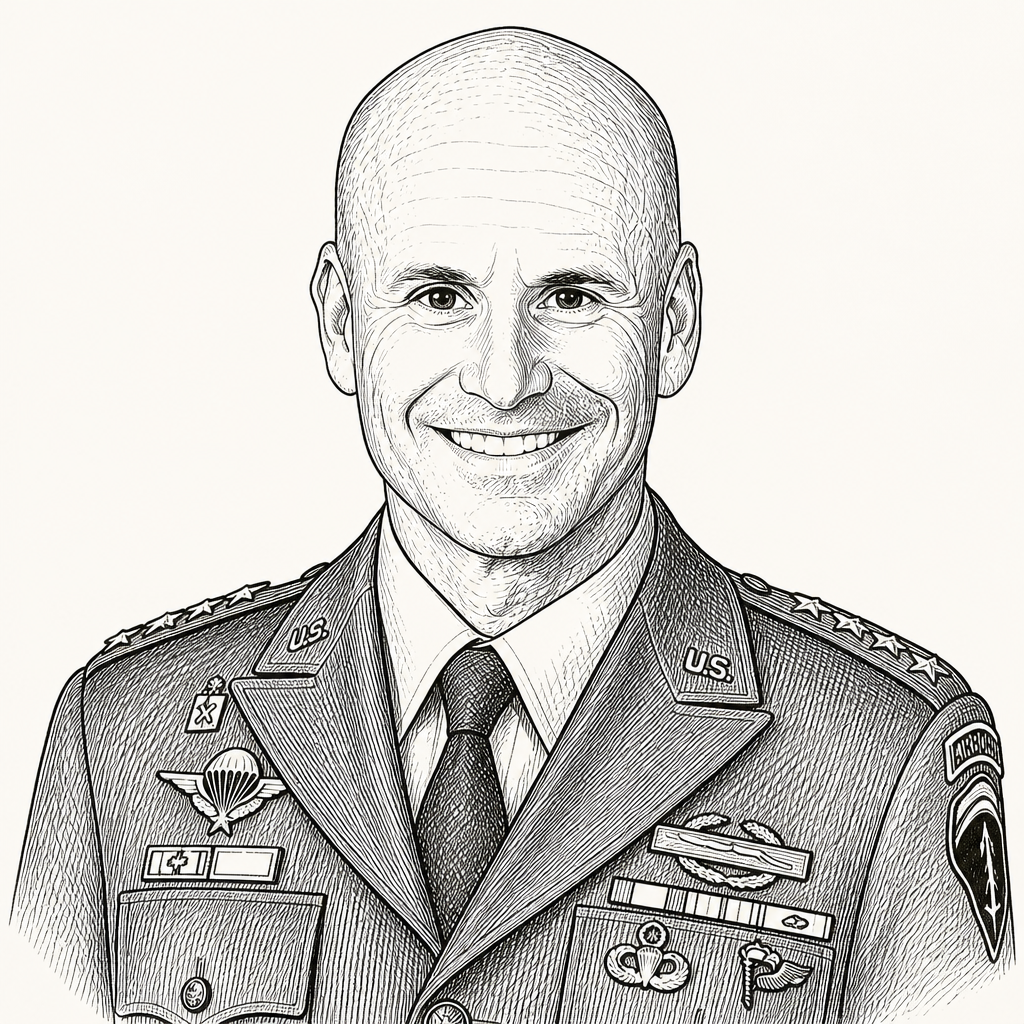
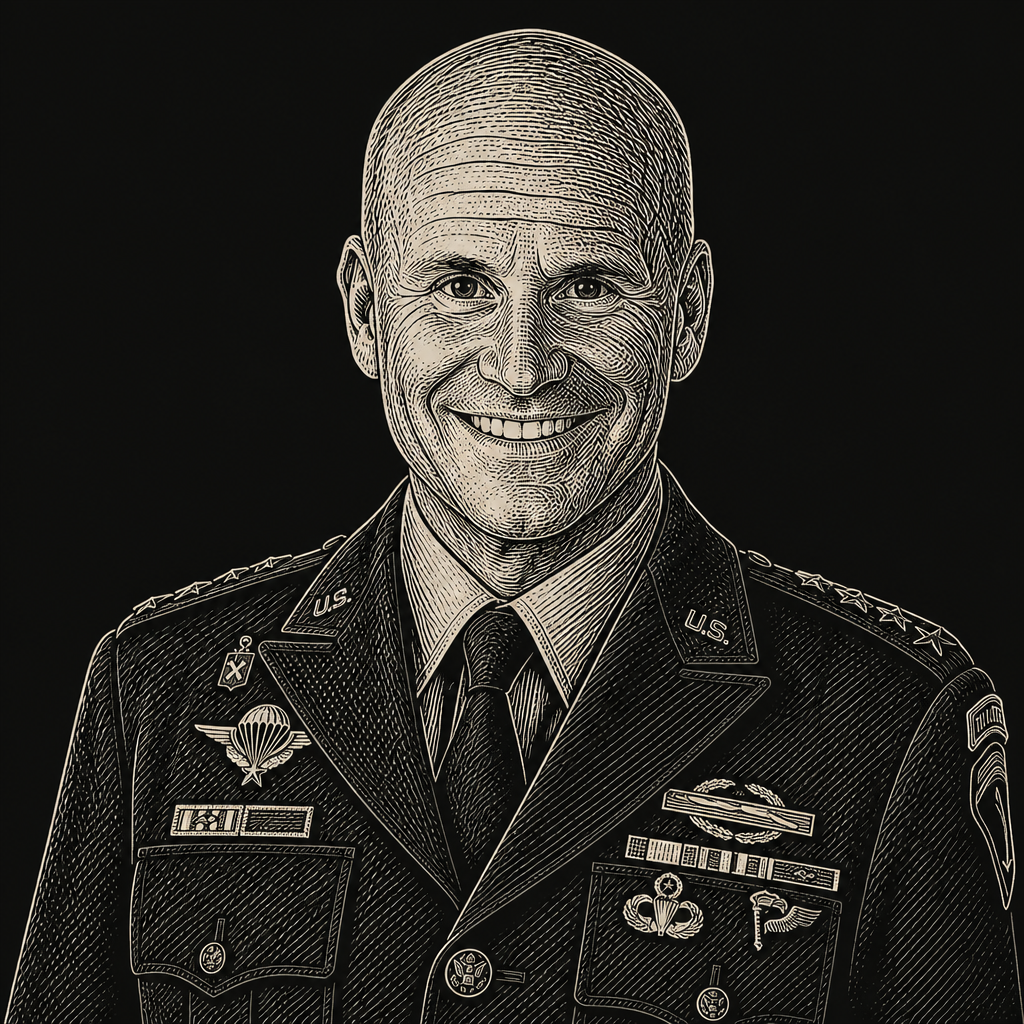
Dunford drew the central line between advice and advocacy. A president’s desk, he said, does not receive “purely military” problems. It receives strategic problems with military, diplomatic, economic, and political dimensions. The senior military officer’s role is to understand the president’s political objectives, understand the context in which those objectives are being pursued, and provide military options that might help achieve them. That means explaining risk, opportunity cost, and probability of success. It does not mean telling the president what to do.
Afghanistan after 2014 was his main example. As commander of U.S. and NATO forces in Afghanistan, Dunford spent more than a year providing options for the post-2014 presence as the United States moved toward a NATO non-combat mission. He said he did not tell the president whether the United States “should or shouldn’t stay in Afghanistan.” Instead, he framed the advice around the political objectives the president had stated: mitigating the risk of another 9/11 and preventing al-Qaeda from again threatening U.S., allied, or partner interests. Against those objectives, he laid out different levels of resourcing, the risks attached to each, and the likelihood that each military option would succeed.
Not once in that process did I say we should or we shouldn't stay in Afghanistan.
The benchmark, in Dunford’s telling, is not what the president wants to hear. It is what the president has identified as the political objective and whether the military dimension of a strategy can plausibly achieve it. If no acceptable military option exists within the constraints and restraints given, the officer has to say that too.
His Afghanistan example sharpened the point. At one stage in the post-2014 discussion, Dunford told the president that roughly 10,000 forces was the minimum needed at the end of 2014, and that if the United States did not maintain that level, it should leave. When the president challenged whether he really meant that, Dunford said he did. The issue was not a symbolic troop number. It was the “ecosystem” of capabilities required to make the mission achievable at an acceptable risk to the force.
It's not a numbers game. It's a capability game.
Dunford’s test was whether the force could be told, honestly, why it was being asked to deploy: what political objective had been set, why that objective was achievable, and whether the resources provided gave a sufficient probability of success. If Americans are placed in harm’s way without a clearly articulated and achievable political objective, he said, they should not be there.
That kind of advice also requires shared assumptions. Dunford described briefing one president on military options while the president repeatedly looked at a three-by-five card and appeared impatient. Dunford stopped and asked whether the president’s objectives had changed. The president replied that the objectives had not changed, but that his assumption about the ability to achieve them had. Dunford’s response was that they then needed a different conversation: the president and military adviser could not operate from different assumptions or ambiguity about the objective.
Herbert McMaster connected the same problem to Vietnam. Drawing on his own historical work on how Vietnam became an American war, McMaster said the Joint Chiefs of Staff during Lyndon Johnson’s first year and a half after John F. Kennedy’s assassination concluded that they should give Johnson the option he wanted from a domestic political perspective. Johnson wanted to win election in his own right in 1964 and pass Great Society legislation in 1965, McMaster said, and viewed Vietnam principally as a danger to those goals. The chiefs’ accommodation of those domestic political priorities, in McMaster’s telling, masked the long-term costs and consequences.
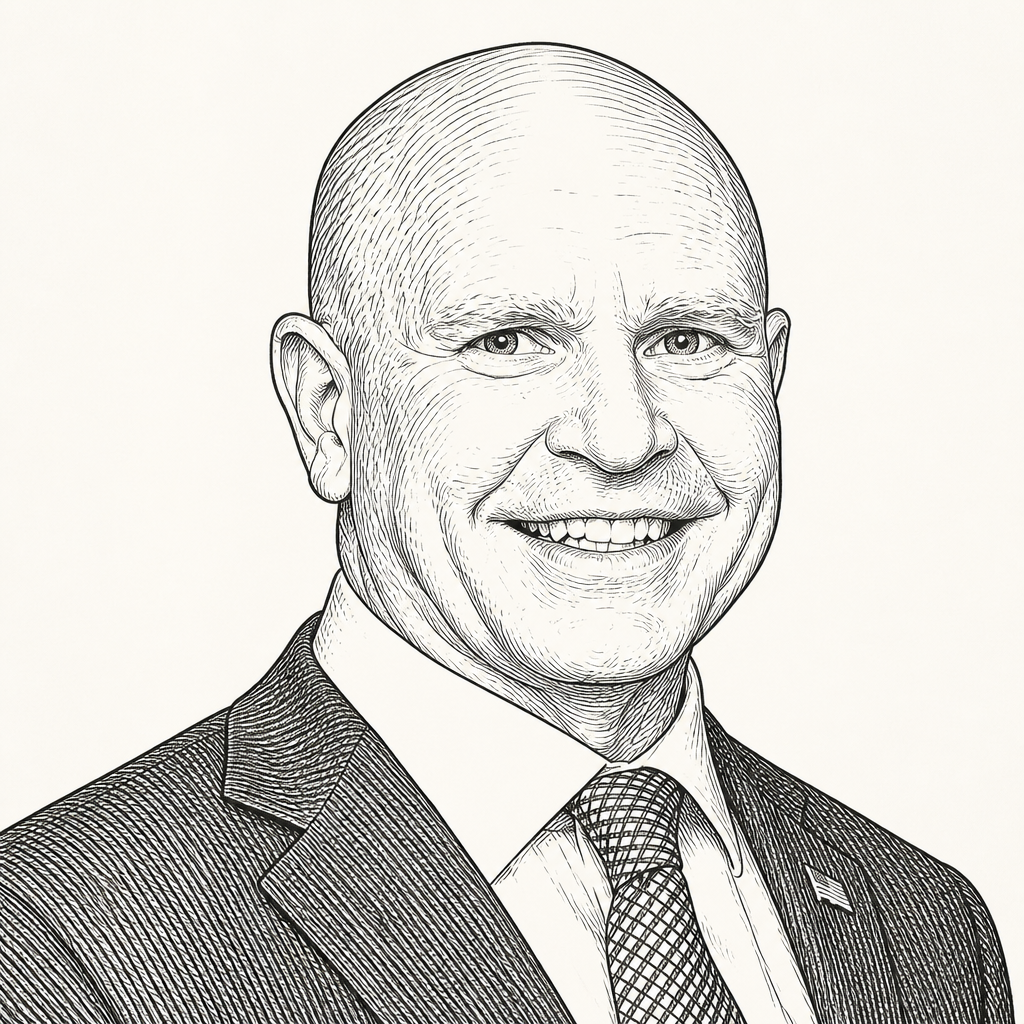
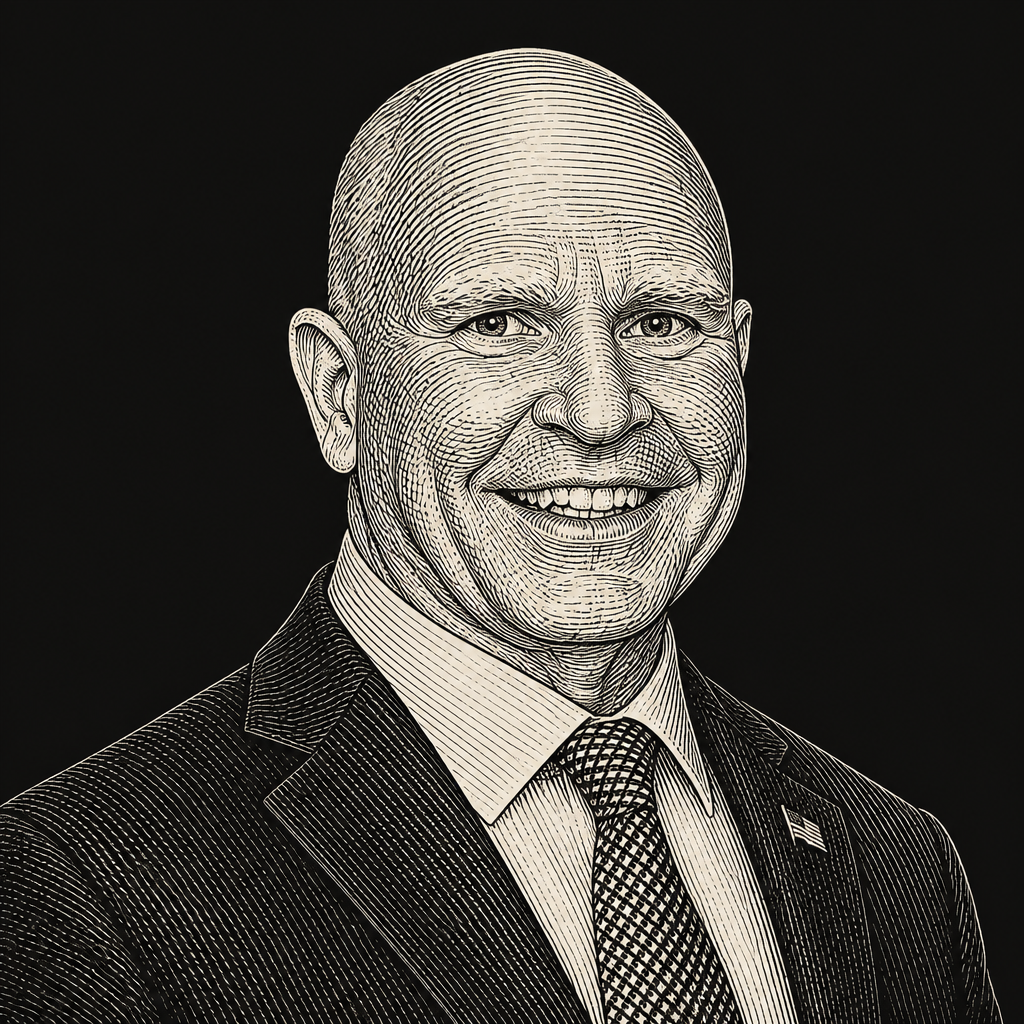
McMaster also tied Dunford’s 10,000-force example to a later decision. He said that “two presidents later” a number and date were dictated for Afghanistan, and “we got August of 2021 out of that,” referring to what he called the “terrible and deadly withdrawal from Afghanistan and Kabul.”
Dunford answered McMaster’s Vietnam comparison with a formulation he attributed to his predecessor, General Martin Dempsey. Senior military leaders have a legal obligation to provide advice, Dempsey had told him, but political leaders are not obligated to listen. Why would they listen? Only if the military adviser is credible, competent, trustworthy, and, in the U.S. context, nonpartisan.
Credible advice has to survive more than one audience
Christopher Cavoli described the combatant commander’s role in terms similar to Dunford’s, but with an institutional caveat: the chairman of the Joint Chiefs of Staff is not in the combatant commander’s chain of command, yet is indispensable in the chain of information. The chairman is “in all the meetings,” while the field commander is only in the meetings to which he is invited and is not present in the hallway conversations afterward. Cavoli’s practical conclusion was blunt: a field commander who does not spend substantial time talking to the chairman is “foolish.”
Cavoli’s experience as Supreme Allied Commander Europe added another layer. In NATO, he said, he had 32 heads of state and government as bosses, along with the secretary general and the NATO secretariat. He was told early that “decisions are not made in Brussels” but “in capitals” and merely reported in Brussels. To influence those decisions, he had to travel to capitals and brief national leaders directly.
The regional plans that became part of NATO’s rearmament effort illustrated the problem. NATO had gone 35 years without a general defense plan after the Cold War, Cavoli said. When new regional defense plans were prepared, they mattered politically to the countries where they would unfold. Heads of state wanted to be briefed; they had views; they expected interaction. Cavoli’s credibility depended not only on whether leaders thought he was competent as a soldier and general, but whether they believed he was acting in the interest of the alliance rather than the United States or any single nation.
That dual role made transparency essential. As both a U.S. four-star general commanding U.S. European Command and NATO’s Supreme Allied Commander Europe, Cavoli said he had to be perceived as a disinterested arbiter of alliance military interests. His answer was to keep his advice consistent from capital to capital, avoid tailoring it to whichever leader was in front of him, and ensure that the United States knew his position before he rendered it elsewhere. The common principles, he said, were transparency, communication, credibility, and objectivity.
Cavoli also argued that senior officers sometimes have to provide what he called “gentle education” to civilian leaders. Not patronizingly, he said, but because military officers are trained to frame strategic problems in terms of instruments of national power, options, and courses of action. Civilian leaders may not have the same formal strategic preparation. It often falls to the senior officer in the room to help make the discussion productive.
On Ukraine, Cavoli said he gave unpopular advice under two administrations as commander of U.S. European Command. When he saw decisions unfolding that would prevent military outcomes from matching stated political desires, he believed he had an obligation to say so. The method mattered: first, be certain the advice is accurate and based on “hard calculus,” not emotion; then get the chairman’s view; then move through the secretary and the White House. At each step, Cavoli said, the advice must be consistent, objective, and demonstrable — “army math, not opinions.”
That same logic shaped his answer to a German citizen worried about degraded bonds between the United States and Europe. Cavoli separated the political relationship from the full network of national ties. Bonds between nations do not exist only at the political level. They include political, cultural, historical, familial, commercial, and military-to-military ties. When one tie degrades, the others do not necessarily degrade with it. Often, other ties help hold the relationship together while political winds shift.
Military-to-military relationships are particularly useful, Cavoli said, because they are usually founded on a common experience of approaching a hard military problem and solving it together. That shared objective activity gives the relationship a durable base. U.S. military-to-military relationships with other countries have long been an important part of broader national relationships, especially when commercial or political ties fray.
The same credibility problem runs in multiple directions. Dunford said military leaders need credibility with political leadership, but also with the force, Congress, and the parents who send their sons and daughters into uniform. Their advice must be perceived as grounded in military effectiveness, efficiency, and readiness — not political acceptability. If military leaders shade advice toward what is politically convenient, they damage the professional basis on which their influence rests.
The military is not a constitutional backstop against lawful policy
Herbert McMaster pressed the chain-of-command question because, in his view, many Americans misunderstand it. Civilian leaders make decisions; military officers implement lawful orders and provide professional military advice. The military is not supposed to see itself as a check on executive power. McMaster described that as precisely the kind of danger the founders worried about.
Christopher Cavoli distinguished loyal obedience from activism. Officers, especially senior officers, have a broad effect on the institution. Their job is to take lawful policy at face value, think it through, and implement it. Their job is not necessarily to advocate for that policy or become activists on its behalf. That distinction becomes especially important when administrations change. If an officer has not turned himself into an activist for the previous policy, he can implement the new lawful order without sending a signal of hypocrisy or inconsistency to subordinates.
Cavoli also emphasized the narrowness of the unlawful-order category. Military officers are not obligated to follow unlawful orders; they are obligated not to follow them. But when parsed with lawyers, many orders an officer may dislike are lawful.
This idea that the military is a magic check on executive power is not only distasteful constitutionally, it's also not really effective under our constitution.
Joseph Dunford gave a concrete example from his first year as chairman of the Joint Chiefs of Staff under Secretary of Defense Ash Carter. Carter was preparing to announce a major personnel policy. Dunford had expressed concerns that the force was not ready and had recommended against moving forward at that time. Carter considered the advice and decided to proceed.
When Carter’s chief of staff told Dunford that he and the secretary would jointly announce the policy in the press room, Dunford refused. He said he would appear the next day to explain how he would enthusiastically execute the policy, but he would not stand beside Carter during the announcement in a way that implied the decision was a purely military judgment based on readiness or effectiveness. Carter accepted the distinction. According to Dunford, Carter said he was making a policy decision, and Dunford would implement it. Carter also said he would identify the issues Dunford had raised and explain how the department would address them in implementation.
Dunford’s larger formulation was simple: political leaders determine the “what,” military leaders determine the “how.” The division is not perfectly clean, he acknowledged, because military leaders advise on consequences and implementation. But policy is in the purview of civilian leaders.
Political leaders have the right to be wrong.
That line, Dunford said, came from a letter signed by former secretaries of defense and chairmen on the foundations of military advice. Cavoli praised Dunford’s handling of the Carter episode because it showed personal responsibility: a staffer had told the chairman how the event would unfold; Dunford used his access to the civilian executive, opened the uncomfortable door, and addressed the matter directly. Cavoli’s lesson was that senior military leaders sometimes have to go through doors they formally have access to but may not want to open.
This is also why Dunford stressed privacy. Pre-decisional advice to political leaders has to remain private. Senior officers must not get ahead of the president or the secretary of defense, and must not create material that political opponents can use against them. Dunford quoted former Secretary of Defense Robert Gates: too many senior leaders talk too much.
Cavoli extended the point to retired officers. Retired generals have First Amendment rights, he said, but if they become politically active or publicly critical after having been in private decision-making rooms, they risk causing active-duty officers to be excluded from future opportunities to provide candid advice. That effect has to be weighed heavily.
Dunford invoked Omar Bradley’s advice that a retired general should “retire his tongue along with his suit and mothball his opinions.” Dunford said his own rule after leaving uniform was not to say or do anything publicly in a suit coat that he would not have done in uniform. Senior retired officers, he argued, cannot realistically pretend their public conduct does not reflect on the institution. They are still introduced as generals. What they say can make life harder for those still responsible for advising civilian leaders.
McMaster agreed that nonpartisanship is the key. He said his work at Hoover involves commenting on national security and foreign policy, but he tries to do so in a nonpartisan way — not endorsing candidates and not turning commentary into ad hominem attacks on individual leaders.
A later audience question referred to a September 2022 open letter signed by retired chairmen and secretaries of defense describing norms for American civil-military relations. Dunford, one of the signatories, said he had reread it that morning and still believed it applicable. The letter was intended not as a contemporary political statement but as a statement of enduring principles.
He described public trust in the U.S. military as a gift. The military is trusted by Americans and by partners and allies around the world, he said, and that trust began with George Washington and continues into the present. The letter sought to describe a framework within which military advice can be effective and military advisers can act ethically. Dunford’s warning was institutional: the day the military is seen as merely another special interest group is the day it stops being influential in providing advice. And the day a senior officer no longer has influence in providing military advice, he said, is the day he should take off the uniform and go home.
Congressional oversight does not erase professional boundaries
The civil-military relationship does not run only between military officers and the executive branch. Congress has Article I responsibilities, including oversight and the power of the purse. But Joseph Dunford and Christopher Cavoli both described congressional testimony as a setting where professional boundaries can be tested by political pressure.
Dunford recalled a pre-hearing meeting on Syria with the chairman of the Senate Armed Services Committee. The senator asked what Dunford planned to tell the president. Dunford said he could explain the framing of the problem and the considerations he would weigh, but he could not share the details of advice he had not yet given to the president. The president had not made a decision.
The senator then asked whether Dunford was saying the United States should not go after the Russians, and raised atrocities committed by Russia and the Assad regime. Dunford answered that, as a person, he did not find those actions acceptable, but as a military leader it was not his job to address them unless the president had asked him to. He had been tasked to develop the military dimension of a strategic approach to ISIS.
The meeting, scheduled for 45 minutes, lasted less than two. Dunford said he was “dismissed” and then criticized sharply in the hearing the next day. But he presented it as an example of the line a military adviser has to hold. There is pressure to say something inconsistent with the president’s policy or with a decision still in formulation. The officer cannot retreat into personal opinion. In that venue, Dunford said, he did not have a personal opinion unless asked for one in sworn testimony — and he said that never happened in any testimony in which he participated. He was there to provide a professional opinion.
Maintaining that boundary can irritate members of Congress, but Dunford argued it earns trust over time. Even those who are frustrated by the answer come to understand the professional ethos behind it.
Cavoli added a lesser-known institutional detail. Before confirmation to three- or four-star rank, an officer must write to the chairs of the Armed Services Committees pledging to provide personal professional judgment when asked, even if that judgment disagrees with the president. But, Cavoli said, the pledge does not require the officer to volunteer such views publicly. It is permissible to tell a senator, “Can I share that with you privately?”
In public hearings, he said, members of Congress rarely invoke that pledge directly, because doing so would be “picking a fight.” More often, a member will warn in a private office call that a difficult question is coming the next day. The officer may respond that the question cannot be answered publicly because it would require contradicting a presidential policy still in formulation. The member may acknowledge that but say the question has to be asked anyway.
Cavoli described this as part of the “reality and theater” of Capitol Hill. Senior officers need a sense of where the boundaries are. They must be honest in public and private, but honesty does not mean satisfying every political demand for an answer. An officer can say, in substance, that he cannot answer the question as desired because doing so would be wrong and would cause the questioner to lose respect for him.
That distinction matters in a polarized environment where, as McMaster put it, both parties have at times tried to drag the military into partisan politics. He cited videos by members of Congress warning service members not to follow illegal orders, which he said carried the subtext that the military should operate as a check on executive policies those members opposed. He also rejected claims that the military is “woke” or “extremist.” The military, he said, is intolerant of behavior destructive to unit cohesion, its ethos, and its professional military ethic.
Lawyers help commanders preserve lawful force and moral authority
Asked whether the U.S. military is “over-lawyered,” Herbert McMaster argued that the complaint is often misunderstood. Commanders are not bound to follow lawyers’ legal opinions in the way a subordinate follows an order; lawyers provide advice. McMaster described occasions in Iraq when he used force despite legal uncertainty, including destroying about 40 trucks he said were transloading weapons across the Syrian border. In his view, the action fit the rules of engagement.
But McMaster suggested the broader complaint is often a reaction to restrictions imposed by civilian policymakers, especially in Afghanistan, rather than to lawyers themselves. He said it had been difficult to get the department to implement President Trump’s desire to remove restrictive rules of engagement and return to an approach to war grounded in jus in bello and the laws of warfare.
Joseph Dunford said he never felt encumbered by lawyers. He welcomed them as part of the team because they helped him understand the full dimensions of the issues before him. Lawyers provide advice, he said, but also expertise on complicated questions. From battalion command upward, officers are informed by operational law.
For Dunford, the deeper issue was not bureaucratic process but values. When American service members go into harm’s way, he said, they bring “the very best of the values of the American people.” The law helps them do that. The use of force must reflect discrimination in targeting and proportionality to the mission. Those principles, he said, frame just-war doctrine and domestic law. Even if some reject the authority of international law, domestic law exists, and the U.S. law of armed conflict accords with it.
He described military lawyers as professional problem-solvers who help commanders accomplish missions in accordance with the law of armed conflict. Vietnam and the early days of Iraq showed how violations can corrode the reputation and effectiveness of the force. The law of armed conflict exists so the United States can fight ethically and in accordance with American values and domestic law.
Christopher Cavoli agreed and added one warning: it is troubling to argue that an unscrupulous enemy permits the United States to become less scrupulous, especially on discrimination and proportionality. McMaster put the point as retaining honor. The United States does not want “fair fights,” he said; it seeks overmatch. But overmatch can and must be applied in a way consistent with law and, even more importantly, with the military’s ethical code.
Cavoli then framed military leadership as moral protection for subordinates. Many people who have not commanded repeatedly in peace and combat, he said, do not understand how much of leadership involves helping one’s own people avoid actions they will regret for the rest of their lives: accidents, atrocities, carelessness that gets a comrade killed, and sins of omission and commission that accumulate in military life. One of an officer’s jobs is to prevent those things from happening.
McMaster added that leaders who set the wrong tone get outcomes they did not intend. He cited Jonathan Shay’s Achilles in Vietnam: Combat Trauma and the Undoing of Character as a study of that problem.
Merit claims need care because identity politics can cut both ways
An audience question invoked Secretary Hegseth and what the questioner called the “Department of War,” asking whether promotions in the department had only recently become merit-based, as the questioner described Hegseth as claiming, and whether current civilian and military leadership had been selected solely on merit.
Herbert McMaster answered first and said he believed there had been a tendency in previous administrations to push equality of outcome rather than equality of opportunity. He said he had seen examples on promotion boards. But he also said the current environment appeared to him to risk an “unequal and opposite reaction.” If people were being removed because they were women or minorities, he said, that would also be wrong.
The military should judge people, McMaster said, by “what’s in their soul,” their professionalism, sacrifice, courage, honor, and commitment to the mission. Both sides of that identity-politics dynamic, he argued, threaten the warrior ethos and professional military ethic. “I wish it would just stop,” he said.
Joseph Dunford answered from his own experience. While exceptions exist, he said the military he grew up in was a meritocracy. Promotions were based on merit, and the results spoke for themselves. Recent military performance, he said, reflected decades of a system that developed capabilities and people. The system was not perfect because humans were involved, but he said he could look Americans in the eye and say he had been part of a meritocracy.
Christopher Cavoli said the same. He estimated that he had served on 10 or 12 general officer selection boards and found them objective. The boards made difficult choices, selecting the best people based on service records, reputations, and knowledge of the officers. He also pointed to the legal structure governing the promotion system, identifying DOPMA as the law that lays it out, and said the Army follows it very rigidly; he assumed the same was true across the other services.
The speakers did not claim perfection. Their emphasis was that the basic structure and culture they experienced were meritocratic, and that both identity-based promotion pressures and identity-based removals would damage the professional ethic they were trying to protect.
The stakes are practical for the force and the country
Herbert McMaster placed the discussion in a longer American tradition. Near the 250th anniversary of the founding, he said, the United States has tried to maintain and build on a tradition that keeps a “bold line” between the military and partisan politics. There have been moments when that line was challenged, and moments when professional officers preserved it. He named George Washington and George Marshall as examples, and placed Cavoli and Dunford in that tradition.
Christopher Cavoli’s final point was that the professionalism of U.S. military leaders is one of the country’s most precious assets. It has to be guarded and perpetuated. That responsibility belongs to military leaders, but also to citizens who expect and support that standard.
Dunford ended where he began: with the men and women sent into harm’s way. Civil-military relations, in his framing, are not an abstract etiquette for Washington. They exist to ensure that service members are deployed in pursuit of political objectives that are achievable, fully deliberated, and understood across their diplomatic, economic, and military dimensions. The functioning of the U.S. military affects American effectiveness abroad and the protection of national interests. The system, he said, should continue to be improved, but it has produced the kind of leaders that Americans in harm’s way deserve.