Taiwanese Support for Self-Defense Is High but Conditional
 Larry Diamond
 James Ellis
 Kharis Templeman
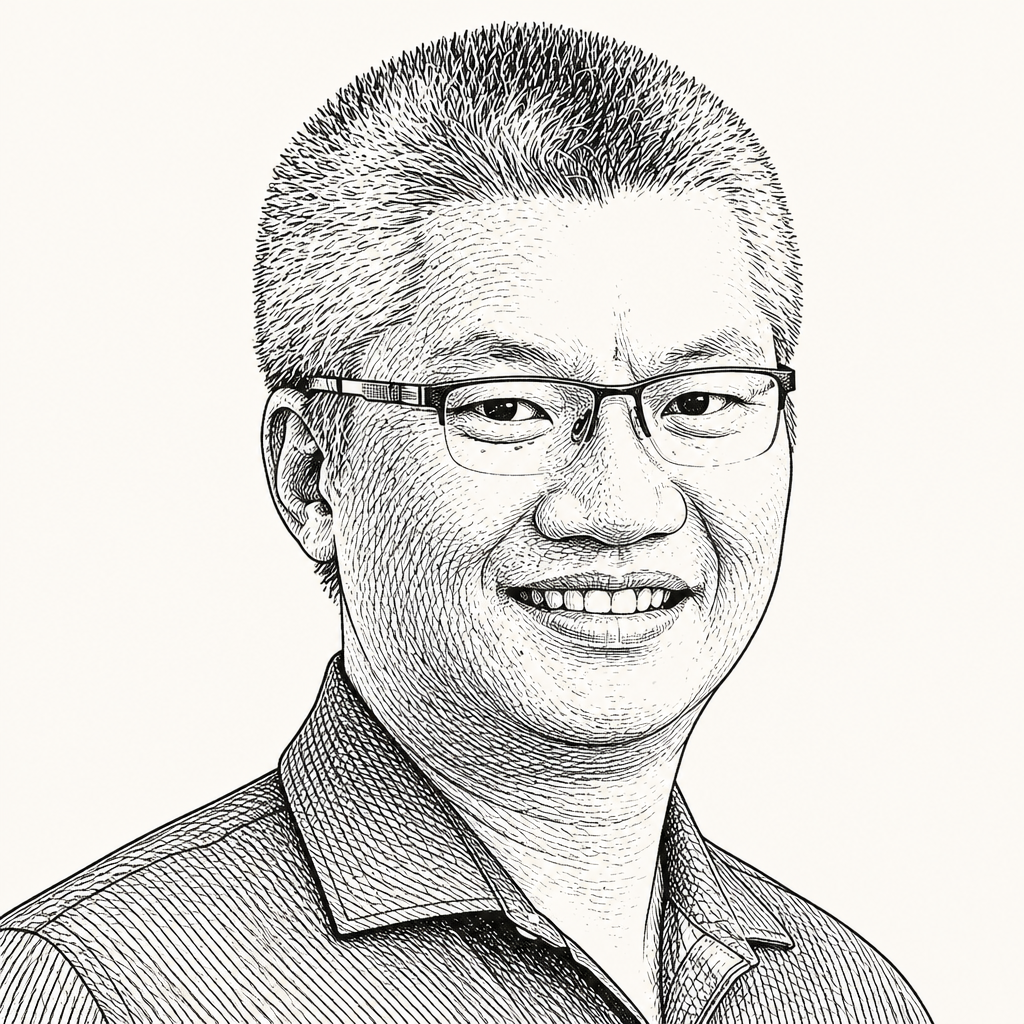
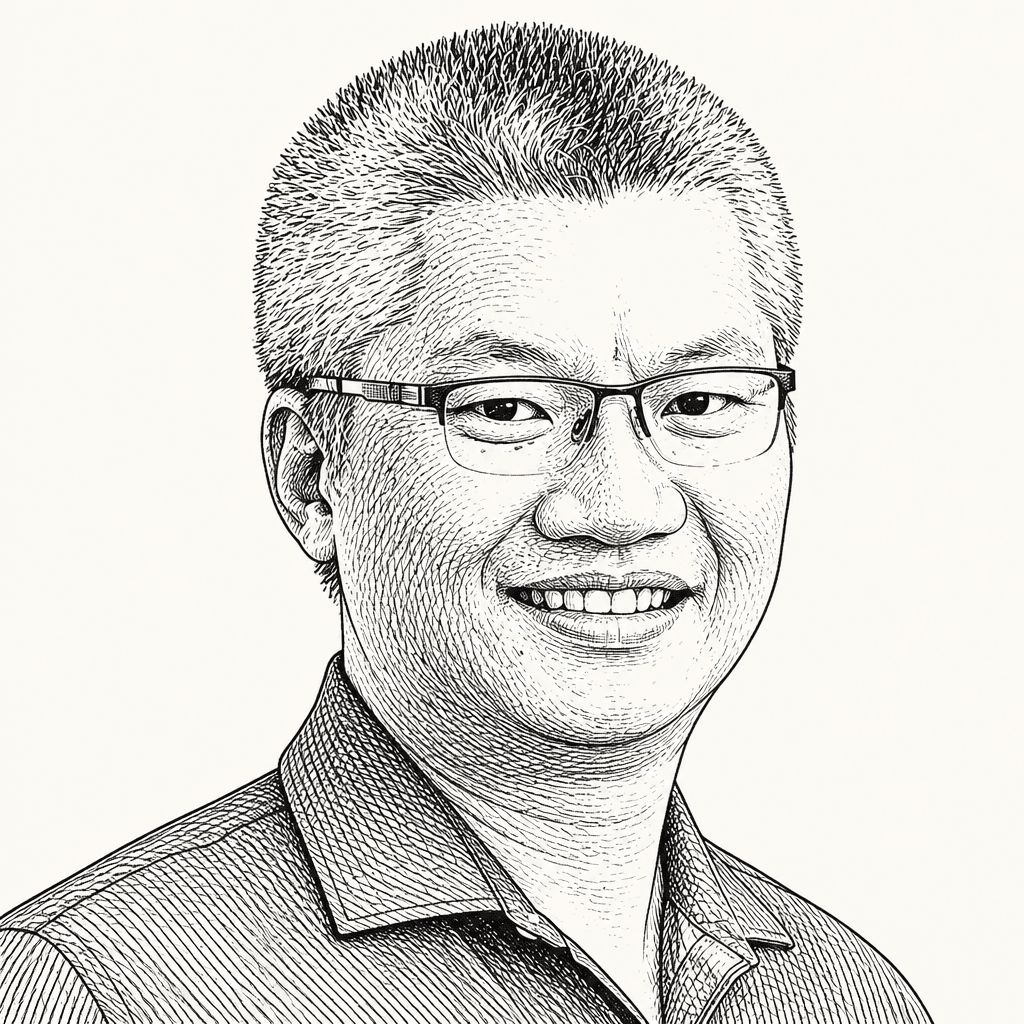 Wen-Chin WuHoover InstitutionWednesday, May 27, 202618 min read
Wen-Chin Wu, in a Hoover Institution talk drawing on multiple public-opinion surveys, argues that Taiwanese support for self-defense is high but conditional. He separates backing for national defense measures, including U.S. arms purchases, from personal willingness to fight or resist, and finds that both depend heavily on perceived threat from China, expectations of U.S. intervention, party identity, costs, and question wording. The result, in Wu’s account, is not a Taiwan that is either complacent or uniformly resolved, but a public that is “worried but cool” amid coercion and strategic ambiguity.

Taiwanese support for self-defense is high, but it is not one thing
Wen-Chin Wu separates Taiwanese resolve into two related but distinct questions: whether citizens support national defense measures such as buying U.S. arms, and whether they personally say they are willing to fight or resist if China attacks. On both measures, the topline numbers are comparatively high. The complication is that both measures move sharply with perceived threat, expectations of U.S. involvement, partisan identity, and survey wording.

Wu’s central finding is not that Taiwan is either complacent or ready for war. It is that Taiwanese voters can simultaneously be worried about China, economically confident, divided over defense policy, and sensitive to how the United States signals its commitments. In his framing, this helps explain why Taiwan can appear “worried but cool” at the same time.
The threat environment in Wu’s data is not abstract. Chinese military aircraft incursions into Taiwan’s air defense identification zone rose after 2016, increased sharply after 2020, and jumped again after Nancy Pelosi’s 2022 visit to Taiwan. China’s military drills around Taiwan after Pelosi’s visit illustrated the same coercive pattern. In public opinion terms, World Values Survey data for Taiwan showed rising concern about war: the share saying they were worried “very much” about a war involving their country rose from 34.7% in 2012 to 42.4% in 2019 and 54.7% in 2024.
Yet that anxiety coexists with other forms of “coolness.” Taiwan’s stock market and TSMC’s share price rose substantially over the same broader period, and Taiwanese politics remained divided over defense spending and U.S. arms purchases. In Wu’s American Portrait Survey, roughly 80% of respondents in 2025 and 2026 said China posed at least somewhat of a threat to Taiwan’s national security. But when respondents were asked whether they believed China would use military force to attack Taiwan, less than half of all respondents said they believed it would. DPP supporters were more likely to believe China would attack; KMT supporters were more likely to doubt it.
That distinction matters throughout the findings. Taiwanese who perceive China as a serious threat are much more supportive of arms purchases and more willing to resist. Taiwanese who do not see China as an immediate or serious threat are less supportive. Wu said the key cleavage between DPP and KMT respondents increasingly appears to be whether they view China as a threat.
“The key issue is about whether they view China as a threat or not,” Wu said.
Wu’s broader claim is that Taiwanese public opinion is not simply a measure of patriotism or fatalism. It is a set of conditional judgments about threat, cost, credibility, and political identity.
Trump’s comments fit Taiwan’s problem with strategic ambiguity
The immediate context for Wu’s analysis was President Trump’s recent statements after a visit to China. As quoted in the presentation, Trump said he was holding arms sales to Taiwan “in abeyance” because “it depends on China,” calling the sales “a very good negotiating chip.” Asked about U.S. defense of Taiwan, Trump said, “I’m not looking to have someone go independent, and we have to travel 9,500 miles to fight a war. I want them to cool down, I want China to cool down.” On chips, he said he wanted “everybody making chips in Taiwan” to come to America.
Wu said those statements raised concern in Taiwan, especially because many people interpreted Trump as implicitly objecting to Taiwan independence. But he stressed that he did not yet have public opinion data collected after those comments, so his analysis was necessarily inferential.
His interpretation was that Trump’s comments can be understood as another version of U.S. strategic ambiguity: creating uncertainty in both Beijing and Taipei about whether the United States would intervene in a cross-Strait war. Wu described the traditional purpose as “dual deterrence”: deterring China from invading Taiwan while also deterring Taiwan from declaring de jure independence.
That reading was reinforced, in Wu’s account, by Secretary of State Marco Rubio’s statement that U.S. policy on Taiwan was unchanged as of May 14, 2026, and that the point of strategic ambiguity was that Washington did not want conflict or disruption.
Wu’s expectation was that Trump’s latest comments might cause short-term fluctuations in Taiwanese opinion if measured immediately, but verbal shifts alone would probably matter less over the medium term unless they produced concrete consequences — for example, if Taiwan actually could not obtain weapons from the United States, or if China responded with major military exercises.
Strategic ambiguity, in Wu’s formulation, allows different audiences to hear different things. That is its dilemma and, as he put it, perhaps its “beauty”: “Every person can pick up what he or she would like to believe.”
Support for U.S. arms sales is broad, but party lines explain the political deadlock
Wu’s American Portrait Survey shows stable majority support for Taiwan purchasing weapons from the United States. From 2021 through January 2026, overall support stayed between the mid-60s and low-70s, with the January 2026 wave at 68.3%. Wu described this as “high support” that does not fluctuate dramatically.
The political problem is not the overall level of support. It is the partisan distribution. DPP supporters are overwhelmingly favorable toward U.S. arms purchases; Wu said more than 90% support them. KMT supporters are much less supportive, with more than half saying Taiwan does not need to purchase arms from the United States. Wu connected that divide to the recent deadlock in Taiwan’s legislature over funding for U.S. weapons. He said the opposition coalition had blocked the arms sale for several months before lawmakers approved funds after months of argument.
Threat perception explains much of the divide. In the American Portrait Survey, support for U.S. arms sales rises sharply as respondents’ assessment of China’s threat rises. In 2026, only 18.9% of those who said China posed “no threat at all” supported U.S. arms sales; 47.6% of those who said China was “not much of a threat” supported them; 66.5% of those seeing “somewhat of a threat” supported them; and 89.0% of those seeing “a very serious threat” supported them.
| Perceived China threat | Support for U.S. arms sales, 2025 | Support for U.S. arms sales, 2026 |
|---|---|---|
| No threat at all | 35.3% | 18.9% |
| Not much of a threat | 41.1% | 47.6% |
| Somewhat of a threat | 70.1% | 66.5% |
| A very serious threat | 87.3% | 89.0% |
Belief that China is likely to attack also increases support for U.S. arms purchases across partisan groups. Among all respondents, 85.6% of those who believed China would attack supported U.S. arms sales, compared with 62.0% among those who did not believe China would attack. Among KMT supporters, the gap was especially large: 54.6% of KMT respondents who believed China would attack supported U.S. arms sales, compared with 26.6% of KMT respondents who did not.
The arms-sales question also functions as a question about U.S. commitment. Wu asked respondents whether Taiwan purchasing U.S. arms would decrease, increase, or leave unchanged the likelihood that the United States would deploy forces to help Taiwan. Most respondents said arms purchases would not change the likelihood. But DPP supporters were more optimistic that arms purchases would increase the chance of U.S. help. KMT respondents were more divided, with some saying U.S. help would become more likely and others saying less likely.
This helps explain why the arms issue carries more political weight than a simple procurement question. For some Taiwanese respondents, Wu said, purchasing arms from the United States “does not mean just purchase arms”; it is related to whether the United States would help Taiwan in a future conflict.
Taiwanese willingness to fight is robust, but the wording changes the number
Wu repeatedly cautioned that “willingness to fight” is a difficult object to measure. The topline across multiple surveys is high: since 1995, Taiwanese willingness to fight or defend Taiwan has generally remained above 50%, including among respondents under 30. But the numbers change substantially depending on whether respondents are asked about defending the country, fighting on the battlefield, resisting at all costs, or fighting under a particular political scenario.
The difference between “defend Taiwan against invasion” and “fight for Taiwan independence” is one example. Taiwan Foundation for Democracy data since 2018 showed willingness to fight against China’s invasion in the range of 60% to 80% among all respondents, and 70% to 89% among respondents under 30. When the question was framed as fighting after Taiwan declares independence and China attacks, the number fell: 55% to 72% among all respondents, and 57% to 87% among respondents under 30. Wu emphasized that even under the independence framing, more than half still said they were willing to fight.
Even smaller wording changes have large effects. In a project with colleagues, Wu randomly assigned respondents to different formulations. Asking whether respondents were willing to “defend our country” produced a much higher affirmative response than asking whether they were willing to “fight on the battlefield.” In one result, 80.2% said they were willing to defend the country, while 58.6% said they were willing to fight on the battlefield. Another formulation, “defend our country and fight on the battlefield,” produced 51.87%.
| Question wording | Willingness to fight |
|---|---|
| Defend our country | 80.2% |
| Fight on the battlefield | 58.6% |
| Defend our country and fight | 71.13% |
| Defend our country and fight on the battlefield | 51.87% |
| Defend our country and resist | 75.14% |
Wu interprets this partly through social desirability bias. A direct question about defending Taiwan or defending the country may make respondents feel obligated to say yes. Prior studies using a list experiment found that about 7% of respondents overreported their willingness to defend Taiwan. To reduce what Wu called “lip service,” the American Portrait Survey asked whether respondents would be willing to resist “at all costs” if China attacks Taiwan.
Even with that more demanding wording, more than 50% of respondents on average said they were willing to fight or resist at all costs. But the partisan pattern remained: DPP supporters were more willing, KMT and TPP supporters less so, and nonpartisans were around 40%.
Threat perception again mattered. Respondents who saw China as a serious threat were more willing to resist at all costs; those who saw little or no threat were less willing.
U.S. help produces mixed effects, not a clean free-riding story
Wu tested the free-riding argument in the January 2026 American Portrait Survey, but he cautioned that the findings need further examination and had not yet been analyzed systematically. The sample was split into three groups. One group received the baseline question about willingness to fight at all costs. A second group was asked whether they would fight at all costs if the United States did not deploy forces to help Taiwan. A third group was asked whether they would fight at all costs if the United States did deploy forces.
The logic of the test was straightforward. If Taiwanese respondents expect the United States to fight and therefore reduce their own willingness to fight, U.S. help should lower willingness. But a competing expectation is also plausible: U.S. intervention could increase perceived chances of survival or success, making Taiwanese respondents more willing to join the fight.
Wu said the findings were “not as straightforward” as expected. Some respondents appeared to free-ride when U.S. help was introduced; others became more willing to fight; others were not affected. The effects also varied across party lines.
This ambivalence matters because U.S. commitment is not just a military variable in Taiwanese public opinion. It shapes Taiwanese assessments of whether defense investments are meaningful, whether resistance can succeed, and whether U.S. arms purchases are linked to future intervention.
At the same time, Wu’s data show skepticism toward U.S. credibility. In the American Portrait Survey, the share agreeing that the United States is a credible country — described as a country that sticks to its word — was 45.3% in 2021, fell to the mid-30s in later waves, briefly rose to 41.2% in 2024, and stood around 34% in the 2026 wave. The partisan gap was large: DPP respondents were much more likely than KMT, TPP, or nonpartisan respondents to see the United States as credible.
By comparison, China’s credibility remained much lower, but Wu flagged a warning sign: the share seeing China as credible rose in the most recent wave, from roughly 11% to between 17% and 19.5%, depending on the result shown. Wu said he did not have direct evidence that this was caused by cognitive warfare or disinformation, but he described the rise as concerning.
Young people may be less willing to fight by age, but cohort effects are more complicated
Kharis Templeman said Wu’s willingness-to-fight numbers looked “surprisingly good” compared with other surveys he had seen, and asked how the American Portrait Survey compared with other instruments. Wu’s answer focused on methodology. Some surveys, such as the Taiwan National Security Survey, use open-ended or semi-open-ended formats that allow respondents to say they would follow government instructions, do nothing, or give other answers. Closed-ended questions — “are you willing or not?” — tend to produce different and often higher numbers.

Wu also said that social desirability bias varies by wording. Asking whether someone is willing to “defend Taiwan” or “defend our country” likely carries more pressure to answer affirmatively than asking whether someone is willing to “fight on the battlefield.” He did not claim to have solved the measurement problem.
On age, Wu said World Values Survey data show an inverted U-shaped relationship: respondents around ages 18 to 30 show lower willingness to fight, willingness rises as people age, and then changes again among older respondents. But he distinguished age effects from cohort effects. Some younger cohorts are less willing to fight than older cohorts, but the very youngest cohorts in the data appear more willing than slightly older young cohorts. Wu said more work is needed to explain the decline and rise among cohorts born after the 1980s.
That distinction affects how one interprets claims that “young people” in Taiwan are unwilling to fight. Wu’s conclusion was cautious: young generations may or may not be less willing to fight depending on whether “young” is defined by age or by cohort.
James Ellis pressed on the difference between general support for defense and personal willingness to bear costs. Wu acknowledged that surveys struggle to impose real costs on respondents. His team has asked proxy questions, such as how many days respondents could bear without electricity or internet during a blockade or disruption, but he said those still do not fully measure actual resolve.


Wu also addressed military service. He said colleagues have found that certain forms of military service increase willingness to fight. His own current work surveys new conscripts in Taiwan during the first week and eighth week of boot camp. According to Wu, after eight weeks of training, willingness to fight on the battlefield increased. He said the team surveyed almost every new conscript in Taiwan in 2024 and that he could “confidently say” military training increases willingness to fight on the battlefield.
Defense spending is popular until the cost or the messenger changes
Templeman asked whether respondents had been asked about concrete sacrifices, such as extending conscription or raising taxes to fund defense. Wu said other surveys have asked about extending military service, and majority support appears high. But he warned that this too can be a form of social desirability bias or “lip service,” because many respondents have already served or will not have to serve.
On defense spending, Wu had more direct evidence. In the 2025 American Portrait Survey, a baseline question asked whether respondents supported increasing the national defense budget. About 70% said yes. But support fell when the increase was framed as requiring taxation. It also fell when framed as a response to President Trump’s request that allies share more of the defense burden.
Templeman summarized the implication: when Trump pressures allies and partners to burden-share, support in Taiwan actually drops. Wu said that was what the 2025 data showed.
In 2026, Wu’s team changed the wording to avoid naming Trump and instead asked about increasing Taiwan’s defense budget in response to a U.S. government request. Support still fell relative to the baseline, except among TPP supporters. Wu interpreted this as evidence that Taiwanese people do not want to feel coerced into raising defense spending.
The distinction is important for policy. Taiwanese respondents may support higher defense spending in principle, but that support becomes more fragile when respondents are asked to bear direct fiscal costs or when the increase is framed as compliance with U.S. pressure.
Gray-zone coercion raises fear and support for arms, but not necessarily willingness to fight
Larry Diamond challenged the battlefield framing. Chinese aggression, he noted, might take the form of cyberattacks, blockade, coercive pressure, economic hardship, or efforts to demoralize the public, rather than an immediate invasion. Wu agreed that gray-zone tactics are a crucial research frontier, especially because “everywhere can be a battlefield,” including cyberspace. But he said telephone surveys limit how many questions can be asked and how complex a scenario can be. Internet surveys allow more scenario detail, but Wu warned that they have representativeness problems.


The American Portrait Survey has asked basic questions about blockade scenarios. In the latest wave, Wu said, many respondents thought Taiwan should react if China blockaded Taiwan, and many believed the United States would intervene.
Wu also described a small 2025 survey experiment. Half the respondents were told updated information about the number of Chinese military flybys around Taiwan in 2024, described as a historical high. Respondents who received the information became more fearful or concerned, but not more angry. They also became more supportive of purchasing U.S. arms. Wu said the arms-sales effect was statistically significant, though his phrasing of the exact p-value was imprecise in the discussion. Willingness to resist at all costs rose only modestly, from 59.0% in the control group to 61.8% in the experimental group, which Wu said did not appear statistically significant.
| Outcome | Control group | Experimental group |
|---|---|---|
| Fear | 3.7 | 4.6 |
| Anger | 6.1 | 6.3 |
| Support for U.S. arms sales | 69.7% | 74.3% |
| Willingness to resist at all costs | 59.0% | 61.8% |
The gray-zone issue also produced a substantive disagreement. Wu said that if China ultimately wants to take over Taiwan, “someday China need to land its troops” on Taiwan. Ellis pushed back, saying he was not sure that was still true. He emphasized information operations and the possibility that pressure could shape Taiwanese political choices without a landing operation. Wu did not fully resolve the disagreement, but he acknowledged strong concern about China’s cognitive warfare and the need to track changing perceptions of China’s credibility.
TSMC is both an economic asset and a divided security symbol
Wu treated TSMC as a separate but connected part of Taiwanese self-defense opinion because Trump has repeatedly commented on Taiwan’s chip industry and because Taiwanese debates often frame TSMC’s importance as a security asset. Wu presented two competing ideas.
The “silicon shield” argument holds that TSMC’s importance increases the likelihood that the United States would defend Taiwan. The “silicon field” argument holds the opposite: that TSMC investment in the United States decreases the likelihood of U.S. military defense of Taiwan because critical technology has moved out of Taiwan.
In the 2023 American Portrait Survey, the public was split. On the silicon shield question, 44.6% agreed or strongly agreed, while 47.7% disagreed or strongly disagreed and 7.5% did not respond. On the silicon field question, 38.7% agreed or strongly agreed, while 49.9% disagreed or strongly disagreed and 10.5% did not respond.
The partisan split was stark. In Wave 3, 72.5% of DPP respondents agreed with the silicon shield argument, compared with only 18.7% of KMT respondents. KMT respondents were more likely to agree with the silicon field argument: 52.5% did so, compared with 28.3% of DPP respondents. TPP respondents also leaned toward the silicon field view, with 52.8% agreeing.
| Group | Agree with silicon shield | Agree with silicon field |
|---|---|---|
| All | 44.6% | 38.8% |
| KMT | 18.7% | 52.5% |
| DPP | 72.5% | 28.3% |
| TPP | 33.6% | 52.8% |
| Nonpartisan | 39.5% | 38.6% |
| Others | 33.9% | 20.0% |
In 2025 and 2026, Wu asked whether TSMC’s investment in the United States affected the likelihood that the United States would help Taiwan. The public remained polarized, though about half of all respondents said there was no impact. In Wave 6, 28.5% of all respondents said TSMC investment decreased the likelihood of U.S. help, 50.1% said it had no impact, and 21.4% said it increased the likelihood.
KMT respondents were especially likely to see TSMC investment as decreasing U.S. willingness to help: 56.1% did so in Wave 6. DPP respondents were more likely than others to say investment increased the likelihood of help, though even among DPP respondents, the largest share said there was no impact.
Asked whether TSMC’s financial performance and benefits to Taiwanese people might shape the silicon shield view, Wu said TSMC creates material benefits, “including my mom.” But he argued that whether people conceptualize TSMC as a security shield still depends heavily on partisanship and national security views. He also noted non-security constraints on keeping more fabs in Taiwan: electricity, the absence of nuclear power, dependence on international energy markets, environmental concerns, and limited territory on a small island.
Status quo, identity, and nonpartisans complicate the partisan map
Wu’s party findings are not reducible to a simple DPP-versus-KMT electorate. Nonpartisans are a large category in the American Portrait Survey, roughly comparable in size to DPP supporters in some waves, and Wu treated them as an important group. Ellis noted that nonpartisans often appeared closer to the KMT than the DPP in some results. Wu partly accepted the observation but resisted reducing them to hidden KMT supporters.
Wu offered two explanations. First, the DPP has been in power for more than eight years, creating what he called the burden of incumbency. Nonpartisans may have higher expectations of, or more criticisms toward, the DPP. Second, many nonpartisans may prefer maintaining the cross-Strait status quo. Templeman added that nonpartisans vote at lower rates and that some are “secret partisans” or “closet partisans”: respondents who say they are nonpartisan but report voting consistently for one party in past elections.
The status quo itself is not a settled category. Many Taiwanese respondents say they support maintaining it, but Wu said the status quo is rarely clearly defined. In the American Portrait Survey, his team asked whether Taiwan and China belong to the same country or to different countries. In the 2026 wave, 73.4% of all respondents said Taiwan and China do not belong to the same country, while 18.1% said they belong to the same country and 8.5% were nonresponsive or otherwise outside the two categories.
| Group | Taiwan and China belong to the same country | Taiwan and China do not belong to the same country | Other / nonresponse |
|---|---|---|---|
| KMT | 44.1% | 51.2% | 4.6% |
| DPP | 3.0% | 95.3% | 1.6% |
| TPP | 15.5% | 79.5% | 5.0% |
| Nonpartisan | 10.9% | 79.3% | 9.7% |
| Others | 2.9% | 70.2% | 26.9% |
| All | 18.1% | 73.4% | 8.5% |
Among DPP respondents, the answer was overwhelming: 95.3% said Taiwan and China do not belong to the same country. Among KMT respondents, views were divided: 44.1% said Taiwan and China belong to the same country, and 51.2% said they do not. TPP respondents and nonpartisans were much closer to the DPP position on this question, with roughly four-fifths saying Taiwan and China do not belong to the same country.
Identity also affects threat perception. Wu said people who identify as Taiwanese only perceive higher threat from China than those with dual Taiwanese and Chinese identity. Follow-up questions about the name of the relevant country produced a range of answers — Republic of China, Republic of China Taiwan, People’s Republic of China, and other formulations. His point was not that Taiwanese respondents lack views, but that their views of legal and political status differ substantially, especially among KMT supporters.
These distinctions matter because Wu’s entire argument runs through partisan and identity cleavages. DPP supporters generally perceive higher threat from China, support U.S. arms purchases, are more willing to resist, have more confidence in U.S. help, and are more likely to see TSMC as a silicon shield. KMT supporters are more skeptical of China’s likelihood of attacking, less supportive of U.S. arms purchases, less likely to view U.S. arms procurement as improving Taiwan’s security, and more likely to see TSMC investment in the United States as hollowing out Taiwan’s advantage. TPP supporters and nonpartisans often fall between the two, but not always.
Wu’s most concise explanation was that views of China drive much of the divergence. If respondents see China as a serious threat, they tend to adopt a more assertive view of self-defense. If they do not, they are more likely to prioritize other issues such as the economy or social welfare.
Templeman drew out one implication: if the PRC dialed down visible military exercises around Taiwan, it might reduce threat perception in the electorate and thereby reduce support for defense. Wu said that was plausible. But he added that China’s credibility is now so low among Taiwanese respondents that even a reduction in coercion might not be readily trusted. Reestablishing mutual understanding, he said, would take substantial effort.