The American Revolution Was Won by Surviving Britain’s Strategic Failures
 Bill Whalen
 Niall Ferguson
 Rick Atkinson
 John Cochrane
 Herbert McMasterHoover InstitutionWednesday, July 1, 202625 min read
Rick Atkinson, the military historian, tells Hoover’s GoodFellows that the American Revolution was won less by overpowering Britain than by surviving an expeditionary counterinsurgency until British strategy, logistics, political intelligence and will broke down. The discussion then turns to contemporary Britain, California and the Democratic Party, where Niall Ferguson and John Cochrane argue that fiscal promises, class politics and primary incentives are pushing democracies toward policies their institutions may not be able to sustain.
The Revolution was won by not losing
Rick Atkinson frames the American victory as the familiar logic of an expeditionary counterinsurgency: the imperial power has to win, while the rebels have to avoid losing. The mismatch was severe. Bill Whalen notes that the Continental Army at its peak was roughly half the size of the British Army in North America, and the Continental Navy roughly one-fourth the size of the Royal Navy. Atkinson sharpens the imbalance further: the Royal Navy had 400 warships; the Continental Congress built 13 frigates, and “not one of them survived the war.”


The American Revolution, in Atkinson’s account, was not a weaker state overpowering a stronger one on conventional military terms. It was a rebellion that survived long enough, across enough terrain, against an enemy operating across 3,000 miles of ocean in the age of sail, for British will and coherence to fail. George Washington did not understand this immediately, Atkinson says, but he came to understand the strategic premise even if he did not articulate it that way.
When you're waging a counter-insurgency, specifically, especially one that's expeditionary, you have to travel a long distance to put down the insurrection, you have to win. And if you're the rebels fighting an insurrection, you have to not lose.
Atkinson does not reduce the outcome to either American victory or British failure. “Those are not incompatible concepts,” he tells Whalen. The British had material advantages, but they lacked, in his view, the generals, strategic coherence, and domestic will necessary to prevail over eight years. They also repeatedly misread the American political and social terrain.
John Cochrane draws out an economic and logistical implication from Atkinson’s books: the rebels denied land access to the British to an extent Cochrane had not appreciated, making maritime supply in the age of sail more burdensome than the simple disparity in forces suggests. The Royal Navy ruled the waves, but ruling the waves did not solve the problem of controlling inland populations, roads, local provisions, militia networks, and political loyalty.


Atkinson’s larger point is that British strategy remained incoherent. London and its commanders moved from one approach to another, ultimately embracing a Southern strategy because earlier attempts had failed. That strategy rested on what Atkinson calls a false assumption: that South Carolina, Georgia, and North Carolina contained a large silent majority of Loyalists waiting for British forces to arrive so they could rise up and help destroy the rebellion. In Atkinson’s telling, the British learned only very late that this assumption was not grounded in fact.
Cochrane summarizes the implication as the rebels winning the internal civil war, which helped them win the war against Britain. Atkinson agrees that the civil war dimension is central. The Revolution was a civil war “on several levels”: between mother country and insurrectionists; among Americans, especially in the South; and among Native nations. In the South, the later years of fighting were marked by “brother on brother, father against son,” extrajudicial killings, and hangings. Among the Six Nations of the Iroquois, or Haudenosaunee, the war forced a choice that fractured a long-standing compact: four nations aligned with the British, two with the Americans, and they fought each other.
The British were not merely fighting an army. They were trying to restore authority over a population in which allegiance, grievance, fear, opportunity, and local violence were interwoven. Atkinson treats that human terrain as decisive.
Independence was not inevitable when the shooting began
Niall Ferguson presses Atkinson on contingency by quoting George Washington from October 9, 1774. Washington wrote that it was “not the wish or interest” of Massachusetts or any other colonial government, “separately or collectively, to set up for independency,” and that “no such thing is desired by any thinking man in all North America.” Washington instead described the “ardent wish” of liberty’s advocates as restoration of peace and tranquility on constitutional grounds, and avoidance of “the horrors of a civil discord.”


“I am as well satisfied as I can be of my existence, that no such thing is desired by any thinking man in all North America.”
Atkinson accepts the force of the quotation. Contingency, he says, is “like gravity” in history. When the shooting starts at Lexington and Concord on April 19, 1775, “overwhelmingly most people” are not thinking about independence. They are seeking a redress of grievances as they define them. They deliberately aim blame at Parliament, Lord North, Sandwich, and other ministers, while avoiding direct accusation against the king. Many preferred to believe, and Atkinson thinks many genuinely did believe, that George III was being misled by his counselors.
That position did not survive bloodshed intact. Atkinson identifies Thomas Paine as crucial in articulating, in plain and bold language, the case for throwing over monarchy and cutting ties with empire. But he also stresses the effect of killing. Bunker Hill, on June 17, 1775, left 226 British dead. Once killing began in earnest, “it’s hard to put the genie back in the bottle.”
The point is not that independence was predetermined. Atkinson says generous British terms offered earlier might have changed the course. In 1778, London sent a mission that was prepared to concede essentially everything the Americans had previously demanded, except independence. By then, in Atkinson’s view, it was too late. The rebels “have the bit in their teeth,” and he does not think the conflict could stop short of a final decision.
Cochrane pushes the counterfactual further. Canada, New Zealand, and Australia later worked out arrangements within the British imperial system; perhaps something similar could have remained on the table for the American colonies. Independence was a radical and risky idea for a population dependent on international trade under British naval supremacy. Cochrane suggests that more common sense in British policy—offering 1778 concessions in 1774, avoiding punitive coastal raids and town burnings, perhaps relying more on blockade and waiting for American factional conflict—might have prevented the break.
Atkinson’s answer distinguishes early contingency from later irreversibility. Even if Washington had been killed, even if Britain had won militarily, Atkinson says it is difficult to imagine a political settlement satisfactory to the king and the British government once the war had become a blood feud. The American population was doubling every 25 years, four times Britain’s growth rate and, in his description, faster than anything seen in modern European history. The United States would become large quickly. Remaining indefinitely in a subservient imperial role would be difficult, especially after bloodshed and residual insurrection, particularly in the South.
Ferguson adds his own favorite counterfactual from J.C.D. Clark’s essay in Virtual History: after the Seven Years’ War, Britain might have taken Guadeloupe rather than Canada in the 1763 Peace of Paris. He quotes William Burke’s warning that if the colonists found “no check from Canada,” they would expand almost without bounds into the interior and Britain might soon risk losing what it possessed. Ferguson’s shorthand: “Guadeloupe instead of Canada, no American Revolution.”
Atkinson calls it a good counterfactual and notes that the “real money” was in the West Indies, while the fur trade in Canada, though not insignificant, did not carry the same weight. He says the British choice in 1763 was a bad one.
The broader disagreement is not over whether contingency mattered; all treat it as central. The tension is over how long contingency remained open. Atkinson’s position is that before the war, and perhaps in its earliest stages, a different British approach might have mattered. By 1778, after bloodshed, mobilization, and the internationalization of the war, he sees no plausible amicable settlement short of independence.
Archival work changes the cast of characters
Herbert McMaster emphasizes that Atkinson’s Revolution trilogy draws power from newly accessed or underused primary sources, including accounts from British soldiers and officers, even letters written as men were dying. Atkinson answers by describing archival work not as ornament but as the means of entering otherwise opaque minds.

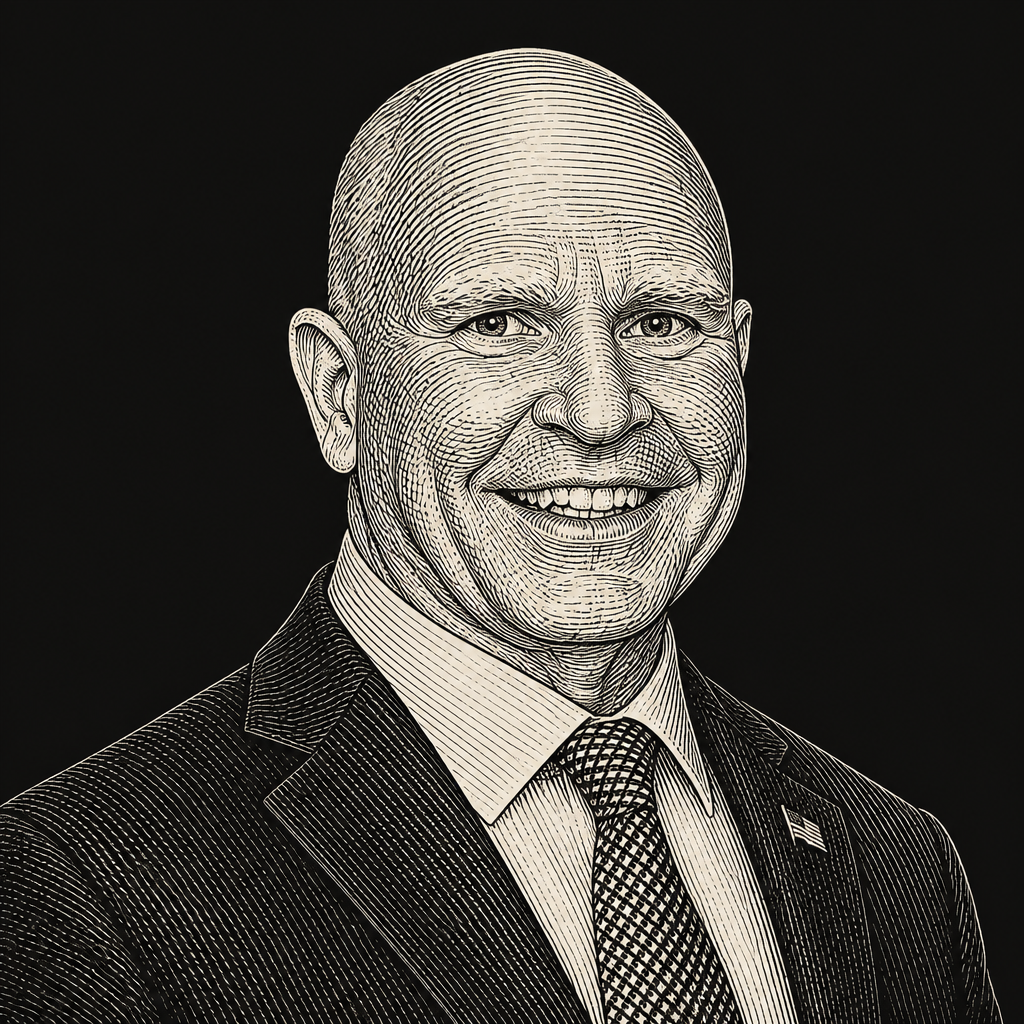
The clearest example is Washington. Atkinson calls him “the indispensable man” and “the long pole in the tent,” but also deliberately opaque. Washington did not want observers inside his head. Atkinson cites an artist who painted him from life and remarked on Washington’s “remarkably dead eye,” because he could make his eyes go dead when he did not want the viewer to see inside him.
For Atkinson, the route into Washington is the papers. The University of Virginia has been curating the Washington Papers since 1968. Atkinson says the project is on volume 37 of the Revolutionary War papers and nearly finished. For the first two volumes of his trilogy, he read volumes 1 through 27, each about 600 pages. The correspondence shows Washington as a capable writer and reveals how he thought and reacted. Letters to his cousin Lund Washington, who managed Mount Vernon while Washington was away, reveal what Atkinson says Washington “really cares about in this life,” which is Mount Vernon.
Atkinson describes a parallel experience with the papers of George III. The Georgian papers, owned by Queen Elizabeth II, were opened to outside scrutiny in 2016. Atkinson says he was among the first allowed in, spending a month at Windsor Castle in April 2016. Each day he entered through the Henry VIII gate, climbed 102 stone steps and 21 wooden stairs to the garret of the Round Tower, begun by William the Conqueror in the 11th century, where the papers are kept.
The George III he found there was not the American caricature, nor “the sinister ninny who prances across the stage every night in Hamilton singing ‘You’ll Be Back.’” He was, Atkinson says, a more complicated figure: a patriot king, a constitutional monarch, and a man with reasons for what he did, even if those reasons were not necessarily good. George was also a “great list maker.” His papers include lists of regiments abroad from 1768 to 1775, recipes for insecticide, correspondence with Queen Charlotte, correspondence about his children, and correspondence about “those damn rebels.”
McMaster tells readers not to skip Atkinson’s endnotes, calling them explanatory and “unbelievable.” Atkinson jokes that he wrote them just for him. The exchange underscores a serious historiographical claim: there remains more to discover even in heavily studied events. Atkinson begins from the premise that great events and great people are “bottomless.” People will be writing about Abraham Lincoln 500 years from now, he says, because there will always be more to discover and more to write.
Ferguson adds Maya Jasanoff’s Liberty’s Exiles to the reading list, noting its account of Loyalists and reminding listeners that a fifth of the inhabitants of the 13 colonies were Loyalists, many of whom left after Patriot victory, some for Canada and some for the Caribbean. Atkinson adds Gordon Wood, whom he had seen shortly before Wood’s death at 92 after being struck by a car in a supermarket parking lot. Atkinson says everything Wood wrote was excellent and that some of it was foundational for later thinking about the Revolution. McMaster specifically names The Creation of the American Republic and The Radicalism of the American Revolution as “unbelievable” and “fantastic.”
Saratoga turned British muddle into French intervention
Asked by McMaster about the most important contingencies, Rick Atkinson chooses Saratoga as a case study in British strategic incoherence and American opportunity. The initial British plan was for General John Burgoyne to lead an army from Montreal down Lake Champlain into the Hudson River Valley, while General William Howe, commander of all British forces in America, came up the Hudson. They would meet around Albany and cleave New England from the Mid-Atlantic colonies.
The plan had been approved by the king, Lord North, and the cabinet. Then Howe changed his mind. He concluded the war would be won in Philadelphia, where he believed there were Loyalists in Pennsylvania. McMaster jokes that Howe must have heard about Philadelphia cheesesteaks; Atkinson accepts the joke and returns to the logistics. Howe went by ship, in the middle of the summer of 1777, and the movement took forever. Horses died by the hundreds. Atkinson says the prevailing sound of the expedition was horse carcasses being hoisted from holds and thrown into the Chesapeake Bay.
Burgoyne, meanwhile, had already begun moving south with about 8,000 men. But Howe was not moving toward Albany; he was going in the opposite direction. As Burgoyne moved farther from Montreal, his supply lines stretched thinner. American forces, both Continental troops and militia, reinforced.
Atkinson identifies Benedict Arnold as the tactical force at the cannon’s mouth in the two Saratoga battles of September and October 1777. Arnold, before his treason, was in Atkinson’s view the best tactical leader on either side in the first years of the war: “born to lead other men in the dark of night.” General Horatio Gates, a former British Army officer, commanded the American side at Saratoga, and Atkinson credits the Americans with, for once, getting themselves together and fighting well with militia and Continental troops under competent battlefield leadership.
The result destroyed Burgoyne’s army. Atkinson says almost none of the 8,000 men who had come from Canada ever saw Canada again. That victory persuaded the French to believe Benjamin Franklin, whom Atkinson calls America’s first and arguably greatest diplomat, and to enter the war.
Once France entered in spring 1778, followed by Spain and then the Dutch, the conflict became global. Atkinson says Britain then had to win—or at least reach a “noble draw”—because the Bourbon powers were trying to cut its throat. Other European powers that were not combatants, including the Russians, Swedes, Danes, and Portuguese, provided material support. In 1779, people in southern England could look offshore and see a Franco-Spanish fleet preparing to invade, a fleet Atkinson says was larger than the Spanish Armada of 1588.
John Cochrane challenges the word “existential,” arguing that Britain did not win the American war and still survived; perhaps it managed a noble draw with the Americans and won the wider war by realizing that victory over the Americans was not essential. Atkinson replies that Britain did not know it was not existential until 1783. To those seeing the enemy fleet off the southern coast, it seemed dire.
The British war effort therefore had two contradictory features. The American rebellion pulled Britain into a fight it mishandled. But once France, Spain, and the Dutch entered, Britain faced a larger imperial war that helped unify domestic opinion in a way the struggle against Americans had not. Britain lost more than 30,000 dead, spent the equivalent, in Atkinson’s terms, of $25 billion, and lost about half a million acres from an empire already described by 1774 as one on which the sun never set. Yet the 1783 treaty was, Atkinson says, relatively generous to Britain, and Britain retained most of the empire before building another “bigger, better, badder” one.
The American fiscal problem was never solved during the war
John Cochrane asks Atkinson to explain the money. Washington constantly lacked funds, the logistical demands were immense, and the Continental Congress never solved war finance well. The Americans printed paper money, but Alexander Hamilton later did not assume that paper in the same way he assumed interest-paying debt. Foreign money mattered; French support helped sustain the American cause but also contributed to the fiscal crisis of the French monarchy.
Atkinson agrees. France ultimately contributed what he recalls as 23 million livres, “a big pile of money.” Spain and the Dutch contributed to a lesser degree. The Americans needed hard currency and could obtain it only through “the kindness of strangers.” Congress lacked taxing authority. The war was being fought against “taxation without representation,” and there was not enough political courage in Congress to insist on necessary taxation. Congress relied on the states; the states were unreliable and wary of imposing taxes at the necessary scale.
So Congress printed money “to beat the band.” By 1779, Atkinson says, “not worth a Continental” had become literally true. The dollar was so devalued that people lit pipes with Continental dollars and made jackets from them.
The result was not merely accounting disorder. It became a social and military crisis. Atkinson describes the economy as essentially turning to barter and the politics as increasingly dicey. Soldiers mutinied; then officers mutinied. Officers went unpaid for months and then years while trying to support families and maintain shops, tanneries, and farms at home. Washington treated the first major mutiny, the Pennsylvania Line, gently. He treated the second brutally, using drumhead courts-martial and executing the mutiny’s leaders. The issue, Atkinson stresses, was largely money.
Robert Morris enters Atkinson’s account as “something of a savior,” savvy enough to assemble loans and use some of his own personal money. He had become rich during the Revolution. Still, Atkinson’s conclusion is that the peace established in 1783 came “just in the nick of time.” After that came the question: “now what?” His answer is pointed: “over to you Hamilton.”
The Revolution, in this telling, was not funded by a well-functioning republican fiscal state. It was sustained through paper emissions, state requisitions, foreign support, improvisation, and the endurance of unpaid soldiers. The military victory arrived before the financial machinery of the new state had been built.
Britain’s current crisis is not anarchy, but fiscal senescence
The discussion of Britain begins with Whalen calling it “anarchy in the UK,” but Niall Ferguson rejects the word. Keir Starmer’s resignation as prime minister is, in his view, “a very British political crisis” playing out inside the House of Commons, not in riots or burning streets. Starmer lost the support of many Labour MPs whom he had helped bring into Parliament in the 2024 election. Ferguson expects Andy Burnham, the former mayor of Manchester and a figure slightly to Starmer’s left, to replace him by late July.
Ferguson argues that Burnham will face the same problem as Starmer: social-democratic governments across Europe want to expand welfare programs built on a mid-20th-century model, but there is no money. Aging populations push public finances toward deterioration. Starmer lost his MPs over that constraint, and Ferguson expects Burnham to encounter the same fate within roughly the same implicit “two-year contract.”
The analogy he chooses is not revolution but a failing soccer club. Managers turn over because the team lacks the money to be good. “That is not anarchy,” Ferguson says. “It’s more like just senescence or gerontocracy.” He sees no way out that a social-democratic party can deliver in any country.
John Cochrane initially reads the British case as part of a wider political pattern. He sees a common-sense center in many democracies that does not want Modern Monetary Theory-level left economics and does not want Trump- or Reform-style nationalism on the right. But that center is also tired of elite incompetence, not only the scale of welfare states but the waste of money “down rat holes.” The optimistic note, for Cochrane, is that periods of big change are preferable to stagnation, even if politics is now oscillating between extremes.
Ferguson disagrees sharply with Cochrane’s account of the center. In Britain, he says, the problem is precisely the supposedly sensible center. What is missing is radicalism capable of reforming welfare, cutting taxation on business, and reviving growth—what he associates with Javier Milei’s Argentina. The same applies, he says, to Germany under Friedrich Merz’s Christian Democrat-led coalition with the Social Democrats. Whether moderate left or moderate right, European governments cannot do the radical things needed to restore growth.
Cochrane clarifies that by “center” he means the average voter as he hopes the average voter exists: someone open to radical reform, less regulation, lower taxes, and smaller government. Ferguson rejects that as a description of Britain and Europe. The average voter, he says, wants more government and more benefits, and would like lower taxes only if someone else, especially the rich, pays. That is why, in Ferguson’s account, Britain has Labour and is moving somewhat leftward under Burnham. Ferguson describes Burnham’s proposals as more public housing, a larger state role in transportation, and a new center of government in Manchester—a “new Downing Street,” effectively doubling central government.
Herbert McMaster asks whether countries must pass through a cycle of failure before returning to smaller government and market policies, as in the pre-Thatcher years. Ferguson says yes. In Britain he hears a mood like the 1970s: cynicism, pessimism, and constant references to “Broken Britain” whenever trains are late or roads have potholes. But he sees the present as harder than the Thatcher era because Britain is now much more multiracial, and the immigration issue gives parties like Reform UK a way to gain ground by defining the problem as immigration rather than welfare dependency, taxation, or weak incentives. That, in Ferguson’s view, drains energy from the economic reform debate.
Ferguson also adds a defense dimension. Britain, he says, has disarmed to an extent most citizens do not appreciate. He claims its navy may be at its weakest point since 1667, and says the army is described as capable of capturing “a small market town on a good day.” Labour’s pledge to President Trump to raise defense spending cannot, in Ferguson’s view, be delivered. He describes the latest defense review as “moving around the deck chairs on the one destroyer that can still set sail.”
Class politics and wealth taxes point to the same fiscal temptation
Whalen asks whether Britain has an appetite for class warfare comparable to the United States, using Labour’s imposition of standard-rate VAT on private school fees as an example. Niall Ferguson replies that the appetite has always been great. “Class is to England what race is to the United States,” he says: the great preoccupation.
Labour, in Ferguson’s view, defaults to class war with policies that have no rationale except punishing people for being middle class. VAT on private school fees is his example. He expects more measures in the same vein. Taxes will rise on the wealthy even when economists warn that higher capital gains taxes will not raise much revenue. Ferguson’s imagined Labour answer is that they will do it anyway because the targeted people “have it coming to them.”
He calls the approach self-defeating because it drives out wealth creators and entrepreneurs. Ferguson says the exodus of millionaires from Britain is already on a massive scale and predates Labour, because tax increases began under supposedly center-right Conservatives. The consolation, returning to McMaster’s cycle-of-failure point, is that eventually conditions may become bad enough that voters “get real.” Ferguson thinks that has happened in Latin America, especially Argentina, but not yet in Britain or most European countries.
The American version appears in Whalen’s question to Cochrane about California and national wealth taxes. Whalen says California faces a November debate over a proposed 5% wealth tax on billionaires, while Governor Gavin Newsom opposes that state measure but supports a federal wealth tax on wealth above $100 million. Whalen quotes CNN describing Newsom’s rationale as a response to artificial intelligence: a “National Public Equity Fund” that would give every American, not only tech companies and investors, a share of wealth likely to be produced by AI. As quoted by Whalen, that fund would cover “worker transition benefits, universal childcare, free higher education and career training, health care, and in a national industrial strategy for AI.”
“Newsom says this idea comes out of wanting to create a bulwark against how artificial intelligence will reshape the economy.”
John Cochrane rejects the entire premise. A national wealth tax, he says, has an obvious political logic: if a state imposes a wealth tax, rich people leave; if the federal government imposes one, leaving is harder. But he argues that much of the objective is not revenue but “to get rid of the rich.” The problem, in his view, is that when the rich leave, their companies leave too.
Cochrane also attacks the AI equity-fund idea. Shares come with voting rights, and he does not expect the government to run companies profitably. More basically, he claims that AI companies are not currently profitable as a class in the sense relevant to confiscating cash flows: “If you grab the cash flows of all the AI companies, it’s negative billions of dollars a year.” Market values, in his account, rest on hopes of future profits, not present distributable surpluses. Taxpayers, he says, would be “coughing up rather than getting out of it.”
McMaster links the issue back to the Revolution by quoting Atkinson’s The British Are Coming: “Rally Mohawks, bring out your axes and tell King George we’ll pay no taxes!” He suggests that capital and tax-base flight from California may already be a kind of “billionaire Boston Tea Party moment.” Whalen, separately, says billionaires are leaving California for places such as Austin, Nashville, Wyoming, and Florida; the source presents that as Whalen’s claim, not as audited evidence.
Cochrane sees dysfunction in blue states and cities but is unsure they have reached the point that produces reform. He cites Los Angeles politics as evidence that voters may still choose more of the same, adding his own caveat about “questionable counting” rather than establishing it as fact. Ferguson raises the possibility that Steve Hilton, a British-born Republican candidate for governor of California, could become a Milei-like reformer in Sacramento. Cochrane allows that within California’s Democratic Party there is a common-sense reform and YIMBY current, including in the Central Valley and among business-minded ethnic groups that do not want “coastal craziness.” But he warns that any reform governor would face a well-oiled partisan machine.
The fiscal temptation in both Britain and California is similar in the speakers’ telling: promise benefits, target unpopular wealth, and postpone the harder question of whether the policy raises revenue, preserves productive capacity, or worsens the flight of capital and talent.
The Democratic Socialist opening may be larger than a low-turnout primary
Whalen asks whether recent Democratic Socialist victories in New York, including primary defeats of House Democratic incumbents, indicate a national force or merely low-turnout primary dynamics. Niall Ferguson answers by focusing on Zohran Mamdani. His counterfactual is pointed: if Mamdani had been born in the United States rather than Kampala, Uganda, what would the American left now be discussing?
Ferguson sees Mamdani as charismatic, an effective organizer, and a politician with coattails; those are Ferguson’s political judgments, not findings established elsewhere in the source. Because Mamdani is not eligible to run for president, he cannot become the figure Ferguson thinks a large part of the Democratic Party wants: a more electable version of Bernie Sanders. Sanders, Ferguson reminds listeners, was a real contender for the Democratic nomination and had to be stopped. Ferguson says he has often assumed that with a relatively right-of-center Republican incumbent, Democrats would tack toward the center and seek the next Bill Clinton. He no longer thinks that is true. The Democratic response to Trump’s ascendancy, he says, is more likely to be a move further left. “The hunt is on” for an electable Democratic Socialist.
John Cochrane is even more worried because Congress, the Senate, governorships, state offices, cities, and the internal character of the Democratic Party all matter. He reports his own informal “focus group” of wealthy New York liberal relatives, whom he describes as proper liberals with “Trump derangement.” In his telling, their hatred of Trump is leading them to accept extreme positions, including anti-Israel views, rent control, city-run housing, and Mamdani-style policies, even when their own class interests would suffer.
That observation leads to a Wall Street Journal op-ed by Clifford Asness and Aaron Brown, quoted on screen and by Ferguson. The article’s claim, as quoted, is that the only credential a Democratic candidate now needs is having “taken on Trump,” often merely in rhetoric recorded for an advertisement, while beneath that Trump-bashing lies a radical program that would have been a nonstarter not only in an older Democratic Party but in one from quite recent memory. A second quoted line says the left’s program is “a hard turn toward socialism, dressed as ‘fairness.’”
Ferguson calls the mechanism a Trojan horse: bash Trump, then carry radical leftism inside. He also includes antisemitism in the package Cochrane had described. Because the path is straightforward, Ferguson expects many candidates to attempt it and a crowded field to form by the following year.
Herbert McMaster places the development inside Morris Fiorina’s idea of “unstable majorities” and political sorting. The two party tents have narrowed, pushing many Americans into independent identification. Those voters become responders rather than participants: they react to candidates produced by parties, often finding neither appealing. If Democrats produce a Bernie Sanders-type candidate and Republicans produce a nativist, neo-isolationist, retrenchment-oriented candidate from the fringe of MAGA, McMaster thinks the majority of Americans may be dissatisfied with both.
Cochrane turns from ideology to institutional design. As the United States approaches its 250th anniversary, he says, people are asking whether the rules of the game are broken. Direct primaries, rather than party selection of candidates, have radicalized winners. Smoke-filled rooms run by old party elites had many defects, he says, but one virtue was that they selected candidates they thought could win general elections.
Whalen asks Ferguson to handicap possible Democratic Socialist or left-leaning figures for 2028: Alexandria Ocasio-Cortez, Mamdani, Ro Khanna, and Gavin Newsom. Ferguson says “none of the above.” Recent Democratic history, in his view, favors late-emerging outsiders. He says he had not heard of Barack Obama until late 2007; Bill Clinton was not seen as a major contender until relatively late; Jimmy Carter did not feature in the New York Times’ early list of top contenders in 1976. The listed figures, Ferguson says, may fade because they have “run too early.”
Cochrane responds that whoever emerges will likely be opportunistic, sculpting positions to win favor from the left and appointing such figures into an administration. Ferguson’s answer is to return to the Asness-Brown thesis: anti-Trump positioning has become the credential under which a much more radical program can travel.
The connection to the earlier Revolution discussion is not that today’s party fights resemble 1776. It is narrower and more institutional. Atkinson describes British leaders selecting bad strategies from false assumptions about Loyalists and local allegiance. The modern-politics discussion turns on a related selection problem: party systems, primary rules, and fiscal promises may be producing leaders and platforms poorly matched to the constraints they will have to govern.
Professional norms and American soft power round out the institutional theme
The shorter exchanges at the end do not carry the same weight as the Atkinson discussion or the fiscal-politics argument, but they extend the institutional thread.
On Alan Greenspan’s death, John Cochrane says future historians reading primary sources may produce a more nuanced account than the familiar capsule biography: conquered inflation, inscrutable, allowed a housing bubble, too libertarian on financial regulation. Cochrane says that summary is “basically all wrong.” Bad things happened on Greenspan’s watch, but for more complex reasons than usually stated. He also raises a broader scorecard question: how have academic Fed chairs performed compared with bankers and lawyers? The Fed chairmanship, he says, is not a PhD academic job, and Greenspan did well as an “inscrutable banker” relative to later transparent, rules-oriented, model-based academic approaches.
On the retirement of General Chris Donahue at the request of War Secretary Pete Hegseth, Herbert McMaster calls it disappointing. Donahue, he says, was universally respected. McMaster sees an opaque political litmus test producing early retirements and dragging the military into partisan politics. He rejects the idea that there are “woke generals and admirals.” There may have been people in the Department of Defense pushing what he considers a destructive social agenda, but “they’re gone,” and Hegseth is in charge. McMaster describes Hegseth as fighting “a rear guard against phantoms” and argues that the military should be allowed to adhere to its professional ethic and execute constitutional responsibilities under civilian authority.
On the World Cup, Niall Ferguson argues that foreign fans are seeing the United States as it is, not as represented by their media. In Britain, he says, the BBC often portrays the United States, President Trump, and the administration negatively. Then traveling supporters arrive in places like Boston and discover a quality of life substantially higher than in Glasgow. Cochrane adds that the World Cup has sent visitors beyond standard tourist spots into the American heartland, where they encounter Chick-fil-A, Buc-ee’s, suburban housing tracts, and ordinary American abundance. He calls it an unintentionally effective sales pitch for America.
Even the soccer aside loops back to the Revolution. In 1776, Ferguson says, Americans were the small force against empire; in the World Cup, the United States is now the mighty empire, and Bosnia is the little guy. The beauty of the World Cup, he says, is giant-killing.