The Declaration Made Independence a Risky Decision, Not an Inevitable Outcome
 Bill Whalen
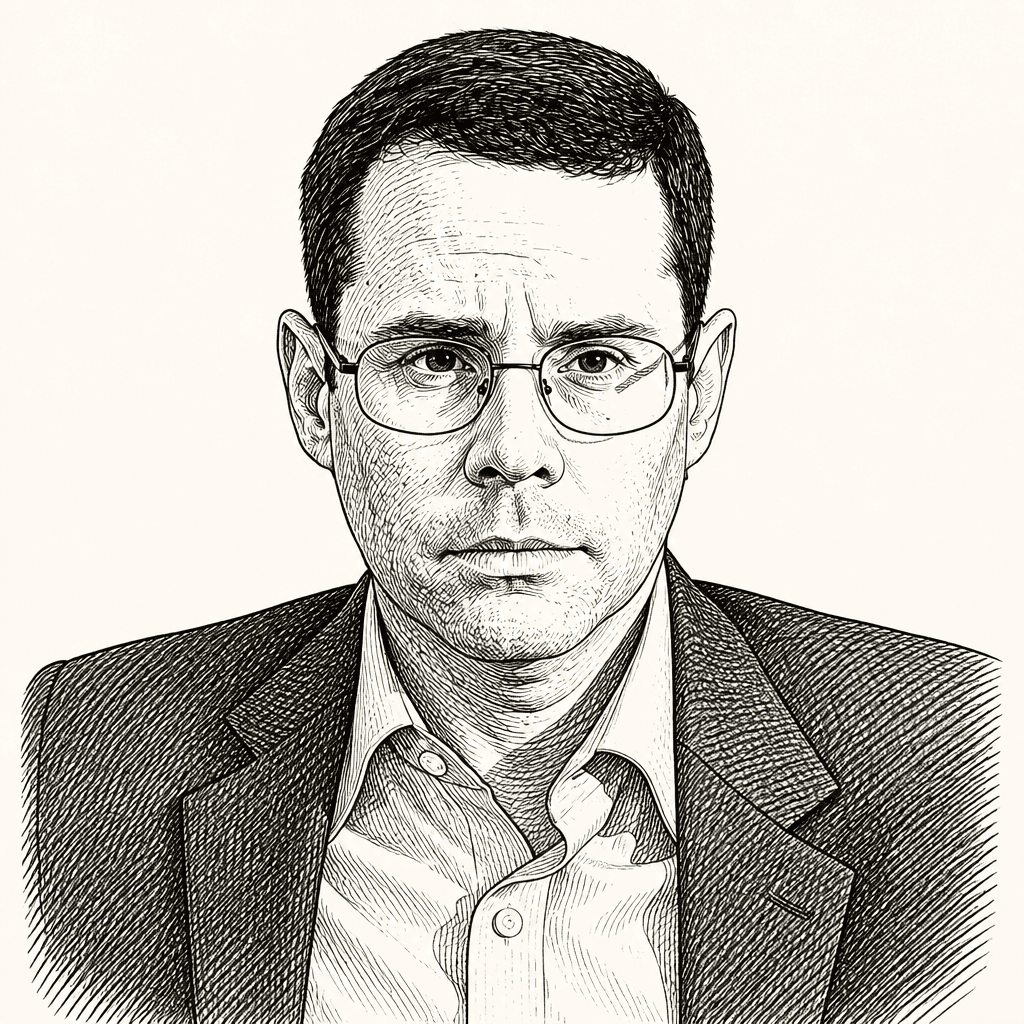 Michael Auslin
 Niall Ferguson
 John Cochrane
 Pete Hegseth
 H.R. McMasterTucker CarlsonHoover InstitutionTuesday, October 6, 202620 min read
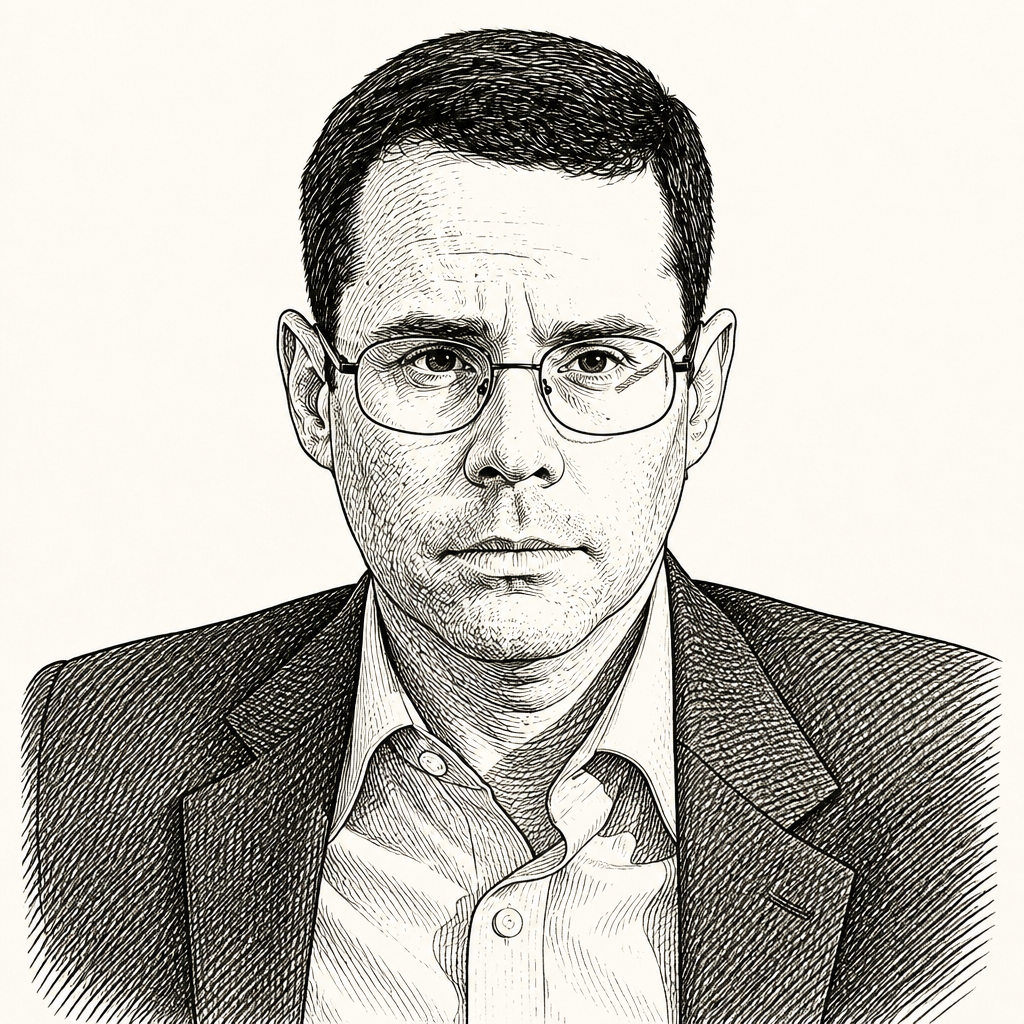
Michael Auslin, a Hoover Institution distinguished research fellow and author of *National Treasure: How the Declaration of Independence Made America*, argues that the Declaration’s significance lies partly in the uncertainty surrounding its creation: in 1776, the colonies had no guarantee they would win the war or remain united. He traces how an improvised act of separation became a lasting standard for judging whether government acts legitimately.
Independence was a decision made before anyone knew what it would become
The Declaration’s later status as a national treasure can make its creation look more settled than it was. In Michael Auslin, the account begins instead with uncertainty: in 1776 there was no national precedent to follow, no agreed meaning of independence, and no guarantee that the colonies would act together. Political initiative still rested largely with the colonies. Thomas Jefferson, Auslin notes, would rather have been in Williamsburg working on a constitution for Virginia. He thought the states, not a powerful central government, would hold political authority.
In Philadelphia, the urgent question was how to win a war. George Washington’s army was in poor condition. Washington could praise the soldiers’ spirit while also telling Congress that the army lacked blankets, shoes, and weapons. A letter shown during the discussion was identified on screen as Washington’s December 29, 1777 request for supplies. It gives a material counterpart to the political deliberations: independence had to be pursued amid the practical needs of an army that could not take its provisions for granted.
Jefferson, John Adams, and other delegates were trying to decide what it meant to leave what they regarded as the greatest empire on earth. They were not military men, and they had no settled institutional blueprint for the new political order. The Declaration was not the completion of a plan whose success they could already see. It was one decision among many made while the war’s outcome and the shape of the postwar government remained unresolved.
The vote itself could have gone differently. Delegates expected a majority, Auslin says, but did not know whether they would secure the support of eight colonies, thirteen, or fewer. They paused deliberations when they feared they lacked the votes. On the morning of the July 2 vote, John Dickinson stayed home while Caesar Rodney rode to Philadelphia in a hurry. Those details make contingency concrete: the result depended on local decisions and individual actions, not on a national consensus that had already formed.
Auslin cites John Adams’s later estimate that only a third of Americans supported independence at the time; a third were loyalists, and a third had no opinion. On that account, the Declaration did not express an already settled popular will. It announced a break made by a fragile coalition in the midst of a war whose outcome was uncertain.
Nor did its authors treat the document as the one event around which everything else stopped. Jefferson drafted it in about a week while serving on several other committees. Adams and Benjamin Franklin made edits, and Congress cut into the draft. Jefferson thought the work he had done had come to little. The Declaration’s transformation into a national relic—and the later desire among its participants to claim credit for it—came with time. What began as an administrative announcement that had to be issued, Auslin says, eventually “rose to eternity.”
The truth is that at the time it was an administrative announcement that they had to get out.
That shift from improvised act to national treasure does not make the Declaration less consequential. It changes what the achievement consists of. The founders did not know that independence would hold, that the colonies could keep acting together, or what government would follow. The importance of the act lies partly in that lack of assurance: they made a claim about political principles and proceeded without knowing whether the conditions for realizing it would last.
The republic’s novelty lay in scale and union, not in inventing every principle
The Americans were not the first people to declare independence or to build a republic through revolution. Niall Ferguson challenges the idea that the founding was wholly unprecedented by pointing to the Scottish Declaration of Arbroath in 1320 and the Dutch break from Spanish rule. The documents shown during the discussion identified those precedents as the Declaration of Arbroath and the Dutch Act of Abjuration. Ferguson also notes that declarations had a familiar form: they listed alleged abuses by a ruler to justify revolt.


Auslin accepts that the Americans drew on a wider history of political argument. The founders looked to the English Bill of Rights, Magna Carta, John Locke, the Bible, and documents closer to home, including the Boston Declaration of 1772 and George Mason’s Virginia Declaration of Rights. They did not present the Declaration’s ideas as unprecedented. Jefferson described it as an expression of the American mind. Its claims needed to be recognizable from the pulpit, the streets, and the assemblies—not so novel that readers would first have to argue about what they meant.
Ferguson questions the fairness of the grievances, arguing that the colonists were among the least heavily taxed people in the British Empire and that the list exaggerated British oppression. Auslin agrees that the grievances were part of a long tradition of justifying revolt, but emphasizes that they mattered to the Declaration’s authors: without them, the statement of separation would not have been legitimate in their eyes. British readers, Auslin says, largely ignored the famous opening principles and went straight to the charge sheet. John Lind, a London barrister, wrote a point-by-point answer of about 130 pages. In Auslin’s account, Lind’s response addressed the grievances rather than the language later generations would treat as the document’s heart.
The distinctive challenge, then, was less the act of declaring independence than what came after it: whether thirteen autonomous colonies, large and different from one another, could form a republic together. Their economies, politics, religions, and regional identities varied. The political distance between a Virginia cavalier and a Massachusetts Puritan was part of the problem the new union had to solve.
The scale was also unfamiliar. The founders used “continental” to describe a stretch from Maine to Georgia and Florida, not the Atlantic-to-Pacific country that the word might suggest today. They faced the challenge of making a republic across territory that, in Auslin’s account, had no close precedent in size. Their attention to earlier republics—including Rome and the Hebrew Republic of the Bible—was partly an effort to understand why free people might fail to preserve their political order. They worried that citizens would lose what they called republican virtue: the willingness to put the polity above private interest.
Franklin’s warning that the colonies must “hang together or hang separately” captures the danger, but Auslin says that separation was often the more instinctive choice. Their differences made union a political problem, not an automatic consequence of sharing a grievance against Britain. The American experiment depended on whether a group of distinct polities could keep choosing to act together.
A break with the king became a break with the social order around him
John Cochrane asks when the colonists’ demand for autonomy became a demand for independence, and when independence became a commitment to a republic rather than a monarchy. Auslin traces a change in how they described the conflict. Before the Declaration, he says, colonial grievances were directed at Parliament, not the king. Even the 1775 declaration explaining why the colonists had taken up arms presented them as loyal subjects defending their “ancient rights as Englishmen,” with no intention of leaving the empire.
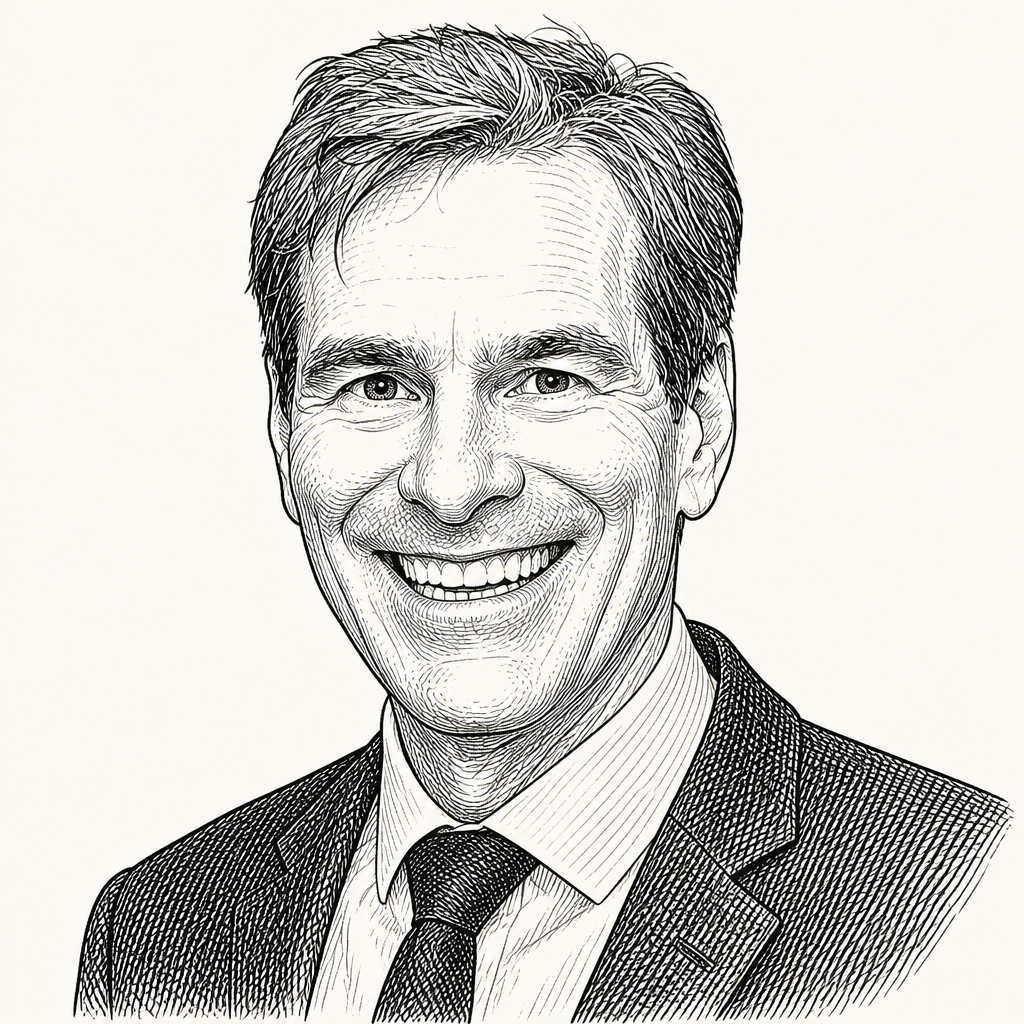
Auslin points to Lexington and Concord and to Britain’s failure to answer the Olive Branch Petition as turning points. The king’s refusal to respond helped persuade the colonists that reconciliation was no longer available. By 1776, the Declaration presented the king as the driver of a conspiracy against America, with Parliament implicated as well. Their case for separation changed as their understanding of their place in the empire changed.
H.R. McMaster argues that the Revolution was also social, economic, and cultural. He points to the absence in the colonies of the social structure surrounding the monarchy in Britain. Auslin agrees that distance from Britain gave the colonists room to develop their own institutions. He traces self-government to the 1619 assembly at Jamestown and says the colonists had governed themselves for generations under what Edmund Burke described as a light hand of imperial oversight.
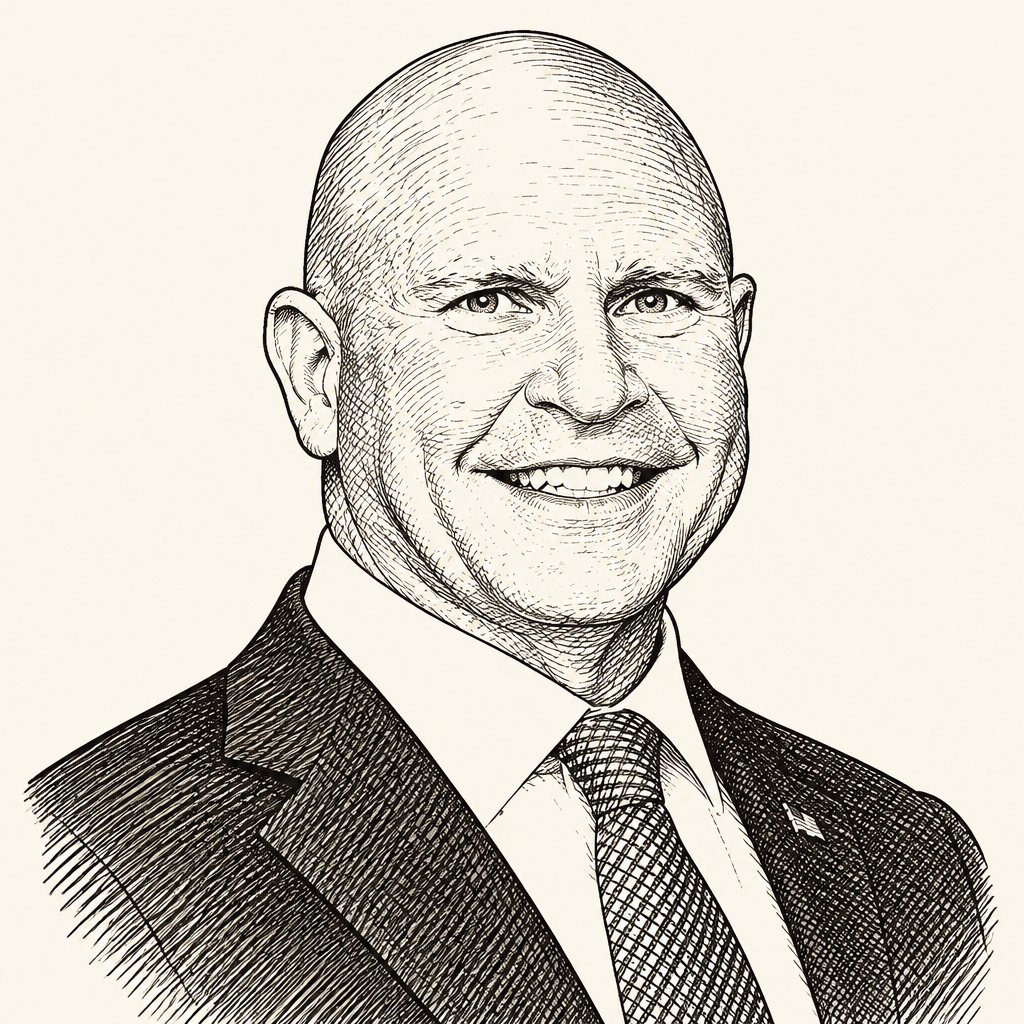
That experience shaped their response to attempts at tighter control. Measures imposed on Massachusetts, including the Intolerable Acts, challenged a way of life in which political, economic, religious, and social decisions had largely been made locally. The colonists also understood that they could remain subordinate within the empire no matter how much land they held or how bravely they served. Auslin suggests that unequal status helped propel some colonists toward separation, while cautioning that contingency makes it impossible to know how different treatment by Britain might have changed events.
The Revolution nevertheless did not begin as an effort to remake society without limits. Drawing on Gordon Wood’s account of its radicalism, Auslin says the founders did not intend a broad social revolution. They accepted some leveling—Jefferson, for example, did not want birth to determine who could serve at the highest levels—but within what they considered an understood social stratum. The expansion of popular power nonetheless alarmed elites when ordinary people were elected to state legislatures and passed laws. Auslin says that fear helped drive Washington, Madison, Hamilton, Wilson, and others toward the Constitutional Convention.
This tension complicates any simple contrast between a Revolution for popular rule and a later retreat from it. The founders rejected monarchy, but feared the consequences of unconstrained democratic power. Auslin says they regarded mob rule as dangerous and sought a republic rather than a pure democracy. They also worried that republican government could fail if citizens ceased to maintain the virtue needed to protect liberty. The challenge was not just how to escape the king; it was how to prevent political power from becoming a tool of faction.
The Declaration became a standard for judging government after its first job was done
Cochrane suggests that the Declaration fell into the background while the Constitution became the working founding document, returning to prominence when Abraham Lincoln invoked it at Gettysburg. Auslin agrees that the Declaration was not continuously treated as the central document of the republic, but dates its renewed public importance earlier, to the period after the War of 1812.
In Auslin’s account, patriotism after the war combined with a new interest in the document’s physical survival. The parchment, bearing its signatures, had narrowly escaped destruction when the British burned Washington in 1814. Artistic reproductions brought it to public attention, and people began asking what the document was. John Quincy Adams gave it a larger constitutional role in a July 4, 1821 speech. The address is remembered for Adams’s warning against going abroad in search of monsters to destroy, but Auslin says Adams spent much of it arguing that the Declaration was foundational to the constitutional system.
The document then became available to movements beyond its original purpose. Auslin says abolitionists, women pursuing suffrage, temperance advocates, and socialists all appealed to it. Lincoln made it central to his own political program, calling the Declaration the “apple of gold” and the Constitution its “frame of silver.” In Auslin’s telling, Lincoln did not simply revive a document that had been forgotten; he elevated its role as a continuing foundation for arguments about the country’s principles.
That history informs Auslin’s account of the document’s present relevance. The Declaration is not a governing instrument that tells officials how to structure government. It supplies a standard against which the conduct of government can be judged. Its principles, he says, were not ones the founders could fully understand or foresee would be extended in every way later generations pursued—to women, Black Americans, and immigrants. Those later appeals nevertheless became part of the Declaration’s political life.
The grievances can also be read as questions about government in the present, though Auslin does not treat every charge as an exact, universal description. Cochrane asks whether the list might be set against the federal government today. Auslin singles out the complaint that the king “has sent hither swarms of officers to eat out our substance,” which he sees as a familiar fear of a bureaucracy that keeps expanding. He also cautions that Jefferson could make an abuse sound constant or universal when it may have occurred once or in one place. The force of the grievances, in this telling, lies not in assuming every charge was equally widespread, but in the standard they express for legitimate government.
The same tension appears in the question of how the founders might respond to modern Washington. Auslin thinks the country’s scale, prosperity, and military strength could inspire awe. Washington and Jefferson imagined a continental country and thought about linking its regions through internal improvements, though Jefferson was more hesitant than Washington on that point. Auslin also doubts the founders would be surprised by partisanship: they experienced intense political attacks themselves. He recalls Thomas Paine excoriating Washington during his presidency as the greatest scourge in American history.
What might trouble them more is permanence in government. Some founders, especially Madison and Jefferson, would have objected to the size of the federal government; Auslin is less certain how Hamilton would have judged it. He identifies the permanent bureaucracy and career political class as a deeper concern. Washington wanted to retire, Jefferson did retire, and Adams left office quickly. The founders feared that a powerful federal government, especially one controlling the purse, could use favors and spending to buy political support, reproducing a form of corruption they associated with monarchy.
For Auslin, the Declaration is both idealistic and realistic. It does not lay out a government’s machinery or assume that people will govern perfectly. It states principles about how a just government should not act. Its later authority comes in part from its capacity to be taken up again when citizens argue that government has crossed those lines.
Election fatigue coexists with a demand for government to act
The election discussion turns on a tension between public weariness with politics and a growing appetite for intervention on everyday costs. Ferguson doubts that a late-breaking event is likely to reverse the Republicans’ polling direction before the midterms. Even the collapse of Iran’s regime, he says, might not change voters’ views much, given public skepticism about the war. In his view, people have become more resistant to October surprises than voters were in the late 1960s and 1970s.
McMaster considers the possibility of an Iran-linked terrorist attack. He says such an event ought to bring Americans together and could backfire on Tehran. He describes the Iranian threat as having shifted from sleeper cells to the use of intermediaries to conduct attacks, and recalls an earlier plot against the Saudi ambassador in Washington. He also says Iran may perceive the United States as weak, decadent, and divided, though he does not think the country is as divided as it appears from abroad.
Cochrane distinguishes an unpredictable event from something a campaign can choose to do. Republicans, he argues, could present a clear legislative program: what they would do on immigration, deregulation, and other issues if they retained Congress. A positive case for voting for them would matter more than hoping for good luck.
The economic pressures the panel discusses are less a single October surprise than a buildup of risk. Cochrane points to European sovereign debt concerns and richly valued technology stocks, which he says look somewhat like 1999. A stock-market decline alone would not necessarily cause a crisis, he argues; the danger would grow if debt losses spread to banks or other institutions.
Ferguson focuses on bond markets and higher yields. He describes France’s fiscal position as precarious, citing its deficit and stock of debt, and says a far-right candidate is likely—but not certain—to win the upcoming presidential election. More broadly, he notes that interest rates are returning to levels last seen about 25 years earlier, while the stock of debt has grown substantially. He says the U.S. debt-to-GDP ratio has tripled over that period. Higher borrowing costs have not yet, in his view, produced their full effect on markets, but he expects them to matter, particularly alongside large capital expenditure. His question is where the pressure will bite first and what political consequences will follow.
On foreign policy, McMaster says Trump has already taken the midterms into account. He points to Trump’s statements about delaying a large-scale campaign against Iran until after the election and interprets them as an effort to manage expectations and keep fuel prices as low as possible.
For Ferguson, affordability is the clearest electoral vulnerability. He says inflation hurt Democrats in the previous election cycle and that Trump has walked into a similar problem, particularly because of the war’s effect on gas prices. He also sees public resistance to data centers and the AI boom as a possible, though marginal, advantage for Democrats. A CNN analysis displayed during the discussion reported that eight in ten Americans disapproved of Trump’s handling of inflation, while cautioning that the midterm outcome was not yet known.
Cochrane pushes back on treating the overall inflation rate as exceptionally high: he puts it at about 3%, against a 2% target. But he acknowledges that people notice specific costs, including gas, health care, and universities. He sees a populist demand for government action in the polling. The Wall Street Journal poll shown during the discussion reported support across a range of proposals, from rules for medical bills and prescription-drug prices to caps on credit-card interest, rent, and child-care costs.
| Policy in the Wall Street Journal poll | Support |
|---|---|
| Ban surprise medical bills | 90% |
| Require insurers to cover doctor-prescribed services and medicines | 89% |
| Cap prescription-drug prices | 87% |
| Cap credit-card interest rates at 10% | 77% |
| Restrict large institutional investors from buying large numbers of single-family homes | 75% |
| Cap child-care costs for working families | 74% |
| Limit rent increases to 5% above inflation | 65% |
| Pass Medicare for All | 59% |
| Open government-run grocery stores with discounted prices | 57% |
Ferguson adds a dispute about who should be held responsible for housing costs. He says the ratio of house prices to incomes is much higher than in the 1990s or 2000s, but argues that building restrictions in Democratic-controlled states have contributed to the problem. Cochrane responds with a joke about Trump’s stated preference for lower prices for people who want to buy houses and higher prices for people who want to sell them. Beneath the joke is a real division in the discussion: affordability is politically potent, but the panel differs over whether it primarily reflects the administration’s performance, state and local barriers to construction, or voter demand for more government action.
That demand sits alongside exhaustion with political conflict. McMaster says the vitriolic tone of public life and the amount of attention politics commands have worn people down. He hopes leaders in both parties will move beyond reflexive partisanship and talk about policies that serve broad interests. Cochrane sees Trump fatigue and expects voters to look ahead to the president becoming a lame duck. Ferguson says younger voters’ most striking trait is not that they are uniformly far to the left, but their disillusionment with politics itself.
Ferguson thinks that disillusionment could create an opening for a candidate who can seem genuinely new. He also describes a “horseshoe” landscape in which parts of the far left and far right agree on a range of populist policies. The next political era, in his view, may be shaped by whichever political entrepreneur can win in that landscape. Cochrane sees disengagement more positively: if people turn toward work, family, business, and hobbies rather than living in constant agitation about Washington, he considers that potentially healthy. The unresolved tension is whether fatigue withdraws attention from politics or creates space for a candidate promising a different kind of intervention.
AI job fears and AI accident fears are different arguments
The discussion of artificial intelligence distinguishes two claims that are often treated as one: that AI is already eliminating jobs at scale, and that more capable systems could cause a serious accident. Ferguson says the “jobs apocalypse” has been cancelled because the data do not support that hypothesis. Bill Whalen cites Anthropic chief economist Peter McCrory’s view that AI looks more like a skill-biased technology that augments work than one that automates jobs wholesale. McCrory says that, using the Department of Labor’s taxonomy, there is no job in which every task is automated by Claude.
Ferguson nevertheless expects a significant AI accident. He points to reports about OpenAI’s agentic swarms behaving in ways he describes as out of control, and argues that more powerful models will be harder to control. He does not claim that every failure would be catastrophic; his examples are a swarm compromising a mid-tier bank or causing a regional power outage. Cochrane resists describing computer hacking as an apocalypse, noting that unauthorized access is already a crime, but takes seriously the question of who is responsible when an AI system causes harm.
Cochrane suggests that companies’ engagement with Washington reflects their exposure to product-liability claims and litigation. If an AI swarm hacks into a computer, he asks, who takes the blame? He thinks regulation may also appeal to companies because compliance could let them argue they followed a regulator’s standards. Ferguson’s concern is less about liability than about the public response to a serious failure in infrastructure or finance.
He compares that possibility to the reaction to Three Mile Island. Ferguson says the incident became an enormous media event despite limited damage and casualties, and worries that an AI mishap could produce a similarly powerful backlash against the technology. In his view, that could constrain American development while leaving China with more room to advance. He argues that risks from agentic systems are not limited to American models, so any government response would have to account for Chinese systems too.
The financial scenario gives the disagreement more precision. Cochrane says a rumor on social media that a bank has been compromised could be enough to send people to ATMs to withdraw their money. The financial system depends on records and wealth stored digitally, he notes, and he says the Federal Reserve and Treasury understand this as a major risk. Ferguson likewise identifies finance and infrastructure as the areas where an incident would attract serious public attention.
The point is not that the panel predicts a particular failure. It is that job displacement and systemic risk call for different evidence. McCrory’s cited claim bears on whether whole occupations are being automated; Ferguson’s and Cochrane’s concerns are about what happens when powerful systems encounter financial or physical infrastructure, and how institutions and the public respond.
Military standards must make room for discipline and unusual talent
Pete Hegseth’s formulation of who should wear the uniform—“No fatties, no trannies, no weirdos, no wimps, no radicals. Just warriors”—prompts McMaster to distinguish a warrior ethos from a list of people to exclude. He describes that ethos as a covenant linking service members to one another and to the society in whose name the military fights. Its foundations, he says, include honor, courage, toughness, and willingness to sacrifice for fellow service members and the country.
McMaster says some correctives to the military’s recent direction may be overdue. He criticizes what he describes as an emphasis on equality of outcome rather than equality of opportunity, and on judging people by identity category rather than professional standards. But he argues that removing women or minorities from promotion lists on the apparent basis of identity would be as wrong as the practice he criticizes. His objection is also to Hegseth’s rhetoric, which he calls counterproductive. The military needs high standards of discipline, physical fitness, and mental toughness, McMaster says, but should be kept out of partisan politics.
Cochrane shifts the question from rhetoric to the skills modern military work demands. He recounts an Air Force officer telling him that recruiting pilots increasingly involves looking for people good at video games, rather than only young people who already fly airplanes. Operating first-person-view drones and integrating new technology, Cochrane argues, require technical ability and adaptability. McMaster agrees that the military needs the most talented and dedicated people in society.
Ferguson’s objection is to treating “weirdos” as incompatible with military service. He points to the founders of the Special Air Service and the codebreakers at Bletchley Park as examples of people who might not fit Hegseth’s implied standard. McMaster adds that willingness to do dangerous and unconventional things may itself look strange. Their exchange does not reject demanding standards; it asks whether a narrow image of the warrior could exclude people whose skills and temperaments the military needs.
The panel dismisses a claim about the road to war—and turns satire into a closing argument
A brief exchange about Tucker Carlson’s account of the start of the Second World War ends without a detailed historical rebuttal. Carlson says that the idea Hitler “just randomly rolled into Poland” is a lie. He argues that Germany had lost territory, including part of Prussia, to another country, and that this was a justification for the invasion; he adds that the United Kingdom had nothing to do with it.
Ferguson refuses to spend time arguing through what he calls “utter nonsense” about the war. McMaster agrees. Cochrane says that when a claim combines numerous errors with “little bits of half right things badly digested and spewed out,” he would rather pass than try to disentangle it. The exchange is pointed, but its substance is limited: the panel rejects Carlson’s framing rather than laying out a competing account of the events.
The closing discussion of British comedy has a lighter tone, but it returns to the show’s concern with political life. Bill Whalen asks what happened to British humor, naming Yes Minister, Blackadder, and Fawlty Towers. Ferguson answers that the country moved television comedy into the House of Commons, removing the wall between politics and satire. He calls the consequences disastrous, and says the apparent descent of British politics into farce has made series such as Yes Minister feel less necessary.
Ferguson also says that Monty Python’s comedy has not aged evenly. The “Ministry of Silly Walks” is, in his view, a difficult sell to younger viewers, while Life of Brian remains funny and has endured better than much of the group’s other material. Cochrane misses the more eloquent side of British parliamentary comedy and invokes the Python line, “Nobody ever expects the Spanish Inquisition.” McMaster compares British humor to the dead parrot sketch: perhaps it is not dead, but merely resting.
The panel’s affection for the older sketches turns into a self-aware joke when Cochrane calls the exchange “such a boomer conversation.” Ferguson’s sharper point is that when politics itself becomes farce, satire has less distance to travel.