The Fed Should Respond When Supply Shocks Keep Inflation Elevated

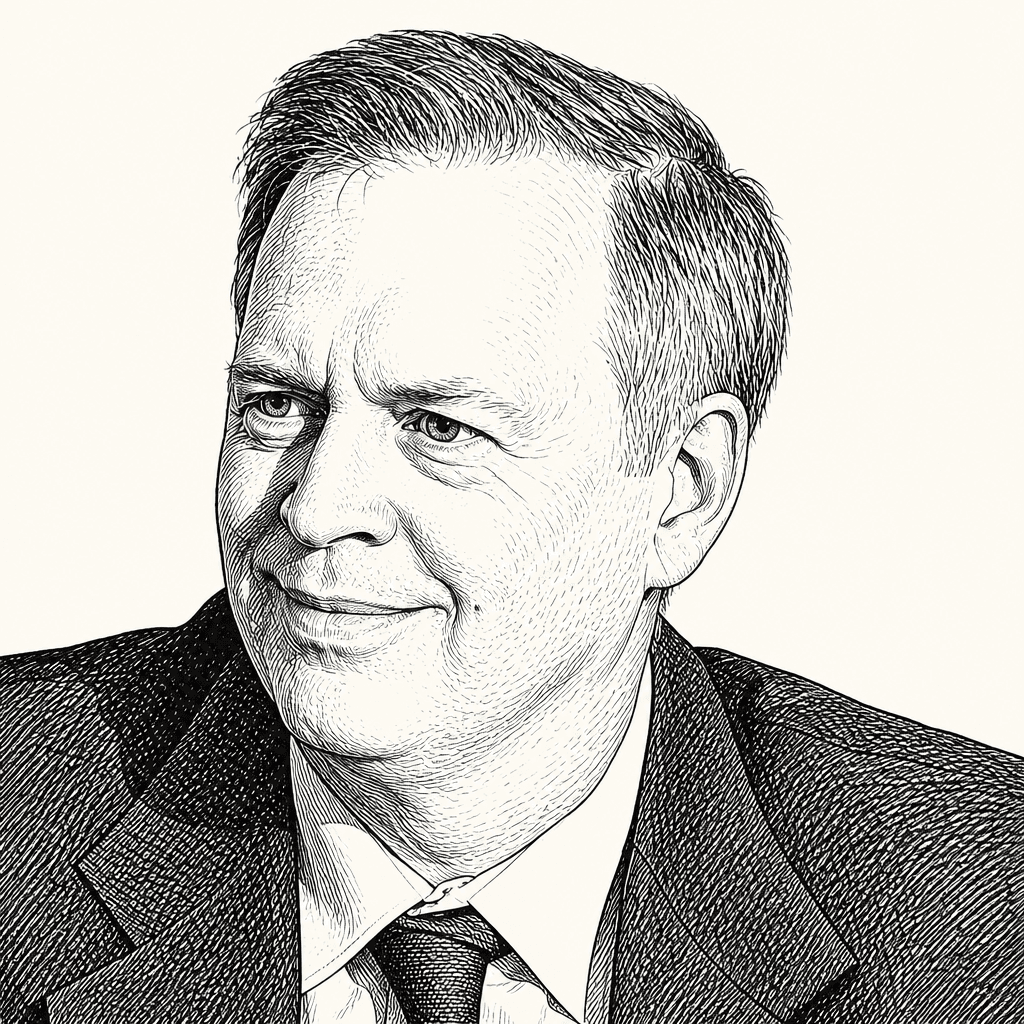
Chicago Fed President Austan Goolsbee argues that the Federal Reserve should not automatically look through negative supply shocks when they are likely to keep inflation above target. Unlike demand-driven overheating, a supply shock leaves the Fed to restrain demand against reduced productive capacity, risking larger losses in employment and output. In a conversation with Steven Davis, Goolsbee makes the case for responding to persistent supply-driven inflation, but not with the same force as to excess demand.
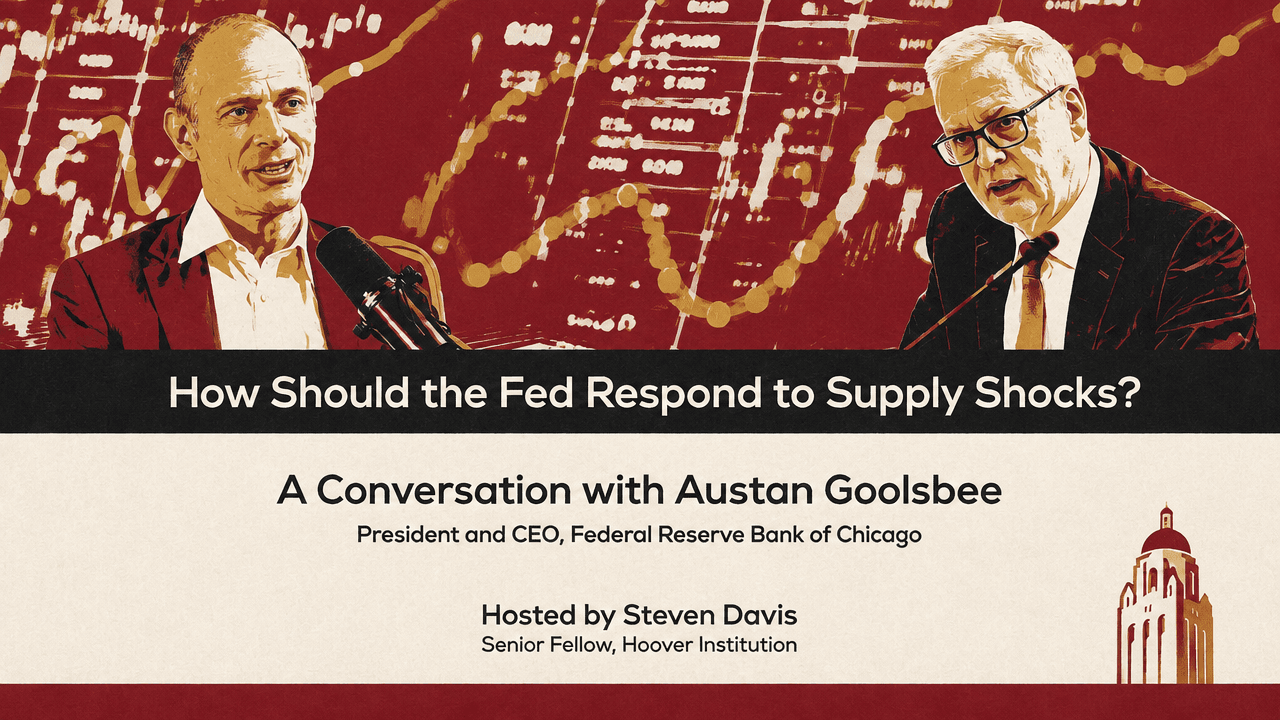
Persistent supply shocks cannot simply be looked through
The conventional case for looking through a supply shock rests on timing. As Austan Goolsbee explains, many familiar shocks—such as weather events, oil disruptions, or supply interruptions—have historically been temporary. They may push prices up, but the shock either unwinds or produces a one-time increase in the price level. Once that increase has passed through, it no longer adds to the inflation rate. If the shock is expected to fade before monetary policy can affect the economy, raising interest rates to counter it can look like a “fool’s errand.”


Goolsbee’s objection is that recent shocks have been larger, more frequent, and more persistent than that conventional account assumes. The central bank cannot treat every negative supply shock as temporary by default. If a shock keeps inflation above target for a prolonged period, the Fed has a responsibility to respond—even if the cause is not excess demand.
His thought experiment is deliberately stark: suppose a supply shock pushes inflation to 4 percent for the next 50 years. Even if the shock eventually ends, looking through it would mean accepting decades of inflation above the 2 percent target. The obligation to restore price stability, in Goolsbee’s view, rules that out. But responding does not mean reacting as forcefully as the Fed would to demand-driven overheating.
The distinction between a price-level increase and persistent inflation is central to the argument. A one-time tariff, for example, could raise prices by 10 percent. If the tariff remained in place but did not keep increasing, its direct effect would be a one-year increase in inflation; afterward, it would leave the price level higher but stop adding to the inflation rate. Goolsbee’s concern is that large shocks may not behave so neatly. COVID-era supply-chain disruption was initially expected to clear within months, but it proved more persistent. He says the same caution applies to tariffs and perhaps to oil.
Davis presses on what it means for a shock to “go away.” Oil-price shocks in the 1970s, he notes, stopped adding to inflation before the higher price level had reversed. Goolsbee resists describing the central problem of the 1970s as merely a temporary inflation impulse followed by a lasting price-level increase. In his account, the key failure was that secondary effects fed into inflation expectations, turning what might have been a temporary shock into a persistent one.
The credibility of monetary policy changes how dangerous that transition is. Davis points out that inflation had already been rising from the late 1960s through much of the 1970s, so the Fed was not starting from a position of strong credibility when the oil shock hit. Goolsbee agrees that this is an important part of the history. He invokes Paul Volcker’s appointment as Fed chair in 1979 and the subsequent rise in the federal funds rate to above 20 percent as a reminder of the cost of restoring credibility once it has been lost.
The comparison is not that every supply shock will reproduce the 1970s. It is that policymakers cannot assume a temporary shock will stay temporary when inflation expectations are vulnerable or the shock itself lasts. Goolsbee’s case is for a response to persistent supply-driven inflation, not for treating every price increase as a reason to tighten.
The same inflation problem can carry different employment costs
The Fed’s instrument is demand. Raising interest rates slows interest-sensitive activity, including construction, business investment, and purchases of consumer durables. When demand itself is too strong, Goolsbee says, the central bank can in principle offset the excess by reducing aggregate demand. It need not rely on wages adjusting to restore balance.
A negative supply shock creates a different problem. If productive capacity falls, the same level of demand now presses against a smaller supply of output. The Fed cannot directly restore lost supply—for example, it cannot produce more oil. It can only reduce demand, bringing activity into line with lower potential output.
That adjustment can be costly because wages do not immediately move down. If policy tries to force the economy back into balance quickly, Goolsbee argues, output and employment may fall too far before wages adjust. The economy would overshoot on the downside. This is the basis for treating a supply shock differently from demand overheating: both can create inflationary pressure, but the route to correcting them differs.
The argument applies specifically to negative supply shocks, not to supply changes in general. Steven Davis asks whether Goolsbee’s case implicitly assumes that supply shocks tend to raise inflation. Goolsbee agrees that he has negative supply shocks in mind, distinguishing them from a positive supply shock such as faster productivity growth. Davis agrees that the two should not be assumed to offset one another over time. Goolsbee says that wage stickiness may create an additional asymmetry between positive and negative shocks.
Davis challenges the wage argument by distinguishing real wages from nominal wages. A negative supply shock makes society poorer, he says, so real wages must fall. With nominal wages sticky, higher prices could reduce real wages without requiring nominal pay cuts. Why should the Fed resist that adjustment?
Goolsbee acknowledges the theoretical possibility. If all wages and prices rose proportionally, he says, the economy might be no worse off in real terms. But he argues that deliberately relying on inflation to lower real wages would require inflation to be unexpected. If workers and firms anticipated the strategy, they could build expected inflation into wage bargaining, potentially generating a wage-price spiral. Davis adds that downward nominal wage stickiness is a serious possibility, while acknowledging that its extent varies with circumstances. Goolsbee agrees that wages may be less sticky on the way up than on the way down.
This exchange sharpens the case for an asymmetric response. Goolsbee is not arguing that the Fed should respond identically to supply shocks and demand shocks of the same size. Demand overheating may build gradually and persist, making a strong response appropriate; supply shocks have often been treated as brief and self-correcting. His claim is narrower: when a negative supply shock is likely to keep inflation elevated, the central bank should not automatically look through it. The response should account for the different costs of using lower demand to offset a loss of supply.
If the conventional wisdom is react to one and don't react to the other, I'm saying there is a case for persistent supply shocks that you do have to react some. That's different from saying you should react exactly the way you do with demand shocks.
The price-level-targeting question brings the same trade-off into focus. Davis asks why the Fed should not aim to return prices to the path they would have followed under steady 2 percent inflation. One version would be a period of below-target inflation after a price-level overshoot; another, more extreme version would be outright deflation. In either case, the policy would use weaker demand to bring inflation down, just as the response to a persistent supply shock would. The question is how much employment cost that adjustment would impose.
Goolsbee says the obstacle is not only the familiar concern that very low inflation leaves less room to cut interest rates before reaching the zero lower bound. The more immediate difficulty is that lowering inflation enough to make up for an earlier overshoot could require a severe recession. In his example, prices are 20 percent above the level implied by a steady 2 percent path, while wages have risen 22 percent. Returning prices to the old path would also require nominal wages to fall, and he says the economy does not know how to achieve that without a large recession. Even a milder plan—such as inflation around half a percent for several years—would require bringing inflation down sharply, with damage to employment as a likely cost.
Goolsbee distinguishes this argument from the zero-lower-bound concern that would arise if the Fed set its inflation target very low over the long term. Davis’s question is instead whether a temporary period of very low inflation could reverse a past price-level rise. Goolsbee’s answer centers on downward wage stickiness: even if the adjustment were spread over several years, pushing inflation sufficiently low could still require a costly contraction.
That makes the price-level discussion a practical counterpart to the wage argument about supply shocks. In both cases, the Fed can reduce inflation by restraining demand, but wages may not adjust smoothly enough to avoid substantial losses in employment and output. The Fed’s price-stability responsibility does not erase that cost; it is part of why Goolsbee argues for responding to persistent supply-driven inflation differently from demand overheating, rather than applying the same force to both.
FOMC meetings are serious, not theatrical
Asked for a more dramatic account of Federal Open Market Committee meetings, Austan Goolsbee declines to disclose confidential proceedings. He says a word-for-word transcript becomes available after five years; until then, he cannot report who is “foaming at the mouth” or pounding a shoe on the table. Even when the transcript is released, he says, he cannot add color that is not in it.
Goolsbee describes the meetings as formal and focused on prices, employment, and the economy—the responsibilities set out in the law. Members come from different professional backgrounds, including finance, economics, and business, and they can disagree or get heated. But he says the seriousness of the task leaves less conflict than a television version would suggest. He jokes that the transcript marks laughter in parentheses, and that he would feel he had failed if it recorded none.
There is room for informal rivalry, too. Goolsbee says he makes the case at meetings that Chicago’s Seventh District is the greatest, especially to Minneapolis Fed President Neel Kashkari, who sits next to him. The banter sits alongside, rather than replacing, his account of a committee focused on its economic responsibilities.
Davis brings up Milton Friedman and Anna Jacobson Schwartz’s A Monetary History of the United States, which treats the Fed as a major contributor to the Great Depression through its role in extending it. Goolsbee agrees with that characterization while distinguishing the Fed’s role in extending the Depression from causing it initially. Davis invokes the history as a warning that central banks can make serious mistakes, including when their independence from political interference is compromised.
Goolsbee’s closing point is that policymakers and the public should pay attention and hold the Fed accountable, because scrutiny can affect behavior. The stakes, as Davis puts it, are asymmetric: there are many ways to get monetary policy wrong and fewer ways to get it right.