Economic Warfare Alone Cannot Break Iran’s Grip on Hormuz
 Bill Whalen
 Herbert McMaster
 John Cochrane
 Niall FergusonHoover InstitutionThursday, August 20, 202612 min read
Economic pressure on Iran cannot reopen the Strait of Hormuz or produce a durable settlement unless it is tied to clear objectives, sustained enforcement and credible military backing, John Cochrane, Niall Ferguson and H.R. McMaster argue. Cochrane doubts Washington will bear those costs; Ferguson says earlier military choices have narrowed its options, while McMaster contends that Iran can still be weakened through an integrated strategy extending beyond economic measures alone.
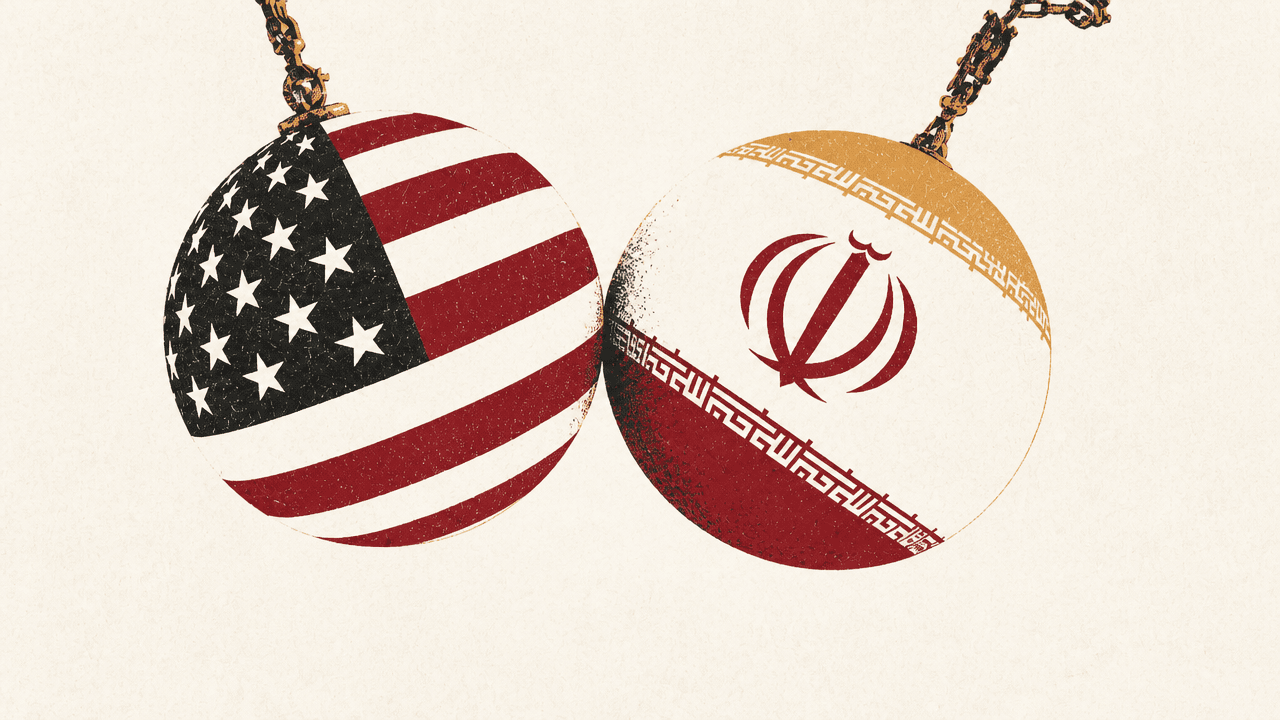
Economic pressure cannot solve a strategic problem on its own
Economic warfare can damage Iran, but it cannot by itself reopen the Strait of Hormuz, compel a durable settlement, or remove the regime’s capacity to threaten the region. Those outcomes depend on objectives, enforcement, military backing, and the ability to sustain all three over time.
John Cochrane draws a distinction between whether sanctions could work and whether they will. Their effectiveness, he says, turns on their severity, the duration of the campaign, and the costs the countries imposing them are prepared to bear. North Korea and Cuba illustrate the limit of a purely economic theory of coercion: an economy can be devastated without producing regime collapse.
Iran, as Cochrane describes it, is preparing to function as a “survival economy.” The regime can endure deprivation, use pauses to rebuild, and retain enough missiles and drones to threaten shipping through the strait. That creates a basic mismatch between means and ends. If Washington wants Tehran to negotiate a new agreement, it is implicitly seeking an arrangement that leaves the regime in place. But the measures most likely to break the regime’s grip on power would be much more ambitious than the pressure compatible with an eventual bargain.
Donald Trump’s announced economic operation promised unprecedented isolation. The statement threatened consequences for countries and institutions providing Iran a “lifeline,” specifically naming oil smuggling, swap lines, cash transfers, exchange houses, ship registries, and front companies. The operative question, Cochrane argues, is not whether that language is forceful. It is whether the United States will sustain the comprehensive campaign it implies.
Cochrane allows that economic destruction can affect military capacity. He points to Ukraine’s drone attacks on Russian economic targets as evidence that sustained damage to productive assets can impair an adversary’s ability to wage war. But he doubts that Washington will pursue a comparably intense campaign against Iran, or absorb its costs long enough to change the regime’s behavior.
His forecast is accordingly bleak: Hormuz remains at least partly constrained; Gulf states find a tacit accommodation with Iran, perhaps involving an unofficial toll; alternative shipping and energy routes grow more important; and the United States eventually allows the crisis to fade from political attention.
Niall Ferguson argues that calling the policy “sanctions” understates the situation. This is not peacetime coercion, he says, but economic warfare inside an active conflict. Historically, blockades worked most often as elements of broader campaigns involving naval, land, and later air power. Economic pressure alone rarely produced a decisive result.


For Ferguson, the economic debate begins with an adverse military reality. Iran retained the ability to disrupt Hormuz even after absorbing major military damage. By sending drones into the strait, he argues, Tehran could frighten insurers and shippers, sharply reduce traffic, and create a global economic shock without needing to defeat American forces conventionally. The consequence is a predicament in which regional actors increasingly have incentives to find covert ways to deal with Iran rather than wait for Washington to break the regime.
We wouldn't be having this conversation if we weren't staring at a colossal failure of U.S. military and air power, naval I should say, and air power.
Ferguson contends that the United States missed its decisive moment when it chose not to escalate to take control of the strait—an escalation that, in his view, would likely have required ground forces. The ceasefire made the problem harder still by giving Iran time to restore command arrangements and reconstitute. Washington is now caught in what he calls a strange equilibrium: oil prices are not yet high enough to force a political capitulation, but military options are not attractive enough to provide an alternative.
McMaster rejects the conclusion that the conflict is over or that Iran has achieved a strategic victory. Herbert McMaster argues that Iran remains in a difficult position and that its continued hostility could produce further opportunities for pressure. He locates the deeper failure in decades of American efforts at de-escalation, escalation management, and conciliation, which he says allowed Tehran to escalate on its own terms.
He nevertheless agrees that the ceasefire was a serious mistake. The initial U.S.-Israeli offensive, McMaster says, disrupted Iranian leadership and sharply reduced Iranian fire after the first week. The pause then gave the regime an opportunity to rebuild its chain of command. Gulf partners, uncertain that the United States would protect them against retaliation, became less willing to commit themselves. An announced effort to move ships out of the Gulf, he adds, became a predictable missile-and-drone target.
The dispute is therefore not over whether economic pressure matters. It is over whether it is linked to an achievable purpose and backed by enough military, political, and industrial power to make that purpose credible.
A pressure campaign needs defined objectives and a wider strategy
McMaster’s alternative is neither an “easy button” of punitive measures nor the claim that sanctions are useless. He calls for an integrated effort aimed at realistic ends: limiting Iran’s ability to rebuild its missile-and-drone complex and regional proxy networks, restricting the regime’s resources, and weakening its control at home.
He applies a framework attributed to Stephen Kotkin, identifying five sources of authoritarian control and corresponding ways to weaken them.
| Source of regime control | Pressure point proposed by McMaster |
|---|---|
| Cash flow | Restrict the regime's financial resources |
| Security forces | Exploit and deepen divisions within the security apparatus |
| Control over economic opportunity | Break the regime's grip on bonyads and other patronage channels |
| Propaganda | Provide Iranians alternative information around the firewall |
| Foreign support | Reduce assistance from China, Russia, and North Korea |
Restricting cash flow matters, McMaster says, partly because it can strain the regime’s ability to pay and retain security forces. Breaking its grip over economic opportunity means challenging control of bonyads and other mechanisms of patronage; restoring cash flows without changing that control would merely strengthen the regime again. Information policy should give Iranians alternatives to state propaganda, while external pressure should reduce the support Tehran receives from China, Russia, and, to a lesser extent, North Korea.
The framework extends beyond tariffs and blockades. McMaster calls for economic, financial, military, intelligence, covert, clandestine, and information measures to work together. Smuggling and black-market channels matter because they can support the reconstitution of Iranian military capabilities; McMaster points to Russian efforts across the Caspian Sea as an example of the kind of activity such a strategy should disrupt. Secondary sanctions may be useful, but only as one tool in a larger attempt to isolate Iran from external sources of strength.
Iran’s behavior, he argues, can also perpetuate its own isolation. McMaster says the United Arab Emirates restored trade and permitted some Iranian flights, only to suffer further Iranian missile strikes; the UAE then cut those connections off again. He reads Tehran’s activity through regional proxies similarly. Iran’s efforts to support militias in Iraq, encourage Houthi threats to Saudi oil infrastructure, and push Hezbollah to resume activity against Israel are, in his view, signs of desperation rather than strength.
Cochrane’s objection is practical. McMaster has described what an integrated campaign should look like, Cochrane says, but not what Washington appears to be doing. If the actual objective is to bring the Iranian regime into negotiations, then the United States is not pursuing the regime-weakening strategy McMaster proposes. Nor does Iran require a functioning, prosperous economy to remain dangerous. It needs enough military capability to fire rockets and drones at the strait.
Ferguson adds that a new memorandum of understanding could reproduce the original paradox: economic pressure might force Iran into an agreement that gives it access to financial resources, thereby restoring some of the capacity the pressure campaign was meant to limit.
The George Costanza theory fails in a long war
The central American constraint is not only diplomatic or tactical. It is a force-structure problem: protracted war consumes sailors, missiles, industrial capacity, and political attention long after the initial display of force.
McMaster calls the opposite assumption the “George Costanza approach to war”—leaving on a high note after a major targeting exercise. Wars do not work that way, he says. The expectation of easy, short conflict is a recurring “pipe dream,” and it leaves the United States unprepared for the sustained demands of an extended campaign.
This pipe dream of easy war is something we have to really guard against.
Reporting shown during the discussion described the USS Abraham Lincoln as having spent more than 250 days at sea, including more than 200 days without a port call, alongside reports of depleted missile stocks and suicide attempts. McMaster resists treating those accounts as proof that the crew as a whole is burned out. Service members have different backgrounds, personal circumstances, and breaking points, he says. Leaders must give personnel a clear sense of purpose and direction while recognizing signs of combat stress and trauma.
But McMaster agrees with the broader diagnosis. The U.S. military is too small for the missions it is being asked to perform. Autonomous and semi-autonomous systems can help, but they do not eliminate the need for more sailors, airmen, soldiers, and Marines. The defense industrial base must also produce weapons and munitions at much greater scale and speed.
That capacity gap has implications beyond the Gulf. A country such as China could conclude that a United States tied down around Iran has fewer credible options if Beijing seeks to coerce Taiwan or press its claims in the South China Sea.
Ferguson identifies depleted missile inventories, rather than exhausted personnel, as the immediate limitation. In his account, diminished stocks explain why Trump’s rhetoric has not translated into the escalation it threatens. New drone defenses may improve the position, but Ferguson says they need to be fielded quickly.
Cochrane dismisses reports about carrier food, presidential travel precautions, and similar stories as a familiar cycle of media alarm. His underlying argument about Iran, however, rests on the same question of credibility: no pressure campaign will achieve its stated result if it lacks demonstrated resolve and the material capacity to continue.
The progressive left may move from cultural politics to affordability
Alexandria Ocasio-Cortez’s remark that “Woke One was crazy” raises a question about political repositioning: can a progressive candidate distance herself from the cultural politics of the early 2020s while retaining a coalition that may be moving toward more explicitly economic demands?
Ferguson does not expect Democrats to return easily to Bill Clinton-style triangulation in 2028. The party’s energy, he argues, lies with democratic socialists, radical progressives, and candidates to the left of the old Democratic center. A red-state governor with an appeal to moderate voters might have been the obvious response to a polarizing Trump presidency in the 1990s model. Ferguson sees little sign of that approach taking hold now.
He also rejects the idea that progressive cultural politics were defeated in 2024. Universities, which he describes as the institutional origin of wokism, may be quieter, but in his view they have not abandoned it. Ferguson calls the present period a lull between “wokes,” not an endpoint.
Zohran Mamdani may be a more effective politician than Ocasio-Cortez, Ferguson says, though Mamdani cannot run for president. Ocasio-Cortez therefore remains a plausible presidential contender. Ferguson cautions against treating a radical-left nominee as implausible merely because it currently appears unlikely: Donald Trump’s presidential candidacy was once viewed as a joke, and Democrats have previously nominated a candidate far to the left of much of their congressional party.
Cochrane reads Ocasio-Cortez’s language differently. He sees an effort to move toward the center and become a viable general-election candidate rather than simply win a Democratic primary. In his description, “Woke One” included DEI, defund-the-police politics, censorship, cancellations, and the Green New Deal. The prospect of “Woke Two,” he says, joins cultural radicalism to a more aggressive institutional and economic agenda.
The economic side is not new, in Cochrane’s view. Wealth taxes, rent control, large-scale taxation, and redistribution resemble an older socialist program. His concern is the combination of those policies with changes favored by parts of the left: abolishing the filibuster, altering presidential selection, and expanding the Supreme Court. He characterizes that agenda as majoritarian power used to entrench itself.
Ferguson asks whether the next phase will be more economic than cultural because voters care about affordability. Healthcare for all, wealth taxes, and redistribution may speak more directly to that concern than the cultural gestures associated with the earlier progressive moment. Cochrane agrees that affordability will be politically potent, but argues that the proposed remedies are familiar and their consequences well established.
The unresolved issue is whether Ocasio-Cortez can reposition herself as a more economically focused candidate without being overtaken by figures further to her left—or whether voters will be willing to separate that repositioning from the politics she now labels “Woke One.”
Arday’s death became a fight over what institutions had done to him
Jason Arday’s suicide prompted competing accounts of responsibility. Ibram X. Kendi, in a post shown during the discussion, wrote that prominent antiracist Black scholars can become targets “almost totally surrounded by resentments,” comparing attacks on them to a lynch mob and accusing media outlets of treating such attacks as mere “accusations.”
Ferguson rejects that characterization. “A suicide is not a lynching,” he says.
He argues that Cambridge and other universities promoted Arday far beyond what Ferguson considers his demonstrated qualifications, in pursuit of diversity. Ferguson describes Arday’s résumé and public biography as containing extraordinary claims that he says were largely undocumented, including a claim of running 30 marathons in 33 days. Ferguson’s point is not simply that Arday’s record was allegedly inflated. It is that institutions, in Ferguson’s account, elevated and celebrated a vulnerable person whom they had insufficiently vetted, then left him exposed once the story began to unravel.
Jason Arday was a victim of a preposterous bending of the academic rules to promote people into positions they were in no way qualified for, in pursuit of a preposterous DEI utopia.
Ferguson is especially critical of efforts to portray Arday’s death chiefly as the consequence of racist persecution by critics and the media. That interpretation, he argues, directs attention away from the standards, incentives, and institutional choices that he believes enabled Arday’s elevation.
John Cochrane places the emphasis on the system rather than Arday alone. In Cochrane’s account, institutions sought a particular kind of scholarly work and an overcoming-adversity narrative; Arday supplied what those institutions rewarded. Cochrane calls that system racist in a different sense: it treats people according to skin color and subjects them to expectations and roles that can be destructive.
Cochrane is sharply dismissive of sociology of education as a field, characterizing its scholarship as intellectually empty. Yet he expresses sympathy for Arday, whom he says was “chewed up and spit out” by a system whose demands he had come to inhabit.
The practical lesson offered by the speakers is a more skeptical approach to hiring. Ferguson says résumés and cover letters should be treated cautiously. Written samples remain important, but generative AI means they cannot settle whether the applicant actually produced the work. Interviews increasingly matter because they can function as an oral examination; Ferguson says he would not hire a researcher without a thorough grilling.
McMaster emphasizes character and motivation as well as research skill. In the military, he says, false claims are difficult to sustain because performance is quickly observable. In academic settings, an interview should test intellect, communication, research capability, character, and the candidate’s underlying aspirations.
Cochrane’s criterion for assistant-professor roles in economics and at Hoover is more direct: written work matters, not personal backstory. But he says AI has transformed research-assistant applications. He now receives highly polished summaries of his own work—sometimes better summaries than he remembers producing himself—and treats their recognizable AI-generated style as a reason to discard them.